
A 1-cup serving of plain raw grapes has about 62 calories. Grapes can be a smart, refreshing snack when you keep portions realistic, and they also provide useful nutrients like vitamin K and some vitamin C. For most people, the key is simple: enjoy grapes as a whole fruit, but remember that their natural sugar and carbs still count toward your overall daily intake. According to USDA SNAP-Ed, 1 cup of raw grapes weighs about 92 grams and provides 62 calories.
How Many Calories Are in Grapes by Serving Size
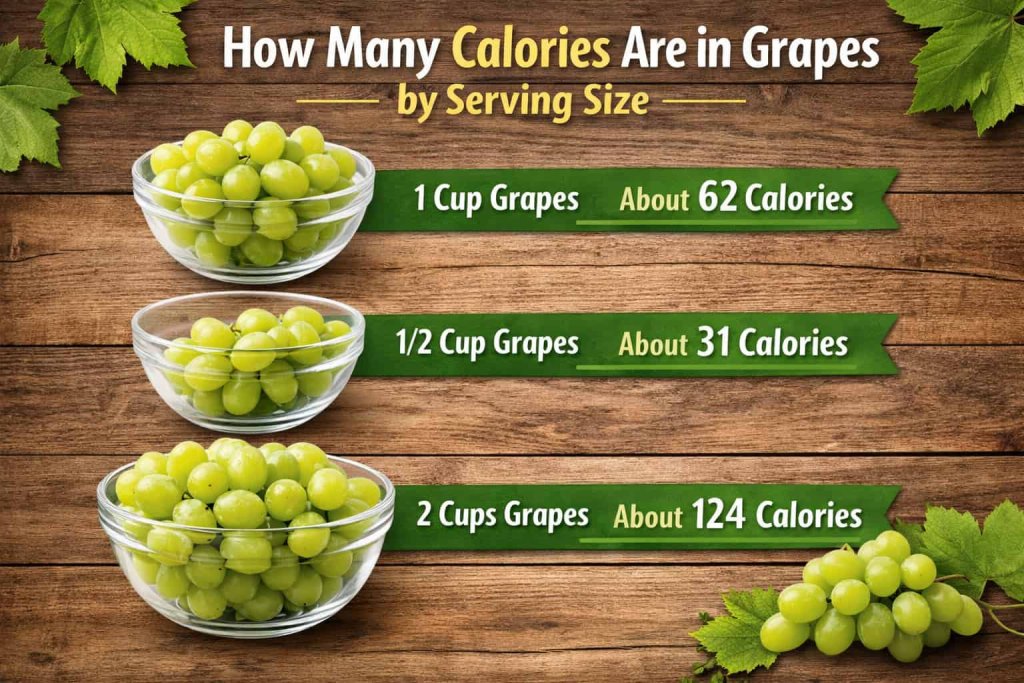
Here is a simple calorie breakdown for plain raw grapes:
- 1 cup grapes (92 g): about 62 calories
- 1/2 cup grapes: about 31 calories
- 2 cups grapes: about 124 calories
Many nutrition databases also list grapes by weight. A 100-gram serving of raw grapes has about 69 calories, which can be helpful when you are comparing labels, weighing food, or using a calorie-tracking app. Since 1 cup of grapes weighs about 92 grams, the calorie totals are very close.
Grapes are moderate in calories for a whole fruit. They are sweet and easy to snack on, so portion size matters more than many people realize. A measured serving can help you enjoy grapes without accidentally eating more than planned.
As a practical visual guide, 1 cup of grapes is usually about a small bowlful, not a large produce-sized serving. This matters because grapes are easy to eat by the handful, and calories can add up quickly when portions double or triple without you noticing.
Nutrition Profile of 1 Cup of Grapes
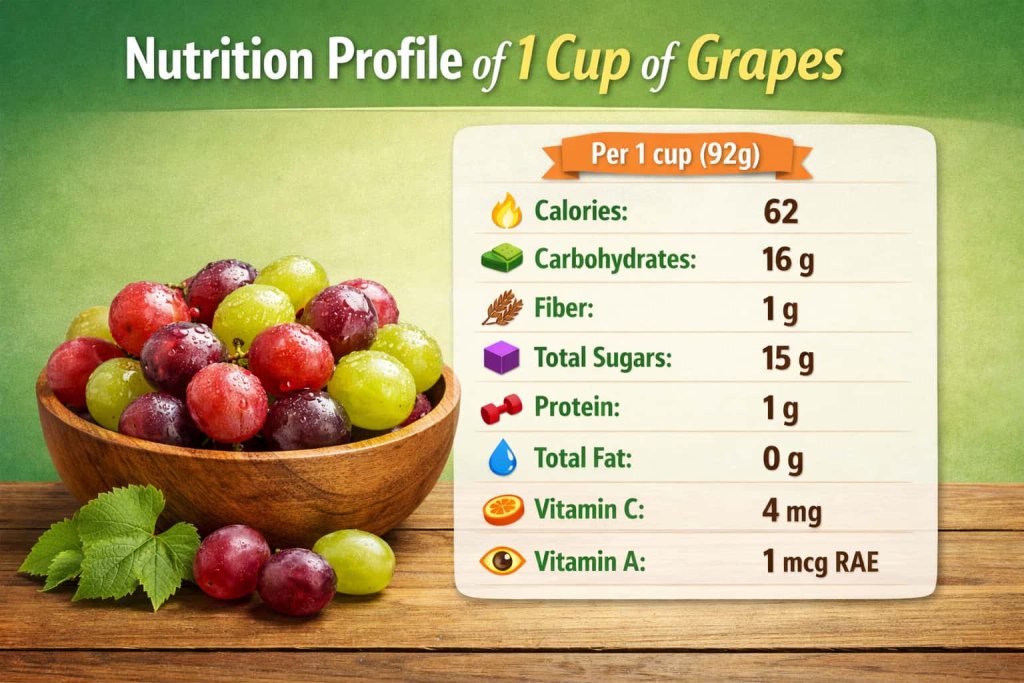
Here is a simple nutrition profile for 1 cup of raw grapes (92 g):
| Nutrient | Amount |
|---|---|
| Calories | 62 |
| Carbohydrates | 16 g |
| Fiber | 1 g |
| Total sugars | 15 g |
| Protein | 1 g |
| Total fat | 0 g |
| Vitamin C | 4 mg |
| Vitamin A | 1 mcg RAE |
These numbers can vary a little by grape type and exact portion, but this is a solid everyday reference point for plain fresh grapes. Red, green, and black grapes are usually similar in calories and carbohydrates, but the exact numbers can vary slightly based on the variety, size, and ripeness of the grapes.
Key Nutrients in Grapes
Grapes are best known for being a hydrating whole fruit with natural carbohydrate, but they also contribute a few nutrients that matter in a healthy diet.
Vitamin K
According to the NIH Office of Dietary Supplements, vitamin K is important for normal blood clotting and also supports bone health. Grapes are not one of the very highest vitamin K foods, but they can still contribute to your daily intake.
Vitamin C
The NIH Office of Dietary Supplements notes that vitamin C helps the body make collagen, supports immune function, and improves absorption of iron from plant foods. Grapes are not a major vitamin C source compared with citrus or strawberries, but they still add a little.
Water and Natural Carbs
Most of the calories in grapes come from natural carbohydrate. That does not make them unhealthy. It simply means grapes are a fruit that is easy to enjoy in larger amounts, so serving size matters more than many people realize. Their water content can also make them feel more refreshing and satisfying than candy or other sweet snacks.
Are Grapes Good for Weight Management?

Yes, grapes can fit well into a weight-management plan. The Dietary Guidelines for Americans recommend regular fruit intake, with most choices coming from whole fruit rather than juice. For people ages 2 and older, recommended fruit intake generally ranges from about 1 to 3 cup-equivalents per day depending on age, sex, and calorie needs.
Grapes may help with weight management because they are:
- lower in calories than many snack foods
- naturally sweet, which can help replace dessert-style snacks
- easy to portion into a bowl or container
- hydrating and convenient
At the same time, grapes are not as high in fiber as some other fruits, so they may be less filling than options like apples, pears, or berries for the same snack occasion. If you want better staying power, pairing grapes with protein or healthy fat can help.
Still, grapes are not a free food. Because they are small and easy to eat quickly, it is common to go past a reasonable portion without noticing. A measured serving is usually more helpful than eating straight from a large bag.
When Grapes May Be Less Helpful for Weight Goals
Grapes can become less helpful for weight control when:
- you snack on them mindlessly in large amounts
- you pair them with high-calorie dips or desserts
- you choose juice or sweetened dried fruit instead of whole grapes
The American Diabetes Association notes that whole fruit is a good choice, while dried fruit and 100% fruit juice have smaller portion sizes and may not be as filling. That same idea also matters for people trying to manage hunger and calories. Whole grapes are usually the better pick than grape juice for fullness.
Who Should Be a Little More Careful With Grapes?
Most people can enjoy grapes without any problem, but a few groups may need more portion awareness.
People With Diabetes or Blood Sugar Concerns
The American Diabetes Association explains that fruit contains carbohydrate, so it should be counted as part of the meal plan. Grapes can absolutely fit into a diabetes-friendly eating pattern, but the portion matters. Eating a large bowl at once may affect blood sugar more than people expect.
People Taking Warfarin
NIH notes that vitamin K can affect how warfarin works. This does not mean people taking warfarin must avoid grapes. It means vitamin K intake should stay fairly consistent from day to day unless a clinician advises otherwise.
People Who Are Closely Tracking Calories
Grapes are nutritious, but their calories can add up if you eat several cups without noticing. If you are using a calorie deficit for weight loss, measuring out your portion can make grapes much easier to fit into your plan.
Fresh Grapes vs Juice or Dried Grapes
Fresh grapes are usually the best choice when you want better fullness for the calories. Whole grapes keep their water structure, which helps with satisfaction. Juice is easier to drink quickly, and dried grapes are more concentrated, so the portion is much smaller. The American Diabetes Association notes that dried fruit and juice can fit into a healthy pattern, but smaller portions are needed and they may not be as filling as other fruit choices.
Raisins are simply dried grapes, but because the water has been removed, the calories and sugar are much more concentrated in a much smaller portion. That is why fresh grapes usually feel more filling for the calories than raisins.
Simple Ways to Enjoy Grapes Without Overdoing Calories
A few practical habits can make grapes more useful for healthy eating:
- portion out about 1 cup instead of eating from the package
- pair grapes with Greek yogurt, cottage cheese, or nuts for more staying power
- freeze grapes for a slower, dessert-like snack
- use grapes to replace candy or pastries, not to add extra calories on top
It can also help to wash and portion grapes into single-serving containers ahead of time. That makes it easier to grab a realistic serving instead of eating several cups straight from a large bag.
These simple choices can make grapes feel more satisfying and easier to manage in a balanced diet.
FAQs
How many calories are in 1 cup of grapes?
A 1-cup serving of raw grapes has about 62 calories.
Are grapes good for weight loss?
They can be. Grapes are a whole fruit and moderate in calories, but they are easiest to fit into a weight-loss plan when you keep portions reasonable.
Do grapes have a lot of sugar?
Grapes contain natural sugar. A 1-cup serving has about 15 grams of total sugars. That is why portion size matters, especially for people monitoring blood sugar.
Are grapes better than grape juice?
For fullness and portion control, whole grapes are usually the better choice. Juice can fit into a healthy diet, but it is easier to consume quickly and may be less filling.
Conclusion
Grapes are a simple, nutritious fruit that can fit into many healthy eating patterns. One cup of grapes has about 62 calories, along with natural carbs, some vitamin C, and helpful vitamin K. They can support weight management when you enjoy them as a portion-aware whole-fruit snack instead of eating them mindlessly or replacing them with juice. For most people, grapes are a smart option when balanced with the rest of the day’s food choices.
Sources and References
- USDA SNAP-Ed — Grapes
- USDA FoodData Central — FoodData Central
- NIH Office of Dietary Supplements — Vitamin K Fact Sheet
- NIH Office of Dietary Supplements — Vitamin C Fact Sheet
- Dietary Guidelines for Americans — Dietary Guidelines for Americans, 2020–2025
- American Diabetes Association — Best Fruit Choices for Diabetes