
Broccoli is very low in calories. In practical terms, 100 grams of raw broccoli has about 34 calories, and 1 cup of raw chopped broccoli has about 31 calories according to USDA FoodData Central. That makes broccoli one of the easiest vegetables to add when you want more volume, fiber, and nutrients without adding many calories.
If you are counting calories, planning meals, or trying to manage your weight, broccoli is a strong option. Plain broccoli stays low in calories whether you eat it raw or cooked. What usually changes the total more is what you add to it, such as butter, oil, cheese sauce, or creamy dressings. CDC notes that fruits and vegetables can help you feel full while eating fewer calories because of their water and fiber.
How Many Calories Are in Broccoli by Serving Size?
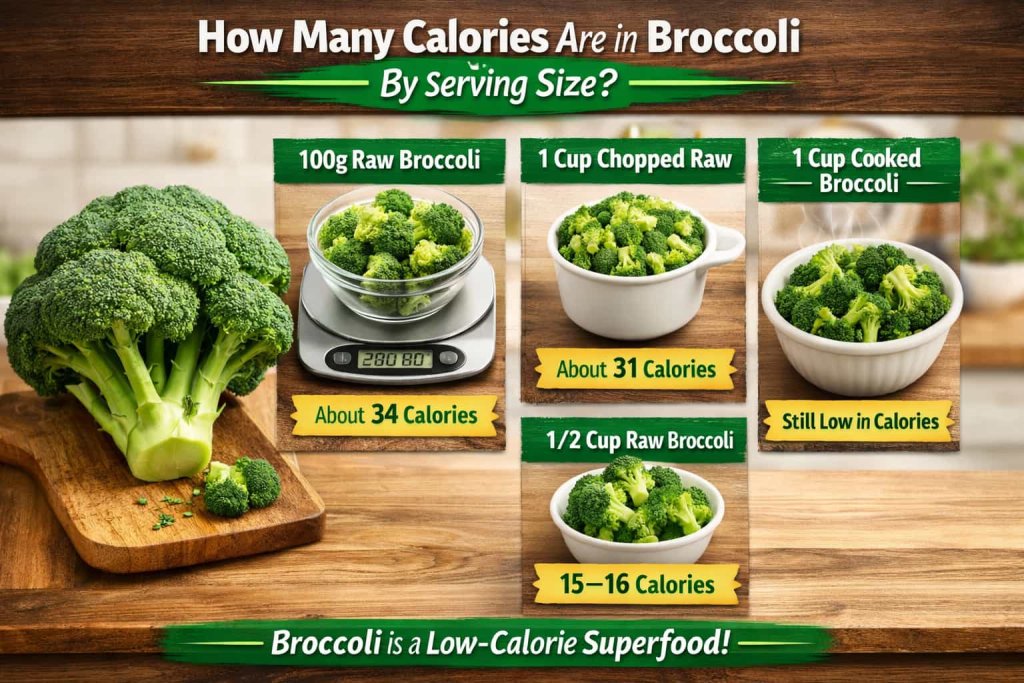
Here is the most practical calorie guide for plain broccoli based on current USDA data:
- 100 grams raw broccoli: about 34 calories
- 1 cup raw chopped broccoli: about 31 calories
- 1/2 cup raw broccoli: about 15 to 16 calories
- 1 cup cooked broccoli: still low in calories, usually in the same general range as raw plain broccoli, depending on the exact cooking method and water content
The biggest takeaway is simple: broccoli is a low-calorie food in both raw and cooked forms. For most readers, the difference between raw and plain cooked broccoli is small enough that portion size and added toppings matter more in real life. That is why steamed or roasted broccoli can still fit easily into a calorie-aware meal plan as long as extras stay moderate.
Raw vs Cooked vs Frozen Broccoli Calories
For everyday use, the calorie difference between plain broccoli forms is small. Raw broccoli, steamed broccoli, and plain frozen broccoli are all low-calorie choices. What changes the total more is usually added oil, butter, cheese, or sauce.
A simple way to think about it is:
- Raw broccoli: very low in calories
- Steamed or boiled plain broccoli: still very low in calories
- Plain frozen broccoli: usually similar to fresh broccoli
- Broccoli with cheese sauce or butter: much higher in calories
This helps readers focus on what matters most in real meals: portion size and toppings, not just whether the broccoli was fresh, frozen, raw, or cooked.
Nutrition Profile of Broccoli
Broccoli offers a lot more than a low calorie count. A 1-cup serving of raw chopped broccoli provides carbohydrate, fiber, a small amount of protein, and almost no fat, while also supplying a high amount of vitamin C. USDA-linked nutrition data also show that broccoli contributes potassium, calcium, magnesium, and small amounts of iron. USDA FoodData Central remains the main authoritative source for these values.
Quick Nutrition Profile of Broccoli
| Serving | Calories | Carbs | Fiber | Protein | Fat |
|---|---|---|---|---|---|
| 100 g raw broccoli | 34 | about 6.6 g | about 2.6 g | about 2.8 g | about 0.4 g |
| 1 cup raw chopped broccoli | 31 | about 6 g | about 2.4 g | about 2.6 g | about 0.3 g |
This is one reason broccoli is often considered a nutrient-dense food. It gives you fiber, volume, and useful micronutrients for very few calories.
Here is the practical nutrition picture readers usually need:
- Low in calories
- Contains fiber
- Provides a small amount of protein
- Very low in fat
- Rich in vitamin C
- Provides vitamin K
- Contains folate, potassium, and other useful micronutrients
Key Nutrients in Broccoli
Vitamin C
Broccoli is well known for its vitamin C content. The NIH Office of Dietary Supplements explains that fruits and vegetables are the best sources of vitamin C and specifically includes broccoli among foods that provide it. This is one of the main reasons broccoli is often seen as a nutrient-dense choice.
Vitamin K
Broccoli also provides vitamin K. NIH Office of Dietary Supplements notes that vitamin K is important for blood clotting and bone health, and its health professional guidance lists broccoli among common dietary sources.
Folate
Folate is another useful nutrient in broccoli. NIH Office of Dietary Supplements notes that folate is naturally present in a wide variety of foods, including vegetables, especially dark green vegetables. Broccoli is not the highest-folate vegetable, but it still adds to overall intake.
Fiber and Potassium
Broccoli also supports a balanced diet with fiber and potassium. Fiber helps make meals feel more filling, while potassium is an important mineral found in many vegetables. Together, these nutrients help explain why broccoli is often recommended in healthy eating patterns.
Is Broccoli Good for Weight Management?
Yes, broccoli can be very helpful for weight management because it gives you a lot of food volume for very few calories. CDC says fruits and vegetables can help you feel full while eating fewer calories because their water and fiber add volume to meals. That is exactly why broccoli works so well in calorie-conscious eating plans.
Broccoli can be especially useful when you want to:
- Make meals larger without adding many calories
- Replace some higher-calorie side dishes
- Add more fiber-rich vegetables to lunch or dinner
- Build plates that feel satisfying but still light
A practical example is replacing part of a higher-calorie side dish with broccoli. Swapping some fries, buttery mashed potatoes, or a creamy casserole side for a generous serving of plain broccoli can lower the calorie total of the meal while still keeping the plate full. That makes broccoli useful for people who want meals to feel satisfying without relying on large amounts of calorie-dense foods.
For example, a large serving of plain broccoli usually adds far fewer calories than fries, creamy side dishes, or heavily buttered vegetables. That does not make broccoli a magic weight-loss food, but it does make it a smart food for people trying to manage hunger and calorie intake more comfortably.
Does Cooking Change Broccoli Calories?
Plain cooking methods do not change broccoli calories very much. Steaming, microwaving, boiling, and roasting plain broccoli usually keep it in a low-calorie range. The larger calorie jump usually comes from ingredients added during or after cooking, such as:
- Butter
- Olive oil
- Cheese sauce
- Creamy salad dressing
- Breaded coatings
One more useful point is nutrient retention. NIH Office of Dietary Supplements notes that vitamin C content in foods can be reduced by prolonged storage and cooking, and that steaming or microwaving may lessen cooking losses. So if you want both convenience and nutrient retention, lightly steaming broccoli is often a practical middle ground.
Who Should Be a Little More Careful?
Most people can enjoy broccoli regularly, but there are a few practical exceptions.
People Taking Warfarin
If you take warfarin or another vitamin K–sensitive blood thinner, broccoli deserves extra attention. NIH Office of Dietary Supplements says it is important for people taking warfarin to get about the same amount of vitamin K each day. This does not usually mean you need to avoid broccoli completely. It means your intake should stay consistent unless your clinician advises otherwise.
People Sensitive to Gas or Bloating
Broccoli can also cause digestive discomfort for some people, especially in large portions. Mayo Clinic explains that adding too much fiber too quickly can lead to gas, bloating, and cramping. Broccoli can be harder to tolerate for some people when portions get large or fiber intake rises too quickly.
If broccoli makes you uncomfortable, it often helps to:
- Start with smaller portions
- Cook it rather than eating it raw
- Increase fiber gradually
- Drink enough water as you increase fiber intake
Simple Ways to Eat Broccoli Without Adding Too Many Calories
Broccoli stays most calorie-friendly when you keep preparation simple. Good lower-calorie options include:
- Steamed broccoli with lemon
- Roasted broccoli with a light amount of olive oil
- Broccoli added to soups or stir-fries
- Raw broccoli with a lighter yogurt-based dip
- Broccoli mixed into grain bowls or salads
A useful rule of thumb is this: plain broccoli is low in calories, but rich sauces and heavy toppings can change the nutrition profile quickly. If your goal is weight management, pay as much attention to what is on the broccoli as to the broccoli itself.
Frequently Asked Questions
How many calories are in 1 cup of broccoli?
A cup of raw chopped broccoli has about 31 calories based on USDA data.
How many calories are in 100 grams of broccoli?
100 grams of raw broccoli has about 34 calories according to USDA data.
Is broccoli a low-calorie food?
Yes. Broccoli is considered a low-calorie vegetable because it provides a relatively large portion for very few calories. CDC also supports vegetables as a helpful choice for feeling full with fewer calories.
Is broccoli good for weight loss?
Broccoli can support a weight-loss eating pattern because it is low in calories and contains fiber and water, which can help meals feel more filling. It is not a special fat-burning food, but it is a very practical one for lower-calorie meals.
Final Answer
Broccoli is one of the best examples of a food that gives you a lot nutritionally for very few calories. A typical 100-gram serving has about 34 calories, and 1 cup of raw chopped broccoli has about 31 calories according to USDA FoodData Central. It is also a good source of vitamin C and vitamin K, and it fits well into weight-management meals because it adds volume without adding many calories.
At the same time, broccoli works best as part of a balanced meal rather than as the whole meal by itself. Pairing it with a protein source, healthy fat, and another satisfying food can make meals more filling and more realistic to stick with over time.
If you want to keep broccoli calorie-friendly, focus on simple cooking methods and watch high-calorie add-ons. That gives you the biggest benefit from a vegetable that is already doing a lot right.
Sources/References
- USDA FoodData Central — FoodData Central
- CDC — Healthy Habits: Fruits and Vegetables to Manage Weight
- NIH Office of Dietary Supplements — Vitamin C Fact Sheet for Consumers
- NIH Office of Dietary Supplements — Vitamin K Fact Sheet for Consumers
- NIH Office of Dietary Supplements — Vitamin K Fact Sheet for Health Professionals
- NIH Office of Dietary Supplements — Folate Fact Sheet for Health Professionals
- Mayo Clinic — Dietary fiber: Essential for a healthy diet