
Psyllium husk powder benefits are real, but the strongest evidence is for constipation relief, better bowel regularity, and helping lower LDL cholesterol as part of a heart-healthy diet. It may also help support blood sugar control in some people, but that benefit should be described more carefully than many supplement labels do. Understanding where the evidence is strong and where it is limited helps you use psyllium more safely and with more realistic expectations.
What Is Psyllium Husk Powder?
Psyllium husk powder is a soluble fiber supplement made from the husk of psyllium seeds. According to MedlinePlus, psyllium is a bulk-forming laxative that absorbs liquid in the intestines, swells, and forms a bulkier stool that is easier to pass. It is commonly sold as powder, granules, capsules, liquid, and wafers.
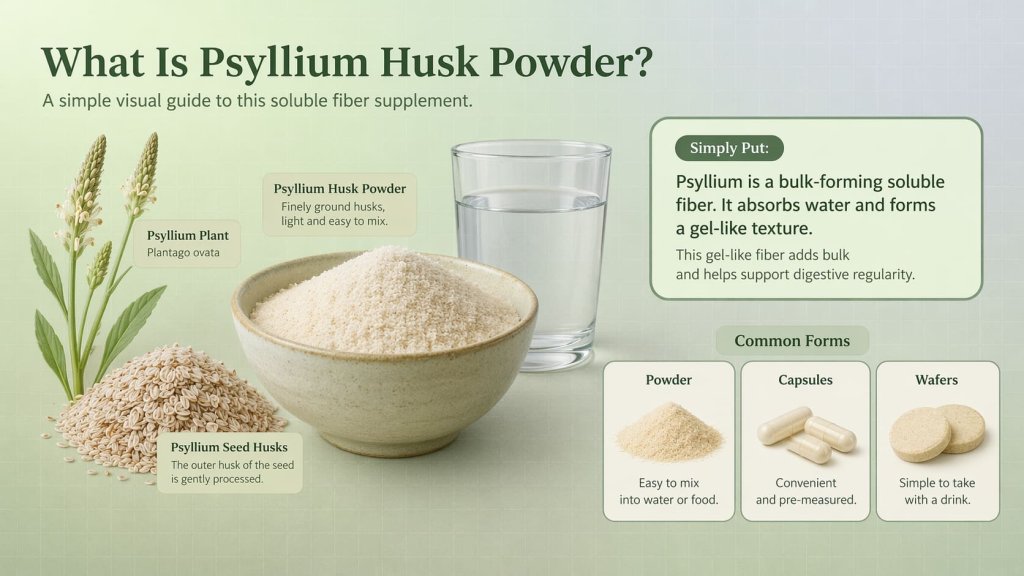
That gel-forming action is important because it helps explain why psyllium is often discussed for both digestive and metabolic benefits. CDC notes that soluble fiber dissolves in water and forms a gel-like substance that slows digestion, which can help support both blood sugar and cholesterol control.
Psyllium Husk Powder Benefits With the Strongest Evidence
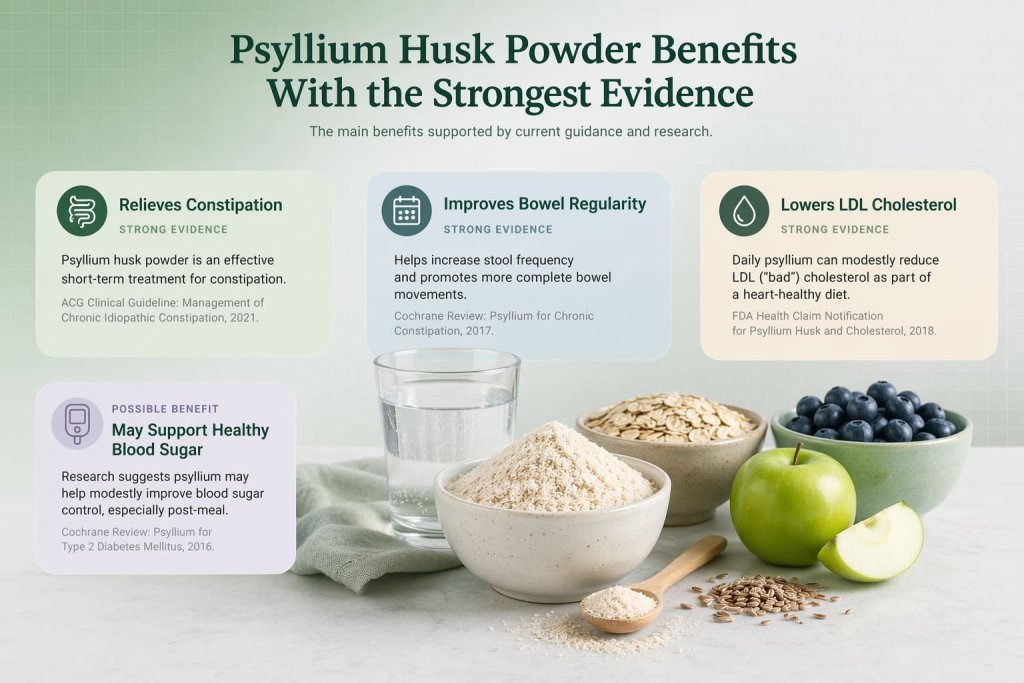
Helps Relieve Constipation and Support Regularity
This is the clearest and most reliable benefit. MedlinePlus lists psyllium as a treatment for constipation, and NIDDK recommends more fiber plus adequate fluids as part of constipation treatment. NIDDK also says adults generally need 22 to 34 grams of fiber per day, depending on age and sex.
In practical terms, psyllium husk powder can help when stools are hard, infrequent, or difficult to pass, especially if your diet is low in fiber. It works by adding bulk and helping stool hold water, which can make bowel movements more regular and easier to pass.
May Also Help Normalize Loose Stools
Psyllium is often thought of only as a constipation fiber, but that is not the full picture. MedlinePlus also notes that doctors may prescribe psyllium for diarrhea. That makes sense because psyllium forms a gel when mixed with water, which can help add bulk to stool and make bowel movements more formed. This does not mean it is the right fix for every cause of diarrhea, especially if symptoms are severe, persistent, or linked to fever or blood in the stool.
May Help Lower LDL Cholesterol
This is another well-supported benefit. Under FDA labeling rules in the eCFR, foods containing soluble fiber from psyllium seed husk may carry a heart-disease-risk-reduction claim when used as part of a diet low in saturated fat and cholesterol. The rule specifies 7 grams or more per day of soluble fiber from psyllium seed husk for this effect.
That does not mean psyllium is a cholesterol medicine by itself. It means psyllium can be a useful add-on to a broader eating pattern that also limits saturated fat and cholesterol. The same FDA rule ties the benefit specifically to lowering total and LDL cholesterol within that larger diet context.
May Support Blood Sugar Control
Blood sugar support is promising, but this claim needs careful wording. A 2024 systematic review and meta-analysis indexed in PubMed Central found that psyllium significantly reduced fasting blood sugar, HbA1c, and HOMA-IR compared with placebo. CDC also explains that soluble fiber slows digestion, which can help control blood sugar.
Psyllium husk powder may help support glycemic control when used consistently as part of an overall diabetes-friendly eating plan. However, it should not be considered a cure or a substitute for prescribed medical treatment.
May Be Helpful for Some People With IBS-Related Constipation
For people with irritable bowel syndrome, fiber is not one-size-fits-all. NIDDK’s IBS nutrition guidance says fiber may improve constipation in IBS and suggests that soluble fiber appears more helpful than insoluble fiber for relieving IBS symptoms.
The catch is that too much fiber too quickly can make gas and bloating worse. NIDDK recommends increasing fiber slowly, by about 2 to 3 grams a day, to help reduce those side effects.
Benefits That Are Often Overstated
Psyllium husk powder is not best described as a detox product, a fat burner, or a stand-alone weight-loss solution. A 2020 meta-analysis indexed in PubMed did not find a significant effect on body weight, BMI, or waist circumference overall. That means weight-loss claims should be much more restrained than constipation or cholesterol claims.
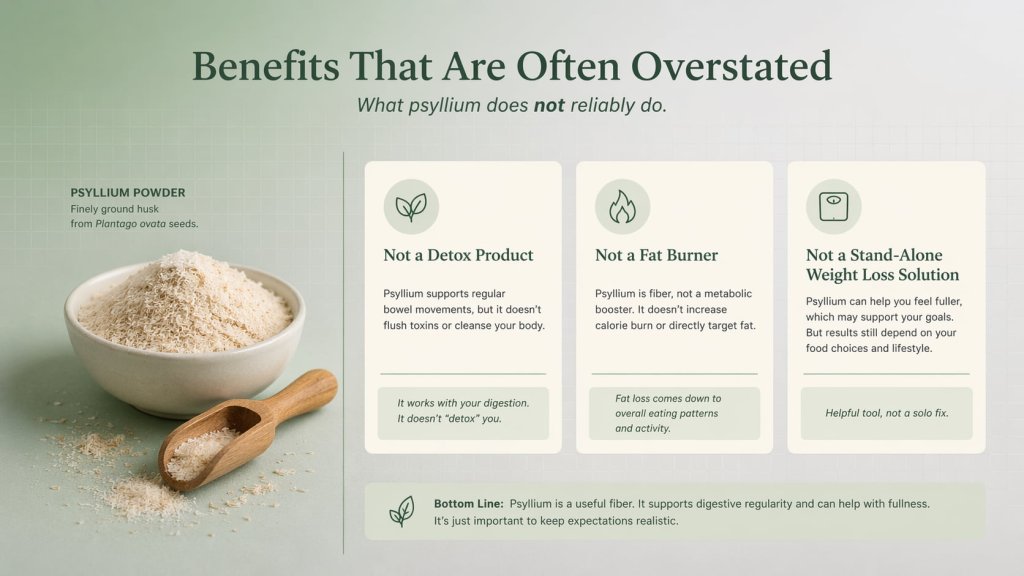
A more accurate message is that psyllium may support a healthier eating pattern for some people, but it should not be sold as a proven shortcut for weight loss. Sustainable weight change still depends mainly on overall nutrition, physical activity, sleep, stress, and long-term habits. CDC notes that people who lose weight gradually, about 1 to 2 pounds per week, are more likely to keep it off than people who lose weight faster.
Who May Benefit From Psyllium Husk Powder
Psyllium husk powder may be useful for:
- Adults who are not getting enough fiber from food
- People dealing with occasional constipation or irregular bowel movements
- People trying to improve LDL cholesterol as part of a heart-healthy diet
- Some people with IBS-related constipation who tolerate soluble fiber well
- Some people who want extra support for blood sugar management alongside medical care and meal planning
These uses align best with the current evidence base and official guidance.
Who Should Be Careful Before Using Psyllium Husk Powder
Psyllium is not right for everyone. MedlinePlus says you should talk to a clinician before using it if you have a history of intestinal blockage, difficulty swallowing, rectal bleeding, diabetes, kidney disease, heart disease, or high blood pressure.
Pregnancy and breastfeeding also deserve a quick check-in. MedlinePlus says you should tell your doctor if you are pregnant, planning to become pregnant, or breast-feeding before using psyllium. That does not automatically mean psyllium is unsafe, but it does mean it is better to confirm that the product and dose make sense for your situation.
There is also an important swallowing safety issue. Federal labeling rules warn that taking psyllium-containing products without enough liquid may cause choking, and people with difficulty swallowing should not use them.
MedlinePlus also warns not to inhale psyllium powder when mixing it, because accidental inhalation can trigger allergic reactions in some people.
How to Take Psyllium Husk Powder Safely
Safe use matters just as much as the benefit itself. MedlinePlus says psyllium powder and granules should be mixed with at least 8 ounces (240 mL) of liquid, and you should drink at least that much liquid when taking it.
A practical approach is to:
- Start with the product’s label directions rather than taking a large amount right away
- Increase fiber gradually so your gut has time to adjust
- Drink enough water throughout the day
- Stop and get medical advice if you develop trouble swallowing, breathing problems, rash, severe stomach pain, nausea, or vomiting
Those precautions matter because fiber can help, but too much too fast can lead to gas, bloating, cramping, constipation, or diarrhea. NIDDK and MedlinePlus both support a slower increase.
It also helps to know what to expect. According to MedlinePlus self-care guidance, laxatives typically start working within 2 to 5 days, and MedlinePlus drug information says you should not take psyllium for longer than 1 week unless your doctor tells you to. If constipation does not improve with self-care, or if you have warning signs such as rectal bleeding, blood in the stool, constant abdominal pain, vomiting, fever, inability to pass gas, or unexplained weight loss, NIDDK says you should get medical advice promptly.
Drug Interactions and Timing
MedlinePlus says psyllium can affect how some medicines should be taken and specifically advises not to take digoxin, salicylates such as aspirin, or nitrofurantoin within 3 hours of psyllium. It also advises telling your clinician or pharmacist about all prescription drugs, nonprescription products, vitamins, herbal products, and supplements you use.
That does not mean these are the only possible interactions. It means spacing and medication review are important, especially if you take multiple daily medicines.
Psyllium Husk Powder Benefits in Real-World Terms
For most readers, the best way to think about psyllium husk powder benefits is simple: it is a fiber tool, not a miracle supplement. Its most practical evidence-backed uses are helping you stay regular, making constipation easier to manage, and supporting LDL cholesterol reduction when paired with a diet low in saturated fat and cholesterol. Blood sugar support is promising, but it belongs in the “may help” category rather than the “proven for everyone” category.
That framing is more accurate, more useful, and safer than broad claims that psyllium “detoxes” the body or melts away weight.
FAQ About Psyllium Husk Powder Benefits
Is psyllium husk powder good for constipation?
Yes. This is the best-supported use. MedlinePlus identifies psyllium as a bulk-forming laxative for constipation, and NIDDK includes more fiber and fluids as part of constipation treatment.
Can psyllium husk powder lower cholesterol?
It may help lower total and LDL cholesterol when used as part of a diet low in saturated fat and cholesterol. FDA labeling rules specifically allow a heart-disease-risk-reduction claim for soluble fiber from psyllium seed husk under those conditions.
Can psyllium husk powder help with blood sugar?
It may help support blood sugar control. The evidence is promising, including a 2024 meta-analysis, but this should be described as supportive rather than as a replacement for diabetes treatment.
Can psyllium husk powder help you lose weight?
Evidence for direct weight loss is mixed and much weaker than the evidence for constipation or cholesterol benefits. It is better viewed as a fiber supplement than a proven weight-loss product.
Can psyllium husk powder help with diarrhea?
Sometimes. Psyllium can help bulk stool and may be prescribed for diarrhea in some cases, but it is not the right self-treatment for every cause of diarrhea. Ongoing, severe, or bloody diarrhea needs medical evaluation.
When should you avoid psyllium husk powder?
You should be careful or avoid it if you have difficulty swallowing, possible bowel blockage, or certain medical conditions that require professional guidance. It also must be taken with enough liquid to reduce choking risk.
Conclusion
Psyllium husk powder benefits are worth knowing, but they are strongest in a few specific areas: constipation relief, bowel regularity, stool normalization, and LDL cholesterol support. Blood sugar support may be a useful added benefit for some people, but it should be described carefully and used alongside proper medical care, not instead of it. If you are considering psyllium regularly, especially for cholesterol, diabetes, IBS, pregnancy, breastfeeding, or if you take daily medicines, it is smart to review it with a clinician or pharmacist first.
This content is for informational purposes only and not medical advice.
References
- National Library of Medicine / MedlinePlus — Psyllium: MedlinePlus Drug Information
- National Library of Medicine / MedlinePlus — Constipation in Adults: Self-care
- National Institute of Diabetes and Digestive and Kidney Diseases — Treatment for Constipation
- Electronic Code of Federal Regulations — 21 CFR 101.81 Health claims: Soluble fiber from certain foods and risk of coronary heart disease
- Centers for Disease Control and Prevention — Fiber: The Carb That Helps You Manage Diabetes
- PubMed Central — The effect of psyllium on fasting blood sugar, HbA1c, HOMA-IR, and insulin: a systematic review and meta-analysis
- PubMed — The effects of psyllium supplementation on body weight, body mass index and waist circumference: a systematic review and dose-response meta-analysis of randomized controlled trials