
For most adults, lunch often lands around 400 to 700 calories, but the right number depends on your total daily calorie needs. That is why there is no single official calorie target for lunch. A good lunch should fit your daily calorie budget, support your energy needs, and help you stay satisfied through the afternoon.

Understanding how many calories for lunch makes sense for you can make meal planning much easier. It also helps you avoid two common problems: eating too little at lunch and feeling ravenous later, or eating a restaurant-sized lunch that quietly uses up most of your day’s calories.
There Is No Single Official Number for Lunch
According to the U.S. Department of Agriculture and U.S. Department of Health and Human Services, the calories you need depend on your age, sex, height, weight, and physical activity level. The same guidance also says to pay attention to portion sizes, especially for foods and drinks that are higher in calories, and to choose water or unsweetened beverages more often.
The National Institute of Diabetes and Digestive and Kidney Diseases explains the same idea in practical terms: how much you eat matters just as much as what you eat, and your calorie needs vary based on factors such as age, body size, sex, metabolism, and activity. NIDDK also points people to MyPlate and other planning tools instead of giving one universal number for a single meal.
That means the best way to decide how many calories for lunch you need is to start with your daily calorie goal, then divide your food intake sensibly across the day.
A Practical Rule for How Many Calories for Lunch
A useful real-world method is to give lunch about one-quarter to one-third of your daily calories. That is a planning approach, not a formal federal lunch rule, but it fits how calorie budgeting works in daily meal planning. For many adults, that naturally places lunch somewhere in the 400-to-700-calorie range. This is a practical inference based on total daily calorie guidance from federal sources and portion-planning advice, not a fixed government requirement.
How Many Calories for Lunch by Daily Calorie Target
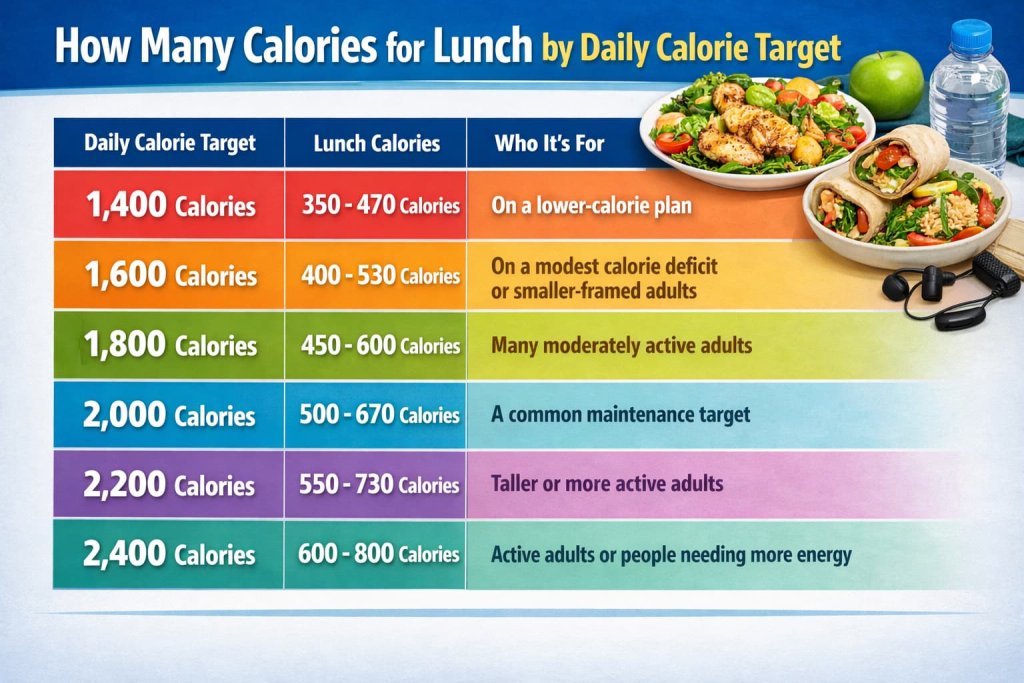
| Daily calorie target | Practical lunch range | Often fits people who are… |
|---|---|---|
| 1,400 calories | 350 to 470 calories | on a lower-calorie plan |
| 1,600 calories | 400 to 530 calories | on a modest calorie deficit or smaller-framed adults |
| 1,800 calories | 450 to 600 calories | many moderately active adults |
| 2,000 calories | 500 to 670 calories | a common maintenance target |
| 2,200 calories | 550 to 730 calories | taller or more active adults |
| 2,400 calories | 600 to 800 calories | active adults or people needing more energy |
These ranges are rounded from a practical lunch target of about 25% to 33% of daily calories. Use them as a meal-planning guide, not a rigid rule.
Your Lunch Calories Should Match the Rest of Your Day
Lunch does not need to be the same size every day. A better approach is to match lunch to your overall eating pattern.
For example:
- If you eat a light breakfast, lunch may need to be a little larger
- If you usually have an afternoon snack, lunch can sometimes be a little smaller
- If dinner is your biggest family meal, lunch may fit better in the middle of your range
- If you train in the afternoon, a more substantial lunch may help with energy and recovery
This is why a lunch target is best treated as a flexible range, not a fixed number. The goal is to make lunch work with the rest of your day so you stay satisfied, meet your calorie needs, and avoid extreme hunger later.
How Many Calories for Lunch for Weight Loss, Maintenance, or Weight Gain
For weight loss
If you are trying to lose weight, lunch usually works best on the lower end of your range, but it still needs enough protein, fiber, and volume to keep you full. A lunch that is too small can backfire and lead to overeating later. In practice, many people on a 1,600- to 1,800-calorie plan do well with a lunch around 400 to 550 calories. Portion control matters here just as much as food choice.
For maintenance
If your goal is to maintain your weight, lunch often works well in the middle of your range. For many adults eating around 2,000 calories per day, that means roughly 500 to 650 calories for lunch, depending on breakfast, dinner, snacks, and activity level.
For weight gain or higher energy needs
If you are very active, trying to gain weight, or simply need more calories, lunch can move toward the upper end of your range. In that case, adding calorie-dense but nutrient-rich foods such as rice, potatoes, avocado, nuts, olive oil, yogurt, or whole-grain bread can help without turning lunch into a highly processed meal. The same federal guidance still applies: choose nutrient-dense foods and watch portion size.
What a Balanced Lunch Should Look Like
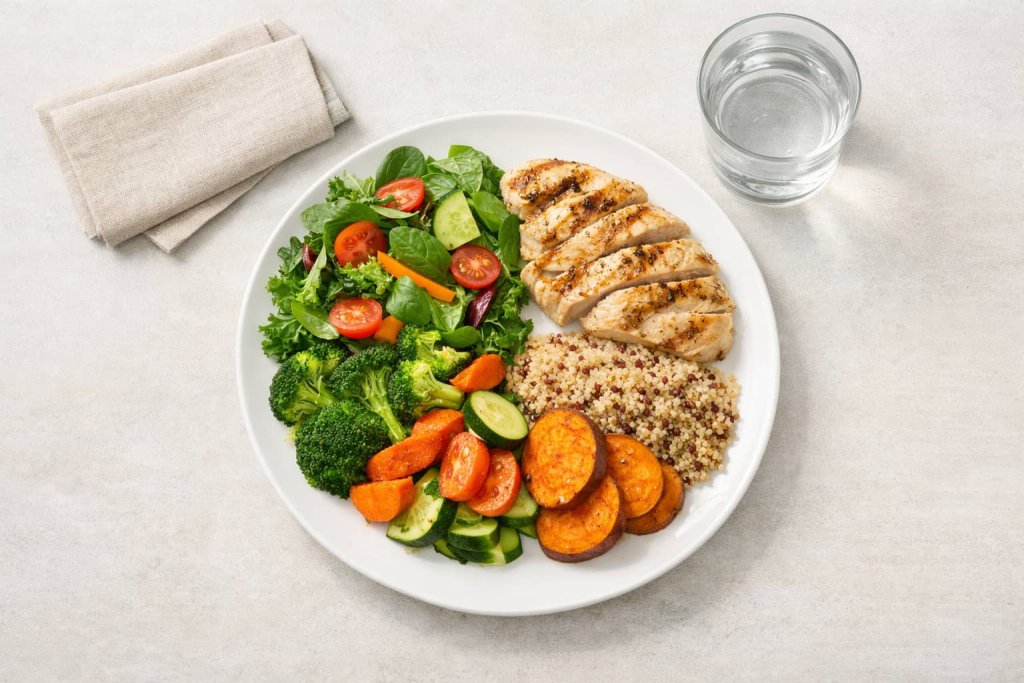
A simple way to build lunch is the plate method from the CDC: fill half your plate with nonstarchy vegetables, one-quarter with lean protein, and one-quarter with carb foods such as rice, whole grains, beans, fruit, or starchy vegetables. The CDC also recommends water or another low-calorie drink with the meal.
That structure makes lunch easier to portion and usually helps you stay fuller than a meal built mostly around refined carbs. It also gives you a practical way to keep calories reasonable without obsessing over every bite.
What Makes a Lunch More Filling
A lunch usually feels more satisfying when it includes all three of these:
- Protein, such as chicken, fish, eggs, Greek yogurt, tofu, beans, or turkey
- Fiber-rich foods, such as vegetables, fruit, beans, or whole grains
- Some healthy fat, such as avocado, nuts, seeds, olive oil, or hummus
When lunch is built from only one or two of these pieces, it often does not last very long. For example, a carb-heavy lunch with little protein may leave you hungry again quickly, while a lunch with protein, vegetables, and a smart carb source is more likely to carry you through the afternoon.
How Many Calories for Lunch on a 2,000-Calorie Day
According to the USDA MyPlate, a 2,000-calorie daily pattern includes about 2 cups of fruit, 2.5 cups of vegetables, 6 ounce-equivalents of grains, 5.5 ounce-equivalents of protein foods, and 3 cups of dairy, while also limiting added sugars, saturated fat, and sodium as part of a balanced eating plan. These targets apply to your full day of eating, not just one meal.
On a 2,000-calorie plan, a practical lunch usually falls around 500 to 670 calories, which is roughly one-quarter to one-third of your daily calories. This helps you distribute energy evenly across meals while leaving room for breakfast, dinner, and optional snacks.
A balanced lunch in this range might include:
- a lean protein source such as chicken, fish, eggs, tofu, or beans
- vegetables or salad for fiber and volume
- a carb source such as whole grains, rice, bread, or potatoes
- a small amount of healthy fat
For example, this could look like a grain bowl with vegetables and protein, a sandwich with fruit and yogurt, or leftovers that include protein, vegetables, and a smart carb portion. The goal is to build a lunch that supports your daily nutrition targets while keeping calories in a practical range.
Easy Lunch Templates by Calorie Range
Around 400 calories
This range can work well for smaller appetites or lower-calorie days. A good structure is:
- lean protein
- plenty of vegetables
- one moderate carb serving
- water or an unsweetened drink
Example idea: grilled chicken salad with beans, lots of vegetables, and a light vinaigrette.
Around 500 to 600 calories
This is a very workable middle ground for many adults. A balanced lunch here might include:
- a solid protein source
- vegetables
- a full serving of rice, potatoes, bread, or another carb food
- a little healthy fat
Example idea: turkey sandwich on whole-grain bread with fruit and plain Greek yogurt.
Around 650 to 800 calories
This range often fits active adults or people with higher calorie needs. The key is to add calories with useful foods, not just oversized restaurant extras.
Example idea: rice bowl with salmon, roasted vegetables, avocado, and fruit.
Common Reasons Lunch Ends Up Too High in Calories
Large portions are one of the biggest reasons lunch calories climb faster than expected. NIDDK notes that a portion is what you choose to eat, while a serving is the amount listed on the label, and the two are often not the same. It also advises looking for calorie information on menus, choosing smaller sizes, sharing meals, or taking half home when eating out.
Another issue is hidden calories from sugary drinks, creamy dressings, chips, sauces, and oversized sides. The American Heart Association recommends checking the Nutrition Facts label and ingredient list and choosing foods with less sodium, added sugars, and saturated fat.
How to Keep Restaurant Lunch Calories Reasonable
Restaurant lunches can be much higher in calories than homemade meals because portions, sauces, drinks, and sides add up quickly. A simple way to manage this is to keep one or two parts of the meal lighter instead of trying to change everything.
Useful strategies include:
- choosing water or an unsweetened drink instead of soda or sweet tea
- asking for dressing or sauce on the side
- skipping fries or chips and choosing fruit, vegetables, or a plain side instead
- stopping when you are comfortably full and boxing the rest
- choosing grilled, baked, roasted, or bowl-style meals instead of heavily fried options
This keeps lunch practical and realistic while still helping it fit your daily calorie goal.
Common Reasons Lunch Ends Up Too Low in Calories
A lunch that is too light often looks healthy on paper but is missing staying power. Examples include:
- a salad with very little protein
- fruit only
- soup without enough protein or fiber
- skipping lunch and just having coffee
When lunch is too small, many people end up snacking all afternoon or overeating at dinner. That is why the best lunch is not simply the lowest-calorie lunch. It is the one that fits your daily needs and keeps you satisfied.
Is 500 Calories for Lunch Good?
Yes, for many adults, 500 calories for lunch is a very reasonable target. It often fits well into a 1,800- to 2,200-calorie day and leaves room for breakfast, dinner, and possibly a snack. Whether it feels right depends on your appetite, activity, and what the rest of your day looks like.
Is 300 Calories Enough for Lunch?
Sometimes, but not for everyone. A 300-calorie lunch may work for someone on a lower-calorie plan or on a day with a bigger breakfast and dinner. Still, many adults find that 300 calories is too little unless the meal is built very carefully around protein, fiber, and volume. If you are constantly hungry after lunch, that is a sign the meal may be too small for you.
Should Lunch Be Bigger Than Dinner?
There is no universal rule. What matters most is your total daily calories, food quality, portion size, and consistency. Some people prefer a larger lunch because it helps with afternoon hunger and energy. Others prefer a lighter lunch and a bigger dinner. Either approach can work if the overall day makes sense.
Who Should Use More Personalized Guidance
General lunch calorie ranges are helpful, but they are not perfect for everyone. Personalized guidance matters more if you are:
- a teen who is still growing
- pregnant or breastfeeding
- an endurance athlete
- managing diabetes, kidney disease, or another medical condition
- recovering from disordered eating or struggling with appetite regulation
In those situations, it is better to use individualized advice from a qualified health professional instead of copying a generic lunch target.
How to Tell if Your Lunch Calories Are Working for You
Your lunch calories are probably in a good place if you feel satisfied for a few hours, have steady afternoon energy, and do not feel driven to over-snack soon after eating.
Your lunch may need adjusting if:
- you are very hungry again within an hour or two
- you regularly crash in the afternoon
- you feel overly full, sluggish, or sleepy after lunch
- your lunch leaves too few calories for the rest of the day
In most cases, small changes work best. Adding a little more protein, fiber, or food volume may help if lunch is too small. Reducing oversized portions, sugary drinks, or heavy extras may help if lunch is too large.
Frequently Asked Questions
How many calories for lunch for weight loss?
A common starting point is about 400 to 550 calories, depending on your full daily calorie target. The key is choosing a lunch with enough protein, fiber, and volume so you are not overly hungry later.
How many calories for lunch on a 1,800-calorie diet?
A practical range is about 450 to 600 calories.
How many calories for lunch on a 2,000-calorie diet?
A practical range is about 500 to 670 calories.
What matters more: calories or food quality?
Both matter. Calories help with energy balance, but food quality affects fullness, nutrition, and long-term health. A balanced lunch with vegetables, protein, smart carbs, and mostly minimally processed foods usually works better than a highly processed meal with the same calorie count.
The Bottom Line on How Many Calories for Lunch
The best answer to how many calories for lunch is this: use your daily calorie needs as the starting point, then aim for roughly one-quarter to one-third of that total. For many adults, that means lunch falls somewhere around 400 to 700 calories.
Keep it simple. Build lunch around vegetables, protein, and a sensible carb portion. Watch portion size, especially when eating out. And make sure your lunch is satisfying enough to support the rest of your day, not just low enough to look good on paper.
Sources and References
- U.S. Department of Agriculture and U.S. Department of Health and Human Services — Dietary Guidelines for Americans, 2025–2030
- Office of Disease Prevention and Health Promotion — Dietary Guidelines for Americans
- National Institute of Diabetes and Digestive and Kidney Diseases — Food Portions: Choosing Just Enough for You
- CDC — Diabetes Meal Planning
- American Heart Association — Diet and Lifestyle Recommendations
- American Heart Association — Added Sugars
- American Heart Association — Saturated Fats