
Energy drinks can raise heart rate and blood pressure, disrupt sleep, worsen anxiety, dehydrate you, and become especially risky for children, teens, pregnant people, and anyone who mixes them with alcohol or takes certain medications.
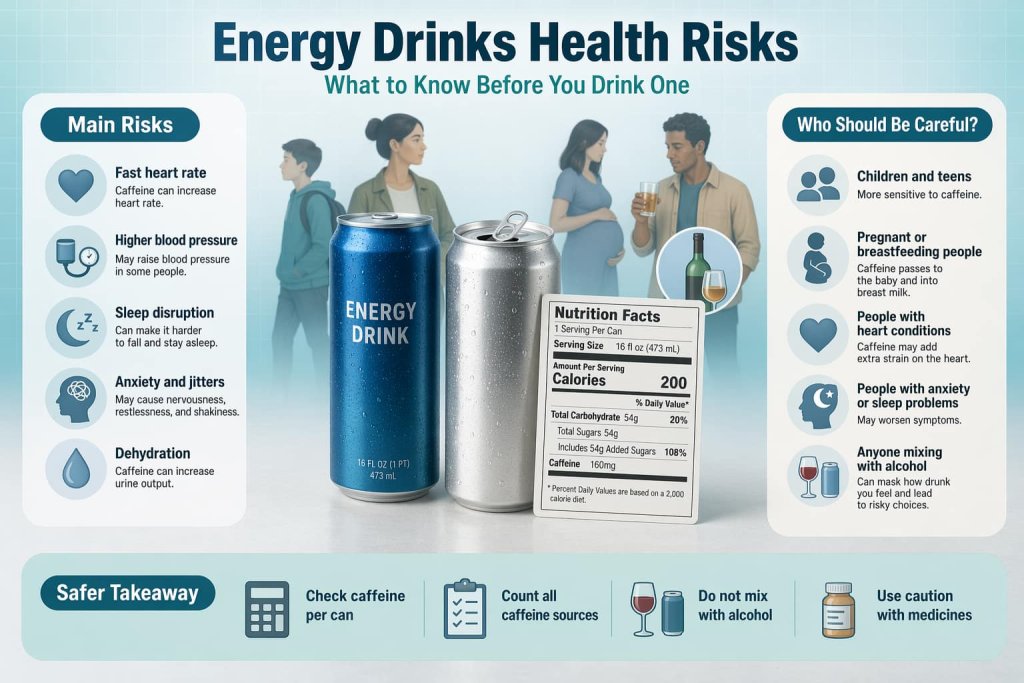
That is why understanding energy drinks health risks matters before treating them like a harmless pick-me-up. A smart starting point is to check the caffeine per can, count your total caffeine from all sources, avoid mixing energy drinks with alcohol, and be more cautious if you have a medical condition or are pregnant.
What makes energy drinks risky?
According to FDA guidance on caffeine, energy drinks can contain far more caffeine than many people expect. The FDA says these products generally range from 54 to 328 mg of caffeine per 16 fluid ounces, with some containing 41 to 246 mg per 12 fluid ounces. The NIH’s NCCIH energy drinks page also notes that energy drinks may include other ingredients such as guarana, taurine, ginseng, and sugars, and guarana adds more caffeine to the total.
The label does not always make the real impact easy to judge. NCCIH notes that caffeine amounts vary widely and may not be easy to identify across different products, especially beverages, shots, and supplement-style items. That matters because a small container can still deliver a concentrated dose.
Energy drinks health risks start with caffeine, but do not end there
The main short-term risks are tied to stimulant effects on the heart, blood vessels, brain, and sleep. CDC guidance on energy drinks says these drinks can increase blood pressure, heart rate, and breathing. NCCIH says large amounts of caffeine may cause heart rhythm disturbances and increases in heart rate and blood pressure, and MedlinePlus on caffeine lists side effects such as insomnia, anxiety, dehydration, dizziness, headaches, and fast heart rate. The FDA also lists palpitations, nausea, upset stomach, jitters, and sleep disruption as signs of too much caffeine.
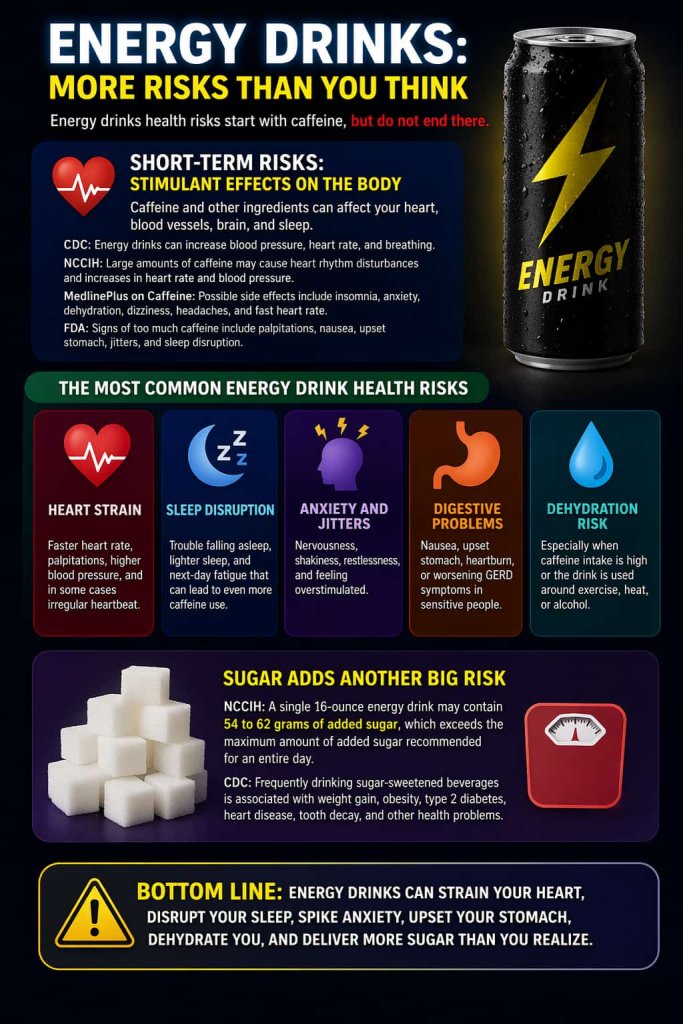
In practical terms, the most common energy drink health risks include:
- Heart strain: faster heart rate, palpitations, higher blood pressure, and in some cases irregular heartbeat
- Sleep disruption: trouble falling asleep, lighter sleep, and next-day fatigue that can lead to even more caffeine use
- Anxiety and jitters: nervousness, shakiness, restlessness, and feeling overstimulated
- Digestive problems: nausea, upset stomach, heartburn, or worsening GERD symptoms in sensitive people
- Dehydration risk: especially when caffeine intake is high or the drink is used around exercise, heat, or alcohol
Sugar is another important part of the picture. NCCIH says a single 16-ounce energy drink may contain 54 to 62 grams of added sugar, which exceeds the maximum amount of added sugar recommended for an entire day. CDC fast facts on sugary drinks add that frequently drinking sugar-sweetened beverages is associated with weight gain, obesity, type 2 diabetes, heart disease, tooth decay, and other health problems.
How much caffeine is too much?
For most healthy adults, the FDA says up to 400 mg of caffeine per day is an amount not generally associated with negative effects. But that is not a universal green light. The FDA also says sensitivity varies widely from person to person, so some people feel side effects well below that level.
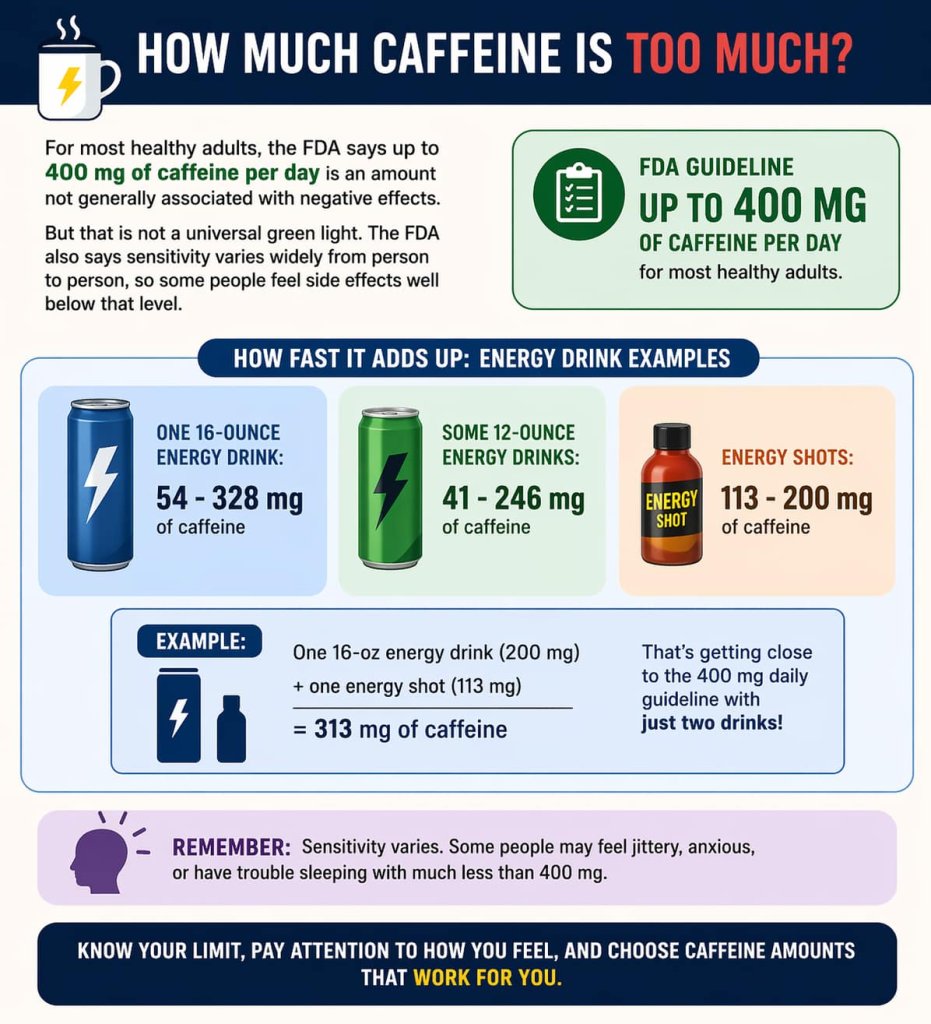
A quick reality check shows how fast energy drink intake can add up:
- One 16-ounce energy drink: often 54 to 328 mg of caffeine
- Some 12-ounce energy drinks: 41 to 246 mg of caffeine
- Energy shots: about 113 to 200 mg in a small container
That means one drink may already put some people close to their personal limit, especially if they also had coffee, tea, pre-workout, soda, caffeinated gum, chocolate, or certain medicines the same day.
Who should be most careful with energy drinks?
Energy drinks are not a good fit for everyone. MedlinePlus says you should check with a health care provider about limiting or avoiding caffeine if you are pregnant, breastfeeding, have insomnia or other sleep disorders, migraines, anxiety, GERD or ulcers, arrhythmia, high blood pressure, or if you take certain medicines or supplements, including stimulants, some antibiotics, asthma medicines, and heart medicines. MedlinePlus also says children and teens should not have as much caffeine as adults and may be especially sensitive to its effects.
Also watch for caffeine stacking from medicines and other stimulants. MedlinePlus says caffeine side effects can be stronger if you also use stimulants, certain antibiotics, asthma medicines, or some heart medicines. Other MedlinePlus guidance on medicine-related high blood pressure also flags common over-the-counter cough and cold products, nasal decongestants, nicotine, and phentermine. In real life, the problem is often not one energy drink by itself, but the combined stimulant load.
Pregnancy
Pregnancy deserves special caution. MedlinePlus pregnancy and nutrition guidance says it is best for most people to limit caffeine to less than 200 mg per day during pregnancy, and ACOG’s pregnancy caffeine guidance says moderate caffeine consumption of less than 200 mg per day does not appear to cause miscarriage or preterm birth. MedlinePlus also notes that caffeine passes through the placenta and high intake may be harmful for a developing baby.
Breastfeeding
If you are breastfeeding, keep total caffeine moderate and count energy drinks along with coffee, tea, soda, and other caffeine sources. CDC guidance on maternal diet and breastfeeding says about 300 mg of caffeine per day or less usually does not adversely affect most infants, while ACOG’s breastfeeding FAQ says 200 mg per day most likely will not affect your baby. Because an energy drink can deliver a large dose quickly, it is smart to check the label carefully and cut back if your baby seems unusually fussy, jittery, irritable, or has trouble sleeping.
Children and teens
This is one of the clearest high-risk groups. The CDC says 30% to 50% of adolescents are reported to consume energy drinks, and in 2011, 1,499 adolescents ages 12 to 17 went to the emergency room for an energy-drink-related emergency. The CDC also says the American Academy of Pediatrics recommends that adolescents do not consume energy drinks. On HealthyChildren.org’s caffeine guide for kids, the AAP says avoiding caffeine is the best choice for all kids and lists side effects such as fast or irregular heartbeat, elevated blood pressure, anxiety, nausea, restlessness, and sleep loss.
Energy drinks and alcohol are a bad mix
One of the most important energy drinks health risks is what happens when caffeine and alcohol are combined. CDC guidance on mixing alcohol and caffeine says caffeine does not reduce the effects of alcohol on your body. Instead, it can make you feel more alert or less impaired than you really are, which may lead to more drinking and more harm. The CDC also lists higher blood pressure, irregular heartbeat, and dehydration as added concerns.
Energy drinks are not sports drinks
People often confuse these products, but they are not the same. On HealthyChildren.org’s sports nutrition page, the AAP explains that for exercise lasting less than an hour, water is sufficient for most kids, while sports drinks may help replace carbohydrates and electrolytes during longer or very hot sessions. That same page says sports drinks are very different from energy drinks, which contain caffeine and excess sugar, and says energy drinks are not recommended.
Warning signs you may have had too much caffeine
Do not ignore these symptoms after an energy drink, especially after more than one serving or when other caffeine sources were involved:
- racing or irregular heartbeat
- fast breathing
- tremors or body shakes you cannot control
- severe restlessness, anxiety, or inability to sit still
- nausea, upset stomach, dizziness, or severe jitters
The AAP says to get medical help right away if a child has had a large amount of caffeine and develops symptoms such as racing or irregular heartbeat, fast breathing, tremors, anxious feelings, or marked hyperactivity.
What to Do If You Feel Sick After an Energy Drink
Stop caffeine right away. Do not take another energy drink, caffeine pill, or other stimulant. Sip water if you are awake and not vomiting. MedlinePlus guidance on caffeine overdose says to get medical help right away for symptoms such as trouble breathing, confusion, seizures, irregular heartbeat, rapid heartbeat, severe tremors, or repeated vomiting. You can also contact Poison Help at 1-800-222-1222 for free urgent guidance in the U.S. Do not make yourself vomit unless Poison Help or a clinician tells you to.
Safer ways to get energy without energy drinks
A better long-term plan is to fix the reason you feel drained instead of trying to cover it with more stimulant intake. HealthyChildren recommends a few simple habits that work better over time: choose water, get enough sleep, read labels, and pay attention to how your body feels after caffeine. The FDA also recommends paying close attention to the caffeine content in new products and counting all sources across the day.
A practical approach looks like this:
- choose water first for hydration
- treat sleep as the real fix for low energy whenever possible
- read the label before you buy a new drink or shot
- count caffeine from coffee, tea, soda, supplements, medicines, and energy drinks together
- avoid using energy drinks as a routine solution for school, work, workouts, or lack of sleep
Frequently asked questions
Are sugar-free energy drinks safer?
Not automatically. A sugar-free version may cut the added sugar, but it can still contain a large amount of caffeine and other stimulants, so the heart, sleep, anxiety, and dehydration concerns can remain.
Is one energy drink a day bad?
It depends on the can size, the caffeine amount, your body, your medications, and what else you consumed that day. For some people, one can may fit within the FDA’s general adult limit. For others, one can may be enough to trigger palpitations, anxiety, poor sleep, or push total daily caffeine too high.
Do energy drinks improve workouts?
NCCIH says some studies found energy drinks may improve alertness and physical endurance, but there is less evidence that they improve muscle strength or power. Any possible performance effect has to be weighed against the caffeine and stimulant risks.
Safety box
Seek medical help right away if a child or teen has had a large amount of caffeine and develops racing or irregular heartbeat, fast breathing, tremors, or severe agitation. If you are pregnant, keep total caffeine under 200 mg per day unless your clinician tells you otherwise, and ask whether you should avoid caffeine completely based on your health history.
Conclusion
Energy drinks may look convenient, but the real risks are easy to underestimate. The biggest problems are usually too much caffeine, poor sleep, heart-related symptoms, anxiety, dehydration, excess sugar, and risky use patterns such as mixing with alcohol. The safest move is to read the label, count your total caffeine from all sources, and skip energy drinks altogether if you are pregnant, under 18, sensitive to caffeine, or managing a health condition that caffeine can worsen.
This content is for informational purposes only and not medical advice.
References
- Food and Drug Administration — Spilling the Beans: How Much Caffeine is Too Much?
- National Center for Complementary and Integrative Health — Energy Drinks
- Centers for Disease Control and Prevention — The Buzz on Energy Drinks
- American College of Obstetricians and Gynecologists — How much coffee can I drink while I’m pregnant?
- Centers for Disease Control and Prevention — Maternal Diet and Breastfeeding
- American College of Obstetricians and Gynecologists — Breastfeeding Your Baby
- MedlinePlus — High Blood Pressure Caused by Medicines
- HealthyChildren.org — Sports Nutrition for Busy Families and Busy Lifestyles
- MedlinePlus — Caffeine Overdose