
The best high protein breakfast ideas combine a real protein source such as eggs, Greek yogurt, cottage cheese, tofu, beans, milk, or fortified soy with fruit, vegetables, or whole grains, so breakfast feels more balanced and satisfying. That matters because a lot of quick breakfasts are heavy on refined carbs and light on protein, which can leave you hungry again too soon.
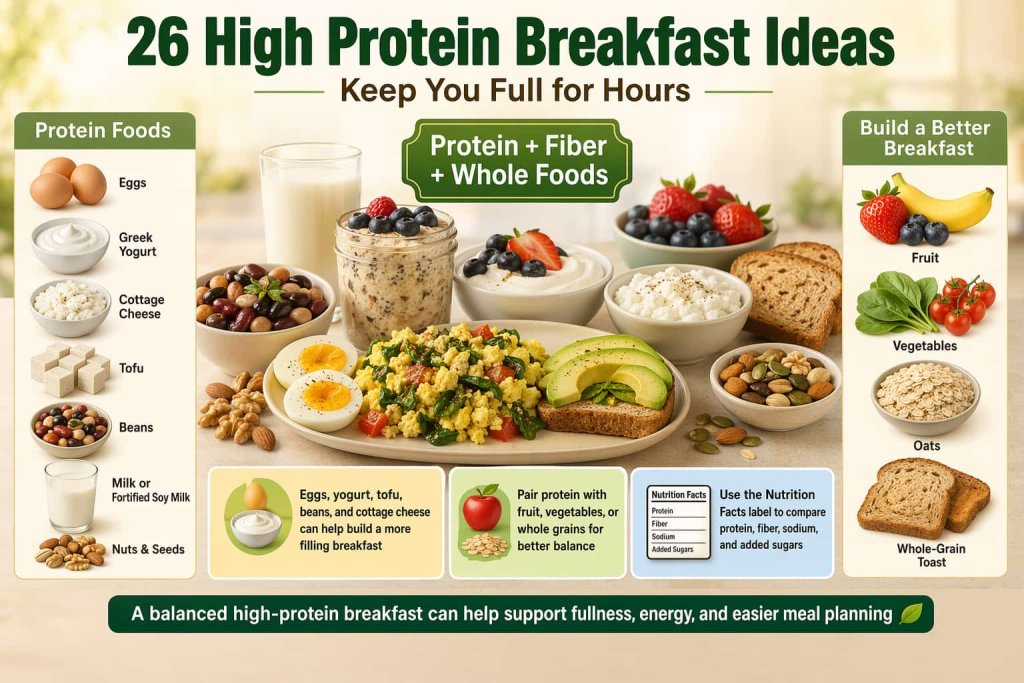
Current U.S. dietary guidance supports building meals around nutrient-dense protein foods, whole grains, produce, and dairy or fortified soy, while the FDA Nutrition Facts label guidance can help you compare packaged breakfast foods for protein, fiber, sodium, and added sugars.
A practical high-protein breakfast does not have to mean eating plain eggs every morning. You can go savory, sweet, plant-based, make-ahead, or grab-and-go. The goal is simple: center breakfast around protein-rich foods and then add fiber and produce to make it more useful in real life.
What counts as a high protein breakfast?
There is no single official cutoff for a high protein breakfast, but in everyday meal planning, it usually means a breakfast built around one or two meaningful protein sources rather than a carb-heavy meal with very little staying power. MedlinePlus protein guidance notes that many protein foods provide about 7 grams of protein per ounce-equivalent, including 1 large egg, 1/4 cup tofu, or 1/2 cup cooked beans or lentils. Low-fat dairy is also a useful protein source.
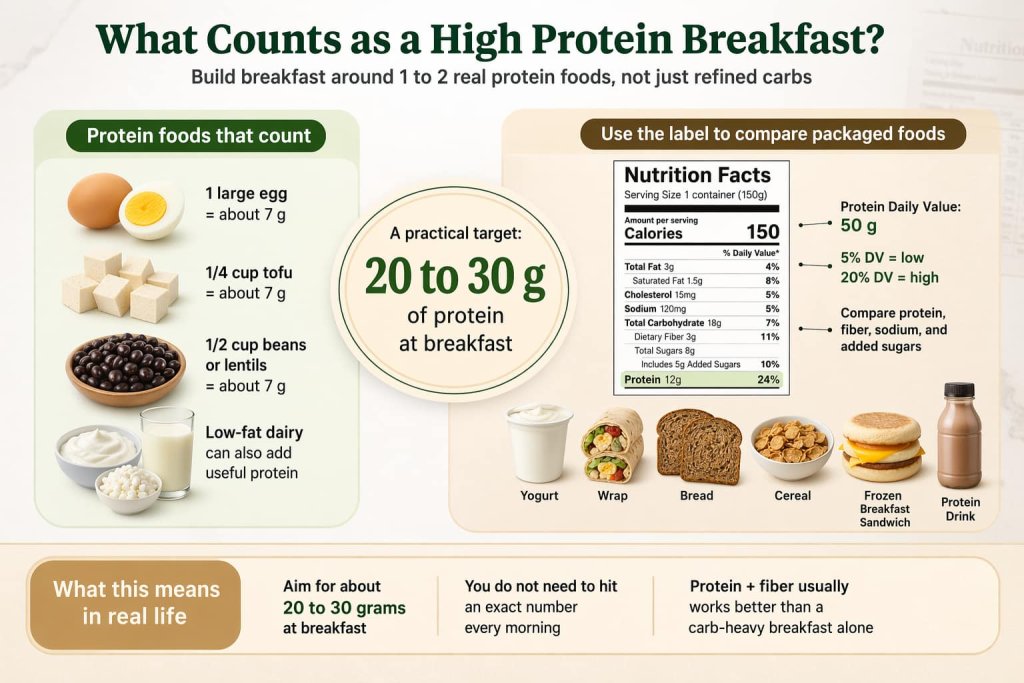
For packaged foods, the FDA Daily Value reference can help you compare options. The current Daily Value for protein is 50 grams per day on a 2,000-calorie diet, and the FDA’s general label rule says 5% Daily Value is low while 20% Daily Value is high. That makes labels especially useful when comparing yogurts, wraps, breads, cereals, frozen breakfast sandwiches, or protein drinks.
How much protein should breakfast have?
A practical target for many adults is around 20 to 30 grams of protein at breakfast. An American Journal of Clinical Nutrition review notes that protein intakes around 25 to 30 grams per meal can support appetite control and weight-management efforts, while an International Society of Sports Nutrition position stand describes about 20 to 40 grams of high-quality protein per meal as a useful range for active people trying to support muscle protein synthesis.
You do not need to hit an exact number every morning, but this gives you a more useful target than simply trying to eat more protein.
How to build high protein breakfast ideas that actually keep you full
Protein can help with fullness, but the most useful breakfasts usually pair protein with fiber and minimally processed ingredients. An American Journal of Clinical Nutrition review on protein and satiety found that protein generally has a stronger satiating effect than carbohydrate or fat, while a 2024 Journal of Dairy Science study found that a dairy-based protein-rich breakfast improved satiety after breakfast, even though it did not lower total daily energy intake. The realistic takeaway is that a high-protein breakfast may help you feel fuller, but it is not a magic shortcut for weight loss on its own.
A simple formula works well:
- Start with 1 or 2 protein foods such as eggs, Greek yogurt, cottage cheese, tofu, beans, milk, fortified soy milk, nuts, or seeds.
- Add fiber from fruit, vegetables, oats, or whole-grain bread or wraps.
- Keep an eye on added sugar, saturated fat, and sodium in flavored yogurts, breakfast meats, sauces, and packaged bars.
- Use the label to compare similar products and choose options with more protein and fiber and less sodium or added sugar.
High protein breakfast ideas with eggs
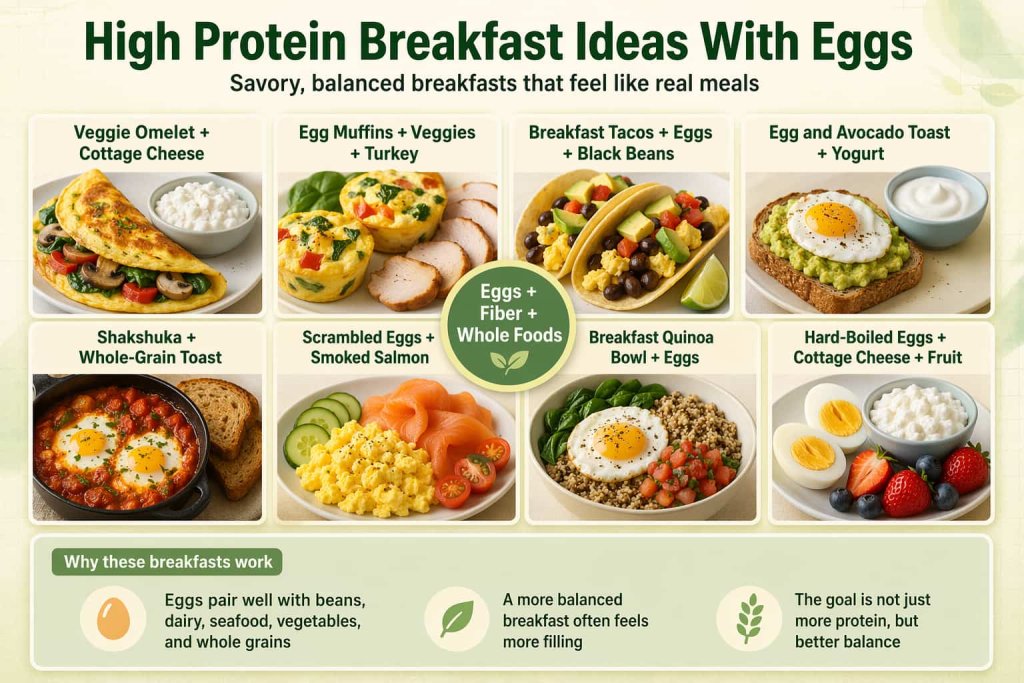
These ideas work well if you want a savory breakfast that feels like a real meal.
1. Veggie omelet with cottage cheese
Fold spinach, mushrooms, and peppers into an omelet, then add a scoop of cottage cheese on the side for an easy protein boost.
2. Egg muffins with vegetables and turkey
Bake eggs with chopped vegetables and a little turkey or chicken sausage for a portable make-ahead option.
3. Breakfast tacos with eggs and black beans
Fill corn or whole-grain tortillas with scrambled eggs, black beans, salsa, and avocado.
4. Egg and avocado toast with a yogurt side
Put eggs on whole-grain toast, add avocado, and serve with plain Greek yogurt to make the meal more filling.
5. Shakshuka with extra eggs
Simmer eggs in a tomato and pepper sauce, then pair with whole-grain toast.
6. Scrambled eggs with smoked salmon
Add smoked salmon to eggs and serve with sliced cucumber or tomatoes for a quick, protein-forward breakfast.
7. Breakfast quinoa bowl with eggs
Use leftover quinoa as the base, then top with eggs, greens, and a spoon of salsa.
8. Hard-boiled eggs with cottage cheese and fruit
This is one of the easiest no-cook breakfasts for busy mornings.
Eggs, beans, lean meats, seafood, dairy, and whole grains all fit within current healthy eating patterns, which is why combinations like these work so well in practice. The main idea is not just more protein, but better balance.
High protein breakfast ideas with Greek yogurt, cottage cheese, and milk
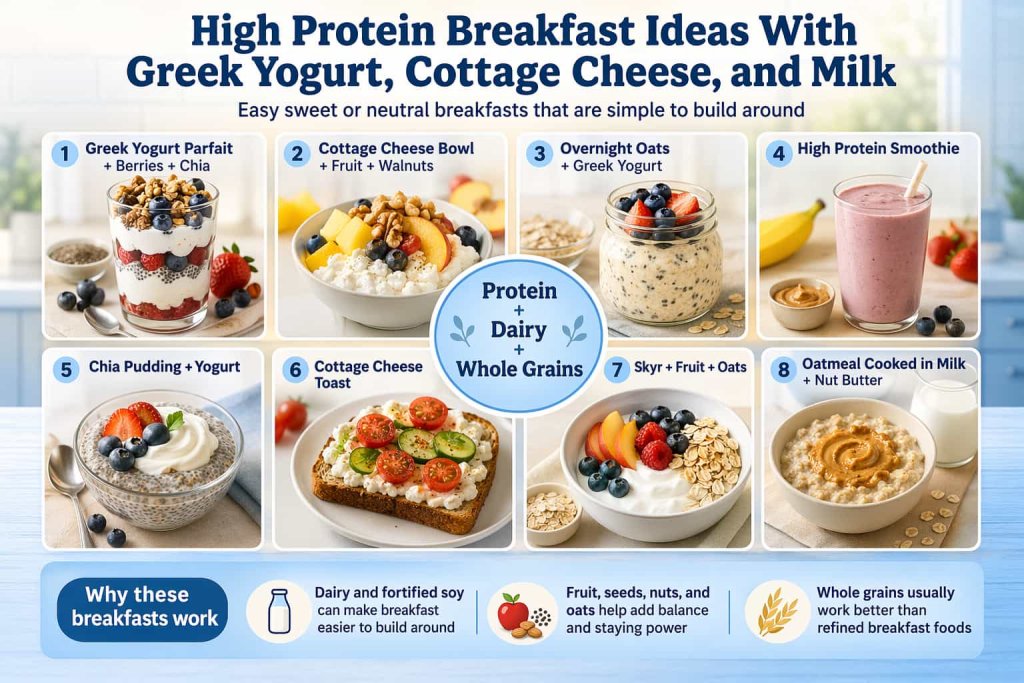
These are some of the easiest sweet or neutral breakfast options to build around.
9. Greek yogurt parfait with berries and chia seeds
Layer plain Greek yogurt with berries, chia seeds, and a small handful of nuts.
10. Cottage cheese bowl with fruit and walnuts
Top cottage cheese with pineapple, peaches, or berries and a few walnuts.
11. Overnight oats with Greek yogurt
Stir oats, milk, Greek yogurt, and chia seeds together the night before, then add fruit in the morning.
12. High protein smoothie
Blend milk or fortified soy milk with Greek yogurt, fruit, nut butter, and ice.
13. Chia pudding with yogurt
Make chia pudding with milk or fortified soy milk, then add a spoonful of Greek yogurt before serving.
14. Cottage cheese toast
Spread cottage cheese on whole-grain toast and top with sliced tomato, cucumber, or berries.
15. Skyr with fruit and oats
Skyr is a strained dairy product similar to yogurt and works well with fruit and oats.
16. Oatmeal cooked in milk with nut butter
Cooking oatmeal in milk instead of water is an easy way to raise the protein content without making breakfast feel heavy.
Dairy foods and fortified soy can be useful breakfast anchors, and whole grains are a better base than many refined breakfast foods because they add more nutrition and staying power.
Plant-based high protein breakfast ideas
You do not need eggs or meat to build a high-protein breakfast. MedlinePlus dietary proteins guidance notes that you do not need animal products to get enough protein, though eating a variety of plant proteins across the day is smart. That makes plant-based breakfasts fully workable with tofu, soy, beans, lentils, nuts, and seeds.
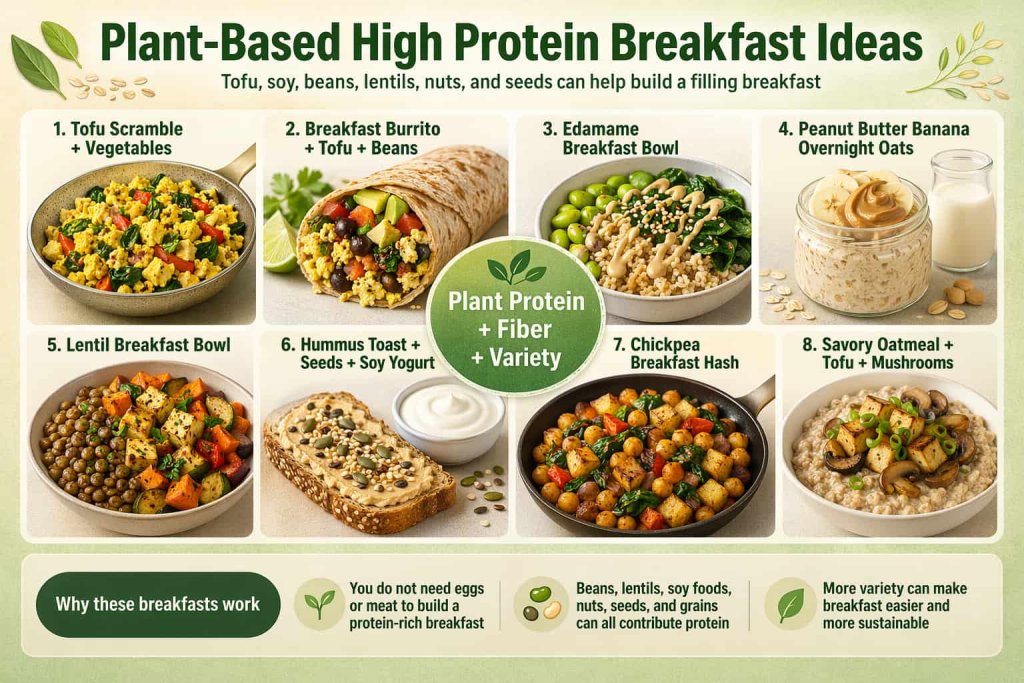
17. Tofu scramble with vegetables
Crumble tofu into a skillet with turmeric, onions, spinach, and peppers.
18. Breakfast burrito with tofu and beans
Wrap tofu scramble, black beans, salsa, and avocado in a whole-grain tortilla.
19. Edamame breakfast bowl
Pair shelled edamame with brown rice or quinoa, greens, and a tahini drizzle.
20. Peanut butter banana overnight oats with soy milk
This works well when you want a sweeter breakfast without relying on a sugary cereal.
21. Lentil breakfast bowl
Use cooked lentils with roasted vegetables and a fried or baked tofu topping.
22. Hummus toast with seeds and soy yogurt
Spread hummus on whole-grain toast, sprinkle with hemp or pumpkin seeds, and serve with unsweetened soy yogurt.
23. Chickpea breakfast hash
Sauté chickpeas with potatoes, peppers, onions, and greens for a hearty weekend breakfast.
24. Savory oatmeal with tofu and mushrooms
Turn oats into a savory bowl and top with tofu, mushrooms, and scallions.
These ideas work especially well when you want more variety, less reliance on eggs, or a breakfast that fits a vegetarian or vegan routine. Beans, lentils, soy foods, nuts, seeds, and some grains can all contribute meaningful protein.
Quick high protein breakfast ideas for busy mornings
If mornings are rushed, simplicity matters more than perfection.
25. Egg and cheese breakfast sandwich on a whole-grain English muffin
Make it with a whole-grain base and add tomato or spinach if you want more volume.
26. Bean and cheese breakfast quesadilla
Use a whole-grain tortilla, black beans, and a moderate amount of cheese for a fast, satisfying option.
A breakfast does not need to be elaborate to work. Combining one protein food with one fiber-rich food is often enough to make breakfast more useful than a pastry, sugary cereal, or plain toast alone. The easiest upgrades are often yogurt instead of sweetened cereal, eggs plus fruit instead of just toast, or oats with milk, seeds, and nut butter instead of instant flavored packets.
Meal-prep and storage tips
Many of these breakfasts work well as make-ahead meals, but storage matters. FoodSafety.gov cold storage guidance says hard-cooked eggs keep about 1 week in the refrigerator, egg casseroles keep about 3 to 4 days, and quiche keeps about 3 to 5 days. USDA food safety guidance also says to refrigerate perishable foods within 2 hours and reheat leftovers to 165°F.
That makes a real difference for egg muffins, breakfast burritos, cooked breakfast bowls, and other meal-prep breakfasts.
Easy ways to make high protein breakfasts healthier
Small upgrades can make a big difference over time.
- Choose plain or lower-added-sugar yogurt when possible.
- Pick whole-grain bread, wraps, oats, or cereals instead of refined options.
- Use nuts, seeds, avocado, or nut butter for texture and staying power, but keep portions realistic because these foods are calorie-dense.
- Limit highly processed breakfast meats if sodium is a concern.
- Add fruit or vegetables to make breakfast more balanced instead of only adding more protein.
- Compare labels and look for more fiber and less saturated fat, sodium, and added sugar.
Who should be more careful with a high protein breakfast?
Most healthy people can include more protein at breakfast without any problem, but a few groups should be more thoughtful.
If you have chronic kidney disease, protein needs may need to be individualized. The National Institute of Diabetes and Digestive and Kidney Diseases explains that some people with CKD may need only moderate amounts of protein, because protein breakdown creates waste that the kidneys must remove.
If you are pregnant, protein-rich foods can still be part of a healthy breakfast pattern, but food safety matters. MedlinePlus pregnancy nutrition guidance says to avoid undercooked eggs, meat, poultry, and seafood during pregnancy.
If you have food allergies or intolerances, adjust the protein source rather than giving up on the idea. Eggs, dairy, soy, nuts, and wheat are common triggers, so choose alternatives that fit your needs. For example, someone avoiding dairy might use tofu, beans, edamame, or fortified soy yogurt instead.
FAQs about high protein breakfast ideas
Is a high protein breakfast good for weight loss?
It can help, especially if it makes breakfast more filling and reduces mindless snacking later, but it does not guarantee fat loss. Protein-rich breakfasts may improve satiety, yet overall calorie intake and the quality of the rest of your diet still matter.
Are eggs enough for a high protein breakfast?
Eggs are a strong base, but many people will feel better if they add another protein or fiber source too. Pairing eggs with Greek yogurt, beans, cottage cheese, whole grains, fruit, or vegetables usually makes breakfast more satisfying and balanced.
What is the easiest high protein breakfast with no cooking?
Good no-cook options include Greek yogurt parfaits, cottage cheese bowls, overnight oats with yogurt, hard-boiled eggs with fruit, or a smoothie made with milk or fortified soy milk and yogurt.
Do I need protein powder for a high protein breakfast?
No. Protein powder is optional, not required. You can build a protein-rich breakfast from foods such as eggs, Greek yogurt, cottage cheese, beans, tofu, milk, or fortified soy foods. If you buy a packaged shake, bar, or powder, FDA label guidance is a good reminder to check serving size, protein, added sugars, sodium, and saturated fat instead of assuming every high-protein product is automatically a healthy choice.
Can I make a high protein breakfast without eggs?
Yes. Greek yogurt, cottage cheese, tofu, beans, lentils, fortified soy foods, nuts, and seeds all work. You do not need eggs or meat to build a protein-rich breakfast.
Final thoughts on high protein breakfast ideas
High protein breakfast ideas do not need to be complicated. The best ones are the ones you will actually make and enjoy consistently. Start with one easy upgrade, such as adding Greek yogurt to overnight oats, beans to breakfast tacos, or cottage cheese to toast, and build from there.
When breakfast includes real protein, fiber, and minimally processed ingredients, it usually works better than a quick sugary option that leaves you hungry an hour later. Pick a few ideas from this list, repeat the ones you like, and make breakfast easier on yourself instead of more perfect.
References
- MedlinePlus — Dietary Guidelines for Americans 2025–2030
- MedlinePlus — Protein in Diet
- U.S. Food and Drug Administration — Daily Value on the Nutrition and Supplement Facts Labels
- American Journal of Clinical Nutrition — The Role of Protein in Body Weight Regulation
- International Society of Sports Nutrition — Position Stand: Protein and Exercise
- Journal of Dairy Science — A Dairy-Based, Protein-Rich Breakfast Enhances Satiety
- FoodSafety.gov — Cold Food Storage Charts
- National Institute of Diabetes and Digestive and Kidney Diseases — Healthy Eating for Adults with Chronic Kidney Disease