
Yes, high protein breakfast ideas for weight loss can help, mainly by improving fullness and making it easier to control calories later in the day. The clearest evidence is not that breakfast magically burns fat, but that a protein-rich breakfast can support appetite control, and current federal guidance in the Dietary Guidelines for Americans, 2025–2030 says to prioritize protein foods at every meal.
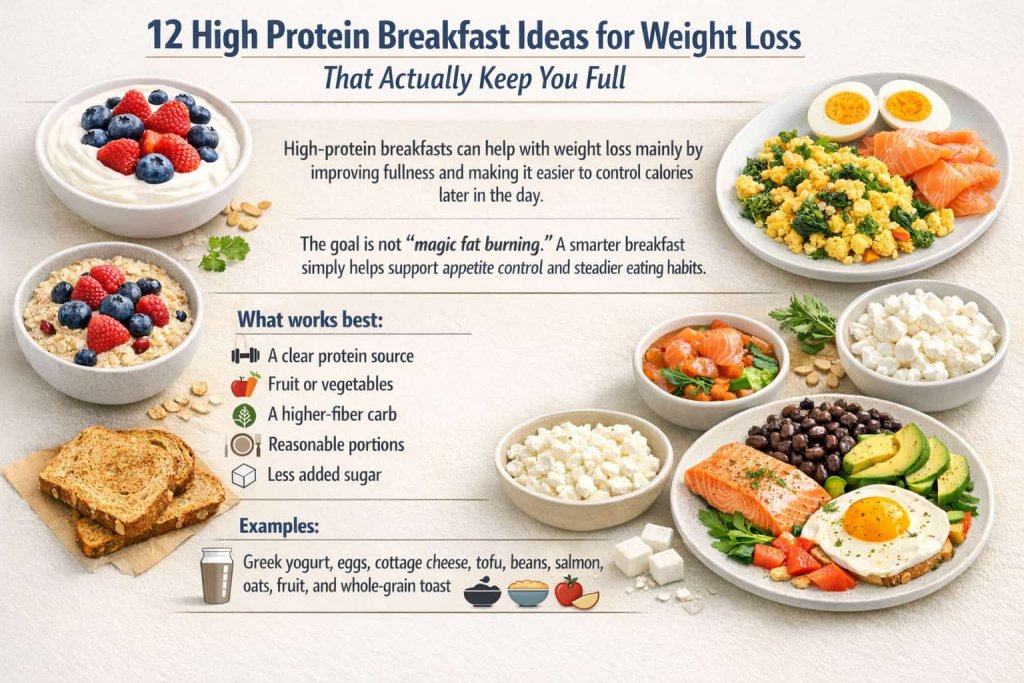
That matters because many “healthy” breakfasts are still built around refined carbs and added sugar, which can leave you hungry again too soon. A smarter breakfast for weight loss usually pairs a clear protein source with fruit or vegetables, a higher-fiber carb, and portions that fit your day. USDA MyPlate also recommends building meals from multiple food groups and gives breakfast examples like yogurt parfaits with fruit and nuts in its Start Simple with MyPlate guide.
Why high protein breakfast ideas can help with weight loss
A protein-rich breakfast may help with weight loss because it can increase satiety and, in some studies, reduce how much people want to eat later. A systematic review and meta-analysis indexed in PubMed found that protein-rich breakfasts may reduce subsequent energy intake and suppress appetite, while a newer randomized trial indexed in PubMed found higher-protein breakfasts increased satiety but did not clearly improve body composition on their own.
That is the key reality check: breakfast can be a useful tool, but it is not the whole plan. CDC says healthy weight loss still depends on an overall lifestyle that includes good nutrition, regular physical activity, enough sleep, and stress management, and gradual loss of about 1 to 2 pounds per week is more likely to be maintained in its weight-loss guidance.
What makes a breakfast weight-loss friendly?
The most useful high protein breakfast ideas for weight loss tend to follow the same pattern:
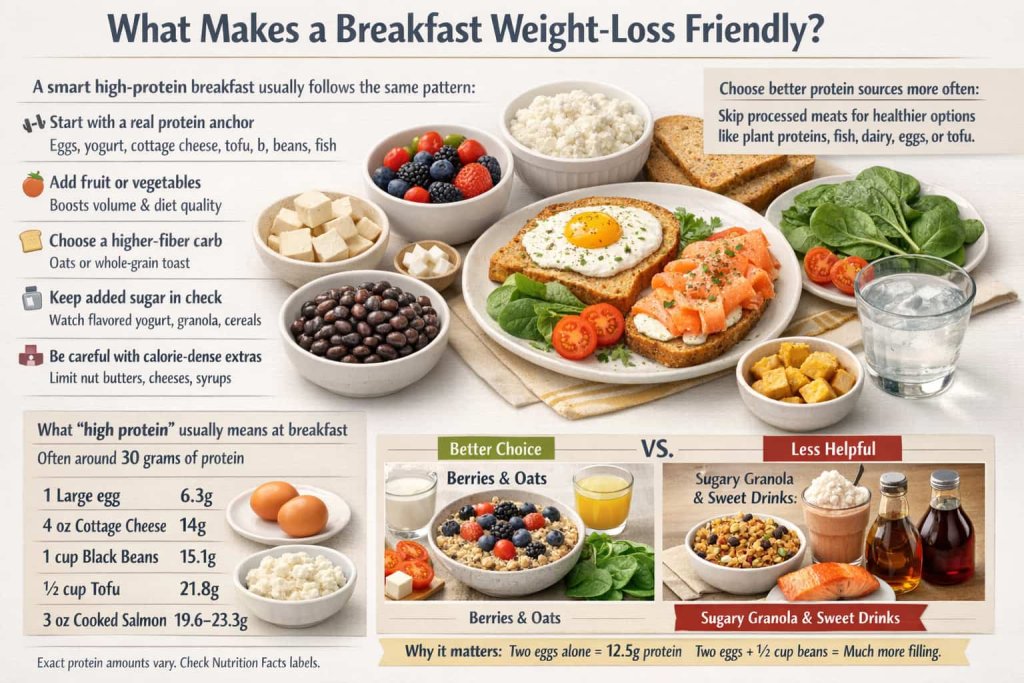
- Start with a real protein anchor such as eggs, yogurt, cottage cheese, tofu, beans, fish, or another minimally processed protein food.
- Add fruit or vegetables for volume and overall diet quality.
- Use a higher-fiber carb when you want one, such as oats or whole-grain toast.
- Keep added sugar in check, especially in flavored yogurt, granola, cereal, breakfast bars, and bottled smoothies.
- Watch calorie-dense extras like large amounts of nut butter, cheese, syrup, sweetened coffee drinks, and oversized smoothie add-ins.
It also helps to avoid making processed meats your default breakfast protein. The American Heart Association recommends choosing healthy protein sources mostly from plant foods, regularly eating fish and seafood, using dairy thoughtfully, and choosing lean, unprocessed meat or poultry if you eat them in its guidance on picking healthy proteins.
What “high protein” usually means at breakfast
There is no official breakfast-specific protein target, but in breakfast research, a higher-protein breakfast is often around 30 grams of protein rather than just a meal with a small amount of protein. You do not need to hit that exact number every morning, but it helps explain why two eggs alone may feel lighter than two eggs plus beans, or a yogurt bowl built with extra protein-rich ingredients. As a practical rule, build breakfast around one substantial protein source first, then add fruit or vegetables and a higher-fiber carb if you want one.
A quick protein reality check
Protein adds up more slowly than many people expect. USDA data show that one large egg has about 6.3 grams of protein, 4 ounces of low-fat cottage cheese has about 14 grams, 1 cup of cooked black beans has about 15.1 grams, 1/2 cup of firm tofu has about 21.8 grams, and 3 ounces of cooked salmon provides roughly 19.6 to 23.3 grams depending on the type, based on USDA nutrient data summarized by the National Agricultural Library protein chart.
That is why a breakfast built from just two eggs lands at about 12.5 grams, while two eggs plus 1/2 cup of beans gets much closer to a more filling protein intake. Exact numbers vary by brand and preparation, so packaged foods are best checked on the Nutrition Facts label or in USDA FoodData Central.
12 high protein breakfast ideas for weight loss
These ideas are built around the same official principles: protein foods at meals, more whole and minimally processed foods, and less reliance on added sugar-heavy breakfast products. Use them as templates and adjust portions to fit your calorie needs.
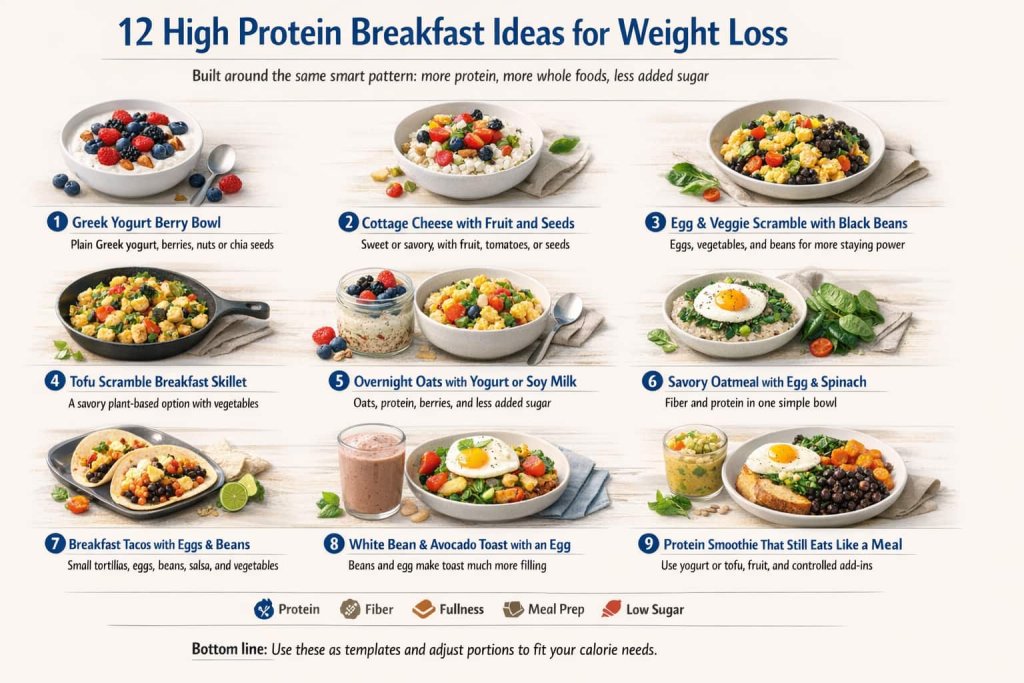
1. Greek yogurt berry bowl
Fill a bowl with plain Greek yogurt, berries, and a small sprinkle of nuts or chia seeds. This works well when you want something fast, cold, and easy to portion. Use fruit for sweetness instead of relying on honey-heavy granola or flavored yogurt.
2. Cottage cheese with fruit and seeds
Cottage cheese can be the entire protein base of breakfast. Top it with pineapple, berries, peaches, or sliced tomatoes and cracked pepper if you prefer savory meals. Add a small amount of pumpkin seeds or hemp seeds for texture.
3. Egg and veggie scramble with black beans
Scramble eggs with spinach, peppers, onions, or mushrooms and add a scoop of black beans. This gives you an easy protein-plus-produce breakfast that usually feels much more substantial than toast alone.
4. Tofu scramble breakfast skillet
If you want a plant-based option, crumble tofu into a skillet with turmeric, garlic, mushrooms, spinach, and tomatoes. Serve it on its own or with a small piece of whole-grain toast. It is especially useful if you want a savory breakfast without eggs.
5. Overnight oats made with yogurt or fortified soy milk
Overnight oats are only as weight-loss-friendly as what goes into the jar. Build them around oats plus plain Greek yogurt or unsweetened fortified soy milk, then add berries, cinnamon, and a modest amount of nuts or seeds. Skip dessert-style versions loaded with sweeteners.
6. Savory oatmeal with egg and spinach
Oatmeal does not have to be sweet. Cook oats, stir in spinach, and top with an egg or two plus black pepper or salsa. This is a smart option when you want fiber and protein in the same bowl without a lot of added sugar.
7. Breakfast tacos with eggs and beans
Use small corn or whole-grain tortillas, then fill them with eggs, beans, salsa, and vegetables. This is one of the easiest high protein breakfast ideas for weight loss because the tortillas help with structure and satisfaction while the eggs and beans do the heavy lifting.
8. White bean and avocado toast with an egg
Mash white beans onto whole-grain toast, then add sliced avocado and a boiled or fried egg. The beans make the toast more filling than butter or jam, and the egg turns it into a true protein-centered meal.
9. Protein smoothie that still eats like a meal
A smoothie can help on rushed mornings, but only if it has enough substance. Blend plain yogurt or silken tofu with fruit, unsweetened milk or fortified soy milk, and ice. Keep nut butters, sweeteners, juice, and multiple high-calorie add-ins under control so the smoothie does not quietly become a liquid dessert.
10. Egg muffins for meal prep
Bake egg muffins with chopped vegetables and keep them in the fridge for busy weekdays. Pair two or three with fruit or a slice of whole-grain toast. This is one of the best choices for people who skip breakfast simply because they do not want to cook in the morning.
11. Salmon breakfast plate
Try leftover baked salmon or no-salt-added canned salmon with eggs, cucumber, tomatoes, or whole-grain toast. It is a less common breakfast idea, but it fits the guidance to include seafood regularly and can be very satisfying when you want something savory and higher in protein.
12. Sweet potato breakfast bowl with eggs or tofu
Build a bowl with roasted sweet potato, sautéed greens, beans, and eggs or tofu. This works especially well if you like meal-prep breakfasts that reheat well and keep you full well into the afternoon.
How to make any breakfast more filling without overdoing calories
The easiest upgrade is to stop asking whether breakfast is “healthy” in a vague sense and start asking whether it has a real protein source. Then check what else is in the meal. Many people do better when breakfast includes one protein anchor, one produce item, and one optional higher-fiber carb instead of several calorie-dense extras layered together.
A few simple upgrades usually help:
- Replace sugary yogurt with plain yogurt plus fruit.
- Replace pastry breakfasts with eggs, tofu, yogurt, or cottage cheese.
- Swap sausage-heavy meals for eggs, beans, tofu, or fish more often.
- Use smaller amounts of granola, nut butter, cheese, and syrup.
- Read the Nutrition Facts label on packaged breakfast foods and compare added sugars before buying, using the FDA guide to added sugars on the Nutrition Facts label.
Common mistakes with high protein breakfast ideas for weight loss
One common mistake is assuming that “high protein” automatically means “good for weight loss.” A breakfast sandwich loaded with processed meat, cheese, and a large sweet coffee can still be very calorie-dense. Another is choosing protein bars, cereals, and flavored yogurts that look healthy but carry a lot of added sugar. FDA notes that added sugars are listed on the Nutrition Facts label specifically to help consumers make informed choices, and the Dietary Guidelines recommend keeping added sugars under 10% of total daily calories.
Another easy mistake is ignoring what you drink with breakfast. Juice, sweet coffee drinks, flavored creamers, bottled smoothies, and café-style add-ins can raise calories and added sugars quickly without offering the same staying power as a solid meal. If breakfast is meant to help with fullness, it helps to compare serving size, protein, and added sugars on drink labels instead of assuming a beverage is a lighter choice.
Another mistake is expecting breakfast alone to overcome everything else. CDC’s guidance is clear that sustainable weight loss comes from the bigger picture, not one perfect meal. A solid breakfast can make the rest of the day easier, but it still has to fit into your full-day calorie intake and overall eating pattern.
Who should be careful with a higher-protein breakfast?
If you have chronic kidney disease or have been told to limit protein, do not assume a higher-protein breakfast is automatically right for you. NIDDK explains in its guide to healthy eating for adults with chronic kidney disease that some people with CKD may need moderate amounts of protein rather than simply more protein, and the right balance should be personalized with a clinician or dietitian.
FAQ
Do I have to eat breakfast to lose weight?
No. Weight loss still depends on a sustainable calorie deficit and overall habits. But if eating breakfast helps you manage hunger, a protein-rich breakfast may make it easier to stay on track later in the day.
How much protein should breakfast have for weight loss?
There is no single magic breakfast number that fits everyone. Current federal guidance emphasizes protein foods at every meal, while older baseline references still note an adult protein RDA of 0.8 g/kg/day in the American Heart Association overview of protein and heart health. In practice, it is more useful to build breakfast around a clear protein source and make sure your total daily intake fits your body size, goals, and medical needs.
Are smoothies good high protein breakfast ideas for weight loss?
They can be, but only if they are built like a meal instead of a dessert. A smoothie with a real protein base and controlled add-ins can work well; one packed with juice, sweetened yogurt, nut butter, granola, and syrup can get calorie-dense quickly. Checking the label for added sugars helps when you use packaged ingredients.
Are eggs or Greek yogurt better for weight loss?
Both can fit well. Eggs are a practical whole-food protein, and yogurt is convenient and easy to pair with fruit. The better choice is usually the one that helps you stay full, fits your calorie needs, and does not come with lots of added sugar or heavily processed sides.
The bottom line on high protein breakfast ideas for weight loss
The best high protein breakfast ideas for weight loss are not the fanciest ones. They are the breakfasts you can repeat consistently: meals built around eggs, yogurt, cottage cheese, tofu, beans, or fish, with fruit or vegetables and simple portions that fit your day. When breakfast helps you stay full and control calories later, it becomes a useful part of a real weight-loss plan.
Pick two or three ideas from this list, buy the ingredients this week, and make them your default rotation. Consistency beats variety overload every time.
References
- U.S. Department of Health and Human Services & U.S. Department of Agriculture — Dietary Guidelines for Americans, 2025–2030
- American Heart Association — The American Heart Association Diet and Lifestyle Recommendations
- American Heart Association — Protein and Heart Health
- U.S. Food and Drug Administration — Added Sugars on the Nutrition Facts Label
- Centers for Disease Control and Prevention — Steps for Losing Weight
- PubMed — Effect of Protein-Rich Breakfast on Subsequent Energy Intake and Subjective Appetite in Children and Adolescents: Systematic Review and Meta-Analysis
- PubMed — No Effects of High- v. Low-Protein Breakfast on Body Composition or Cardiometabolic Risk Markers, but Increased Satiety in Young Women with Overweight and Obesity