
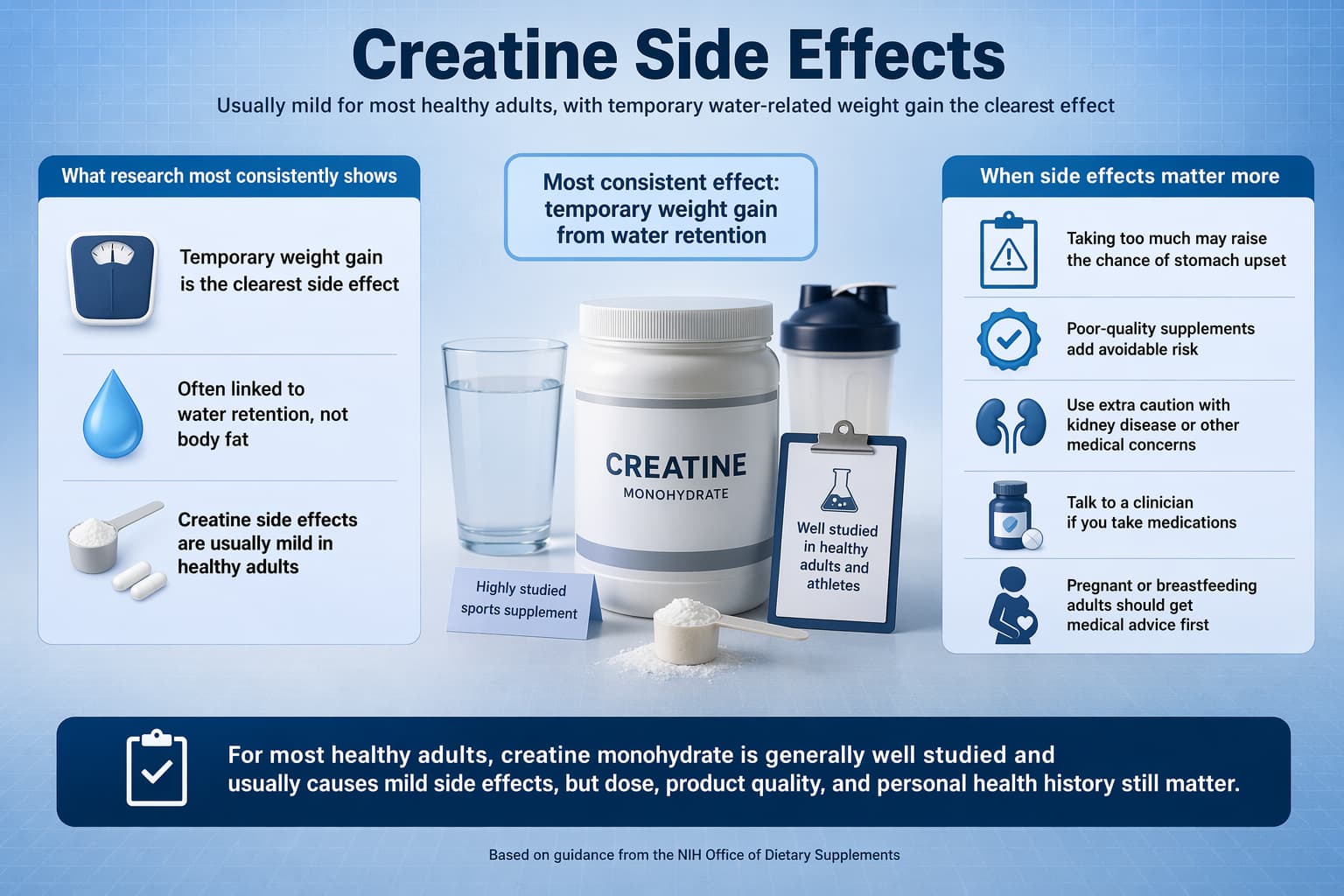
For most healthy adults, creatine side effects are usually mild, and the clearest one is temporary weight gain from water retention. That is the main effect that shows up consistently in authoritative guidance and research summaries. The bigger risks are less about creatine monohydrate itself and more about taking too much, using poor-quality supplements, or using it despite kidney concerns or other medical issues. (NIH Office of Dietary Supplements)
Creatine is one of the most studied sports supplements on the market. It can help with short, high-intensity exercise, but understanding creatine side effects matters before you start, especially if you have kidney disease, take medications, are pregnant or breastfeeding, or buy supplements from brands with weak quality control.
Creatine Side Effects at a Glance
The best-supported creatine side effects are not the scary ones that often circulate online. Here is what current evidence supports most clearly:
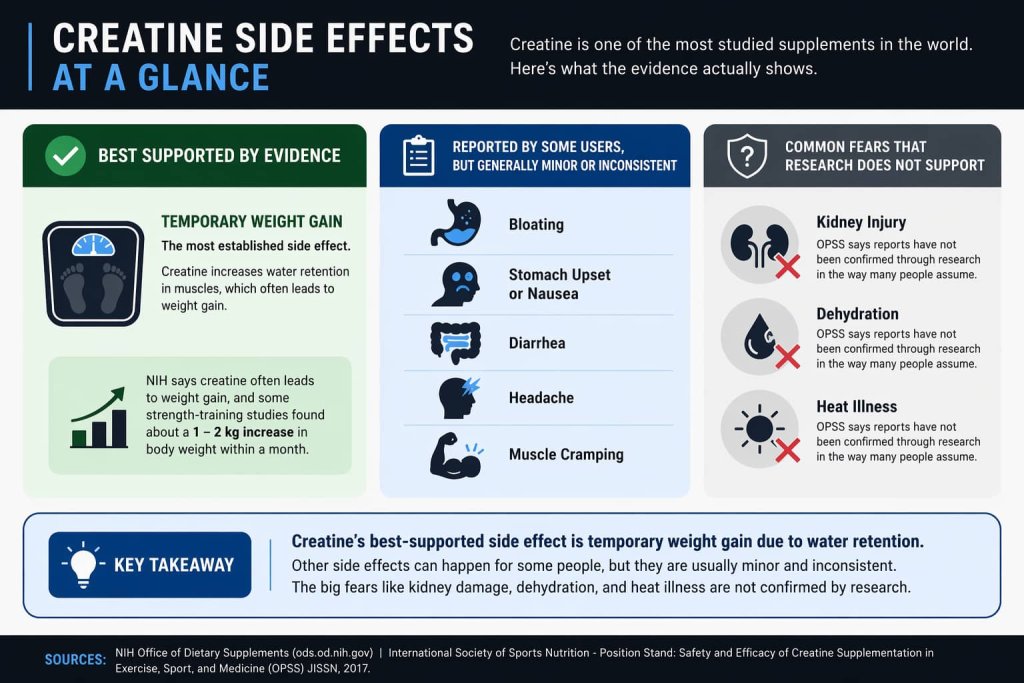
- Temporary weight gain is the most established side effect, largely because creatine increases water retention. NIH says creatine often leads to weight gain, and some strength-training studies found about a 1–2 kg increase in body weight within a month.
- Bloating, stomach upset, nausea, diarrhea, headache, and muscle cramping are reported in some users, but they are generally described as minor or inconsistent rather than inevitable. (OPSS)
- Kidney injury, dehydration, and heat illness are common fears, but OPSS says those reports have not been confirmed through research in the way many people assume.
What Creatine Side Effects Are Most Common?
Weight gain and water retention
If you notice the scale move up soon after starting creatine, that does not automatically mean fat gain. NIH says creatine commonly causes weight gain because it increases water retention, and that is the side effect seen most consistently across studies and guidance.
This matters because some people want the performance benefit without extra body weight. For power sports, that tradeoff may be acceptable. For endurance sports or weight-class sports, it may be less appealing. NIH notes that creatine is of limited value for endurance activities and that the added weight can be a downside there.
Bloating and stomach discomfort
Some users report bloating, gastrointestinal upset, nausea, diarrhea, or headache. These are usually described as minor effects, not signs that creatine is unsafe for everyone. They are also not universal.
Cramping and heat intolerance
Muscle cramps and heat intolerance do come up in creatine discussions, but NIH describes those reports as anecdotal, and OPSS says dehydration and heat illness have not been confirmed through research. That does not mean you should ignore hydration or training conditions. It means the evidence does not support treating creatine as a proven cause of those problems in healthy users taking recommended amounts.
Is Creatine Bad for Your Kidneys?
For healthy adults, the current evidence is more reassuring than many headlines suggest. Mayo Clinic says studies in healthy people have not found that creatine harms kidney function when taken at recommended doses, and a recent review summarized in PubMed reported that creatine is likely safe for kidney function in healthy individuals and several clinical populations when used appropriately.
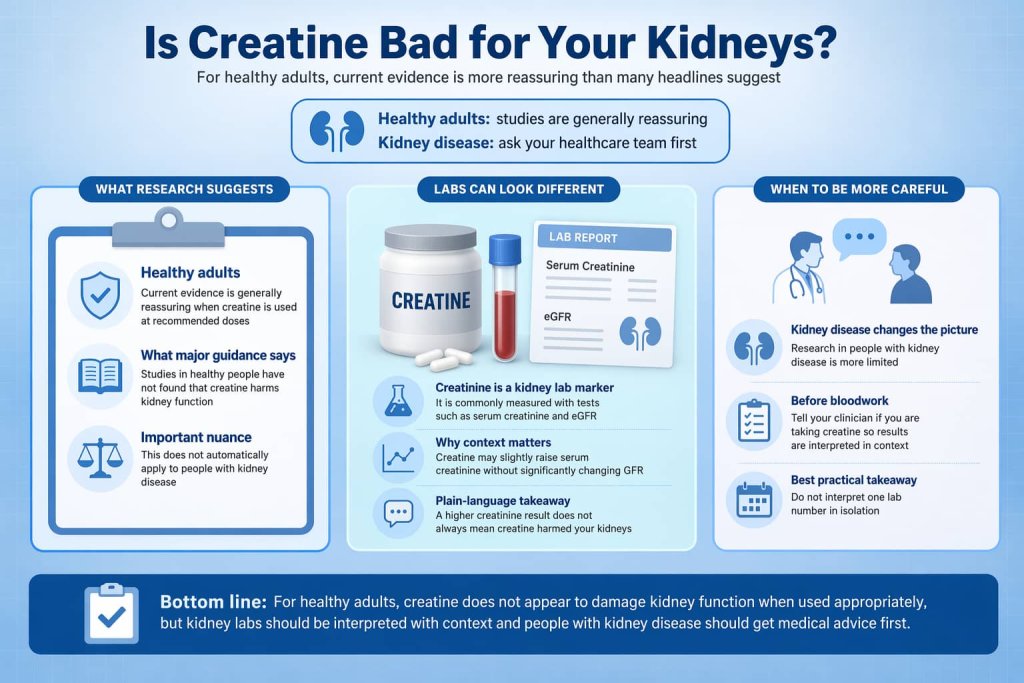
That said, this is not a blanket green light for everyone. Mayo Clinic also says research in people with kidney disease is limited, and people with kidney disease should speak with their healthcare team before using creatine.
Kidney lab testing adds another reason to be careful with context. MedlinePlus explains that creatinine is a normal waste product measured in blood or urine to help evaluate kidney function, often alongside eGFR. If you are taking creatine and getting kidney labs checked, tell your clinician so your results are interpreted with the full picture in mind.
One important detail is that creatine can make kidney lab results look more concerning than they really are. A 2025 systematic review and meta-analysis in BMC Nephrology found that creatine supplementation was associated with a small increase in serum creatinine, but not with a significant change in glomerular filtration rate, or GFR. In plain terms, that means creatine may slightly shift a common kidney blood marker without necessarily harming kidney function. That is why it is smart to tell your clinician about creatine use before bloodwork rather than interpreting a higher creatinine result in isolation. (BMC Nephrology)
Does Creatine Cause Hair Loss?
This is one of the most searched creatine side effects, but the evidence is weak. A 2025 randomized controlled trial summary reported that it was the first study to directly assess hair follicle health after creatine supplementation and found strong evidence against the claim that creatine harms hair follicle health. Recent review literature has also treated hair loss as a common misconception rather than an established side effect. (PubMed Central)
That does not prove creatine could never affect hair in any individual case. It does mean there is currently no strong evidence that hair loss belongs on the short list of well-established creatine side effects.
How Dosage Affects Creatine Side Effects
One reason people have different experiences is that they use different dosing strategies.
NIH describes a common adult protocol as a loading phase of 20 grams per day for 5 to 7 days, split into four 5-gram servings, followed by a maintenance phase of 3 to 5 grams per day. NIH also describes another approach: roughly 3 to 6 grams per day without a loading phase for several weeks.
Because larger doses are used during loading, some people prefer the slower maintenance-only approach when they are mainly trying to reduce the chance of bloating or stomach discomfort. That is a practical choice rather than an official rule, but it fits with the side effects reported in current guidance.
Which Form Has the Best Safety Data?
If your main concern is safety, creatine monohydrate is the form with the strongest evidence base. NIH says it is the most widely used and studied form, and other forms such as creatine ethyl ester, creatine alpha-ketoglutarate, and buffered creatine have not been proven superior for muscle creatine levels, stability, digestibility, or safety.
That is important because flashy labels often imply that newer forms are gentler or cleaner. Based on current authoritative guidance, that marketing claim is not well supported.
Who Should Be Careful With Creatine?
A cautious approach makes sense for:
- People with kidney disease or abnormal kidney history. Mayo Clinic says evidence in this group is limited and advises discussing use with a healthcare team.
- People taking medications or multiple supplements. NCCIH says dietary supplements can interact with medications and can pose risks if you have certain medical problems.
- Pregnant or breastfeeding people, and children. NCCIH says many dietary supplements have not been adequately tested in pregnant women, nursing mothers, or children.
- Athletes subject to drug testing. Product contamination is a separate risk from creatine itself, which is why third-party certification matters.
Safety note: Creatine is a dietary supplement, not a medication. FDA does not approve dietary supplements for safety and effectiveness before they are sold, and manufacturers are responsible for evaluating product safety and labeling before marketing.
How to Lower Your Risk of Creatine Side Effects
Choose a simple, evidence-based approach:
1. Stick with creatine monohydrate
It has the strongest safety and efficacy data.
2. Stay within established dosing ranges
Typical adult use is 20 g/day for 5–7 days followed by 3–5 g/day, or 3–6 g/day without loading. More is not better.
3. Buy a third-party tested product
OPSS recommends looking for third-party certified products, and NSF Certified for Sport is one established program that tests sports supplements for banned substances and label accuracy standards.
This step matters more than many people realize. According to NCCIH, some bodybuilding and performance supplements contain hidden ingredients that are not listed on the label, including prescription drug ingredients, controlled substances, or anabolic steroids. In other words, the bigger safety risk may sometimes come from the product itself rather than creatine monohydrate. That is why a plain, third-party tested creatine monohydrate powder is usually a safer choice than a proprietary “muscle-building” blend.
4. Tell your clinician before using it
That is especially important if you have kidney issues, take regular medications, or are having kidney function tests checked.
What to do if you notice possible creatine side effects
If you develop an unexpected or serious reaction after starting creatine, stop using the product and seek medical care or advice. The FDA says consumers and health professionals should report suspected serious reactions to dietary supplements through the Safety Reporting Portal. That matters because supplements are not reviewed the same way as prescription drugs before sale, so post-market reports help identify unsafe or contaminated products faster. (FDA Safety Reporting Portal guidance)
Frequently Asked Questions About Creatine Side Effects
Does creatine make you gain fat?
Not by itself. The most established early weight gain from creatine is linked to water retention, not automatic fat gain.
Does creatine cause bloating?
It can. Bloating is one of the minor side effects reported in some studies and guidance, but not everyone gets it.
Do you need a loading phase?
No. NIH lists both a loading-plus-maintenance approach and a lower daily dose without loading. The slower option may be appealing to people who want a simpler routine.
How long is creatine safe to take?
Mayo Clinic says creatine is likely safe for many people when taken by mouth at recommended doses for up to five years.
Are creatine side effects worse in low-quality supplements?
Potentially, yes. OPSS notes that improper dosing or contamination with other substances could contribute to adverse events, and FDA says supplement oversight is different from drug approval, with manufacturers responsible for product safety before marketing.
Bottom Line
The most evidence-based answer is simple: creatine side effects are usually mild for healthy adults, and temporary water-related weight gain is the one you are most likely to notice. Concerns about kidney damage, dehydration, and hair loss are much less supported than many people think, though anyone with kidney disease, medical conditions, or regular medication use should get personalized advice first.
If you decide to use creatine, the safest starting point is a third-party tested creatine monohydrate product at recommended doses. That keeps the focus on what is actually supported by evidence instead of hype.
References
- MedlinePlus — Creatinine Test (link)
- National Center for Complementary and Integrative Health — Dietary and Herbal Supplements (link)
- National Center for Complementary and Integrative Health — Dietary Supplements Marketed for Weight Loss, Bodybuilding, and Sexual Enhancement (link)
- PubMed Central — Does creatine cause hair loss? A 12-week randomized controlled trial (link)
- BMC Nephrology — Effect of creatine supplementation on kidney function: a systematic review and meta-analysis (link)
- NSF — Certified for Sport Program (link)