
Foods high in iron can help if your anemia is caused by iron deficiency, but food alone is not enough for every case. The best choices include iron-fortified cereal, oysters, white beans, lentils, tofu, beef, and other foods that supply meaningful iron per serving. It is also important to improve absorption by pairing iron-rich foods with vitamin C-rich foods and getting checked if you have symptoms such as fatigue, shortness of breath, pale skin, or heavy periods.
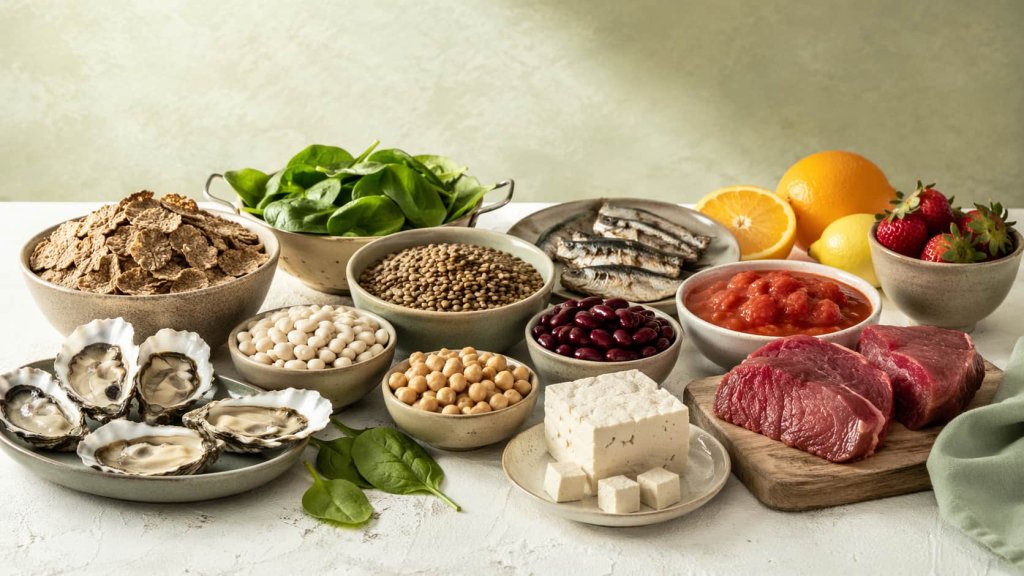
This article focuses on iron-deficiency anemia, which is the most common type of anemia. That matters because not all anemia is caused by low iron. According to the World Health Organization, anemia can also be linked to low folate, vitamin B12, vitamin A, infections, inflammation, chronic disease, menstrual blood loss, pregnancy-related issues, or inherited blood disorders.
Recent data also suggest iron problems may be more common than many people realize. The National Heart, Lung, and Blood Institute highlighted research showing that in U.S. survey data from 2017 to 2020, about 14% of adults had absolute iron deficiency and 15% had functional iron deficiency.
First, make sure it is iron-deficiency anemia
If you think you may have anemia, it is worth getting tested instead of guessing. The NHLBI says doctors typically use a complete blood count, hemoglobin, blood iron, and ferritin testing to help confirm iron-deficiency anemia. That is important because taking iron when you do not actually need it can be harmful.
Common symptoms can include fatigue, weakness, dizziness, pale skin, shortness of breath, chest pain with activity, headaches, and sometimes brittle nails or pica. The Office on Women’s Health notes that iron-deficiency anemia often develops slowly, so symptoms may be mild at first.
Why iron may be low in the first place
Iron-deficiency anemia is often not just a food issue. It can also happen because you are losing blood, not absorbing iron well, or both.
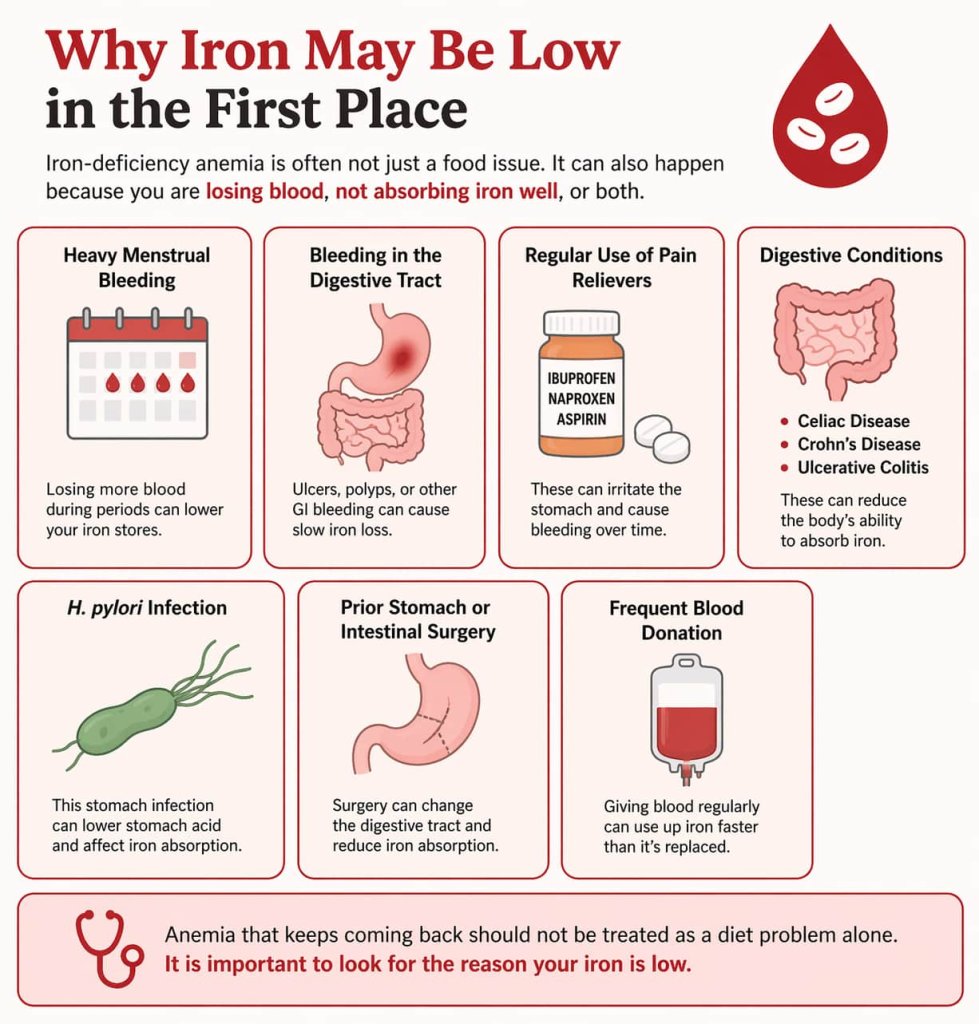
Common reasons include:
- Heavy menstrual bleeding
- Bleeding in the digestive tract
- Regular use of pain relievers such as aspirin, ibuprofen, or naproxen
- Digestive conditions such as celiac disease, Crohn’s disease, or ulcerative colitis
- H. pylori infection
- Prior stomach or intestinal surgery
- Frequent blood donation
This is why anemia that keeps coming back should not be treated as a diet problem alone. It is important to look for the reason your iron is low.
12 foods high in iron for anemia
The iron amounts below come from the NIH Office of Dietary Supplements food table for selected foods. Amounts can vary somewhat by brand, preparation, and portion size, but these numbers are a solid evidence-based starting point.
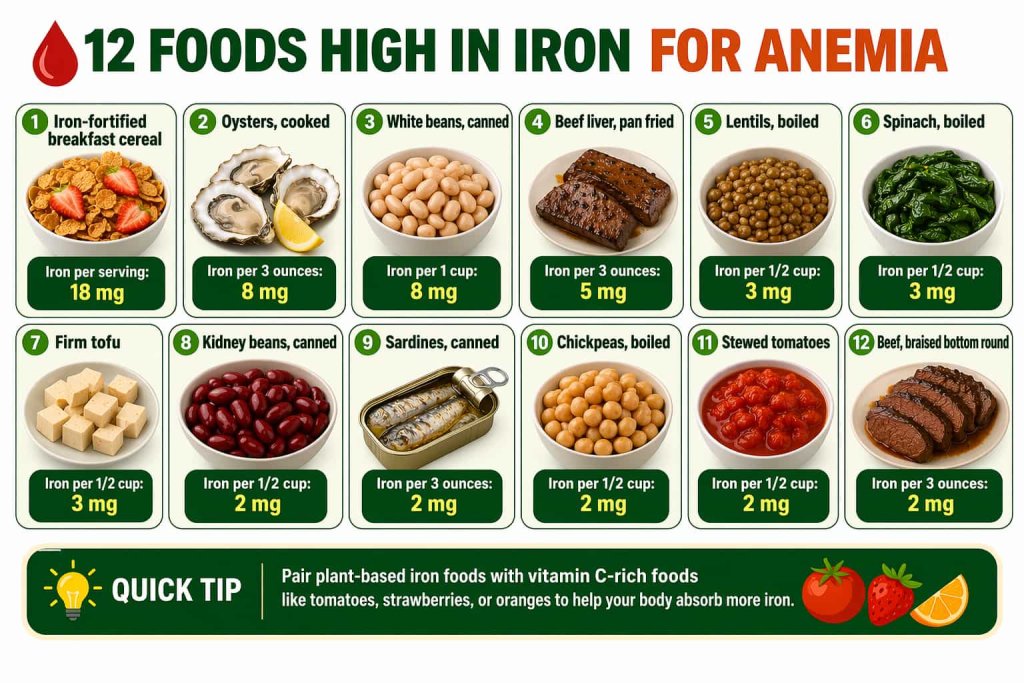
1. Iron-fortified breakfast cereal
Iron per serving: 18 mg
This is one of the easiest ways to get a large amount of iron quickly. It can be especially useful for people who do not eat meat. Choose a cereal that is actually fortified, and serve it with strawberries or orange slices to support absorption.
2. Oysters, cooked
Iron per 3 ounces: 8 mg
Cooked oysters are one of the richest natural sources of heme iron, the form your body absorbs more easily. They can be a strong option for adults who eat seafood.
3. White beans, canned
Iron per 1 cup: 8 mg
White beans are one of the best plant-based choices on the list. They also work well in soups, stews, grain bowls, and mashed bean spreads.
4. Beef liver, pan fried
Iron per 3 ounces: 5 mg
Beef liver is very high in iron, but it is not the right choice for everyone. The NHS advises avoiding liver and liver products during pregnancy because they contain a lot of vitamin A, which can harm an unborn baby.
5. Lentils, boiled
Iron per 1/2 cup: 3 mg
Lentils are affordable, filling, and practical for everyday meals. A lentil soup or lentil bowl with tomatoes and bell peppers is a smart combination.
6. Spinach, boiled
Iron per 1/2 cup: 3 mg
Spinach does contain iron, but it should not be your only strategy. Some plant foods, including spinach, also contain compounds that can reduce iron absorption.
7. Firm tofu
Iron per 1/2 cup: 3 mg
Tofu is one of the best iron-rich foods for vegetarian and vegan diets. It is especially useful in stir-fries, grain bowls, and soups.
8. Kidney beans, canned
Iron per 1/2 cup: 2 mg
Kidney beans are another easy plant-based option that fits chili, soups, and rice bowls. Pairing them with tomatoes can make the meal even more useful nutritionally.
9. Sardines, canned
Iron per 3 ounces: 2 mg
Sardines provide iron in a compact serving and also offer protein. They are a practical pantry option for quick meals.
10. Chickpeas, boiled
Iron per 1/2 cup: 2 mg
Chickpeas are versatile and easy to add to salads, curries, soups, and roasted snack mixes. They are a helpful choice if you want more nonheme iron from everyday foods.
11. Stewed tomatoes
Iron per 1/2 cup: 2 mg
Stewed tomatoes are not just useful for their iron content. They also fit naturally into meals with beans or lentils, which can help you build a more iron-friendly plate.
12. Beef, braised bottom round
Iron per 3 ounces: 2 mg
Beef gives you heme iron, which is absorbed better than plant-based nonheme iron. A modest serving can be a practical way to support iron intake if you eat red meat.
Which foods are highest in iron per serving?
If you want the strongest first picks, start with the foods near the top of the list:
- Iron-fortified breakfast cereal
- Oysters
- White beans
- Beef liver
- Lentils
- Tofu
These stand out because they provide more iron per typical serving than many other common options in the NIH table.
Why some iron foods work better than others
There are two main types of iron in food: heme iron and nonheme iron. Heme iron, found in meat and seafood, is absorbed better. Nonheme iron, found in beans, tofu, vegetables, and fortified grains, can still help a lot, but absorption is more affected by the rest of the meal.
NIH reports that iron bioavailability is about 14% to 18% from mixed diets that include meat, seafood, and vitamin C, versus about 5% to 12% from vegetarian diets. The same fact sheet also explains that people who follow vegetarian diets generally need about 1.8 times more iron than standard recommendations because plant-based iron is less bioavailable.
How to absorb more iron from your meals
Getting iron on the plate is only part of the job. You also want your body to absorb it well. NHLBI guidance points to a few practical ways to improve absorption.
- Pair plant-based iron with vitamin C-rich foods such as oranges, strawberries, tomatoes, broccoli, or sweet peppers.
- If you eat animal foods, adding meat, poultry, or seafood to a meal can improve absorption of nonheme iron.
- Use fortified foods strategically when intake is low.
- Do not rely on spinach alone as your main iron food.
- Be careful with black tea or coffee around iron-rich meals because they can reduce absorption.
- If you take calcium or iron supplements, follow your clinician’s advice about timing, since calcium can interfere with iron absorption.
A simple example is a lentil bowl with tomatoes and bell peppers, tofu with broccoli, or fortified cereal topped with strawberries. Those combinations usually make more sense than eating iron foods in isolation.
One more practical tip: if you use iron-fortified cereal or grain products, check the Nutrition Facts label instead of assuming all brands are the same. A higher % Daily Value for iron means the food contributes more iron per serving. That can make fortified foods much more useful when you are trying to raise iron intake consistently. The U.S. Food and Drug Administration says 20% Daily Value or more is considered high, while 5% Daily Value or less is considered low.
How much iron do you need each day?
Your iron needs depend on age, sex, and life stage. Common daily targets include:
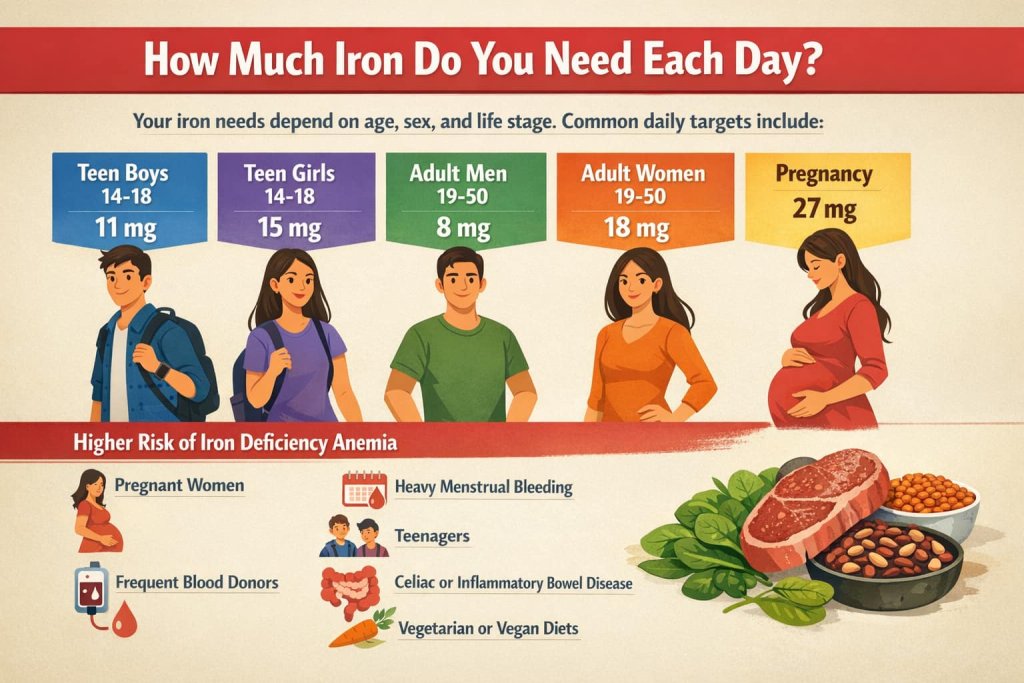
- Teen boys ages 14 to 18: 11 mg
- Teen girls ages 14 to 18: 15 mg
- Adult men ages 19 to 50: 8 mg
- Adult women ages 19 to 50: 18 mg
- Pregnancy: 27 mg
People with higher risk of iron-deficiency anemia include pregnant women, people with heavy menstrual bleeding, teens, frequent blood donors, people with celiac disease or inflammatory bowel disease, and some people following vegetarian or vegan diets if intake is not planned carefully.
A simple day of eating for more iron
Here is a practical pattern that can help raise iron intake from food:
- Breakfast: iron-fortified cereal with strawberries
- Lunch: lentil or white bean bowl with tomatoes and peppers
- Snack: roasted chickpeas or a tofu wrap
- Dinner: beef with beans, or tofu with broccoli and tomatoes
- Add-ons: cooked spinach, sardines, or bean-based soup where they fit
This kind of routine works better when you repeat it consistently, rather than relying on one “superfood.”
When food may not be enough
Food matters, but confirmed iron-deficiency anemia often needs medical treatment too. NHLBI says oral iron is the most common treatment, and some people with more serious anemia or long-term conditions may need IV iron. Blood transfusions may be used for serious iron-deficiency anemia.
Get medical help right away if you have chest pain, fainting, black or tarry stool, bright red blood in your stool, vomit that looks like coffee grounds, or severe dizziness and shortness of breath. Those symptoms can point to more serious anemia or active bleeding and should not be managed with food alone.
Ask a clinician about testing and treatment if you have:
- Ongoing fatigue or weakness
- Shortness of breath
- Heavy periods
- Pregnancy
- Blood in the stool
- Known digestive disorders
- Anemia that keeps coming back
Safety notes and who should be careful
- Pregnancy: Do not use liver as your go-to iron food during pregnancy. NHS advises avoiding liver and liver products because of the high vitamin A content.
- Supplements: Do not start high-dose iron on your own just because you feel tired. NHLBI notes iron supplements are generally not given to people who do not have iron-deficiency anemia, because too much iron can damage organs.
- Heavy periods: The Office on Women’s Health says heavy periods are a major reason women develop iron-deficiency anemia. If your periods are unusually heavy, getting evaluated is important.
- Children and teens: Iron needs go up during growth, but supplementation in kids and teens should be guided by a clinician.
FAQs about foods high in iron for anemia
What foods are highest in iron for anemia?
Iron-fortified cereal, oysters, white beans, and beef liver are among the highest-iron options per typical serving in the NIH food table.
Is spinach enough to fix low iron?
Usually not by itself. Spinach contains iron, but some plant foods also contain compounds that reduce iron absorption. It is better used as one part of a broader iron-rich eating pattern.
What should I eat with iron-rich foods?
Vitamin C-rich foods such as oranges, strawberries, tomatoes, broccoli, and sweet peppers can help. Meat, poultry, and seafood can also improve absorption of nonheme iron from plant foods.
How long does it take food to help iron-deficiency anemia?
Food can support your iron intake right away, but diagnosed iron-deficiency anemia often takes longer to correct. NHLBI says oral iron treatment commonly takes three to six months to restore iron levels.
The bottom line on foods high in iron for anemia
The best foods high in iron for anemia are the ones you can eat regularly and combine wisely. Iron-fortified cereal, beans, lentils, tofu, oysters, sardines, and beef can all help increase iron intake, especially when paired with vitamin C-rich foods. But if anemia is confirmed or symptoms are significant, food should be part of a treatment plan, not the whole plan.
If low iron may be affecting your energy, start by upgrading your meals, then follow up with proper testing so you know exactly what you are treating.
This content is for informational purposes only and not medical advice.
References
- World Health Organization — Anaemia
- NIH Office of Dietary Supplements — Iron – Health Professional Fact Sheet
- National Heart, Lung, and Blood Institute — About 1 in 4 Americans may have inadequate iron intake or absorption
- National Heart, Lung, and Blood Institute — Iron-Deficiency Anemia
- National Heart, Lung, and Blood Institute — Anemia Treatment
- Office on Women’s Health — Iron-Deficiency Anemia
- NHS — Foods to avoid in pregnancy
- U.S. Food and Drug Administration — Low and High Percent Daily Value on the Nutrition Facts Label