
The Kettlebell Windmill is one of the best exercises to build core strength, mobility, and shoulder stability—all in one powerful movement.
This dynamic, full-body exercise challenges your balance and coordination while improving flexibility through your hips, spine, and shoulders. Learning proper form helps prevent injuries, boost athletic performance, and build real-world functional strength.
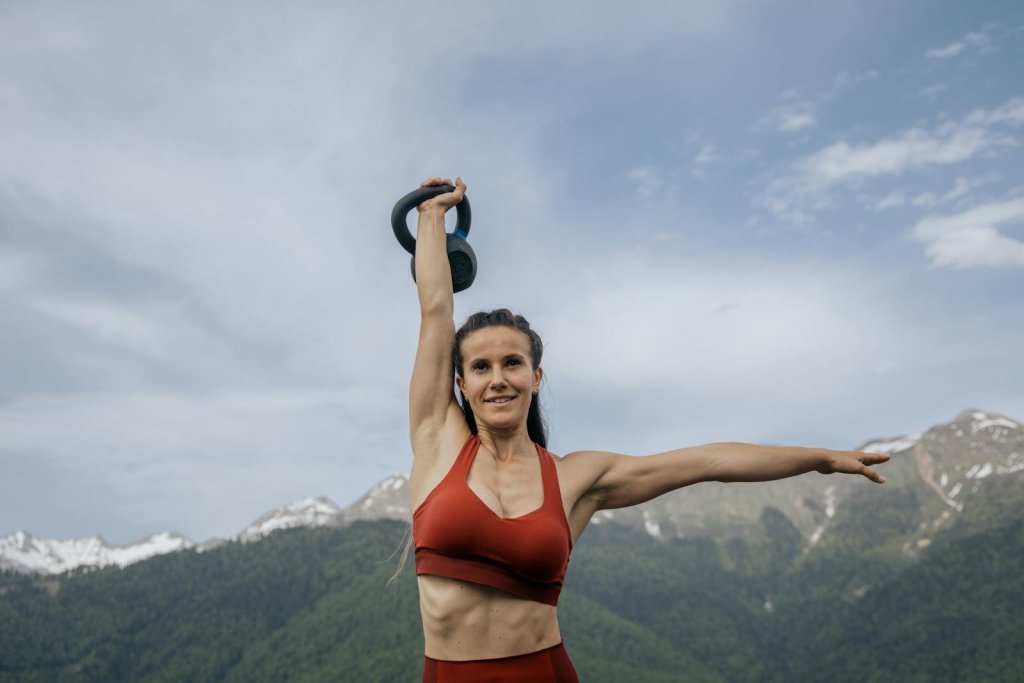
In this guide, you’ll learn why the kettlebell windmill works, which muscles it targets, and how to perform it safely for maximum results.
Why the Kettlebell Windmill Works
The Kettlebell Windmill uniquely combines strength, mobility, and stability training.
- Core Integration: Your obliques, transverse abdominis, and lower back stabilize your torso as you hinge and rotate.
- Shoulder Stability: The overhead arm maintains a locked-out position, activating the rotator cuff and stabilizers for joint health.
- Hip Mobility: The movement reinforces a proper hip hinge, improving flexibility and reducing tightness in the hamstrings and hips.
- Spinal Control: It encourages controlled spinal movement and alignment, promoting better posture and balance.
A 2023 meta-analysis in Frontiers in Physiology found unilateral resistance training resulted in larger effects on unilateral jump and strength measures compared to bilateral training.
Key Function
The Kettlebell Windmill activates the posterior chain (glutes, hamstrings, and back extensors) while demanding precise coordination between your core and shoulders—making it a comprehensive stability builder.
How to Do the Kettlebell Windmill
Step-by-Step Guide
- Start Position:
- Stand with your feet slightly wider than shoulder-width.
- Hold a kettlebell overhead in one hand with your arm fully extended.
- Turn both feet about 45° away from the kettlebell side.
- Engage Core and Set Hips:
- Keep eyes on the kettlebell at all times.
- Brace your core and keep your chest open.
- Hinge and Lower:
- Push your hips back toward the kettlebell side.
- Slowly lower your torso by sliding your free hand down the inside of your front leg.
- Keep your arm overhead locked and spine neutral—don’t round forward.
- Reach the Bottom:
- Go down until your hand touches your shin, ankle, or floor (depending on flexibility).
- Pause briefly for control.
- Return to Start:
- Drive your hips forward and lift your torso back up, keeping your arm vertical throughout.
Muscles Worked in the Kettlebell Windmill
| Primary Muscles | Supporting Muscles |
|---|---|
| Obliques | Transverse Abdominis |
| Gluteus Medius | Erector Spinae |
| Shoulders (Deltoids, Rotator Cuff) | Hamstrings |
| Core Stabilizers | Quadratus Lumborum |
Trainer Tip
- Start light—8–12 kg (18–26 lb) for beginners.
- Keep your core tight and eyes fixed on the kettlebell to maintain alignment.
- Prioritize form over depth; flexibility improves with consistency.
- Use a mirror or video feedback to monitor hip hinge and shoulder positioning.
Common Mistakes to Avoid
- Bending forward instead of hinging at the hips.
- Losing shoulder alignment—the arm should remain vertical.
- Twisting the torso excessively instead of maintaining controlled rotation.
- Using too heavy a kettlebell before mastering technique.
Benefits of the Kettlebell Windmill
- Improves Shoulder Stability – Strengthens rotator cuff and stabilizers, reducing injury risk.
- Enhances Core Strength – Trains obliques and deep core muscles through rotational control.
- Increases Hip Flexibility – Promotes functional mobility through deep hip hinge.
- Boosts Postural Alignment – Encourages upright spine and balanced load control.
- Builds Functional Strength – Transfers well to athletic performance and daily activities.
Research Insight:
A 2025 systematic review in Frontiers in Sports and Active Living reported that core muscle training improves dynamic balance, core strength and stability in athletic populations.
Safety & Precautions
- Avoid overhead kettlebell exercises if you have shoulder impingement or instability.
- Warm up with shoulder circles, hip hinges, and side bends.
- Stop if you feel sharp or joint pain—slight muscle stretch is fine, discomfort is not.
- Always perform under supervision or record yourself for form assessment.
Variations & Progressions
1. Bodyweight Windmill
Why it works:
The Bodyweight Windmill helps you master the foundation of the exercise without external load. It teaches you to hinge correctly from the hips, control your spine, and coordinate rotation through your core and shoulders. This version builds mobility, stability, and proprioception—the awareness of your body in space—before progressing to heavier variations.
Muscles worked:
Obliques, gluteus medius, erector spinae, hamstrings, and deep core stabilizers (transverse abdominis, quadratus lumborum).
How to do it:
- Stand with feet slightly wider than shoulder-width.
- Extend one arm overhead and the other along your side.
- Rotate both feet 45° away from the raised arm.
- Keep eyes on your raised hand.
- Push your hips back toward that side and slowly lower your torso, sliding your free hand down your front leg.
- Go as low as flexibility allows, keeping your back straight and core engaged.
- Return to standing by driving through your hips.
Trainer Tip:
Perform in front of a mirror to ensure your hips move straight back—not sideways—and that your overhead arm stays vertical throughout the motion.
2. Double Kettlebell Windmill
Why it works:
This variation increases load and balance demand, challenging your shoulders, obliques, and hips equally. Holding one kettlebell overhead and another at the hip enhances stability through both sides of your body, improving anti-rotational core control and bilateral strength balance.
Muscles worked:
Deltoids, obliques, gluteus medius, hamstrings, transverse abdominis, and erector spinae.
How to do it:
- Hold one kettlebell overhead with your right hand and another at your left hip.
- Rotate your feet about 45° away from the overhead kettlebell side.
- Keep both arms locked and your eyes fixed on the top kettlebell.
- Push your hips back and lower your torso, letting the bottom kettlebell travel along your front leg.
- Pause briefly when you reach your lowest stable point, then drive through your hips to return upright.
Trainer Tip:
Keep the bottom kettlebell close to your body—this ensures proper alignment and reduces torque on your lower back. Move slowly and avoid jerking through the hinge.
3. Bottoms-Up Windmill
Why it works:
The Bottoms-Up Windmill is an advanced stability drill that forces your grip, wrist, and shoulder stabilizers to stay highly active. By holding the kettlebell upside-down, the center of gravity shifts above your hand, increasing the demand for precision, balance, and fine motor control. This strengthens stabilizers and reinforces shoulder integrity.
Muscles worked:
Forearm flexors, deltoids, rotator cuff, obliques, glutes, hamstrings, and deep spinal stabilizers.
How to do it:
- Hold the kettlebell upside-down by the handle, bottom facing upward, with a firm grip.
- Extend your arm overhead, keeping the wrist neutral and elbow locked.
- Rotate your feet 45° away from the kettlebell side and engage your core.
- Slowly hinge at the hips, lowering your torso while keeping your eyes fixed on the kettlebell.
- Descend under control until your free hand reaches your shin or ankle, then return to standing by driving through your hips.
Trainer Tip:
Use a light kettlebell (4–8 kg) to start. Move deliberately and focus on wrist alignment—if the kettlebell begins to wobble, pause and reset. This variation is about control, not load.
Programming Tips
- Reps: 6–10 per side
- Sets: 2–4
- Rest: 45–60 seconds between sets
- Frequency: 2–3 times per week
- Pair with Turkish Get-Ups or Single-Leg Deadlifts for full-body coordination training.
FAQs
1. Is the Kettlebell Windmill good for beginners?
Yes, start with a light weight or bodyweight version to develop coordination before adding load.
2. What weight should I start with?
Women: 8–10 kg (18–22 lb); Men: 10–12 kg (22–26 lb), focusing on control over weight.
3. Can it improve posture?
Absolutely. It strengthens the obliques, glutes, and back extensors that stabilize your spine.
4. Is it safe for shoulder injuries?
Avoid if you have acute shoulder issues. Reintroduce gradually after consulting a physiotherapist.
5. How often should I do it?
2–3 times per week as part of a strength or mobility routine is ideal.
6. Can I combine it with other kettlebell workouts?
Yes—combine with Turkish Get-Ups, Kettlebell Swings, or Goblet Squats for balanced training.
7. What’s the main difference between Windmill and Side Bend?
The Windmill uses a hip hinge, while the side bend focuses on spinal lateral flexion.
Conclusion
The Kettlebell Windmill is more than a strength move—it’s a coordination, stability, and mobility powerhouse. Whether your goal is to improve posture, build a resilient core, or enhance shoulder health, this exercise delivers exceptional results when performed with proper technique and consistency.
Start light, move slow, and stay focused—your body will thank you.