
Ground beef can range from relatively lean to fairly calorie-dense, so the exact calorie count depends mostly on the fat percentage. In everyday terms, a 3-ounce cooked serving of 90% lean ground beef has about 184 calories, while fattier versions have more and very lean versions usually have less. The key is to check the lean-to-fat ratio on the package and whether you are measuring it raw or cooked. USDA FoodData Central is one of the best places to verify current ground beef entries, and older USDA nutrient tables are still useful for common cooked serving sizes.
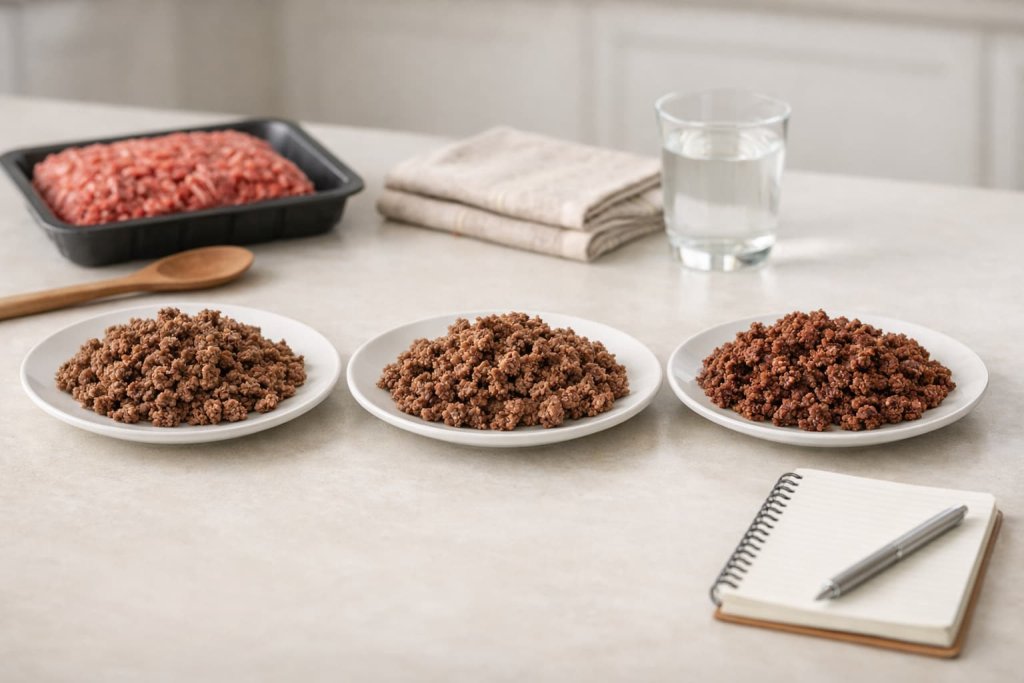
Understanding this matters because “ground beef” is not one fixed food. An 80/20 pack, a 90/10 pack, and a 93/7 pack do not have the same calorie or fat profile, even if the portion looks similar on the plate. That difference affects calorie tracking, protein intake, meal prep, and how well ground beef fits into a weight-management plan.
How Many Calories Are in Ground Beef by Leanness?
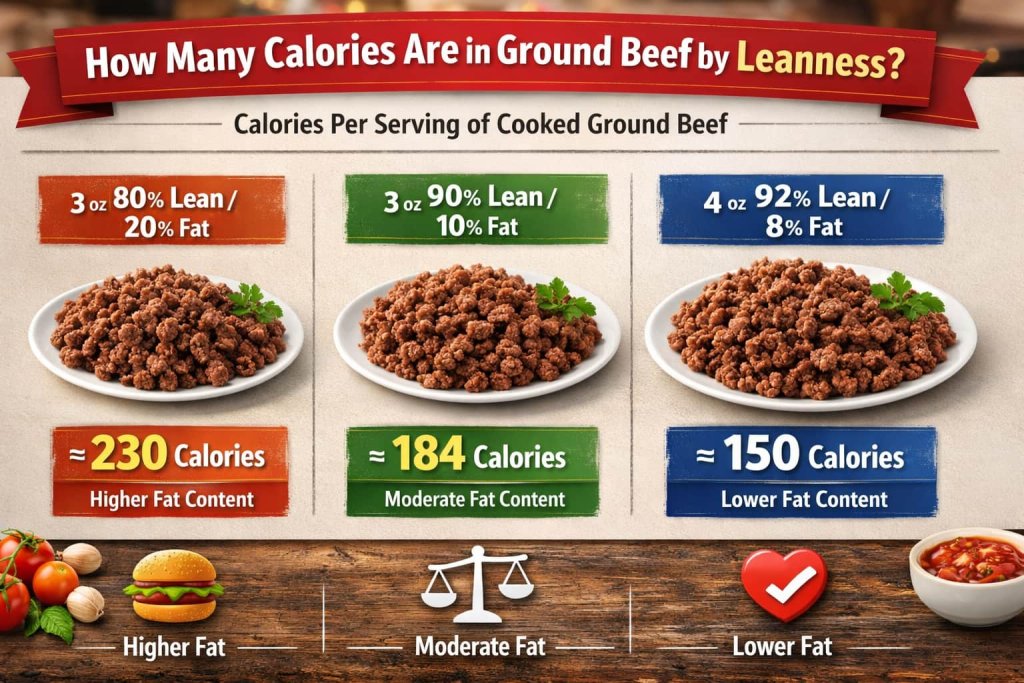
The most practical answer is that ground beef calories rise as fat content rises. USDA and USDA-linked nutrition references consistently show this pattern.
Common real-world examples include:
- 3 oz cooked 90% lean / 10% fat ground beef: about 184 calories
- 4 oz serving of 92% lean / 8% fat ground beef: about 150 calories on a USDA-approved nutrition label
- 3 oz cooked 80% lean / 20% fat ground beef: generally higher than 90/10, with older USDA nutrient tables commonly listing it around 230 calories
Because labels and databases may show raw or cooked values, the most accurate comparison is to use the same state for each food before comparing them. Cooked ground beef is usually more calorie-dense per 100 grams because water cooks off during preparation.
Quick Ground Beef Calorie Comparison
For most readers, this is the easiest way to compare common types of ground beef:
- 80% lean / 20% fat: usually the highest in calories among the common supermarket options
- 85% lean / 15% fat: a middle-ground option with fewer calories than 80/20
- 90% lean / 10% fat: a popular leaner choice with a better protein-to-calorie balance
- 93% lean / 7% fat or 95% lean / 5% fat: usually the best fit when calorie control is the priority
A helpful rule of thumb is simple: as the lean percentage goes up, calories and saturated fat usually go down. That is why two equal-looking portions of ground beef can differ quite a bit nutritionally depending on the label.
Why Ground Beef Calories Vary So Much
There are three main reasons:
Fat percentage
This is the biggest factor. Ground beef labeled 80/20 contains more fat than 90/10 or 93/7, so it also contains more calories. USDA MyPlate specifically encourages choosing ground beef that is at least 93% lean when you want a leaner option.
Raw vs. cooked weight
A raw portion and a cooked portion are not interchangeable. Ground beef loses water during cooking, which makes the cooked food weigh less and become more concentrated nutritionally per gram. That is why calorie numbers can look confusing if one source uses raw weight and another uses cooked weight. USDA’s beef nutrient calculator notes that its nutrient profiles were developed for different fat levels and cooking methods.
When checking a package or a nutrition database, make sure you are comparing raw to raw or cooked to cooked. A raw 4-ounce portion and a cooked 4-ounce portion are not equivalent because cooking reduces water weight. If you track food by app or label, this one detail can prevent major calorie-counting mistakes.
Portion size
A small patty, a heaping taco filling, and a “normal” bowl portion may all look similar but weigh very differently. For calorie tracking, 3 ounces cooked is one of the most useful reference servings because many USDA nutrient tables use that size.
Nutrition Profile of Ground Beef
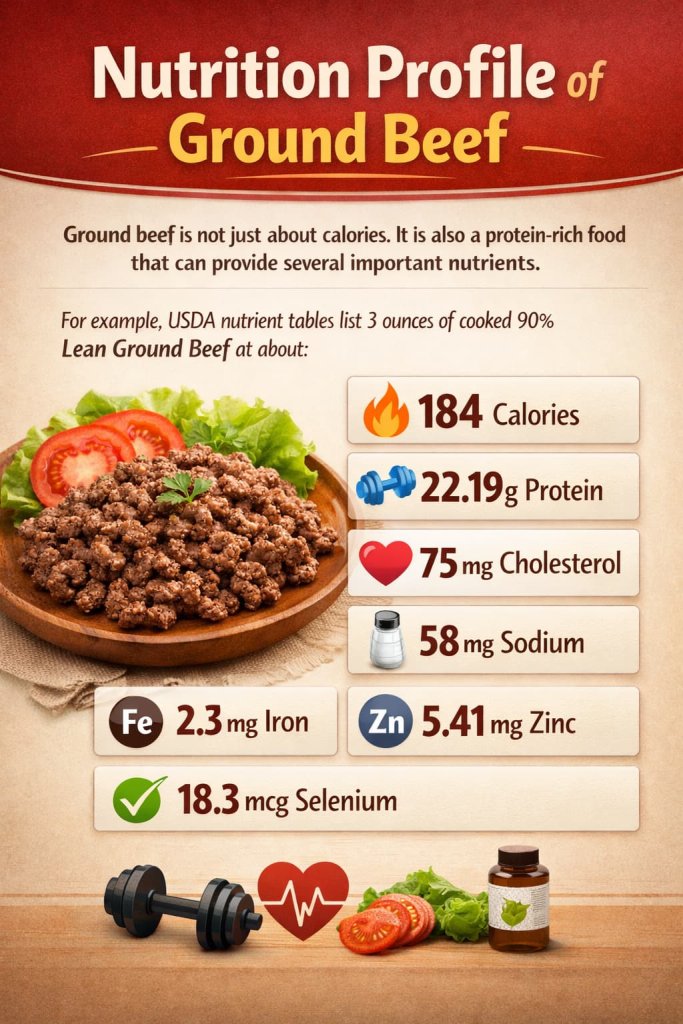
Ground beef is not just about calories. It is also a protein-rich food that can provide several important nutrients.
For example, USDA nutrient tables list 3 ounces of cooked 90% lean ground beef at about:
- 184 calories
- 22.19 grams of protein
- 75 mg cholesterol
- 58 mg sodium
- 2.3 mg iron
- 5.41 mg zinc
- 18.3 mcg selenium
That makes leaner ground beef a fairly nutrient-dense choice for people who want substantial protein along with minerals such as iron, zinc, and selenium.
Key Nutrients in Ground Beef
Protein
Ground beef is a high-protein food, and protein can help with fullness and meal satisfaction. USDA nutrient tables put 3 ounces of cooked 90% lean ground beef at just over 22 grams of protein, which is a meaningful amount for a modest serving.
Vitamin B12
Ground beef can help you get vitamin B12 because meat is one of the natural food sources of B12. The NIH Office of Dietary Supplements vitamin B12 fact sheet notes that vitamin B12 is found in fish, meat, poultry, eggs, milk, and other dairy products.
Zinc
Zinc is another strength of beef. The NIH zinc fact sheet says meat is a good source of zinc, and USDA nutrient tables show cooked lean ground beef contributes a meaningful amount per serving.
Iron
Ground beef also contributes iron, which is one reason red meat is often included in discussions about iron intake. USDA nutrient tables show about 2.3 mg of iron in 3 ounces of cooked 90% lean ground beef.
Selenium
Selenium is not always the first nutrient people think about, but ground beef provides it too. USDA nutrient tables list 18.3 mcg selenium in 3 ounces of cooked 90% lean ground beef.
Is Ground Beef Good for Weight Management?
Ground beef can fit into a weight-management diet, but the best choice is usually the leaner version and the right portion.
Why it may help:
- It provides substantial protein, which may support fullness
- Leaner versions give a better protein-to-calorie ratio
- It works well in portion-controlled meals like bowls, salads, stuffed peppers, tacos, and lettuce wraps
What to watch:
- Fattier ground beef adds calories quickly
- Large servings can turn a simple protein choice into a high-calorie meal
- Cooking with extra oil, cheese, creamy sauces, or oversized buns changes the total more than the beef alone
USDA MyPlate recommends choosing lean cuts of meat and ground beef that is at least 93% lean, which is especially useful advice for readers focused on calorie control.
Which Ground Beef Is Best if You Are Counting Calories?
For most people trying to reduce calories while still getting plenty of protein, the most practical picks are:
90/10 or 93/7 ground beef
These options usually strike the best balance between flavor, protein, and calorie control. They are often easier to fit into a meal plan than 80/20 ground beef. MyPlate’s lean-protein guidance supports this approach.
95/5 ground beef
This is even leaner and can work well for strict calorie goals, although some people find it slightly less juicy. If you use it in chili, pasta sauce, or tacos with other flavorful ingredients, that tradeoff is often minor. USDA nutrient tables also include very lean ground beef entries in their standard profiles.
Who Should Be a Little More Careful with Ground Beef?
People watching saturated fat intake
Ground beef can contain a meaningful amount of saturated fat, especially fattier blends. The Dietary Guidelines for Americans, 2020–2025 recommend keeping saturated fat to less than 10% of daily calories, and the American Heart Association notes that saturated fat is found in foods such as beef and other animal-based products.
People managing heart health or LDL cholesterol
Leaner ground beef is the better choice here because it lowers saturated fat and total calorie intake compared with regular 75% to 85% lean ground beef. MyPlate specifically flags regular ground beef among protein foods that can be higher in saturated fat.
People trying to lose weight
Ground beef can still work, but the portion and fat percentage matter. A modest serving of lean ground beef is very different from a large serving of fattier ground beef. For many readers, simply switching from 80/20 to 90/10 or 93/7 is one of the easiest ways to cut calories without cutting protein too much.
People at higher risk from foodborne illness
Ground beef needs extra care because bacteria can be mixed throughout the meat during grinding. The USDA Food Safety and Inspection Service, FDA, and CDC all advise cooking ground beef to 160°F (71°C).
Ground Beef Food Safety: What Readers Should Know
A complete article on ground beef should include safety, not just calories.
Cook it to 160°F
USDA says ground beef should be cooked to a safe minimum internal temperature of 160°F. This is one of the most important takeaways because color alone is not a reliable doneness test.
Use a food thermometer
USDA specifically advises using a food thermometer rather than guessing based on color. A burger can brown before it is fully safe.
Chill leftovers promptly
USDA leftovers guidance reinforces safe handling for cooked meats and leftovers. Ground meats should be cooked thoroughly and handled promptly after meals.
For day-to-day safety, raw ground beef should usually be cooked or frozen within 1 to 2 days of refrigeration. After cooking, refrigerate leftovers within 2 hours, or within 1 hour if the temperature is above 90°F. These details are easy to overlook, but they matter just as much as cooking ground beef to the right internal temperature.
Practical Tips to Keep Ground Beef Calories Reasonable
If you enjoy ground beef and want to keep meals balanced, these habits help:
- Choose 90/10, 93/7, or 95/5 more often
- Build meals around 3 to 4 ounces cooked
- Pair it with vegetables, beans, or whole grains instead of only refined carbs
- Drain excess fat after cooking when appropriate
- Use stronger seasonings, onions, garlic, tomato, salsa, or herbs so you do not rely on extra fat for flavor
- Compare labels carefully because calories can differ a lot from one package to another
These are simple changes, but they make ground beef much easier to fit into a balanced diet.
FAQs About How Many Calories in Ground Beef
How many calories are in 3 ounces of ground beef?
It depends on the leanness. A 3-ounce cooked serving of 90% lean ground beef has about 184 calories in USDA nutrient tables, while fattier versions are higher.
Is 80/20 ground beef high in calories?
It is higher in calories than leaner ground beef because it contains more fat. That is why 80/20 is usually less ideal for strict calorie tracking than 90/10 or 93/7.
Is lean ground beef good for weight loss?
It can be. Lean ground beef offers a lot of protein for a relatively moderate calorie cost, especially if you choose 90/10 or leaner and keep portions reasonable. USDA MyPlate recommends choosing ground beef that is at least 93% lean when possible.
Is cooked ground beef more calorie-dense than raw ground beef?
Yes, usually. Cooking reduces water weight, so the cooked beef becomes more concentrated per gram. That is why raw and cooked calorie numbers should not be compared directly without checking the serving basis.
Final Takeaway
Ground beef calories are not one fixed number. The biggest factor is how lean it is. For most readers, the smartest approach is to check the package ratio, compare raw vs. cooked serving sizes carefully, and choose a leaner option when calorie control matters. Lean ground beef can still give you plenty of protein, vitamin B12, zinc, iron, and selenium while fitting into a balanced meal plan.
If your goal is better everyday nutrition, start with one simple upgrade: choose 90/10 or 93/7 ground beef, keep your cooked portion around 3 to 4 ounces, and pair it with high-fiber sides for a more balanced meal.
Sources/References
- USDA Agricultural Research Service — FoodData Central
- USDA Agricultural Research Service — Beef Nutrient Calculator
- USDA MyPlate — Simple with MyPlate
- USDA MyPlate — Protein Foods Group
- NIH Office of Dietary Supplements — Vitamin B12 Fact Sheet
- NIH Office of Dietary Supplements — Zinc Fact Sheet
- U.S. Department of Health and Human Services and USDA — Dietary Guidelines for Americans, 2020–2025
- American Heart Association — Saturated Fats
- USDA Food Safety and Inspection Service — Ground Beef and Food Safety
- USDA Food Safety and Inspection Service — Safe Minimum Internal Temperature Chart
- USDA Food Safety and Inspection Service — Steps to Keep Food Safe
- FDA — Safe Food Handling
- CDC — Ground Beef Preparation