
Yes, tomatoes can fit a keto diet in moderate portions. A medium fresh tomato has about 5 grams of total carbohydrate and 2 grams of fiber, but tomato paste, sauce, and other concentrated tomato products can raise the carb count much faster, which matters on a keto pattern that typically limits carbs to about 20 to 50 grams per day. USDA SNAP-Ed and the NCBI Bookshelf both support that basic takeaway.
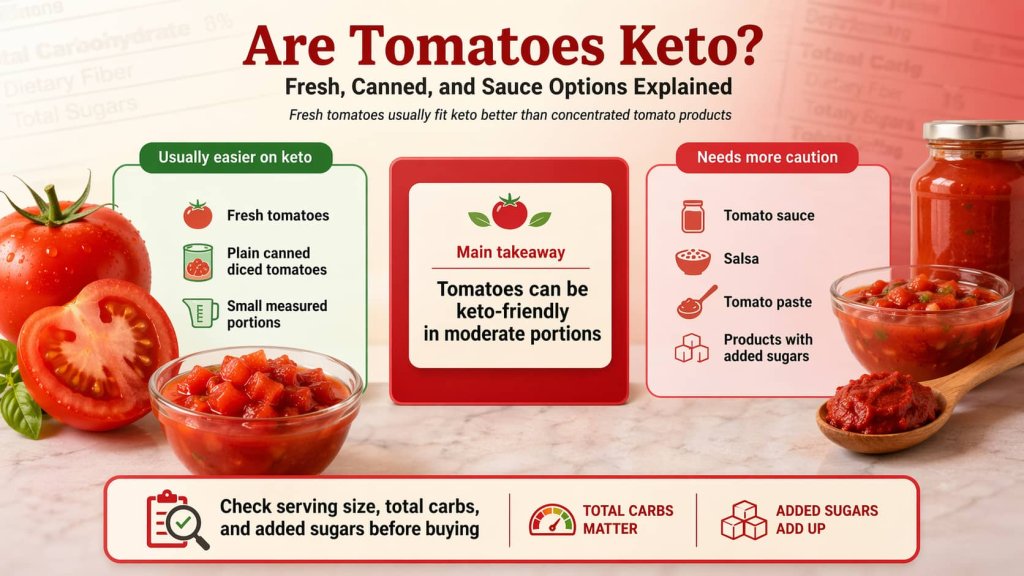
Tomatoes are worth understanding because they show up in salads, sauces, salsas, soups, burger toppings, and condiments. The short version is simple: fresh tomatoes are usually keto-friendly, while processed tomato products need more careful label reading. The most useful things to check are serving size, total carbohydrate, fiber, and whether the product has added sugars, as explained by the FDA Nutrition Facts Label guide.
Are tomatoes keto or too high in carbs?
For most people following keto, fresh tomatoes are not too high in carbs when eaten in normal portions. They are much easier to fit into a low-carb meal than bread, rice, pasta, potatoes, or sweet fruit. A sliced tomato on eggs, a few tomato wedges in a salad, or some chopped tomato in a lettuce wrap is usually manageable, based on USDA nutrition data from USDA SNAP-Ed.
One reason tomatoes confuse keto eaters is that, in everyday conversation, many people think of them as a fruit. In practical meal planning, though, tomatoes are usually treated more like a non-starchy vegetable. The CDC includes tomatoes among non-starchy vegetables, and USDA MyPlate counts a large tomato toward the Vegetable Group. That helps explain why tomatoes usually fit keto much more easily than sweeter fruits.
Where people get tripped up is assuming all tomato foods work the same way. They do not. When tomatoes are cooked down into paste or turned into sauce, the carbs become more concentrated per serving. And when a packaged tomato product includes sweeteners, the carb load can climb even more. The FDA also notes that added sugars are listed separately on the Nutrition Facts label, which makes them easier to spot.
How many carbs are in tomatoes?
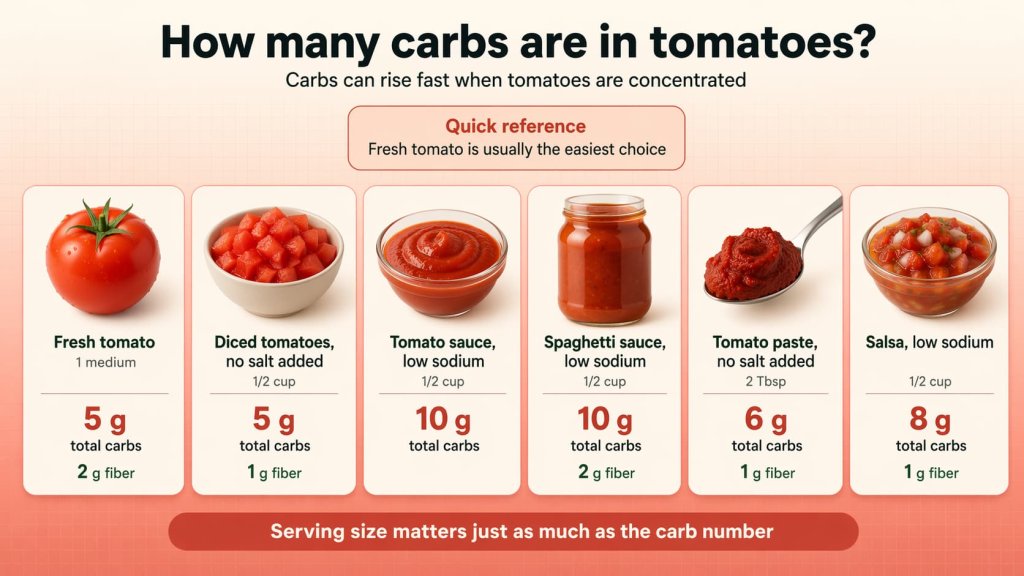
The numbers below come from USDA sources for the exact serving sizes shown. They are useful benchmarks, but packaged brands can differ, so always check the label on the product you buy.
| Tomato food | Serving size | Total carbs | Fiber | Sugars | Calories | Source |
|---|---|---|---|---|---|---|
| Fresh tomato | 1 medium (123 g) | 5 g | 2 g | 3 g | 22 | USDA SNAP-Ed |
| Diced tomatoes, no salt added | 1/2 cup (130 g) | 5 g | 1 g | 3 g | 25 | USDA Foods diced tomatoes |
| Tomato sauce, low sodium | 1/2 cup (123 g) | 10 g | 0 g | 7 g | 40 | USDA Foods tomato sauce |
| Spaghetti sauce, low sodium | 1/2 cup (125 g) | 10 g | 2 g | 6 g | 50 | USDA Foods spaghetti sauce |
| Tomato paste, no salt added | 2 Tbsp (35 g) | 6 g | 1 g | 4 g | 33 | USDA Foods tomato paste |
| Salsa, low sodium | 1/2 cup (128 g) | 8 g | 1 g | 6 g | 35 | USDA Foods salsa |
What this means for keto in real life
A fresh medium tomato is usually easy to fit into keto. Even a full tomato only uses a small part of a typical daily keto carb budget. That is why tomatoes often work well in salads, bunless burgers, omelets, and snack plates.
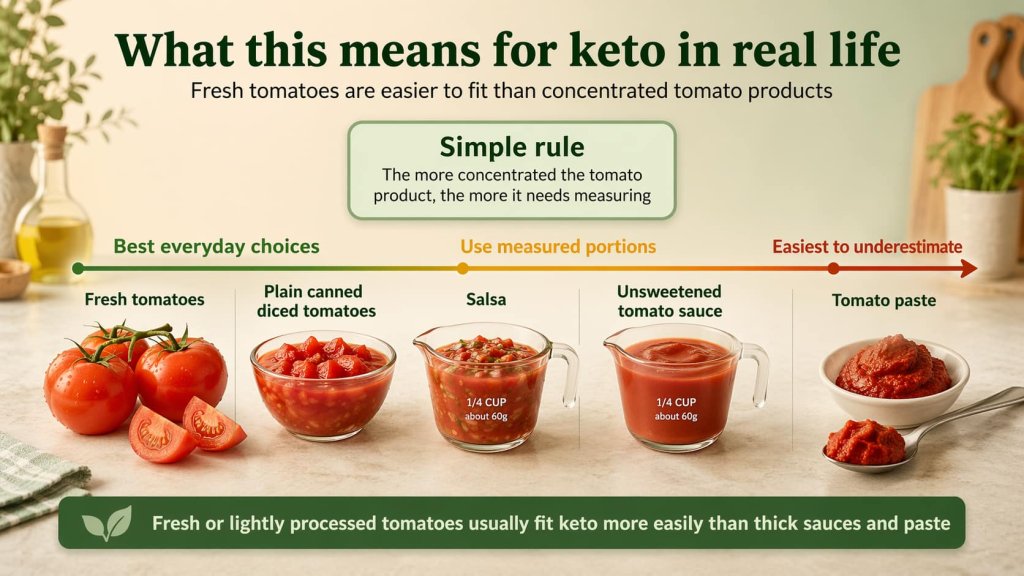
Tomato sauce and salsa can still fit, but portion size starts to matter more. A half cup of tomato sauce or spaghetti sauce lands around 10 grams of total carbohydrate in the USDA examples above. Tomato paste is even more concentrated, with 6 grams of total carbohydrate in just 2 tablespoons. That does not mean these foods are off-limits. It means they are better treated as measured ingredients rather than “free” foods on keto.
A simple keto rule is to think of tomato foods on a spectrum. Fresh tomatoes and plain canned diced tomatoes are usually the easiest everyday choices. Measured portions of salsa and unsweetened tomato sauce can still fit, but they use more of your carb budget faster. Tomato paste is the easiest to underestimate because it is much more concentrated. In the USDA examples above, a medium fresh tomato has 5 grams of total carbohydrate, plain canned diced tomatoes have 5 grams per 1/2 cup, tomato sauce has 10 grams per 1/2 cup, and tomato paste has 6 grams in just 2 tablespoons. That makes tomatoes much easier to use on keto when they are fresh or lightly processed, and much more important to measure when they are concentrated.
When tomatoes stop being keto-friendly
Tomatoes usually become less keto-friendly for one of three reasons:
- The serving is much larger than you think
- The product is concentrated, like paste or thick sauce
- The product has added sugars
The FDA explains that serving size is the first thing to check on the Nutrition Facts label, because all the listed numbers apply to that exact amount. The agency also explains that added sugars are included within total sugars and are listed separately so you can see whether a product has sweeteners added during processing.
That is why plain diced tomatoes are often easier to fit into keto than sweetened pasta sauce, pizza sauce, ketchup, or barbecue-style tomato condiments. Tomatoes themselves are not the main problem in many packaged products. The real issue is usually concentrated servings, sweeteners, or both.
Should you count total carbs or net carbs?
Many keto eaters look at net carbs, but this is where it helps to be careful. The American Diabetes Association says “net carbs” does not have a legal definition, is not recognized by the ADA, and is calculated by subtracting fiber or sugar alcohols from total carbohydrate. ADA also notes that this method is not entirely accurate because fiber and sugar alcohols can affect the body differently depending on the type used. The FDA recommends using total carbohydrate on the Nutrition Facts label.
For tomatoes, that means a medium fresh tomato is often estimated at about 3 grams of net carbs because it has 5 grams of total carbohydrate and 2 grams of fiber. But it is smarter to treat that as an estimate, not a guarantee. If you want the safest label-reading rule, start with total carbohydrate and then use fiber as extra context.
Best ways to eat tomatoes on keto
Tomatoes fit keto best when they add flavor, freshness, and volume without becoming the main carb source in the meal. Good examples include:
- Sliced tomato with eggs, avocado, and cheese
- Chopped tomato in a taco salad or lettuce wrap
- A few tomato slices on a bunless burger
- Measured salsa with eggs, grilled chicken, or taco bowls
- Small amounts of tomato paste in soups, stews, or low-carb sauces
A helpful rule is to pair tomatoes with foods that are naturally low in carbs and more filling, such as eggs, meat, fish, cheese, olive oil, nuts, seeds, or non-starchy vegetables. That keeps the overall meal easier to manage. The American Diabetes Association’s low-carb guidance also emphasizes non-starchy vegetables, lean protein, and healthy fats as the core of a lower-carb eating pattern.
How to check whether a tomato product is keto-friendly
Start with serving size
The FDA says the serving size tells you exactly what the carb numbers apply to. A jar or pouch may contain multiple servings, so the carb total can double or triple quickly if you use more than the listed amount.
Check total carbohydrate first
This is the fastest way to see whether a sauce, salsa, or paste realistically fits your daily carb target. If the number looks high for the amount you plan to eat, it may not be the best choice for keto.
Look for added sugars
The FDA notes that added sugars appear on the Nutrition Facts label and are included within total sugars. If a tomato product has added sugars, that is a sign to slow down and compare brands.
It also helps to check the ingredient list, not just the carb number. Two tomato sauces can look similar on the shelf, but one may be mostly tomatoes, water, and seasonings while another includes sugar or other sweeteners. The FDA notes that added sugars appear on the Nutrition Facts label within total sugars, which makes side-by-side brand comparisons easier when you are trying to keep tomato products keto-friendly.
Compare plain vs. concentrated products
Fresh and diced tomatoes stay relatively modest in carbs. Paste, pizza sauce, and thicker sauces are more concentrated, so smaller amounts matter more.
Who should be careful with strict keto?
Tomatoes themselves are not usually the issue. The bigger issue is how strict keto affects your overall eating pattern.
The ADA notes that eating fewer carbs can affect blood glucose and that people taking diabetes medications should talk with a doctor about whether medication adjustments are needed before and after major food changes. ADA also notes that lower-carb eating can reduce fiber intake and may lead to digestion changes like constipation if meals are not planned well.
That matters most if you:
- Use insulin or other glucose-lowering medication
- Already struggle to get enough fiber
- Rely heavily on packaged “keto” sauces or condiments
- Are cutting carbs very aggressively without planning balanced meals
Frequently asked questions
How many tomatoes can you eat on keto?
It depends on your total daily carb budget, but a medium fresh tomato is usually manageable because it has about 5 grams of total carbohydrate. For many people, that makes one tomato or a modest serving of chopped tomato easy to fit into a meal plan.
Is tomato sauce keto?
Sometimes. In the USDA example, 1/2 cup of low-sodium tomato sauce has 10 grams of total carbohydrate. That can fit keto, but it is not as easy to “free-pour” as fresh tomato. Sweetened sauces need even more caution.
Is salsa keto?
Often yes, in measured amounts. The USDA low-sodium salsa example has 8 grams of total carbohydrate per 1/2 cup, so a small spoonful or a few tablespoons is usually easier to fit than a large serving.
Is tomato paste keto?
It can be, but it is easy to underestimate. Just 2 tablespoons of tomato paste contain 6 grams of total carbohydrate in the USDA example, so it works better as a flavoring ingredient than as a large base.
Are canned tomatoes keto?
Usually yes, especially plain no-salt-added diced tomatoes. In the USDA example, 1/2 cup has 5 grams of total carbohydrate, which is similar to a fresh medium tomato.
Final answer
Tomatoes are generally keto-friendly, especially fresh tomatoes and plain canned tomatoes in moderate portions. The catch is that tomato products become less keto-friendly as they become more concentrated or more sweetened. If you stay aware of serving size, total carbohydrate, and added sugars, tomatoes can usually stay on the menu.
For the simplest decision at the store, choose plain tomato products first, then compare labels before buying sauces, salsa, or paste.
References
- FDA — Added Sugars on the Nutrition Facts Label
- CDC — Carbohydrate Lists for Diabetes: Non-Starchy Vegetables
- USDA MyPlate — Tomato Fact Card
- USDA Foods — Tomato Paste, No Salt Added, Canned
- USDA Foods — Spaghetti Sauce, Low-Sodium, Canned
- USDA Foods — Salsa, Low-Sodium, Canned
- American Diabetes Association — All About the Low Carb and Very Low Carb Eating Patterns