
Zinc supplements can be useful when you do not get enough zinc, have a higher risk of low zinc status, or are using a specific clinician-recommended product such as a short-term cold lozenge or an AREDS2 eye formula. Zinc supplements are not a cure-all, though, and more is not always better. The most reliable way to use them is to match the product and dose to a real need, use the NIH Office of Dietary Supplements zinc fact sheet as a reference, and stay within safe intake limits.
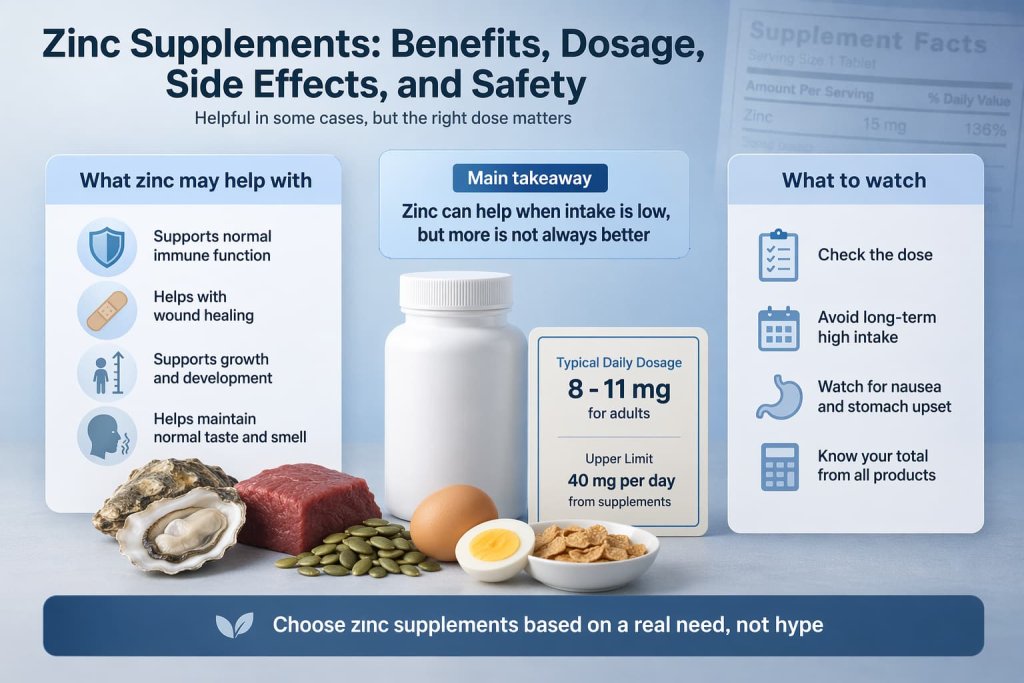
For many people, zinc needs can be met through food first. That matters because zinc supports normal immune function, wound healing, protein and DNA synthesis, growth and development, and the senses of taste and smell, but the Dietary Guidelines for Americans note that nutritional needs should be met primarily through foods when possible.
What zinc supplements may help with
Zinc is an essential mineral, so the clearest reason to supplement is to correct or prevent inadequate intake. When zinc status is low, the effects can show up in many body systems, including immune function, appetite, wound healing, and taste or smell.
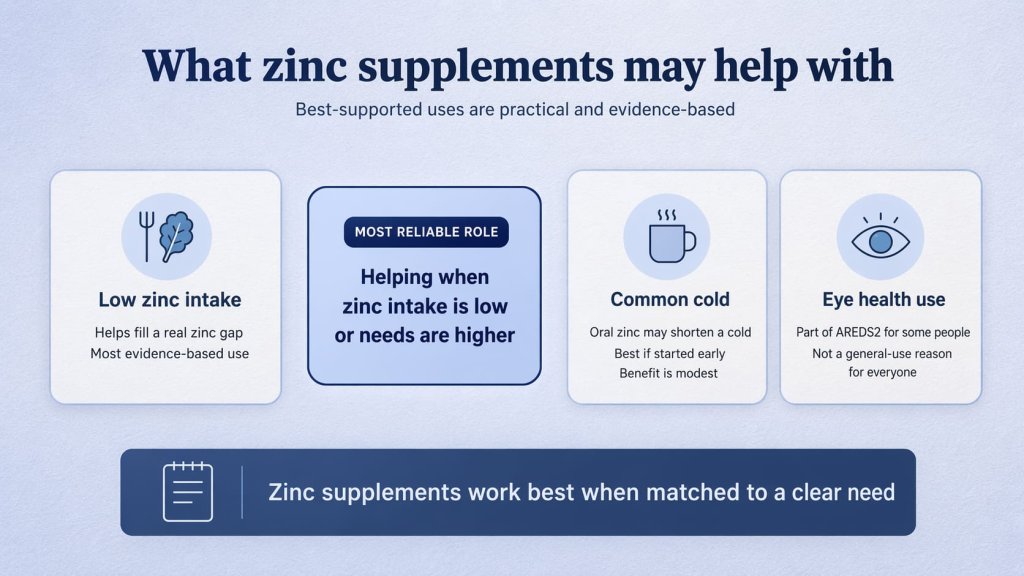
The best-supported uses of zinc supplements include these:
- Filling a genuine zinc gap or deficiency risk. This is the most evidence-based reason to use zinc supplements.
- Helping a cold end a little sooner in some cases. Oral zinc lozenges or syrup started early may shorten cold duration, but results are mixed and the benefit is modest rather than dramatic.
- Part of the AREDS2 formula for certain people with age-related macular degeneration. This is a targeted medical use, not a general wellness recommendation for everyone.
Who may benefit most from zinc supplements
According to ODS, the people most likely to need closer attention to zinc intake include those with gastrointestinal disorders such as inflammatory bowel disease or celiac disease, people who have had bariatric surgery, people following vegetarian or vegan diets, women who are pregnant or lactating, exclusively breastfed infants after 6 months, children with sickle cell disease, and people with alcohol use disorder.
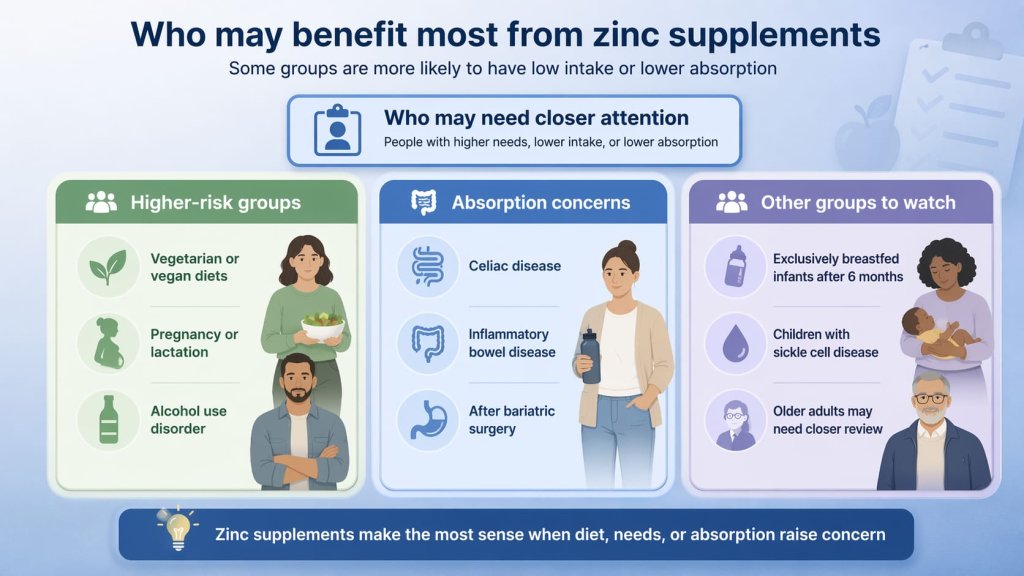
Vegetarian and vegan diets deserve special mention because beans, nuts, and whole grains do contain zinc, but they also contain phytates, which can reduce zinc absorption. That does not mean plant-based eaters must take zinc, but it does mean intake and absorption deserve a little more attention.
Signs low zinc may be worth discussing with a clinician
Low zinc is not always obvious, but it can show up as reduced taste or smell, poor wound healing, frequent infections, hair loss, or low appetite. In older adults, low zinc can also affect thinking, reasoning, and memory. These signs are not specific to zinc, so they are a reason to get evaluated, not to assume you need high-dose supplements.
How much zinc do you need?
ODS lists these recommended daily amounts for adults, and the FDA Daily Value guide uses 11 mg as the Daily Value for adults and children age 4 and older.
- Adult men: 11 mg a day
- Adult women: 8 mg a day
- Pregnancy: 11 mg a day
- Lactation: 12 mg a day
The key safety limit for most adults is the Tolerable Upper Intake Level of 40 mg a day from all sources combined, including food, supplements, and medications, unless a clinician is supervising a different dose for a medical reason.
Food sources of zinc before you buy a supplement
Many people can cover their zinc needs without a standalone supplement. ODS lists meat, fish, other seafood, eggs, and dairy as good sources, with oysters standing out as especially rich. Beans, nuts, whole grains, fortified cereals, and seeds also provide zinc, though plant foods are generally less bioavailable because of phytates.
In real life, that means a supplement makes the most sense when your diet is low in zinc-rich foods, your needs are higher, or absorption may be lower. It is less compelling as an automatic daily add-on when your diet and multivitamin already cover the basics.
How to choose zinc supplements wisely
Start with the label. ODS notes that zinc supplements commonly use zinc sulfate, zinc acetate, and zinc gluconate, and the Supplement Facts panel lists the amount of elemental zinc, not the weight of the full compound. That is why two products can use different forms but still deliver the same actual zinc dose.
A simple label shortcut also helps: the Daily Value for zinc is 11 mg, so a supplement with 100% DV gives 11 mg per serving. That makes it easier to spot when a product is moderate versus high-dose. For example, 200% DV is 22 mg, which is already double the Daily Value and above the adult RDA for most women.
There is no one perfect form for every person. In one study cited by ODS, zinc citrate and zinc gluconate had similar absorption in young adults, at about 61%, while zinc oxide was lower at about 50%. That is useful context, but dose, tolerance, purpose, and the rest of your supplement stack matter just as much.
A practical rule is to add up the zinc from everything you take before buying another product. A multivitamin, a standalone zinc capsule, and a cold lozenge used in the same week can push intake much higher than intended. That matters because manufacturers set serving sizes, and FDA guidance on dietary supplements explains that the agency does not preapprove dietary supplements or their labels the way it does drugs.
Zinc supplements for colds: what the evidence says
This is one of the most common reasons people buy zinc supplements. The evidence is not perfect, but it is good enough to say this: oral zinc may help shorten a cold if started early, but it does not clearly prevent colds, and it is not a guaranteed fix.
If you use zinc for a cold, think of it as a short-term option, not an open-ended daily habit. Oral zinc lozenges are the form most often studied, and the best-supported use is starting within 24 hours of symptoms and using them for less than 2 weeks. It is also smart not to stack a cold lozenge with a separate zinc supplement unless you have checked the total daily amount.
ODS reports that zinc lozenges or syrup taken shortly after symptoms begin appear to reduce duration more than severity overall. The same fact sheet cites a 2024 Cochrane review in which participants using zinc products resolved symptoms about 2 days earlier on average, but certainty was low to very low. The National Center for Complementary and Integrative Health also notes that oral zinc may help when started within 24 hours of symptom onset.
The safety warning here is important: do not use intranasal zinc products. NCCIH says zinc products used inside the nose have been linked to loss of smell, which may be long-lasting or permanent.
Zinc supplements for eye health
Zinc does have a real, evidence-based role in eye care, but only in a specific setting. The National Eye Institute AREDS2 overview explains that AREDS or AREDS2 supplements can reduce the risk of progression from intermediate to advanced age-related macular degeneration by about 25%. The AREDS2 formula includes 80 mg zinc and 2 mg copper.
That does not mean high-dose zinc is a good idea for everyone. AREDS2 is a targeted formula for specific eye disease risk, and NEI also notes that these supplements do not prevent AMD from starting.
Safety box for zinc supplements
Safety box
- Common side effects of too much zinc include nausea, dizziness, headaches, stomach upset, vomiting, and loss of appetite.
- For most adults, the upper limit is 40 mg a day from all sources combined.
- Taking 50 mg a day or more for weeks can interfere with copper absorption and may reduce immune function and HDL cholesterol.
- Avoid zinc products used inside the nose because of the risk of smell loss.
- Ask a clinician or pharmacist before using zinc if you take regular medicines or already use a multivitamin or “immune support” product.
Zinc supplement interactions to know about
Zinc can interact with some commonly used medicines. ODS specifically lists quinolone antibiotics, tetracycline antibiotics, penicillamine, and thiazide diuretics as important examples.
Here is the practical takeaway:
- Take quinolone or tetracycline antibiotics at least 2 hours before or 4 to 6 hours after zinc.
- Take zinc and penicillamine at least 1 hour apart.
- Know that thiazide diuretics can increase zinc loss in urine over time.
- Be careful with iron-heavy products, because supplements containing 25 mg or more of elemental iron taken at the same time can reduce zinc absorption.
What zinc supplements do not clearly do
Zinc is essential for normal immune function, but that should not be confused with a broad promise to “boost immunity” in everyone. The strongest evidence is for correcting low intake or deficiency risk, not for turning a well-nourished person into someone who gets sick less often.
It is also worth knowing how supplement claims work. FDA information on dietary supplements explains that supplements are regulated differently from drugs and are generally not FDA-approved before sale. If a supplement makes a structure/function claim, the label must also say the product is not intended to diagnose, treat, cure, or prevent disease.
Frequently asked questions about zinc supplements
Can you take zinc supplements every day?
Yes, but daily use only makes sense if the total amount fits your needs and stays within safe limits. For many adults, the smarter question is not whether zinc can be taken every day, but whether you actually need extra zinc beyond food or a multivitamin.
Which zinc supplement form is best?
There is no universal best form. Zinc sulfate, acetate, and gluconate are all common. The most important thing is the elemental zinc amount, the purpose of use, your tolerance, and whether the product fits with the rest of your supplements and medicines.
Can you get enough zinc from food alone?
Often, yes. Oysters, red meat, seafood, eggs, dairy, fortified cereals, pumpkin seeds, lentils, and other foods can contribute meaningful amounts. Food first is especially sensible when your diet already includes several zinc-rich foods.
Is more zinc better for immunity?
No. Zinc is important for immune function, but higher and higher doses do not automatically create better immune outcomes. At high intakes, side effects and copper problems become a bigger concern.
Conclusion
Zinc supplements can be helpful, but they work best when used for the right reason: low intake, higher-risk situations, or a specific evidence-based purpose such as early cold lozenges or an AREDS2 formula recommended for eye health. The safest approach is to check how much zinc you already get, read the elemental zinc amount on the label, and avoid drifting into high-dose daily use without a clear reason.
When in doubt, ask a clinician or pharmacist to review your dose, your medicines, and your full supplement stack before you start.
This content is for informational purposes only and not medical advice.
References
- FDA — Daily Value on the Nutrition and Supplement Facts Labels
- NCCIH — Colds, Flu, and Complementary Health Approaches
- National Eye Institute — AREDS/AREDS2 Clinical Trials
- FDA — Dietary Supplements
- FDA — Questions and Answers on Dietary Supplements
- U.S. Departments of Agriculture and Health and Human Services — Dietary Guidelines for Americans, 2020–2025