
Yes, carrots can fit a keto diet in moderation. The catch is portion size: keto diets usually keep carbs very low, often around 20 to 50 grams per day, and carrots are higher in carbs than leafy greens or other very low-carb vegetables. A medium carrot has about 6 grams of total carbs and 2 grams of fiber, while 1 cup of chopped raw carrots has about 12.26 grams of total carbs. That means carrots are usually keto-friendly as a small side, garnish, or snack, but not the best choice for large servings. USDA SNAP-Ed carrot nutrition, USDA carbohydrate data, and an NIH StatPearls overview of low-carbohydrate diets all support that basic takeaway.
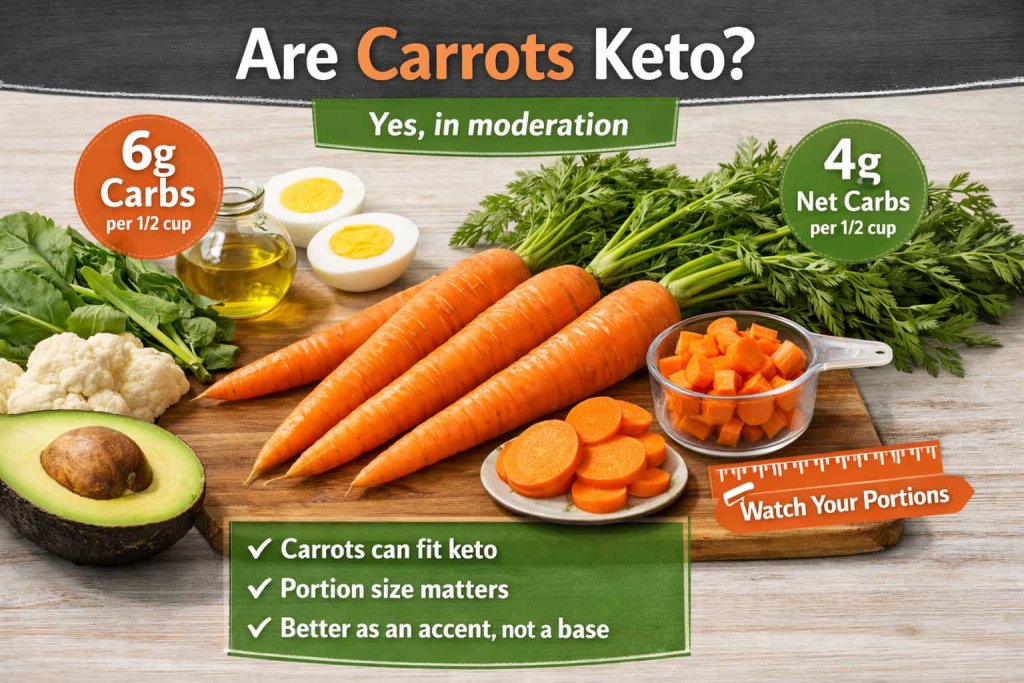
Understanding this matters because carrots are nutritious, easy to overeat, and often misunderstood on keto. You do not need to avoid them completely. You just need to treat them as a moderate-carb vegetable instead of a “free” one.
Are Carrots Keto?
Carrots are keto-compatible, not ultra-low-carb. In real-life meal planning, that means they can work on keto when you keep the portion modest and account for the carbs in your daily total. Since many ketogenic diets limit carbs to about 20 to 50 grams a day, a small serving of carrots can fit, but a large bowl of carrots can use up a meaningful share of your carb budget.
That makes carrots different from vegetables many keto eaters use more freely, such as lettuce, spinach, zucchini, mushrooms, cucumbers, or cauliflower. Carrots are still a good vegetable. They just take a little more planning.
How carrots compare with lower-carb keto vegetables
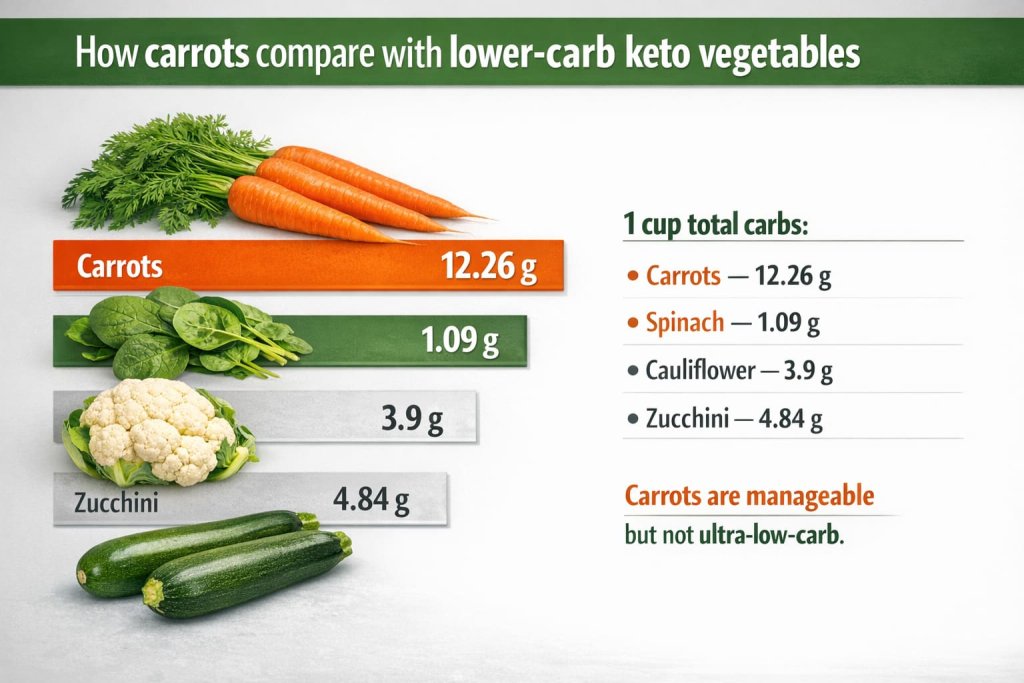
If you are trying to save carbs, carrots are manageable, but they are not in the same range as many classic keto vegetables. USDA data shows that 1 cup of chopped raw carrots has 12.26 grams of total carbohydrate, compared with 1 cup of raw spinach at 1.09 grams, 1 cup of raw cauliflower at 3.9 grams, and 1 cup of cooked sliced zucchini at 4.84 grams. That is why carrots usually work better as a smaller accent vegetable, while spinach, cauliflower, and zucchini are easier to use in larger portions on keto.
Carrot Carbs on Keto: What the Numbers Look Like
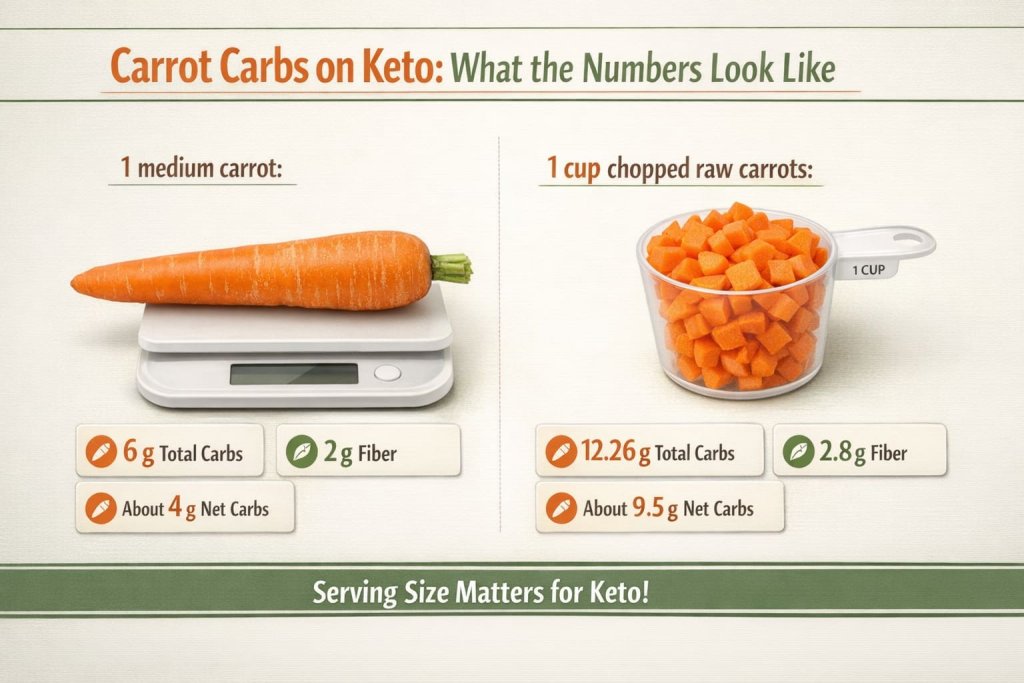
Here is the practical carb picture for common raw carrot servings:
| Serving | Total Carbs | Fiber | Estimated Net Carbs* |
|---|---|---|---|
| 1 medium carrot (61 g) | 6 g | 2 g | about 4 g |
| 1 cup chopped raw carrots | 12.26 g | 2.8 g | about 9.5 g |
What carrots use up in a keto carb budget
One easy way to judge carrots on keto is to compare the serving with your daily carb target. On a stricter 20-gram-per-day keto plan, one medium carrot at 6 grams of total carbohydrate uses about 30% of the day’s budget, while 1 cup of chopped raw carrots at 12.26 grams uses a little over 60%. On a 50-gram-per-day plan, those same servings are much easier to fit. That does not make carrots off-limits. It simply shows why carrots work better on keto as a measured add-on than as a large base vegetable.
USDA nutrition data lists 1 medium carrot at 6 grams of carbohydrate and 2 grams of fiber. USDA nutrient tables also list 1 cup chopped raw carrots at 12.26 grams of carbohydrate, 2.8 grams of fiber, and 52 calories.
*Many keto eaters estimate “net carbs” by subtracting fiber from total carbs. But the American Diabetes Association explains what “net carbs” means and notes that the term has no legal definition, is not recognized by the ADA, and the equation is not entirely accurate for every food. For the most dependable label reading, ADA recommends starting with total carbohydrate.
Why Carrots Can Still Be a Smart Keto Food
Carrots are not just about carbs. They also bring real nutritional value. The NIH Office of Dietary Supplements vitamin A fact sheet explains that provitamin A carotenoids from plant foods are converted by the body into vitamin A, and vitamin A supports immune function, growth and development, cellular communication, and normal eye and organ function. NIH also notes that orange and yellow vegetables such as carrots are rich sources of these compounds.
That is why carrots do not need to be labeled “bad for keto.” A better way to think about them is this:
- good nutrition
- moderate carbs
- best in measured servings
For many people, that balance is reasonable.
When Carrots Stop Being Keto-Friendly
Carrots become harder to fit into keto when the portion gets large or the recipe adds extra sugar.
The biggest problems are usually:
- eating multiple large carrots without tracking them
- snacking on big handfuls of baby carrots
- drinking carrot juice
- ordering honey-glazed or sweet roasted carrots
- assuming all vegetables are equally low in carbs
Plain carrots are one thing. Sweetened carrot dishes are another. If you are using packaged products or prepared foods, check the serving size, total carbohydrate, and added sugars on the label. The American Diabetes Association’s guide to reading nutrition labels recommends checking serving size first and then looking at total carbohydrates and added sugars.
Best Ways to Eat Carrots on Keto
If you like carrots and want to stay keto, the easiest approach is to use them as a small supporting ingredient, not the main vegetable.
Good keto-friendly ways to use carrots
- add a few carrot ribbons or shreds to a salad
- roast a small portion with olive oil, salt, and pepper
- add a modest amount to soups or stir-fries
- pair carrots with protein and fat so the meal is more balanced
- measure servings instead of eating from a bag
A small amount can add color, crunch, and flavor without pushing carbs too high. This is often a more practical strategy than banning carrots completely.
Are Baby Carrots Keto?
Yes, baby carrots can be keto in moderation too. USDA SNAP-Ed notes that baby carrots are not a different kind of carrot; they are regular carrots that have been peeled and cut into smaller pieces. So the keto question is still about how many you eat, not whether the carrot is “baby” or “regular.”
A practical way to think about baby carrots is by portion size. The CDC’s carb-counting examples list 8 baby carrots at about 7 grams of carbohydrate. That can still fit into keto for some people, but it is enough that snacking straight from a large bag can use more of your carb budget than expected. A measured portion is a smarter choice than mindless grazing.
Because baby carrots are easy to snack on mindlessly, they can add up fast. That is one reason they feel “less keto” in practice even though they are still just carrots.
Are Cooked Carrots Keto?
Cooked carrots can still fit keto. Cooking alone does not make carrots non-keto. What matters most is:
- the portion size
- whether sugar or syrup is added
- what else is in the meal
Plain steamed, sautéed, or roasted carrots are usually easier to fit than glazed carrots or carrot-heavy purées. When in doubt, use the nutrition label or recipe calculator and focus on the total carbs per serving. ADA’s label-reading guidance is especially useful here.
A Simple Rule: Use Carrots as an Accent, Not a Base
For strict keto, carrots usually work best as an accent vegetable.
That means:
- a few slices on the side
- a small handful in a salad
- a limited amount in a cooked dish
It usually does not mean:
- a full bowl of carrots
- large portions of carrot soup
- frequent carrot juice
- sweet holiday-style carrot recipes
This simple rule helps you keep the benefits of carrots without letting them crowd out lower-carb foods.
Who Should Be More Careful?
If you have diabetes, take insulin or other glucose-lowering medication, or are considering a very-low-carbohydrate eating pattern, it is smart to talk with your clinician before making major carb cuts. The 2026 American Diabetes Association Standards of Care state that people following very-low-carbohydrate eating plans should have consistent medical oversight.
Safety note
A keto-style diet can change how you manage blood glucose, medications, and meal planning. If you use diabetes medication, do not assume that “lower carb” is automatically safer without guidance.
FAQ
How many carrots can you eat on keto?
For many people, one medium carrot can fit into keto, especially if the rest of the day is built around lower-carb foods. A full cup of chopped carrots is much more significant from a carb standpoint, so it takes more planning.
Can you eat carrots every day on keto?
You can, as long as your total daily carbs still line up with your version of keto. Daily use is usually easier when carrots are a small part of meals rather than the main vegetable.
Do carrots kick you out of ketosis?
A small serving usually will not by itself. Larger servings, frequent snacking, or carrot dishes with added sugar are more likely to make your carb intake harder to control. Since ketogenic diets are typically very low in carbohydrate, the total day matters more than one bite of carrot.
Should you count total carbs or net carbs?
If you follow keto, you may see both methods used. But ADA says “net carbs” is not an FDA-defined term and is not recognized by the ADA, so checking total carbohydrate first is the safer, clearer starting point.
The Bottom Line on Carrots and Keto
Carrots are keto-friendly in moderation, but they are not a free food on keto. They have more carbs than many other vegetables, yet they also provide valuable nutrition, including provitamin A carotenoids. For most people, the best move is simple: enjoy carrots in small, measured portions, keep an eye on total carbs, and save the biggest vegetable portions for lower-carb options.
If you are trying to stay in ketosis, treat carrots as a planned extra, not a default base. That way you get the flavor and nutrition without making your carb budget harder to manage.
References
- U.S. Department of Agriculture, National Agricultural Library — Total kcal nutrient table
- National Center for Biotechnology Information — Low-Carbohydrate Diet, StatPearls
- National Center for Biotechnology Information — The Ketogenic Diet, StatPearls
- NIH Office of Dietary Supplements — Vitamin A and Carotenoids Fact Sheet for Health Professionals
- American Diabetes Association — Get to Know Carbs
- American Diabetes Association Professional Practice Committee — Standards of Care in Diabetes—2026: Facilitating Positive Health Behaviors and Well-being to Improve Health Outcomes
- Centers for Disease Control and Prevention — Carb Counting to Manage Blood Sugar