
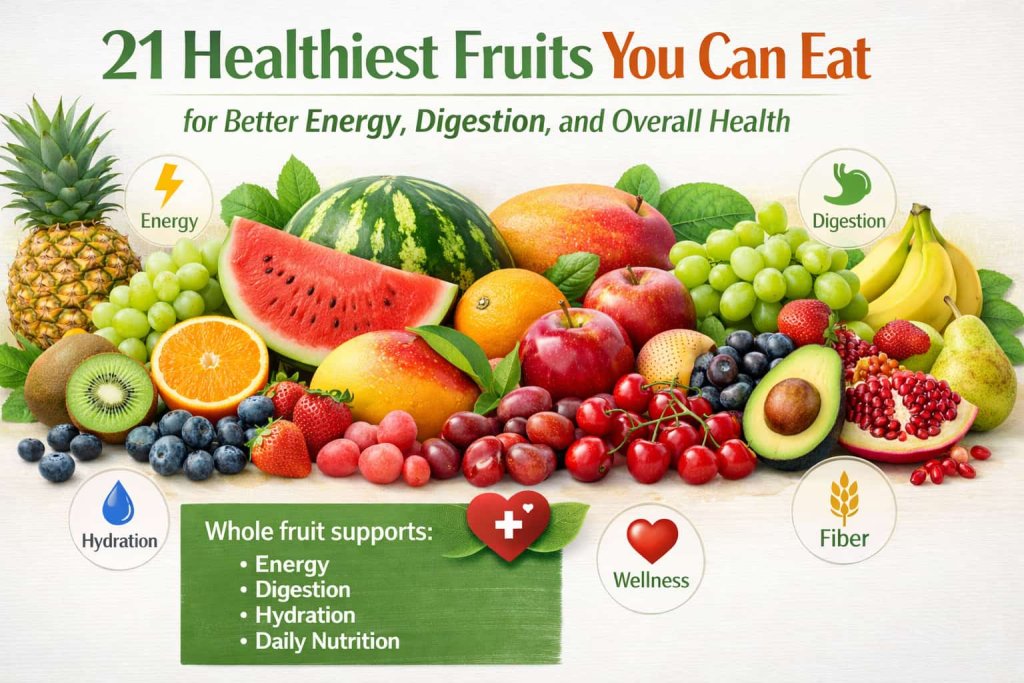
The healthiest fruits are the ones that help you eat more whole fruit consistently, especially fruits rich in fiber, vitamin C, potassium, water, and, in the case of avocado, healthy unsaturated fat. There is no single perfect fruit, but there are several standout choices that make it easier to build a balanced, nutrient-dense diet. According to the Dietary Guidelines for Americans, whole fruit should be a regular part of a healthy eating pattern.
That matters because most adults still do not eat enough fruit. CDC data found that only 12.3% of U.S. adults met fruit intake recommendations, even though fruit helps supply important nutrients many people fall short on, including fiber and potassium.
What Makes a Fruit Healthy?
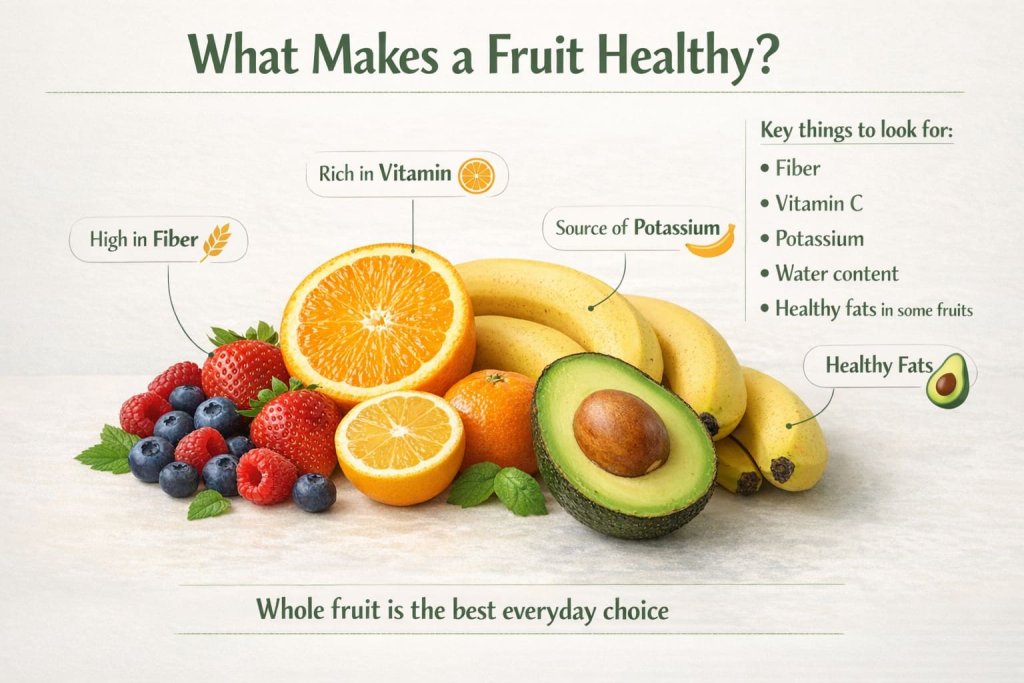
A healthy fruit is not the one with the most hype. It is the one that helps you meet your daily fruit goal in a practical way while adding useful nutrition to your meals and snacks. The best fruits usually do one or more of these things: add fiber for digestion and fullness, provide vitamin C, contribute potassium, bring water for volume and hydration, or replace less nutritious snack foods. CDC notes that fruits can help with fullness because of their water and fiber content and can support healthy weight management when they replace more calorie-dense foods through its healthy eating guidance on fruits and vegetables.
The bigger picture matters too. The Dietary Guidelines say that at least half of your fruit should come from whole fruit rather than 100% juice. The American Heart Association also recommends eating many different types and colors of fruit to get a wider range of nutrients.
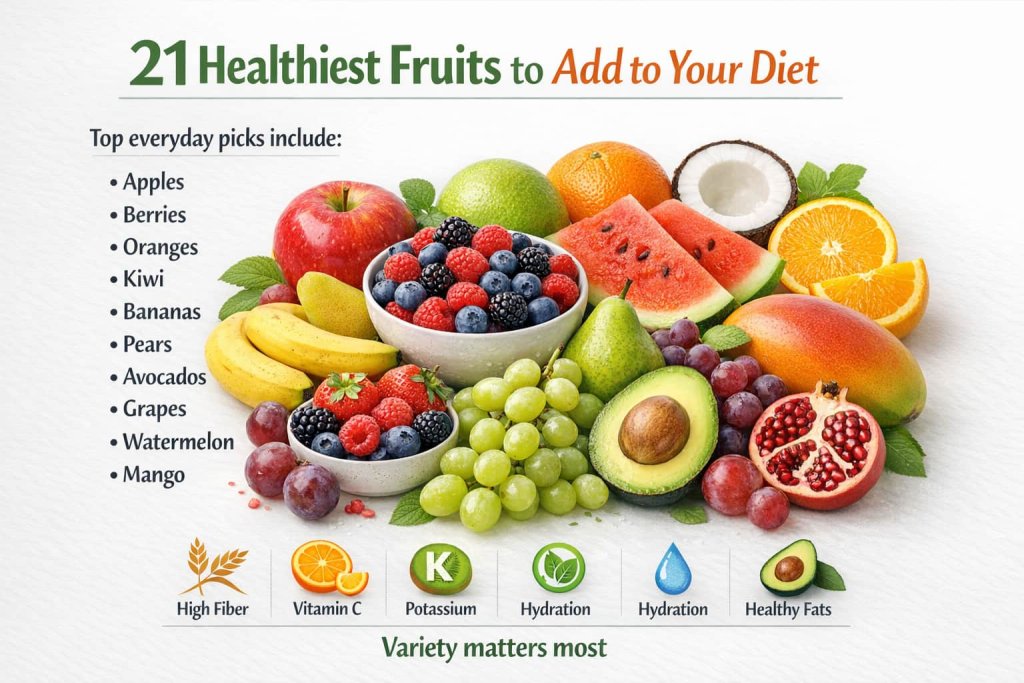
21 Healthiest Fruits to Add to Your Diet
This is not a miracle-food ranking. These fruits stand out because they make it easier to eat more whole fruit and cover nutrients people often need more of.
1. Apples
Apples are one of the easiest whole fruits to eat regularly. They are portable, filling, and a simple way to choose whole fruit instead of juice, which helps you get more fiber.
2. Pears
Pears are a strong everyday fruit because they are fiber-friendly, widely available, and work well as a snack or part of breakfast. If you want a fruit that supports digestion and fullness, pears are a smart choice.
3. Strawberries
Strawberries deserve a place near the top of any healthiest fruits list because they combine whole-fruit convenience with fiber and are also listed by the NIH Office of Dietary Supplements as a good source of vitamin C.
4. Raspberries
Raspberries are one of the best fruits for people trying to eat more fiber. The American Heart Association specifically highlights berries with seeds, including raspberries, as good fiber sources.
5. Blackberries
Like raspberries, blackberries are a strong fiber pick and are especially useful when you want a fruit that feels more substantial than juice or a sugary snack food.
6. Blueberries
Blueberries are easy to add to oatmeal, yogurt, smoothies, or snacks. They also help you follow the advice to eat a variety of colorful fruits.
7. Oranges
Oranges are one of the classic healthiest fruits because citrus fruits are highlighted by NIH as strong vitamin C sources. They are also easy to portion and naturally satisfying.
8. Grapefruit
Grapefruit is another vitamin C-rich citrus fruit that can fit well into a healthy diet. The main caveat is that grapefruit and grapefruit juice can interact with some medicines, so it is worth checking with your pharmacist or clinician if you take prescription drugs.
9. Kiwi
Kiwi is one of the standout fruits for vitamin C. NIH specifically lists kiwifruit among foods rich in vitamin C, making it a great option when you want a small fruit with a strong nutrient payoff.
10. Cantaloupe
Cantaloupe is another vitamin C-rich fruit and a refreshing option for people who prefer fruit with a high-water, light feel.
11. Bananas
Bananas are one of the most practical fruits for quick energy because they are portable, easy to digest, and listed by the NIH Office of Dietary Supplements in its potassium fact sheet as a source of potassium. They work especially well before exercise or as part of a balanced snack.
12. Avocados
Avocado is different from most fruits because it stands out for fiber and monounsaturated fat rather than sweetness. The American Heart Association notes that avocados provide both fiber and unsaturated fats, which is why they can be a strong choice for heart-friendly meals.
13. Mango
Mango is a great fruit for variety, color, and natural sweetness. It can help replace more heavily processed desserts with whole fruit and fits well into a broader pattern of colorful fruit intake.
14. Papaya
Papaya is another colorful fruit that can help expand your fruit routine beyond the usual apples and bananas. It works especially well in breakfasts and fruit bowls when you want more variety.
15. Pineapple
Pineapple is naturally sweet, easy to use fresh or frozen, and can make healthy snacks feel more satisfying. It also pairs well with plain yogurt, cottage cheese, or other balanced snack options.
16. Watermelon
Watermelon is a useful fruit for people who prefer light, refreshing options. Because fruit adds water and volume to meals and snacks, watermelon can help you feel satisfied without needing a heavy dessert.
17. Grapes
Grapes are easy to portion, kid-friendly, and convenient for lunches and snacks. They are another example of a fruit that can make daily fruit intake more realistic.
18. Pomegranate
Pomegranate adds variety, color, and texture to meals. It is especially useful for people who get bored with the same fruit choices and want more ways to stick with a whole-fruit habit.
19. Peaches
Peaches are a strong seasonal fruit choice and an easy way to add sweetness without relying on heavily processed desserts. They also fit well into the guidance that fresh, frozen, canned, and dried fruit can all be healthy choices when you watch added sugar.
20. Cherries
Cherries are another helpful rotation fruit because they are easy to eat fresh, frozen, or mixed into balanced meals and snacks. They are a good reminder that the healthiest fruit pattern is usually a varied one.
21. Dried Apricots
Dried apricots are one of the most useful dried fruits because NIH specifically lists them as a potassium source. They are nutrient-dense and convenient, but portion size matters because dried fruit is concentrated. USDA MyPlate notes that 1/2 cup dried fruit counts as 1 cup of fruit.
Which Healthiest Fruits Are Best for Specific Goals?
Best Fruits for Digestion
For digestion, start with pears, apples, raspberries, blackberries, strawberries, and avocados. These choices stand out because fiber supports digestive health, and several of these fruits are specifically highlighted as good fiber sources.
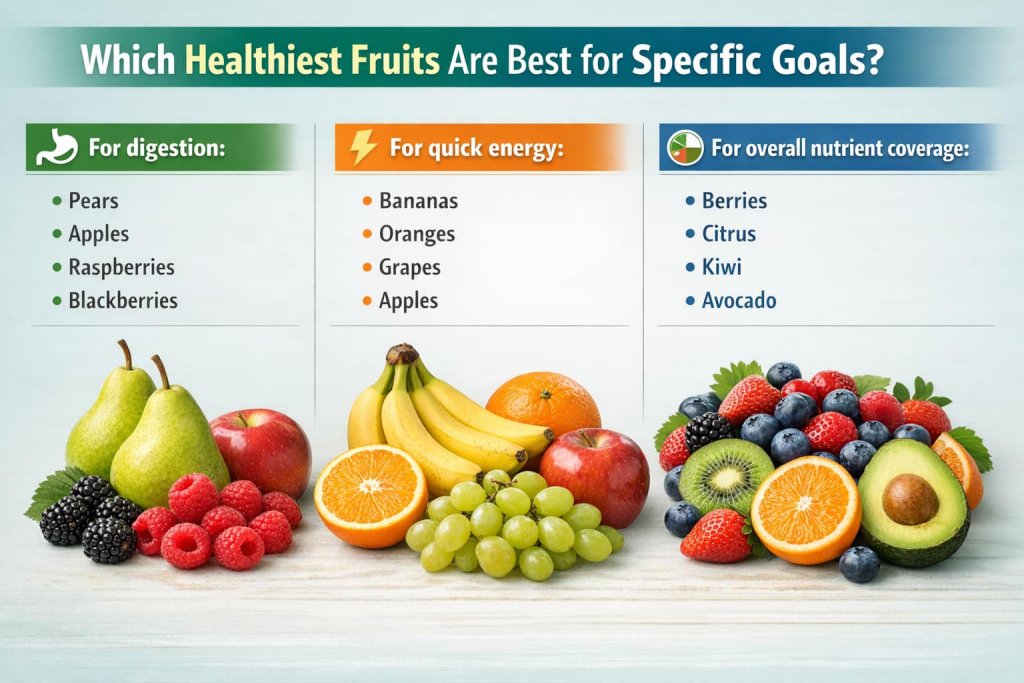
Best Fruits for Quick Energy
For quick energy, bananas, oranges, grapes, and apples are some of the easiest choices because they are convenient, portable, and simple to pair with protein or healthy fat for a more satisfying snack.
Best Fruits for Overall Nutrient Coverage
If you want broad coverage rather than obsessing over one best fruit, rotate through berries, citrus, kiwi, bananas, avocado, and a few colorful seasonal fruits such as mango, peaches, watermelon, or cherries. That matches heart-health guidance to eat many types and colors of fruit.
Fruit and Blood Sugar: What to Know
Whole fruit can still fit a healthy eating pattern, including for many people with prediabetes or diabetes. The key is to prioritize whole fruit over juice, because juice raises blood sugar faster than whole fruit. It also helps to pair fruit with protein, fat, or higher-fiber foods so the meal or snack feels more balanced and filling.
Good examples include an apple with peanut butter, berries with plain Greek yogurt, or orange slices with a handful of nuts. This does not mean you need to fear fruit. It means the type of fruit, portion, and what you eat with it all matter. CDC explains in its diabetes meal planning guidance that fruit can fit into a healthy eating pattern and that juice raises blood sugar faster than whole fruit.
How Much Fruit Should You Eat Each Day?
For many adults, 2 cups of fruit a day is a useful benchmark in a 2,000-calorie eating pattern. USDA MyPlate gives simple examples of what counts as 1 cup: 1 small apple, 1 large banana, 1 cup of grapes, 1 cup of sliced mango, or 1/2 cup of raisins.
Just as important, make whole fruit your default. The Dietary Guidelines say that at least half of the recommended amount of fruit should come from whole fruit rather than juice.
Fresh vs Frozen vs Canned vs Dried Fruit
Fresh fruit is great, but it is not the only healthy option. The American Heart Association says fresh, frozen, canned, and dried fruit can all be healthy choices. The key is checking labels and choosing options with the lowest added sugars, frozen fruit with no added sugar, and canned fruit packed in water, its own juice, or light syrup instead of heavy syrup.
When buying packaged fruit, the most helpful label terms are “no added sugar,” “unsweetened,” and, for canned fruit, “packed in its own juice” or “packed in water.” These are usually better everyday choices than fruit packed in syrup. Dried fruit and 100% fruit juice can still fit, but portions are smaller and they are often less filling than whole fruit. The American Diabetes Association recommends choosing fruit without added sugars when possible and keeping portions in mind for dried fruit and juice.
This matters in real life because convenience often determines what you actually eat. Frozen berries, canned peaches packed in juice, and unsweetened dried fruit can all help you keep fruit on hand and make daily fruit intake more realistic.
Easy Ways to Eat More of the Healthiest Fruits
Try these simple upgrades:
- Add berries or sliced kiwi to yogurt or oatmeal.
- Keep apples, pears, bananas, or grapes visible for grab-and-go snacks.
- Pair fruit with protein or healthy fat, such as nuts, plain yogurt, or cottage cheese.
- Use frozen fruit in smoothies, but keep the base simple and avoid loading in added sugar.
- Swap dessert more often with fruit plus yogurt, cinnamon, or a small handful of nuts.
A Simple Fruit Safety Habit That Matters
Because fruit is often eaten raw, wash it under running water before you eat, peel, or cut it. That includes fruit with peels or rinds you do not eat, such as oranges, melons, and avocados, because germs on the outside can transfer to the knife and flesh. Do not use soap or produce wash. For firm or rough-skinned fruit, gently scrub with a clean produce brush and cut away damaged areas before eating. The FDA produce safety guidance supports rinsing produce under running water, washing before peeling or cutting, and avoiding soap or produce wash.
Safety Notes Worth Knowing
Two cautions are especially useful. First, grapefruit can affect how some medicines work, so check before eating it regularly if you take prescription drugs. FDA explains this in its consumer update on grapefruit juice and some drugs. Second, if you have chronic kidney disease, you may need to limit some higher-potassium fruits depending on your lab results and medical advice. The NIDDK recommends individualized guidance for potassium intake in CKD.
FAQ About the Healthiest Fruits
What is the single healthiest fruit?
There is no single healthiest fruit. The best answer is to eat a variety of whole fruits, because different fruits contribute different nutrients such as fiber, vitamin C, potassium, and water.
Is it healthy to eat fruit every day?
Yes. Daily fruit intake is part of healthy eating guidance, and many adults would benefit from eating more fruit, especially whole fruit.
Is dried fruit healthy?
Yes, dried fruit can be healthy and convenient. It is more concentrated than fresh fruit, though, so portions add up quickly. USDA MyPlate notes that 1/2 cup dried fruit counts as 1 cup of fruit.
Is fruit juice as healthy as whole fruit?
Usually no. Juice can count, but whole fruit is the better default because the Dietary Guidelines recommend that at least half of your fruit come from whole fruit rather than juice.
Conclusion
The healthiest fruits are not exotic or expensive. Apples, berries, citrus, bananas, kiwi, pears, avocado, and a rotating mix of colorful seasonal fruit can all support better energy, digestion, and overall health when they help you eat more whole fruit consistently.
A simple goal works best: keep a few easy favorites on hand, choose whole fruit more often than juice, and build more variety into your week. That is a far better strategy than looking for one perfect fruit.
References
- USDA MyPlate — Simple with MyPlate
- CDC — Adults Meeting Fruit and Vegetable Intake Recommendations
- CDC — Diabetes Meal Planning
- American Heart Association — Fresh, Frozen or Canned Fruit and Vegetables: All Can Be Healthy Choices
- NIH Office of Dietary Supplements — Vitamin C Fact Sheet for Health Professionals
- FDA — Grapefruit Juice and Some Drugs Don’t Mix
- NIDDK — Healthy Eating for Adults with Chronic Kidney Disease
- American Diabetes Association — Fruit