
Yes, peanut butter can be keto-friendly, but only if you choose the right kind and keep the portion under control. A standard 2-tablespoon serving of plain peanut butter has about 200 calories, 16 grams of fat, 8 grams of total carbohydrate, 2 grams of fiber, and 7 grams of protein, which means it can fit into many keto plans more easily than sweetened spreads. A keto diet is usually very low in carbs overall, often under 50 grams per day, so the label and serving size matter more than the food name alone. The USDA peanut butter nutrition sheet and Harvard T.H. Chan School of Public Health’s keto diet review are good starting points for those basics.
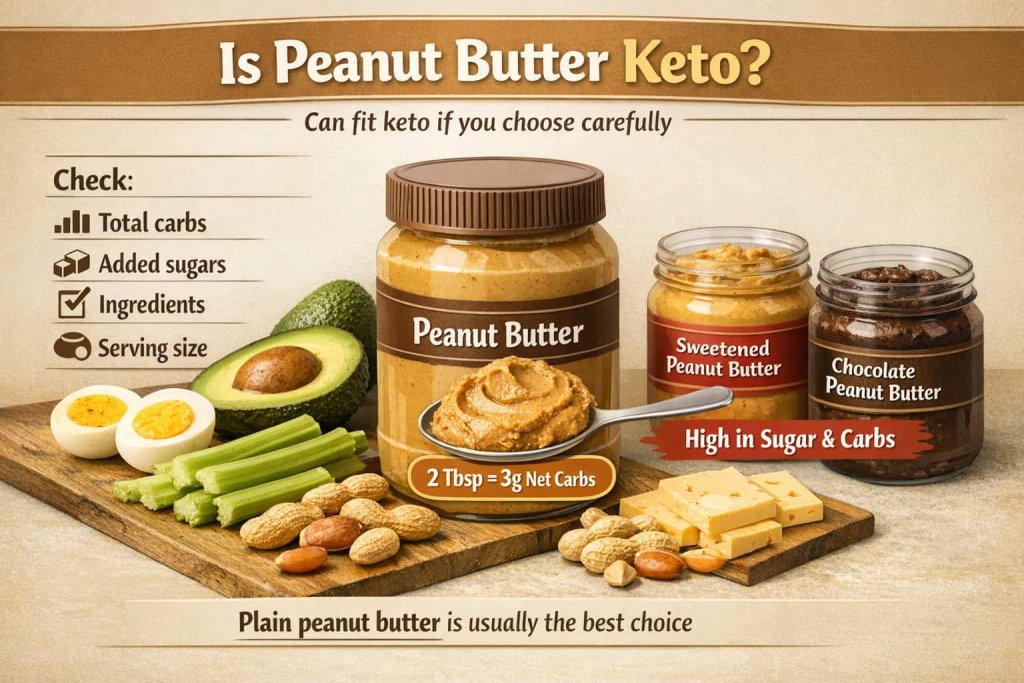
Understanding whether peanut butter is keto matters because many jars look similar on the shelf but are not equal for carbs, added sugar, sodium, or fats. The best keto-friendly peanut butter is usually the simplest one: mostly peanuts, maybe salt, and little to no added sugar.
Is Peanut Butter Keto?
For most people, plain peanut butter is keto in moderation. The bigger issue is not whether peanut butter is automatically allowed, but whether the specific jar fits your daily carb budget.
That is why two peanut butters can look similar and perform very differently on keto. One may be just peanuts and salt. Another may include added sugar, palm oil, or flavorings that push carbs and calories up faster. The American Heart Association guidance on nut butters specifically recommends comparing labels and choosing products with the lowest sodium and preferably no added sugars or tropical oils.
How Many Carbs Are in Peanut Butter?
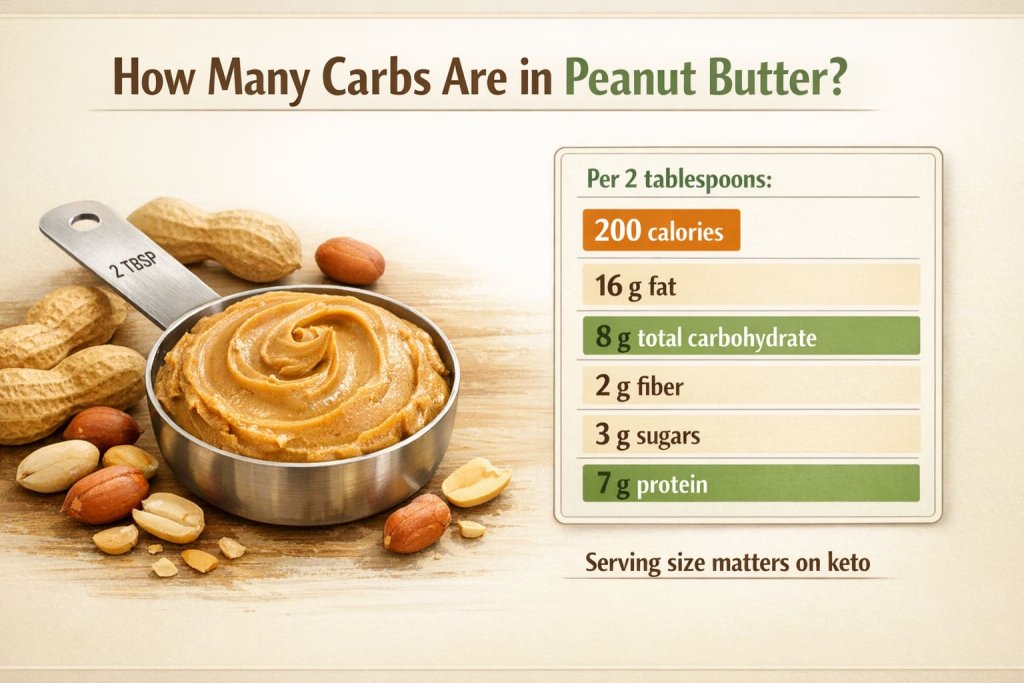
Using the USDA serving size of 2 tablespoons, plain smooth peanut butter typically provides:
- 200 calories
- 16 g fat
- 8 g total carbohydrate
- 2 g fiber
- 3 g sugars
- 7 g protein
Those numbers explain why peanut butter often works on keto better than people expect. It is relatively high in fat, moderate in protein, and not extremely high in carbs for a small serving. But it is also easy to overeat, which is where problems start.
Net Carbs in Peanut Butter: What the Number Really Means
Many keto eaters estimate net carbs by subtracting fiber from total carbohydrate. Using that common shortcut, a 2-tablespoon serving of plain peanut butter comes out to roughly 6 grams. But this is only a rough planning method, not an official labeling standard. The FDA’s Nutrition Facts system lists total carbohydrate and then breaks out fiber, sugars, and added sugars underneath it. The American Diabetes Association explains that net carbs is not a legal definition and is not recognized by the FDA or ADA, so the most reliable number on the jar is still the total carbohydrate per serving. The FDA’s total carbohydrate label guide helps show how that line is structured.
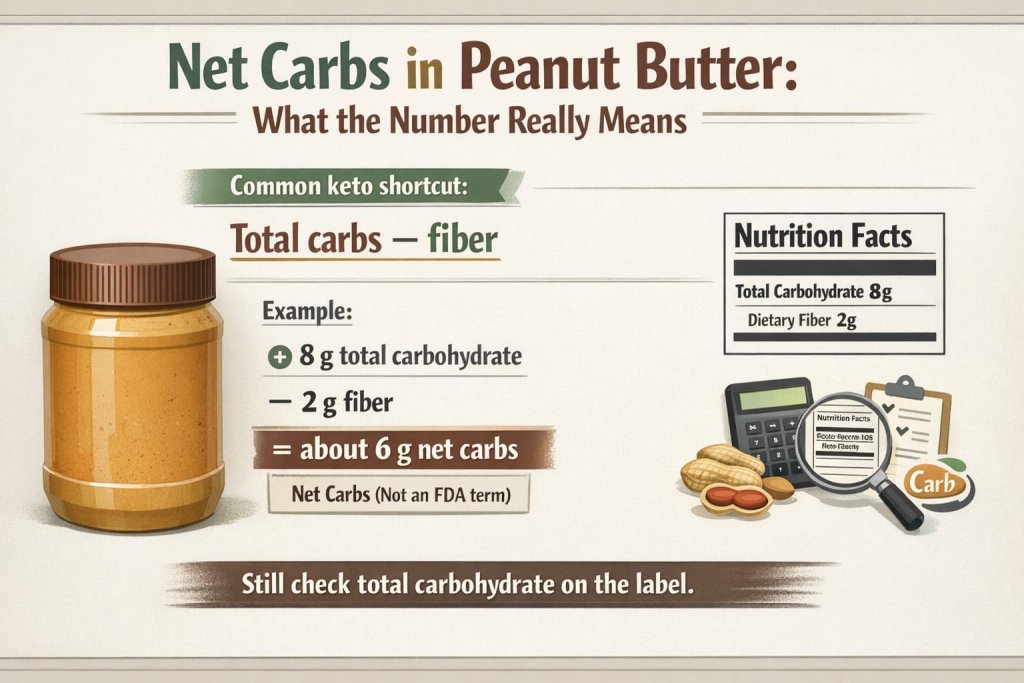
That does not mean the common keto math is useless. It means you should use it carefully. If you are following a stricter keto approach, especially one under 50 grams of carbs per day, a serving that looks small on the label can still use a noticeable share of your day’s carb budget.
Best Peanut Butter for Keto
The best peanut butter for keto usually checks most or all of these boxes:
- Ingredients are simple: peanuts, or peanuts plus salt
- Added sugars are zero or very low
- No palm or coconut oil if you want a cleaner ingredient list
- Lower sodium compared with similar brands
- Serving size is realistic for how you actually eat it
A practical rule is this: if the front of the jar says honey roasted, chocolate, reduced fat, or anything dessert-like, flip it over before assuming it fits keto. Reduced-fat versions can be especially misleading because when fat goes down, sugar or starch sometimes goes up to improve texture or taste. The FDA’s label guide and FDA’s added sugars page are the clearest official references for what to check.
If you are following a stricter keto approach, it can also help to compare peanut butter with other nut or seed butters instead of assuming they are all the same. In a USDA Agricultural Research Service comparison, almond butter had 6.0 grams of total carbohydrate and 3.3 grams of fiber per 2 tablespoons, compared with 7.7 grams of total carbohydrate and 1.8 grams of fiber for peanut butter in the analyzed products. That does not mean almond butter is always better for keto, because formulas vary by brand, but it does show why checking the exact jar can be worth it when carbs are tight.
What Makes Some Peanut Butter Less Keto-Friendly?
Added sugar
Added sugar is the biggest reason a peanut butter stops being keto-friendly. FDA labeling rules require manufacturers to show added sugars on the Nutrition Facts label, which makes it much easier to compare jars side by side. FDA also notes that the Dietary Guidelines recommend keeping added sugars below 10% of daily calories.
Many shoppers also mix up total sugars with added sugars. That matters with peanut butter because a jar can show a few grams of total sugar even when no sugar was added during processing. The FDA explains that total sugars include sugars naturally present in the food plus any added sugars, while the “Includes X g Added Sugars” line tells you how much of that total comes from sweeteners like sugar, syrup, or honey. For keto shopping, the added sugars line is usually the fastest way to spot a peanut butter that is less keto-friendly.
Oversized portions
A healthy peanut butter can still knock you out of your preferred carb range if the portion turns into 4 or 5 tablespoons instead of 2. The standard nut butter serving used by the American Heart Association is 2 tablespoons, and the USDA peanut butter sheet uses the same benchmark.
Extra oils and sodium
A peanut butter may still fit keto macros while being a weaker overall choice nutritionally. The American Heart Association recommends comparing sodium and avoiding added tropical oils when possible. That advice is especially useful if you are choosing between several similar jars.
Is Natural Peanut Butter Better for Keto?
Often, yes. Not because natural automatically means keto, but because natural peanut butter is more likely to have a shorter ingredient list. If the oil separates and you need to stir it, that is usually a sign the jar has fewer stabilizers.
Still, the word natural is not enough by itself. Some natural-style peanut butters still include sweeteners or added oils. Keto shoppers should trust the label, not the marketing. Compare total carbs, added sugars, sodium, serving size, and ingredients every time.
How Much Peanut Butter Can You Eat on Keto?
For many people, 1 to 2 tablespoons is the sweet spot. If your keto plan is very strict, 1 tablespoon is often easier to fit than a full 2-tablespoon serving. That is because keto usually leaves little room for casual extras, and peanut butter is calorie-dense even when the ingredients are good.
A simple way to think about it:
- 1 tablespoon is easier for tighter carb budgets
- 2 tablespoons can still fit, but should usually be measured
- More than 2 tablespoons can add up quickly in both carbs and calories
How to Check if a Peanut Butter Is Keto-Friendly
Use this quick label checklist before you buy:
- Check the serving size first.
Everything else depends on this number. See the FDA’s serving size guide. - Look at total carbohydrate per serving.
This is the main number the FDA and ADA want you to use. - Check dietary fiber and added sugars.
Fiber may help explain why some peanut butters fit keto better than others, while added sugars are often the deal-breaker. - Read the ingredients list.
Peanuts and salt is usually a strong sign. Sugar, syrups, or multiple added fats deserve a closer look. - Compare sodium if you are choosing between brands.
Lower is generally better when everything else is similar.
Best Ways to Eat Peanut Butter on Keto
Once you have a good jar, the easiest way to make peanut butter work on keto is to pair it with foods that do not bring many extra carbs.
Good options include:
- Celery sticks
- A measured spoonful as a snack
- Mixed into plain Greek yogurt if it fits your macros
- Added to a keto smoothie in a measured amount
- Used in a peanut sauce for low-carb vegetables or grilled protein
The key is not to treat peanut butter as free. Measure it, count it, and build the rest of the meal around it.
Who Should Be Careful With Peanut Butter?
Peanut butter is not a good fit for everyone.
You should be more careful if:
- You have a peanut allergy
- You tend to eat it straight from the jar without measuring
- You need to keep sodium lower
- You are using flavored or sweetened peanut butter and assuming it is keto because it is peanut butter
Peanuts are one of the FDA-recognized major food allergens, and packaged foods are required to identify major allergens on the label. If you have a peanut allergy, even a small amount can be dangerous. The FDA food allergy guidance is the official reference here.
Is Keto a Good Fit for Everyone?
Not always. Peanut butter may fit into a keto diet, but keto itself is not the best choice for every person. Harvard’s Nutrition Source notes that ketogenic diets can be restrictive, may increase the risk of nutrient shortfalls if food variety is poor, and may raise LDL cholesterol when the diet leans heavily on saturated fats instead of foods like nuts, seeds, olive oil, avocado, and fish. Harvard also advises extra caution for people with conditions that affect protein or fat metabolism, such as kidney or liver disease, and during pregnancy or breastfeeding. If you are thinking about starting keto for weight loss or blood sugar goals, it is sensible to review it with a physician or registered dietitian first.
Is Peanut Butter Keto? The Bottom Line
Yes, peanut butter can absolutely fit a keto diet. The safest answer is this: plain peanut butter is usually keto-friendly in measured portions, but sweetened or heavily processed versions may not be.
If you want the best peanut butter for keto, keep it simple:
- Choose a jar with peanuts as the main ingredient
- Prefer no added sugar
- Watch the 2-tablespoon serving size
- Use total carbohydrate on the label as your main checkpoint
- Treat peanut butter as a measured food, not an unlimited one
FAQs
Can you eat peanut butter every day on keto?
You can, as long as it fits your carb and calorie targets. Daily use becomes a problem when portions drift upward or the product contains added sugar.
Is natural peanut butter keto?
Usually, it is a better keto candidate because it often has a shorter ingredient list. But natural is not a guarantee. Always check total carbs, added sugars, and ingredients.
Is crunchy peanut butter keto?
It often can be, just like smooth peanut butter, but the answer still depends on the exact label. The same checks apply: serving size, total carbs, added sugars, and ingredient list.
What should you avoid in peanut butter on keto?
The main red flags are added sugar, sugary flavorings, large unmeasured portions, and jars with extra oils or high sodium when better options are available.
Conclusion
Peanut butter is one of those foods that can be either a smart keto staple or a sneaky carb trap. The difference usually comes down to the jar you buy and the amount you eat. Choose a simple peanut butter, read the label carefully, and measure your serving. Done right, peanut butter can be an easy, satisfying part of a low-carb routine.
References
- Harvard T.H. Chan School of Public Health — Diet Review: Ketogenic Diet for Weight Loss
- U.S. Food and Drug Administration — Serving Size on the Nutrition Facts Label
- U.S. Food and Drug Administration — Interactive Nutrition Facts Label: Total Carbohydrate
- American Heart Association — Go Nuts (But Just a Little!)
- American Diabetes Association — Get to Know Carbs
- U.S. Food and Drug Administration — Food Allergies
- USDA Agricultural Research Service — A Tale of Two Nut Butters: Almond Butter and Peanut Butter