
Yes, low calorie snacks can help you stay full, but the best ones are not just low in calories. The most satisfying choices usually combine protein, fiber, whole grains, legumes, or high-volume fruits and vegetables so you get more staying power between meals. According to PubMed, snack choices such as yogurt, nuts, prunes, and popcorn can support satiety.
That matters because the wrong “light” snack can leave you hungry again in 20 minutes. The right one can help you bridge the gap to your next meal without piling on extra calories, added sugars, sodium, or saturated fat. MedlinePlus also supports simple, balanced snacks that combine produce, protein, and whole grains.
What makes a low calorie snack filling?
A filling snack usually does at least one of three things: it adds protein, adds fiber, or adds food volume through water-rich produce. Research reviews on satiety consistently point to snacks such as yogurt, nuts, prunes, and popcorn, while fiber may help reduce hunger and prolong fullness through several appetite-related mechanisms. The CDC also notes that fruits and vegetables can help you feel full while eating fewer calories because their water and fiber add volume.
In real life, that usually means snacks built around combinations like these:
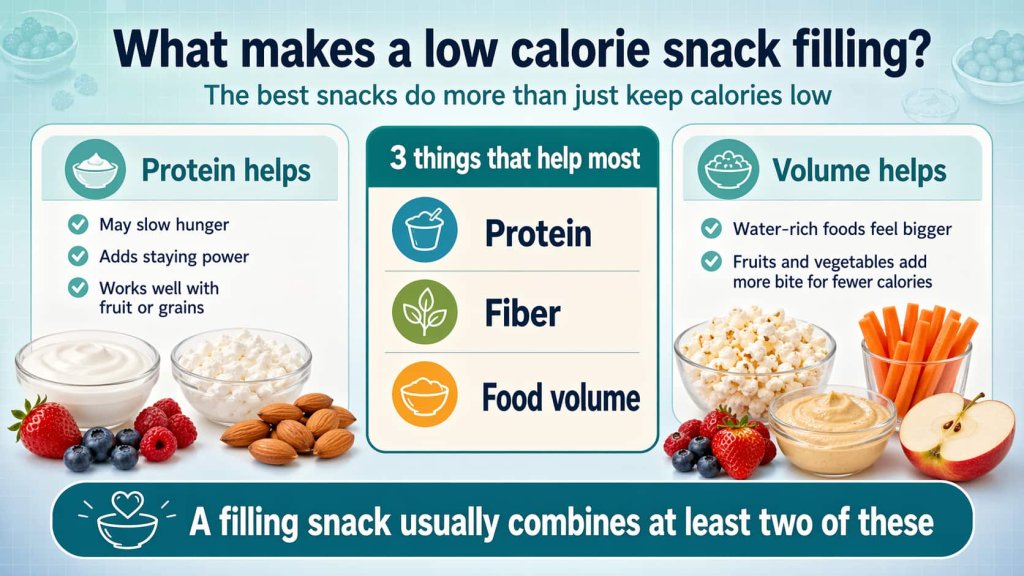
- Fruit plus nuts, yogurt, or cottage cheese
- Vegetables plus hummus or bean dip
- Whole-grain crackers or toast plus a protein topping
- Air-popped popcorn or oats instead of refined sweet snacks
Those pairings line up closely with official snack guidance from MedlinePlus, USDA, and the American Heart Association.
How to build a filling low calorie snack
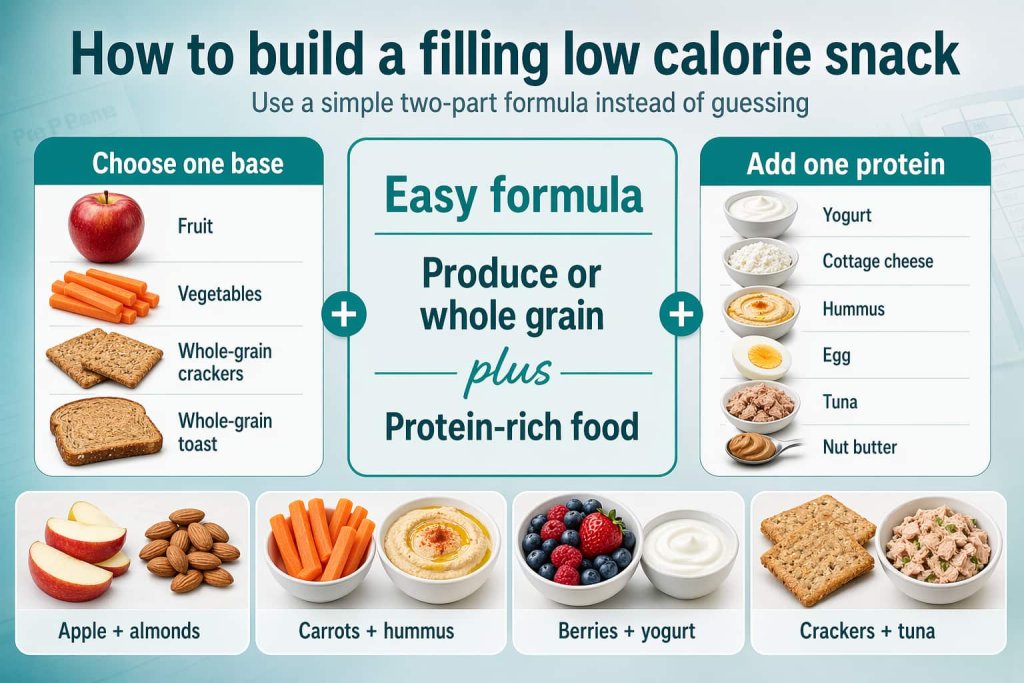
When you are making your own snack, use a simple two-part formula: pair a fruit, vegetable, or whole-grain food with a protein-rich food. Good examples include fruit with plain yogurt, vegetables with hummus, whole-grain crackers with tuna, or toast with peanut butter. MyPlate and MedlinePlus both support this kind of pattern because it helps you keep calories reasonable while adding fiber, protein, or food volume.
What counts as low calorie?
For everyday meal planning, many people use “low calorie snacks” to mean lighter snacks that often land somewhere around 100 to 200 calories per serving. But on food packaging, the FDA’s legal definition is narrower: a food generally must have no more than 40 calories per reference amount customarily consumed to be labeled “low calorie,” according to the Electronic Code of Federal Regulations.
That is why a snack can be a smart, lighter choice for real life without technically qualifying for the FDA’s “low calorie” claim. It is also why label-reading matters more than marketing.
One practical note: most of the snack ideas in this list are “low calorie” in the everyday sense, not necessarily in the FDA label-claim sense. In real life, a snack in the 100- to 200-calorie range can still be a smart, lighter option if it gives you enough protein, fiber, or volume to prevent a second snack 20 minutes later. That is why some of the most filling options here are a little higher than a strict front-of-package “low calorie” claim.
One more label detail matters here: healthy does not mean the same thing as low calorie. The FDA updated the voluntary “healthy” claim in late 2024, and foods that qualify under that rule must meet broader nutrition criteria. A product may fit a healthy eating pattern without being especially low in calories.
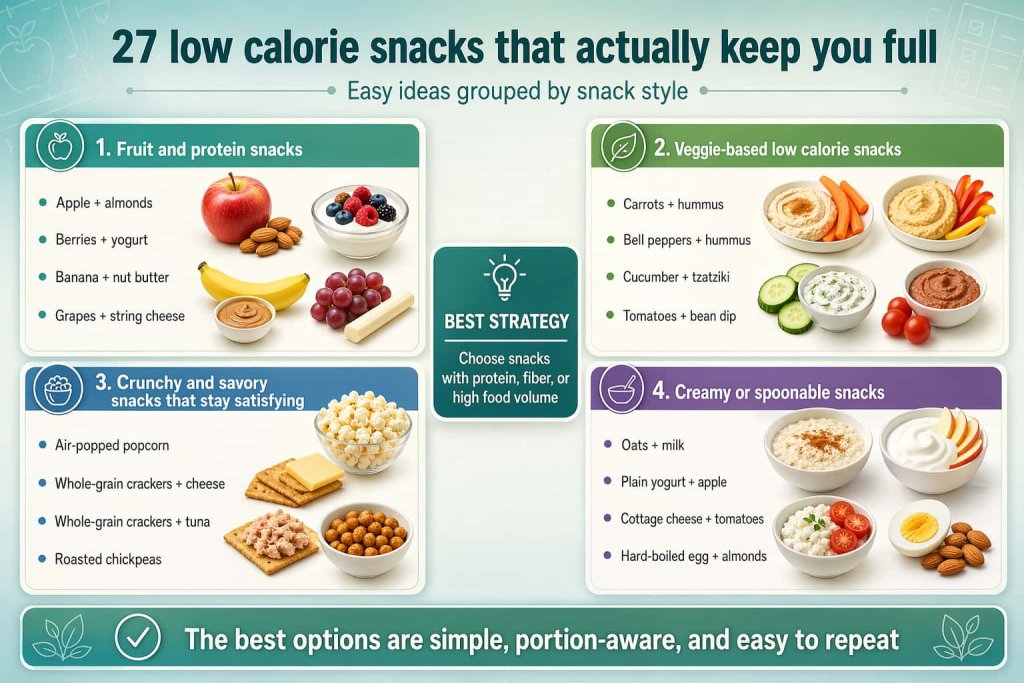
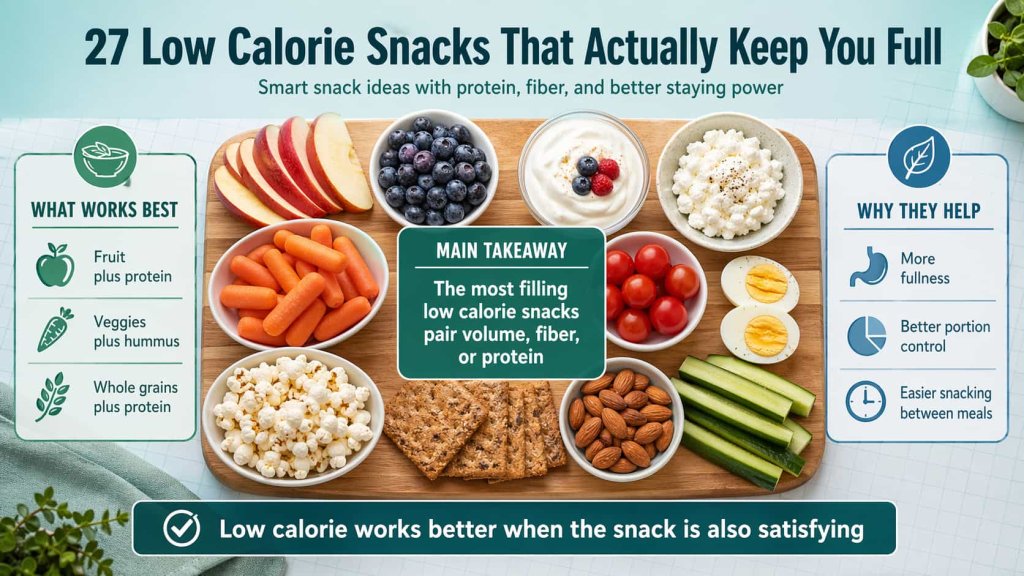
27 low calorie snacks that actually keep you full
The snack ideas below are based on official examples and patterns from MedlinePlus, CDC, USDA, and the American Heart Association. Calorie numbers are approximate because brand, portion size, and toppings can change the total quickly, especially with nuts, cheese, dips, crackers, and smoothies. For packaged foods, check the Nutrition Facts label. For basic foods, USDA FoodData Central is a useful reference point.
Fruit and protein snacks
These are some of the best low calorie snacks for fullness because fruit adds volume and fiber, while dairy, nuts, or nut butter help the snack last longer.
- One medium apple with 12 almonds (about 170 to 190 calories)
Crisp, portable, and far more satisfying than a plain granola bar. - Pear wedges with low-fat cottage cheese (about 140 to 180 calories)
A good mix of fiber, protein, and creaminess. - Half a cup of berries with plain yogurt (about 120 to 170 calories)
Lighter than most flavored yogurt snacks and usually more filling. - Half a cup of berries with low-fat cottage cheese (about 120 to 170 calories)
Higher in protein than fruit alone and easy to portion. - One small banana with 1 tablespoon peanut butter or almond butter (about 160 to 190 calories)
A simple sweet-salty option that feels more substantial than a plain banana. - One cup of grapes with one low-fat string cheese (about 140 to 180 calories)
A very practical desk or lunchbox snack. - One cup of cherry tomatoes with one low-fat string cheese (about 100 to 140 calories)
Lower in calories than the grape version, but still satisfying. - Fruit smoothie made with 1 cup fat-free milk, half a small banana, and half a cup of berries (about 120 to 180 calories)
Best when you keep it simple and skip sugary syrups.
Veggie-based low calorie snacks
Vegetables are naturally lower in calories, and they become much more filling when you pair them with hummus, bean dip, or another protein source. The CDC specifically recommends produce-based swaps because they help you eat more volume for fewer calories.
- One cup of raw carrots with 2 tablespoons hummus (about 90 to 120 calories)
Crunchy, portable, and one of the easiest high-volume options. - One cup of broccoli florets with 2 tablespoons hummus (about 75 to 100 calories)
Very light, but the dip gives it more staying power. - One cup of bell pepper strips with 2 tablespoons hummus (about 75 to 100 calories)
Sweet, crisp, and easy to prep in advance. - Cucumber rounds with low-sodium tzatziki or hummus (about 80 to 120 calories)
Great when you want something cool and fresh instead of salty packaged snacks. - Cherry or grape tomatoes with bean dip or hummus (about 90 to 140 calories)
A fast snack with more fiber and protein than tomatoes alone. - Cauliflower florets with hummus (about 80 to 110 calories)
Another good high-volume option when you want something crunchy. - Sugar snap peas or mixed veggie fingers with hummus (about 100 to 150 calories)
This works well as a grab-and-go snack when prepped ahead.
Crunchy and savory snacks that stay satisfying
Whole grains, legumes, and protein-rich toppings tend to hold you better than refined snack foods. USDA highlights unsalted popcorn and whole-wheat crackers as higher-fiber choices, and MedlinePlus includes popcorn, whole-grain crackers, soup, and oats among its healthier snack examples.
- One cup of tomato soup with five whole-grain crackers (about 140 to 190 calories)
Warm, savory, and more satisfying than crackers alone. - Three cups of air-popped popcorn with 2 tablespoons shredded parmesan (about 140 to 170 calories)
A bigger-looking snack for relatively modest calories. - Five whole-wheat crackers with 1 ounce low-fat cheddar cheese (about 150 to 190 calories)
Easy to portion and more filling than crackers by themselves. - Whole-grain toast with peanut butter or other nut butter (about 150 to 190 calories)
Simple, familiar, and works well when you want something more substantial. - Whole-grain crackers with very low-sodium canned tuna (about 120 to 180 calories)
A strong protein option that works especially well in the afternoon. - Whole-grain crackers with low-sodium salmon (about 130 to 190 calories)
Similar idea, with a different flavor profile and healthy fats. - Roasted chickpeas (about 120 to 180 calories for a modest serving)
Crunchy and more filling than chips because they add both fiber and protein.
Creamy or spoonable snacks
Soft-texture snacks can still be very satisfying when they include milk, yogurt, cottage cheese, oats, or eggs. These combinations work well when you want something easy to eat but still want protein.
- One-third cup rolled oats cooked in 1 cup fat-free milk with cinnamon (about 140 to 180 calories)
Warm, high-volume, and steadier than many sweet snack foods. - A hard-boiled egg and 12 almonds (about 150 to 180 calories)
A small snack that usually lasts surprisingly well. - Plain yogurt with sliced apple and cinnamon (about 130 to 180 calories)
This gives you the feel of dessert with a better nutrition profile. - Low-fat cottage cheese with cherry tomatoes and black pepper (about 120 to 170 calories)
A savory option that is high in protein and easy to prep.
Small-portion snacks that can still work
Some snacks are nutritious and satisfying, but they are also easier to overdo. Nuts, seeds, dried fruit, cheese, and nut butter can fit well in a low calorie snack plan, but portion size matters because they are more calorie-dense. MedlinePlus specifically notes that nuts are nutritious but easy to overeat.
- Unsalted nuts and seeds, pre-portioned (about 160 to 200 calories for a small serving)
A smart option when you want something shelf-stable, but portion it before you start eating.
You can also rotate in a small portion of unsweetened dried fruit with a few nuts when you want something sweet, but keep the serving modest. Whole fruit is usually more filling for the calories because it has more water and volume.
How to choose packaged low calorie snacks
Packaged snacks are easier to shop for when you ignore the front of the package and start with the label. FDA says to look at serving size first, then use % Daily Value as a quick guide: 5% DV or less is low, and 20% DV or more is high. In general, it is smarter to choose snacks that are higher in fiber and lower in added sugars, sodium, and saturated fat. See the FDA’s Nutrition Facts guidance.
Use this simple checklist:
- Start with the serving size. A small bag or cup may contain more than one serving.
- Check calories next. A snack that looks light can be calorie-dense once you eat the full package.
- Look for protein or fiber. That is usually what makes a snack feel worth eating.
- Keep added sugars, sodium, and saturated fat in check.
- Be careful with health claims. “Healthy,” “low sugar,” or “made with whole grains” does not automatically mean low calorie.
Smart shortcuts when fresh ingredients are not practical
Fresh is not the only good option. The CDC notes that frozen or canned fruits and vegetables can be just as nutritious as fresh, but it is smarter to choose versions without added sugar, syrup, cream sauces, or excess salt. Whole fruit is usually more filling than juice because it keeps the fiber. And if you buy yogurt, plain low-fat or fat-free yogurt with your own fruit is usually a better choice than heavily sweetened flavored yogurt.
For reference, FDA’s current Daily Values on a 2,000-calorie diet include 28 grams of fiber, 50 grams of added sugars, 20 grams of saturated fat, and 2,300 milligrams of sodium. That gives you a better way to judge whether a packaged snack is actually helping your day overall.
Common mistakes that make low calorie snacks less helpful
A snack can start out light and turn into a much higher-calorie choice very quickly. The most common reasons are portion creep, sugary add-ins, and eating the snack on top of your usual food instead of using it to replace a higher-calorie option. The CDC makes this point clearly with fruits and vegetables: they help most when they substitute for higher-calorie foods rather than simply adding more calories to the day.
Watch for these easy mistakes:
- Turning a simple smoothie into a dessert with juice, syrups, nut butter, oats, and sweetened yogurt
- Eating nuts, seeds, trail mix, or dried fruit straight from the bag
- Choosing flavored yogurt with lots of added sugar instead of plain yogurt plus fruit
- Picking crackers, rice cakes, or popcorn and then adding enough cheese, butter, or dip to double the calories
- Trusting the front of the package instead of the Nutrition Facts label, as the American Heart Association also warns
Are low calorie snacks good for weight loss?
They can be, especially when they help you avoid overeating later or replace a more calorie-dense snack. But the goal should not be to choose the tiniest snack possible. A better goal is choosing a snack that is light enough to fit your day and filling enough that you do not immediately start looking for more food.
That usually means building snacks around nutrient-dense foods such as fruit, vegetables, whole grains, beans, dairy or fortified soy, eggs, nuts, seeds, and lean proteins instead of relying on “diet snack” marketing. Federal nutrition guidance and NIH resources consistently point back to nutrient-dense foods rather than low-calorie processed snack products. NIA also emphasizes balanced, nutrient-dense eating patterns.
Who may need to personalize these snack ideas
A low calorie snack still needs to fit your health needs. If you have diabetes, foods like fruit, juice, crackers, milk, yogurt, and beans all count toward carbohydrates, so portion size still matters. If you are watching sodium, packaged soups, canned tuna, canned salmon, crackers, and some dips can add up quickly, so look for lower-sodium versions. If you are lactose intolerant, lactose-free dairy or fortified soy options can work well in place of regular milk or yogurt.
FAQ
What is the best low calorie snack to keep you full?
There is no single best option for everyone, but combinations that pair produce plus protein tend to work best. Good examples include apple with almonds, berries with plain yogurt, vegetables with hummus, or whole-grain crackers with tuna.
Are 100-calorie snacks enough?
Sometimes, yes. CDC examples show that produce-based snacks around 100 calories can work well, especially when you want volume and something light. But if you need more staying power, many people do better with a snack that also adds protein or fiber, even if it lands closer to 150 to 200 calories.
Is popcorn a good low calorie snack?
Yes, air-popped popcorn can be a very smart snack because it is a whole grain and gives you a lot of volume for relatively modest calories. The key is keeping toppings reasonable.
What should I look for on a snack label?
Start with serving size and calories, then check fiber, added sugars, sodium, and saturated fat. FDA’s quick rule is that 5% DV or less is low and 20% DV or more is high.
Final thoughts
The best low calorie snacks are the ones that do two jobs at once: they keep calories reasonable and make you feel satisfied. In most cases, that means choosing real foods with protein, fiber, or volume instead of relying on snack packaging buzzwords.
Start with a few easy winners such as apple and almonds, berries and yogurt, carrots and hummus, popcorn, or whole-grain crackers with tuna. Once you find three or four that you genuinely enjoy, smart snacking gets much easier.
If you have diabetes, kidney disease, or another condition that changes your food plan, it is worth tailoring snacks with your clinician or a registered dietitian instead of focusing only on calories.
References
- Electronic Code of Federal Regulations — Nutrient content claims for the calorie content of foods
- FDA — Daily Value on the Nutrition and Supplement Facts Labels
- FDA — Finalizes updated “healthy” nutrient content claim
- CDC — Healthy Habits: Fruits and Vegetables to Manage Weight
- MedlinePlus — 12 healthy snacks with 200 calories or less
- American Heart Association — Healthy Snacking
- PubMed — A review of the effects of nuts on appetite, food intake, metabolism, and body weight