
The best endomorph diet plan is not a special body-type diet. It is a balanced, calorie-aware eating pattern built around high-fiber carbohydrates, lean protein, minimally processed foods, and habits you can maintain. If you feel like you gain fat easily or do better with more structure, this approach is far more evidence-based than rigid “eat by body type” rules. The National Institute of Diabetes and Digestive and Kidney Diseases (NIDDK) says the key to weight loss is choosing a healthy eating plan you can stick with over time, and CDC says healthy weight loss also depends on physical activity, sleep, and stress management.
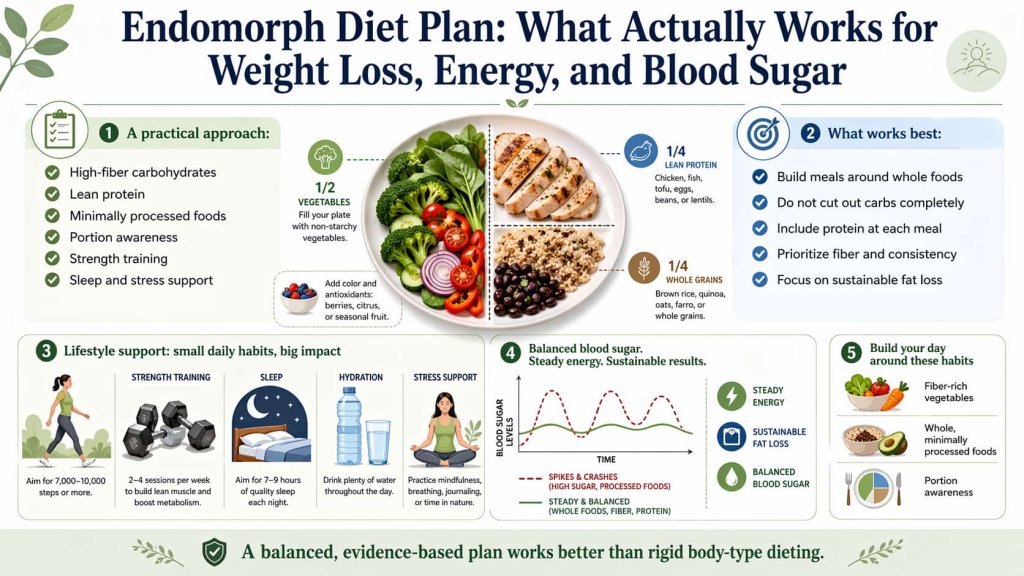
What does “endomorph” mean?
In popular fitness language, an “endomorph” usually refers to someone who feels stockier, stores fat more easily, or struggles more with weight gain. That idea can be useful as a rough description of your experience, but it is not a medically precise system for prescribing calories or macros. A 2025 study in Frontiers in Physiology found substantial variability within somatotype categories and said the ability of somatotype analysis to reflect real differences in muscle mass and fat mass remains unclear.
That is why a responsible endomorph diet plan should not promise that one body-type formula works for everyone. A better question is: What eating pattern helps someone manage hunger, support stable energy, control calories, and keep muscle while losing fat? That is where the strongest evidence points.
What should an endomorph diet plan focus on?
A practical endomorph diet plan should focus on:
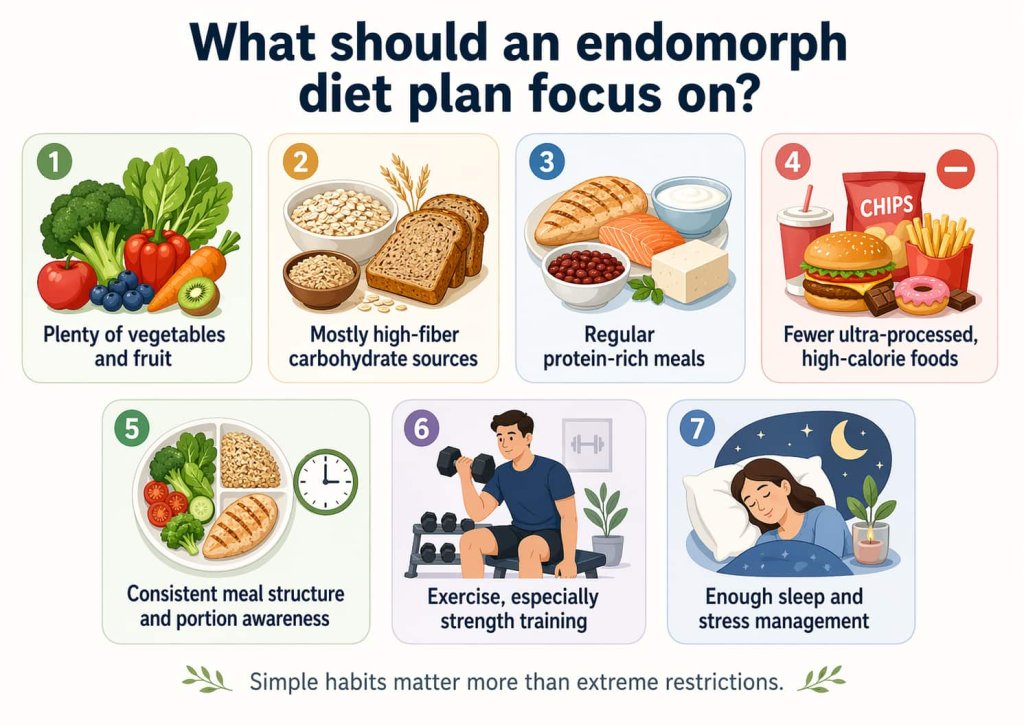
- plenty of vegetables and fruit
- mostly high-fiber carbohydrate sources
- regular protein-rich meals
- fewer ultra-processed, high-calorie foods
- consistent meal structure and portion awareness
- exercise, especially strength training
- enough sleep and stress management
This matches official guidance better than extreme low-carb or “cheat day” approaches. NIDDK recommends a healthy eating plan with nutritious foods and limiting added sugars, saturated fat, and sodium. CDC also warns that eliminating an entire food group like carbohydrates can make a plan harder to sustain and can crowd out important nutrients.
Endomorph diet plan principles that actually make sense
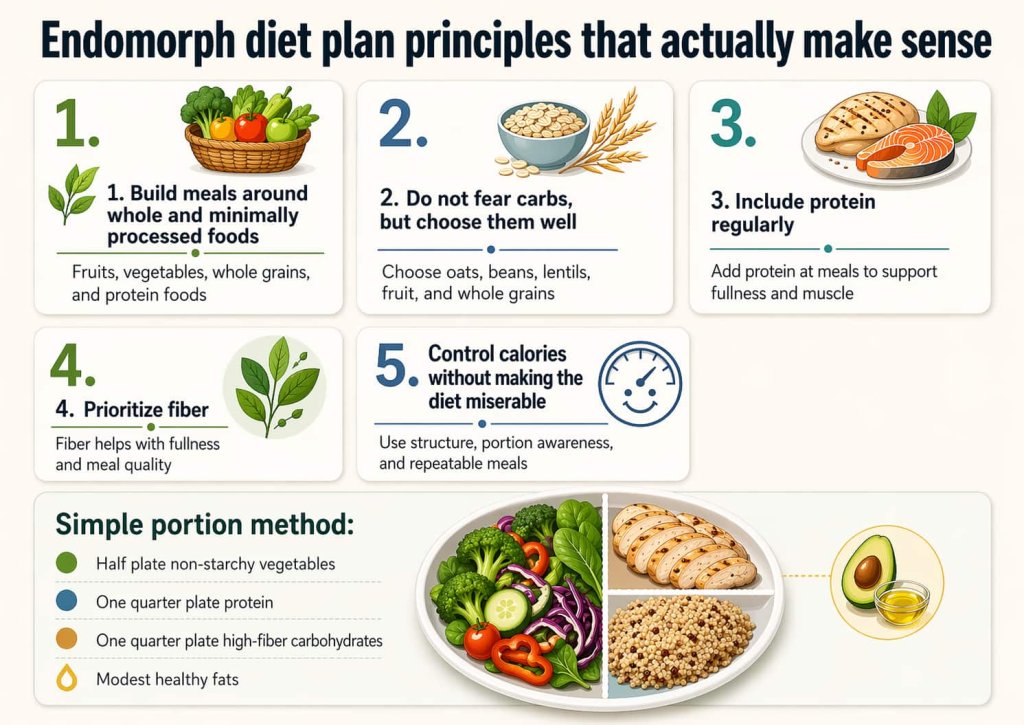
1. Build meals around whole and minimally processed foods
The simplest way to eat for fat loss and better energy is to center meals on foods that give you more nutrition and fullness per calorie. NIDDK recommends a healthy eating pattern that includes fruits, vegetables, whole grains, and protein foods, while keeping added sugars below 10% of calories, saturated fat below 10% of calories, and sodium below 2,300 mg per day.
A simple plate method works well here. The USDA MyPlate guide recommends making half your plate fruits and vegetables, making half your grains whole grains, varying your protein routine, and choosing low-fat or fat-free dairy or fortified soy options.
2. Do not fear carbs, but choose them well
Many people searching for an endomorph diet plan assume they need to cut carbs hard. That is not what official guidance supports. CDC says a variety of healthy foods is better than eliminating one type of food such as carbohydrates, and its diabetes nutrition guidance says carbs can absolutely be part of a healthy diet when you choose higher-fiber options and watch portions.
For most readers, the smarter move is to base most carb choices on foods like oats, beans, lentils, fruit, vegetables, plain yogurt, milk or fortified soy milk, and whole grains such as brown rice, quinoa, and whole-wheat bread. These foods usually do more for fullness, energy, and blood sugar control than refined carbs and sugary drinks.
3. Include protein regularly
A good endomorph diet plan should include protein at each meal because protein can make meals more filling and helps support muscle while you are losing weight. MyPlate and NIDDK both emphasize protein foods as part of a healthy eating pattern, and CDC’s healthy carb guidance also highlights balancing carbs with protein and vegetables.
Good choices include eggs, fish, chicken breast, turkey, Greek yogurt, cottage cheese, tofu, tempeh, edamame, beans, lentils, and lean beef in sensible portions. You do not need a body-type-specific supplement stack to make this work.
4. Prioritize fiber
Fiber matters because it helps meals feel more filling and usually improves the quality of your carb choices. The FDA’s Nutrition Facts label guidance sets the Daily Value for fiber at 28 grams on a 2,000-calorie diet, and the FDA label guide notes that nutrients like fiber are ones to get more of, while saturated fat, sodium, and added sugars are nutrients to limit.
In real life, that means choosing beans over chips, oatmeal over pastries, fruit over candy, and vegetables more often than fries. It also means increasing fiber gradually and drinking enough fluids so your stomach has time to adjust.
5. Control calories without making the diet miserable
An endomorph diet plan only works if it helps you control calorie intake consistently enough to lose fat. NIDDK says adults who want to lose weight and keep it off should reduce calories from foods and beverages, and CDC says the most sustainable pace is about 1 to 2 pounds per week.
That does not mean eating tiny portions all day. It means making your calories work harder: more food volume from vegetables, more fullness from protein and fiber, fewer liquid calories, fewer “healthy” snack calories that pile up quickly, and more awareness of restaurant portions, sauces, sweets, and grazing.
A simple portion method can make the plan easier to follow
If you do not want to count every calorie, a simple plate method can still give the endomorph diet plan more structure. For many meals, aim for:
- half the plate non-starchy vegetables
- one quarter of the plate protein
- one quarter of the plate high-fiber carbohydrates
- a modest portion of healthy fats such as olive oil, nuts, seeds, or avocado
This works well because it helps control calories without making the plan feel overly restrictive. It also makes meals easier to repeat at home, at work, or when eating out. If progress is slow, the first adjustment is usually to slightly reduce calorie-dense extras or large carb portions, not to remove all carbohydrates.
Best foods for an endomorph diet plan
These foods fit the strongest evidence-based pattern for weight control and better meal quality:
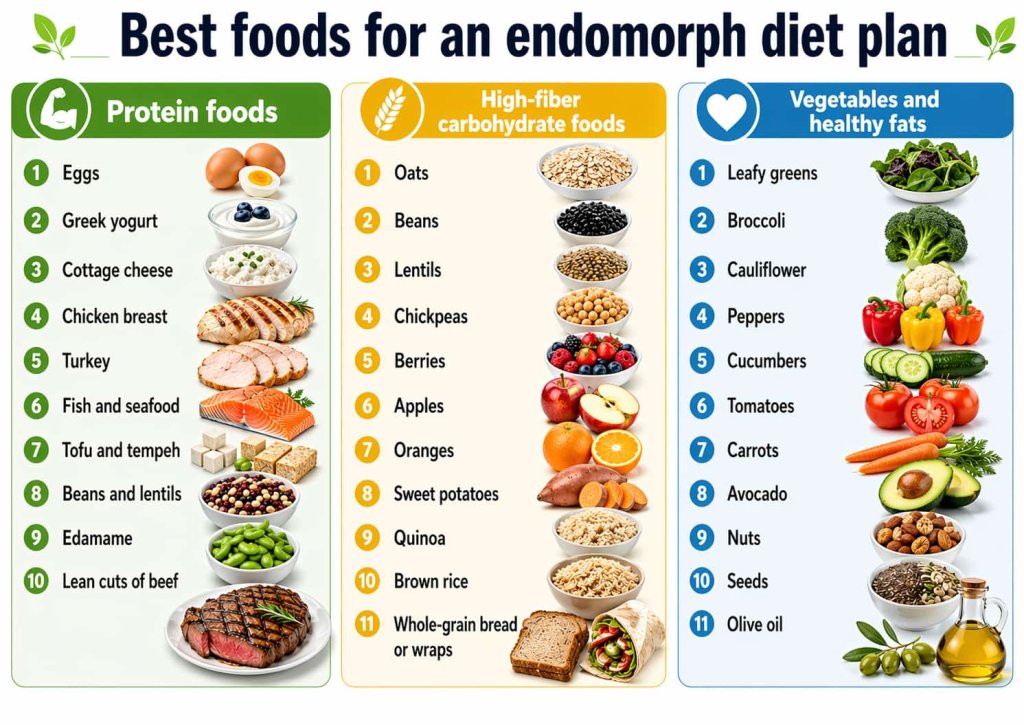
Protein foods
- eggs
- Greek yogurt
- cottage cheese
- chicken breast
- turkey
- fish and seafood
- tofu and tempeh
- beans and lentils
- edamame
- lean cuts of beef
High-fiber carbohydrate foods
- oats
- beans
- lentils
- chickpeas
- berries
- apples
- oranges
- sweet potatoes
- quinoa
- brown rice
- whole-grain bread or wraps
Vegetables and healthy fats
These choices line up well with MyPlate’s emphasis on fruits, vegetables, whole grains, varied proteins, and lower-fat dairy or fortified soy.
Foods to limit on an endomorph diet plan
No food has to be completely banned, but some foods are easier to overeat and do less for fullness:
- sugary drinks
- desserts and pastries
- chips and crackers
- highly processed snack foods
- oversized coffee drinks
- frequent takeout meals heavy in refined carbs and fats
- “healthy” bars and smoothies that are really high-calorie desserts
NIDDK recommends limiting added sugars, saturated fat, and sodium, while CDC notes that a sustainable plan works better than an all-or-nothing approach.
Even healthy foods can become a problem if portions get too large
One of the easiest ways to stall fat loss is to overeat foods that are nutritious but calorie-dense. Common examples include nut butters, nuts, seeds, oils, avocado, granola, trail mix, and large smoothies. These foods can absolutely fit into an endomorph diet plan, but they are usually best used in measured portions rather than eaten casually straight from the container.
This matters because many people think they are eating “clean” while unintentionally pushing calories too high. If you feel stuck, look at extras first: cooking oils, dressings, coffee add-ins, snack portions, and liquid calories often add up faster than expected.
A simple 7-day endomorph diet plan
This sample plan is built around MyPlate structure, higher-fiber carbs, regular protein, and calorie awareness. It is not a medical meal plan, but it is a realistic template many adults can adapt.
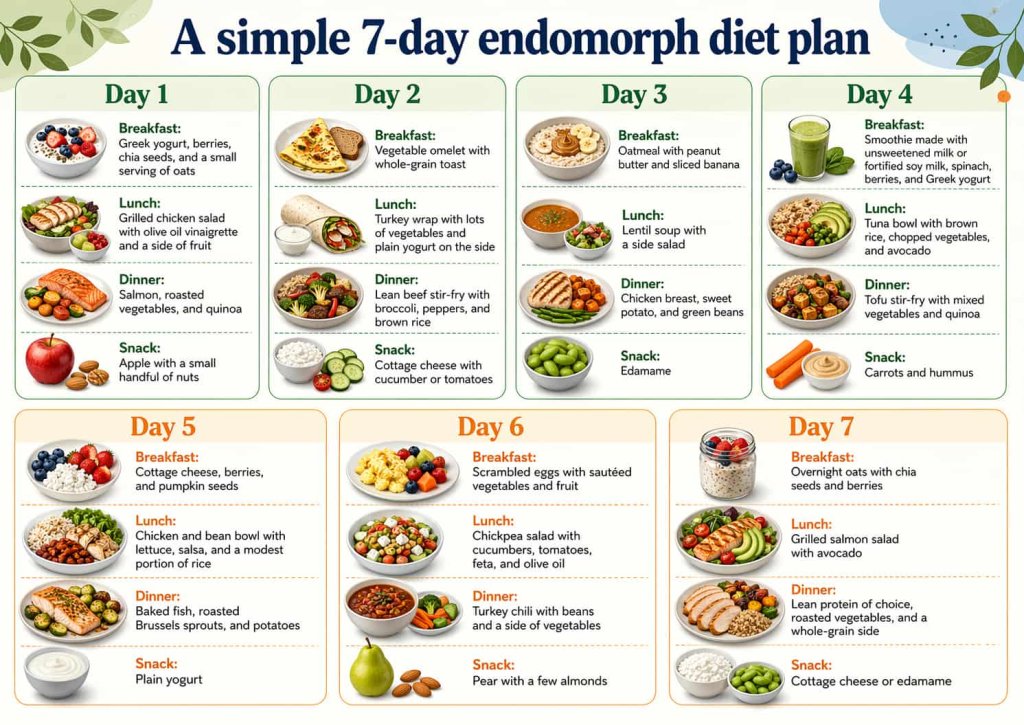
Day 1
Breakfast: Greek yogurt, berries, chia seeds, and a small serving of oats
Lunch: Grilled chicken salad with olive oil vinaigrette and a side of fruit
Dinner: Salmon, roasted vegetables, and quinoa
Snack: Apple with a small handful of nuts
Day 2
Breakfast: Vegetable omelet with whole-grain toast
Lunch: Turkey wrap with lots of vegetables and plain yogurt on the side
Dinner: Lean beef stir-fry with broccoli, peppers, and brown rice
Snack: Cottage cheese with cucumber or tomatoes
Day 3
Breakfast: Oatmeal with peanut butter and sliced banana
Lunch: Lentil soup with a side salad
Dinner: Chicken breast, sweet potato, and green beans
Snack: Edamame
Day 4
Breakfast: Smoothie made with unsweetened milk or fortified soy milk, spinach, berries, and Greek yogurt
Lunch: Tuna bowl with brown rice, chopped vegetables, and avocado
Dinner: Tofu stir-fry with mixed vegetables and quinoa
Snack: Carrots and hummus
Day 5
Breakfast: Cottage cheese, berries, and pumpkin seeds
Lunch: Chicken and bean bowl with lettuce, salsa, and a modest portion of rice
Dinner: Baked fish, roasted Brussels sprouts, and potatoes
Snack: Plain yogurt
Day 6
Breakfast: Scrambled eggs with sautéed vegetables and fruit
Lunch: Chickpea salad with cucumbers, tomatoes, feta, and olive oil
Dinner: Turkey chili with beans and a side of vegetables
Snack: Pear with a few almonds
Day 7
Breakfast: Overnight oats with chia seeds and berries
Lunch: Grilled salmon salad with avocado
Dinner: Lean protein of choice, roasted vegetables, and a whole-grain side
Snack: Cottage cheese or edamame
How many carbs should an endomorph eat?
There is no official carb number for “endomorphs.” A more useful rule is to adjust carbs based on your appetite, activity, blood sugar response, and progress. CDC’s diabetes guidance says carbs can be part of a healthy diet and that the key is choosing carbs with fiber and nutrients and paying attention to portions.
A simple starting point is to include a sensible portion of high-fiber carbs at meals rather than centering meals on refined starches. For example:
- pair protein with fruit or oats at breakfast
- keep lunch built around protein, vegetables, and one smart carb
- use beans, lentils, potatoes, brown rice, or quinoa in measured portions
- cut back first on sugary drinks, pastries, and refined snack foods before cutting out whole food carb sources
That approach is usually easier to sustain than going extremely low-carb for a few weeks and then rebounding. CDC specifically notes that cutting out an entire category like carbohydrates can make long-term adherence harder.
How to make the endomorph diet plan more blood-sugar-friendly
If blood sugar control is one of your goals, the most useful strategy is usually not “eat as few carbs as possible.” A better strategy is to choose higher-fiber carbs, pair them with protein or healthy fats, and avoid building meals around refined carbs by themselves.
In practice, that can look like:
- oatmeal with Greek yogurt or eggs instead of pastries alone
- fruit with nuts or cottage cheese instead of fruit juice
- rice or potatoes served with chicken, fish, tofu, or beans plus vegetables
- beans, lentils, and whole grains more often than sugary cereals, white bread, or sweets
This approach can help many people feel fuller and may support steadier energy after meals. If you have diabetes, prediabetes, or take blood-sugar-lowering medication, your carb targets and meal timing may need to be more individualized.
How to read labels for an endomorph diet plan
Label reading can make this keyword much more practical. FDA says 5% Daily Value or less is low and 20% or more is high. In general, foods with more fiber are useful, while foods high in saturated fat, sodium, or added sugars deserve a closer look. The FDA also lists 28 grams as the Daily Value for fiber, 2,300 mg for sodium, and 50 grams for added sugars on a 2,000-calorie label.
When comparing two similar foods, a quick rule is to favor the one with:
- more fiber
- less added sugar
- less saturated fat
- less sodium
- a short, recognizable ingredient list when possible
Exercise matters as much as the food plan
No endomorph diet plan is complete without movement. CDC says adults need at least 150 minutes of moderate-intensity aerobic activity each week and at least 2 days of muscle-strengthening activity. Going above 150 minutes can provide additional health benefits. The muscle-strengthening part matters because better body composition is not just about losing weight; it is also about keeping or building lean mass.
A realistic weekly structure could be:
- 2 to 4 days of strength training
- brisk walking most days
- one or two longer activity sessions on weekends
- more daily movement overall, such as steps, stairs, and short walks after meals
Sleep and stress can make or break results
CDC says healthy weight loss includes enough sleep and stress management, not just diet and exercise. Adults ages 18 to 60 generally need at least 7 hours of sleep, and NHLBI notes that too little sleep can affect hunger hormones, insulin response, food choices, and physical activity.
If your eating is “good” on paper but cravings, late-night snacking, and low energy keep knocking you off track, sleep is often part of the problem. A consistent bedtime, a darker room, and less screen time before bed can help make the nutrition plan easier to follow.
Common mistakes on an endomorph diet plan
Treating body type like destiny
Your body type does not lock you into one macro ratio forever. The evidence for somatotypes as a precise nutrition system is limited, so your actual response to food, training, and sleep matters more.
Cutting carbs too aggressively
Many people do better when they reduce refined carbs and sugary foods, not when they eliminate all carbs. Fiber-rich carbs can support fullness and fit into healthy eating patterns, including for people working on blood sugar control.
Drinking calories without noticing
Sweet coffee drinks, juice, soda, alcohol, and oversized smoothies can quietly push calories up fast. NIDDK specifically notes that reducing calories from foods and beverages matters for weight loss.
Skipping strength training
Cardio helps, but a body-composition goal usually goes better when you also lift weights or do other resistance training at least twice per week, which CDC includes in adult activity guidance.
Expecting fast results
CDC says gradual loss of about 1 to 2 pounds per week is more likely to stay off. It also notes that even a modest 5% reduction in body weight can improve blood pressure, cholesterol, and blood sugar.
What to do if progress stalls
If you have been following the plan consistently for two to three weeks and are not seeing progress, do not jump straight to an extreme diet. Start with the most common issues first:
- reduce liquid calories and unplanned snacks
- tighten portions of calorie-dense foods such as oils, nut butters, granola, and restaurant meals
- make sure protein and vegetables are showing up at most meals
- add more daily movement, such as walks after meals or a higher step count
- keep strength training consistent
- check sleep, stress, and weekend eating patterns
It also helps to track more than body weight alone. Waist measurements, how your clothes fit, energy levels, workout performance, and hunger patterns can give a more complete picture of whether the plan is working.
Who should be careful with an endomorph diet plan?
Be more cautious with any calorie-restricted or macro-focused plan if you:
- have diabetes
- take medications that affect blood sugar or appetite
- have kidney disease
- are pregnant or breastfeeding
- are under 18
- have a history of disordered eating
CDC notes that medical conditions, medications, hormones, age, stress, and other factors can affect weight management. NIDDK’s Body Weight Planner also says it is intended for adults only and not for younger people or pregnant or breastfeeding women.
FAQ
What is the best diet for an endomorph?
The best endomorph diet is a sustainable eating pattern built around vegetables, fruit, high-fiber carbs, protein, and calorie control. There is no medically proven “endomorph macro ratio” that works for everyone.
Should endomorphs avoid carbs?
No. CDC guidance does not support eliminating whole food groups like carbohydrates. A better strategy is to choose higher-fiber carb sources and watch portions.
Is low carb better for endomorph weight loss?
Some people may prefer a lower-carb pattern because it helps them manage appetite, but official guidance does not say “endomorphs” need to eat low carb. Adherence, calorie intake, food quality, activity, and sleep matter more.
How fast should weight loss happen?
CDC says a gradual, steady pace of about 1 to 2 pounds per week is more likely to be maintained than faster loss.
Is there a good tool to estimate calorie needs?
The NIDDK Body Weight Planner can be a helpful starting tool for adults, but it is not intended for younger people or for those who are pregnant or breastfeeding.
The bottom line on the endomorph diet plan
An endomorph diet plan works best when you stop thinking in terms of “special body-type rules” and start thinking in terms of repeatable habits. Build most meals from protein, vegetables, fruit, and high-fiber carbs. Keep portions sensible. Limit added sugars and ultra-processed foods. Strength train. Sleep enough. Then give the plan time to work. That is the approach most likely to improve weight, energy, and blood sugar in a way you can actually maintain.
If you want to make the plan more precise, start by tracking your current intake for a few days, then use that information to reduce obvious excess calories and build a weekly routine you can repeat. A simple plan you can follow beats a perfect plan you quit.
References
- Centers for Disease Control and Prevention — Steps for Losing Weight
- USDA MyPlate — Start Simple with MyPlate
- Centers for Disease Control and Prevention — Adult Activity: An Overview
- U.S. Food and Drug Administration — How to Understand and Use the Nutrition Facts Label
- Centers for Disease Control and Prevention — Choosing Healthy Carbs
- National Heart, Lung, and Blood Institute — How Sleep Works: Why Is Sleep Important?
- National Institute of Diabetes and Digestive and Kidney Diseases — About the Body Weight Planner
- Frontiers in Physiology — Beyond somatotype categories: composition-based clustering of body types in young adults