
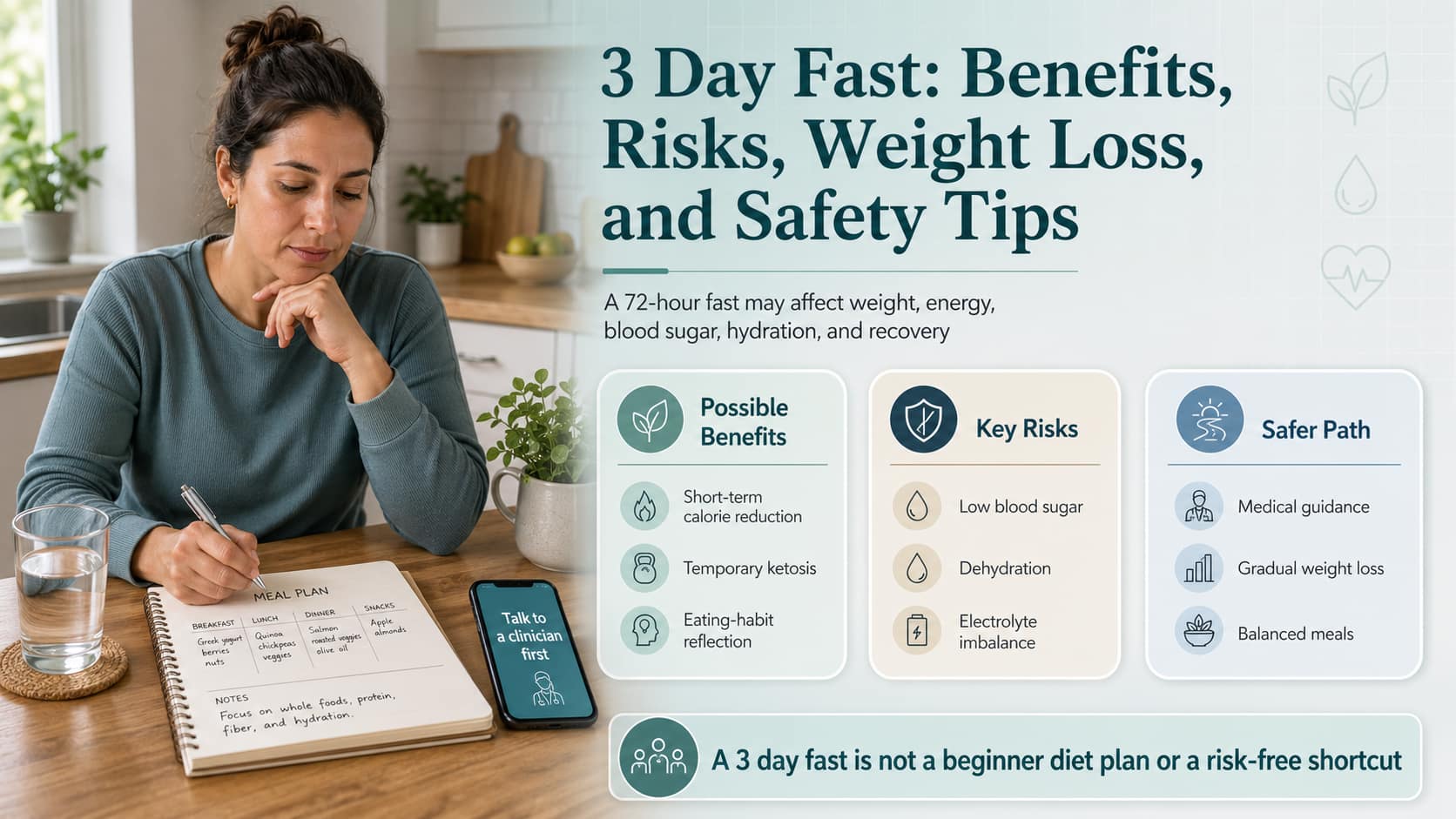
A 3 day fast is a 72-hour period without calories, and it should only be considered by medically cleared adults because it can affect blood sugar, hydration, electrolytes, medications, and eating behavior. It may cause quick scale weight loss and short-term metabolic changes, but it is not a simple fat-loss shortcut or a safe choice for everyone.
If your goal is better health or weight loss, it is important to understand what a 3 day fast can and cannot do. Most people will do better with a sustainable plan that includes balanced meals, enough protein, regular activity, sleep, and gradual weight loss.
What Is a 3 Day Fast?
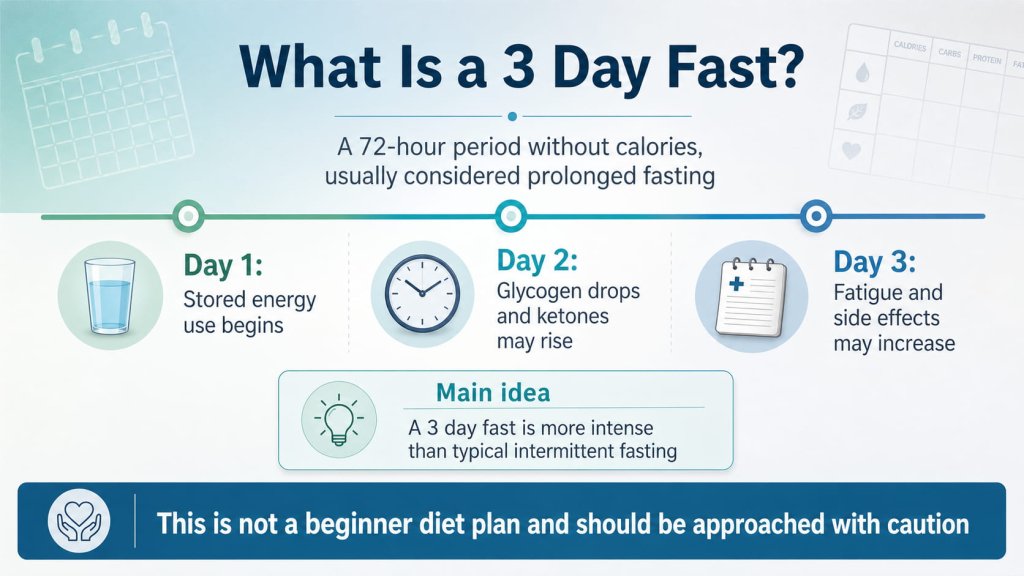
A 3 day fast, also called a 72-hour fast, usually means avoiding all calorie-containing foods and drinks for three full days. Some people call this a water fast, but fasting rules vary widely online.
The safest way to think about it is this:
A 3 day fast is a form of prolonged fasting, not a beginner diet plan.
It is different from common intermittent fasting patterns, such as eating during an 8- to 12-hour window each day. A 72-hour fast places much more stress on the body because it removes calories for multiple days in a row.
The Mayo Clinic notes that intermittent fasting is not appropriate for everyone, including people with eating disorders, people who are pregnant or breastfeeding, and people at higher risk of bone loss and falls.
Is a 3 Day Fast the Same as a Dry Fast?
No. A 3 day fast usually refers to avoiding calories, not avoiding fluids. Dry fasting means avoiding both food and fluids, and it can raise the risk of dehydration much faster.
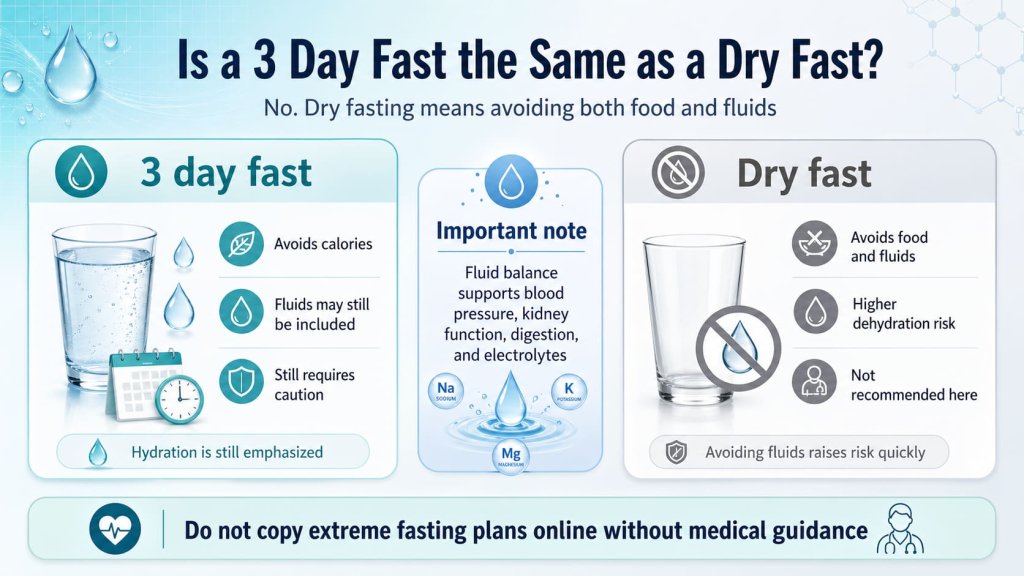
This article does not recommend dry fasting. Fluid balance is important for blood pressure, temperature control, kidney function, digestion, and electrolyte balance. If someone is considering any form of prolonged fasting, they should speak with a qualified health professional first instead of copying an extreme fasting plan online.
Is a 3 Day Fast Safe?
A 3 day fast is not automatically safe just because it is short. Going 72 hours without calories can be risky for some people, especially if they have medical conditions, take medication, train hard, have a history of disordered eating, or are under 18.
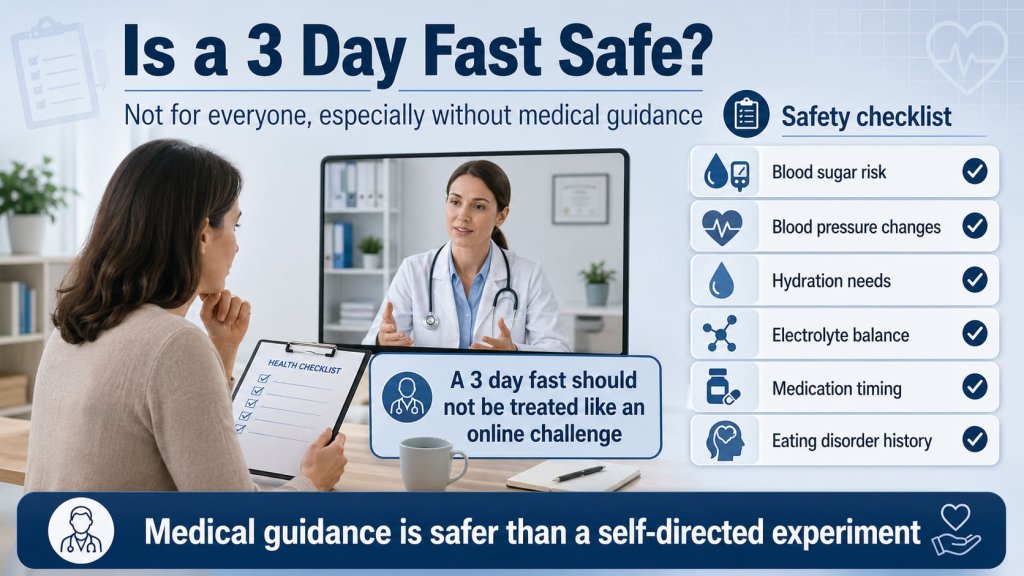
A 3 day fast should not be treated like an online challenge or a simple willpower test. Because prolonged fasting can affect blood sugar, blood pressure, hydration, electrolytes, and medication timing, the safest approach is medical guidance rather than a self-directed experiment.
The Mayo Clinic Health System says skipping meals is not recommended for people under 18, people with a history of disordered eating, or people who are pregnant or breastfeeding. It also advises people with diabetes or other medical issues to talk with their health care team before starting intermittent fasting.
Safety Box
A 3 day fast is not recommended for:
- Children or teenagers under 18
- Pregnant or breastfeeding people
- Anyone with a current or past eating disorder
- People with diabetes, especially those using insulin or glucose-lowering medication
- People with kidney, liver, heart, adrenal, or serious medical conditions
- People taking medications affected by food, fluids, blood pressure, sodium, or potassium
- People with low body weight, recent major weight loss, or malnutrition risk
- Older adults, people at fall risk, or anyone prone to dizziness or fainting
- Athletes or highly active people who need consistent fueling
If any of these apply, a 3 day fast is not a good do-it-yourself plan.
What Happens During a 3 Day Fast?
During a 3 day fast, your body shifts away from incoming food energy and starts relying more on stored energy. This does not happen in one clean step. It changes gradually.
First 24 Hours
Your body uses available glucose from recent meals and stored glycogen. Glycogen is stored with water, so early weight loss often includes water weight.
You may feel hungry, irritable, tired, or distracted. Some people also get headaches or lightheadedness.
Around 24 to 48 Hours
As glycogen stores drop, the body uses more fat for energy. Ketone production may rise. This is one reason people associate longer fasting with ketosis.
However, being in ketosis does not mean a fast is automatically healthy, safe, or superior for fat loss.
Around 48 to 72 Hours
By the third day, fatigue, dizziness, poor exercise tolerance, sleep changes, and mood changes may become more noticeable. Some people feel mentally clear, while others feel worse.
A 2024 study published in Nature Metabolism looked at a 7-day water-only fast in 12 healthy volunteers and found an average weight loss of 5.7 kg, with systemic protein changes becoming more evident after about 3 days of complete calorie restriction. This study is useful, but it was small and does not prove that a 3 day fast is safe or necessary for the general public.
Potential 3 Day Fast Benefits
A 3 day fast may have some short-term effects, but the benefits should not be overstated. Many claims online go beyond what current human evidence can prove.
Short-Term Calorie Reduction
A 3 day fast creates a large short-term calorie deficit. That can lower scale weight quickly.
But fast weight loss is not the same as lasting fat loss. Much of the early drop can come from water, glycogen, and less food in the digestive tract.
Temporary Ketosis
Longer fasting can increase ketone production as the body relies more on fat-derived fuel. Some people report reduced hunger after the first day or two, but others feel worse.
Ketosis is a metabolic state, not a guarantee of better health.
Possible Metabolic Changes
Some fasting research suggests that fasting may influence insulin sensitivity, inflammation markers, fat metabolism, and cellular stress responses. However, results depend on the fasting method, study length, participant health, and whether calories are reduced overall.
Mayo Clinic Health System explains that fasting may lead to ketosis and may support some metabolic processes, but it also notes that long-term benefits and risks are still not fully known.
A Reset for Eating Habits
Some adults use short fasting periods to reflect on hunger cues, snacking patterns, or emotional eating. This can be helpful for some people, but it can be harmful for others.
If fasting creates fear around food, guilt after eating, binge-restrict cycles, or obsession with the scale, it is not a healthy tool.
What About Autophagy During a 3 Day Fast?
Autophagy is often mentioned in fasting discussions. Cleveland Clinic describes autophagy as a natural process where the body breaks down and reuses old or damaged cell parts.
Fasting may influence autophagy, but this does not mean a 3 day fast can prevent disease, reverse aging, or “detox” the body. Autophagy is not something most people can feel or measure at home, and research in humans is still developing.
A safer way to explain it is this: fasting may trigger some cellular stress-response changes, but that does not make prolonged fasting necessary, risk-free, or better than sustainable nutrition habits.
3 Day Fast Weight Loss: How Much Can You Lose?
A 3 day fast can make the scale drop quickly, but that does not mean you lost several pounds of body fat.
Most fast weight loss comes from:
- Lower food volume in the gut
- Glycogen loss
- Water loss
- Reduced sodium intake
- Some fat loss from the calorie deficit
To lose body fat, your body needs a calorie deficit over time. A 72-hour fast can create a deficit, but it can also lead to rebound eating, fatigue, poor workouts, and a harder time staying consistent.
For safer long-term weight management, the CDC says people who lose weight gradually, about 1 to 2 pounds per week, are more likely to keep it off than people who lose weight quickly.
The NIDDK recommends realistic goals, such as losing 5% to 10% of starting body weight within 6 months, rather than chasing extreme short-term results.
Is a 3 Day Fast Better Than a Regular Calorie Deficit?
Not necessarily. A fast can reduce calorie intake quickly, but that does not mean it works better than a steady calorie deficit.
A 2026 Cochrane review found that intermittent fasting may result in little to no difference in weight loss compared with traditional dietary advice for adults with overweight or obesity. The review also noted that evidence on quality of life, unwanted effects, and long-term satisfaction is still limited.
This matters because the best weight-loss plan is not the most extreme one. It is the one a person can follow safely and consistently while still getting enough nutrients.
Risks and Side Effects of a 3 Day Fast
The biggest problem with a 3 day fast is that it can sound simple: just do not eat for three days. In real life, the body depends on steady fluid, electrolyte, and glucose balance.
Low Blood Sugar
Low blood sugar can happen when someone does not eat enough carbohydrates, exercises more than usual, is sick, or takes certain diabetes medications. MedlinePlus explains that severe hypoglycemia can cause serious complications and needs prompt treatment.
Possible warning signs include:
- Shakiness
- Sweating
- Dizziness
- Weakness
- Confusion
- Fast heartbeat
- Blurred vision
- Fainting
People with diabetes should not change food intake or medication timing without medical guidance.
Dehydration and Electrolyte Imbalance
Fasting can change fluid intake, sodium intake, urination, and sweating patterns. This matters because electrolytes help control muscle, nerve, heart, blood pressure, blood glucose, and fluid balance.
MedlinePlus explains that sodium, potassium, magnesium, and phosphate play important roles in fluid balance, heart function, muscles, nerves, and blood pressure.
Possible signs of fluid or electrolyte problems include:
- Dizziness
- Muscle cramps
- Heart palpitations
- Extreme weakness
- Confusion
- Severe headache
- Fainting
These symptoms should not be ignored.
Medication Problems
Some medications need food. Others affect blood sugar, blood pressure, kidney function, sodium, or potassium.
A 3 day fast may be especially risky with medications such as:
- Insulin
- Sulfonylureas or other glucose-lowering drugs
- Blood pressure medication
- Diuretics
- Lithium
- Certain heart medications
- Some anti-inflammatory medications
- Medications that irritate the stomach when taken without food
Do not stop or adjust medication to make a fast “work.” That decision belongs with a qualified health care professional.
Poor Exercise Tolerance
Hard training during a 3 day fast can increase the risk of dizziness, poor performance, dehydration, and muscle loss. Athletes and active people may struggle to fuel and refuel properly during fasting.
If you want fat loss while keeping muscle, a plan with protein, resistance training, and moderate calorie control is usually more practical.
Disordered Eating Risk
Fasting can become harmful when it turns into punishment, rigid food rules, binge-restrict cycles, or anxiety around eating.
Be especially careful if you notice:
- Feeling guilty after eating
- Wanting to fast to “make up for” meals
- Hiding food rules from others
- Obsessing over weight changes
- Feeling out of control around food after fasting
- Avoiding social situations because of food
A fasting plan is not worth damaging your relationship with food.
Who Should Not Do a 3 Day Fast?
A 3 day fast is a poor fit for many people. Avoid it unless a qualified clinician says it is appropriate for you.
Do not do a 3 day fast if you are:
- Under 18
- Pregnant, trying to become pregnant, or breastfeeding
- Living with type 1 or type 2 diabetes unless supervised by your care team
- Taking medication that requires food or affects blood sugar, blood pressure, kidneys, or electrolytes
- Recovering from an eating disorder or currently struggling with disordered eating
- Underweight or at risk of malnutrition
- Recently ill, injured, or recovering from surgery
- Experiencing fainting, dizziness, heart rhythm issues, or low blood pressure
- Training intensely or competing in sports
- Managing kidney disease, liver disease, heart disease, or another serious condition
For these groups, fasting can create more risk than reward.
How to Approach a 3 Day Fast Safely
The safest approach is not to treat a 3 day fast as a casual challenge. If an adult is still considering it, the first step is medical clearance, especially if any health condition, medication, or weight-loss history is involved.
Talk to a Qualified Health Professional First
Before attempting a prolonged fast, ask a clinician whether fasting is appropriate for your health status.
Important questions include:
- Is fasting safe with my medications?
- Do I have any blood sugar or blood pressure risks?
- Should I avoid prolonged fasting because of my health history?
- Are there safer options for my goal?
- What symptoms mean I should stop and get help?
This is especially important for people using diabetes medication, blood pressure medication, diuretics, or any medication that must be taken with food.
Do Not Start With a 3 Day Fast
A 72-hour fast is not a beginner fasting method. If someone has never fasted, jumping straight into three days without food increases the chance of side effects.
A safer adult approach is usually to start with basic habits first:
- Eat regular balanced meals
- Reduce late-night snacking if needed
- Prioritize protein and fiber
- Build a moderate calorie deficit
- Walk more
- Strength train two or more days per week
- Sleep consistently
For most people, these steps are safer and more effective than an aggressive fast.
Avoid Intense Exercise During Prolonged Fasting
Heavy lifting, long runs, high-intensity intervals, and hot-weather workouts can increase risk during fasting.
If medically cleared adults fast, activity should generally stay light and low-risk. Stop if dizziness, chest discomfort, confusion, weakness, or faintness appears.
Know When to Stop
A fast should be stopped if concerning symptoms appear.
Do not push through:
- Fainting or near-fainting
- Confusion
- Chest pain
- Severe weakness
- Persistent vomiting
- Severe headache
- Heart palpitations
- Trouble staying hydrated
- Symptoms of low blood sugar
- Worsening mood or obsessive food thoughts
These are safety signals, not willpower tests.
When to Get Medical Help Immediately
Stopping the fast may not be enough if symptoms are severe. Get urgent medical help if fasting is followed by fainting, confusion, chest pain, severe weakness, repeated vomiting, a racing or irregular heartbeat, seizure, or signs of severe dehydration.
People with diabetes should be especially careful. The American Diabetes Association explains that low blood glucose can cause symptoms such as shakiness, sweating, fast heartbeat, anxiety, hunger, irritability, and confusion. Anyone using insulin or glucose-lowering medication should not attempt prolonged fasting without medical supervision.
How to Break a 3 Day Fast
Breaking a prolonged fast matters because the digestive system and fluid balance may be more sensitive after several days without food.
For medically cleared adults, the general idea is to restart with small, easy meals rather than a very large meal. Good options may include simple foods such as soup, yogurt, eggs, cooked vegetables, fruit, rice, potatoes, oats, or lean protein.
Avoid turning the first meal into a binge. Very large, greasy, or high-sugar meals may cause stomach discomfort and may be harder to tolerate.
Refeeding syndrome is uncommon after only three days in healthy adults, but risk rises in people who are malnourished, have very low intake for longer periods, have low electrolytes, misuse alcohol, or take certain medications. NICE advises that people who have eaten little or nothing for more than 5 days should have nutrition support introduced cautiously.
NCBI Bookshelf explains that refeeding syndrome involves fluid and electrolyte shifts after a period of starvation, especially involving phosphate, potassium, magnesium, and thiamine.
3 Day Fast vs Intermittent Fasting
A 3 day fast is much more intense than most intermittent fasting plans.
| Fasting style | What it usually means | Main concern |
|---|---|---|
| 12-hour overnight fast | Finishing dinner and eating breakfast the next morning | Usually easier and less restrictive |
| 14:10 or 16:8 fasting | Eating within a daily time window | May still be too restrictive for some people |
| 24-hour fast | No calories for a full day | Higher risk of fatigue, overeating, and blood sugar issues |
| 3 day fast | No calories for about 72 hours | Prolonged fasting risks increase |
For most people, improving meal quality and consistency is more useful than forcing longer fasting windows.
Safer Alternatives to a 3 Day Fast for Weight Loss
If the goal is weight loss, there are safer and more sustainable ways to create progress.
Build a Moderate Calorie Deficit
You do not need extreme restriction. A moderate calorie deficit means eating slightly less than your body uses while still getting enough nutrients.
Helpful habits include:
- Build meals around protein, vegetables, fruit, whole grains, beans, lentils, or potatoes
- Limit sugary drinks and frequent ultra-processed snacks
- Use smaller portions of calorie-dense foods
- Keep regular meal timing if it helps control hunger
- Avoid all-or-nothing food rules
Prioritize Protein and Fiber
Protein and fiber help meals feel more filling. They also make weight loss easier to maintain because you are less likely to feel constantly hungry.
Good choices include:
- Eggs
- Greek yogurt
- Fish
- Chicken
- Tofu
- Beans and lentils
- Oats
- Potatoes
- Vegetables
- Fruit
- Whole grains
Strength Train While Losing Weight
Strength training helps support muscle while body weight goes down. A simple routine two to three days per week can work well.
Focus on basic movements:
- Squats or sit-to-stands
- Hip hinges
- Rows
- Push-ups or chest presses
- Shoulder presses
- Planks or dead bugs
Use Fasting Only if It Improves Consistency
Some adults prefer a shorter eating window because it helps them reduce snacking. Others feel worse, overeat later, or become obsessed with food.
The best eating pattern is the one that supports your health, energy, and consistency.
Common Mistakes With a 3 Day Fast
Treating It Like a Detox
Your liver, kidneys, lungs, digestive system, and skin already help your body process and remove waste. A 3 day fast is not a required detox.
Expecting Pure Fat Loss
Fast scale loss is not the same as pure fat loss. Water, glycogen, and food volume can change quickly.
Ignoring Medication Risks
Medication and fasting can interact in serious ways. This is especially important for diabetes, blood pressure, kidney, heart, and psychiatric medications.
Doing Intense Workouts While Fasting
Hard exercise without fuel can increase dizziness, dehydration, poor performance, and recovery problems.
Breaking the Fast With a Huge Meal
Large meals after prolonged fasting can cause stomach discomfort and may lead to binge-restrict cycles.
FAQ About a 3 Day Fast
Is a 3 day fast good for fat loss?
A 3 day fast can create a calorie deficit, so some fat loss may happen. However, much of the quick scale drop is usually water, glycogen, and reduced food volume. For lasting fat loss, gradual habits are safer and easier to maintain.
How much weight can you lose on a 3 day fast?
Scale weight may drop several pounds, but the amount varies by body size, sodium intake, glycogen stores, hydration, and activity. It should not be interpreted as all body fat.
Can you exercise during a 3 day fast?
Hard training is not a good idea during prolonged fasting. Low-intensity movement may be tolerated by some medically cleared adults, but dizziness, weakness, confusion, or faintness means you should stop.
Is a 3 day fast safe for teenagers?
No. Skipping meals and prolonged fasting are not recommended for people under 18. Teenagers need consistent energy and nutrients for growth, school, sports, mood, hormones, and overall health.
Does a 3 day fast reset your metabolism?
No strong evidence shows that a 3 day fast “resets” metabolism in a simple or guaranteed way. Fasting can cause short-term metabolic changes, but long-term health depends more on sustainable nutrition, activity, sleep, and medical needs.
Is a 3 day fast better than intermittent fasting?
Not necessarily. A 3 day fast is more extreme and carries more risk. Many people who benefit from fasting do better with a shorter eating window or simply reducing late-night snacking.
What should you eat after a 3 day fast?
After a prolonged fast, medically cleared adults should generally return to food gradually with smaller, easy-to-digest meals. People at risk of malnutrition, electrolyte problems, or refeeding syndrome need medical guidance.
Conclusion
A 3 day fast may cause quick scale weight loss and short-term metabolic changes, but it is not a magic fat-loss method and it is not safe for everyone. The biggest risks involve low blood sugar, dehydration, electrolyte imbalance, medication issues, poor exercise tolerance, and disordered eating patterns.
For most people, a safer path is steady weight loss through balanced meals, enough protein and fiber, regular movement, strength training, sleep, and realistic goals. If you are considering a 3 day fast, talk with a qualified health professional first and choose the option that protects your long-term health.
This content is for informational purposes only and not medical advice.
References
- Mayo Clinic — Intermittent Fasting: What Are the Benefits?
- CDC — Steps for Losing Weight
- NIDDK — Choosing a Safe and Successful Weight-loss Program
- MedlinePlus — Hypoglycemia
- NICE — Nutrition Support for Adults: Recommendations
- Nature Metabolism — Systemic Proteome Adaptations to 7-Day Complete Caloric Restriction in Humans
- Cochrane — Intermittent Fasting, Traditional Dietary Advice or No Treatment
- American Diabetes Association — Low Blood Glucose