
Hammer curls vs bicep curls comes down to muscle focus: bicep curls are better for directly training the biceps, while hammer curls are better for building arm thickness, brachialis strength, and forearm involvement. For bigger arms, the best choice is usually not one or the other. It is using both with good form, enough volume, and proper recovery.
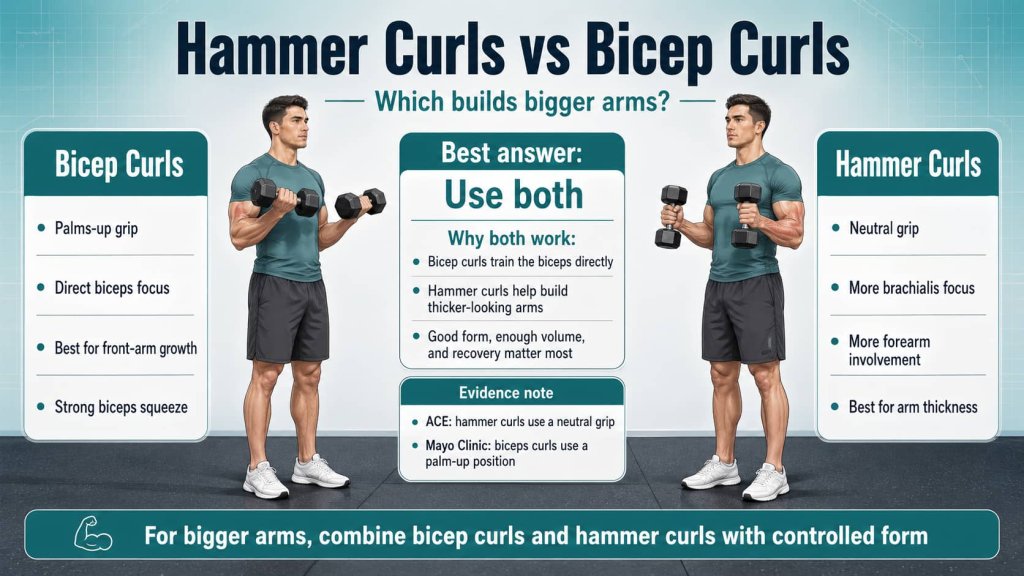
Bicep curls use a palms-up grip, which strongly targets the front of the upper arm. Hammer curls use a neutral grip, which brings in more of the brachialis and brachioradialis, helping the arms look fuller from the side. The American Council on Exercise describes hammer curls with a neutral grip and stable torso, while the Mayo Clinic explains that dumbbell biceps curls use a palm-up position with the elbow close to the body.
Hammer Curls vs Bicep Curls: Quick Answer
Hammer curls and bicep curls both train elbow flexion, but they do not feel exactly the same.
| Exercise | Grip | Main Focus | Best For |
|---|---|---|---|
| Hammer curl | Neutral grip, palms facing each other | Brachialis, brachioradialis, biceps | Arm thickness, forearms, grip support |
| Bicep curl | Supinated grip, palms facing up | Biceps brachii | Front-arm size, biceps peak, direct biceps work |
If your goal is bigger arms, use both:
- Use bicep curls to directly train the biceps.
- Use hammer curls to build thicker-looking arms and stronger forearms.
- Train with controlled reps instead of swinging heavy weights.
- Allow recovery between hard arm sessions.
What Are Hammer Curls?
Hammer curls are a dumbbell curl variation done with your palms facing each other. This is called a neutral grip.
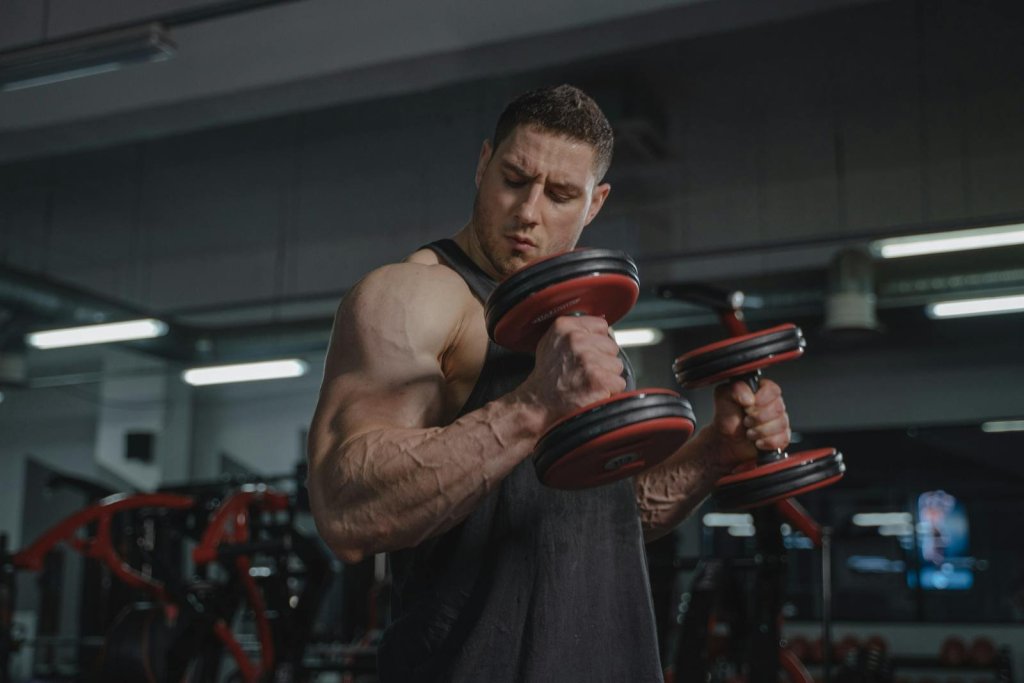
Instead of turning your palms up like a traditional curl, you keep the dumbbells in a “hammer” position from start to finish.
Hammer curls mainly train:
- Biceps brachii
- Brachialis
- Brachioradialis
- Forearm flexors and grip-support muscles
The neutral grip is what makes hammer curls different. It shifts more work toward the brachialis and brachioradialis, which can help make your arms look thicker, especially from the side.
What Are Bicep Curls?
Bicep curls are the classic arm exercise where you curl a weight upward with your palms facing up.
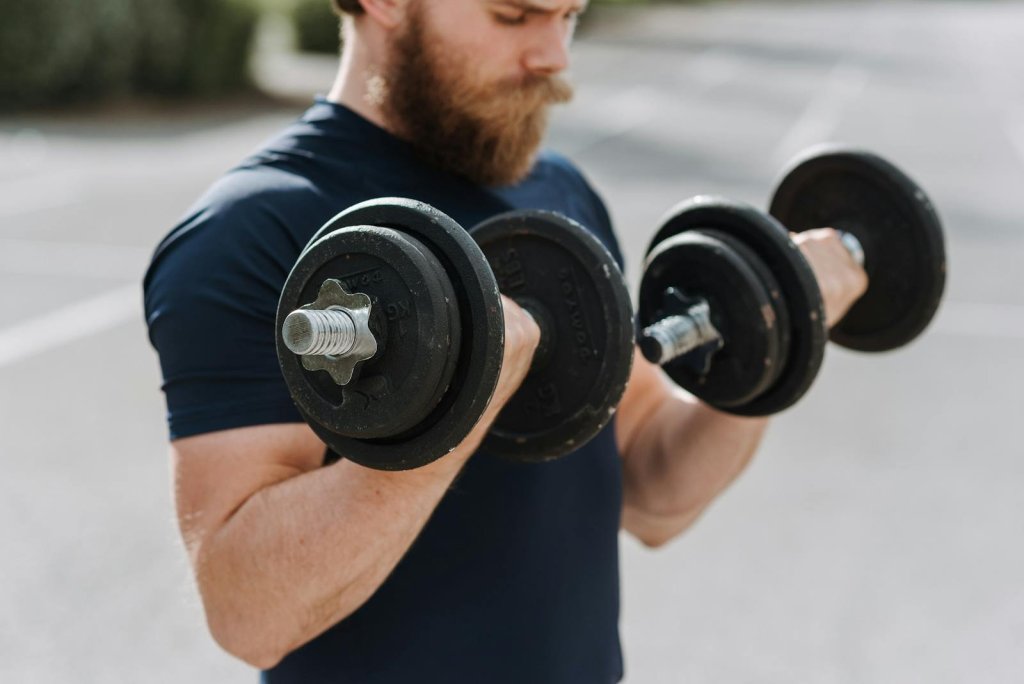
This palms-up position is called supination. It allows the biceps brachii to work strongly because the biceps help bend the elbow and rotate the forearm.
Bicep curls mainly train:
- Biceps brachii short head
- Biceps brachii long head
- Brachialis
- Forearm muscles as secondary support
The bicep curl is one of the best basic exercises for directly targeting the front of the upper arm.
Hammer Curls vs Bicep Curls: Main Difference
The main difference between hammer curls and bicep curls is the grip.
Hammer curls use a neutral grip, while bicep curls use a palms-up grip.
That grip change affects which muscles work hardest.
Hammer Curl Grip
In hammer curls:
- Palms face each other.
- Wrists stay neutral.
- Forearms work harder.
- Brachialis involvement increases.
- The movement often feels easier on the wrists for some people.
Bicep Curl Grip
In bicep curls:
- Palms face upward.
- The biceps are placed in a strong curling position.
- The front of the upper arm gets more direct focus.
- The exercise often creates a stronger “biceps squeeze” at the top.
Both exercises are useful, but they build the arms in slightly different ways.
Muscles Worked in Hammer Curls and Bicep Curls
Hammer curls and bicep curls overlap, but each one has a different emphasis.
Muscles Worked in Hammer Curls
Hammer curls target the upper arm and forearm together.
Primary muscles worked:
- Brachialis: A deep upper-arm muscle under the biceps
- Brachioradialis: A large forearm muscle near the elbow
- Biceps brachii: The main front-arm muscle
Secondary muscles worked:
- Wrist flexors
- Grip muscles
- Core stabilizers
- Shoulder stabilizers
The brachialis matters because when it grows, it can push the biceps outward and make the upper arm look thicker.
Muscles Worked in Bicep Curls
Bicep curls focus more directly on the biceps brachii.
Primary muscles worked:
- Biceps brachii long head
- Biceps brachii short head
- Brachialis
Secondary muscles worked:
- Brachioradialis
- Forearm flexors
- Shoulder stabilizers
- Core muscles
Because the palms are turned upward, bicep curls are especially useful for training the biceps through a strong contraction.
Which Curl Builds Bigger Arms?
For bigger arms, hammer curls and bicep curls work best together.
Bicep curls help build the front of the upper arm. Hammer curls help build the side thickness of the upper arm and add more forearm involvement.
Think of it this way:
- Bicep curls build the “classic biceps look.”
- Hammer curls build thickness and forearm strength.
- Together, they train the arm more completely.
If you only do bicep curls, you may miss some brachialis and forearm development. If you only do hammer curls, you may not get as much direct biceps focus.
Which Curl Is Better for Biceps Growth?
Bicep curls are usually better for direct biceps growth because the palms-up position lines up well with the biceps’ role in elbow bending and forearm supination.
Choose bicep curls if your main goal is:
- More direct biceps focus
- Better biceps squeeze
- Front upper-arm growth
- Classic arm-building training
Good bicep curl variations include:
- Dumbbell bicep curl
- Barbell curl
- EZ-bar curl
- Cable bicep curl
- Incline dumbbell curl
- Preacher curl
For most people, a controlled dumbbell or cable curl is easier to learn before moving into heavier barbell curls.
Which Curl Is Better for Forearms and Grip?
Hammer curls are usually better for forearms and grip support.
Because your palms face each other, your brachioradialis and grip-support muscles work harder than they do in many standard bicep curl variations.
Choose hammer curls if your goal is:
- Stronger-looking forearms
- Better grip support
- More arm thickness
- A curl variation that may feel more wrist-friendly
- Better carryover to pulling exercises like rows and pull-ups
Hammer curls are especially useful if your arms look smaller from the side, even when your biceps are growing.
Hammer Curls vs Bicep Curls: Benefits Compared
Both exercises have clear benefits.
Benefits of Hammer Curls
Hammer curls may help:
- Build thicker-looking upper arms
- Strengthen the brachialis
- Improve forearm size and strength
- Support grip strength
- Feel more comfortable for some wrists
- Improve strength for pulling movements
Hammer curls are also simple to load. You only need dumbbells, and you can use them in beginner, intermediate, or advanced workouts.
Benefits of Bicep Curls
Bicep curls may help:
- Build the biceps directly
- Improve front-arm size
- Create a stronger biceps contraction
- Support pulling strength
- Add shape to the upper arm
- Improve basic arm strength
Bicep curls are popular because they are easy to understand and can be done with dumbbells, barbells, cables, resistance bands, or machines.
How to Do Hammer Curls With Proper Form
Hammer curls look simple, but form matters. Using too much weight can turn the exercise into a shoulder swing instead of an arm-building movement.
How to do it:
- Stand tall with a dumbbell in each hand.
- Keep your palms facing each other.
- Let your arms hang by your sides.
- Brace your core and keep your shoulders relaxed.
- Keep your elbows close to your ribs.
- Curl the dumbbells upward without twisting your wrists.
- Stop near the top when your elbows are bent.
- Squeeze briefly without leaning back.
- Lower the dumbbells slowly.
- Repeat with control.
Trainer Tip: Keep your wrists straight the whole time. Do not let the dumbbells pull your wrists backward.
How to Do Bicep Curls With Proper Form
Bicep curls should feel controlled, not rushed. The goal is to make the biceps do the work, not your hips, shoulders, or lower back.
How to do it:
- Stand tall with a dumbbell in each hand.
- Start with your arms by your sides.
- Turn your palms forward or slightly upward.
- Keep your elbows close to your body.
- Brace your core.
- Curl the dumbbells upward by bending your elbows.
- Keep your shoulders still.
- Squeeze your biceps near the top.
- Lower the weights slowly.
- Repeat without swinging.
Trainer Tip: Lower the weight slowly. The lowering part helps build control and keeps tension on the muscle.
Hammer Curls vs Bicep Curls: Which Should You Do First?
Do the exercise that matches your main goal first.
If your goal is bigger biceps, start with bicep curls. If your goal is thicker arms and stronger forearms, start with hammer curls.
Simple rule:
- Biceps priority: Bicep curls first, hammer curls second
- Forearm/thickness priority: Hammer curls first, bicep curls second
- Balanced arm growth: Alternate which one you do first each workout
Most people should not overthink the order. Good form, enough weekly volume, and progressive overload matter more than the exact order.
Should You Do Hammer Curls and Bicep Curls in the Same Workout?
Yes, you can do hammer curls and bicep curls in the same workout.
This is often a smart choice because the exercises complement each other.
A simple arm workout could look like this:
| Exercise | Sets | Reps |
|---|---|---|
| Dumbbell bicep curl | 3 | 8–12 |
| Hammer curl | 2–3 | 10–15 |
| Cable curl or band curl | 2 | 12–15 |
You do not need a huge number of curl variations in one workout. Two well-performed curl exercises are usually enough for most beginners and intermediate lifters.
Sets, Reps, and Weekly Programming
For arm growth, use a mix of moderate and slightly higher reps.
Good starting ranges:
- Bicep curls: 2–4 sets of 8–12 reps
- Hammer curls: 2–4 sets of 10–15 reps
- Beginner total: 4–6 direct curl sets per week
- Intermediate total: 6–10 direct curl sets per week
The CDC recommends adults do muscle-strengthening activities at least 2 days per week that work major muscle groups, including the arms. For arm training, that does not mean doing curls every day. It means training consistently while allowing muscles and joints time to recover.
Beginner Example
Use this if you are new to arm training.
| Day | Exercise | Sets and Reps |
|---|---|---|
| Day 1 | Dumbbell bicep curl | 2 sets of 10–12 |
| Day 1 | Hammer curl | 2 sets of 10–12 |
| Day 2 or 3 | Cable or band curl | 2 sets of 12–15 |
| Day 2 or 3 | Hammer curl | 2 sets of 12–15 |
Intermediate Example
Use this if you already train consistently.
| Day | Exercise | Sets and Reps |
|---|---|---|
| Pull day | Barbell or dumbbell curl | 3 sets of 8–10 |
| Pull day | Hammer curl | 3 sets of 10–12 |
| Arm day | Incline curl | 3 sets of 10–12 |
| Arm day | Cable hammer curl | 2–3 sets of 12–15 |
How Much Weight Should You Use?
Use a weight you can control from the first rep to the last rep.
A good curl weight should let you:
- Keep your elbows mostly still
- Avoid swinging your torso
- Lower the weight slowly
- Feel the target muscles working
- Finish the set with 1–3 good reps left in reserve
If you have to lean back, shrug, or swing the dumbbells, the weight is probably too heavy.
Common Curl Mistakes to Avoid
Curl mistakes are common because people often chase heavier weights too quickly.
| Mistake | Why It Hurts Progress | Quick Fix |
|---|---|---|
| Swinging the weight | Takes tension off the arms | Use lighter weight and slow reps |
| Letting elbows drift forward too much | Turns it into a shoulder-assisted curl | Keep elbows close to your sides |
| Rushing the lowering phase | Reduces muscle tension | Lower for 2–3 seconds |
| Bending the wrists | May irritate wrists or reduce control | Keep wrists straight |
| Going too heavy | Breaks form and increases strain | Choose a weight you can control |
| Training curls every day | Can irritate elbows and slow recovery | Leave recovery time between hard sessions |
Hammer Curls vs Bicep Curls for Different Goals
Best for Bigger Biceps
Choose bicep curls as your main movement.
Best options:
- Dumbbell bicep curl
- Barbell curl
- Cable curl
- Incline dumbbell curl
Best for Thicker Arms
Choose hammer curls and pair them with bicep curls.
Best options:
- Dumbbell hammer curl
- Cross-body hammer curl
- Rope cable hammer curl
Best for Forearms
Choose hammer curls.
Best options:
- Dumbbell hammer curl
- Rope hammer curl
- Cross-body hammer curl
Best for Beginners
Start with both, but keep the volume simple.
Best beginner setup:
- Dumbbell bicep curl: 2 sets of 10–12 reps
- Hammer curl: 2 sets of 10–12 reps
Use light to moderate weight and focus on clean movement.
Are Hammer Curls Easier on the Wrists?
Hammer curls may feel easier on the wrists for some people because the neutral grip keeps the wrist in a more natural position.
That does not mean hammer curls are automatically safe for everyone. If you feel sharp pain, numbness, tingling, or discomfort that gets worse, stop the exercise and adjust your grip, weight, or range of motion.
You can also try:
- Lighter dumbbells
- Cable rope hammer curls
- Resistance band curls
- EZ-bar curls instead of straight-bar curls
- Slower reps with less weight
If pain continues, it is best to get guidance from a qualified healthcare or fitness professional.
Can You Build Big Arms With Only Curls?
Curls help build the arms, but they are not the whole plan.
For bigger arms, you also need:
- Progressive overload
- Enough protein and calories for your goal
- Good sleep
- Recovery between workouts
- Pulling exercises like rows, pulldowns, and pull-ups
- Triceps training, because the triceps make up a large part of upper-arm size
A strong arm-building plan usually includes both direct arm exercises and bigger upper-body pulling and pushing movements.
Best Workout Plan Using Hammer Curls and Bicep Curls
Here is a simple arm-focused plan you can add after your back workout or upper-body workout.
Simple Bigger Arms Curl Workout
| Exercise | Sets | Reps | Rest |
|---|---|---|---|
| Dumbbell bicep curl | 3 | 8–12 | 60–90 seconds |
| Hammer curl | 3 | 10–15 | 60–90 seconds |
| Cable curl or band curl | 2 | 12–15 | 45–75 seconds |
Use this 1–2 times per week depending on your full training plan.
If your elbows feel sore or your performance drops, reduce the number of sets before adding more.
Who Should Be Careful With Curl Exercises?
Hammer curls and bicep curls are generally simple exercises, but some people should be more careful.
Be cautious if you have:
- Current elbow pain
- Wrist pain
- Shoulder irritation
- Recent arm, wrist, or shoulder injury
- Numbness or tingling in the arm or hand
- Pain that gets worse during the workout
- Trouble controlling the weight
Modify by using lighter weight, a neutral grip, cables, bands, or a shorter range of motion. Stop if the movement causes sharp or worsening pain.
Hammer Curls vs Bicep Curls: Which Is Better?
Neither exercise is always better. They are better for different jobs.
1. Choose bicep curls if you want:
- More direct biceps focus
- Stronger front-arm contraction
- Classic biceps training
2. Choose hammer curls if you want:
- More arm thickness
- More brachialis work
- More forearm involvement
- A neutral-grip curl option
3. Choose both if you want:
- Bigger arms overall
- Better balance between upper arm and forearm development
- More complete arm training
For most lifters, the best answer is simple: do bicep curls and hammer curls in the same weekly plan.
FAQs About Hammer Curls vs Bicep Curls
Are hammer curls better than bicep curls?
Hammer curls are better for brachialis, brachioradialis, forearms, and arm thickness. Bicep curls are better for directly targeting the biceps. For overall arm growth, both are useful.
Do hammer curls build biceps?
Yes, hammer curls do train the biceps, but they also involve the brachialis and brachioradialis more than standard bicep curls. They are not only a forearm exercise.
Do bicep curls make your arms bigger?
Bicep curls can help make your arms bigger when you train consistently, use progressive overload, eat enough to support your goal, and recover well. They work best as part of a full upper-body strength plan.
Should I do hammer curls or bicep curls first?
Do bicep curls first if your main goal is biceps growth. Do hammer curls first if your main goal is arm thickness or forearm strength. You can also alternate the order from workout to workout.
Can beginners do hammer curls and bicep curls?
Yes. Beginners can do both exercises with light dumbbells and controlled form. A good start is 2 sets of 10–12 reps for each exercise, 1–2 times per week.
Are hammer curls good for forearms?
Yes. Hammer curls are one of the better curl variations for forearm involvement because the neutral grip challenges the brachioradialis and grip-support muscles.
How many times per week should I train arms?
Most people can train arms 1–3 times per week depending on total workout volume, recovery, and experience level. Beginners should start with 1–2 focused sessions per week.
Conclusion
Hammer curls vs bicep curls is not about picking one forever. Bicep curls are better for direct biceps growth, while hammer curls are better for arm thickness, brachialis development, and forearm support.
If you want bigger arms, include both in your weekly routine. Start with strict form, use a weight you can control, progress slowly, and give your elbows and wrists enough recovery.