
Magnesium for muscles supports normal muscle contraction, nerve signaling, energy production, and relaxation, but it is not a guaranteed fix for cramps or soreness. The best approach is to get enough magnesium from food first, then consider supplements only when your intake is low or a healthcare professional recommends them.

Magnesium matters because your muscles do not work alone. They rely on nerves, electrolytes, energy metabolism, hydration, and recovery habits. According to the NIH Office of Dietary Supplements, magnesium helps regulate muscle and nerve function, protein synthesis, blood glucose control, blood pressure, and many enzyme reactions in the body.
What Does Magnesium Do for Muscles?
Magnesium is an essential mineral and electrolyte. It helps your body manage the electrical signals and chemical reactions that allow muscles to contract and relax.
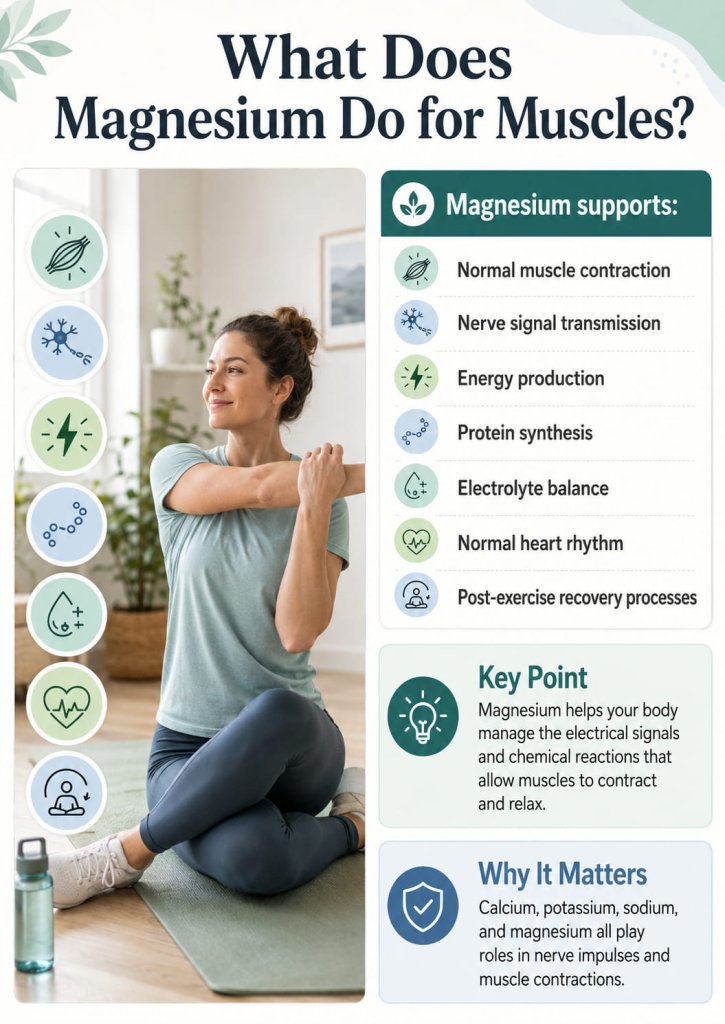
For muscle health, magnesium supports:
- Normal muscle contraction
- Nerve signal transmission
- Energy production
- Protein synthesis
- Electrolyte balance
- Normal heart rhythm
- Post-exercise recovery processes
Magnesium also helps move calcium and potassium across cell membranes. That matters because calcium, potassium, sodium, and magnesium all play roles in nerve impulses and muscle contractions. When these systems are out of balance, muscle function can feel off.
Magnesium for Muscles: Key Benefits
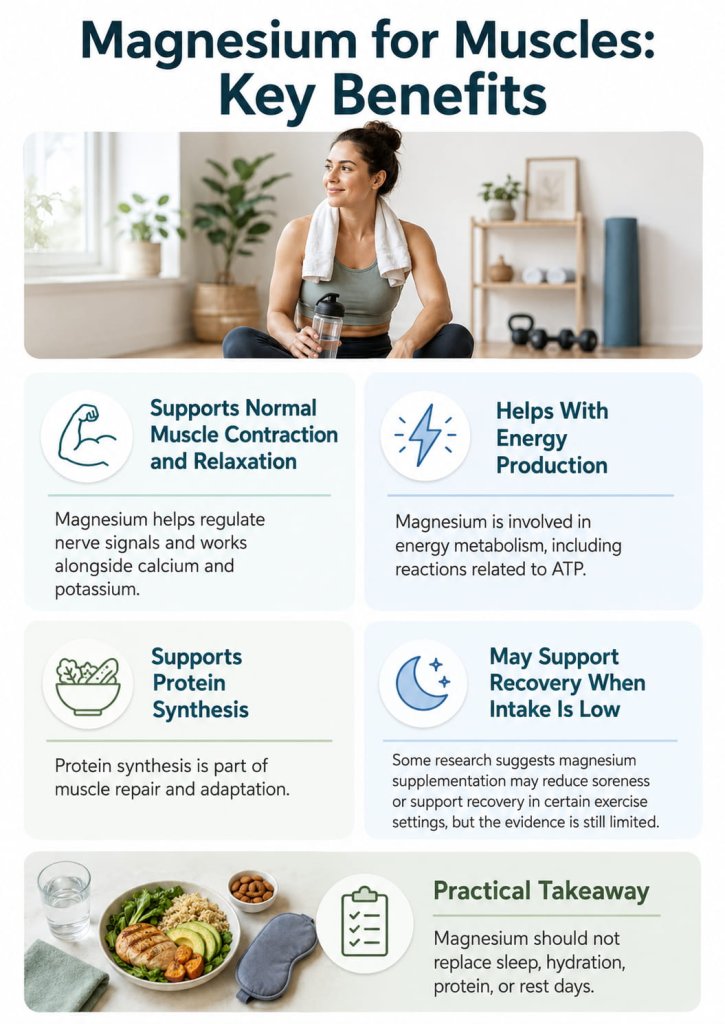
Supports Normal Muscle Contraction and Relaxation
Muscles need coordinated nerve signals to contract properly. Magnesium helps regulate those signals and works alongside calcium and potassium.
Calcium helps trigger contraction. Magnesium helps support normal relaxation after contraction. This does not mean magnesium works like an instant muscle relaxer, but low magnesium status can interfere with normal neuromuscular function.
Helps With Energy Production
Muscles need energy for every rep, step, sprint, and stretch. Magnesium is involved in energy metabolism, including reactions related to ATP, the body’s main energy-carrying molecule.
That is one reason magnesium is often discussed in sports nutrition. It does not act like caffeine or a pre-workout stimulant. Instead, it supports basic cellular processes that help muscles function normally.
Supports Protein Synthesis
Protein synthesis is part of muscle repair and adaptation. Magnesium is involved in enzyme systems that help regulate protein synthesis, according to NIH guidance.
This does not mean magnesium alone builds muscle. Strength training, enough protein, enough total calories, sleep, and recovery still matter most. Magnesium simply supports normal body functions that are part of the bigger muscle-building process.
May Support Recovery When Intake Is Low
Some research suggests magnesium supplementation may reduce soreness or support recovery in certain exercise settings, but the evidence is still limited.
One randomized trial studied 350 mg of magnesium per day for 10 days and found improvements in muscle soreness and perceived recovery after eccentric exercise. However, the study was small and involved college-aged participants, so the results should not be stretched too far.
A 2024 systematic review also reported that magnesium supplementation reduced soreness and improved some recovery or performance markers in selected studies, but only a small number of studies met the review criteria.
The practical takeaway: magnesium may help some people recover better when their intake is low, but it should not replace sleep, progressive training, hydration, protein, or rest days.
Does Magnesium Help Muscle Cramps?
Magnesium may help muscle cramps when cramps are related to low magnesium, but it is not a reliable cure-all for everyone.
Low magnesium can cause symptoms such as muscle spasms, cramps, weakness, numbness, and tingling. MedlinePlus lists muscle spasms or cramps and muscle weakness among possible symptoms of magnesium deficiency.
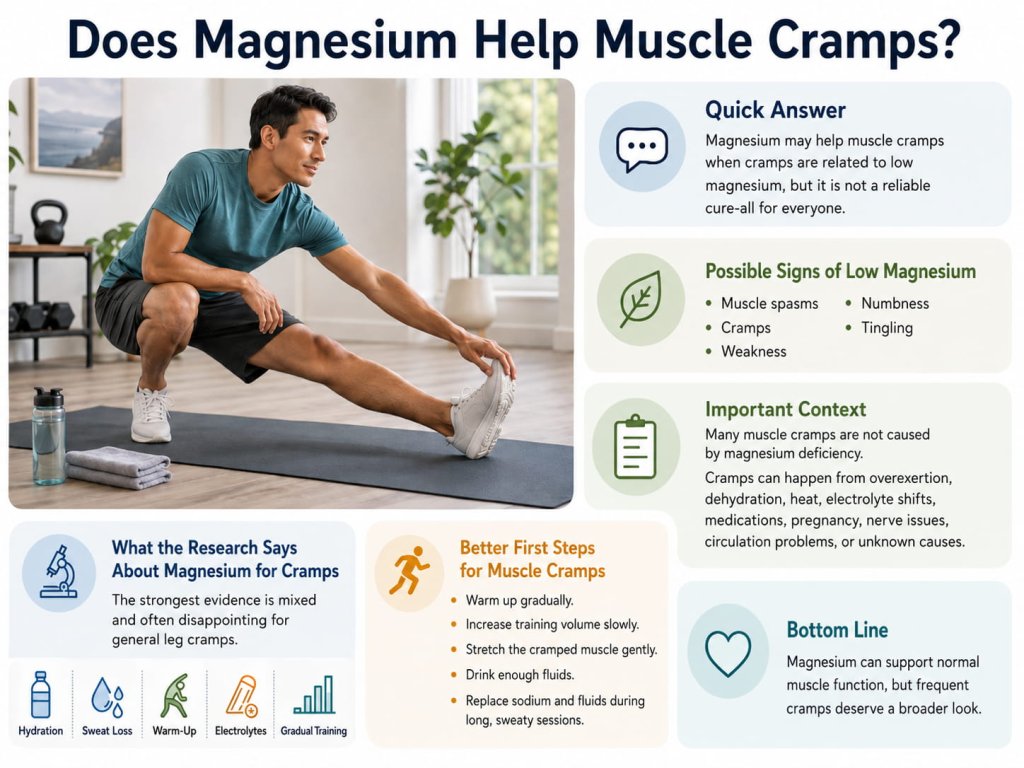
However, many muscle cramps are not caused by magnesium deficiency. Cramps can happen from overexertion, dehydration, heat, electrolyte shifts, medications, pregnancy, nerve issues, circulation problems, or unknown causes.
The NCBI Bookshelf notes that muscle cramps are often linked with dehydration, electrolyte imbalances, medications, and overexertion, although many cases are idiopathic, meaning no clear cause is found.
What the Research Says About Magnesium for Cramps
The strongest evidence is mixed and often disappointing for general leg cramps.
A Cochrane review concluded that magnesium supplementation is unlikely to provide clinically meaningful cramp prevention for older adults with skeletal muscle cramps. The same review found pregnancy-related cramp evidence less certain.
So, magnesium may be worth discussing with a healthcare professional if you have low intake, deficiency risk, pregnancy-related cramps, or symptoms that suggest an electrolyte issue. But for many people, magnesium is only one possible piece of the cramp puzzle.
Better First Steps for Muscle Cramps
If cramps happen during or after training, start with the basics:
- Warm up gradually.
- Increase training volume slowly.
- Stretch the cramped muscle gently.
- Drink enough fluids.
- Replace sodium and fluids during long, sweaty sessions.
- Avoid sudden jumps in intensity.
- Review medications with a healthcare professional if cramps are frequent.
- Seek care if cramps are severe, persistent, one-sided, or linked with swelling, weakness, numbness, or chest symptoms.
For workout-related cramps, do not focus on magnesium alone. Long, hot, or very sweaty sessions can also involve fluid and sodium losses. In those cases, drinking plain water without replacing electrolytes may not fully solve the problem. A balanced approach includes gradual conditioning, enough fluids, adequate sodium during heavy sweating, and enough overall food intake to support training.
Magnesium can support normal muscle function, but frequent cramps deserve a broader look.
Can Magnesium Help Muscle Recovery and Soreness?
Magnesium may support recovery, especially if your intake is low, but it is not a shortcut for faster muscle repair.
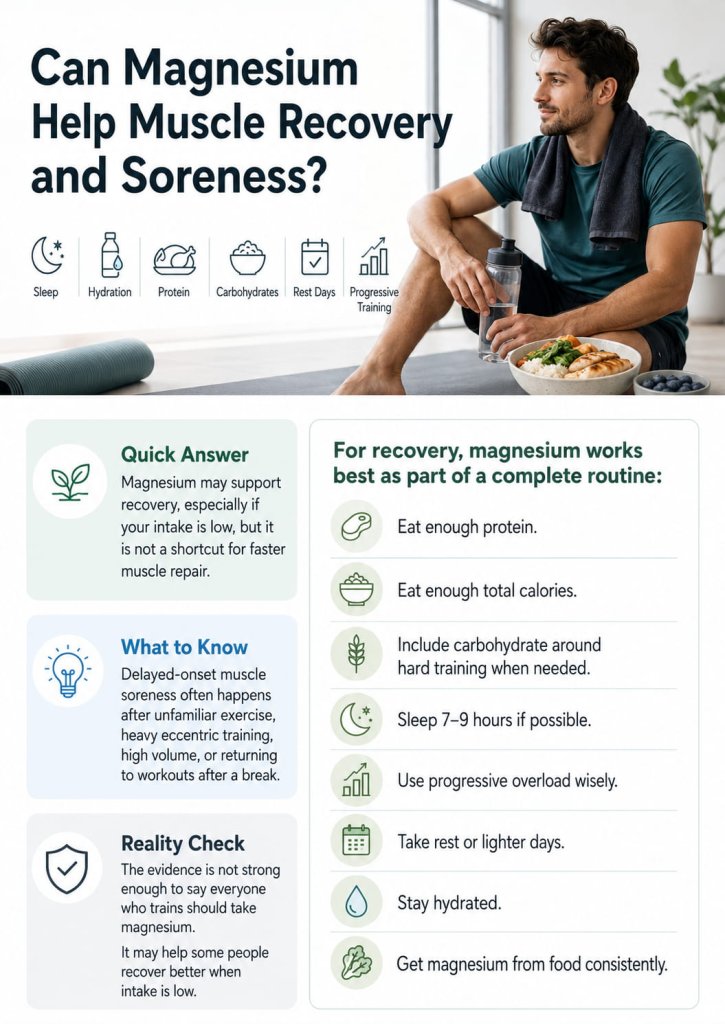
Delayed-onset muscle soreness often happens after unfamiliar exercise, heavy eccentric training, high volume, or returning to workouts after a break. Magnesium may play a role because it supports energy metabolism, muscle function, inflammation-related processes, and protein synthesis.
Still, the evidence is not strong enough to say everyone who trains should take magnesium.
In fact, a 2025 randomized crossover trial found that short-term magnesium chloride supplementation had modest negative effects on some cycling performance measures in regular exercisers without low magnesium. The authors recommended that regular exercisers without hypomagnesemia should not supplement just for performance.
For recovery, magnesium works best as part of a complete routine:
- Eat enough protein.
- Eat enough total calories.
- Include carbohydrate around hard training when needed.
- Sleep 7–9 hours if possible.
- Use progressive overload wisely.
- Take rest or lighter days.
- Stay hydrated.
- Get magnesium from food consistently.
How Much Magnesium Do You Need?
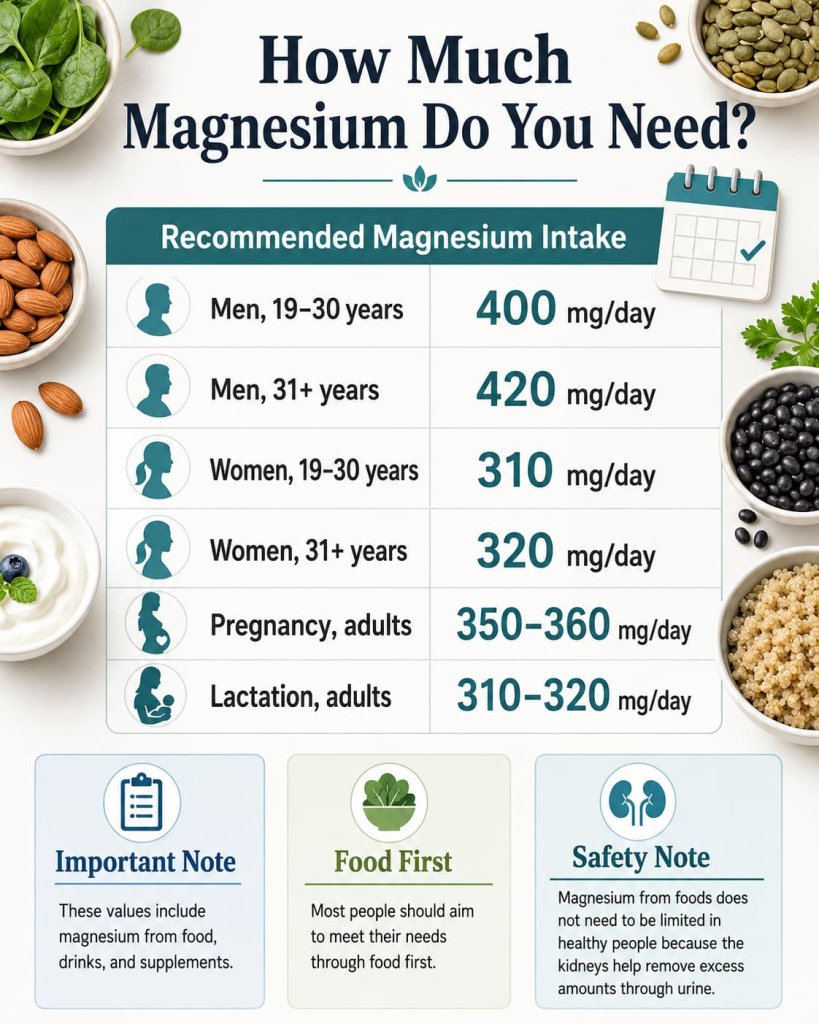
For adults, the Recommended Dietary Allowance for magnesium is:
| Group | Recommended Magnesium Intake |
|---|---|
| Men, 19–30 years | 400 mg/day |
| Men, 31+ years | 420 mg/day |
| Women, 19–30 years | 310 mg/day |
| Women, 31+ years | 320 mg/day |
| Pregnancy, adults | 350–360 mg/day |
| Lactation, adults | 310–320 mg/day |
These values include magnesium from food, drinks, and supplements. NIH provides these intake recommendations in its magnesium fact sheet.
Most people should aim to meet their needs through food first. Magnesium from foods does not need to be limited in healthy people because the kidneys help remove excess amounts through urine.
Best Food Sources of Magnesium for Muscles
The best magnesium-rich foods are simple, everyday whole foods: seeds, nuts, beans, lentils, leafy greens, whole grains, and some dairy foods.
Here are useful magnesium food sources based on NIH food data:
| Food | Serving | Magnesium |
|---|---|---|
| Pumpkin seeds, roasted | 1 oz | 156 mg |
| Chia seeds | 1 oz | 111 mg |
| Almonds, dry roasted | 1 oz | 80 mg |
| Spinach, boiled | ½ cup | 78 mg |
| Cashews, dry roasted | 1 oz | 74 mg |
| Peanuts, oil roasted | ¼ cup | 63 mg |
| Black beans, cooked | ½ cup | 60 mg |
| Edamame, shelled and cooked | ½ cup | 50 mg |
| Peanut butter | 2 tbsp | 49 mg |
| Brown rice, cooked | ½ cup | 42 mg |
| Plain low-fat yogurt | 8 oz | 42 mg |
| Banana | 1 medium | 32 mg |
Food-first magnesium is usually the safest choice because it also comes with fiber, protein, healthy fats, potassium, and other nutrients.
Easy Ways to Eat More Magnesium
You do not need a complicated meal plan. Try these simple upgrades:
- Add pumpkin seeds or chia seeds to oatmeal.
- Use spinach in eggs, smoothies, soups, or rice bowls.
- Snack on almonds or cashews.
- Add black beans to tacos, salads, or wraps.
- Choose brown rice or oats more often.
- Pair yogurt with nuts and fruit.
- Use peanut butter with whole-grain toast or banana.
A muscle-friendly day could include oats with chia seeds, a spinach omelet, a black bean bowl, yogurt with almonds, and brown rice with dinner.
Food First or Supplement: Which Should You Choose?
For most people, food should come first. Magnesium-rich foods also provide fiber, potassium, protein, healthy fats, and other nutrients that support overall health and training recovery.
A supplement may be more reasonable if you rarely eat magnesium-rich foods, have a diagnosed low magnesium level, have a medical condition that affects absorption, or your healthcare professional recommends it.
A supplement is less likely to help if you already eat plenty of nuts, seeds, beans, whole grains, and leafy greens and you do not have signs of low magnesium. In that case, better recovery may come from improving sleep, protein intake, hydration, training load, and rest days instead of adding more magnesium.
Magnesium Supplements: Types, Dosage, and Absorption
Magnesium supplements come in several forms. The form matters because some types are absorbed better or are gentler on digestion than others.
Common forms include:
- Magnesium citrate
- Magnesium glycinate
- Magnesium chloride
- Magnesium lactate
- Magnesium malate
- Magnesium oxide
NIH notes that magnesium forms that dissolve well in liquid tend to be better absorbed. Small studies suggest magnesium aspartate, citrate, lactate, and chloride are more bioavailable than magnesium oxide and magnesium sulfate.
Which Magnesium Is Best for Muscles?
There is no single “best” magnesium for every muscle goal.
Here is a practical guide:
| Supplement Form | Practical Notes |
|---|---|
| Magnesium citrate | Common, well absorbed, may loosen stools |
| Magnesium glycinate | Often chosen for gentler digestion |
| Magnesium chloride | Well absorbed; used in some research |
| Magnesium lactate | Often well tolerated |
| Magnesium malate | Popular in general wellness supplements |
| Magnesium oxide | Usually less absorbed; more likely to affect digestion for some people |
Always check the label for elemental magnesium. The Supplement Facts panel usually lists the amount of elemental magnesium, which is the number that counts toward your daily intake.
How Much Supplemental Magnesium Is Safe?
For adults, the tolerable upper intake level from supplements or medications is 350 mg per day. This upper limit does not apply to magnesium naturally found in food. NIH explains that high magnesium from supplements or medicines can cause diarrhea, nausea, and abdominal cramping, while very high intakes can cause serious toxicity.
This is why “more” is not better. If your diet already contains enough magnesium, a high-dose supplement may add side effects without improving muscle performance.
Who May Need More Magnesium?
Some people are more likely to have low magnesium intake or low magnesium status.
You may need to pay closer attention if you:
- Eat very few nuts, seeds, legumes, whole grains, or leafy greens
- Follow a restrictive diet
- Have certain digestive disorders
- Have type 2 diabetes
- Drink alcohol heavily
- Are an older adult
- Use certain medications long term
- Have symptoms that could suggest low magnesium
NIH lists gastrointestinal diseases, type 2 diabetes, alcohol dependence, and older age among factors linked with higher risk of magnesium inadequacy.
If you suspect deficiency, do not guess based only on cramps. A healthcare professional may recommend a magnesium blood test or broader electrolyte testing depending on your symptoms.
It is also important to know that magnesium testing can be imperfect. Much of the body’s magnesium is stored in bones and soft tissues, while only a small amount circulates in the blood. A normal blood magnesium result may not always reflect total body magnesium status, so symptoms, diet, medications, kidney function, and overall health history still matter.
MedlinePlus notes that symptoms of low magnesium can include fatigue, weakness, muscle cramps, numbness or tingling, irregular heartbeat, and seizures when levels are extremely low.
Who Should Be Careful With Magnesium Supplements?
Magnesium supplements are not risk-free.
Be careful and talk with a healthcare professional first if you:
- Have kidney disease or reduced kidney function
- Are pregnant or breastfeeding
- Take regular prescription medications
- Use laxatives or antacids containing magnesium
- Have heart rhythm problems
- Have unexplained weakness, dizziness, numbness, or severe cramps
- Are considering high-dose magnesium
People with kidney problems need extra caution because the kidneys help clear excess magnesium. If kidney function is impaired, magnesium can build up and become dangerous.
Medication Interactions
Magnesium can interact with several medications, including:
- Bisphosphonates
- Tetracycline antibiotics
- Quinolone antibiotics
- Some diuretics
- Proton pump inhibitors
It may reduce absorption of certain medicines if taken too close together. In other cases, medications may affect magnesium levels. Ask a pharmacist or clinician how to time magnesium safely if you take regular medication.
As a general safety rule, do not take magnesium at the exact same time as medications unless your healthcare professional says it is okay. Some antibiotics, thyroid medicines, and bone-health medications may need to be separated from magnesium by several hours because minerals can reduce absorption. A pharmacist can give the safest timing for your specific prescription.
The FDA also explains that dietary supplements are not approved for safety and effectiveness before they are sold, and companies are responsible for ensuring their products meet legal safety and labeling requirements.
Safety Box: When to Get Medical Help
Most occasional muscle cramps are not an emergency. But you should seek medical guidance if cramps are frequent, severe, unexplained, or come with other symptoms.
Get medical help quickly if you have:
- Severe weakness
- Chest pain
- Shortness of breath
- Fainting
- Irregular heartbeat
- New numbness or tingling
- Swelling, redness, or warmth in one leg
- Cramps after starting a new medication
- Persistent vomiting, diarrhea, or dehydration
- Known kidney disease and you are taking magnesium
Do not use magnesium supplements to self-manage serious symptoms.
How to Use Magnesium for Muscle Health in Real Life
The best plan is simple: build a magnesium-rich diet, train progressively, hydrate well, and use supplements only when there is a clear reason.
Step 1: Check Your Food Intake
Ask yourself how often you eat:
- Nuts
- Seeds
- Beans
- Lentils
- Spinach or other leafy greens
- Whole grains
- Yogurt
- Soy foods
- Dark chocolate in moderate portions
If these foods rarely show up, food is the best place to start.
Step 2: Look at the Whole Cramp Picture
If you get cramps, magnesium may not be the main issue. Also review:
- Hydration
- Sodium intake during sweaty workouts
- Training intensity
- Warm-up quality
- Sleep
- Medication changes
- Alcohol intake
- Long periods of sitting
- Footwear
- Heat exposure
For exercise-related cramps, sudden overload and fatigue are common triggers.
Step 3: Supplement Carefully if Needed
If you choose a supplement, consider a moderate dose instead of jumping to the highest amount. Many people use smaller doses, such as 100–200 mg/day of supplemental magnesium, depending on diet and professional guidance.
Starting low is usually smarter than starting high. A smaller dose helps you check tolerance, especially because magnesium supplements can cause loose stools or stomach discomfort. If you are using magnesium mainly to fill a dietary gap, the goal is to meet your needs safely, not to push intake as high as possible.
Avoid stacking multiple magnesium-containing products, such as a magnesium supplement plus magnesium laxatives or antacids, unless your clinician recommends it.
Step 4: Track Your Response
If you start magnesium, track:
- Cramp frequency
- Digestive side effects
- Sleep quality
- Soreness
- Training performance
- Any unusual symptoms
Stop and ask a healthcare professional if you develop diarrhea, nausea, dizziness, weakness, irregular heartbeat, or other concerning symptoms.
Magnesium for Muscles FAQ
Is magnesium good for muscles?
Yes. Magnesium supports normal muscle contraction, nerve signaling, energy production, and protein synthesis. It is important for muscle function, but it does not automatically prevent cramps, soreness, or injuries.
Does magnesium relax muscles?
Magnesium helps support normal muscle relaxation as part of nerve and electrolyte function. However, it should not be treated like an instant muscle relaxer or a replacement for medical care.
Does magnesium help muscle cramps?
It may help if cramps are related to low magnesium, but evidence does not show strong benefits for many older adults with general skeletal muscle cramps. Cramps can have many causes, including fatigue, dehydration, heat, medications, and electrolyte shifts.
What type of magnesium is best for muscle cramps?
There is no proven best form for everyone. Magnesium citrate, chloride, lactate, and glycinate are commonly used. Magnesium oxide may be less absorbed and may cause more digestive issues for some people.
Is magnesium good after a workout?
Magnesium can be part of a recovery-supportive diet, especially if your intake is low. But post-workout recovery depends more on protein, carbohydrates, hydration, sleep, training load, and rest.
Can I take magnesium every day?
Many people can safely get magnesium every day from food. Supplements should stay within safe limits unless a healthcare professional recommends otherwise. For adults, the upper limit from supplements or medications is 350 mg/day.
What foods are highest in magnesium?
Pumpkin seeds, chia seeds, almonds, spinach, cashews, black beans, peanuts, soy foods, brown rice, and yogurt are useful sources.
Can too much magnesium be harmful?
Yes. Too much magnesium from supplements or medications can cause diarrhea, nausea, and cramping. Very high intakes can be dangerous, especially for people with kidney problems.
Final Thoughts on Magnesium for Muscles
Magnesium for muscles is important, but it works best as part of a complete health and training routine. It supports normal contraction, relaxation, nerve function, energy production, and recovery processes.
For most people, the smartest first step is food: seeds, nuts, beans, leafy greens, whole grains, and yogurt. Supplements may be useful when intake is low or a clinician recommends them, but high doses are not better and can cause side effects.
Start with a magnesium-rich diet, train progressively, stay hydrated, and get medical guidance if cramps are frequent, severe, or unusual.
This content is for informational purposes only and not medical advice.
References
- MedlinePlus — Magnesium Blood Test
- NCBI Bookshelf — Muscle Cramps
- PubMed — Effects of Magnesium Supplementation on Muscle Soreness and Performance
- PubMed Central — Effects of Magnesium Supplementation on Muscle Soreness in Different Type of Physical Activities: A Systematic Review
- PubMed — Short-Term Magnesium Supplementation Has Modest Detrimental Effects on Cycle Ergometer Exercise Performance
- FDA — FDA 101: Dietary Supplements