
Calcium rich foods include yogurt, milk, fortified plant-based drinks, calcium-set tofu, canned fish with edible bones, and cooked leafy greens. These foods can help you meet your daily calcium needs and support strong bones, teeth, muscles, nerves, and normal body function.
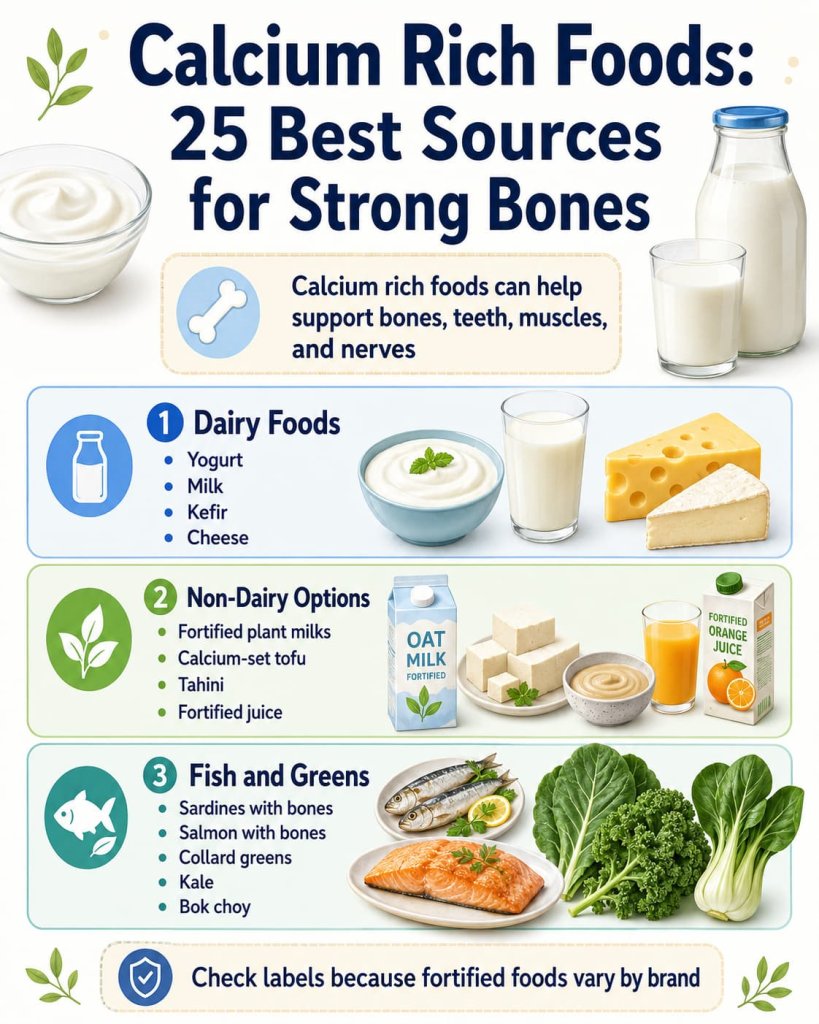
Getting enough calcium matters at every age, but it is especially important during the teen years, pregnancy, breastfeeding, and older adulthood. The NIH Office of Dietary Supplements explains that vitamin D is also needed because it helps the body absorb calcium.
What Is Calcium and Why Does Your Body Need It?
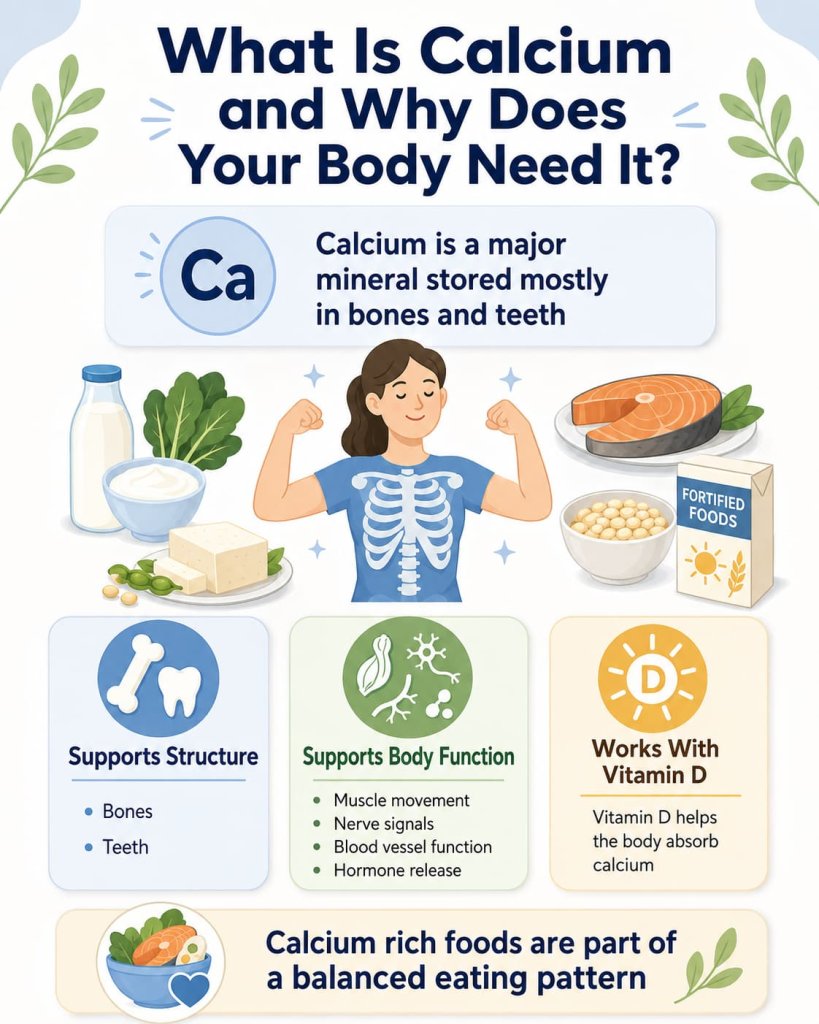
Calcium is the most abundant mineral in the body. Most of it is stored in bones and teeth, where it helps provide structure and strength. A smaller amount helps muscles move, nerves send signals, blood vessels work properly, and hormones release normally.
That is why calcium rich foods are not only about bones. They are also part of a balanced eating pattern that supports overall health.
The 2025–2030 Dietary Guidelines for Americans notes that adolescence is a major growth period and that adequate calcium and vitamin D are important for peak bone mass. It also notes that some older adults need fewer calories but equal or greater amounts of key nutrients, including calcium and vitamin D.
How Much Calcium Do You Need Per Day?
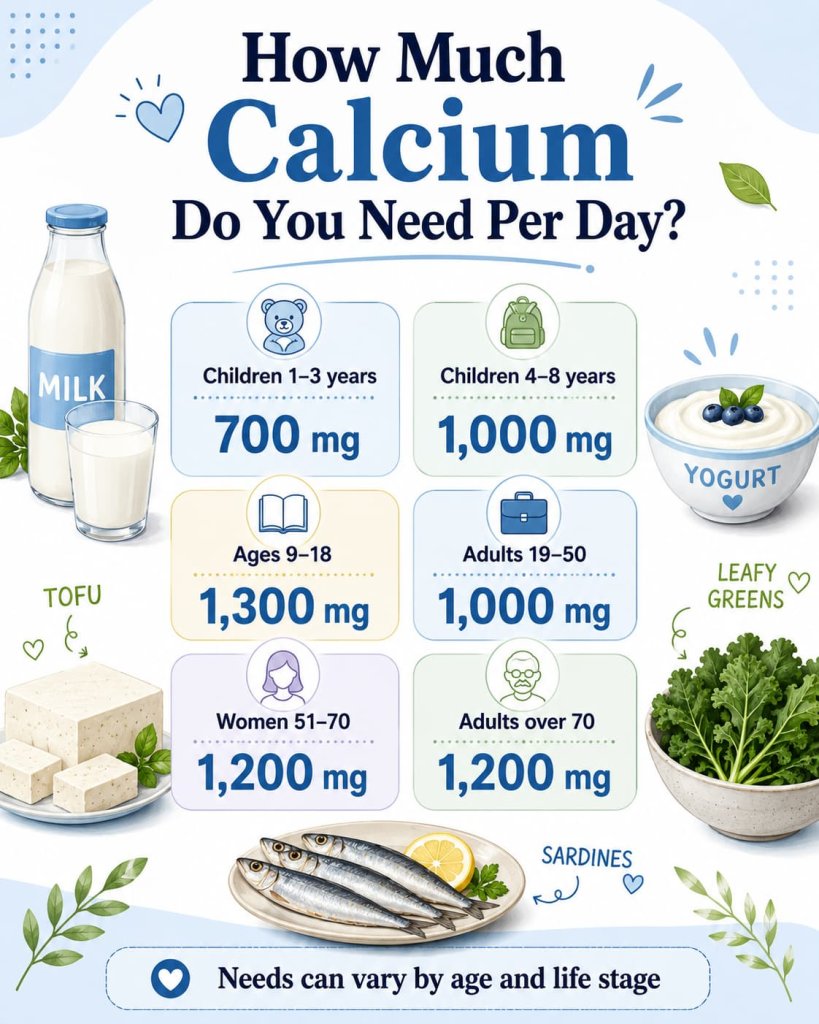
Daily calcium needs depend on age, sex, and life stage. For most adults, the goal is 1,000 to 1,200 mg per day. Teens need more because bones are still growing.
| Age or life stage | Recommended calcium per day |
|---|---|
| Children 1–3 years | 700 mg |
| Children 4–8 years | 1,000 mg |
| Children 9–13 years | 1,300 mg |
| Teens 14–18 years | 1,300 mg |
| Adults 19–50 years | 1,000 mg |
| Men 51–70 years | 1,000 mg |
| Women 51–70 years | 1,200 mg |
| Adults over 70 years | 1,200 mg |
| Pregnant or breastfeeding teens | 1,300 mg |
| Pregnant or breastfeeding adults | 1,000 mg |
These recommendations come from the NIH calcium fact sheet, which lists the current Recommended Dietary Allowances for calcium.
How to Read Calcium on Food Labels
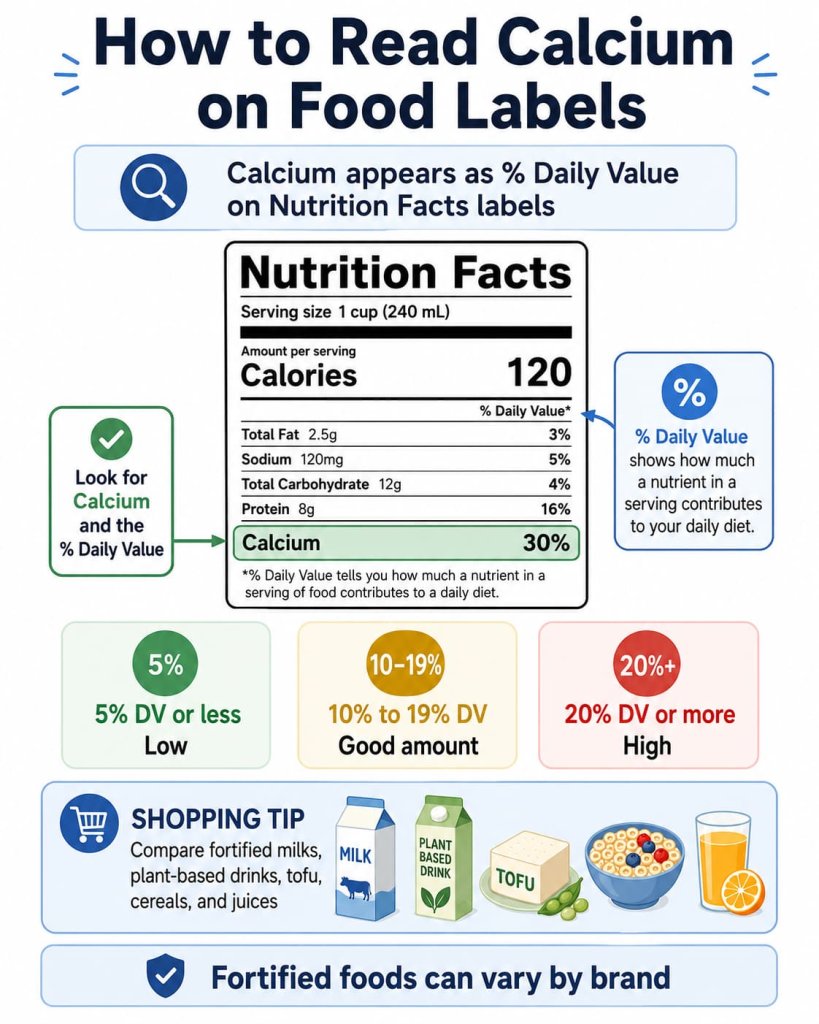
Packaged foods show calcium on the Nutrition Facts label as a percent Daily Value. The FDA lists the Daily Value for calcium as 1,300 mg for adults and children age 4 and older.
As a simple label rule:
- 5% DV or less is low.
- 10% to 19% DV is a good amount.
- 20% DV or more is high.
This is helpful when comparing fortified milks, plant-based drinks, cereals, juices, and tofu. Fortified foods can vary a lot by brand, so always check the label.
Calcium Rich Foods: 25 Best Sources for Strong Bones
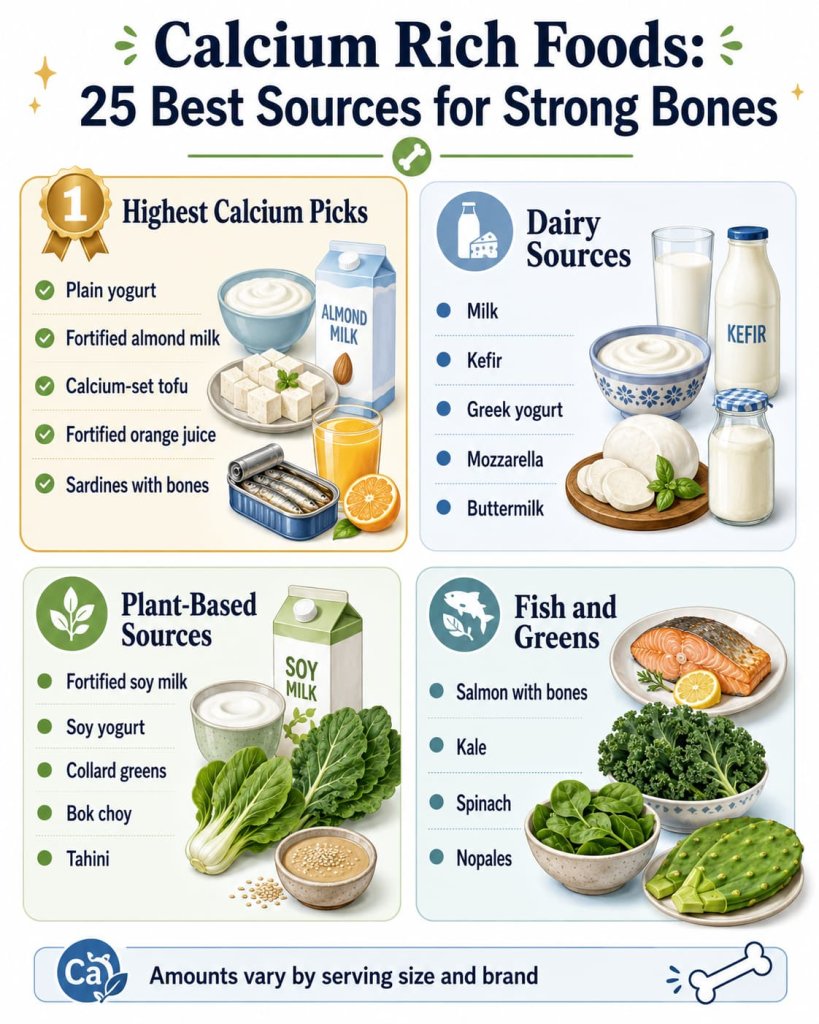
The calcium amounts below are approximate. They come mainly from USDA standard portions and NIH food-source data. Fortified foods may vary by brand.
| # | Calcium rich food | Serving size | Calcium | Approx. %DV |
|---|---|---|---|---|
| 1 | Plain nonfat yogurt | 8 oz | 488 mg | 38% |
| 2 | Plain low-fat yogurt | 8 oz | 448 mg | 34% |
| 3 | Fortified almond milk, unsweetened | 1 cup | 442 mg | 34% |
| 4 | Calcium-set tofu | 1/2 cup | 434 mg | 33% |
| 5 | Fortified 100% grapefruit juice | 1 cup | 350 mg | 27% |
| 6 | Fortified 100% orange juice | 1 cup | 349 mg | 27% |
| 7 | Part-skim mozzarella | 1.5 oz | 333 mg | 26% |
| 8 | Canned sardines with bones | 3 oz | 325 mg | 25% |
| 9 | Plain low-fat kefir | 1 cup | 317 mg | 24% |
| 10 | Low-fat milk, 1% | 1 cup | 305 mg | 23% |
| 11 | Fortified soy milk, unsweetened | 1 cup | 301 mg | 23% |
| 12 | Plain soy yogurt | 8 oz | 300 mg | 23% |
| 13 | Fat-free milk | 1 cup | 298 mg | 23% |
| 14 | Low-fat buttermilk | 1 cup | 284 mg | 22% |
| 15 | Fortified rice milk, unsweetened | 1 cup | 283 mg | 22% |
| 16 | Whole milk | 1 cup | 276 mg | 21% |
| 17 | Cooked collard greens | 1 cup | 268 mg | 21% |
| 18 | Plain low-fat Greek yogurt | 8 oz | 261 mg | 20% |
| 19 | Plain nonfat Greek yogurt | 8 oz | 250 mg | 19% |
| 20 | Cooked spinach | 1 cup | 245 mg | 19% |
| 21 | Cooked nopales | 1 cup | 244 mg | 19% |
| 22 | Cooked bok choy | 1 cup | 185 mg | 14% |
| 23 | Canned salmon with bones | 3 oz | 181 mg | 14% |
| 24 | Cooked kale | 1 cup | 177 mg | 14% |
| 25 | Tahini | 1 tbsp | 154 mg | 12% |
The USDA list includes dairy foods, fortified soy alternatives, vegetables, tofu, canned sardines, canned salmon with bones, fortified juices, fortified almond milk, and fortified rice milk as calcium sources.
Best Dairy Calcium Rich Foods
Plain Yogurt
Plain yogurt is one of the easiest high-calcium foods to add to breakfast or snacks. An 8-ounce serving of plain nonfat yogurt can provide about 488 mg of calcium, while plain low-fat yogurt provides about 448 mg.
Choose plain yogurt when possible. Flavored yogurt may contain added sugar, so check the label.
Milk
Milk is a classic calcium source because it is widely available, affordable, and easy to use in meals. One cup of low-fat milk provides about 305 mg of calcium, while fat-free milk provides about 298 mg.
Lactose-free milk is also an option for people who avoid regular milk because of lactose intolerance.
Kefir
Kefir is a fermented dairy drink. One cup of plain low-fat kefir provides about 317 mg of calcium. It can be used in smoothies or as a drink with meals.
Cheese
Cheese can be calcium rich, but portions matter. A 1.5-ounce serving of part-skim mozzarella provides about 333 mg of calcium. Cheese can also be higher in sodium and saturated fat, so use it as part of a balanced diet.
Best Non-Dairy Calcium Rich Foods
Fortified Plant-Based Milks
Fortified almond milk, soy milk, and rice milk can be strong calcium sources. One cup of fortified almond milk may provide about 442 mg of calcium, while fortified soy milk provides about 301 mg.
The key word is “fortified.” Not every plant-based milk has the same calcium level. Shake the carton before pouring because added calcium can settle at the bottom.
Calcium-Set Tofu
Calcium-set tofu is one of the best dairy-free calcium rich foods. A 1/2-cup serving can provide about 434 mg of calcium.
Look for tofu made with calcium sulfate. Tofu made with other coagulants may contain much less calcium.
Fortified Orange or Grapefruit Juice
Fortified 100% orange juice and grapefruit juice can provide about 349 to 350 mg of calcium per cup. This can help people who do not drink milk.
Still, juice is not the same as whole fruit. Keep portions moderate and choose 100% juice without added sugar when possible.
Tahini
Tahini is a paste made from sesame seeds. One tablespoon provides about 154 mg of calcium. It works well in hummus, sauces, salad dressings, and grain bowls.
Best Fish Sources of Calcium
Canned Sardines With Bones
Canned sardines with edible bones provide about 325 mg of calcium in a 3-ounce serving. They also offer protein and omega-3 fats.
The calcium comes mainly from the soft bones, so boneless sardines will not provide the same amount.
Canned Salmon With Bones
Canned salmon with bones provides about 181 mg of calcium in a 3-ounce serving. Like sardines, the soft edible bones add calcium.
Use canned salmon in salads, patties, rice bowls, or sandwiches.
Best Vegetable Sources of Calcium
Cooked Collard Greens
Cooked collard greens provide about 268 mg of calcium per cup. They are one of the better leafy green calcium sources and can be added to soups, stews, or side dishes.
Cooked Kale
Cooked kale provides about 177 mg of calcium per cup. It also fits easily into soups, omelets, pasta, and grain bowls.
Cooked Bok Choy
Cooked bok choy provides about 185 mg of calcium per cup. It is a good option for stir-fries and simple vegetable sides.
Cooked Spinach
Cooked spinach contains calcium, but it is not the most absorbable choice. NIH notes that spinach contains oxalic acid, which lowers calcium absorption. Calcium absorption from spinach is much lower than from milk.
Spinach is still a nutritious food. Just do not rely on spinach alone as your main calcium source.
Calcium Absorption Matters
A food can contain calcium, but your body may not absorb all of it. Dairy foods and many fortified foods have calcium absorption around 30%, according to NIH. Some plant compounds, such as oxalic acid and phytic acid, can reduce absorption.
That is why a smart calcium plan includes variety. Combine high-calcium dairy or fortified foods with vegetables, tofu, fish with bones, beans, nuts, and seeds.
Vitamin D also matters. Mayo Clinic explains that the body needs vitamin D to absorb calcium, and vitamin D can come from certain foods, fortified foods, supplements when needed, and sunlight exposure.
Simple Ways to Eat More Calcium Rich Foods
You do not need a complicated plan. Start by adding one calcium rich food to a meal you already eat.
Try these easy ideas:
- Add plain yogurt to breakfast.
- Use fortified soy milk or dairy milk in oatmeal.
- Make a smoothie with kefir or fortified plant milk.
- Add calcium-set tofu to stir-fries.
- Use canned salmon with bones in a lunch bowl.
- Add cooked kale, bok choy, or collards to dinner.
- Use tahini in sauces or salad dressings.
- Choose calcium-fortified drinks when they fit your diet.
Sample High-Calcium Day
Here is a simple example using regular foods. Amounts are approximate.
| Meal | Food | Calcium |
|---|---|---|
| Breakfast | Plain low-fat yogurt, 8 oz | 448 mg |
| Lunch | Canned salmon with bones, 3 oz | 181 mg |
| Snack | Low-fat milk, 1 cup | 305 mg |
| Dinner | Cooked collard greens, 1 cup | 268 mg |
| Total | 1,202 mg |
This sample day meets the 1,000 mg adult target and comes close to the 1,200 mg target for women over 50 and adults over 70.
Dairy-Free High-Calcium Day
Here is a simple dairy-free example.
| Meal | Food | Calcium |
|---|---|---|
| Breakfast | Fortified soy milk, 1 cup | 301 mg |
| Lunch | Calcium-set tofu, 1/2 cup | 434 mg |
| Snack | Fortified orange juice, 1 cup | 349 mg |
| Dinner | Cooked bok choy, 1 cup | 185 mg |
| Total | 1,269 mg |
This shows that people who do not drink milk can still get calcium from fortified foods, tofu, vegetables, and other options.
Who Should Pay Extra Attention to Calcium?
Some people may need to be more careful about calcium intake, including:
- Teens during rapid growth years.
- Adults over 50.
- People who avoid dairy.
- People following vegan diets.
- People with lactose intolerance.
- Pregnant or breastfeeding people.
- People with certain digestive conditions.
- People taking long-term medications that may affect bone health.
If you have a medical condition, take medications, or are considering supplements, talk with a healthcare professional.
Can You Get Too Much Calcium?
Yes, especially from supplements. Food-based calcium is usually safe for most people, but supplements can push total intake too high.
Mayo Clinic notes that adults 19–50 should not exceed 2,500 mg of total calcium per day, and adults 51 and older should not exceed 2,000 mg per day from food, drinks, and supplements combined. It also notes that supplements may cause constipation and may interact with some medicines.
More calcium is not always better. The goal is to meet your needs, not greatly exceed them.
Should You Take a Calcium Supplement?
A food-first approach is best for most people. Supplements may be useful when someone cannot meet calcium needs through food, but they are not right for everyone.
Before using a supplement, check how much calcium you already get from food and fortified drinks. Then talk with a healthcare professional, especially if you are pregnant, breastfeeding, taking medication, have kidney issues, or have a history of high blood calcium.
Common Mistakes to Avoid
Relying Only on Supplements
Supplements can help some people, but they should not replace a balanced diet. Calcium rich foods often provide other nutrients too, such as protein, potassium, magnesium, and vitamin D when fortified.
Forgetting Vitamin D
Calcium and vitamin D work together. Without enough vitamin D, calcium absorption may be lower.
Assuming All Plant Milks Are High in Calcium
Plant-based milks are only high in calcium if they are fortified. Always read the Nutrition Facts label.
Counting Spinach as Your Main Calcium Food
Spinach has calcium, but much of it is not well absorbed. Use spinach for variety, not as your only calcium source.
Ignoring Serving Size
A food may look high in calcium, but the listed amount depends on the serving size. Compare foods using the same serving size when possible.
FAQs About Calcium Rich Foods
What foods are highest in calcium?
Some of the highest calcium rich foods include plain yogurt, fortified almond milk, calcium-set tofu, fortified orange juice, sardines with bones, low-fat milk, fortified soy milk, and cooked collard greens.
What is the best calcium rich food for strong bones?
There is no single best food for everyone. Yogurt, milk, fortified plant-based drinks, calcium-set tofu, sardines with bones, canned salmon with bones, kale, bok choy, and collard greens are all useful options.
Can I get enough calcium without dairy?
Yes. Fortified soy milk, fortified almond milk, calcium-set tofu, fortified juices, sardines with bones, canned salmon with bones, tahini, kale, bok choy, and collard greens can all help. Check labels because fortified foods vary by brand.
Is milk or yogurt better for calcium?
Both can be good choices. Plain yogurt often provides more calcium per serving than milk, but milk is also easy to use daily. Choose the option that fits your diet, taste, and health needs.
Is spinach a good calcium source?
Spinach contains calcium, but it is not the most absorbable source because it contains oxalic acid. It is healthy, but kale, bok choy, collard greens, dairy foods, fortified drinks, and calcium-set tofu are often more practical calcium choices.
How much calcium do adults need daily?
Most adults ages 19–50 need 1,000 mg per day. Women ages 51–70 and adults over 70 need 1,200 mg per day. Men ages 51–70 need 1,000 mg per day.
Are calcium supplements safe?
Calcium supplements are not right for everyone. They may cause side effects, interact with medicines, or push total calcium intake too high. Ask a healthcare professional before taking a supplement.
Conclusion
Calcium rich foods can help you build a stronger daily nutrition routine without overcomplicating your meals. Start with simple choices like yogurt, milk, fortified soy or almond milk, calcium-set tofu, sardines with bones, canned salmon, collard greens, kale, bok choy, and tahini.
For the best results, focus on variety, check food labels, include vitamin D sources, and talk with a healthcare professional before using calcium supplements.
This content is for informational purposes only and not medical advice.