
The best vitamin D foods include fatty fish, cod liver oil, UV-exposed mushrooms, fortified milk, fortified plant milk, fortified yogurt, fortified orange juice, eggs, and some fortified cereals. These foods can help you meet your daily vitamin D needs, which is important because vitamin D helps your body absorb calcium and supports normal bone mineralization.
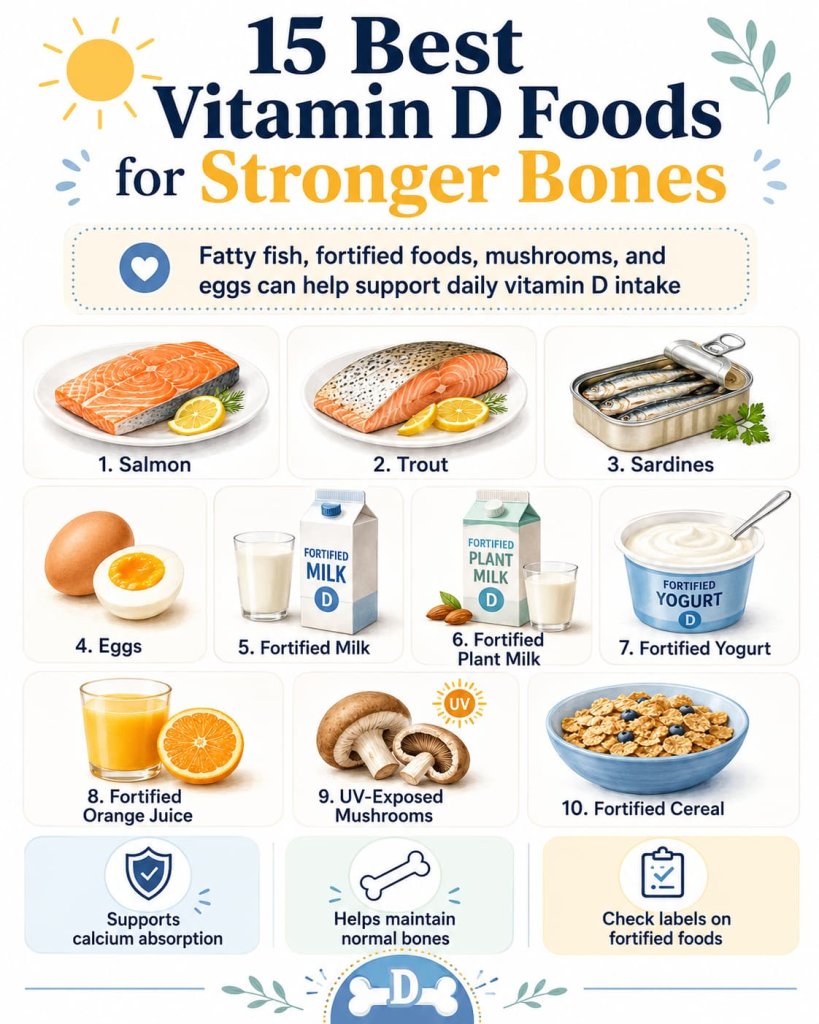
Vitamin D foods matter because only a small number of foods naturally contain meaningful amounts of this nutrient. According to the NIH Office of Dietary Supplements, fatty fish and fish liver oils are among the best natural sources, while fortified foods provide much of the vitamin D in many U.S. diets.
This guide explains the best vitamin D foods, how much vitamin D they provide, how much you need each day, and how to choose them safely.
Best Vitamin D Foods: Quick Answer
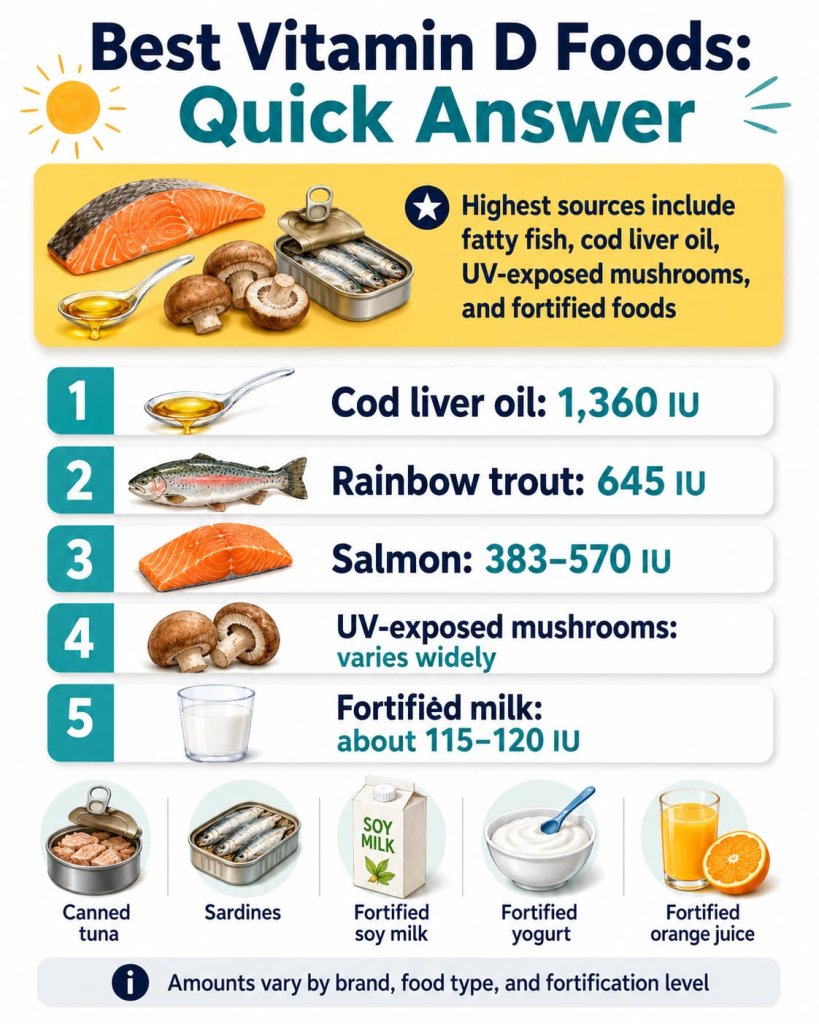
If you want the highest vitamin D foods, start with fatty fish and fortified foods. Cod liver oil is the most concentrated source, but it is usually used like a supplement, not a regular food. For everyday meals, salmon, rainbow trout, sardines, tuna, fortified milk, fortified soy milk, fortified yogurt, fortified orange juice, and UV-exposed mushrooms are more practical choices.
Here is a quick overview.
| Vitamin D Food | Serving | Approx. Vitamin D |
|---|---|---|
| Cod liver oil | 1 tablespoon | 1,360 IU |
| Rainbow trout | 3 ounces | 645 IU |
| Salmon | 3 ounces | 383–570 IU |
| UV-exposed mushrooms | 1 cup raw | 0–1,110 IU |
| Canned light tuna | 3 ounces | Up to 231 IU |
| Herring | 3 ounces | 182 IU |
| Sardines | 3 ounces | 164 IU |
| Fortified soy milk | 1 cup | About 119 IU |
| Fortified cow’s milk | 1 cup | About 115–120 IU |
| Fortified yogurt | 8 ounces | About 116 IU |
| Fortified orange juice | 1 cup | About 100 IU |
Vitamin D amounts can vary by brand, species, preparation, and fortification level. The USDA/MyPlate Food Sources of Vitamin D list shows that seafood, fortified dairy, fortified soy milk, mushrooms, and fortified orange juice are practical choices for increasing vitamin D intake.
How Much Vitamin D Do You Need Each Day?
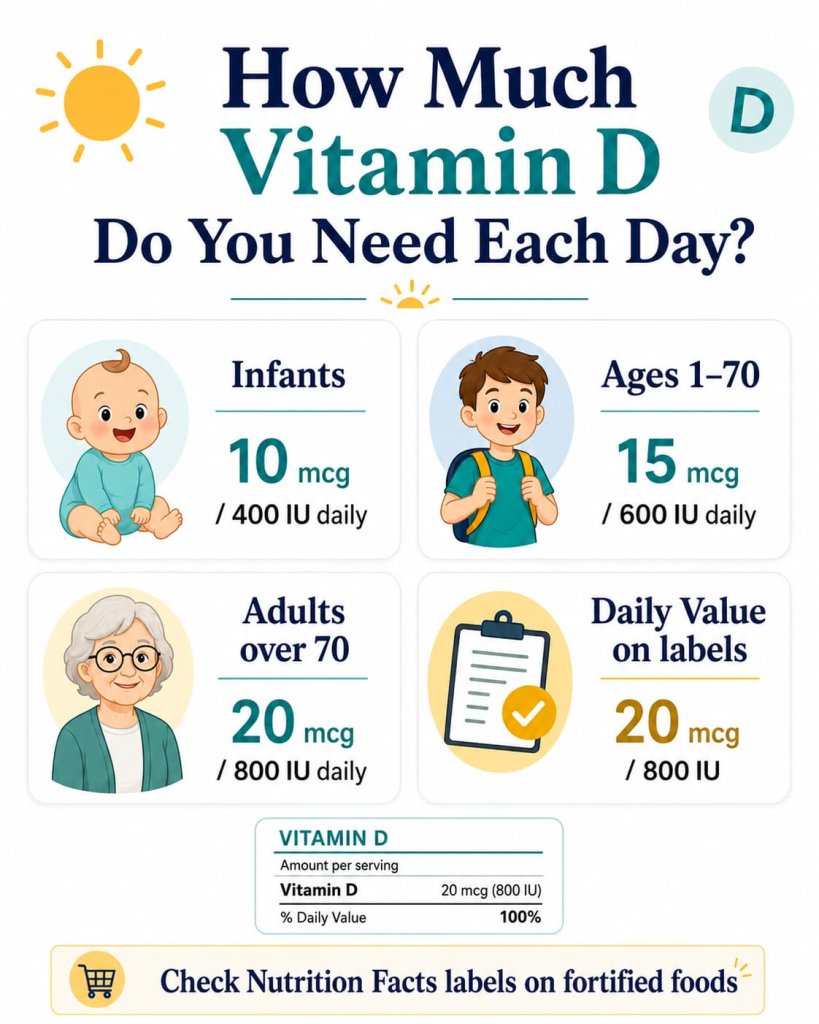
Most children, teens, and adults ages 1 to 70 need 15 mcg, or 600 IU, of vitamin D per day. Adults over 70 need 20 mcg, or 800 IU, per day. Infants need 10 mcg, or 400 IU, per day.
The FDA Daily Value for vitamin D on Nutrition Facts labels is 20 mcg, or 800 IU. A food that provides 20% DV or more is considered high in that nutrient. This makes food labels helpful when comparing fortified milk, plant milk, yogurt, cereal, and orange juice.
15 Best Vitamin D Foods for Stronger Bones
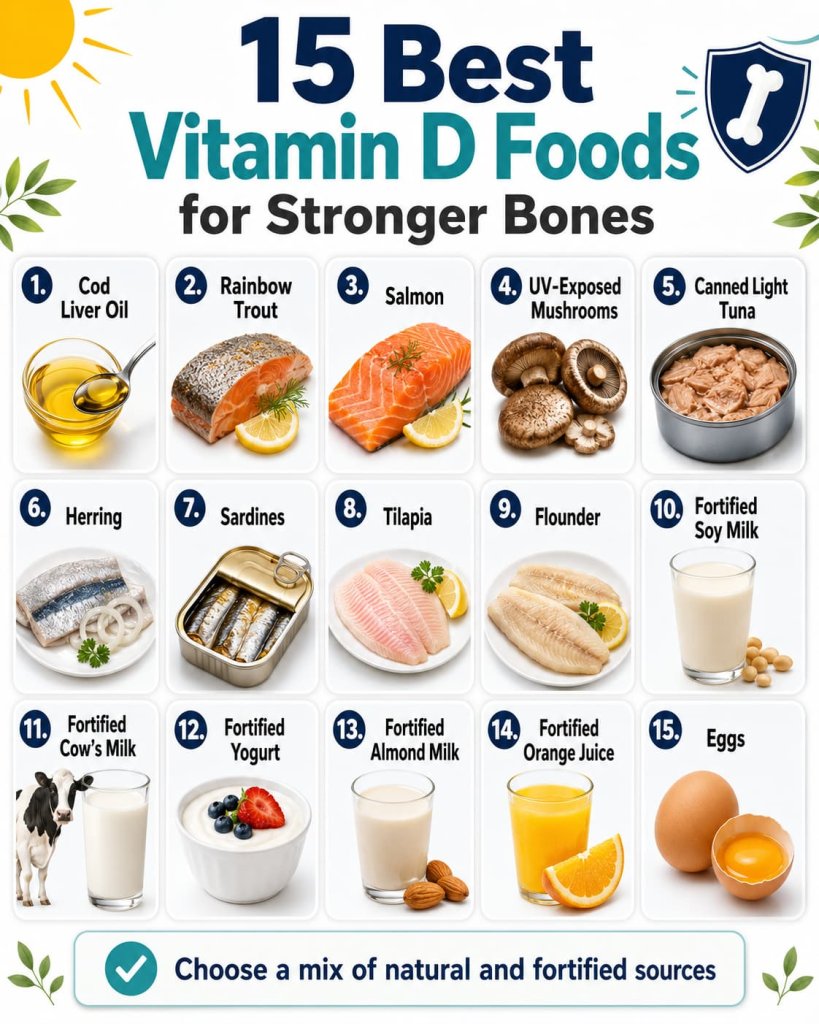
1. Cod Liver Oil
Cod liver oil is one of the richest sources of vitamin D. One tablespoon provides about 34 mcg, or 1,360 IU, which is more than the Daily Value.
However, cod liver oil should be used carefully because it can also contain high amounts of vitamin A. If you already take supplements, talk with a healthcare professional before adding cod liver oil regularly. For many people, regular foods like salmon, trout, milk, yogurt, and fortified plant milk are easier to fit into a balanced routine.
2. Rainbow Trout
Rainbow trout is one of the best regular food sources of vitamin D. A 3-ounce serving provides about 645 IU.
It is also a protein-rich fish that fits well into simple meals. You can bake, grill, or pan-cook trout and serve it with vegetables, whole grains, or a calcium-rich side such as yogurt or fortified milk.
3. Salmon
Salmon is one of the most popular vitamin D foods. A 3-ounce serving may provide about 383 to 570 IU, depending on the type and preparation.
Salmon is also rich in protein and omega-3 fats. For a bone-supportive meal, pair salmon with leafy greens, beans, roasted vegetables, or a fortified dairy or plant-based drink.
4. UV-Exposed Mushrooms
Mushrooms are special because they are one of the few plant-based foods that can provide vitamin D. However, the amount depends heavily on whether the mushrooms were exposed to ultraviolet light.
Some raw mushrooms may provide very little vitamin D, while UV-exposed mushrooms can provide much more. USDA data lists raw mushrooms as ranging from 0 to 1,110 IU per cup, depending on type and UV exposure.
Look for package wording such as “UV-exposed,” “vitamin D mushrooms,” or check the Nutrition Facts label.
5. Canned Light Tuna
Canned light tuna is affordable, easy to store, and useful for quick meals. A 3-ounce serving can provide up to about 231 IU of vitamin D, though amounts vary.
Use canned tuna in sandwiches, salads, rice bowls, wraps, or pasta. For fish safety, choose lower-mercury options and follow current seafood advice. The FDA/EPA fish guidance lists canned light tuna as a “Best Choice” option for many people.
6. Herring
Herring is a fatty fish that provides about 182 IU of vitamin D per 3-ounce serving.
It has a stronger flavor than salmon or trout, so it may not be everyone’s first choice. Still, it can be a useful vitamin D food if you enjoy fish-based meals. Choose versions lower in sodium when possible, especially if you are watching your salt intake.
7. Sardines
Sardines provide about 164 IU of vitamin D per 3-ounce serving. They are also convenient because they are usually canned and ready to eat.
Canned sardines with bones can also add calcium, which works closely with vitamin D for bone health. Try sardines on whole-grain toast, in salads, with rice, or mixed into pasta.
8. Tilapia
Tilapia provides about 127 IU of vitamin D per 3-ounce serving. It is not as high as trout or salmon, but it can still contribute to your daily intake.
Tilapia has a mild flavor, so it works well for people who do not enjoy stronger-tasting fish. Bake it with herbs, lemon, and vegetables for a simple meal.
9. Flounder
Flounder provides about 118 IU of vitamin D per 3-ounce serving. It is another mild fish option that can help increase vitamin D intake.
Because flounder is lower in fat than salmon, it may provide less vitamin D than fatty fish. Still, it can be part of a varied seafood routine.
10. Fortified Soy Milk
Fortified soy milk usually provides about 119 IU of vitamin D per cup, depending on the brand.
It is one of the best dairy-free vitamin D options because many fortified soy milks also provide calcium. Choose unsweetened versions when possible and check the Nutrition Facts label for vitamin D and calcium amounts.
11. Fortified Cow’s Milk
Fortified cow’s milk provides about 115 to 120 IU of vitamin D per cup. In the United States, most milk is voluntarily fortified with vitamin D.
Milk also naturally provides protein, calcium, phosphorus, and other nutrients that support a balanced diet. If you use dairy, fortified low-fat or fat-free milk can be an easy way to add vitamin D to breakfast, smoothies, oatmeal, or meals.
12. Fortified Yogurt
Fortified yogurt can provide about 116 IU of vitamin D per 8-ounce serving, but not all yogurt is fortified.
Plain yogurt is usually the better everyday choice because it has less added sugar than many flavored options. For a simple vitamin D and calcium snack, combine fortified yogurt with fruit, nuts, or whole-grain cereal.
13. Fortified Almond Milk
Fortified almond milk often provides about 107 IU of vitamin D per cup, though amounts vary by brand.
It can be useful for people who avoid dairy or soy. However, almond milk is usually much lower in protein than cow’s milk or soy milk, so check the label if you are using it as a regular milk replacement.
14. Fortified Orange Juice
Fortified orange juice provides about 100 IU of vitamin D per cup when vitamin D is added.
This can be helpful for people who do not drink milk. However, juice is easier to overconsume than whole fruit, so keep portions moderate. Look for “fortified with vitamin D” on the label.
15. Eggs
Eggs are not the highest vitamin D food, but they can still contribute. One large scrambled egg provides about 44 IU of vitamin D, and the vitamin D is found in the yolk.
Eggs are easy to include in breakfast, salads, grain bowls, or quick meals. They work best as a supporting source of vitamin D, not your main source.
Natural vs. Fortified Vitamin D Foods
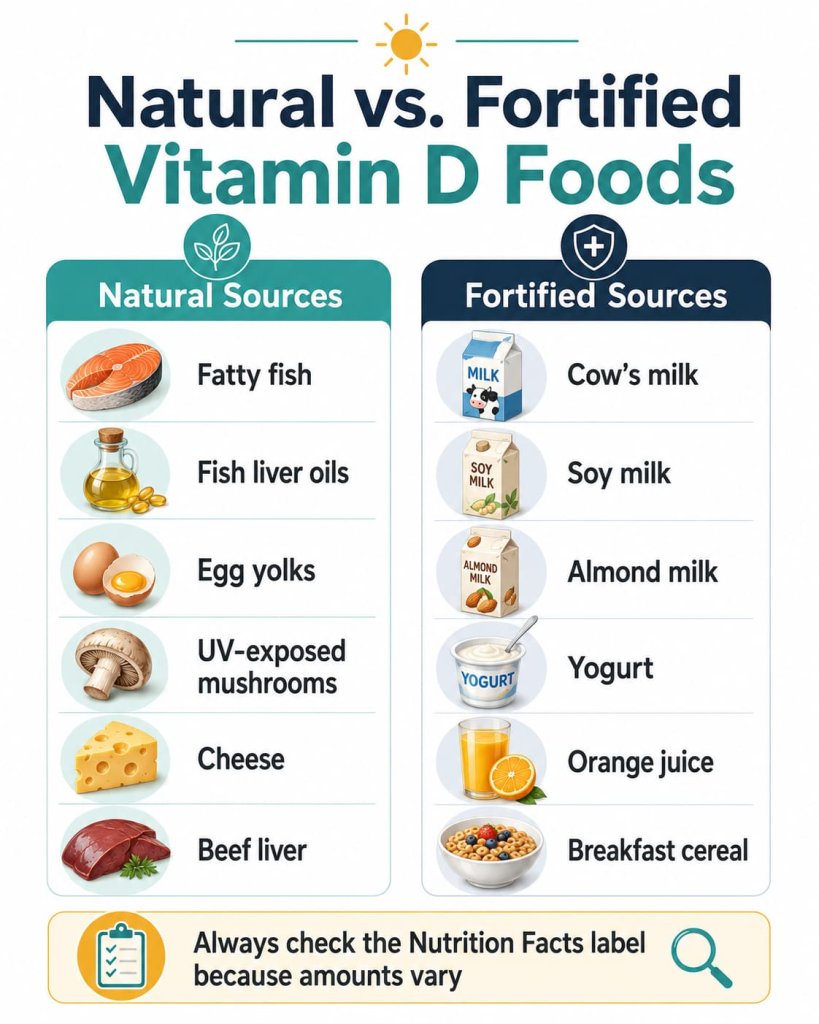
Vitamin D foods fall into two main groups: natural sources and fortified sources.
Natural sources include:
- Fatty fish
- Fish liver oils
- Egg yolks
- Beef liver
- Cheese
- UV-exposed mushrooms
Fortified sources include:
- Cow’s milk
- Soy milk
- Almond milk
- Oat milk
- Yogurt
- Breakfast cereal
- Orange juice
- Some margarines and other foods
Fortified foods are important because very few foods naturally contain vitamin D. The FDA Nutrition Facts label guidance explains that Daily Values help consumers compare nutrients on labels. For vitamin D, always check the Nutrition Facts panel because different brands may contain different amounts.
Vitamin D Foods for Vegetarians and Vegans
Vegetarians can get vitamin D from eggs, fortified dairy products, fortified yogurt, fortified milk, and UV-exposed mushrooms.
Vegans have fewer natural options, but they can still choose:
- UV-exposed mushrooms
- Fortified soy milk
- Fortified almond milk
- Fortified oat milk
- Fortified rice milk
- Fortified orange juice
- Some fortified cereals
One important note: many vegan vitamin D products use vitamin D2, while some use vegan vitamin D3 from lichen. If you avoid animal-derived ingredients, check the label carefully.
How to Build a Bone-Supportive Meal With Vitamin D Foods
Vitamin D supports bone health by helping the body absorb calcium. That means a bone-supportive meal should not focus on vitamin D alone. It should also include calcium, protein, and other nutrient-dense foods.
Simple meal ideas include:
- Salmon with roasted vegetables and a side of yogurt
- Fortified oatmeal made with milk or soy milk
- Tuna salad with whole-grain toast and fruit
- Eggs with mushrooms and fortified milk
- Sardines on whole-grain toast with a side salad
- Fortified yogurt with fruit and cereal
- Smoothie made with fortified soy milk, fruit, and plain yogurt
A balanced eating pattern matters more than one single food.
How to Choose Vitamin D Foods Safely
Vitamin D foods are generally safe for most people, but a few details matter.
First, be careful with cod liver oil and high-dose supplements. Vitamin D toxicity is usually linked to excessive supplement intake, not normal food intake. For ages 9 and older, the NIH lists the tolerable upper intake level as 100 mcg, or 4,000 IU, per day from all sources.
Second, choose lower-mercury fish more often. Salmon, sardines, trout, tilapia, flounder, and canned light tuna are commonly recommended lower-mercury choices. People who are pregnant, breastfeeding, or feeding young children should follow FDA/EPA seafood guidance.
Third, check labels on fortified foods. Not all yogurt, cereal, plant milk, or orange juice contains vitamin D.
Fourth, talk with a healthcare professional if you have osteoporosis, kidney disease, digestive disorders, a history of low vitamin D, or if you take medications that affect vitamin D.
Who May Need More Attention to Vitamin D?
Some people may have a harder time getting enough vitamin D from food and sunlight alone. This may include older adults, people with limited sun exposure, people with darker skin, people who cover most of their skin outdoors, people with certain digestive conditions, and people who follow strict vegan diets without fortified foods.
This does not mean everyone needs testing or supplements. The U.S. Preventive Services Task Force found insufficient evidence to recommend routine vitamin D deficiency screening for asymptomatic community-dwelling adults. If you are concerned about your vitamin D level, ask a qualified healthcare professional what makes sense for your situation.
Can You Get Enough Vitamin D From Food Alone?
Some people can get enough vitamin D from food, fortified products, and safe sun exposure, but it can be difficult. USDA/MyPlate notes that it can be hard to get enough vitamin D from foods and drinks that naturally contain it, which is why fortified foods may help.
A practical approach is to include vitamin D foods regularly rather than relying on one food. For example, you might eat fatty fish twice a week, use fortified milk or soy milk daily, choose fortified yogurt, and add UV-exposed mushrooms when available.
FAQs About Vitamin D Foods
What food is highest in vitamin D?
Cod liver oil is one of the highest vitamin D sources, with about 1,360 IU per tablespoon. Among regular foods, rainbow trout, salmon, UV-exposed mushrooms, tuna, herring, and sardines are strong choices.
Which fruit is high in vitamin D?
Whole fruits are not natural sources of vitamin D. However, some brands of 100% orange juice are fortified with vitamin D. Check the label to confirm.
Are eggs high in vitamin D?
Eggs contain some vitamin D, but they are not a high source compared with fatty fish or fortified foods. One large scrambled egg provides about 44 IU, and the vitamin D is in the yolk.
What vegetables have vitamin D?
Most vegetables do not provide vitamin D. Mushrooms are the main exception, especially when exposed to UV light. UV-exposed mushrooms can contain much more vitamin D than regular mushrooms.
Is milk a good source of vitamin D?
Fortified milk can be a good source of vitamin D. One cup usually provides about 115 to 120 IU. Plant milks such as soy, almond, and oat milk may also provide vitamin D if they are fortified.
Can vitamin D foods make bones stronger?
Vitamin D foods support bone health by helping the body absorb calcium and maintain normal bone mineralization. They work best as part of a balanced diet that also includes calcium, protein, and regular weight-bearing activity.
Is too much vitamin D dangerous?
Yes, too much vitamin D can be harmful, usually from excessive supplement intake. For ages 9 and older, the upper limit is 4,000 IU per day from all sources unless a healthcare professional recommends otherwise.
Conclusion
Vitamin D foods can help support stronger bones by helping your body absorb calcium and maintain normal bone health. The best choices include fatty fish, UV-exposed mushrooms, fortified milk, fortified plant milk, fortified yogurt, fortified orange juice, eggs, and fortified cereals.
For the easiest routine, combine several vitamin D foods across the week. Choose salmon or trout when you eat fish, use fortified milk or soy milk daily, check labels on yogurt and plant milk, and add UV-exposed mushrooms when available.
This content is for informational purposes only and not medical advice.