
Magnesium rich foods include pumpkin seeds, chia seeds, almonds, spinach, cashews, black beans, edamame, brown rice, yogurt, soymilk, potatoes, and oatmeal. These foods are easy to find, simple to meal prep, and can help you build a more balanced food-first approach to magnesium.
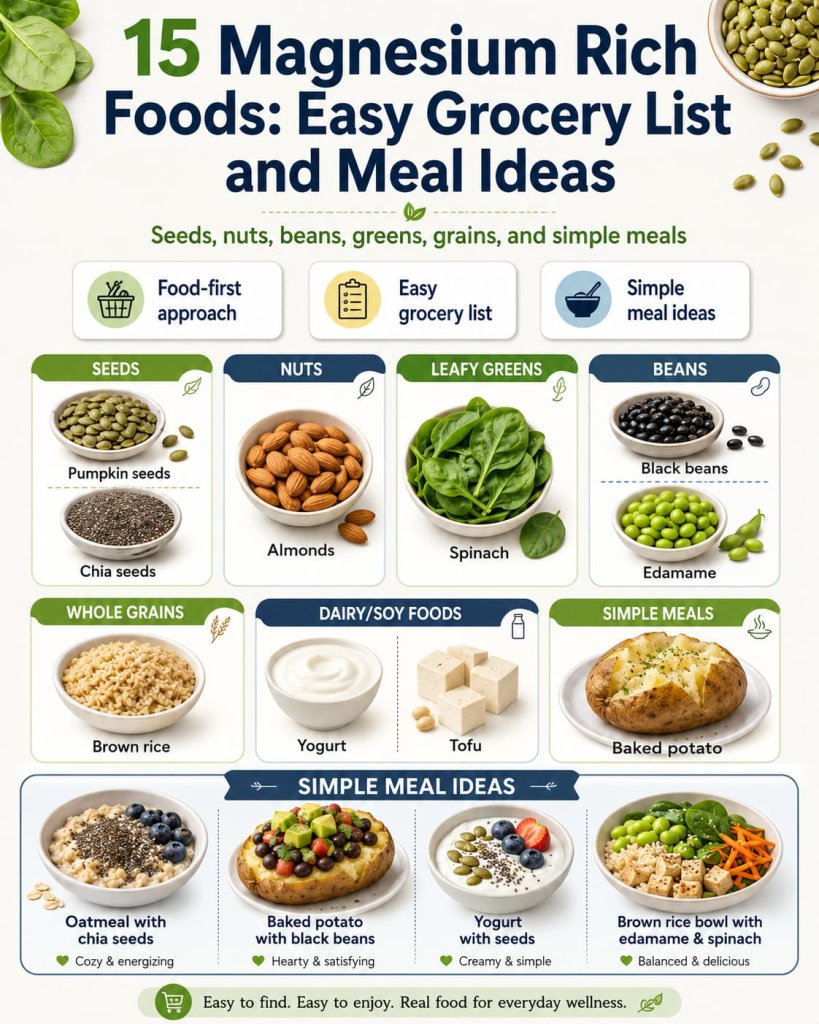
Magnesium supports normal muscle and nerve function, blood sugar regulation, blood pressure regulation, protein production, bone health, and DNA production, according to the NIH Office of Dietary Supplements. The key is not to rely on one food. A better plan is to eat a variety of nuts, seeds, legumes, leafy greens, whole grains, and dairy or soy foods throughout the week.
What Is Magnesium?
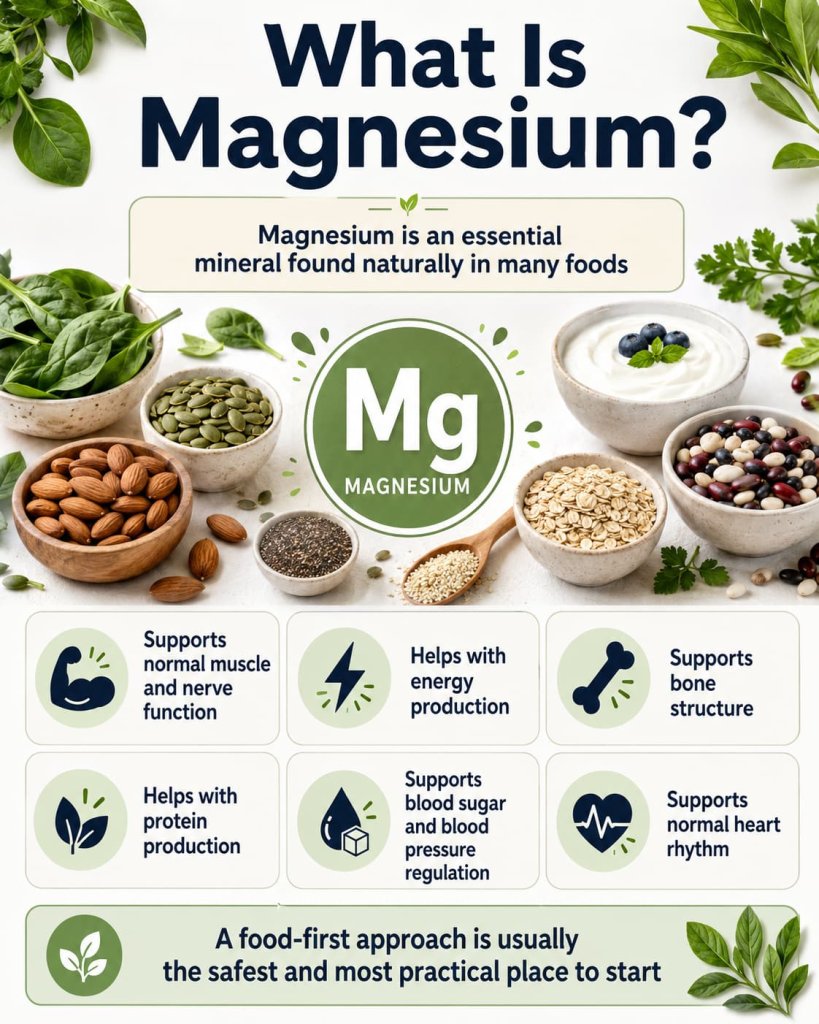
Magnesium is an essential mineral found naturally in many foods. It is also added to some fortified foods and included in some supplements, antacids, and laxatives.
Your body uses magnesium for many normal functions, including:
- Muscle and nerve function
- Energy production
- Protein production
- Bone structure
- Blood sugar regulation
- Blood pressure regulation
- Normal heart rhythm
A food-first approach is usually the safest and most practical place to start.
How Much Magnesium Do You Need Per Day?
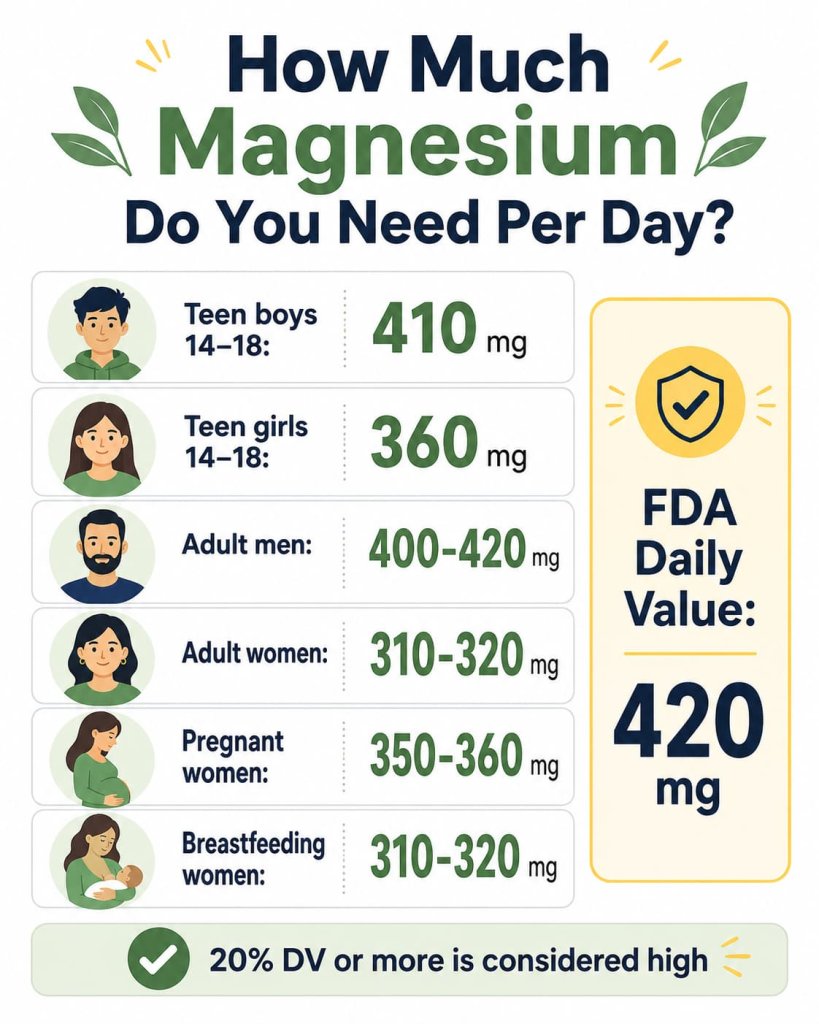
Magnesium needs vary by age, sex, and life stage. For adults, the Recommended Dietary Allowance is generally 400–420 mg per day for men and 310–320 mg per day for women, according to NIH. Teen needs are also higher than many people expect: 410 mg for boys ages 14–18 and 360 mg for girls ages 14–18.
| Group | Recommended magnesium per day |
|---|---|
| Teen boys 14–18 | 410 mg |
| Teen girls 14–18 | 360 mg |
| Adult men | 400–420 mg |
| Adult women | 310–320 mg |
| Pregnant women | 350–360 mg |
| Breastfeeding women | 310–320 mg |
The FDA Daily Value for magnesium is 420 mg for adults and children age 4 and older. On Nutrition Facts labels, 5% DV or less is considered low, while 20% DV or more is considered high.
Magnesium Rich Foods: Quick List
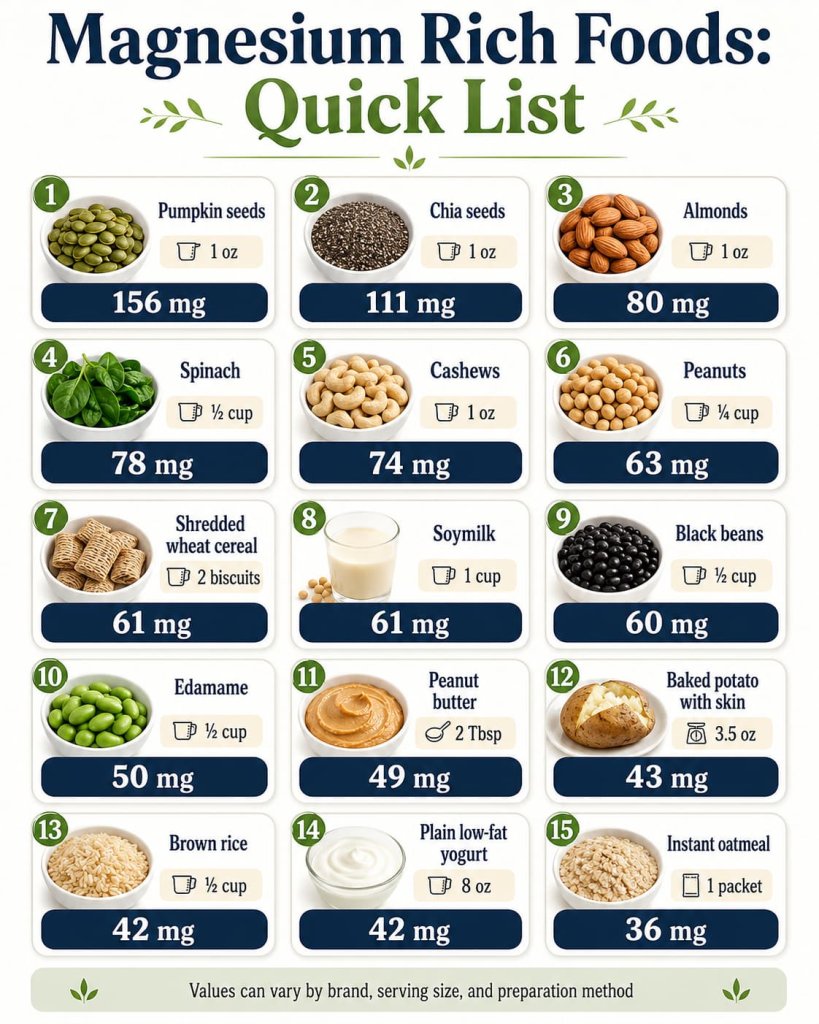
The foods below are practical, grocery-store-friendly sources of magnesium. The magnesium amounts are based on the NIH magnesium food table, which uses USDA FoodData Central nutrient data. Values can vary by brand, preparation method, and serving size.
| Food | Serving | Magnesium | % Daily Value |
|---|---|---|---|
| Pumpkin seeds, roasted | 1 oz | 156 mg | 37% |
| Chia seeds | 1 oz | 111 mg | 26% |
| Almonds, dry roasted | 1 oz | 80 mg | 19% |
| Spinach, boiled | ½ cup | 78 mg | 19% |
| Cashews, dry roasted | 1 oz | 74 mg | 18% |
| Peanuts, oil roasted | ¼ cup | 63 mg | 15% |
| Shredded wheat cereal | 2 large biscuits | 61 mg | 15% |
| Soymilk, plain or vanilla | 1 cup | 61 mg | 15% |
| Black beans, cooked | ½ cup | 60 mg | 14% |
| Edamame, shelled and cooked | ½ cup | 50 mg | 12% |
| Peanut butter, smooth | 2 Tbsp | 49 mg | 12% |
| Baked potato with skin | 3.5 oz | 43 mg | 10% |
| Brown rice, cooked | ½ cup | 42 mg | 10% |
| Plain low-fat yogurt | 8 oz | 42 mg | 10% |
| Instant oatmeal | 1 packet | 36 mg | 9% |
15 Magnesium Rich Foods to Add to Your Grocery List
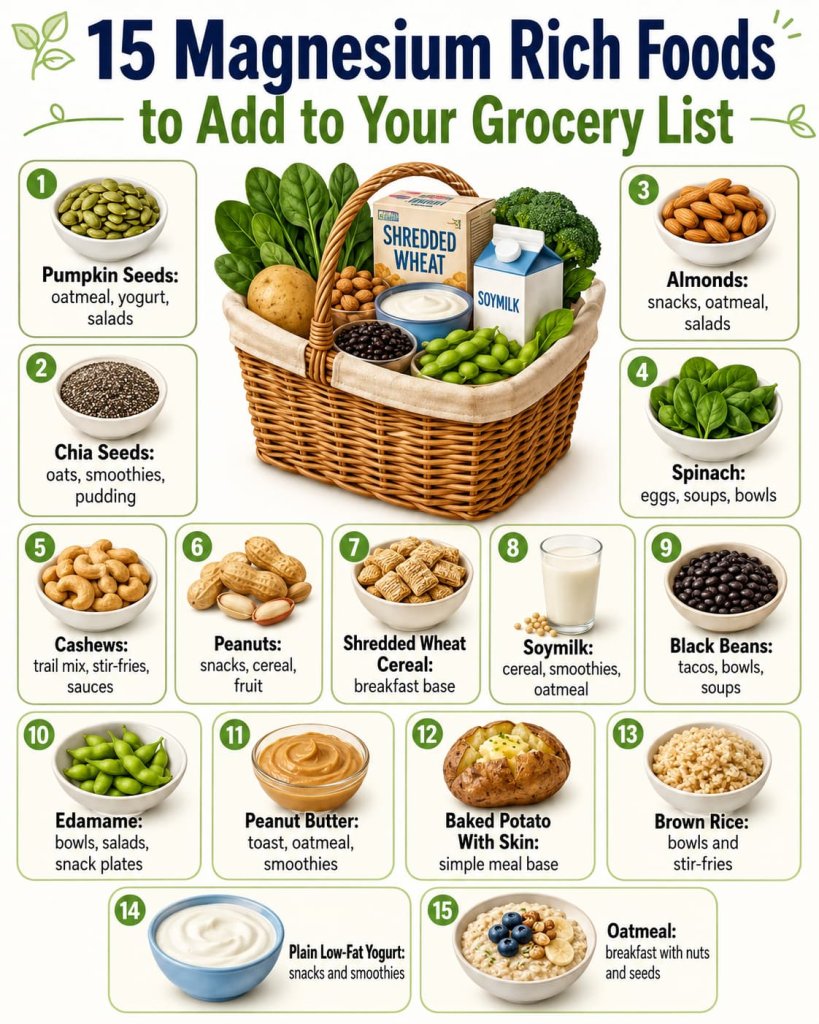
1. Pumpkin Seeds
Pumpkin seeds are one of the highest magnesium rich foods you can buy. A 1-ounce serving of roasted pumpkin seeds provides about 156 mg of magnesium, or 37% of the Daily Value.
Add them to oatmeal, yogurt, salads, grain bowls, or trail mix. Choose unsalted or lightly salted pumpkin seeds if you are watching sodium.
2. Chia Seeds
Chia seeds provide about 111 mg of magnesium per ounce, or 26% of the Daily Value.
They are easy to use because they do not need cooking. Stir chia seeds into overnight oats, smoothies, yogurt, or homemade chia pudding.
3. Almonds
Almonds provide about 80 mg of magnesium per ounce, or 19% of the Daily Value.
They work well as a snack with fruit, a crunchy topping for oatmeal, or an easy add-on for salads and lunch boxes.
4. Spinach
Boiled spinach provides about 78 mg of magnesium per ½ cup, or 19% of the Daily Value.
Cooked spinach is more compact than raw spinach, so it is easier to eat a meaningful serving. Add it to eggs, soups, pasta, rice bowls, wraps, and smoothies.
5. Cashews
Cashews provide about 74 mg of magnesium per ounce, or 18% of the Daily Value.
Use cashews in trail mix, stir-fries, oatmeal, homemade snack bowls, or blended sauces.
6. Peanuts
Peanuts provide about 63 mg of magnesium per ¼ cup, or 15% of the Daily Value.
They are affordable, easy to find, and simple to pair with fruit, whole-grain cereal, or a homemade snack mix.
7. Shredded Wheat Cereal
Shredded wheat cereal provides about 61 mg of magnesium per 2 large biscuits, or 15% of the Daily Value.
For a stronger breakfast, serve it with soymilk or milk and add banana, berries, chia seeds, or nuts.
8. Soymilk
Plain or vanilla soymilk provides about 61 mg of magnesium per cup, or 15% of the Daily Value.
Use soymilk in cereal, smoothies, oatmeal, or coffee. Choose unsweetened soymilk if you want less added sugar.
9. Black Beans
Cooked black beans provide about 60 mg of magnesium per ½ cup, or 14% of the Daily Value.
Black beans are also useful because they add fiber and plant-based protein. Use them in tacos, burrito bowls, soups, salads, or loaded baked potatoes.
10. Edamame
Cooked shelled edamame provides about 50 mg of magnesium per ½ cup, or 12% of the Daily Value.
Add edamame to rice bowls, noodle bowls, salads, or simple snack plates.
11. Peanut Butter
Smooth peanut butter provides about 49 mg of magnesium per 2 tablespoons, or 12% of the Daily Value.
Spread it on whole-wheat toast, add it to oatmeal, blend it into smoothies, or pair it with apple or banana slices.
12. Baked Potato With Skin
A baked potato with skin provides about 43 mg of magnesium per 3.5 ounces, or 10% of the Daily Value.
Keep the skin on when possible. For a simple meal, top a baked potato with black beans, spinach, plain yogurt, and salsa.
13. Brown Rice
Cooked brown rice provides about 42 mg of magnesium per ½ cup, or 10% of the Daily Value.
Whole grains are generally better magnesium sources than refined grains because refining can remove the nutrient-rich bran and germ.
14. Plain Low-Fat Yogurt
Plain low-fat yogurt provides about 42 mg of magnesium per 8 ounces, or 10% of the Daily Value.
For a magnesium-focused snack, top yogurt with chia seeds, almonds, pumpkin seeds, or sliced banana.
15. Oatmeal
Instant oatmeal provides about 36 mg of magnesium per packet, or 9% of the Daily Value.
Oatmeal becomes a much stronger magnesium-rich breakfast when you add chia seeds, peanut butter, almonds, pumpkin seeds, banana, or soymilk.
Easy Magnesium Rich Foods Grocery List
Use this section as a simple shopping checklist.
Nuts and Seeds
- Pumpkin seeds
- Chia seeds
- Almonds
- Cashews
- Peanuts
- Peanut butter
- Sunflower seeds
- Flaxseed
Beans and Legumes
- Black beans
- Kidney beans
- Chickpeas
- Lentils
- Edamame
- Soybeans
- Tofu
Whole Grains
- Brown rice
- Oatmeal
- Shredded wheat cereal
- Whole-wheat bread
- Quinoa
- Bran cereal
Vegetables and Fruits
- Spinach
- Swiss chard
- Potatoes with skin
- Bananas
- Avocado
- Artichokes
Dairy and Soy Foods
- Plain yogurt
- Milk
- Soymilk
- Tofu
MedlinePlus lists dark green leafy vegetables, fruits, nuts, legumes, seeds, soy products, whole grains, and milk as good dietary sources of magnesium.
Easy Meal Ideas With Magnesium Rich Foods
Magnesium-Rich Breakfast Ideas
Oatmeal bowl: Cook oatmeal with soymilk, then add chia seeds, peanut butter, banana slices, and almonds.
Yogurt bowl: Top plain yogurt with pumpkin seeds, chia seeds, and berries.
Whole-grain cereal: Serve shredded wheat cereal with soymilk or milk and add banana or nuts.
Magnesium-Rich Lunch Ideas
Black bean rice bowl: Combine brown rice, black beans, spinach, avocado, salsa, and plain yogurt.
Edamame grain bowl: Add edamame to brown rice or quinoa with vegetables and a simple dressing.
Peanut butter banana toast: Use whole-wheat bread, peanut butter, and banana for a quick meal or snack.
Magnesium-Rich Dinner Ideas
Salmon plate: Serve salmon with brown rice and cooked spinach.
Loaded baked potato: Top a baked potato with black beans, spinach, salsa, and plain yogurt.
Tofu bowl: Combine tofu, quinoa, spinach, edamame, and vegetables.
Magnesium-Rich Snack Ideas
- Pumpkin seeds with fruit
- Banana with peanut butter
- Yogurt with chia seeds
- Almonds and dried fruit
- Edamame with a light sprinkle of salt
- Whole-wheat toast with peanut butter
One-Day Magnesium-Rich Meal Plan
This is a simple example, not a strict diet plan.
| Meal | Example |
|---|---|
| Breakfast | Oatmeal with chia seeds, banana, peanut butter, and soymilk |
| Snack | Plain yogurt with almonds |
| Lunch | Brown rice bowl with black beans, spinach, avocado, and salsa |
| Snack | Edamame or pumpkin seeds |
| Dinner | Salmon, baked potato with skin, and cooked spinach |
This works because it spreads magnesium rich foods throughout the day instead of depending on one large serving.
Tips to Keep More Magnesium in Food
Alberta Health Services notes that magnesium can be lost during cooking, so it recommends cooking foods in a small amount of water for the shortest practical time. Its 2026 nutrition handout also highlights dark green vegetables, nuts, seeds, whole grains, milk, and legumes as useful magnesium food sources.
Simple tips:
- Steam or sauté vegetables instead of boiling them for a long time.
- Keep potato skins on when possible.
- Choose whole grains more often than refined grains.
- Add seeds and nuts after cooking to keep texture and nutrients.
- Use beans, lentils, and edamame as easy meal-prep proteins.
Can You Get Enough Magnesium Without Supplements?
Many people can improve magnesium intake through food by regularly eating nuts, seeds, legumes, leafy greens, whole grains, dairy foods, and soy foods.
Supplements may be useful for some people, but they are not automatically better than food. NIH notes that magnesium supplements can interact with some medications, including certain antibiotics, bisphosphonates, diuretics, and proton pump inhibitors. People who take medication, have kidney disease, are pregnant, or have a medical condition should ask a healthcare professional before using magnesium supplements.
Can You Get Too Much Magnesium?
Too much magnesium from food is usually not a concern for healthy people because the body removes extra amounts. The bigger concern is high magnesium intake from supplements, laxatives, or antacids.
For adults, the upper limit for magnesium from supplements and medications only is 350 mg per day. This upper limit does not apply to magnesium naturally found in foods. High supplemental magnesium can cause side effects such as diarrhea, nausea, and abdominal cramping.
FAQ About Magnesium Rich Foods
What foods are highest in magnesium?
Pumpkin seeds and chia seeds are among the highest common magnesium rich foods. A 1-ounce serving of roasted pumpkin seeds provides about 156 mg, while 1 ounce of chia seeds provides about 111 mg.
Are bananas high in magnesium?
Bananas contain magnesium, but they are not one of the highest sources. One medium banana provides about 32 mg of magnesium. They are still useful with oatmeal, yogurt, peanut butter, or smoothies.
Are almonds or pumpkin seeds better for magnesium?
Pumpkin seeds are higher in magnesium. One ounce of pumpkin seeds provides about 156 mg, while 1 ounce of dry-roasted almonds provides about 80 mg.
Is spinach a good source of magnesium?
Yes. A ½-cup serving of boiled spinach provides about 78 mg of magnesium. Spinach is easy to add to eggs, soups, pasta, rice bowls, and smoothies.
What drink has magnesium?
Soymilk is a practical option, with about 61 mg of magnesium per cup. Mineral water may also contain magnesium, but the amount varies by source and brand.
Should I take a magnesium supplement?
Do not start a supplement just because magnesium is popular. Food is the best first step for most people. Ask a healthcare professional first if you take medication, have kidney problems, are pregnant, or have a health condition.
What is the easiest way to eat more magnesium?
Add one magnesium-rich food to each meal. For example, add chia seeds to breakfast, black beans to lunch, and spinach or brown rice to dinner.
Conclusion
Magnesium rich foods are simple, affordable, and easy to add to everyday meals. Start with pumpkin seeds, chia seeds, almonds, spinach, black beans, edamame, brown rice, yogurt, soymilk, potatoes, and oatmeal. Then use them in breakfast bowls, grain bowls, snacks, and easy dinners.
A food-first approach gives you magnesium along with fiber, protein, healthy fats, vitamins, and other minerals. Start with one or two easy swaps this week, then build from there.
This content is for informational purposes only and not medical advice.
References
- NIH Office of Dietary Supplements: Magnesium Fact Sheet for Health Professionals
- NIH Office of Dietary Supplements: Magnesium Fact Sheet for Consumers
- FDA: Daily Value on the Nutrition and Supplement Facts Labels
- USDA FoodData Central
- MedlinePlus: Magnesium in Diet
- Alberta Health Services: Magnesium and Your Diet