
A normal C-reactive protein level is generally below 5 mg/L, although some laboratories use an upper limit of 8 or 10 mg/L. A result above the laboratory’s reference range may indicate inflammation, but it cannot identify the cause or location of that inflammation by itself.
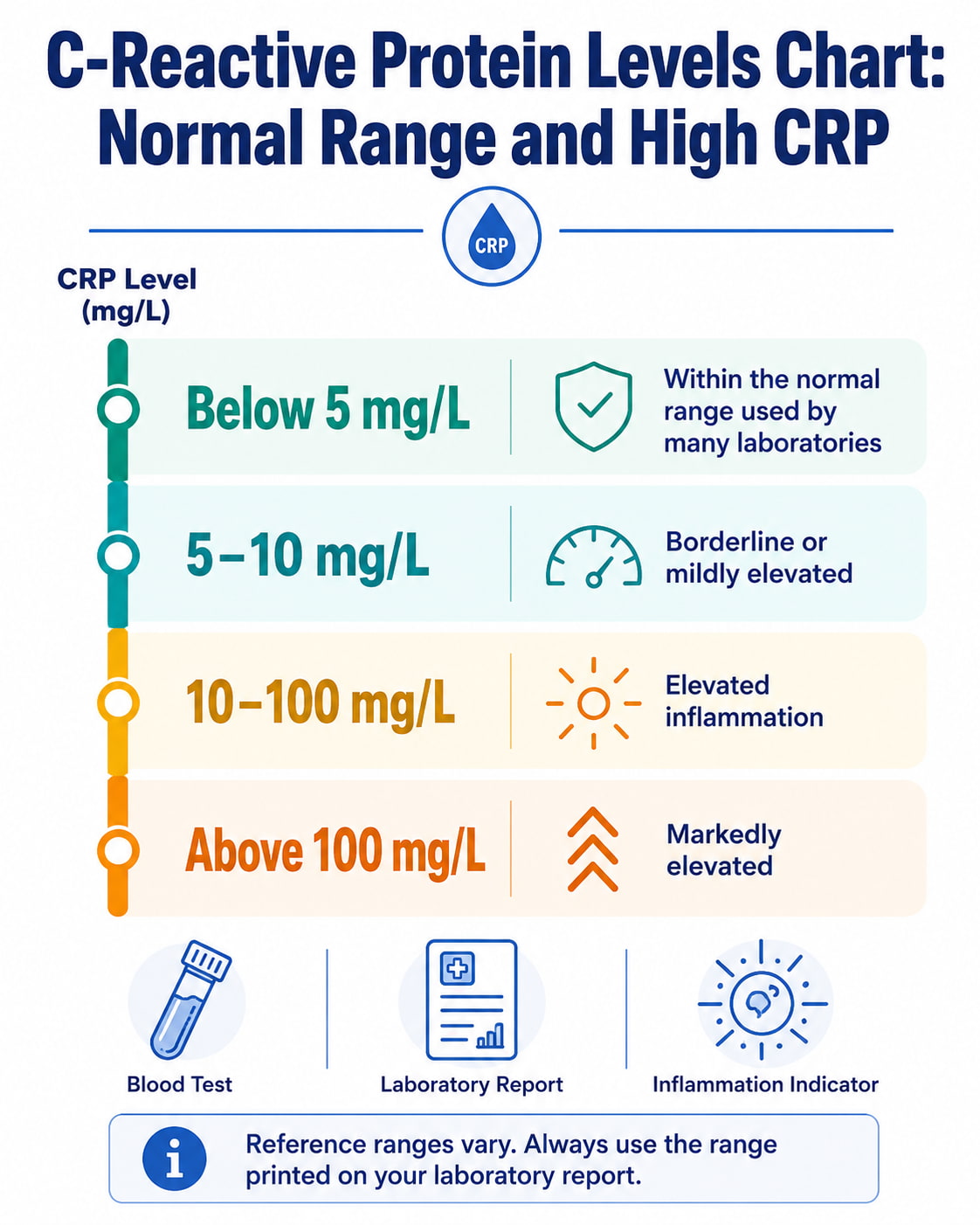
A C-reactive protein levels chart can help you understand whether a result is within the expected range, mildly elevated, or markedly high. However, CRP ranges vary between laboratories, testing methods, and clinical situations. Always compare your result with the reference interval printed on your laboratory report.
This guide explains standard CRP levels, high-sensitivity CRP ranges, unit conversions, possible causes of high CRP, and when medical evaluation may be needed.
C-Reactive Protein Levels Chart
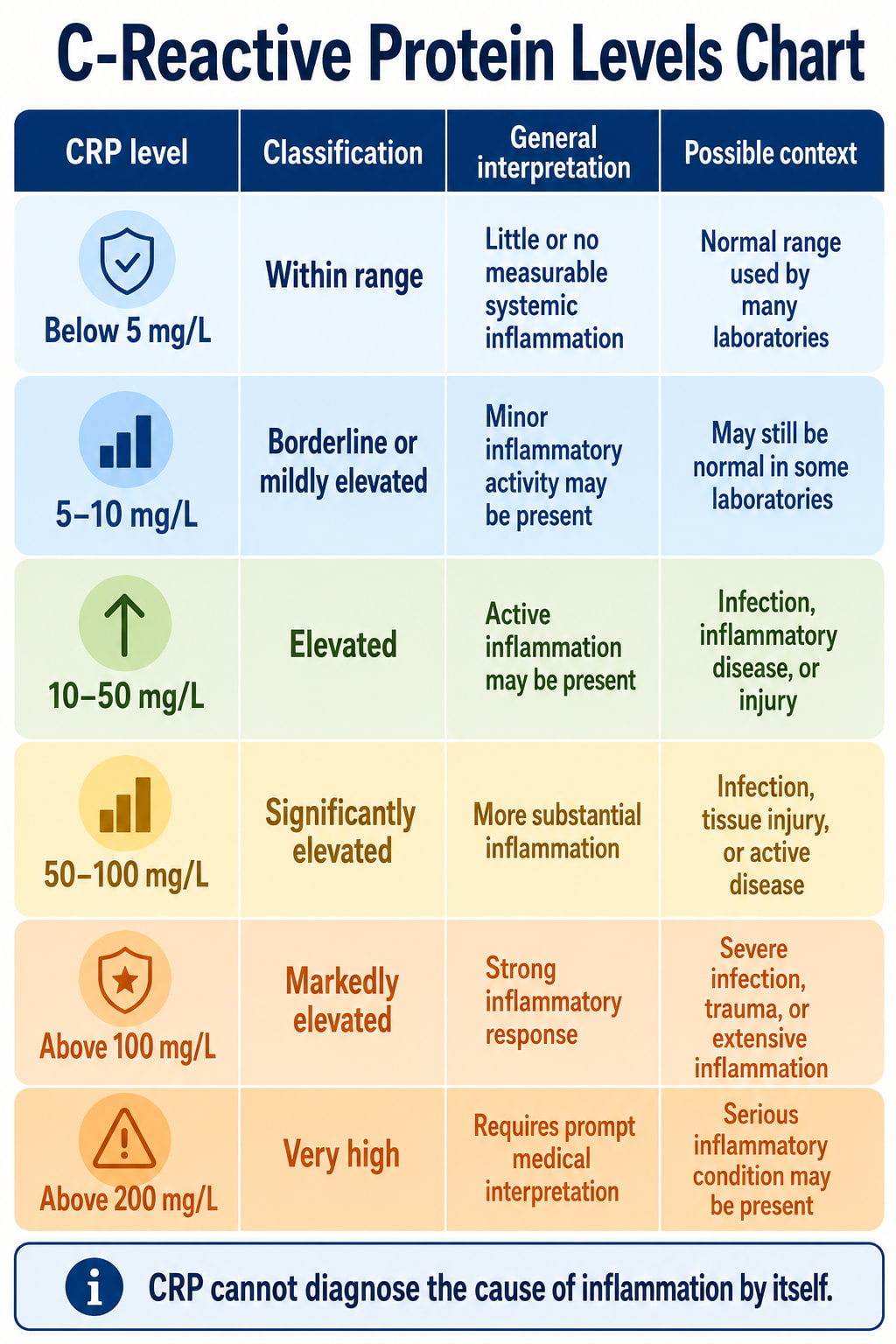
The following chart provides a general interpretation of standard CRP results in adults. These categories are approximate and should not replace the reference range or interpretation provided by your healthcare professional.
| CRP level | General interpretation | What it may mean |
|---|---|---|
| Below 5 mg/L | Within the normal range used by many laboratories | Little or no measurable systemic inflammation |
| 5–10 mg/L | Borderline or mildly elevated | May be normal in some laboratories or may reflect minor inflammation |
| 10–50 mg/L | Elevated | May occur with infection, inflammatory disease, injury, or another active inflammatory process |
| 50–100 mg/L | Significantly elevated | May indicate a more substantial infection, inflammation, or tissue injury |
| Above 100 mg/L | Markedly elevated | May occur with severe infection, major trauma, extensive inflammation, or sepsis |
| Above 200 mg/L | Very high | Requires prompt medical interpretation because a serious inflammatory condition may be present |
The Mayo Clinic Laboratories CRP reference page lists a standard CRP reference value of less than 5 mg/L. It also notes that CRP concentrations above 100 mg/L can occur after severe inflammatory stimuli, including major trauma and severe infection.
These numbers do not diagnose a specific condition. For example, a CRP above 100 mg/L may occur with a serious bacterial infection, but it does not automatically mean a person has sepsis. Symptoms, vital signs, medical history, cultures, imaging, and other laboratory tests are needed to determine the cause.
What Is a C-Reactive Protein Test?
C-reactive protein, commonly shortened to CRP, is a protein produced mainly by the liver. The amount in the blood increases when the immune system activates an inflammatory response.
Inflammation can develop because of:
- An infection
- An autoimmune or inflammatory condition
- An injury or burn
- Recent surgery
- Tissue damage
- Certain chronic health conditions
A standard CRP blood test measures the amount of CRP circulating in the blood. Healthcare professionals may use the result to detect inflammation, monitor an inflammatory disease, evaluate a possible infection, or follow a patient’s response over time.
CRP is considered a nonspecific inflammatory marker. This means it may show that inflammation is present, but it cannot reveal exactly where the inflammation is located or what caused it.
According to Mayo Clinic’s CRP testing guidance, CRP testing may be used when evaluating infections and chronic inflammatory diseases such as rheumatoid arthritis or lupus.
What Is the Normal CRP Range?
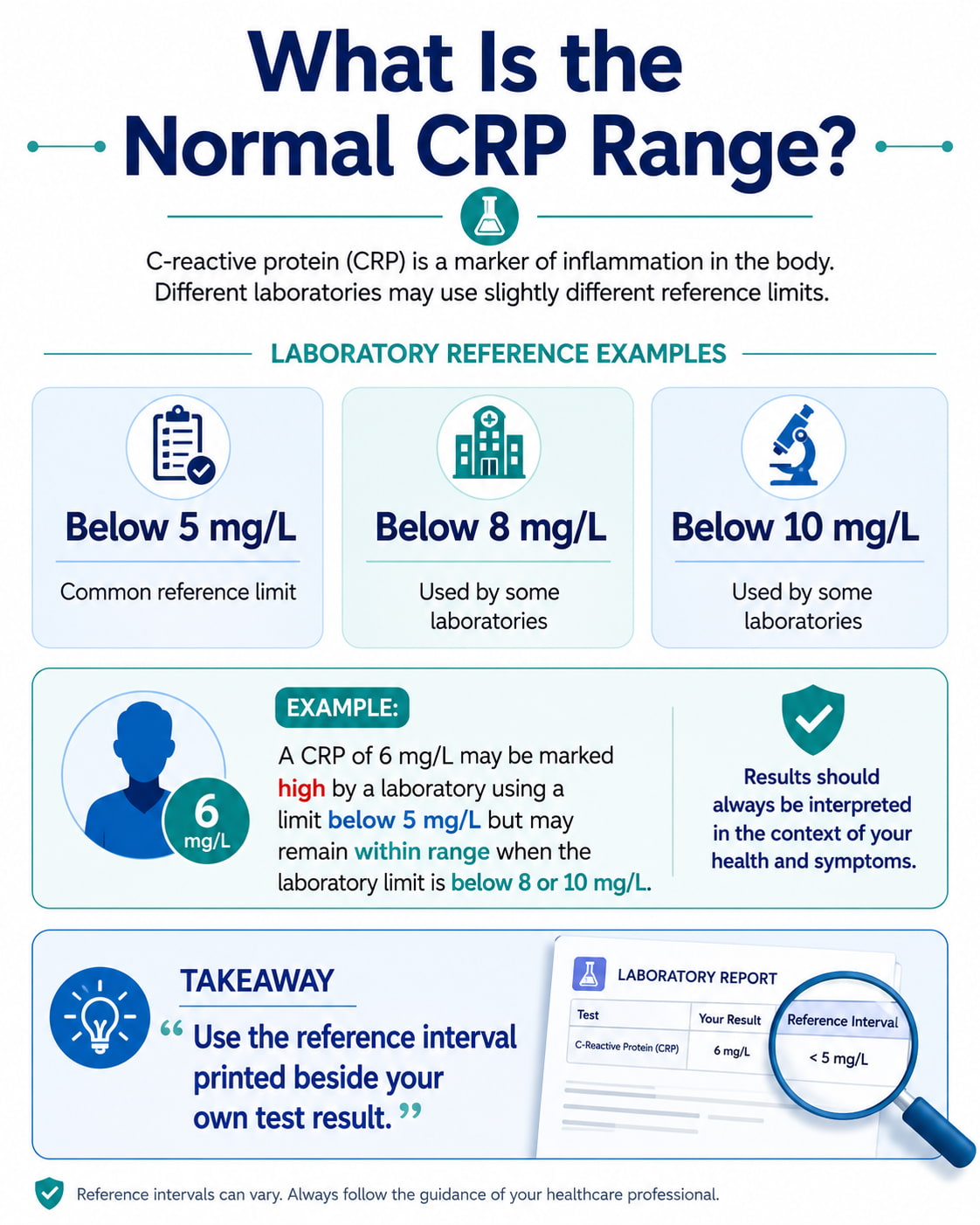
There is no single universal CRP cutoff used by every laboratory.
Common standard CRP reference limits include:
- Below 5 mg/L
- Below 8 mg/L
- Below 10 mg/L
Mayo Clinic Laboratories uses less than 5 mg/L, while other laboratories may consider results below 8 or 10 mg/L within their reference range. Mayo Clinic’s patient guidance states that results of 8 or 10 mg/L and higher may be considered elevated, depending on the laboratory.
This variation explains why a result of 6 mg/L might be labeled high on one laboratory report but remain within range on another.
Which CRP Range Should You Use?
Use the range shown directly beside your CRP result.
Laboratory reference ranges take into account the testing equipment, assay, specimen handling, and calculation methods used by that facility. A general online chart is useful for context, but your report’s reference interval should take priority.
CRP Levels in mg/L and mg/dL
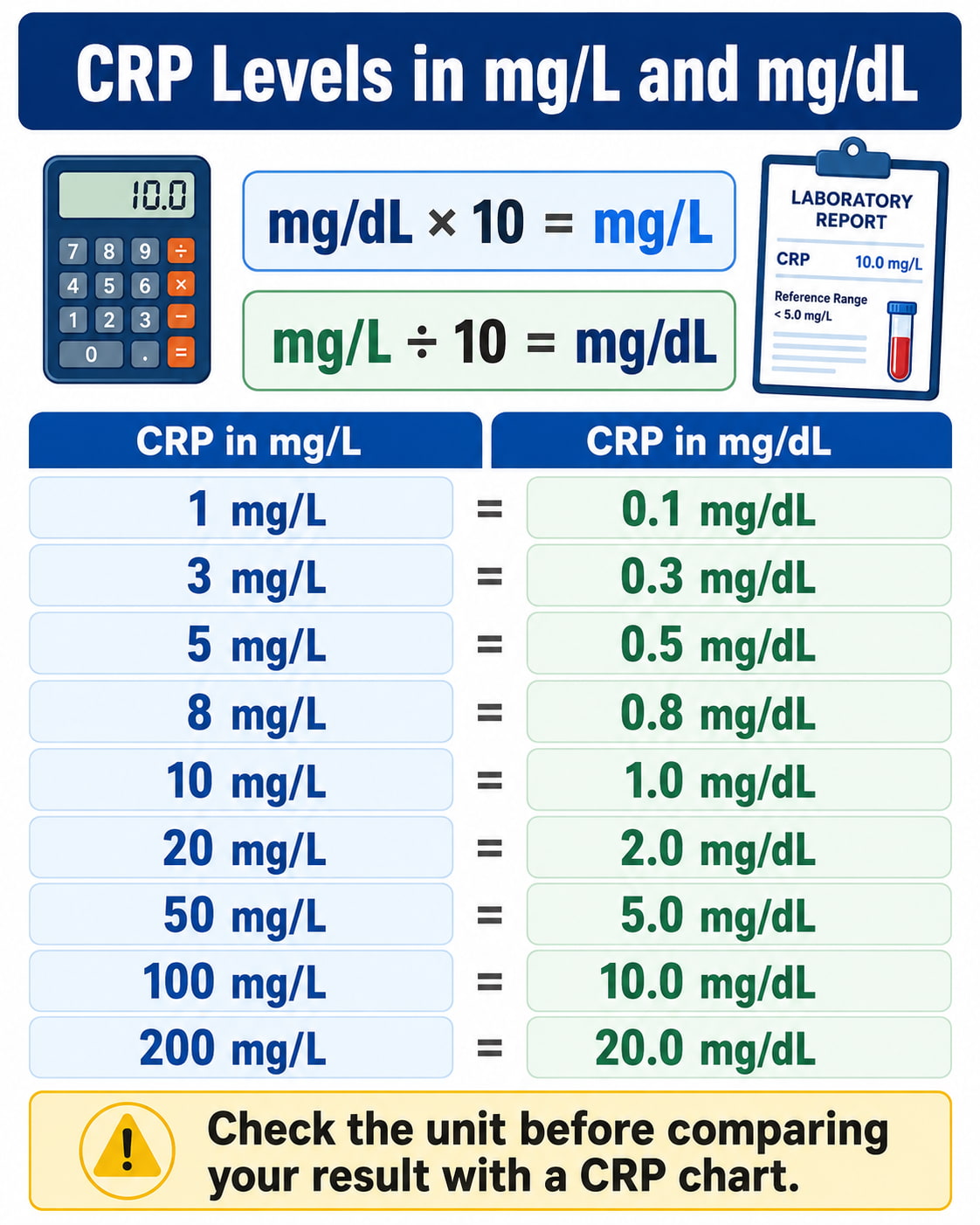
CRP is usually reported in milligrams per liter, written as mg/L. Some reports use milligrams per deciliter, written as mg/dL.
These units are not numerically equal.
CRP Unit Conversion Formula
mg/dL × 10 = mg/L
mg/L ÷ 10 = mg/dL
CRP Conversion Chart
| CRP in mg/L | CRP in mg/dL |
|---|---|
| 1 mg/L | 0.1 mg/dL |
| 3 mg/L | 0.3 mg/dL |
| 5 mg/L | 0.5 mg/dL |
| 8 mg/L | 0.8 mg/dL |
| 10 mg/L | 1.0 mg/dL |
| 20 mg/L | 2.0 mg/dL |
| 50 mg/L | 5.0 mg/dL |
| 100 mg/L | 10.0 mg/dL |
| 200 mg/L | 20.0 mg/dL |
Always check the unit before comparing your result with a C-reactive protein levels chart. Mistaking mg/dL for mg/L can make a result appear ten times higher or lower than it actually is.
What Do Specific CRP Levels Mean?
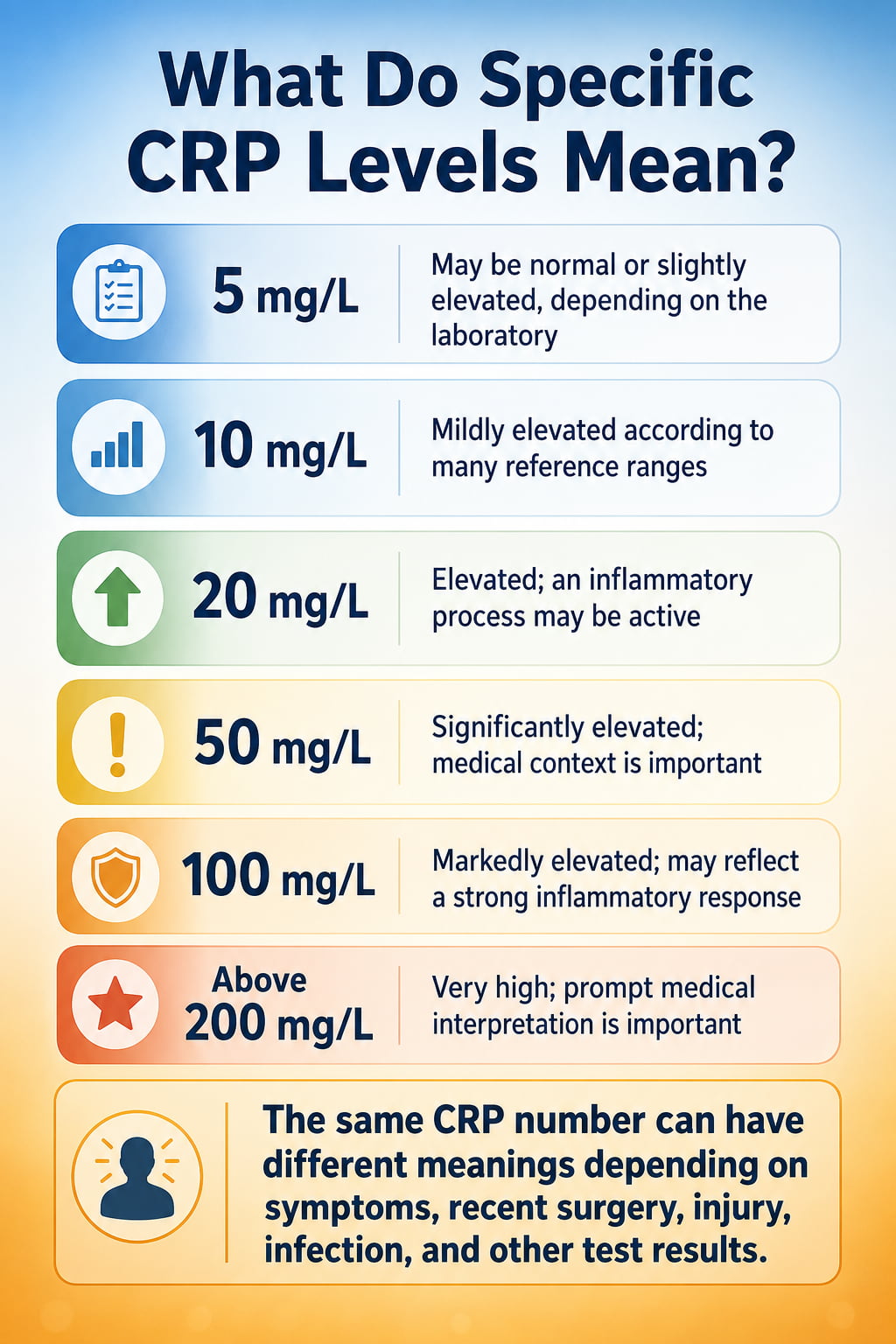
A CRP result should be interpreted in context. The same number may have different meanings in someone recovering from surgery, someone with rheumatoid arthritis, and someone experiencing a new fever.
Is a CRP Level of 5 mg/L High?
A CRP of 5 mg/L is at or slightly above the upper limit used by laboratories with a reference range below 5 mg/L.
Other laboratories may consider 5 mg/L normal. The result may also reflect a minor or temporary inflammatory response.
Is a CRP Level of 10 mg/L High?
A CRP of 10 mg/L is above the reference range used by many laboratories.
Possible explanations include a recent infection, minor injury, chronic inflammatory condition, obesity, or another source of low-grade inflammation. A single CRP of 10 mg/L does not identify the cause.
What Does a CRP Level of 20 mg/L Mean?
A CRP of 20 mg/L is elevated above common standard reference limits.
It suggests that an inflammatory process may be active, but it is not specific enough to determine whether the cause is viral, bacterial, autoimmune, or related to an injury. Symptoms and additional testing are important.
What Does a CRP Level of 50 mg/L Mean?
A CRP of 50 mg/L is significantly elevated.
Levels in this range may occur with substantial infections, active inflammatory diseases, recent surgery, tissue injury, or other medical conditions. The number should be reviewed with a healthcare professional, especially when accompanied by fever, worsening pain, breathing difficulty, or weakness.
What Does a CRP Level of 100 mg/L Mean?
A CRP of 100 mg/L is markedly elevated and may reflect a strong inflammatory response.
Mayo Clinic Laboratories notes that levels above 100 mg/L can be associated with severe stimuli such as major trauma and severe infection. However, the CRP number alone cannot determine whether the cause is bacterial or whether sepsis is present.
What Does a CRP Level Above 200 mg/L Mean?
A CRP above 200 mg/L represents a very strong inflammatory response.
Possible causes include a severe infection, extensive tissue injury, major surgery, severe autoimmune inflammation, or another serious condition. Prompt medical interpretation is important, particularly when the result is new or rising.
Standard CRP vs. High-Sensitivity CRP
A standard CRP test and a high-sensitivity CRP test measure the same protein, but they are designed for different clinical purposes.
| Feature | Standard CRP | High-sensitivity CRP |
|---|---|---|
| Also called | CRP | hs-CRP or cardiac CRP |
| Main purpose | Detecting and monitoring broader inflammation | Helping assess cardiovascular risk |
| Measurement range | Moderate to very high CRP levels | Very small CRP elevations |
| Common use | Infection, injury, surgery, inflammatory disease | Heart attack and stroke risk assessment |
| Typical cutoff | Often below 5–10 mg/L | Frequently interpreted around 1, 2, 3, and 10 mg/L |
The term “high sensitivity” refers to the test’s ability to measure very small amounts of CRP. It does not mean that the patient’s inflammation is more severe.
Do not interpret a standard CRP result using an hs-CRP cardiovascular chart unless the report specifically identifies the test as hs-CRP, high-sensitivity CRP, or cardiac CRP.
High-Sensitivity CRP Levels Chart
The traditional hs-CRP cardiovascular categories for adults are:
| hs-CRP level | Relative cardiovascular risk category |
|---|---|
| Below 1.0 mg/L | Lower relative risk |
| 1.0–3.0 mg/L | Average relative risk |
| 3.1–10.0 mg/L | Higher relative risk |
| Above 10 mg/L | Possible active infection or inflammation; cardiovascular interpretation may not be reliable |
The Quest Diagnostics hs-CRP reference guide uses the lower, average, and higher relative-risk categories shown above. It recommends considering repeat testing when hs-CRP is between 3.1 and 10 mg/L to rule out a temporary increase from infection or inflammation.
Mayo Clinic uses a simpler cardiovascular interpretation:
- Below 2.0 mg/L: lower cardiovascular risk
- 2.0 mg/L or higher: higher cardiovascular risk
These two systems are not necessarily contradictory. The 1, 3, and 10 mg/L categories describe levels of relative cardiovascular risk, while 2 mg/L is often used as a clinical risk-enhancing threshold.
Why hs-CRP May Need to Be Repeated
CRP naturally changes over time. A cold, injury, strenuous workout, or temporary inflammatory condition may affect a single hs-CRP result.
For cardiovascular assessment, Mayo Clinic advises using the average of two hs-CRP results, ideally measured approximately two weeks apart.
If the level is above 10 mg/L, clinicians generally look for an active infection or another inflammatory cause before using the result to estimate cardiovascular risk.
2026 Cardiovascular Guidance on hs-CRP
The cardiovascular role of hs-CRP continues to develop.
The American Heart Association’s March 2026 dyslipidemia guideline update identifies hs-CRP as one of several additional markers that may help refine a person’s risk of atherosclerotic cardiovascular disease. Other factors include cholesterol levels, blood pressure, diabetes, kidney health, smoking, family history, and coronary artery calcium.
An hs-CRP result should not be used by itself to decide whether someone needs cholesterol-lowering medication. It is one part of a broader clinician–patient risk assessment.
What Causes High CRP Levels?
High CRP means the body has activated an inflammatory response. It does not automatically indicate one specific disease.
Infections
CRP may rise with:
- Bacterial infections
- Viral infections
- Fungal infections
- Pneumonia
- Urinary tract infections
- Skin or wound infections
- Abdominal infections
Bacterial infections may cause large CRP increases, but CRP alone cannot reliably distinguish a bacterial infection from every viral or noninfectious condition.
Autoimmune and Inflammatory Diseases
CRP may increase during active inflammation associated with:
- Rheumatoid arthritis
- Lupus
- Vasculitis
- Polymyalgia rheumatica
- Inflammatory bowel disease
- Crohn’s disease
- Ulcerative colitis
- Certain inflammatory forms of arthritis
CRP is sometimes measured repeatedly to help follow disease activity or response to a management plan.
Injury, Surgery, and Tissue Damage
CRP can rise after:
- Major or minor surgery
- Burns
- Bone fractures
- Significant injuries
- Heart muscle injury
- Tissue damage
An increase is expected after some procedures. Healthcare teams may follow the trend to determine whether CRP is falling as expected or remains elevated.
Chronic Health and Lifestyle Factors
Mild or persistent CRP elevations may be associated with:
- Obesity
- Smoking
- Diabetes
- Metabolic syndrome
- Poor sleep
- Periodontal disease
- Chronic kidney disease
- Hormone replacement therapy
- Some chronic inflammatory conditions
These associations do not prove that any one factor caused an individual result.
Can CRP Be High Without an Infection?
Yes. CRP can be elevated even when no infection is present.
Noninfectious causes include autoimmune disease, inflammatory bowel disease, injury, surgery, burns, heart muscle damage, obesity, smoking, and strenuous physical activity.
This is why antibiotics should not be started based only on a high CRP result. A healthcare professional must determine whether an infection is likely and whether additional tests are needed.
Can CRP Be High Without Symptoms?
A mildly elevated CRP can occur without obvious symptoms.
Low-grade inflammation may not cause noticeable signs. Some people may also have a temporary increase from exercise, a mild viral illness, poor sleep, or another short-term factor.
A high or persistent CRP without symptoms still deserves interpretation in the context of:
- The exact result
- The laboratory reference range
- Previous CRP measurements
- Current health conditions
- Recent illness or surgery
- Medications
- Other test results
How Quickly Do CRP Levels Rise?
CRP may begin increasing within approximately 6–12 hours after an acute inflammatory response begins. It often peaks within 24–48 hours.
As inflammation resolves, CRP generally decreases. This relatively rapid response makes repeated CRP testing useful in certain clinical situations.
Why a CRP Trend May Be More Useful Than One Result
A series of results may show whether inflammation is:
- Increasing
- Remaining stable
- Responding to medical management
- Resolving naturally
- Returning after an initial improvement
For example, a decrease from 120 mg/L to 40 mg/L may provide different information than an increase from 40 mg/L to 120 mg/L, even though both sets of results include the same numbers.
The trend must still be interpreted with the patient’s symptoms and overall condition.
What Can Affect a CRP Test Result?
Several factors can temporarily or chronically influence CRP.
Recent Intense Exercise
Long-distance running, heavy weight training, and other strenuous exercise may cause a temporary increase. Mayo Clinic advises that patients may be asked to avoid hard exercise before testing.
Recent Illness or Vaccination
A cold, flu-like illness, infection, or recent immune response may temporarily raise CRP.
Surgery or Injury
CRP commonly increases after tissue injury. The timing and trend may be more useful than a single postoperative measurement.
Medications
Certain medicines can influence CRP or the underlying inflammatory response. Tell your healthcare professional about prescription medicines, nonprescription medicines, and supplements.
Do not stop aspirin, ibuprofen, statins, steroids, or any other medicine solely to change a CRP result unless your healthcare professional instructs you to do so.
Pregnancy and Hormone Therapy
Pregnancy and hormone replacement therapy may influence CRP levels in some people.
Liver Disease
Because CRP is produced mainly by the liver, the response may be less pronounced in people with significant liver disease. A low CRP does not always exclude inflammation in this situation.
Do You Need to Fast for a CRP Test?
Fasting is usually not required for a standard CRP test.
However, you may need to fast when the same blood sample is being used for other tests, such as:
- A fasting lipid panel
- Blood glucose testing
- Certain metabolic tests
Follow the preparation instructions given by your laboratory or healthcare professional.
What Should You Do After a High CRP Result?
A high CRP result should be approached step by step.
1. Confirm the Type of CRP Test
Check whether the report says:
- CRP
- Standard CRP
- hs-CRP
- High-sensitivity CRP
- Cardiac CRP
The standard and high-sensitivity tests have different purposes.
2. Check the Units
Confirm whether the result is reported in mg/L or mg/dL.
Remember that 1 mg/dL equals 10 mg/L.
3. Use the Laboratory’s Reference Range
Compare the result with the range printed on the report rather than relying only on a general chart.
4. Consider Recent Events
Tell your healthcare professional about recent:
- Fever or infection
- Injury
- Surgery
- Vaccination
- Dental procedure
- Strenuous exercise
- Medication changes
5. Review the Result With a Healthcare Professional
Medical follow-up is particularly important when the CRP level is:
- Significantly above the reference range
- Increasing on repeat tests
- Persistently elevated
- Accompanied by new symptoms
- Above 100 mg/L
- Unexpected based on your current health
6. Focus on the Underlying Cause
CRP is a marker rather than a disease. The goal is not simply to lower the number.
Management depends on the underlying cause, which may involve an infection, inflammatory condition, injury, cardiovascular risk factor, or another health issue. Avoid taking antibiotics, steroids, aspirin, or supplements specifically to lower CRP without professional guidance.
When Is a High CRP an Emergency?
There is no single CRP number that automatically defines an emergency.
A person with a CRP of 100 mg/L may be seriously ill, while another person may have an expected elevation after major surgery and already be under close medical supervision. Symptoms and overall condition determine urgency.
Seek immediate medical care when a high CRP accompanies possible signs of severe infection or sepsis, including:
- Confusion or disorientation
- Shortness of breath
- Clammy or sweaty skin
- Extreme pain or discomfort
- Fever, shivering, or feeling unusually cold
- A very fast heart rate
- A weak pulse
- Rapid worsening of an existing infection
- Severe weakness or difficulty staying awake
The Centers for Disease Control and Prevention describes sepsis as a life-threatening medical emergency that requires rapid evaluation and treatment.
Frequently Asked Questions
What is a normal C-reactive protein level?
Many laboratories consider a standard CRP below 5 mg/L normal. Other laboratories use an upper limit of 8 or 10 mg/L. Use the reference range printed on your laboratory report.
Is a CRP level of 10 mg/L dangerous?
A CRP of 10 mg/L is mildly elevated according to many laboratory ranges, but the result alone does not indicate danger. Recent infection, injury, obesity, chronic inflammation, or other factors may contribute. Symptoms and the CRP trend matter.
Is a CRP level of 20 mg/L high?
Yes. A standard CRP of 20 mg/L is above common adult reference ranges. It suggests active inflammation but cannot identify the exact cause.
What infection causes high CRP?
Many bacterial, viral, and fungal infections can raise CRP. Bacterial infections may sometimes cause particularly high levels, but CRP alone cannot confirm the type or source of infection.
What CRP level indicates sepsis?
No CRP cutoff can diagnose sepsis by itself. Levels above 100 mg/L may occur with severe infection or sepsis, but sepsis is diagnosed through urgent medical assessment, symptoms, vital signs, and tests for infection or organ dysfunction.
What is the difference between CRP and hs-CRP?
Standard CRP is generally used to detect and monitor broader inflammation. High-sensitivity CRP measures much smaller CRP concentrations and may be used as one part of cardiovascular risk assessment.
How long does it take for CRP to return to normal?
The time depends on the cause. CRP may decrease relatively quickly as an acute inflammatory response resolves, but it may remain elevated when infection, tissue injury, or inflammatory disease continues. Repeat testing can help show the direction of change.
Conclusion
A C-reactive protein levels chart can provide useful context, but a CRP result is only one part of a medical evaluation. Many laboratories use a normal standard CRP range below 5 mg/L, while others use 8 or 10 mg/L as the upper limit.
Results above 10 mg/L generally indicate measurable inflammation, and levels above 100 mg/L may occur with a severe inflammatory response. However, CRP cannot diagnose an infection, autoimmune disease, heart condition, or sepsis by itself.
Check the type of test, confirm the units, follow the laboratory’s reference range, and discuss high or persistent results with a qualified healthcare professional.
This content is for informational purposes only and not medical advice.