
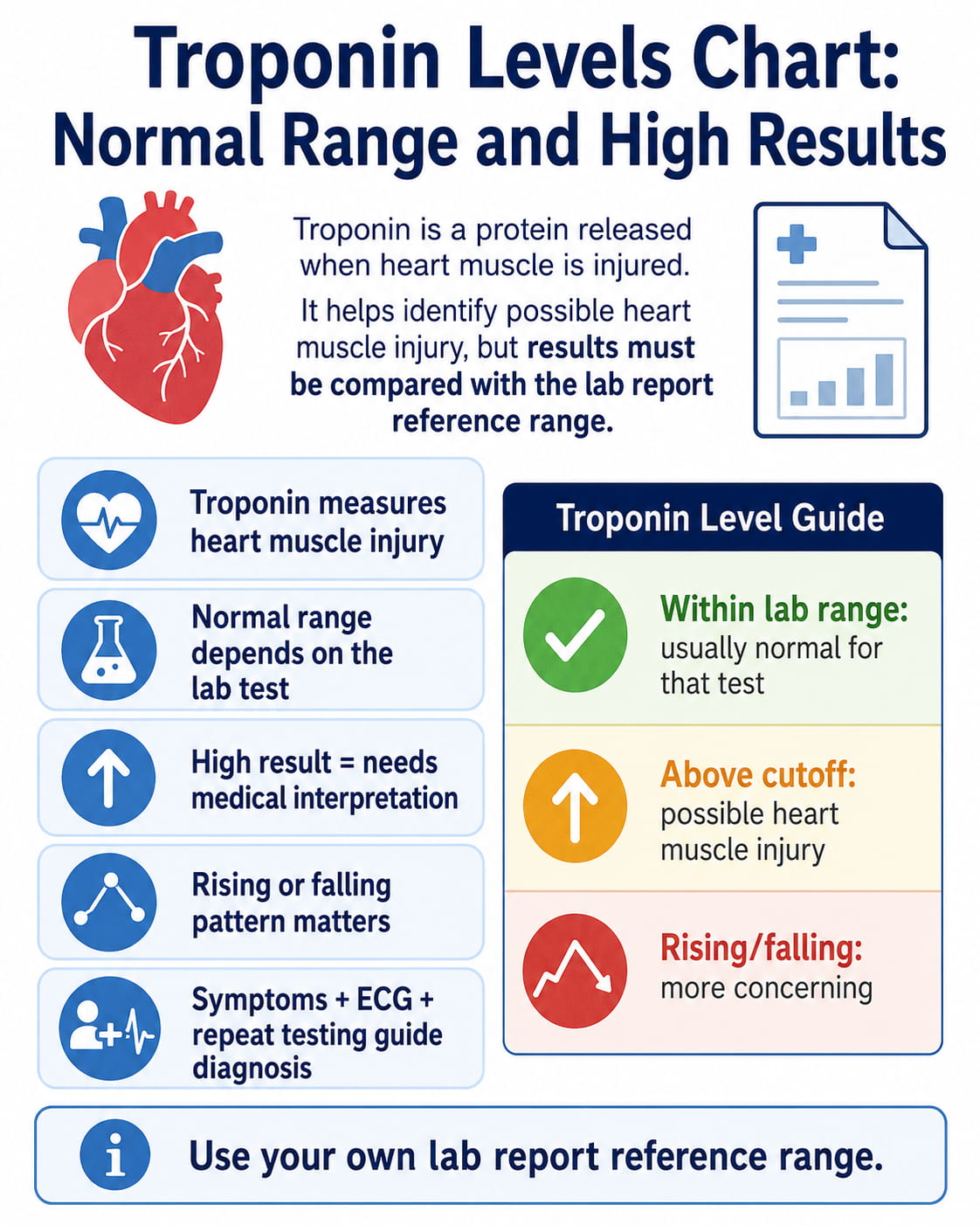
A troponin level is usually considered normal when it falls within the reference range printed on your own lab report. A Troponin Levels Chart can help you understand common ranges, but there is no single “normal” number that applies to every person, every lab, or every troponin test.
Troponin testing is often used when doctors are checking for heart muscle injury, including a possible heart attack. If you have chest pain, shortness of breath, pain spreading to the arm, jaw, neck, or back, sweating, nausea, fainting, or severe weakness, call 911 or your local emergency number right away. Do not wait for online information to interpret a result.
Troponin Levels Chart
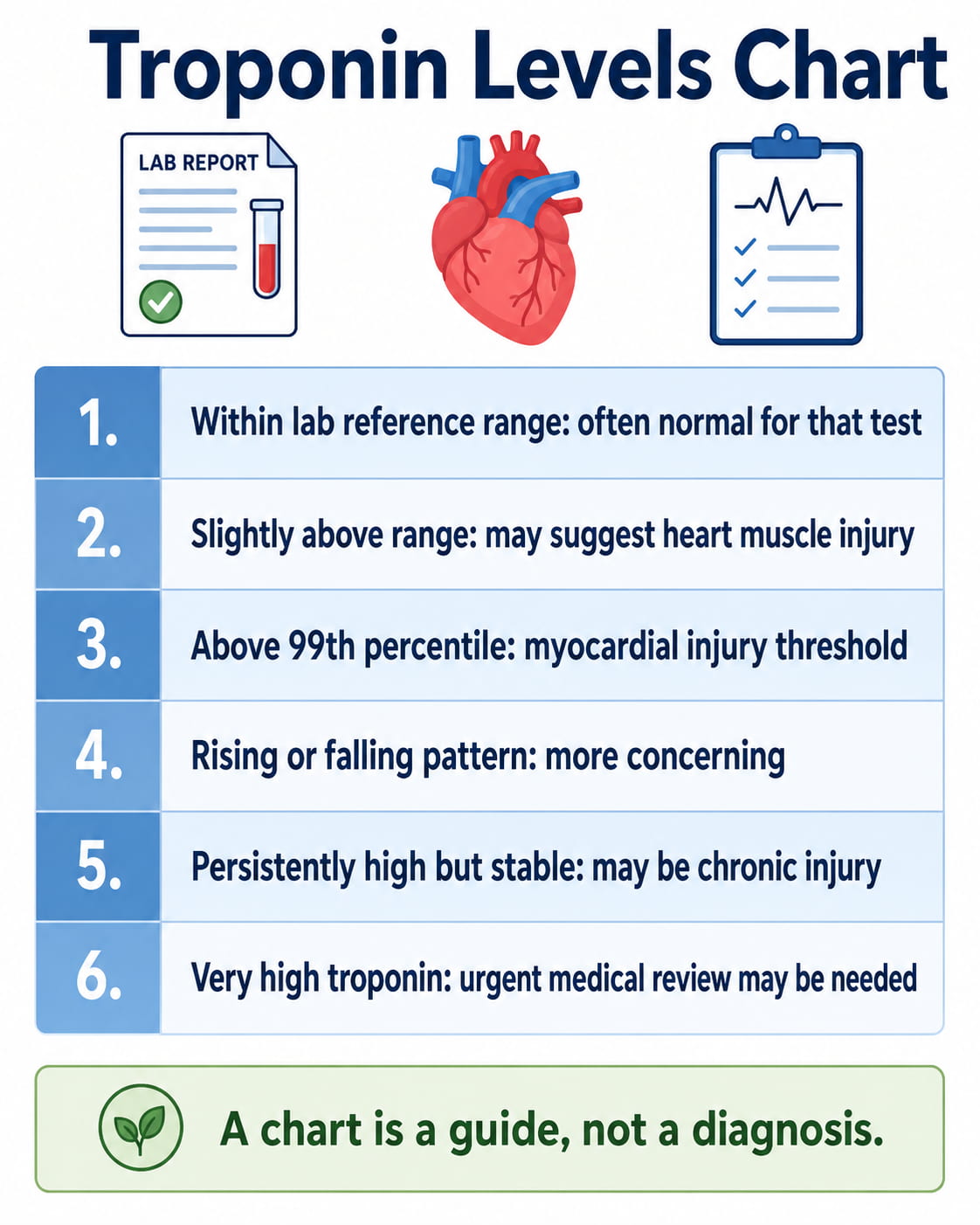
Troponin results can be confusing because different labs use different tests, units, and cutoffs. Many older or “conventional” troponin tests report results in ng/mL, while many high-sensitivity troponin tests report results in ng/L.
Use this chart as a general guide only. Always compare your number with the reference range on your own lab report.
| Troponin result category | What it may mean | What usually happens next |
|---|---|---|
| Within the lab reference range | Often considered normal for that specific test | Symptoms still matter; doctors may repeat the test if a heart problem is suspected |
| Slightly above the reference range | May suggest heart muscle injury | Repeat troponin, ECG, symptoms, and medical history are reviewed together |
| Above the 99th percentile cutoff | Meets the lab threshold for myocardial injury | Does not automatically mean heart attack; clinical context is needed |
| Rising or falling troponin pattern | More concerning for recent or acute heart muscle injury | Doctors may evaluate urgently for heart attack or other serious causes |
| Persistently high but stable | May suggest chronic heart muscle injury | Can happen with conditions such as heart failure or kidney disease |
| Very high troponin | Often more concerning for significant heart injury | Emergency evaluation is usually needed, especially with symptoms |
According to the MedlinePlus troponin test guide, higher-than-normal troponin usually means there is some damage to heart muscle, but your healthcare provider must consider your full condition before deciding whether a heart attack caused it.
What Is Troponin?
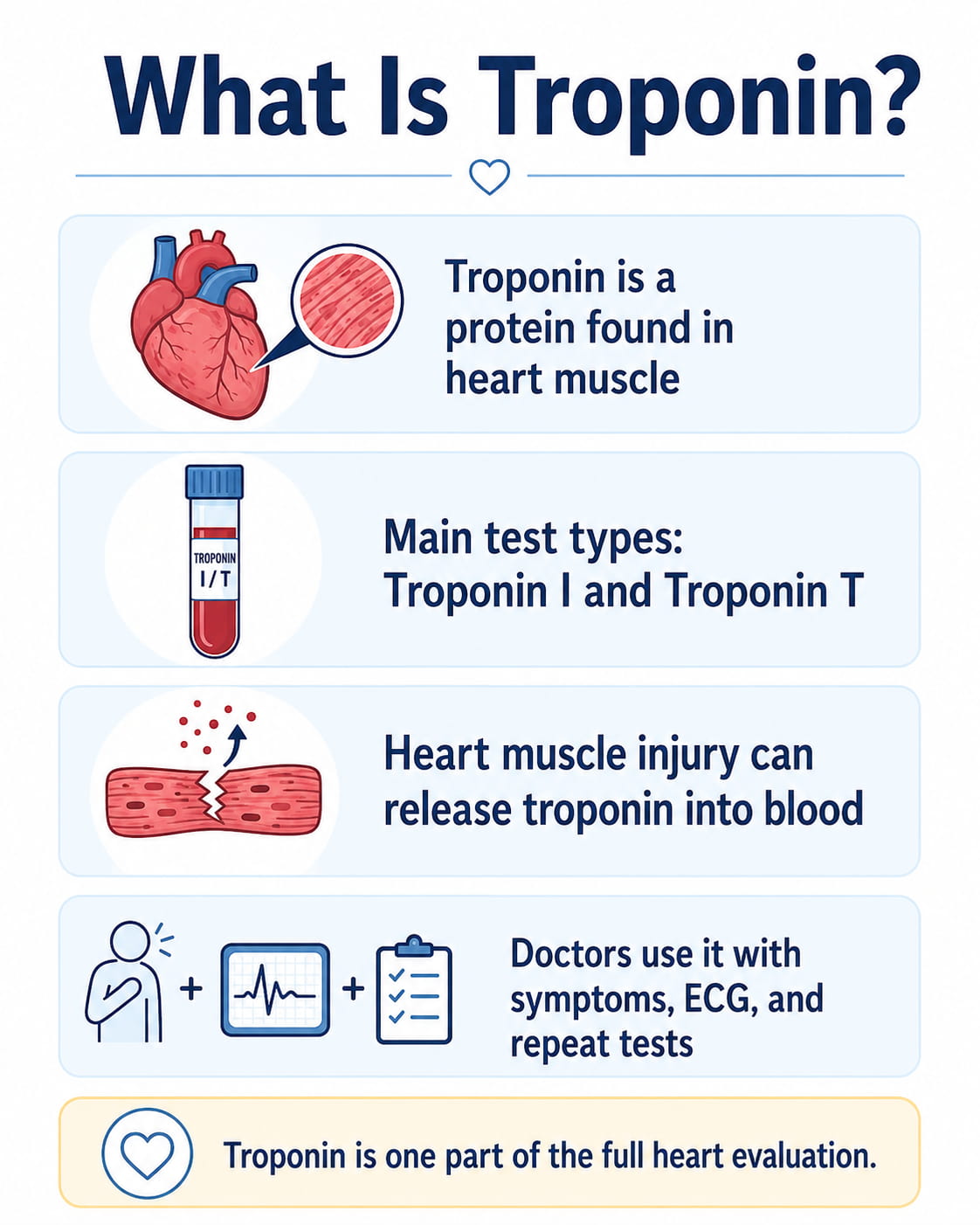
Troponin is a group of proteins found in heart muscle. The two main types used in blood testing are:
- Troponin I
- Troponin T
When heart muscle cells are damaged, troponin can leak into the bloodstream. A troponin blood test measures how much is present. MedlinePlus explains that troponin T and troponin I are released when heart muscle has been damaged, and higher amounts may reflect more heart injury.
Doctors often order troponin testing when someone has symptoms that could suggest a heart attack. The test is usually used with an ECG, symptoms, physical exam, risk factors, and repeat blood tests.
Normal Troponin Levels Chart by Test Type
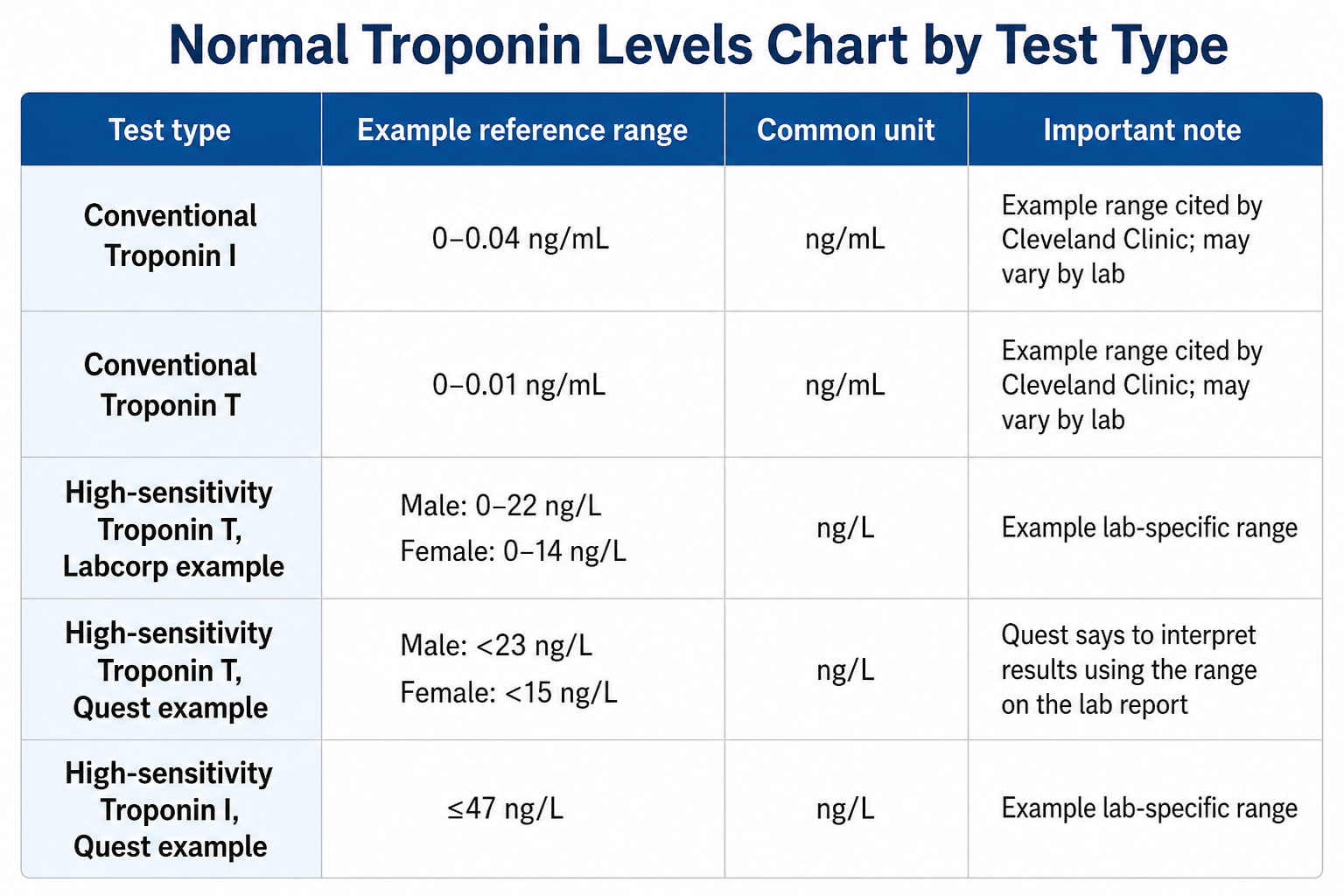
There is no universal normal troponin range. The range depends on whether the test measures troponin I or troponin T, whether it is a high-sensitivity test, and which manufacturer or lab method is used.
| Test type | Example reference range | Common unit | Important note |
|---|---|---|---|
| Conventional Troponin I | 0–0.04 ng/mL | ng/mL | Example range cited by Cleveland Clinic; may vary by lab |
| Conventional Troponin T | 0–0.01 ng/mL | ng/mL | Example range cited by Cleveland Clinic; may vary by lab |
| High-sensitivity Troponin T, Labcorp example | Male: 0–22 ng/L; Female: 0–14 ng/L | ng/L | Example lab-specific range |
| High-sensitivity Troponin T, Quest example | Male: <23 ng/L; Female: <15 ng/L | ng/L | Quest says to interpret results using the range on the lab report |
| High-sensitivity Troponin I, Quest example | ≤47 ng/L | ng/L | Example lab-specific range |
Cleveland Clinic lists common conventional reference ranges as Troponin I: 0–0.04 ng/mL and Troponin T: 0–0.01 ng/mL, while also noting that reference ranges can vary by test and facility. Labcorp lists an example high-sensitivity Troponin T range of 0–22 ng/L for males and 0–14 ng/L for females. Quest also states that reference ranges are general guidance and that results should be interpreted using the range shown on the laboratory report.
What Is High-Sensitivity Troponin?
A high-sensitivity troponin test can detect much smaller amounts of troponin than older tests. This helps doctors identify heart muscle injury earlier in some cases.
High-sensitivity troponin is commonly reported in ng/L. The American College of Cardiology explains that high-sensitivity cardiac troponin is the preferred biomarker for detecting myocardial injury, and that the key cutoff is the assay-specific 99th percentile upper reference limit.
That phrase sounds technical, but the idea is simple: your result is compared with the upper limit expected for that specific test. If your result is above that cutoff, it may show heart muscle injury. It still does not prove the cause by itself.
Troponin ng/mL vs ng/L: Why Units Matter
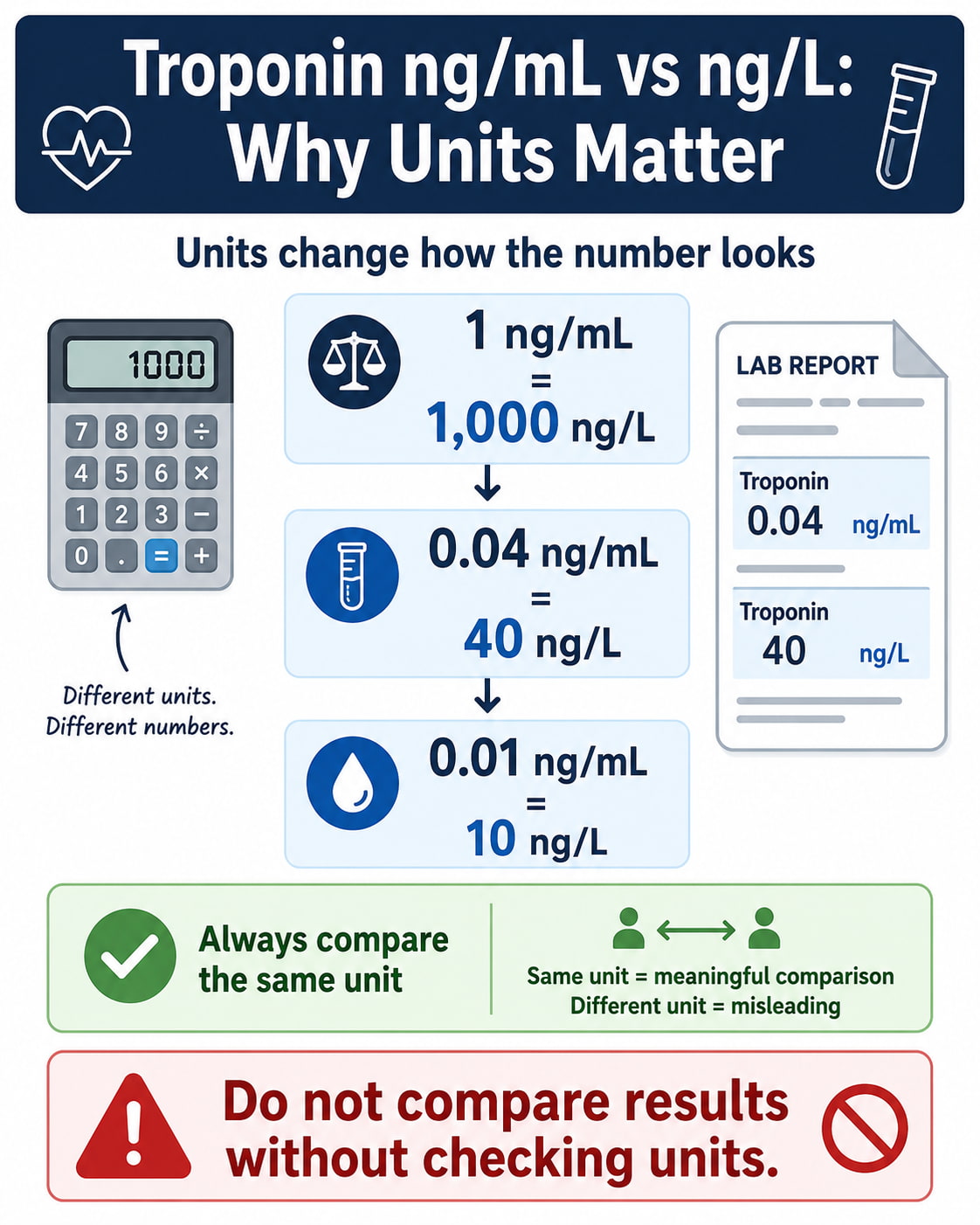
Troponin units matter a lot.
The same number can look very different depending on the unit. A result in ng/mL is not the same as a result in ng/L.
Quick conversion
| Conversion | Meaning |
|---|---|
| 1 ng/mL | 1,000 ng/L |
| 0.04 ng/mL | 40 ng/L |
| 0.01 ng/mL | 10 ng/L |
For example, a conventional troponin I reference range of 0–0.04 ng/mL is equal to 0–40 ng/L. But that does not mean every high-sensitivity test uses 40 ng/L as its cutoff. High-sensitivity tests have their own lab-specific reference limits.
What Troponin Level Indicates a Heart Attack?
No single troponin number can diagnose a heart attack by itself.
A heart attack is usually diagnosed when there is evidence of acute heart muscle injury plus signs that the injury is due to reduced blood flow to the heart. That may include symptoms, ECG changes, imaging findings, or other clinical evidence.
The Fourth Universal Definition of Myocardial Infarction defines myocardial injury as troponin above the 99th percentile upper reference limit, and acute injury involves a rise and/or fall in troponin values. The American College of Cardiology also notes that one high-sensitivity troponin value above the 99th percentile is sensitive for myocardial injury but not specific for myocardial infarction.
In plain English: a high troponin result is important, but doctors need the full picture to decide whether it is a heart attack.
Why Doctors Repeat Troponin Tests
Troponin may not rise immediately after symptoms begin. That is why repeat testing is common.
MedlinePlus says increased troponin may not appear for about 2–3 hours after a heart attack begins, and testing may be repeated over the next several hours if the first result is normal. Cleveland Clinic explains that troponin levels often rise sharply within 3–12 hours, may peak around 24 hours, and can remain high for several days after a heart attack.
Rising vs stable results
A rising or falling troponin pattern can suggest a more recent injury. A high but stable result may suggest chronic myocardial injury, depending on the person’s condition. The 2022 ACC Expert Consensus Decision Pathway notes that relative changes of 20% or more are generally considered significant and can indicate acute myocardial injury, although interpretation depends on the starting value and clinical situation.
High Troponin Causes Besides Heart Attack
High troponin does not always mean a heart attack. It means heart muscle injury or stress may be present.
Possible causes of elevated troponin include:
- Heart attack
- Heart failure
- Abnormal heart rhythms
- Myocarditis, or inflammation of the heart muscle
- Heart valve disease
- Chronic kidney disease
- Pulmonary embolism
- Sepsis or severe infection
- Chest trauma
- Recent heart procedures or surgery
- Severe high blood pressure
- Very intense endurance exercise in some situations
MedlinePlus lists several non-heart-attack causes of higher troponin, including heart failure, kidney disease, pulmonary embolism, sepsis, severe COVID-19 infection, and intense exercise.
Is Slightly High Troponin Serious?
A slightly high troponin result should not be ignored. Even a small elevation can matter, especially if you have symptoms or a rising pattern on repeat tests.
However, a mild increase does not always mean the same thing for every person. For example:
- A person with chest pressure and a rising troponin may need urgent heart attack evaluation.
- A person with chronic kidney disease may have a persistently elevated troponin that needs careful interpretation.
- A person with severe infection may have heart strain without a classic blocked-artery heart attack.
The safest step is to ask the healthcare team, “Is my troponin rising, falling, or stable, and what is the reference range for this test?”
How to Read Your Troponin Lab Report
When looking at a troponin result, focus on five things.
1. The test name
Check whether the result is:
- Troponin I
- Troponin T
- High-sensitivity Troponin I
- High-sensitivity Troponin T
These are not interchangeable.
2. The unit
Look for the unit beside the number:
- ng/mL
- ng/L
- pg/mL
Do not compare results unless the units are the same or properly converted.
3. The reference range
Your lab report should show a reference range or cutoff. That is the most important range to use.
4. The trend
One result gives limited information. Repeat results can show whether troponin is rising, falling, or staying stable.
5. Symptoms and ECG findings
Troponin is only one part of the evaluation. Doctors also consider symptoms, ECG, medical history, exam findings, and other tests.
Troponin Levels and Symptoms: When to Get Emergency Help
Seek emergency medical help right away if you have symptoms that could suggest a heart attack, including:
- Chest pain, pressure, squeezing, or heaviness
- Pain spreading to the arm, shoulder, jaw, neck, back, or upper belly
- Shortness of breath
- Sweating
- Nausea or vomiting
- Lightheadedness or fainting
- Sudden severe weakness
- New confusion, especially in older adults
Do not drive yourself if symptoms are severe or suggest a heart attack. Call your local emergency number.
Can Troponin Be Normal During a Heart Attack?
It can be normal early after symptoms begin. Troponin may take time to rise.
That is why doctors may repeat the test if symptoms are concerning. MedlinePlus notes that if troponin levels are normal 12 hours after symptoms began, a heart attack is usually unlikely.
A normal first test does not always mean “nothing is wrong,” especially if symptoms started recently.
Can Troponin Stay High After a Heart Attack?
Yes. Troponin can remain elevated for several days after heart muscle injury. This is one reason doctors look at the timing of symptoms and the pattern of repeat results.
A falling troponin after a known event may mean the injury is no longer actively increasing. A rising value may be more concerning and usually needs prompt medical review.
Biotin and Troponin Test Accuracy
Tell your healthcare provider if you take biotin, also called vitamin B7. Biotin is found in some hair, skin, nail, and multivitamin supplements.
MedlinePlus warns that biotin can make troponin levels appear lower than they really are, which may affect test interpretation.
Do not stop prescribed medications or supplements without asking your healthcare provider, but make sure the care team knows what you take.
How Much Does a Troponin Test Cost?
There is no single patient price for a troponin test.
Cost can depend on:
- Whether the test is done in an emergency room, hospital, clinic, or outpatient lab
- Insurance coverage
- Deductibles and copays
- Other tests ordered at the same time
- Facility fees
- Local billing rules
For Medicare payment context, CMS maintains the Clinical Laboratory Fee Schedule, which lists payment rates for many lab tests. CMS explains that most clinical diagnostic lab tests are paid using a fee schedule based on weighted median private payer rates, and the 2026 CLFS files were updated for July 2026. CMS also notes that including a code or payment amount on the CLFS does not mean Medicare will cover that test in every situation.
For an individual bill, ask the hospital, lab, or insurance plan for the estimated patient responsibility.
Practical Questions to Ask Your Doctor
If you received a troponin result, these questions can help you understand it better:
- Which troponin test was used: Troponin I, Troponin T, or high-sensitivity troponin?
- What is the reference range for this lab?
- Is my result above the 99th percentile cutoff?
- Was my troponin rising, falling, or stable?
- Do my symptoms or ECG suggest a heart attack?
- Could another condition explain the high result?
- Do I need repeat testing, imaging, or cardiology follow-up?
- Could biotin or supplements affect my result?
Common Mistakes When Reading a Troponin Levels Chart
Mistake 1: Comparing different units
Do not compare ng/mL directly with ng/L without converting.
Mistake 2: Assuming one cutoff works for everyone
High-sensitivity troponin cutoffs may differ by lab, assay, and sex.
Mistake 3: Thinking high troponin always means heart attack
High troponin can happen with many conditions that stress or damage the heart.
Mistake 4: Ignoring symptoms
A “normal” number may not be enough if symptoms are serious or started recently.
Mistake 5: Reading one result without the trend
Repeat testing often matters because the rise or fall can be more informative than one number.
FAQ About Troponin Levels
What is a normal troponin level?
A normal troponin level is one that falls within the reference range printed on your lab report. Common conventional examples include Troponin I 0–0.04 ng/mL and Troponin T 0–0.01 ng/mL, but these are not universal.
Is 0.04 troponin high?
It depends on the test and lab. For some conventional Troponin I tests, 0.04 ng/mL may be near the upper end of the reference range. For other tests, especially high-sensitivity tests, the units and cutoff may be different. Always check your lab report.
What is a dangerously high troponin level?
There is no single “dangerous” number that applies to all tests. Any result above the lab’s reference range can be important, especially if it is rising or paired with chest pain, shortness of breath, ECG changes, or other concerning symptoms.
Can anxiety raise troponin?
Anxiety alone is not usually described as a direct cause of high troponin. However, symptoms that feel like anxiety can overlap with heart symptoms. Chest pain, shortness of breath, sweating, fainting, or severe weakness should be evaluated urgently.
Can troponin be high without a heart attack?
Yes. Troponin can be high from heart failure, myocarditis, kidney disease, pulmonary embolism, severe infection, abnormal heart rhythms, heart procedures, trauma, and other conditions.
How long does troponin stay high?
Troponin may rise within hours after heart muscle injury and can stay elevated for several days. The exact timing depends on the test, the amount of injury, and the person’s overall health.
Should I worry about a slightly elevated troponin?
A slightly elevated troponin should be taken seriously, but it does not always mean a heart attack. Ask your healthcare provider whether the value is rising, falling, or stable and what the result means with your symptoms and ECG.
Conclusion
A Troponin Levels Chart can help you understand common normal ranges and high results, but your own lab report is the most important reference. Troponin levels vary by test type, unit, lab method, sex-specific cutoff, and timing.
If your troponin is high, do not try to diagnose yourself from one number. Ask your healthcare team what test was used, whether the result is above the lab’s cutoff, and whether repeat results show a rise or fall. If you have symptoms of a possible heart attack, seek emergency care immediately.
This content is for informational purposes only and not medical advice.
References
- MedlinePlus: Troponin Test
- MedlinePlus Medical Encyclopedia: Troponin Test
- American College of Cardiology: High-Sensitivity Cardiac Troponin and Chest Pain Guidelines
- Cleveland Clinic: Troponin Test
- Labcorp: Troponin T, Highly Sensitive
- Quest Diagnostics: Troponin T, High Sensitivity
- CMS: Clinical Laboratory Fee Schedule