
The best push ups for chest are variations that challenge your pecs through a full, controlled range of motion while keeping your shoulders, elbows, and core stable. For most people, the best options include incline push-ups, standard push-ups, wide push-ups, slow tempo push-ups, paused push-ups, deficit push-ups, decline push-ups, diamond push-ups, and archer push-ups.
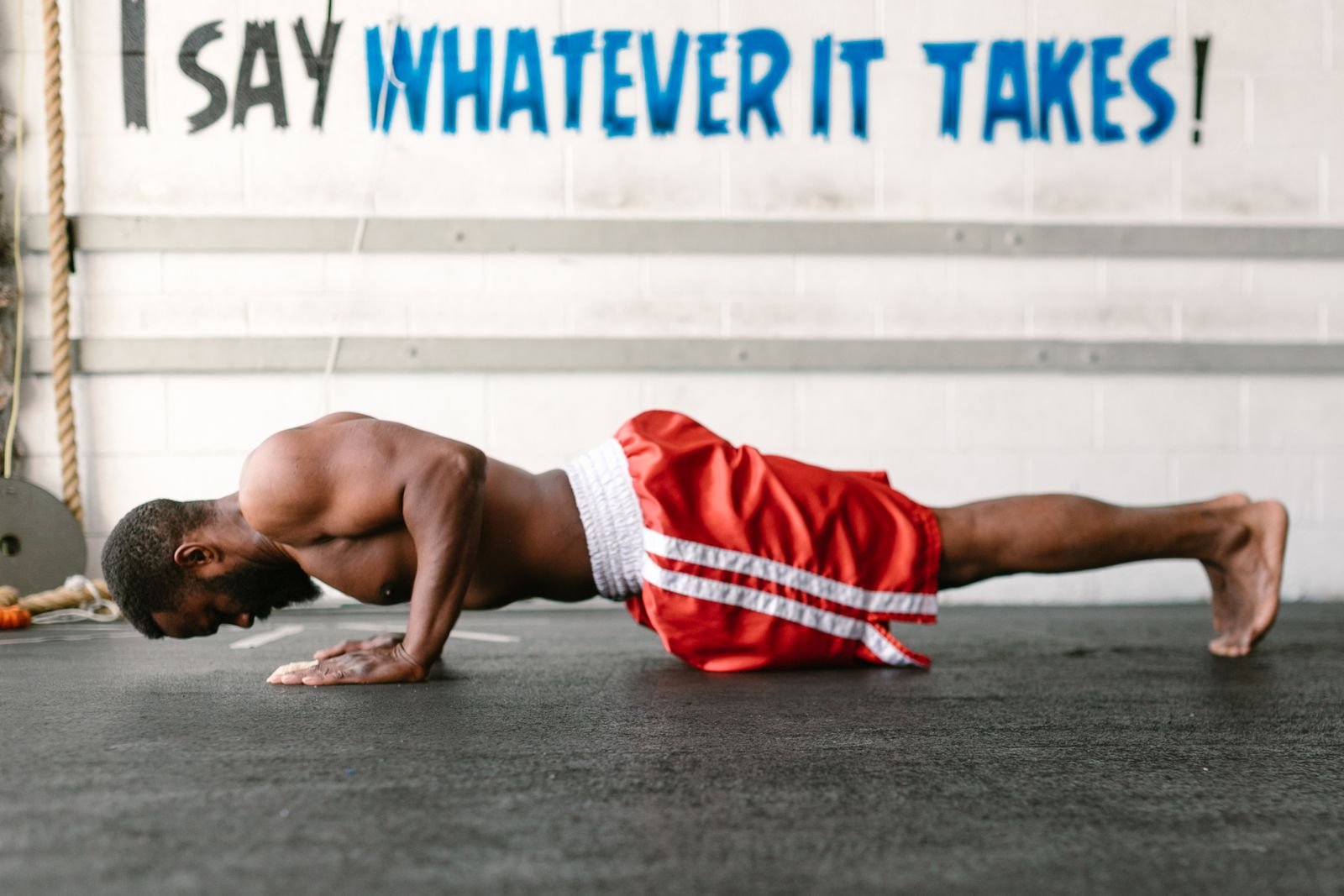
Push-ups are useful because they train the chest without equipment. They also involve the shoulders, triceps, serratus anterior, and core, so they work best when you treat them as a full-body strength exercise, not just an arm movement. The American Council on Exercise lists the push-up as a no-equipment exercise for the arms, chest, and shoulders, while NASM identifies the pectoralis major as a primary muscle during the movement.
Best Push Ups for Chest: Quick Ranking
| Rank | Push-Up Variation | Best For | Difficulty |
|---|---|---|---|
| 1 | Incline Push-Up | Beginners and clean chest-focused form | Beginner |
| 2 | Knee Push-Up | Building strength before full reps | Beginner |
| 3 | Standard Push-Up | Overall chest, shoulders, triceps, and core | Beginner to intermediate |
| 4 | Wide Push-Up | More chest-focused pressing | Intermediate |
| 5 | Slow Tempo Push-Up | More time under tension | Intermediate |
| 6 | Paused Push-Up | Better bottom-position strength | Intermediate |
| 7 | Deficit Push-Up | Greater range of motion | Intermediate to advanced |
| 8 | Decline Push-Up | Upper chest and harder bodyweight pressing | Advanced |
| 9 | Archer Push-Up | Advanced chest strength and side-to-side control | Advanced |
Why Push-Ups Work for Chest Training
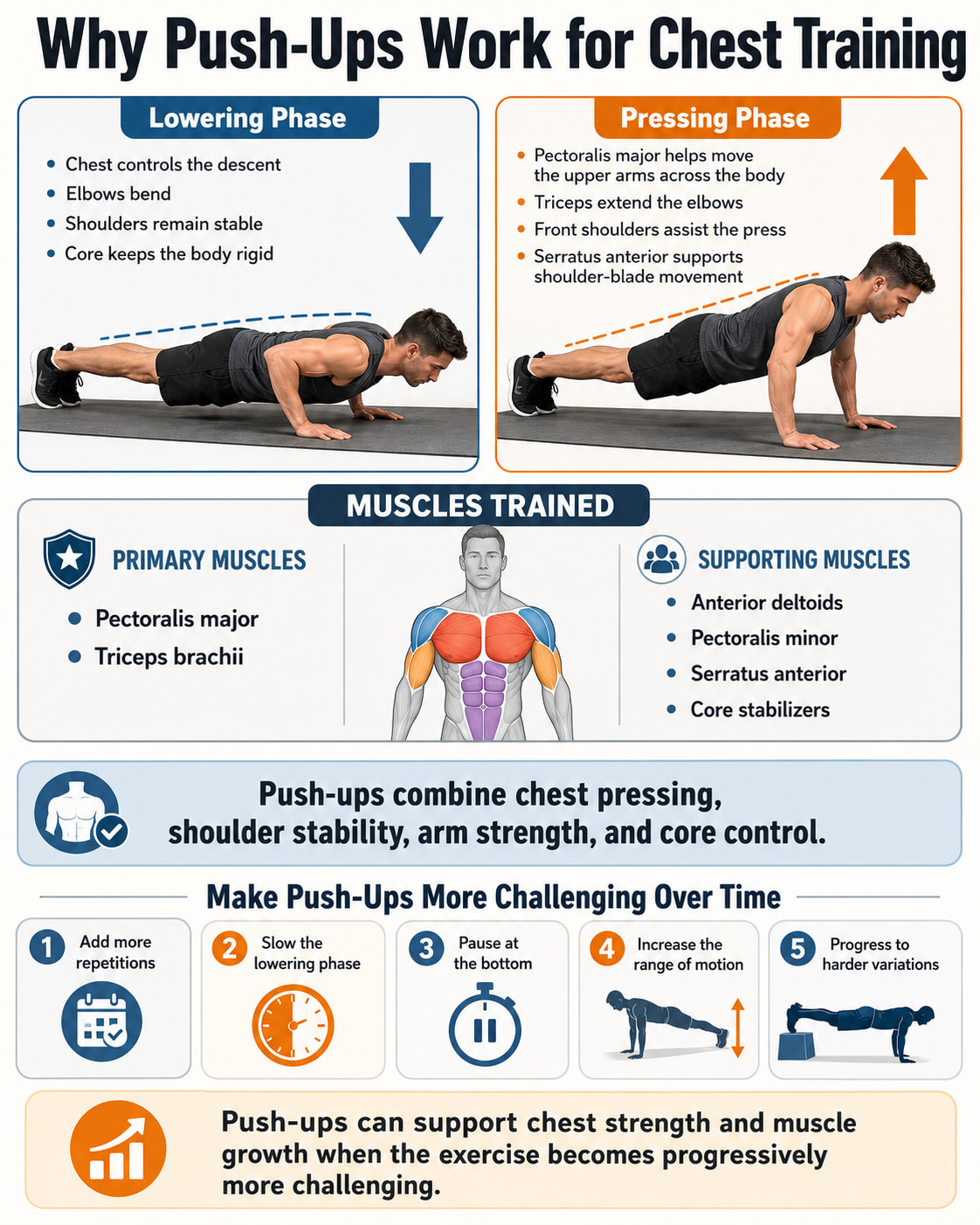
Push-ups train the chest mainly through horizontal pressing. As you lower your body, your chest helps control the descent. As you press back up, the pectoralis major helps bring the upper arms across the body while the triceps extend the elbows and the shoulders assist the press.
NASM describes the push-up as a fundamental upper-body compound exercise that develops chest strength, shoulder stability, and core endurance. It lists the pectoralis major and triceps brachii as primary muscles, with the anterior deltoid, pectoralis minor, serratus anterior, and core stabilizers also involved.
The key is progression. Push-ups can support chest strength and muscle growth, but only if they become challenging over time. That can mean adding reps, slowing the tempo, pausing at the bottom, increasing range of motion, or moving to harder variations.
9 Best Push Ups for Chest
Push-ups are one of the best no-equipment exercises for building chest strength at home. These 9 variations help target your chest from beginner to advanced levels while also training your shoulders, triceps, and core.
1. Incline Push-Up
The incline push-up is one of the best push ups for chest if you are still building strength. Because your hands are elevated, your body carries less load than it does during a full floor push-up.
Why it works: The incline makes the movement easier while still training the same basic push-up pattern. It helps you practice chest control, elbow angle, and core tension without struggling through sloppy reps.
Muscles worked: Chest, triceps, front shoulders, serratus anterior, and core stabilizers.
How to do it:
- Place your hands on a sturdy bench, table edge, countertop, or step.
- Walk your feet back until your body forms a straight line.
- Brace your core and squeeze your glutes lightly.
- Lower your chest toward the elevated surface.
- Keep your elbows angled slightly back, not straight out to the sides.
- Press back up until your arms are straight.
- Repeat for controlled reps.
Trainer Tip: The lower the surface, the harder the exercise. Start high, then gradually move your hands closer to the floor as you get stronger.
2. Knee Push-Up
The knee push-up is another useful beginner variation. It reduces the amount of bodyweight you press while still letting you practice chest-focused pushing from the floor.
Why it works: Knee push-ups make the movement more manageable, which helps you build strength and confidence. They are better than forcing full push-ups with sagging hips, half reps, or poor shoulder control.
Muscles worked: Chest, triceps, front shoulders, serratus anterior, and core.
How to do it:
- Start on your hands and knees.
- Place your hands slightly wider than shoulder-width.
- Move your knees back so your body forms a straight line from shoulders to knees.
- Brace your core and keep your hips from dropping.
- Lower your chest toward the floor.
- Press back up with control.
- Keep each rep smooth and consistent.
Trainer Tip: Do not let your hips stay behind your shoulders like a kneeling plank. Shift forward so your chest actually moves between your hands.
3. Standard Push-Up
The standard push-up is the foundation of chest push-up training. Before chasing advanced variations, you should be able to perform clean standard push-ups with a full range of motion.
Why it works: Standard push-ups train the chest, shoulders, triceps, and core together. They are simple, scalable, and easy to include in home workouts.
Muscles worked: Pectoralis major, triceps, anterior deltoids, serratus anterior, and core stabilizers.
How to do it:
- Start in a high plank with your hands slightly wider than shoulder-width.
- Keep your body straight from head to heels.
- Brace your abs, glutes, and thighs.
- Lower your chest toward the floor.
- Keep your elbows angled back slightly.
- Pause briefly near the bottom if you can control it.
- Press back up until your arms are straight.
Trainer Tip: Think “chest to floor, body as one piece.” If your hips drop before your chest moves, the set is too hard or you are too fatigued.
4. Wide Push-Up
The wide push-up uses a wider hand position than a standard push-up. Many people feel this version more in the chest, but it should be done carefully because too much width may irritate the shoulders.
Why it works: A wider hand position can increase the chest challenge for some people because the arms move through a wider pressing path. However, wider is not always better. You still need shoulder control and a pain-free range of motion.
Muscles worked: Chest, front shoulders, triceps, serratus anterior, and core.
How to do it:
- Start in a high plank.
- Place your hands wider than shoulder-width.
- Keep your fingers pointing forward or slightly outward.
- Brace your core and keep your body straight.
- Lower your chest between your hands.
- Stop before your shoulders feel pinched or strained.
- Press back up with control.
Trainer Tip: Do not place your hands extremely wide. A moderate wide position is usually safer and more effective than an exaggerated one.
5. Slow Tempo Push-Up
The slow tempo push-up is a simple way to make push-ups harder without equipment. Instead of rushing reps, you slow down the lowering phase and make your muscles work longer.
Why it works: Slowing the rep increases the amount of time your chest, shoulders, triceps, and core must stay active. This can make even basic push-ups feel more challenging.
Muscles worked: Chest, triceps, front shoulders, serratus anterior, and core.
How to do it:
- Start in a standard push-up position.
- Brace your body from head to heels.
- Lower for 3 to 5 seconds.
- Keep your elbows controlled.
- Stop near the bottom without relaxing.
- Press back up smoothly.
- Reset your body line before the next rep.
Trainer Tip: Use fewer reps than usual. A set of 6 slow push-ups can be harder than 15 rushed reps.
6. Paused Push-Up
The paused push-up adds a short hold at the bottom of the movement. This removes momentum and makes your chest work harder from a controlled position.
Why it works: Many people bounce out of the bottom of a push-up. Pausing forces you to own the hardest part of the rep.
Muscles worked: Chest, triceps, front shoulders, serratus anterior, and core.
How to do it:
- Start in a strong high plank.
- Lower your chest toward the floor.
- Pause for 1 to 2 seconds near the bottom.
- Keep your body tight during the pause.
- Press up without letting your hips sag.
- Lock in your plank before starting the next rep.
Trainer Tip: Keep the pause active. Do not rest your chest on the floor unless you are doing a separate dead-stop push-up variation.
7. Deficit Push-Up
The deficit push-up increases the range of motion by placing your hands on slightly elevated surfaces, such as sturdy push-up handles, yoga blocks, or low steps.
Why it works: A deeper range of motion can increase the challenge on the chest, but only if your shoulders tolerate it well. This is not the first variation beginners should use.
Muscles worked: Chest, triceps, front shoulders, serratus anterior, and core.
How to do it:
- Place each hand on a sturdy raised surface.
- Set your body in a straight high plank.
- Brace your core and glutes.
- Lower your chest slightly below hand level if comfortable.
- Keep your shoulders controlled.
- Press back up through the hands.
- Stop if you feel shoulder pinching or sharp discomfort.
Trainer Tip: More depth is not always better. Use only the range of motion you can control without shoulder discomfort.
8. Decline Push-Up
The decline push-up raises your feet, making the exercise harder. It shifts more load toward the upper chest and shoulders compared with a standard push-up.
Why it works: Elevating the feet increases the difficulty because more bodyweight shifts toward the hands. It also changes the pressing angle, which can make the upper chest and shoulders work harder.
Muscles worked: Upper chest, overall chest, front shoulders, triceps, serratus anterior, and core.
How to do it:
- Place your feet on a sturdy step, bench, or low chair.
- Put your hands on the floor slightly wider than shoulder-width.
- Keep your body straight from head to heels.
- Brace your core firmly.
- Lower your chest toward the floor.
- Press back up without letting your hips sag.
- Keep the reps controlled.
Trainer Tip: Start with a low elevation. A very high foot position may turn the movement into more of a shoulder-dominant push-up.
9. Archer Push-Up
The archer push-up is an advanced variation that shifts more load to one side at a time. It is one of the hardest no-equipment push ups for chest strength.
Why it works: Archer push-ups increase the load on one arm while the other arm assists. This creates a harder chest and triceps challenge without adding weights.
Muscles worked: Chest, triceps, front shoulders, serratus anterior, core, and side-to-side stabilizers.
How to do it:
- Start in a wide push-up position.
- Keep your body straight and braced.
- Shift your chest toward one hand as you lower.
- Let the opposite arm stay straighter as support.
- Press back to the center.
- Repeat on the other side.
- Keep the movement slow and controlled.
Trainer Tip: Do not rush into this variation. Build strong standard, wide, paused, and decline push-ups first.
How to Feel Push-Ups More in Your Chest
If you only feel push-ups in your shoulders or triceps, your setup may need adjusting.
Use these form cues:
- Place your hands slightly wider than shoulder-width for most chest-focused push-ups.
- Keep your elbows about 30 to 60 degrees from your torso.
- Lower your chest between your hands, not your face.
- Keep your ribs, hips, and legs in one strong line.
- Control the lowering phase instead of dropping quickly.
- Press the floor away while keeping your chest active.
- Stop the set before your hips sag or your shoulders lose position.
The American Council on Exercise recommends bracing the core, glutes, and quadriceps during push-ups to keep the torso rigid and aligned. ACE also notes that hand and elbow position can shift emphasis between the chest, triceps, and shoulders.
Best Push-Up Workout for Chest
Here is a simple no-equipment push-up workout you can do at home.
Beginner Chest Push-Up Workout
Do this 2 to 3 times per week.
| Exercise | Sets | Reps |
|---|---|---|
| Incline Push-Up | 3 | 8 to 12 |
| Knee Push-Up | 2 | 6 to 10 |
| Slow Tempo Incline Push-Up | 2 | 6 to 8 |
| Standard Push-Up Hold or Plank | 2 | 20 to 30 seconds |
Rest 60 to 90 seconds between sets.
Intermediate Chest Push-Up Workout
Do this 2 times per week.
| Exercise | Sets | Reps |
|---|---|---|
| Standard Push-Up | 3 | 8 to 15 |
| Wide Push-Up | 3 | 8 to 12 |
| Paused Push-Up | 2 | 6 to 10 |
| Slow Tempo Push-Up | 2 | 6 to 8 |
Rest 60 to 120 seconds between sets.
Advanced Chest Push-Up Workout
Do this 1 to 2 times per week.
| Exercise | Sets | Reps |
|---|---|---|
| Decline Push-Up | 3 | 8 to 15 |
| Deficit Push-Up | 3 | 6 to 12 |
| Archer Push-Up | 3 | 4 to 8 per side |
| Paused Standard Push-Up | 2 | 6 to 10 |
Rest 90 to 150 seconds between hard sets.
The CDC recommends adults perform muscle-strengthening activities at least 2 days per week that work major muscle groups, including the chest, shoulders, and arms. Push-ups can fit into that weekly strength routine when programmed with enough recovery.
How Many Push-Ups Should You Do for Chest Growth?
For chest growth, the exact number of push-ups matters less than effort, progression, form, and recovery.
A good starting point:
- Beginners: 2 to 4 total push-up sets per workout
- Intermediate: 5 to 8 total push-up sets per workout
- Advanced: 8 to 12 total push-up sets per workout
Most working sets should stop about 1 to 3 reps before form breaks down. If you can easily do more than 25 clean reps, choose a harder variation instead of only adding more reps.
Good ways to progress:
- Add reps
- Add sets
- Slow the lowering phase
- Pause at the bottom
- Use a harder variation
- Reduce rest time slightly
- Improve range of motion
Common Push-Up Mistakes That Limit Chest Results
Letting the hips sag
This usually means your core is losing tension. Keep your ribs and pelvis stacked, and squeeze your glutes lightly.
Flaring the elbows too wide
A little elbow angle is normal, but extreme flaring may put more stress on the shoulders. NASM lists elbows flaring too wide as a common push-up mistake that can increase shoulder stress and reduce chest activation.
Doing half reps
If every rep is shallow, your chest may not get enough useful range of motion. Lower with control as far as you can while keeping good alignment.
Rushing every rep
Fast reps are not always bad, but uncontrolled reps often reduce muscle tension. Slow down and make each rep intentional.
Choosing variations that are too hard
If your form breaks down after two reps, the variation is too advanced for your current strength level. Use an incline or knee version and build up.
Best Weekly Schedule for Chest Push-Ups
Here is a simple weekly plan.
| Day | Workout Focus |
|---|---|
| Monday | Chest push-up workout |
| Tuesday | Legs, walking, or rest |
| Wednesday | Back, core, or light cardio |
| Thursday | Chest push-up workout |
| Friday | Legs or full-body training |
| Saturday | Optional light push-up practice |
| Sunday | Rest or easy activity |
Avoid training hard chest push-ups every day if your goal is strength or muscle growth. Your muscles need recovery time to adapt.
Who Should Modify Push-Ups?
Modify push-ups if you feel pain, lose alignment, or cannot control the movement.
Use an easier variation if you have:
- Wrist discomfort
- Shoulder irritation
- Trouble keeping your core tight
- Very limited upper-body strength
- Difficulty lowering under control
Stop the exercise and get qualified guidance if you feel sharp pain, unusual chest pain, dizziness, or pain that gets worse after training.
FAQs About the Best Push Ups for Chest
What push-up is best for chest?
The standard push-up is the best foundation for chest training. Wide push-ups, slow tempo push-ups, paused push-ups, deficit push-ups, and decline push-ups can make the chest work harder once your form is solid.
Can push-ups build chest muscle?
Yes, push-ups can help build chest muscle when they are challenging enough and progressed over time. For best results, use good form, train close to fatigue, recover well, and eat enough protein and total calories to support your goal.
Are wide push-ups better for chest?
Wide push-ups may feel more chest-focused for many people, but they are not automatically better. If your hands are too wide or your shoulders feel strained, use a moderate hand width instead.
Are diamond push-ups good for chest?
Diamond push-ups work the chest, but they usually emphasize the triceps more than standard or wide push-ups. They can be included as a secondary push-up variation.
How often should I do push-ups for chest?
Most people can train push-ups 2 to 3 days per week. Harder sessions should have rest days between them so your chest, shoulders, and triceps can recover.
Why do I feel push-ups more in my shoulders than my chest?
You may be leaning too far forward, flaring your elbows, using a hand position that is too narrow, or losing chest control at the bottom. Try standard or slightly wide push-ups with slower reps.
Can beginners do chest push-ups at home?
Yes. Beginners can start with incline push-ups or knee push-ups. These variations build strength safely before progressing to full floor push-ups.
Conclusion
The best push ups for chest are the ones you can perform with strong form, enough range of motion, and steady progression. Start with incline, knee, and standard push-ups if you are building your base. Then use wide, slow tempo, paused, deficit, decline, and archer push-ups to make your home chest workouts more challenging.
For the best results, train push-ups 2 to 3 times per week, keep your reps controlled, and progress gradually. Choose the variation that challenges your chest without causing pain or breaking your form.
References
- American Council on Exercise: Push-Up Exercise Library
- NASM: Push-Up Exercise Guide
- CDC: Adult Physical Activity Guidelines
- Physical Activity Guidelines for Americans
- PubMed: Comparison of Muscle Activation Using Various Hand Positions During the Push-Up Exercise
- PubMed: Shoulder Electromyography Activity During Push-Up Variations
- PubMed Central: Shoulder Electromyography Activity During Push-Up Variations
- WHO: Physical Activity Guidance