
A normal alkaline phosphatase level for many adults is approximately 35 to 129 U/L, but the exact range depends on your age, sex, testing method, and laboratory. The most important number is the reference range printed next to the result on your own laboratory report.
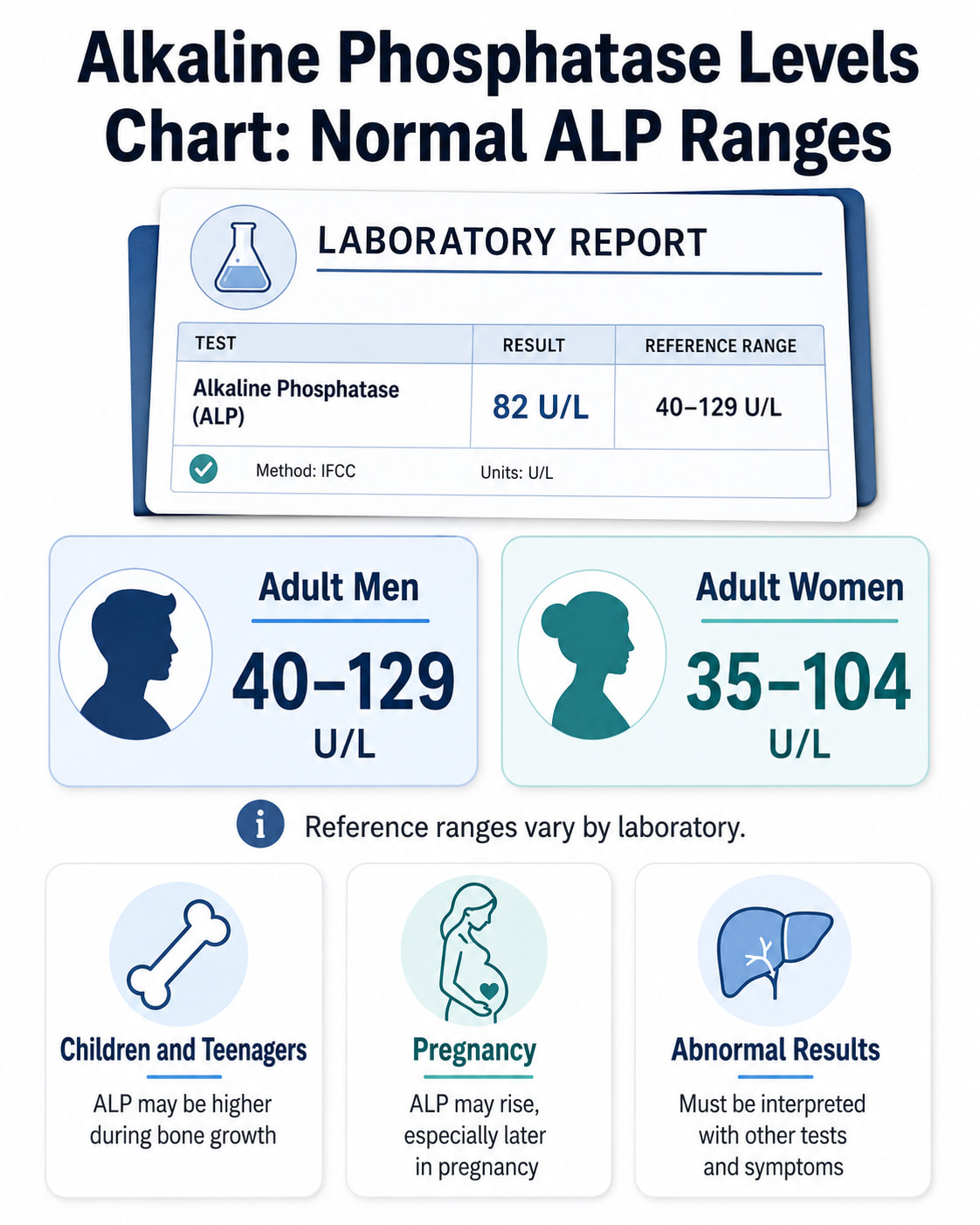
This alkaline phosphatase levels chart provides age- and sex-specific examples from Mayo Clinic Laboratories. Children and teenagers normally have higher ALP levels because their bones are growing. Levels may also rise during pregnancy.
An abnormal result does not provide a diagnosis by itself. Doctors usually interpret ALP alongside symptoms, medical history, and other blood tests to determine whether the result is more likely related to the liver, bile ducts, bones, or another source.
What Is Alkaline Phosphatase?
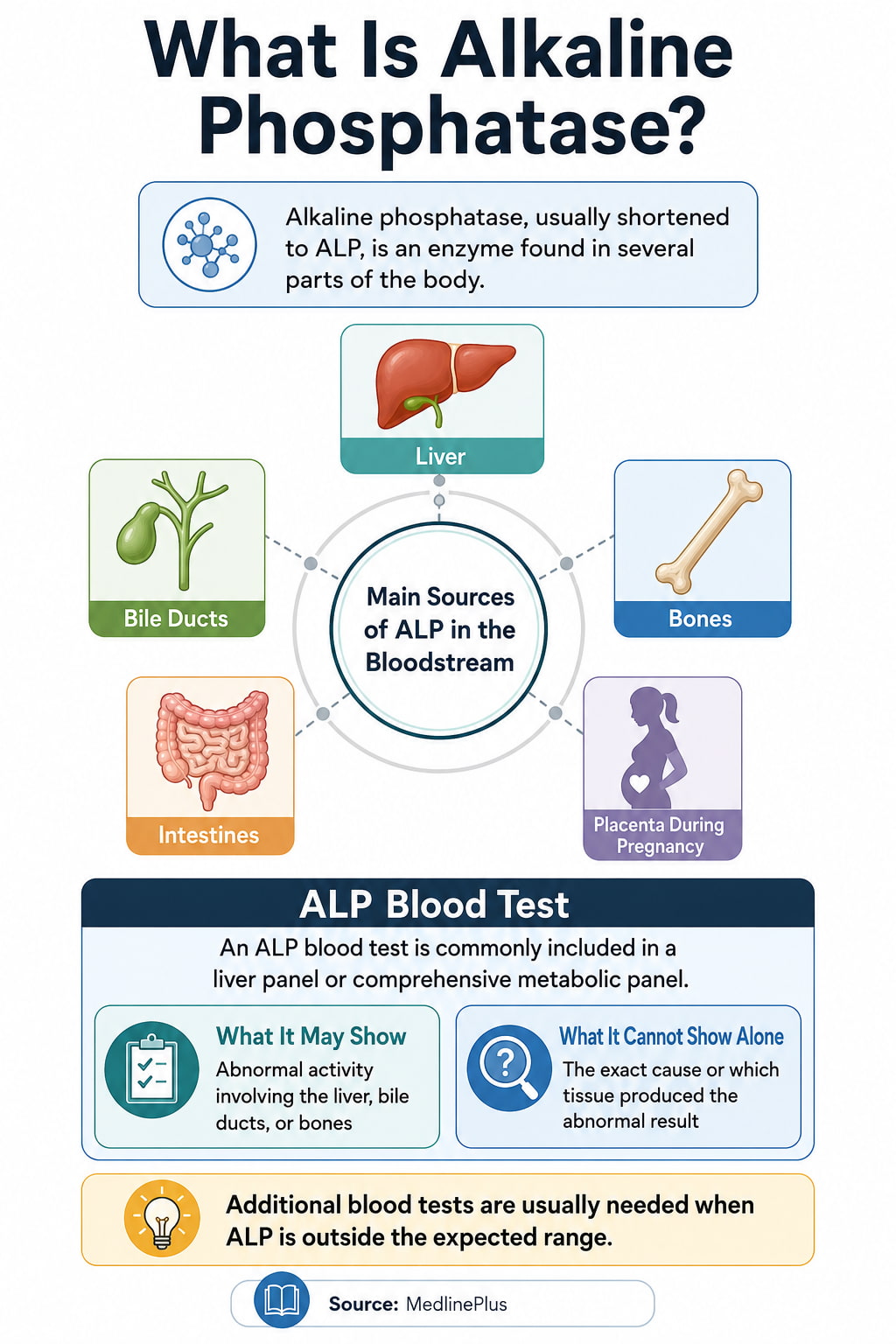
Alkaline phosphatase, usually shortened to ALP, is an enzyme found in several parts of the body. The largest amounts in the bloodstream generally come from the:
- Liver
- Bile ducts
- Bones
- Intestines
- Placenta during pregnancy
An ALP blood test is commonly included in a liver panel or comprehensive metabolic panel. It may help identify abnormal activity involving the liver, bile ducts, or bones, but it cannot show the exact cause or tissue source by itself.
According to MedlinePlus, additional blood tests are usually needed when ALP is outside the expected range.
Alkaline Phosphatase Levels Chart by Age and Sex
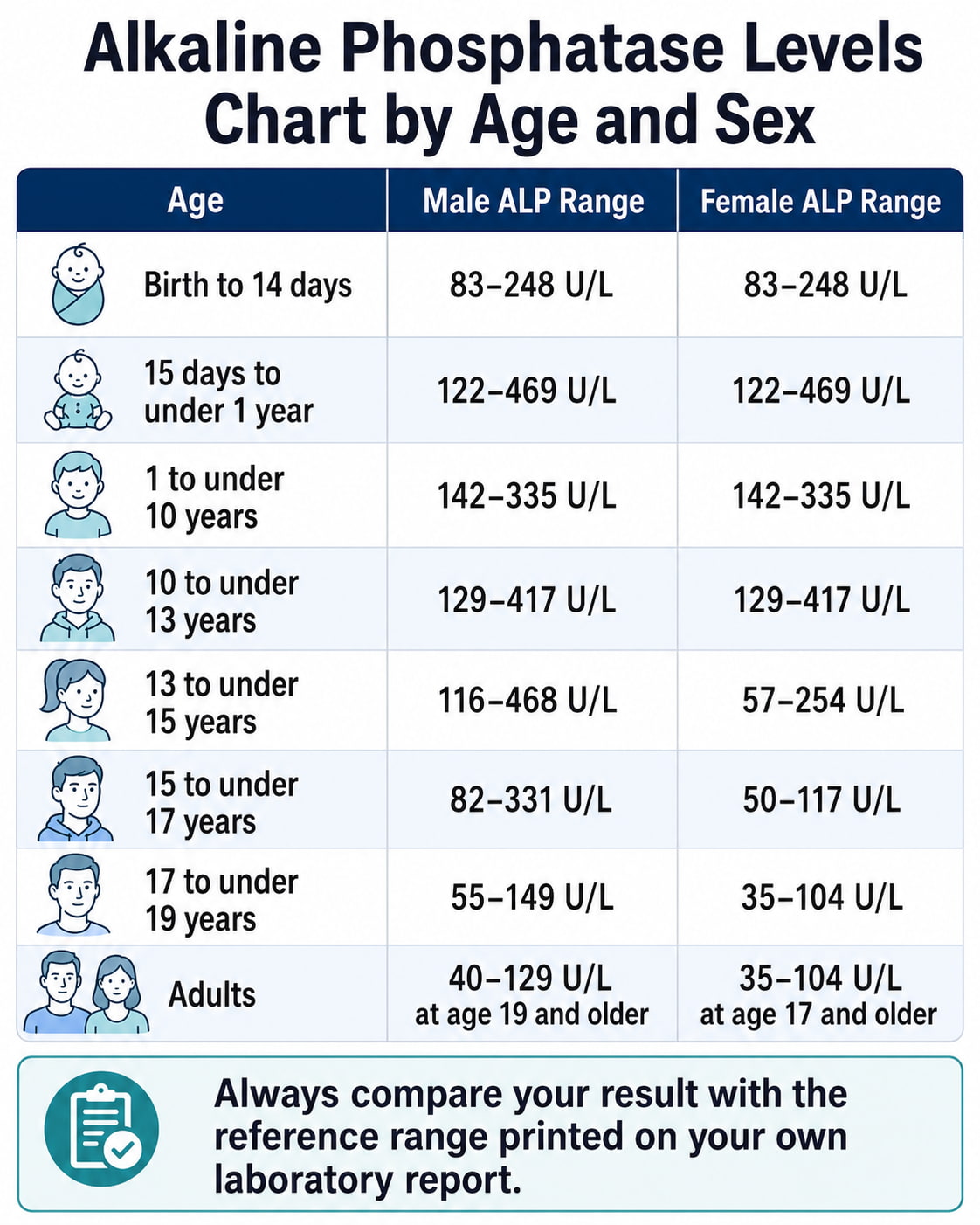
The following alkaline phosphatase levels chart uses current reference intervals from Mayo Clinic Laboratories. These values are useful examples, but they are not universal cutoffs.
| Age | Male ALP Range | Female ALP Range |
|---|---|---|
| Birth to 14 days | 83–248 U/L | 83–248 U/L |
| 15 days to under 1 year | 122–469 U/L | 122–469 U/L |
| 1 to under 10 years | 142–335 U/L | 142–335 U/L |
| 10 to under 13 years | 129–417 U/L | 129–417 U/L |
| 13 to under 15 years | 116–468 U/L | 57–254 U/L |
| 15 to under 17 years | 82–331 U/L | 50–117 U/L |
| 17 to under 19 years | 55–149 U/L | 35–104 U/L |
| Adults | 40–129 U/L at age 19 and older | 35–104 U/L at age 17 and older |
Reference intervals vary because laboratories may use different instruments, testing methods, and patient populations. Always use the range displayed on your test report when deciding whether your result is high or low.
Normal ALP Range for Adult Men
Using the Mayo Clinic reference interval, the normal ALP range for males age 19 and older is:
40–129 U/L
A result above 129 U/L would be flagged as high under this specific reference interval. Another laboratory may use a slightly different upper limit.
Normal ALP Range for Adult Women
Using the same source, the normal ALP range for females age 17 and older is:
35–104 U/L
Adult women may therefore receive a high flag at a value that could remain within range for an adult man. This does not automatically mean that the woman has a medical condition; it means the result should be interpreted using the appropriate reference interval.
Why ALP Levels Are Higher in Children
Children and teenagers usually have higher ALP levels than adults because ALP is produced by osteoblasts, the cells involved in forming new bone.
Levels may rise substantially during growth spurts, especially around puberty. An ALP result that is considered high for an adult may be completely expected for a growing child.
Pediatric results should always be compared with a reference range that accounts for the child’s age and sex.
Normal ALP Levels During Pregnancy
ALP commonly rises during pregnancy, particularly in the third trimester. This increase is partly caused by ALP produced by the placenta and does not necessarily indicate liver or bone disease.
However, pregnancy does not make every elevated result harmless. Symptoms such as jaundice, severe itching, abdominal pain, dark urine, pale stools, nausea, or vomiting should be discussed promptly with a maternity care professional.
ALP alone is not a reliable test for diagnosing a pregnancy-related liver condition. Other tests, including bile acids, bilirubin, ALT, and AST, may be more informative depending on the situation.
How to Read an ALP Blood Test Result
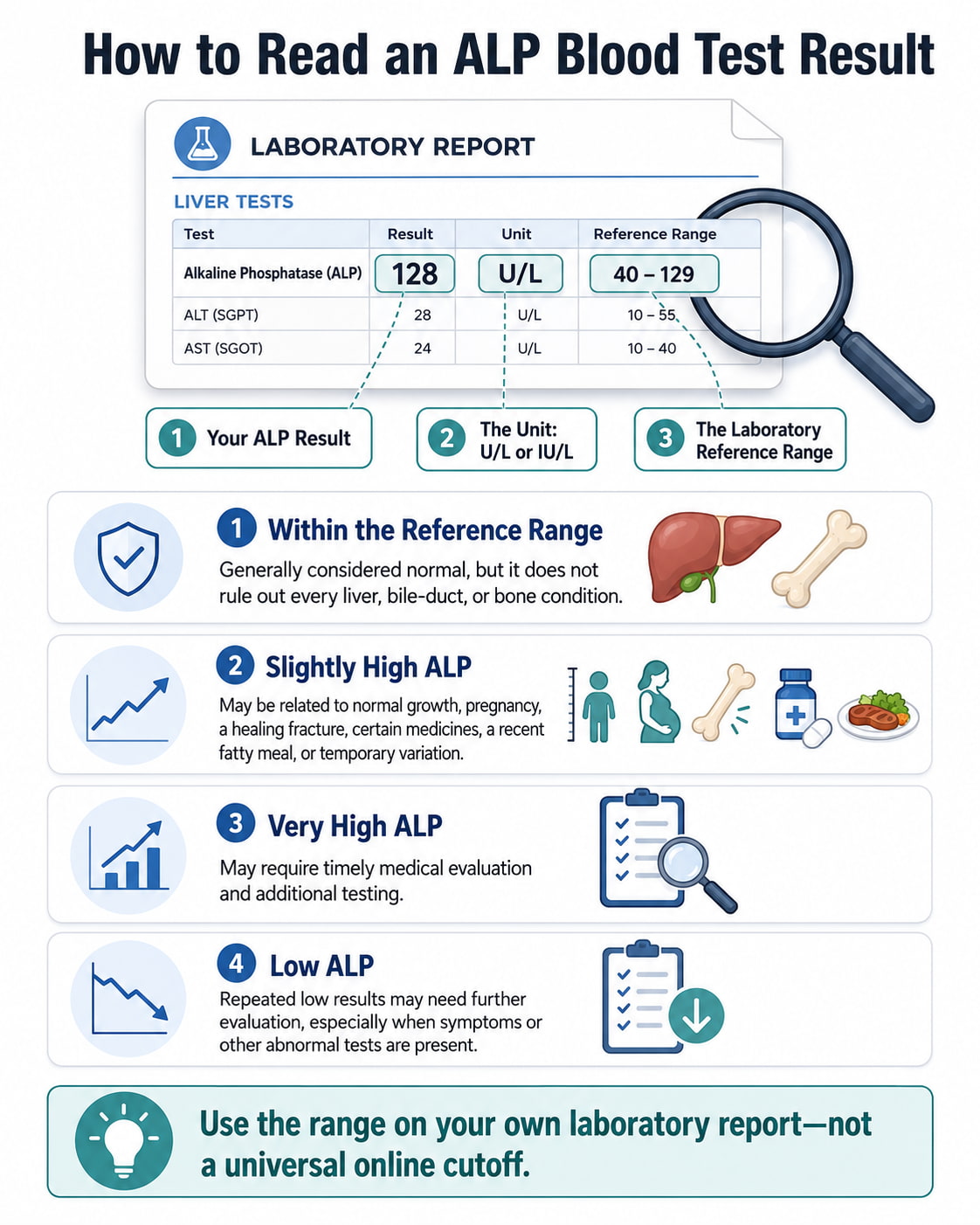
Begin by locating three items on your report:
- Your ALP result
- The unit, usually U/L or IU/L
- The laboratory’s reference range
Do not compare your result only with a chart found online. Your laboratory’s range should take priority because it reflects the method used to test your blood.
Within the Reference Range
A result within the stated range is generally considered normal. However, a normal ALP level does not rule out every liver, bile-duct, or bone condition.
Doctors may still investigate symptoms or abnormalities in other test results.
Slightly High ALP
A small increase may be temporary or caused by factors such as:
- Normal bone growth
- Pregnancy
- A recent fatty meal
- A healing fracture
- Certain medicines
- Normal biological or laboratory variation
A 2026 clinical review in the NCBI Bookshelf describes an elevation of less than 50% above the laboratory’s upper limit as mild. Depending on symptoms and other results, a clinician may repeat the test rather than immediately ordering an extensive evaluation.
For example, when the upper limit is 120 U/L:
- An ALP of 130 U/L is about 1.08 times the upper limit.
- An ALP of 180 U/L is 1.5 times the upper limit.
- An ALP of 480 U/L is four times the upper limit.
These comparisons describe the degree of elevation. They do not determine the cause.
Very High ALP
Mayo Clinic describes an ALP result above four times the upper reference limit as very high. Marked increases can occur with significant bile-duct obstruction and some liver or bone conditions, but the number alone cannot confirm a diagnosis.
A very high result usually requires timely medical evaluation and additional testing.
Low ALP
Low ALP is less common than high ALP. One isolated low result may be caused by temporary variation, but repeated low results may require further evaluation.
The seriousness of a low result depends on how far it is below range, whether it remains low, and whether the person has symptoms or other abnormal laboratory findings.
What Causes High Alkaline Phosphatase Levels?
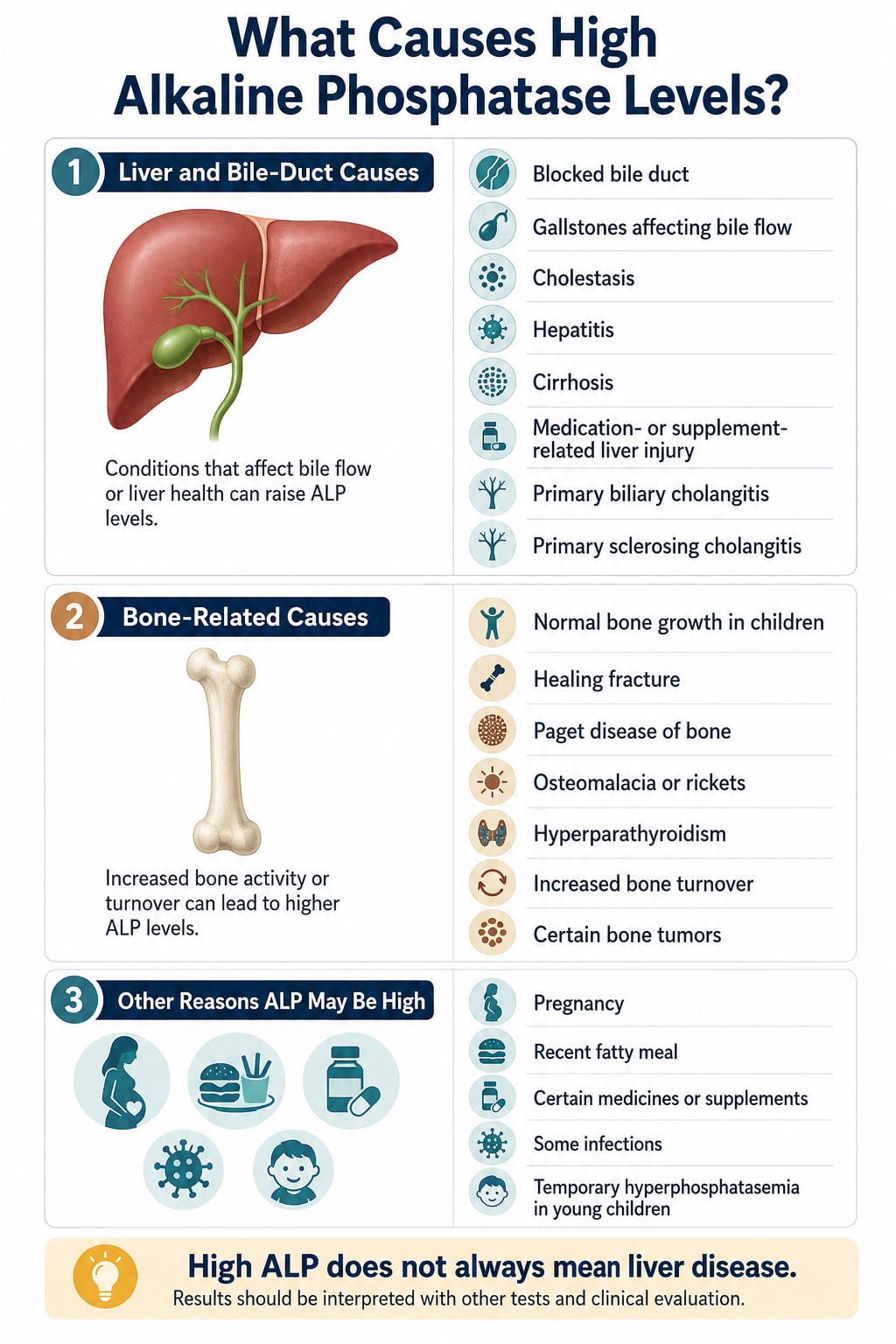
High ALP levels most often come from increased activity in the liver, bile ducts, or bones. Normal growth and pregnancy can also increase the result.
Liver and Bile-Duct Causes
Possible liver or bile-duct causes include:
- A blocked bile duct
- Gallstones affecting bile flow
- Cholestasis
- Primary biliary cholangitis
- Primary sclerosing cholangitis
- Hepatitis
- Cirrhosis
- Medication- or supplement-related liver injury
- Infiltrative liver conditions
- Cancer in or spreading to the liver
- A pancreatic mass that blocks a bile duct
ALP may rise when bile cannot flow normally through the liver and bile ducts. The increase can be particularly marked when an extrahepatic bile duct is substantially obstructed.
Bone-Related Causes
Possible bone-related causes include:
- Normal bone growth in children
- A healing fracture
- Paget disease of bone
- Osteomalacia
- Rickets
- Hyperparathyroidism
- Increased bone turnover
- Certain bone or bone-marrow cancers
- Cancer that has spread to bone
Vitamin D deficiency may contribute to elevated ALP when it leads to impaired bone mineralization, such as osteomalacia in adults or rickets in children. A vitamin D test and other bone-related blood tests may be needed to evaluate this possibility.
Other Reasons ALP May Be High
A high result may also be associated with:
- Pregnancy
- Recent consumption of a fatty meal
- Certain medicines or supplements
- Some infections
- Inflammatory bowel disease
- Congestive heart failure
- Sepsis
- Temporary hyperphosphatasemia in young children
Temporary hyperphosphatasemia can cause a substantial but short-lived increase in ALP in an otherwise well child. A pediatric healthcare professional should still evaluate the result before it is assumed to be harmless.
What Causes Low Alkaline Phosphatase Levels?
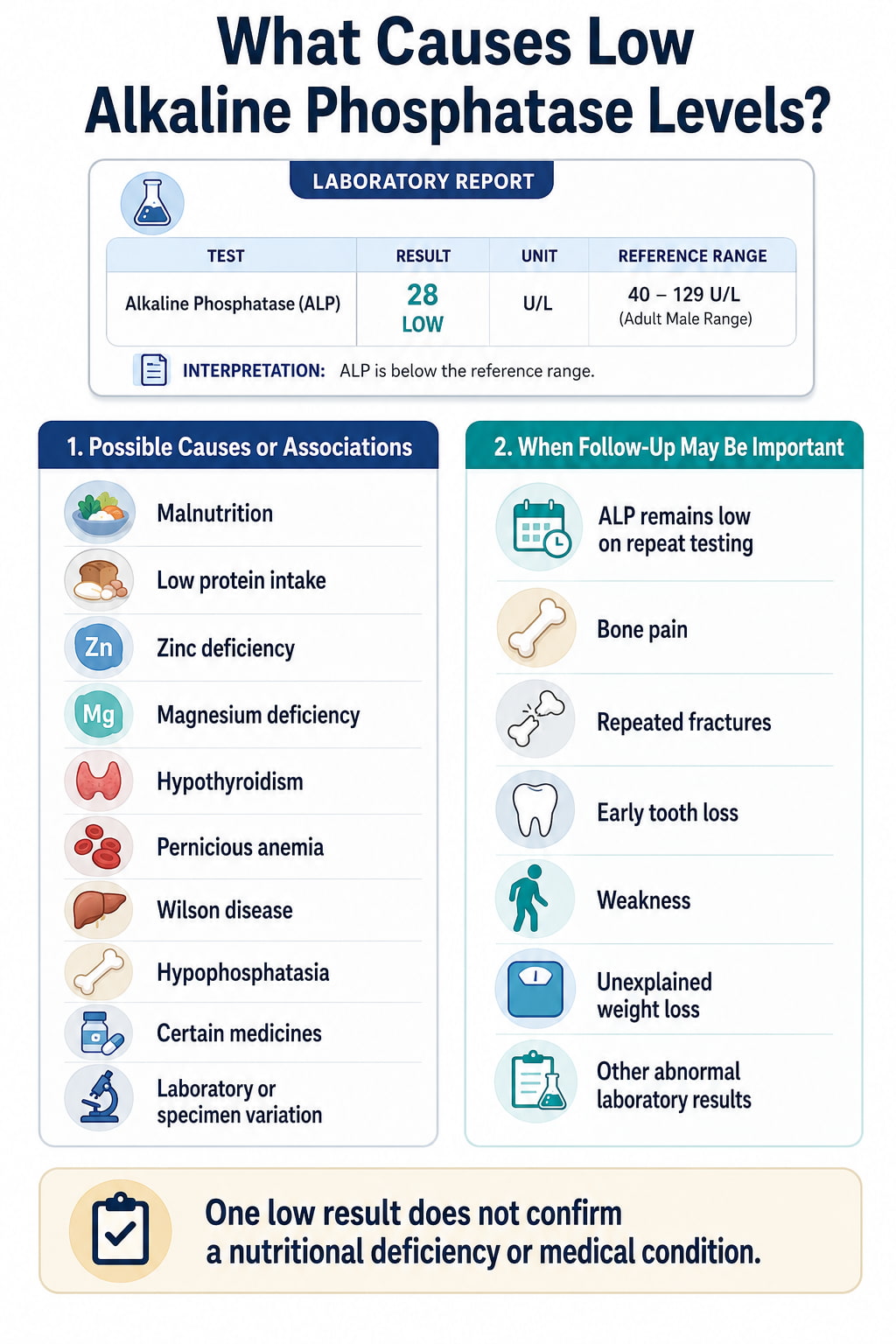
Possible causes or associations of low ALP include:
- Malnutrition
- Low protein intake
- Zinc deficiency
- Magnesium deficiency
- Hypothyroidism
- Pernicious anemia
- Wilson disease
- Hypophosphatasia
- Certain medicines
- Laboratory or specimen variation
Hypophosphatasia is a rare inherited condition that affects bone and tooth mineralization. Persistently low ALP, especially with repeated fractures, bone pain, early tooth loss, or a family history of the condition, may lead a clinician to consider additional testing.
A low ALP result does not confirm a nutritional deficiency or genetic condition. The result must be evaluated with symptoms, diet, medical history, and other blood tests.
How Doctors Determine Whether ALP Comes From the Liver or Bones
Total ALP cannot show exactly where the enzyme came from. Doctors may order additional tests to identify the most likely source.
GGT Test
Gamma-glutamyl transferase, or GGT, is commonly used alongside ALP.
A general interpretation is:
| Test Pattern | More Likely Source |
|---|---|
| High ALP and high GGT | Liver or bile ducts |
| High ALP and normal GGT | Bone or another non-liver source |
| High ALP with abnormal bilirubin, ALT, or AST | Further liver evaluation may be needed |
An elevated GGT supports a hepatobiliary source, but it does not identify the specific liver or bile-duct condition.
ALP Isoenzyme Test
An ALP isoenzyme test separates different forms of alkaline phosphatase. It may estimate how much ALP is coming from the:
- Liver
- Bones
- Intestines
- Placenta
This test can be helpful when routine liver blood tests do not clearly identify the source, although it may not be available in every laboratory.
Other Possible Tests
Depending on the result and symptoms, additional evaluation may include:
- Repeat ALP testing
- ALT and AST
- Bilirubin
- GGT
- 5′-nucleotidase
- Calcium and phosphorus
- Vitamin D
- Parathyroid hormone
- Thyroid tests
- Complete blood count
- Abdominal ultrasound
- CT or MRI imaging
- Bone imaging
When a liver source is suspected, an abdominal ultrasound is often used to look for widened or blocked bile ducts. When a bone source is suspected, testing is selected according to symptoms and the person’s medical history.
Do You Need to Fast Before an ALP Test?
Follow the preparation instructions provided by your clinician or laboratory.
An ALP test is often ordered as part of a group of blood tests that may require fasting for several hours. A fatty meal may temporarily increase the intestinal form of ALP, particularly in some people with blood types O or B.
Before testing:
- Ask whether fasting is required.
- Tell your healthcare professional about medicines and supplements.
- Do not stop prescribed medicine unless instructed.
- Mention whether you were fasting when discussing an unexpected result.
The NCBI clinical review recommends fasting for at least eight hours when accurate assessment of intestinal ALP contribution is important. Local laboratory instructions may differ.
When Should You Contact a Healthcare Professional?
Arrange medical follow-up when:
- Your ALP is outside the laboratory’s range.
- The result remains abnormal on repeat testing.
- ALP is several times the upper limit.
- Other liver or bone tests are also abnormal.
- You have persistent bone pain or repeated fractures.
- You are pregnant and have unexplained itching or other symptoms.
- You recently started a new medicine or supplement.
- You have a history of liver, gallbladder, bile-duct, or bone disease.
Seek urgent medical care for an abnormal ALP result accompanied by:
- Yellow skin or eyes
- Fever or chills
- Severe pain in the upper-right abdomen
- Persistent vomiting
- Dark urine and unusually pale stools
- Confusion, unusual sleepiness, or fainting
Fever, jaundice, and upper-right abdominal pain can occur with a serious bile-duct infection or obstruction and should not be managed through online advice alone. The National Institute of Diabetes and Digestive and Kidney Diseases identifies fever, chills, worsening jaundice, and upper-right abdominal pain as possible signs of a bile-duct infection.
Frequently Asked Questions
Is an ALP level of 150 high?
It depends on the laboratory range, age, and sex.
Using Mayo Clinic Laboratories’ adult ranges, 150 U/L would be above the upper limit for both adult men and women. However, it may be within the expected range for a growing child or teenager.
The result should be interpreted using the reference interval on the actual laboratory report.
Does high ALP always mean liver disease?
No. High ALP may come from the liver, bile ducts, bones, intestines, or placenta.
Children, teenagers, pregnant patients, and people with healing fractures may have increased ALP without primary liver disease. Tests such as GGT, bilirubin, ALT, AST, and ALP isoenzymes can help identify the source.
Can vitamin D deficiency cause high ALP?
Vitamin D deficiency may raise ALP when it affects bone mineralization and contributes to osteomalacia or rickets. However, not everyone with low vitamin D will have elevated ALP.
Calcium, phosphorus, vitamin D, and parathyroid hormone levels may be checked when a bone-related cause is suspected.
Should I worry about a low ALP result?
A single mildly low result is not always serious. Persistently low ALP may be associated with malnutrition, zinc or magnesium deficiency, hypothyroidism, pernicious anemia, Wilson disease, or hypophosphatasia.
Discuss repeated low results with a healthcare professional, particularly when you also have bone pain, fractures, weakness, weight loss, or dental problems.
Can food affect ALP levels?
Yes. Eating a fatty meal before testing may cause a small temporary increase in the intestinal form of ALP.
Follow your laboratory’s fasting instructions and tell your clinician whether you ate before the test.
How long does it take for ALP levels to return to normal?
The timeline depends on the cause. ALP may improve as a temporary trigger resolves, a fracture heals, or normal bile flow returns.
Because circulating ALP has a relatively long half-life, levels may remain elevated for several days after a bile-duct obstruction has resolved. Doctors usually focus on the trend across repeated tests rather than one isolated result.
Is ALP a liver function test?
ALP is commonly included in a liver blood-test panel, but it does not directly measure how well the liver performs all of its functions.
It is mainly a marker that can increase with bile-duct or bone activity. Albumin, bilirubin, and clotting tests provide different information about liver function.
Conclusion
An alkaline phosphatase levels chart can help you understand whether a result is within an expected range, but it cannot diagnose the cause of an abnormal level.
For many adults, example reference ranges are 40–129 U/L for men and 35–104 U/L for women. Children, teenagers, and pregnant patients may normally have higher values. Because laboratories use different ranges, always compare your result with the interval printed on your own report.
High or low ALP should be interpreted with your symptoms, age, medical history, other blood tests, and changes over time. Discuss an unexpected or persistent result with a qualified healthcare professional rather than trying to diagnose it from the number alone.
This content is for informational purposes only and not medical advice.