
A typical serum albumin level is about 3.5 to 5.0 g/dL, although the exact reference range can vary by laboratory. An albumin level below the lab’s range is considered low, while a result above the upper limit is considered high.
An albumin levels chart can help you understand where your result falls, but it cannot explain the cause by itself. Healthcare professionals interpret albumin alongside your symptoms, medical history, hydration status, medications, and other liver, kidney, and inflammation-related tests.
Albumin Levels Chart
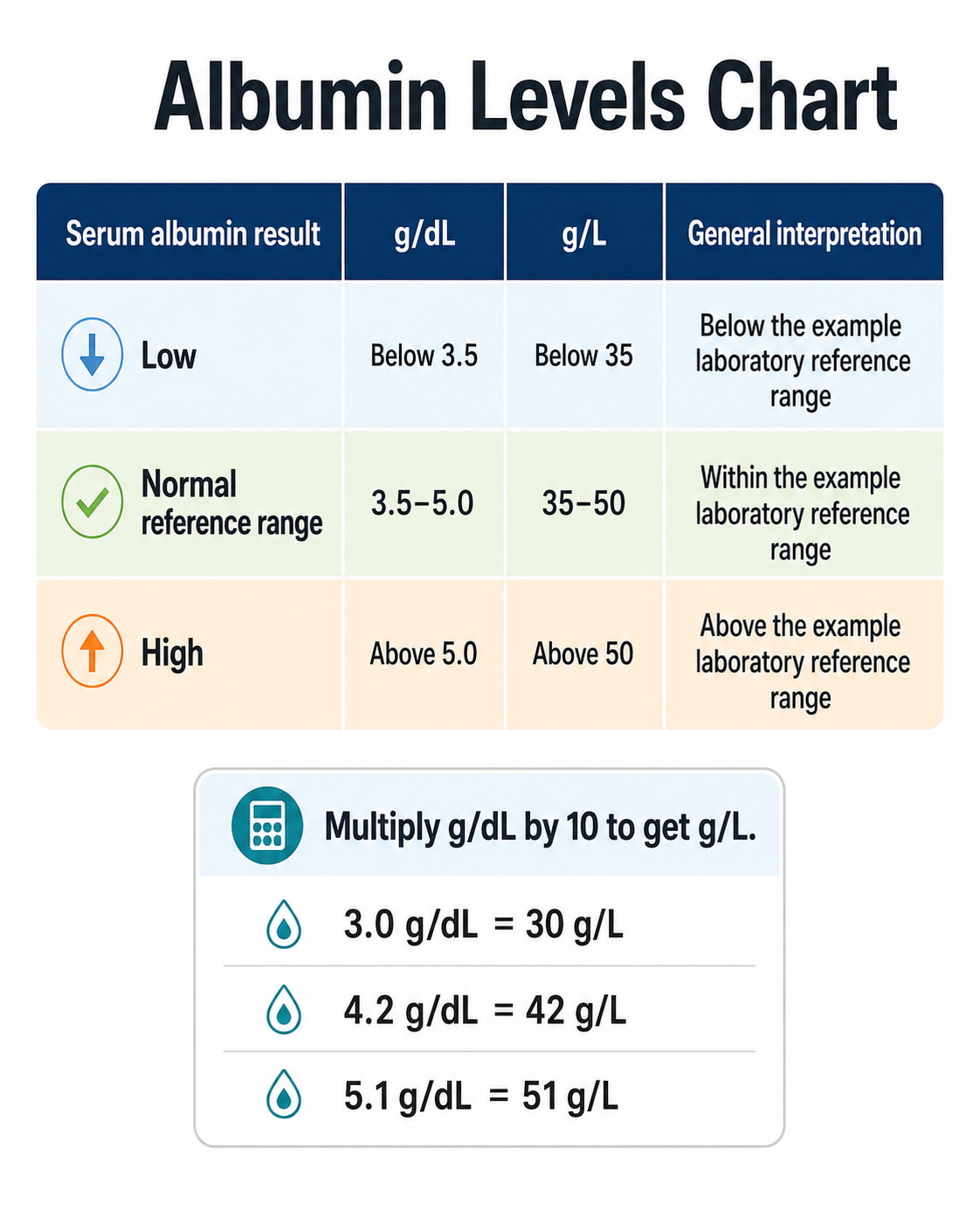
The following chart uses the serum albumin reference interval published by Mayo Clinic Laboratories for people age 12 months and older.
| Serum albumin result | g/dL | g/L | General interpretation |
|---|---|---|---|
| Low | Below 3.5 | Below 35 | Below the example laboratory reference range |
| Normal reference range | 3.5–5.0 | 35–50 | Within the example laboratory reference range |
| High | Above 5.0 | Above 50 | Above the example laboratory reference range |
The Mayo Clinic Laboratories reference interval is 3.5–5.0 g/dL for people age 12 months and older. It does not provide an established interval for infants younger than 12 months on this specific test page.
Reference ranges are not universal. For example, MedlinePlus lists a common range of 3.4–5.4 g/dL. Always compare your result with the range printed on your own laboratory report.
Albumin Unit Conversion
Albumin may appear on a test report in grams per deciliter or grams per liter.
To convert:
- Multiply g/dL by 10 to get g/L.
- Divide g/L by 10 to get g/dL.
For example:
- 3.0 g/dL equals 30 g/L.
- 4.2 g/dL equals 42 g/L.
- 5.1 g/dL equals 51 g/L.
What Is Albumin?
Albumin is a protein produced by the liver. It makes up a large share of the protein found in blood plasma.
Albumin has two important jobs:
- It helps keep fluid inside the blood vessels instead of allowing it to collect in surrounding tissues.
- It transports hormones, vitamins, calcium, bilirubin, fatty acids, enzymes, and many medications through the bloodstream.
When albumin becomes substantially low, fluid may move out of the blood vessels and collect in the legs, abdomen, lungs, or other tissues. This can contribute to swelling and fluid retention.
What Is an Albumin Blood Test Used For?
A serum albumin test measures the concentration of albumin in a blood sample. It may be ordered during a routine checkup or as part of an evaluation for liver, kidney, digestive, inflammatory, or nutritional problems.
Albumin is commonly included in:
- A comprehensive metabolic panel
- A liver panel
- A total protein test
- An albumin-to-globulin ratio
- Monitoring tests for known liver or kidney conditions
The National Library of Medicine’s MedlinePlus explains that an albumin result is often reviewed with other blood tests because albumin alone cannot diagnose a medical condition.
What Do Low Albumin Levels Mean?
A serum albumin result below the laboratory’s reference range is called hypoalbuminemia.
Low albumin means the concentration of albumin in the blood is lower than expected. It does not identify one specific cause. Albumin may decrease when the body makes less of it, loses too much of it, breaks it down more quickly, or has excess fluid diluting the blood.
Common Causes of Low Albumin
Liver disease
Because the liver produces albumin, significant or advanced liver disease may reduce albumin production.
Possible conditions include:
- Cirrhosis
- Severe hepatitis
- Advanced steatotic liver disease
- Other conditions that reduce the liver’s ability to make proteins
Albumin often changes slowly because it remains in circulation for a relatively long time. A normal result does not rule out early liver disease, and a low result does not prove that liver disease is the cause.
Kidney disease
Healthy kidneys generally prevent large amounts of albumin from escaping into urine. When the kidney’s filtering system is damaged, albumin may leak from the blood into the urine.
Substantial kidney-related protein loss can lower serum albumin, particularly in conditions such as nephrotic syndrome. Possible accompanying signs include:
- Foamy urine
- Puffy eyelids
- Swollen feet or ankles
- Changes in urination
- Fatigue
Inflammation or infection
Inflammation can lower serum albumin even when a person is eating enough protein.
During infection, surgery, trauma, or another inflammatory illness, the liver changes the types of proteins it produces. Albumin may also move out of blood vessels or break down more quickly.
For this reason, a low albumin level in someone who is acutely ill may reflect the inflammatory response rather than a simple dietary deficiency.
Digestive or absorption problems
Albumin can be low when the body cannot properly digest or absorb nutrients or when protein is lost through the digestive tract.
Possible contributors include:
- Crohn’s disease
- Celiac disease
- Malabsorption disorders
- Protein-losing intestinal conditions
- Complications following some gastrointestinal surgeries
These conditions usually require more than an albumin test to diagnose.
Severe burns or extensive skin damage
Albumin and other proteins can be lost through extensively damaged skin. Major burns also trigger significant inflammation, which may further lower the measured albumin concentration.
Pregnancy and excess body fluid
Albumin levels normally decrease during pregnancy as blood volume expands.
Large amounts of intravenous fluid, severe fluid retention, and other causes of blood dilution can also make the measured albumin concentration appear lower.
Reduced food intake
Prolonged inadequate intake may contribute to low albumin, particularly when it occurs with weight loss, illness, poor absorption, or inflammation.
However, a low albumin result should not automatically be interpreted as proof that someone is not eating enough protein.
Does Low Albumin Always Mean Malnutrition?
No. Low albumin does not automatically mean that a person is malnourished.
The American Society for Parenteral and Enteral Nutrition states that albumin should not be used as a stand-alone marker of total body protein, muscle mass, or nutritional status. Albumin frequently declines during inflammation regardless of a person’s underlying nutrition status.
A proper nutrition assessment may consider:
- Recent food and calorie intake
- Unintentional weight loss
- Muscle loss
- Loss of body fat
- Fluid accumulation
- Digestive symptoms
- Physical function
- Medical conditions and inflammation
Increasing protein intake may be helpful for some people, but it may be inappropriate for others. People with kidney or advanced liver disease should not make major protein changes without individualized guidance.
Low Albumin Symptoms
A mildly low result may not cause noticeable symptoms. When symptoms occur, they often relate to the underlying condition rather than the albumin number alone.
Possible symptoms or findings include:
- Swelling in the feet, ankles, legs, hands, or around the eyes
- Abdominal swelling or fluid buildup
- Fatigue or weakness
- Reduced appetite
- Unintentional weight loss
- Foamy urine
- Dark urine or pale stool
- Yellowing of the skin or eyes
- Shortness of breath when fluid accumulation is significant
Mayo Clinic Laboratories notes that edema is usually present when serum or plasma albumin falls below 2.0 g/dL. This is a general observation rather than a universal cutoff for every patient.
Seek prompt medical assessment for rapidly worsening swelling, difficulty breathing, confusion, very low urine output, or other severe symptoms.
Is an Albumin Level of 3.0 g/dL Low?
Yes. An albumin level of 3.0 g/dL, or 30 g/L, is below common adult laboratory reference intervals.
However, the number does not reveal the cause. A healthcare professional may review:
- Whether the result is new or long-standing
- Liver enzymes and bilirubin
- Creatinine and estimated glomerular filtration rate
- Urine protein or urine albumin
- Signs of inflammation or infection
- Recent illness, surgery, or intravenous fluids
- Weight and food intake changes
- Digestive symptoms
- Pregnancy status
- Current medications
The next step depends on the full clinical picture rather than the albumin level alone.
What Do High Albumin Levels Mean?
A serum albumin result above the laboratory’s reference interval is called hyperalbuminemia.
High albumin is much less commonly linked to increased albumin production. The main clinical explanation is usually dehydration, which reduces the amount of water in the bloodstream and makes albumin more concentrated.
Dehydration may result from:
- Severe diarrhea
- Vomiting
- Heavy sweating
- Fever
- Inadequate fluid intake
- Other causes of substantial fluid loss
Mayo Clinic Laboratories states that high albumin has little diagnostic significance except in dehydration.
Other Factors That Can Raise an Albumin Result
A high result may also be influenced by:
- A tourniquet remaining on the arm for too long during the blood draw
- Certain medications or hormones
- Temporary changes in hydration
- Differences between laboratory testing methods
A slightly elevated result is often interpreted by checking hydration status, reviewing related tests, and repeating the measurement when appropriate.
Do not assume that high albumin means you are eating too much protein. A high-protein diet is not usually the first explanation considered for a clearly elevated result.
Blood Albumin vs. Urine Albumin
Serum albumin and urine albumin tests measure different things.
| Test | What it measures | Common units | What an abnormal result may suggest |
|---|---|---|---|
| Serum albumin | Albumin concentration in the blood | g/dL or g/L | Reduced production, increased loss, inflammation, dilution, or dehydration |
| Urine albumin or uACR | Albumin leaking into the urine | mg/g or mg/mmol | Possible damage to the kidneys’ filtering system |
A low blood albumin result is not the same as a low urine albumin result.
In kidney disease, a person may have increased albumin in the urine because the kidneys are allowing albumin to escape from the bloodstream. If enough albumin is lost, the blood albumin concentration may eventually decrease.
The National Institute of Diabetes and Digestive and Kidney Diseases explains that a urine albumin-to-creatinine ratio above 30 mg/g is considered higher than normal and may be a sign of kidney disease. The test often needs to be repeated because exercise, fever, infection, and other temporary factors can affect urine albumin.
Why Albumin Reference Ranges Differ
Different laboratories may report slightly different albumin ranges because they use different:
- Testing methods
- Instruments and reagents
- Reference populations
- Sample-handling procedures
- Age-specific criteria
For example, one laboratory may use an upper limit of 5.0 g/dL, while another may use 5.4 or 5.5 g/dL. A result of 5.1 g/dL could therefore be flagged by one laboratory but remain within range at another.
Use the reference interval shown beside your result rather than comparing it only with an online albumin chart.
How to Prepare for an Albumin Blood Test
An albumin test by itself usually does not require special preparation.
However, fasting may be required if albumin is being measured as part of a larger blood panel. Follow the instructions provided by the laboratory or healthcare professional.
Before the test, tell your healthcare professional about:
- Prescription medications
- Over-the-counter medicines
- Supplements
- Hormonal medications
- Pregnancy
- Recent illness
- Severe diarrhea or vomiting
- Intravenous fluid treatment
Certain medicines can affect albumin results. Do not stop a prescribed medication unless the clinician who manages it advises you to do so.
What Other Tests May Be Checked With Albumin?
An abnormal albumin result is often interpreted with several related tests.
Liver-related tests
These may include:
- ALT
- AST
- Alkaline phosphatase
- Bilirubin
- Total protein
- Prothrombin time or INR
These tests provide different information about liver cells, bile flow, and the liver’s ability to produce essential substances.
Kidney-related tests
These may include:
- Creatinine
- Estimated glomerular filtration rate
- Urinalysis
- Urine albumin-to-creatinine ratio
- Urine protein-to-creatinine ratio
These tests can help determine whether albumin or other proteins are being lost through the kidneys.
Inflammation and nutrition assessment
Depending on the situation, a clinician may consider:
- C-reactive protein
- Complete blood count
- Weight history
- Food intake
- Muscle and fat loss
- Digestive symptoms
- Physical examination findings
No single test provides a complete explanation for low albumin.
What to Do After an Abnormal Albumin Result
Start by reviewing the result carefully.
- Check the laboratory’s reference range. Do not rely only on a general online range.
- Confirm the unit. A result reported in g/L will look 10 times higher than the same result in g/dL.
- Look at previous results. A consistent trend may provide more useful information than one isolated measurement.
- Review related tests. Liver, kidney, urine, inflammation, and total protein results can provide important context.
- Consider temporary factors. Dehydration, pregnancy, recent illness, surgery, diarrhea, and intravenous fluids may affect albumin.
- Do not self-treat based on the number. Avoid starting high-dose protein supplements, changing prescription medicines, or sharply restricting fluids without professional guidance.
- Discuss persistent or substantial abnormalities with a healthcare professional. The appropriate next step depends on the underlying cause.
Frequently Asked Questions
What is a normal albumin level?
A commonly used serum albumin range is approximately 3.5–5.0 g/dL, or 35–50 g/L. Some laboratories use slightly wider ranges, so the range on your own test report takes priority.
Is an albumin level of 3.4 g/dL low?
It depends on the laboratory. A value of 3.4 g/dL is slightly below a range that begins at 3.5 g/dL but may be within range at a laboratory that uses 3.4 g/dL as its lower limit. The result should also be interpreted with other tests and your medical circumstances.
What is the most common cause of low albumin?
There is no single cause that applies to everyone. Low albumin commonly occurs with inflammation, significant liver disease, kidney-related protein loss, digestive protein loss, severe illness, fluid overload, or a combination of these factors.
Can dehydration cause high albumin?
Yes. Dehydration is the main recognized cause of high serum albumin. Fluid loss reduces plasma water and makes albumin appear more concentrated.
Does low albumin mean liver failure?
No. Liver disease can cause low albumin, but so can kidney disease, inflammation, infection, digestive disorders, pregnancy, severe burns, fluid overload, and inadequate intake. An albumin result alone cannot diagnose liver failure.
Can eating more protein increase albumin?
It may help when inadequate intake is a genuine contributor, but low albumin often reflects inflammation, organ disease, protein loss, or fluid changes. Simply adding protein may not correct the result and may not be appropriate for someone with kidney or liver disease.
What is the difference between albumin and total protein?
Albumin is one specific blood protein. Total protein measures albumin plus other proteins, mainly globulins. Reviewing albumin, total protein, globulin, and the albumin-to-globulin ratio together may provide more context.
Conclusion
An albumin levels chart can show whether a result falls below, within, or above a typical laboratory interval. In many labs, serum albumin between 3.5 and 5.0 g/dL is considered within range.
Low albumin may occur because of inflammation, liver disease, kidney protein loss, digestive disorders, severe illness, fluid dilution, or inadequate intake. High albumin most often reflects dehydration. Neither result identifies the cause on its own.
Compare your result with the reference range on your laboratory report and discuss persistent or significant abnormalities with a healthcare professional rather than trying to correct the number without knowing why it changed.
This content is for informational purposes only and not medical advice.
References
- Mayo Clinic Laboratories, Albumin, Serum Test Overview
- National Library of Medicine MedlinePlus, Albumin Blood Test.
- National Library of Medicine MedlinePlus Medical Encyclopedia, Albumin Blood (Serum) Test.
- American Society for Parenteral and Enteral Nutrition, Appropriate Use of Visceral Proteins in Nutrition Screening and Assessment
- National Institute of Diabetes and Digestive and Kidney Diseases, Albuminuria: Albumin in the Urine