
Healthy adult stool is usually medium to dark brown, although green stool can also be normal. Diet, bile, digestive speed, medicines, and supplements can temporarily change its appearance. However, unexplained red blood, black tarry stool, or white and clay-colored stool may signal a problem that needs medical attention.
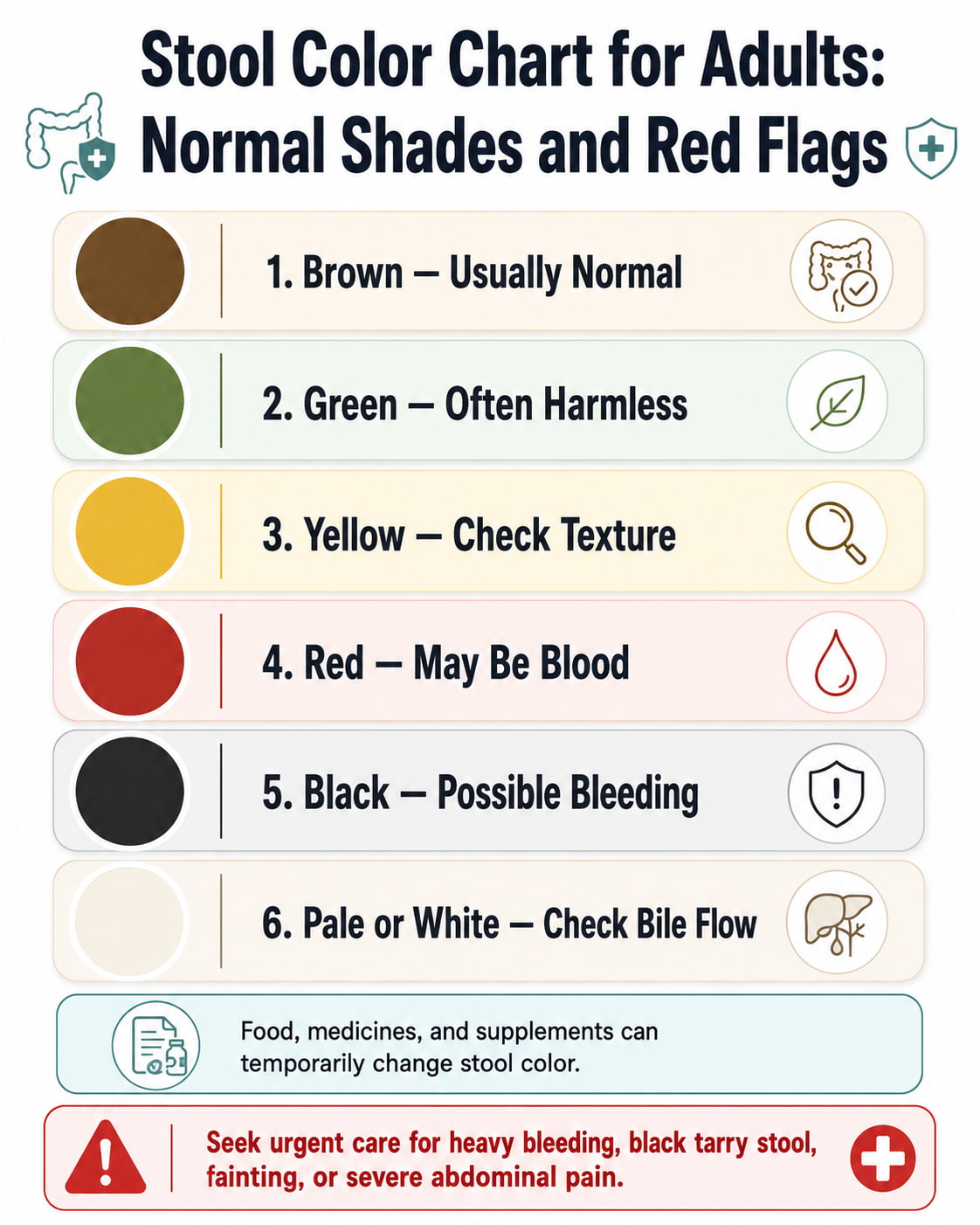
This stool color chart for adults explains which shades are commonly harmless, what may cause them, and when you should contact a healthcare professional.
Stool Color Chart for Adults
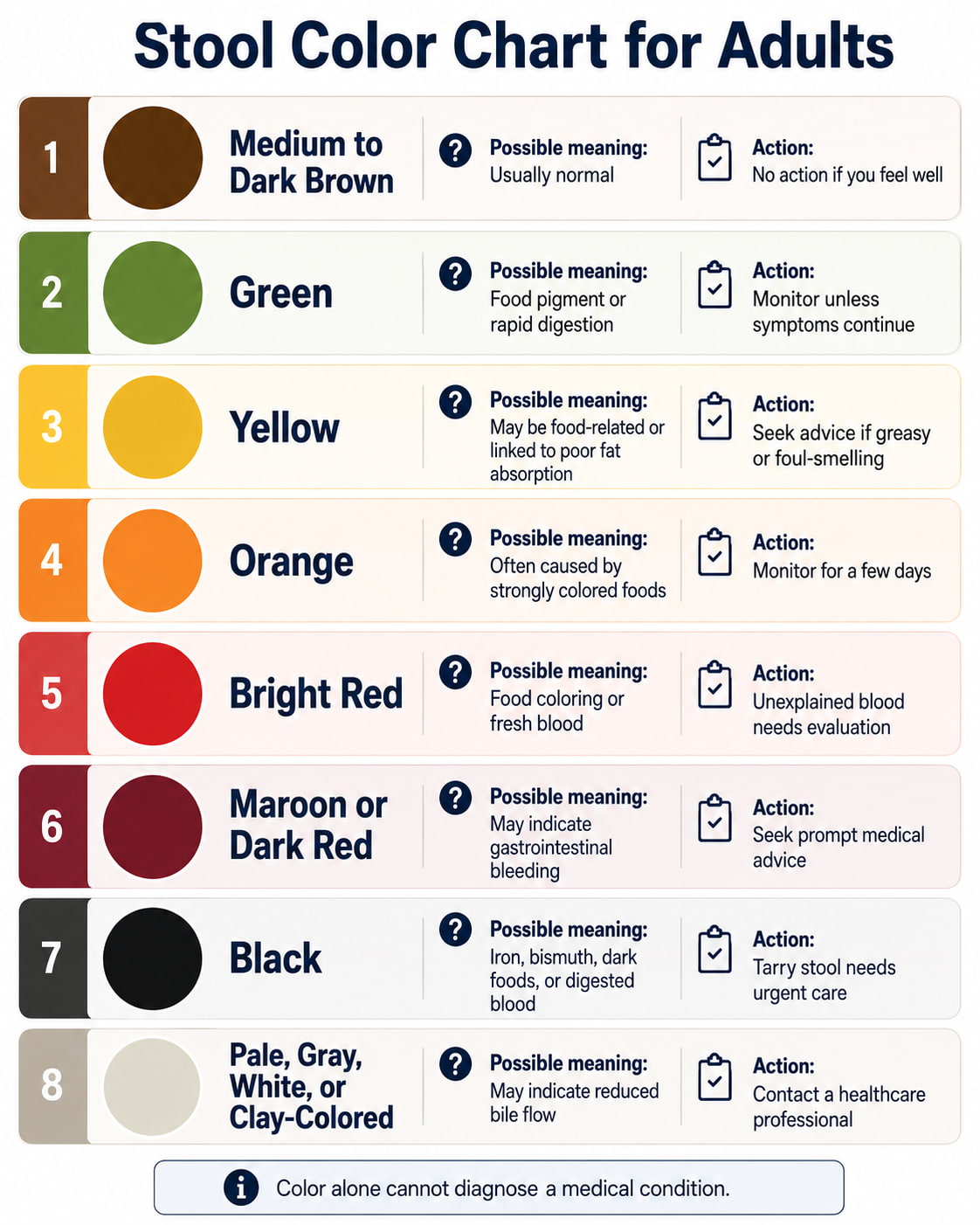
| Stool color | What it may mean | Common causes | What to do |
|---|---|---|---|
| Medium to dark brown | Usually normal | Bile, diet, and normal digestive variation | No action is generally needed if you feel well. |
| Light brown or tan | Often normal | Diet changes and normal differences in bile levels | Monitor unless it becomes pale, gray, white, or clay-like. |
| Green | Usually harmless; stool may be moving through the intestines quickly | Leafy vegetables, green food coloring, iron supplements, antibiotics, or diarrhea | Monitor. Seek advice if it continues with severe diarrhea, pain, fever, or dehydration. |
| Yellow | May be food-related, but greasy and foul-smelling yellow stool can indicate poor fat absorption | Fatty foods, food coloring, rapid digestion, or a malabsorption problem | Contact a healthcare professional if it is repeatedly greasy, bulky, difficult to flush, or accompanied by weight loss. |
| Orange | Usually caused by food pigments | Carrots, pumpkin, squash, sweet potatoes, or orange food coloring | Monitor for a few days. Seek advice if it persists without an obvious food-related cause. |
| Bright red | May be food coloring or fresh blood from the lower digestive tract | Beets, tomatoes, cranberries, hemorrhoids, anal fissures, or gastrointestinal bleeding | Obtain medical advice for unexplained blood. Seek emergency care for heavy bleeding, dizziness, weakness, or severe pain. |
| Maroon or dark red | May indicate blood mixed with the stool | Gastrointestinal bleeding or deeply colored foods | Seek prompt medical advice when there is no clear dietary explanation. |
| Black | Can be caused by food, medicine, or digested blood | Iron, bismuth, activated charcoal, black licorice, blueberries, or upper gastrointestinal bleeding | Black, sticky, tarry, or unusually foul-smelling stool requires immediate medical attention. |
| Pale, gray, white, or clay-colored | May mean that too little bile is reaching the stool | Bile duct blockage, liver or gallbladder problems, certain medicines, or a recent barium test | Contact a healthcare professional promptly, especially with jaundice, dark urine, pain, fever, or vomiting. |
| Blue or purple | Usually caused by strong food pigments | Blueberries, grapes, purple frosting, candy, or artificial coloring | Monitor. The color should disappear after the food pigment passes through your system. |
The Mayo Clinic’s stool color guidance considers shades of brown and even green typical. It identifies bright red, black, pale, white, clay-colored, and greasy yellow stool as colors that may need closer attention depending on their cause and accompanying symptoms.
What Is a Normal Stool Color?
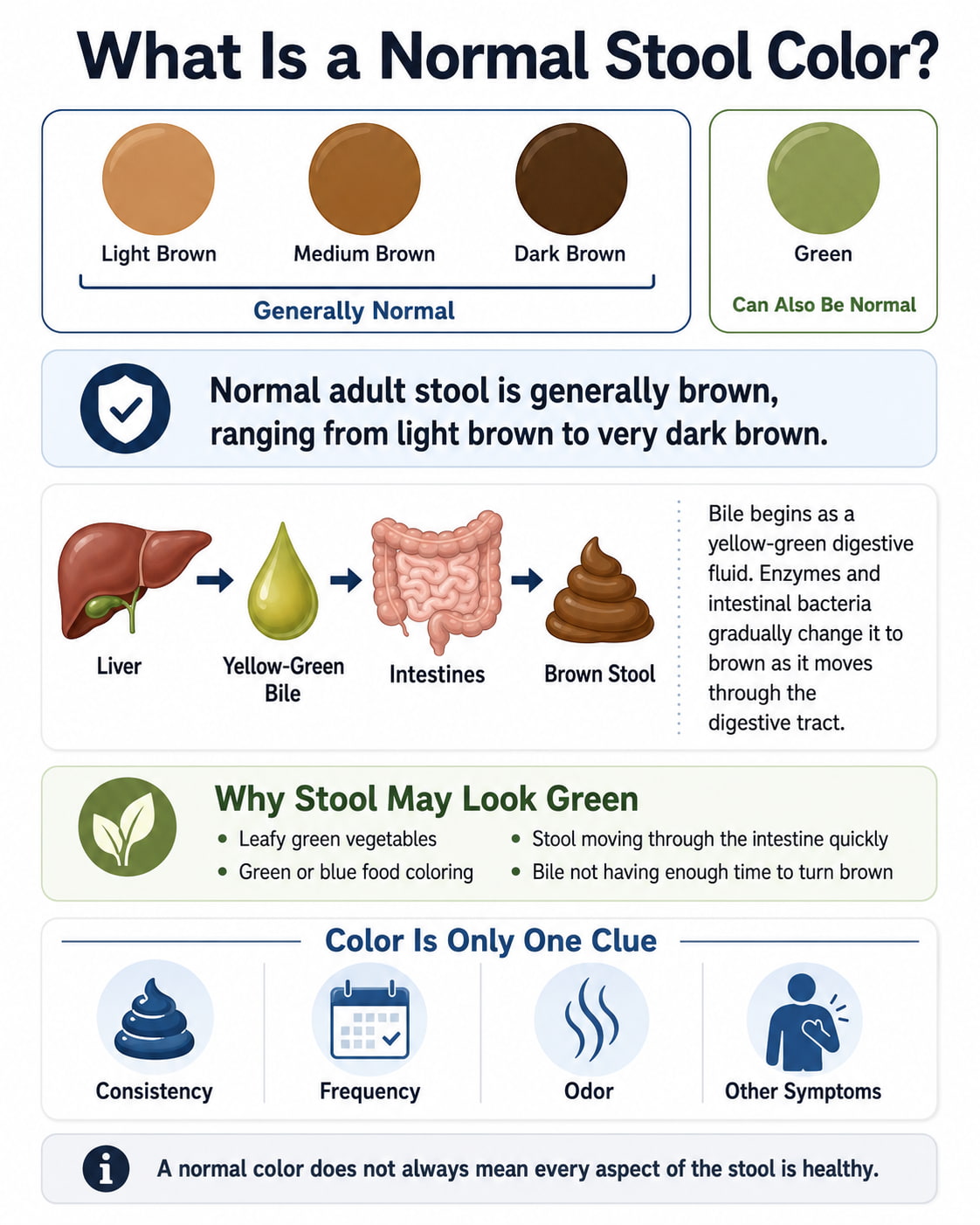
Normal adult stool is generally brown. The shade may range from light brown to very dark brown and can vary from one bowel movement to another.
Bile helps create this color. Your liver produces bile, a yellow-green digestive fluid that helps your body digest fat. As bile passes through the digestive tract, enzymes and intestinal bacteria chemically change it from green to brown.
Green stool may also be normal, especially after eating leafy vegetables or foods containing green or blue coloring. It can also occur when stool moves through the large intestine too quickly for bile to turn completely brown.
A normal color does not necessarily mean that every aspect of the stool is healthy. Its consistency, frequency, odor, and accompanying symptoms also matter.
Why Does Stool Color Change?
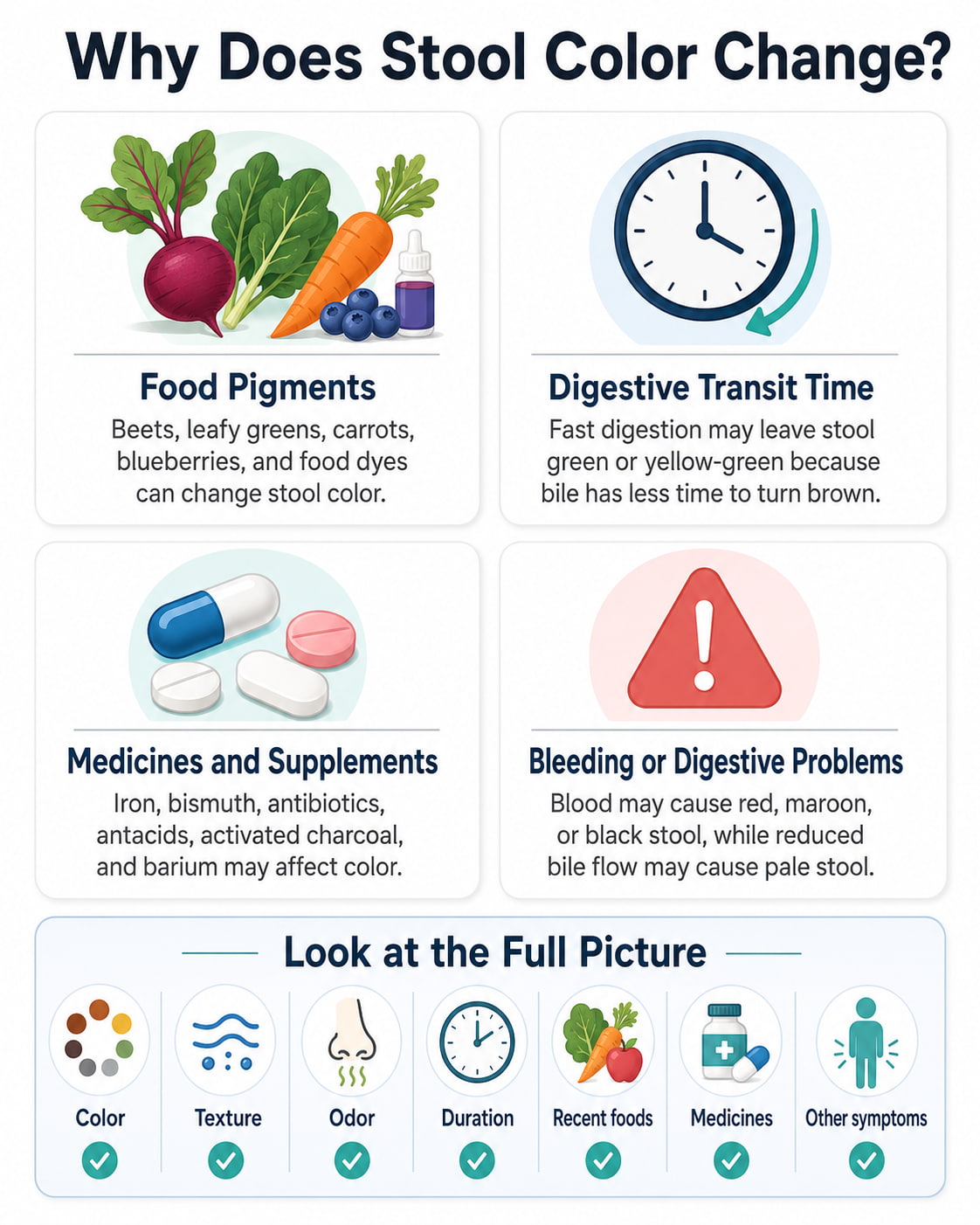
Several factors can change stool color without indicating a serious illness.
Food pigments
Strong natural and artificial pigments may remain visible after digestion. Common examples include:
- Beets making stool red or pink
- Carrots and pumpkin making it orange
- Spinach and kale making it green
- Blueberries making it blue, green, or nearly black
- Artificial food coloring producing red, green, blue, or purple shades
Food-related discoloration should usually fade after the pigment passes through the digestive system, which may take a few days.
Digestive transit time
When food moves rapidly through the intestines, bile may not have enough time to change from green to brown. This can happen during diarrhea and may produce green or yellow-green stool.
Medicines and supplements
Iron supplements, bismuth-containing medicines, antibiotics, antacids, activated charcoal, and barium used during imaging tests can change stool color.
Do not stop a prescribed medicine because of a stool-color change without speaking to the prescribing healthcare professional.
Bleeding or digestive problems
Blood can make stool appear red, maroon, or black. Problems involving bile flow may cause pale or clay-colored stool. Disorders that interfere with nutrient absorption may produce loose, yellow, greasy, and foul-smelling bowel movements.
Color alone cannot identify the cause. The stool’s texture, odor, duration, and associated symptoms provide important context.
What Does Green Stool Mean?
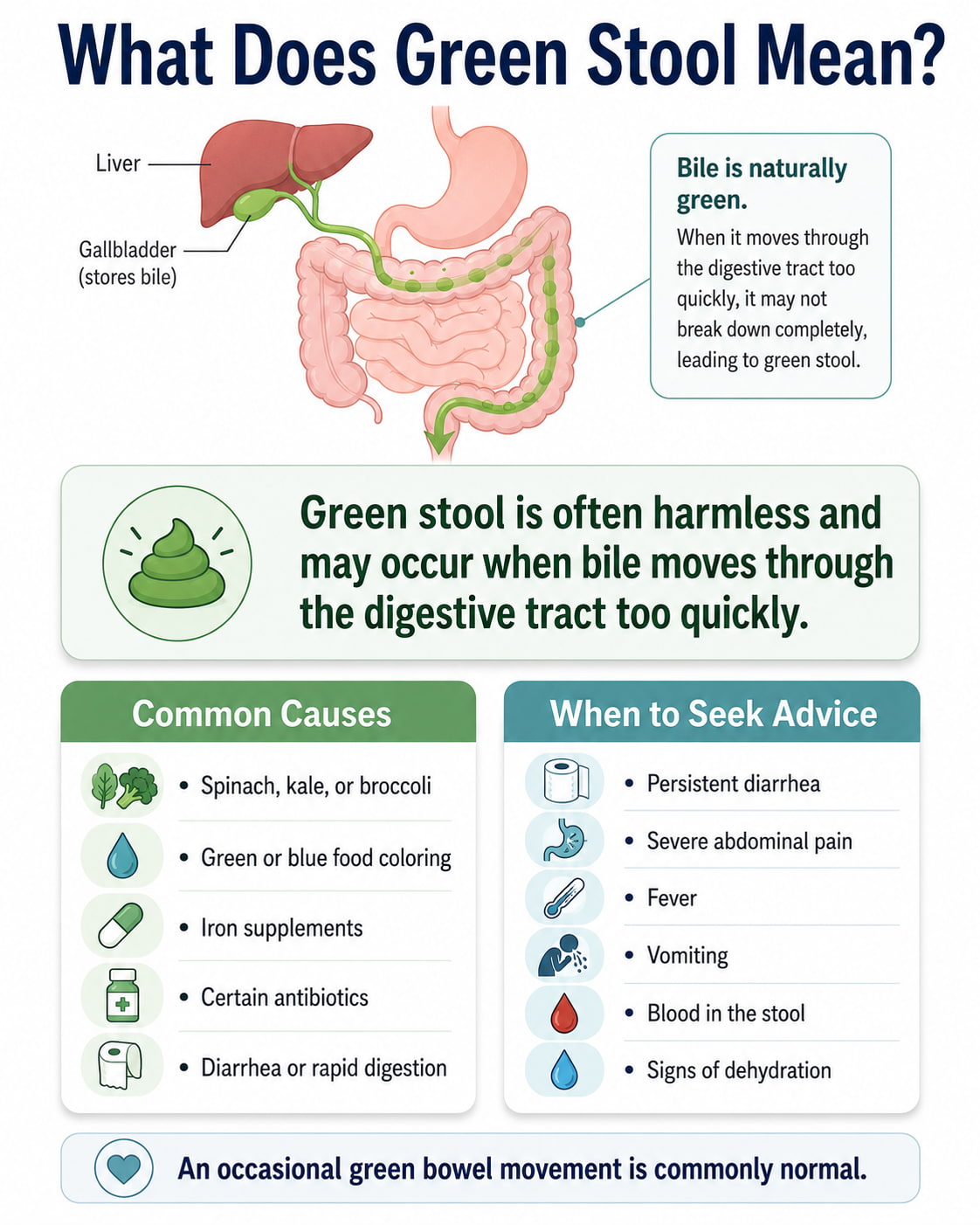
Green stool is often harmless.
Common explanations include:
- Spinach, kale, broccoli, or other green vegetables
- Green or blue food coloring
- Iron supplements
- Certain antibiotics
- Rapid intestinal movement
- Diarrhea
During rapid digestion, bile does not have enough time to complete its normal color change. The stool may remain green when it leaves the body.
Green stool may require medical attention when it occurs with persistent diarrhea, severe abdominal pain, fever, vomiting, blood, or signs of dehydration. Infection and other digestive conditions can sometimes increase intestinal transit speed.
What Does Yellow or Greasy Stool Mean?
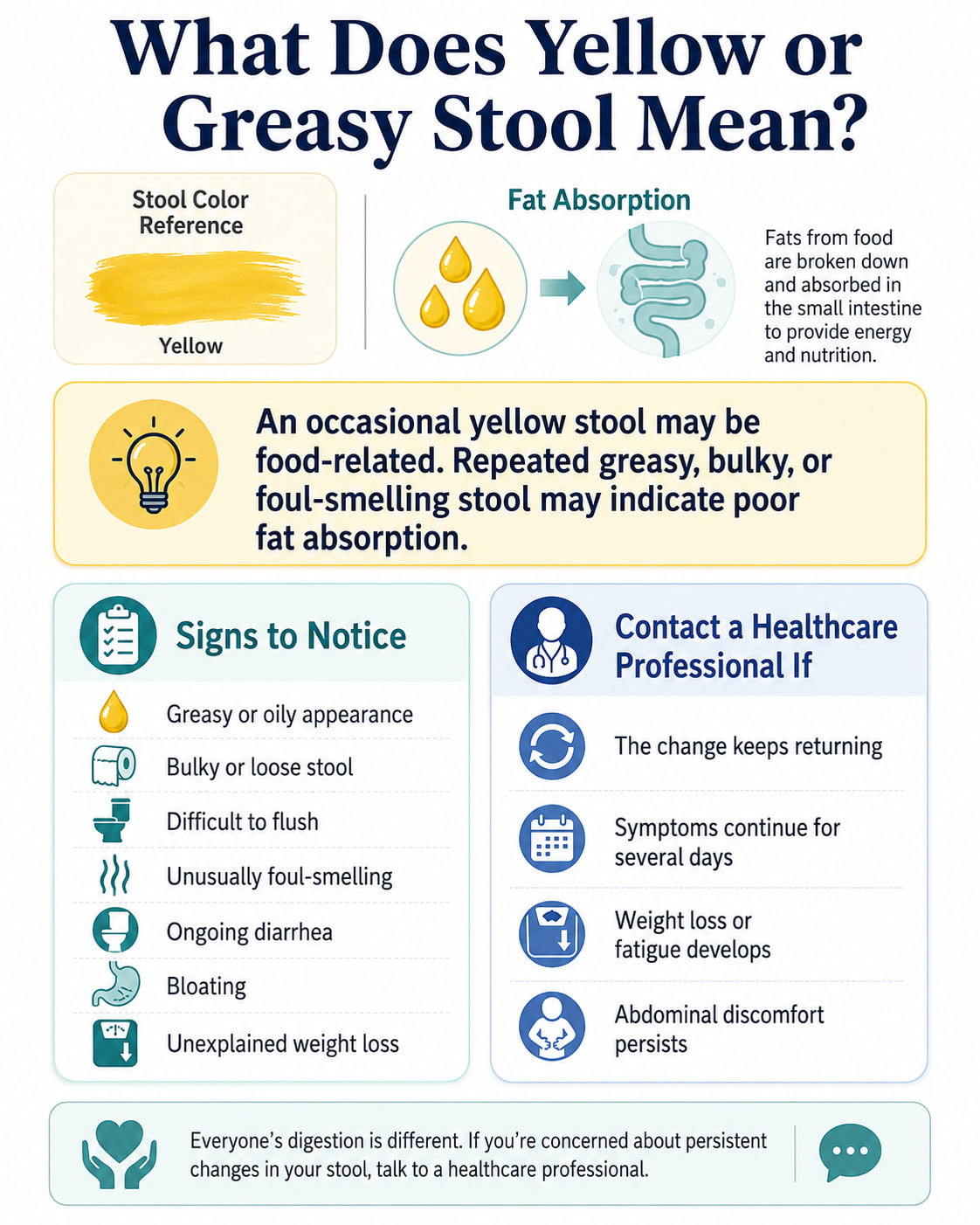
An occasional yellow bowel movement may result from food, food coloring, or rapid digestion. It is more concerning when the stool is repeatedly:
- Greasy or oily
- Bulky
- Loose
- Difficult to flush
- Floating together with other symptoms
- Unusually foul-smelling
This combination may indicate that the body is not absorbing fat or other nutrients properly. The National Institute of Diabetes and Digestive and Kidney Diseases lists loose, greasy, foul-smelling bowel movements, gas, bloating, and weight loss among possible symptoms of malabsorption.
Possible causes vary and cannot be determined by appearance alone. Contact a healthcare professional if yellow, greasy stool continues or is accompanied by unexplained weight loss, ongoing diarrhea, bloating, fatigue, or abdominal discomfort.
What Does Orange Stool Mean?
Orange stool is usually related to strongly pigmented foods, including:
- Carrots or carrot juice
- Pumpkin
- Sweet potatoes
- Winter squash
- Orange frosting, drinks, or candy
A temporary orange color is generally not concerning when you recently ate one of these foods and have no other symptoms.
Persistent orange stool without a clear dietary explanation deserves attention, particularly if the color is unusually pale or occurs with dark urine, yellow skin or eyes, itching, pain, nausea, or fever. Those features may indicate that the change is related to bile rather than food pigment.
What Does Red or Maroon Stool Mean?
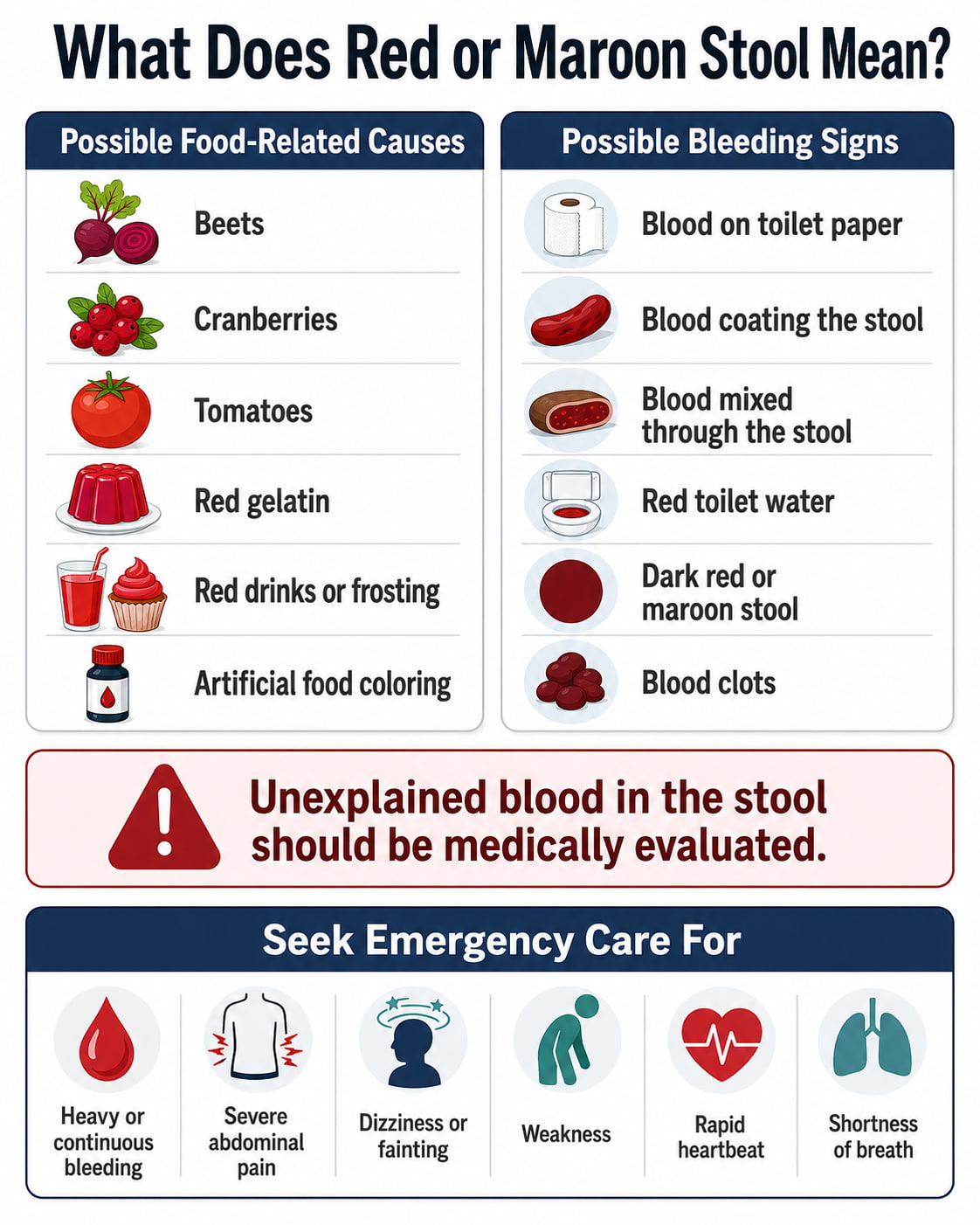
Red stool does not always mean bleeding. Beets, cranberries, tomatoes, red gelatin, drinks, frosting, and artificial food dyes can create a blood-like appearance.
However, bright red blood can come from the colon, rectum, or anus. Common causes may include hemorrhoids or a small anal fissure, but bleeding can also have other gastrointestinal causes that require evaluation.
Blood may appear:
- On toilet paper
- On the outside of the stool
- In the toilet water
- Mixed throughout the stool
- As clots
- As dark red or maroon stool
You should seek medical advice for unexplained blood in your stool. The amount and appearance of blood cannot reliably determine its seriousness.
Seek emergency care when rectal bleeding is heavy or continuous or occurs with lightheadedness, fainting, weakness, a rapid heartbeat, shortness of breath, or severe abdominal pain.
What Does Black Stool Mean?
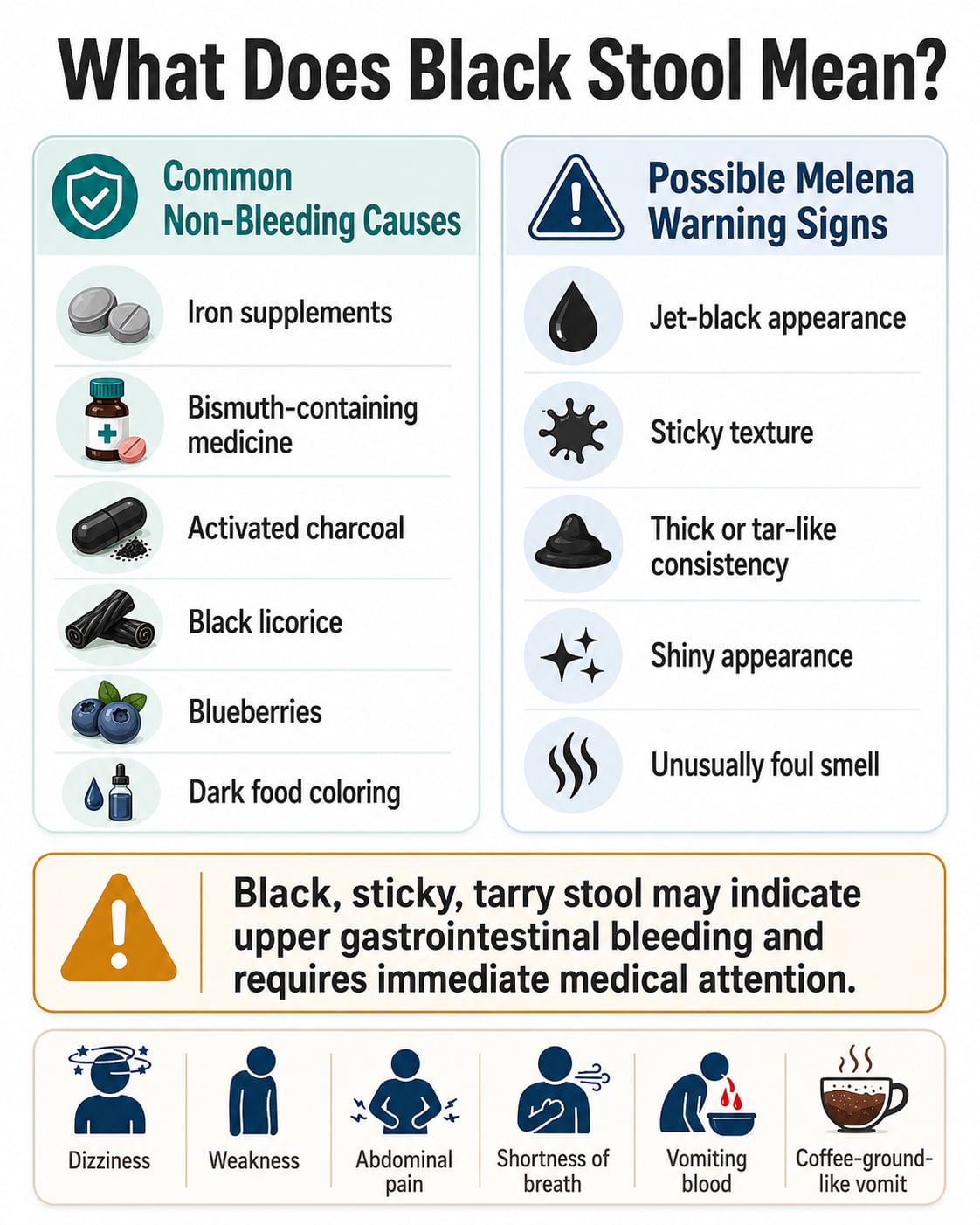
Black stool can have harmless or serious causes.
Common non-bleeding causes include:
- Iron supplements
- Bismuth-containing medicine, such as Pepto-Bismol
- Activated charcoal
- Black licorice
- Large amounts of blueberries
- Dark food coloring
These causes may turn stool very dark green or black without producing gastrointestinal bleeding.
More concerning black stool is often described as:
- Jet black
- Sticky
- Thick
- Shiny
- Tar-like
- Unusually foul-smelling
This appearance is called melena and may result from digested blood traveling from the esophagus, stomach, or upper small intestine. The MedlinePlus guide to black or tarry stools advises contacting a healthcare professional promptly when blood or an unexplained stool-color change occurs.
Seek immediate care for black, tarry stool, especially if you also have dizziness, weakness, abdominal pain, shortness of breath, vomiting blood, or vomit resembling coffee grounds.
What Does Pale, White, or Clay-Colored Stool Mean?
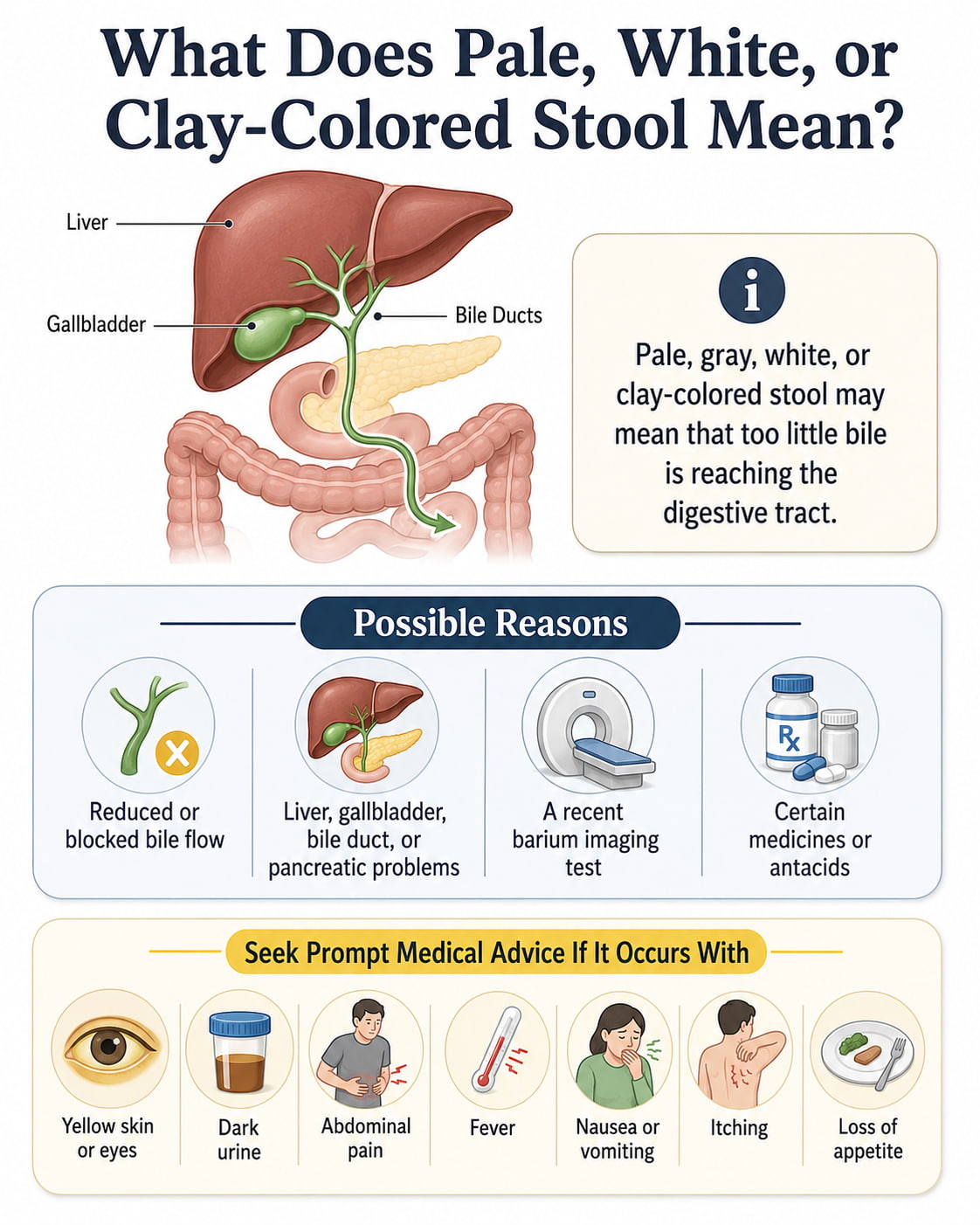
Pale, gray, white, putty-colored, or clay-colored stool may indicate that too little bile is entering the digestive tract.
Because bile helps give stool its brown color, reduced bile production or blocked bile flow can create an unusually light appearance. Possible causes involve the liver, gallbladder, bile ducts, or pancreas.
Temporary lightening can also happen after a barium imaging test or with certain medicines, including some antacids.
According to MedlinePlus guidance on pale or clay-colored stools, jaundice and dark urine may occur with clay-colored stool when bile chemicals accumulate in the body.
White stool is not considered typical. The Mayo Clinic’s white stool guidance recommends medical evaluation because a lack of bile can sometimes indicate a significant underlying problem.
Contact a healthcare professional promptly if pale or white stool persists or appears with:
- Yellow skin or eyes
- Dark urine
- Abdominal pain
- Fever
- Nausea or vomiting
- Itching
- Loss of appetite
Foods and Medicines That Can Change Stool Color
| Food, medicine, or supplement | Possible stool color |
|---|---|
| Beets | Red, pink, or maroon |
| Tomatoes, cranberries, or red food coloring | Red |
| Spinach, kale, or broccoli | Green |
| Blueberries | Blue, green, dark purple, or nearly black |
| Carrots, pumpkin, or sweet potatoes | Orange |
| Black licorice | Black |
| Iron supplements | Dark green or black |
| Bismuth-containing medicines | Black |
| Activated charcoal | Black |
| Some antibiotics | Green or yellow |
| Barium used in imaging | Pale or white |
| Some aluminum-containing antacids | Pale or light-colored |
Before assuming an unusual color is caused by food, consider what you ate during the previous few days. Review your medicines and supplements as well.
A clear dietary or medication explanation is reassuring only when you otherwise feel well and the color returns to normal. Do not dismiss persistent blood-like, tarry, or clay-colored stool simply because you recently ate a colorful food.
How Long Should a Stool-Color Change Last?
A change linked to a meal or food dye should generally disappear after the food passes through your digestive system. This may take a few days.
Keep track of:
- When the color first appeared
- What you recently ate
- New medicines or supplements
- Whether every bowel movement is affected
- Stool texture and odor
- Abdominal or rectal pain
- Diarrhea, fever, vomiting, or weight loss
Contact a healthcare professional if the change continues without an obvious explanation, keeps returning, or occurs with other concerning symptoms.
Do not delay care to monitor stool that contains visible blood, is black and tarry, or is white or clay-colored with jaundice or dark urine.
When Is an Unusual Stool Color an Emergency?
Seek emergency medical care for:
- A large amount of blood
- Continuous rectal bleeding
- Black, sticky, tarry stool
- Vomiting blood
- Vomit that resembles coffee grounds
- Severe or worsening abdominal pain
- Fainting or confusion
- Significant dizziness or weakness
- A rapid heartbeat
- Shortness of breath
- Pale, cold, or clammy skin
The National Institute of Diabetes and Digestive and Kidney Diseases identifies black or tarry stool, dark or bright red blood, dizziness, fainting, abdominal pain, and shortness of breath as possible symptoms of acute gastrointestinal bleeding. Severe bleeding can lead to life-threatening shock.
When Should You Contact a Healthcare Professional?
Arrange prompt medical advice if you notice:
- Any unexplained blood in your stool
- Repeated pale, gray, white, or clay-colored stool
- Persistent yellow, greasy, or foul-smelling stool
- Unexplained maroon stool
- A stool-color change lasting several days without a clear cause
- Unintentional weight loss
- Persistent abdominal or rectal pain
- Fever or repeated vomiting
- Significant changes in bowel habits
- Diarrhea lasting more than two days
- Six or more loose bowel movements in one day
- Dehydration symptoms
Signs of dehydration include extreme thirst, dry mouth, reduced urination, dark urine, tiredness, dizziness, and lightheadedness.
People who are pregnant, older than 65, taking antibiotics, immunocompromised, or using blood thinners may need to contact a healthcare professional sooner.
How Doctors Evaluate an Abnormal Stool Color
A healthcare professional may ask about:
- The exact color and texture
- When the change began
- Foods eaten recently
- Prescription and over-the-counter medicines
- Vitamins and supplements
- Abdominal or rectal symptoms
- Changes in appetite or weight
- History of liver, gallbladder, pancreatic, or digestive conditions
Depending on the symptoms, evaluation may include blood tests, stool tests, imaging, or an endoscopic procedure. A photograph taken in normal lighting may help you describe the appearance, but it should not replace medical evaluation.
Stool Color Chart vs. Bristol Stool Chart
A stool color chart and the Bristol Stool Chart measure different features.
A stool color chart helps identify whether the color could be related to bile, food, medicine, bleeding, or another digestive issue.
The Bristol Stool Chart groups bowel movements according to shape and consistency, from hard pellets to entirely watery stool. It is commonly used to discuss constipation, normal stool form, and diarrhea.
Both color and consistency can provide useful information, but neither chart can diagnose a medical condition by itself.
Frequently Asked Questions
Is dark brown stool normal?
Yes. Dark brown usually falls within the normal range. It becomes more concerning when the stool is truly black, sticky, tar-like, or unusually foul-smelling, particularly when you are not taking iron or bismuth.
Is green stool normal in adults?
Green stool can be normal. It commonly follows leafy vegetables, food coloring, or iron supplements. It can also occur when diarrhea moves stool through the intestines too quickly. Seek advice when green stool occurs with persistent diarrhea, fever, severe pain, blood, or dehydration.
Can iron supplements make stool black?
Yes. Iron can make stool dark green or black. This is a common effect. However, do not assume all black stool is caused by iron. Seek immediate medical care if it is sticky, tarry, foul-smelling, or accompanied by weakness, dizziness, pain, or vomiting blood.
Can Pepto-Bismol make stool black?
Yes. Bismuth-containing medicine can temporarily make the tongue and stool black. The color generally resolves after you stop using the medicine. Follow the product directions, and obtain medical advice if the stool appears tarry or you have other bleeding symptoms.
How can I tell dark brown stool from black tarry stool?
Dark brown stool generally retains a recognizable brown tone and ordinary consistency. Melena is more often jet black, sticky, thick, tar-like, and unusually strong-smelling. Appearance is not always reliable, so seek medical guidance when you are uncertain.
What stool colors should adults worry about?
The main warning colors are unexplained bright red or maroon, black and tarry, and pale, gray, white, or clay-colored. Persistent greasy yellow stool also needs evaluation, especially with weight loss, diarrhea, or abdominal symptoms.
Conclusion
Most temporary stool-color changes are caused by food, bile, medicines, or supplements. Brown is the usual healthy color, and an occasional green bowel movement is commonly harmless.
Pay closer attention when a color change cannot be explained, lasts for several days, or appears with pain, fever, diarrhea, jaundice, dark urine, weight loss, weakness, or dizziness. Seek immediate medical care for heavy bleeding, black tarry stool, vomiting blood, fainting, or other symptoms of significant gastrointestinal bleeding.
When in doubt, document what you see and discuss it with a qualified healthcare professional rather than relying on color alone.
This content is for informational purposes only and not medical advice.
References
- Mayo Clinic: Stool Color—When to Worry
- National Institute of Diabetes and Digestive and Kidney Diseases: Symptoms and Causes of GI Bleeding
- National Institute of Diabetes and Digestive and Kidney Diseases: Symptoms and Causes of Diarrhea
- MedlinePlus: Black or Tarry Stools
- MedlinePlus: Pale or Clay-Colored Stools