
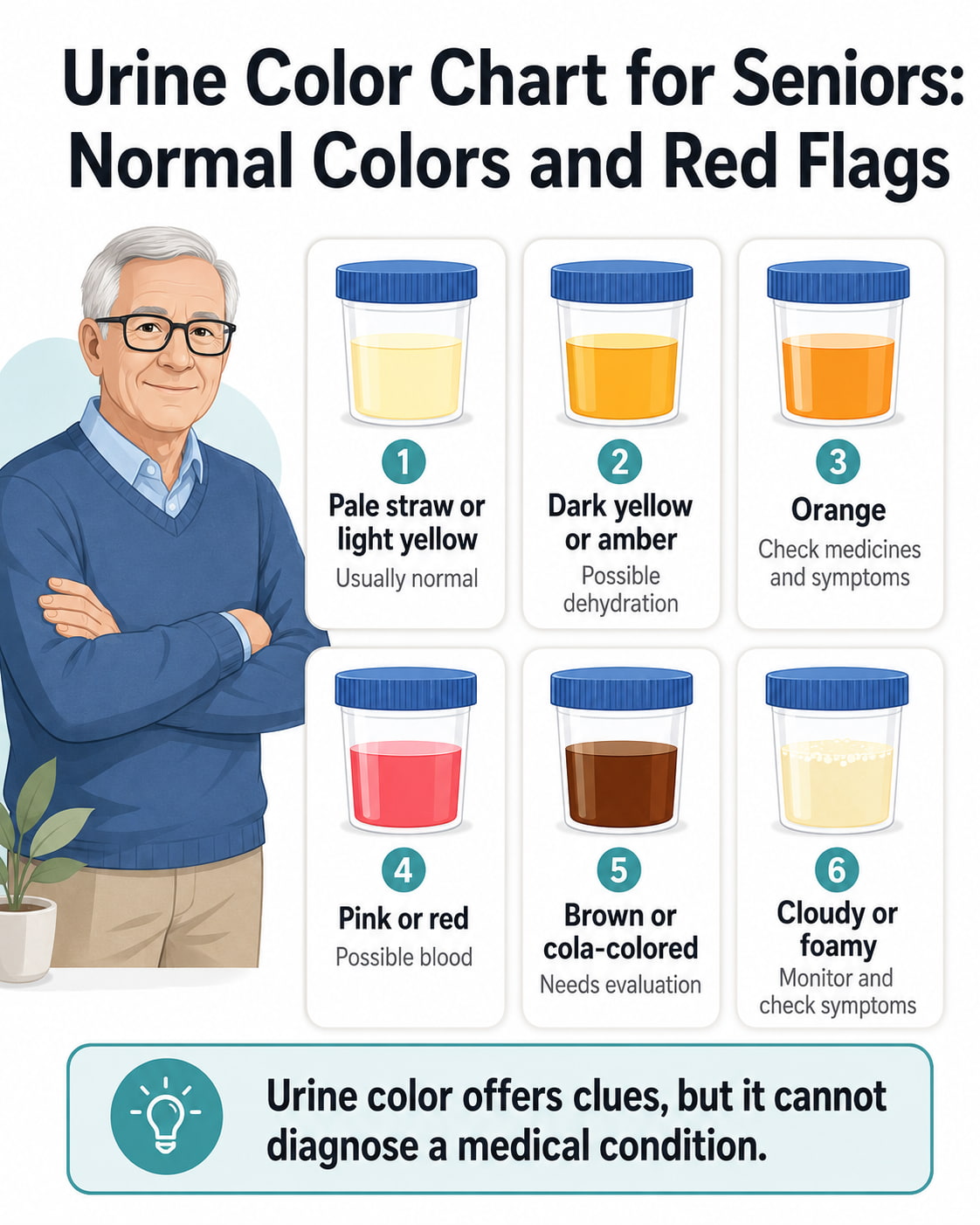
Normal urine in most seniors is clear to pale straw or light yellow. Dark yellow urine often means the urine is concentrated, while unexplained red, pink, brown, cola-colored, persistently cloudy, or increasingly foamy urine may require medical evaluation.
The same general urine color ranges apply to seniors as to other adults. However, older adults may become dehydrated more easily and are more likely to take medications or have urinary, prostate, liver, or kidney conditions that affect urine appearance.
A urine color chart can provide useful clues, but color alone cannot diagnose dehydration, a urinary tract infection, kidney disease, or another medical condition.
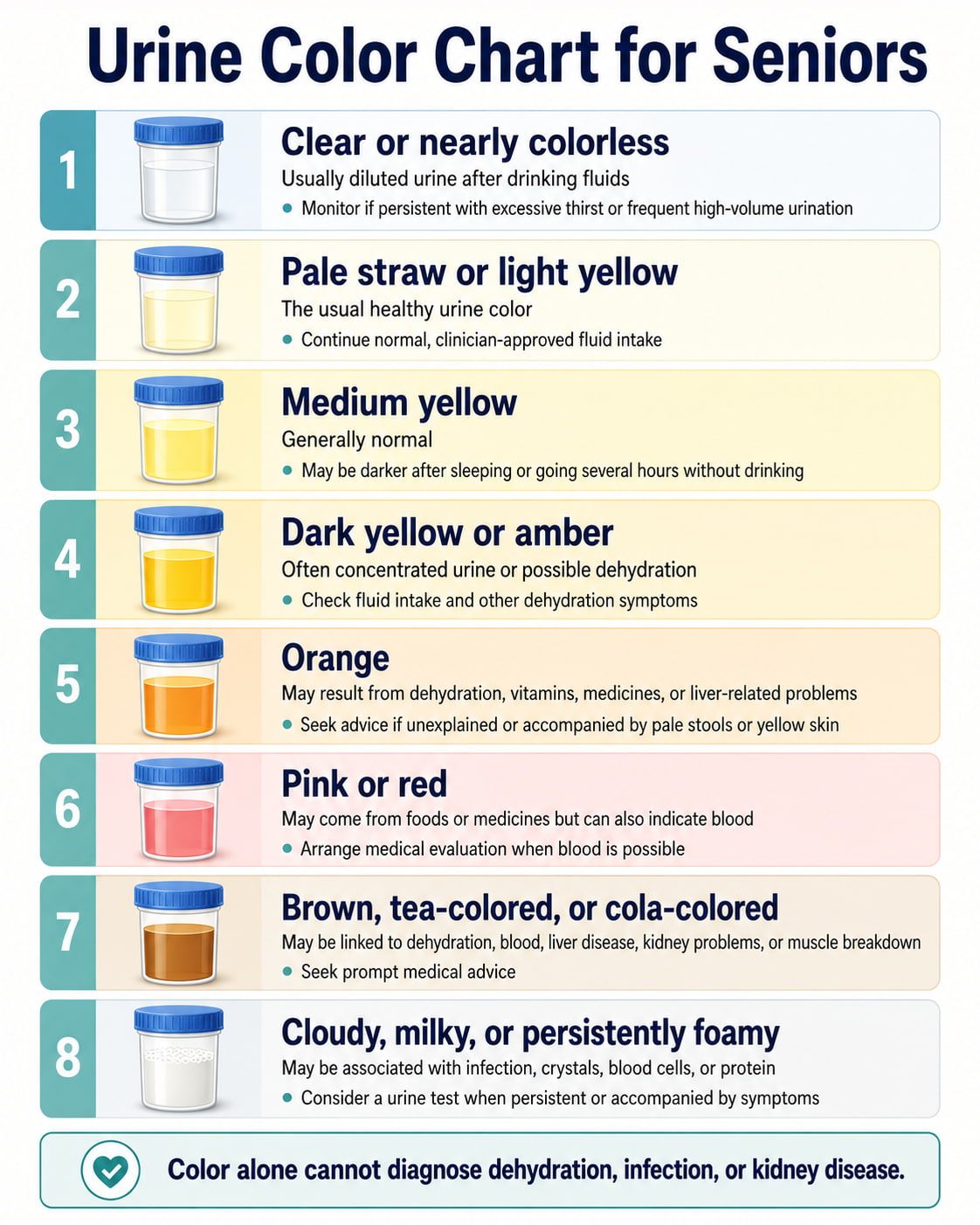
Urine Color Chart for Seniors
| Urine color or appearance | What it may mean | What to do |
|---|---|---|
| Clear or nearly colorless | Usually means the urine is diluted after drinking fluids. Persistent clear urine with excessive thirst and unusually frequent, high-volume urination may need evaluation. | Usually normal when temporary. Do not force additional water if the person is already drinking normally. |
| Pale straw or light yellow | The usual healthy urine color for most seniors. | Continue normal, clinician-approved fluid intake. |
| Medium yellow | Generally normal. It may appear darker after sleeping or going several hours without drinking. | Monitor for other dehydration signs, especially during hot weather or illness. |
| Dark yellow or amber | Often means concentrated urine and possible dehydration. Vitamins and medications can also deepen the color. | Encourage gradual fluid intake when fluids are not restricted. Watch for reduced urination, dizziness, weakness, dry mouth, or confusion. |
| Bright or fluorescent yellow | Frequently caused by B-complex vitamins or multivitamins. | Usually harmless when connected to a supplement. Ask a pharmacist when the cause is uncertain. |
| Yellow-orange or orange | May result from dehydration, vitamins, food coloring, phenazopyridine, rifampin, sulfasalazine, or some laxatives. Liver or bile duct problems are another possibility. | Contact a healthcare professional if the change is unexplained or occurs with pale stools or yellow skin or eyes. |
| Pink or red | May come from beets, blackberries, rhubarb, food dye, or certain medicines. It may also be blood from a UTI, kidney stone, enlarged prostate, kidney disease, injury, or urinary cancer. | Arrange medical evaluation whenever blood is possible, even if the urine returns to normal. |
| Brown, tea-colored, or cola-colored | Possible causes include severe dehydration, blood, liver disease, kidney problems, muscle breakdown, foods, or medications. | Seek prompt medical advice, especially with reduced urination, jaundice, weakness, muscle pain, swelling, or illness. |
| Blue or green | Usually related to food dyes, medical dyes, or certain medicines. Some bacterial infections can occasionally produce green urine. | Review recent medications and medical procedures. Contact a clinician if the color is unexplained or persistent. |
| Cloudy or milky | May contain bacteria, crystals, mucus, blood cells, or white blood cells. A UTI or urinary stone is possible, but appearance alone cannot confirm the cause. | Seek care when cloudiness persists or occurs with burning, urgency, fever, lower abdominal pain, back pain, or blood. |
| Foamy or very bubbly | Temporary foam can result from a forceful urine stream or concentrated urine. Persistent or increasing foam may be associated with protein in the urine. | Request a urine test if foam continues for several days or occurs with swelling, fatigue, diabetes, high blood pressure, or kidney disease. |
Normal urine can range from nearly clear to dark yellow depending on fluid intake. The MedlinePlus urine color guidance describes straw-yellow as the usual color and recommends medical evaluation for unexplained persistent discoloration, clear dark-brown urine, or blood in the urine even once.
What Is a Normal Urine Color for Seniors?
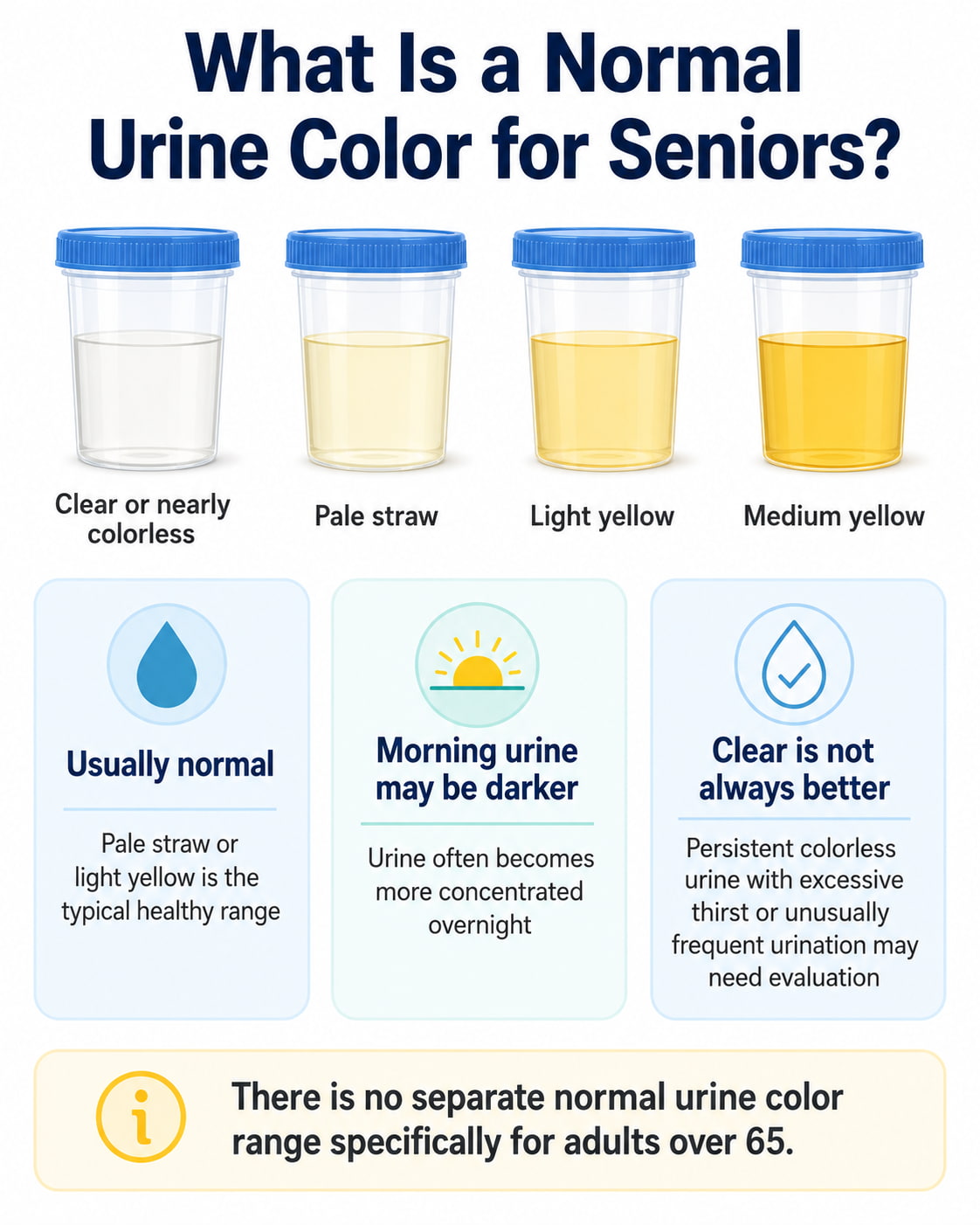
For most seniors, normal urine is:
- Clear to pale straw
- Light yellow
- Transparent rather than cloudy
- Mild-smelling rather than unusually foul
Urine receives its yellow color from natural pigments. Drinking more fluid dilutes these pigments, while drinking less makes the color stronger. Therefore, a person’s urine may be darker first thing in the morning and lighter later in the day.
There is no separate healthy color range specifically for adults over 65. The more important issue is whether a change is new, unexplained, persistent, or accompanied by other symptoms.
Is Clear Urine Always Better?
No. Clear urine is often harmless after drinking water, tea, or another beverage. It does not necessarily mean the person should drink more.
Consistently colorless urine combined with constant thirst, waking frequently to urinate, or passing unusually large amounts of urine should be discussed with a healthcare professional. These symptoms may require testing for blood sugar problems, medication effects, or conditions that affect fluid balance.
Seniors with heart failure, kidney disease, low sodium levels, or a prescribed fluid limit should never increase fluid intake simply to make their urine clear.
What Dark Yellow Urine May Mean in Older Adults
Dark yellow or amber urine most commonly means that the urine is concentrated. This may happen after sleeping, sweating, spending time in hot weather, having a fever, or losing fluid through vomiting or diarrhea.
Older adults have a greater risk of dehydration because thirst may become less reliable with age. Mobility problems, memory impairment, swallowing difficulties, urinary incontinence concerns, and medications such as diuretics may also affect fluid intake or fluid loss.
Signs of Dehydration in Seniors
Look beyond urine color. Other possible signs include:
- Urinating less often than usual
- Dry mouth or dry tongue
- Thirst
- Dizziness or lightheadedness
- Headache
- Weakness or unusual tiredness
- Constipation
- Rapid heartbeat
- New or worsening confusion
- Fainting or difficulty staying awake in severe cases
Dehydration can be more serious in older adults. During hot weather, the CDC advises adults aged 65 and older not to rely entirely on thirst. However, people who take water pills or follow a fluid restriction should ask their healthcare professional how much fluid is safe.
How to Respond to Dark Yellow Urine
When the person is alert, can swallow safely, and has no fluid restriction, offer fluids gradually throughout the day. Water is usually a practical choice, but milk, soup, and other beverages may also contribute to fluid intake.
Do not encourage a senior to drink several large glasses quickly. Excessive water intake can be dangerous for someone with heart failure, advanced kidney disease, low blood sodium, or another condition that limits the body’s ability to remove water.
Contact a healthcare professional when dark urine continues despite normal drinking or appears with vomiting, diarrhea, fever, dizziness, confusion, very low urine output, or difficulty drinking.
Red, Pink, Brown, and Cola-Colored Urine
These colors deserve more attention because they may represent blood, liver problems, kidney conditions, or muscle injury.
Pink or Red Urine
Pink or red urine does not always mean bleeding. Possible harmless causes include:
- Beets
- Blackberries
- Rhubarb
- Red food coloring
- Rifampin
- Phenazopyridine
- Senna-containing laxatives
However, blood can make urine look pink, red, rust-colored, or brown. Possible causes include infection, kidney or bladder stones, an enlarged prostate, urinary injury, kidney disease, and bladder, kidney, or prostate cancer. Blood thinners can make urinary bleeding more noticeable, but they should not automatically be assumed to be the only cause.
The National Institute of Diabetes and Digestive and Kidney Diseases hematuria guide explains that visible blood may occur without pain. Therefore, painless red urine is not necessarily less important than painful red urine.
Contact a healthcare professional whenever urine might contain blood, even if it happens only once or clears by the next bathroom visit.
Brown, Tea-Colored, or Cola-Colored Urine
Possible causes include:
- Severe dehydration
- Blood in the urine
- Liver or bile duct problems
- Kidney inflammation
- Muscle breakdown
- Some UTIs
- Fava beans, rhubarb, or aloe
- Metronidazole, nitrofurantoin, senna, methocarbamol, phenytoin, or some cholesterol-lowering medicines
Clear dark-brown urine may be associated with bilirubin from a liver condition. Tea- or cola-colored urine can also occur with rhabdomyolysis, a serious breakdown of muscle tissue that can damage the kidneys.
Seek urgent care for dark urine accompanied by:
- Severe muscle pain or weakness
- Very little urine
- Swelling
- Yellow skin or eyes
- Pale stools
- Severe abdominal or back pain
- Vomiting
- Confusion
- Recent injury, prolonged immobility, overheating, or extreme exertion
Orange Urine
Orange urine can result from concentrated urine, vitamins, food coloring, or medicines such as phenazopyridine and rifampin. Some constipation medicines and anti-inflammatory medicines can also produce an orange tint.
Orange or dark urine with pale stools, itching, or yellow skin or eyes may indicate that bilirubin is entering the urine because of a liver or bile duct problem. The Mayo Clinic urine color overview recommends medical attention for dark or orange urine when signs of liver dysfunction are also present.
Cloudy, Milky, or Strong-Smelling Urine in Seniors
Cloudy urine may occur when urine contains bacteria, crystals, mucus, white blood cells, red blood cells, or other substances. It can occur with:
- A bladder or kidney infection
- Kidney or bladder stones
- Dehydration
- Vaginal discharge mixing with the urine
- Prostate inflammation
- Blood or protein in the urine
A bladder infection is more likely when cloudy or strong-smelling urine occurs with burning, frequent or intense urges to urinate, lower abdominal discomfort, or blood. A kidney infection may also cause fever, chills, nausea, vomiting, and pain in the back, side, or groin.
Cloudy or strong-smelling urine alone does not prove that a senior has a UTI. Urine can change because of dehydration, diet, medications, bacteria that are not causing illness, or contamination during sample collection.
Does Sudden Confusion Mean a UTI?
Sudden confusion or delirium in a senior requires prompt medical assessment, but it should not automatically be labeled a UTI.
Dehydration, medication side effects, low blood sugar, stroke, constipation, pain, respiratory infection, and other medical problems can cause an abrupt mental change. The Infectious Diseases Society of America guideline recommends looking for other causes when an older adult has bacteria in the urine and delirium but no urinary symptoms, fever, or unstable vital signs.
Seek urgent medical care for sudden confusion, especially when it occurs with fever, breathing difficulty, weakness on one side, fainting, severe pain, or reduced alertness.
What Does Foamy Urine Mean in Seniors?
A few bubbles after urinating are common. Foam may briefly appear when:
- The urine stream hits the toilet water forcefully
- The urine is concentrated
- Cleaning products remain in the toilet
- The person recently exercised
Foam that occurs frequently, becomes thicker, or takes longer to disappear may be caused by protein in the urine. Persistent protein loss can occur with kidney disease, particularly in people with diabetes or high blood pressure.
Ask a healthcare professional about a urinalysis or urine albumin test when foamy urine is persistent or accompanied by:
- Swollen feet, ankles, hands, or eyelids
- Unexplained weight gain
- High blood pressure
- Fatigue
- Reduced urine output
- Diabetes
- Known kidney disease
Foam alone cannot confirm proteinuria. A laboratory urine test is needed.
Foods, Vitamins, and Medicines That Change Urine Color
A new urine color may be harmless when it begins soon after a specific food, vitamin, medication, or medical procedure.
| Color | Possible food, vitamin, or medication causes |
|---|---|
| Bright yellow | B-complex vitamins and multivitamins |
| Pink or red | Beets, blackberries, rhubarb, red dyes, rifampin, phenazopyridine, senna |
| Orange | Vitamins A or B12, phenazopyridine, rifampin, sulfasalazine, some laxatives |
| Brown | Fava beans, rhubarb, aloe, metronidazole, nitrofurantoin, senna, methocarbamol, phenytoin, some statins |
| Blue or green | Food or medical dyes, amitriptyline, cimetidine, triamterene, indomethacin, propofol |
Do not stop a prescribed medication because of a urine color change unless a healthcare professional tells you to do so. Read the medication leaflet or ask a pharmacist whether discoloration is an expected side effect.
Even when a medicine can change urine color, symptoms such as pain, fever, inability to urinate, blood clots, jaundice, or severe weakness still require evaluation.
Special Guidance for Seniors With Urinary Catheters
Urine in a catheter bag may look darker because it has been sitting longer or is more concentrated. Sediment, mucus, or cloudiness may also develop.
An indwelling catheter quickly becomes colonized with bacteria. According to the CDC’s catheter culture stewardship guidance, bacteriuria develops at an estimated rate of 3% to 7% per day, and nearly every person with a catheter for one month will have bacteria in the urine. Bacteria without symptoms generally do not indicate an infection that requires antibiotics.
Contact the care team when a catheter user has:
- Fever or chills
- New pain in the lower abdomen, back, side, or groin
- Blood or clots in the bag
- Little or no urine draining
- New leakage around the catheter
- Nausea or vomiting
- A blocked, kinked, or displaced catheter
- Signs of severe illness or sudden deterioration
Do not disconnect the drainage system or collect a urine sample from the drainage bag unless a healthcare professional has provided instructions.
When Is Urine Color a Red Flag?
Seek Emergency Care Now
Seek emergency assistance when a senior:
- Cannot urinate and has lower abdominal pain or swelling
- Has blood clots that block urine flow
- Produces very little or no urine and is confused, faint, extremely weak, or short of breath
- Has fever or chills with severe back or side pain, vomiting, rapid breathing, or marked confusion
- Has cola-colored urine with severe muscle pain or weakness
- Develops sudden confusion, difficulty waking, new one-sided weakness, facial drooping, or trouble speaking
Acute urinary retention can cause severe lower abdominal pain and an inability to urinate. It requires immediate medical treatment.
Contact a Healthcare Professional Promptly
Arrange prompt medical advice for:
- Possible blood in the urine, even once
- Unexplained pink, red, smoky-brown, or cola-colored urine
- Clear dark-brown urine
- Orange or brown urine with pale stools or yellow skin or eyes
- Persistent cloudy or milky urine
- Burning, urgency, fever, or back pain with a urine change
- Persistent or worsening foam
- A color change that cannot be linked to food or medicine
- New difficulty starting urination
- A weak urine stream or incomplete bladder emptying
- A significant reduction in urine output
How Doctors Evaluate Abnormal Urine Color
A healthcare professional will usually ask about:
- When the change started
- Whether the color appears every time
- Fluid intake and recent dehydration
- Pain, burning, fever, urgency, or frequency
- Foods, vitamins, and medications
- Recent exercise, injury, illness, or medical procedures
- Kidney, bladder, prostate, or liver conditions
- Smoking history
- Catheter use
- Whether blood or clots are visible
Possible tests include:
- Urinalysis: Checks urine appearance, concentration, blood, protein, glucose, ketones, bilirubin, white blood cells, and other substances.
- Urine culture: Looks for bacteria when an infection is suspected.
- Blood tests: May assess kidney function, liver function, blood counts, or muscle injury.
- Imaging: Ultrasound, CT, or other scans may examine the kidneys, ureters, bladder, or prostate.
- Cystoscopy: Uses a small camera to inspect the bladder and urethra when clinically appropriate.
A urinalysis is useful for screening, but an unusual result may require additional testing to identify the cause.
Practical Tips for Monitoring Urine Color at Home
Use these steps when observing urine color in a senior:
- Check fresh urine. Toilet cleaners and colored bowls can change its appearance.
- Compare more than one bathroom visit. A single darker morning sample may be normal.
- Record related symptoms. Note pain, burning, fever, thirst, dizziness, swelling, confusion, or reduced output.
- Review recent foods and medications. Include vitamins, laxatives, antibiotics, and urinary pain medicines.
- Follow prescribed fluid instructions. Do not override a fluid restriction.
- Take a photo when appropriate. A clear image may help a healthcare professional understand a temporary color change.
- Do not rely on color alone. Seek care based on the complete symptom pattern.
Frequently Asked Questions
What color should urine normally be in an older adult?
Normal urine in an older adult is usually clear to pale straw or light yellow. Medium yellow can also be normal, especially in the morning. A new color that persists or occurs with other symptoms deserves attention.
What urine color indicates dehydration in seniors?
Dark yellow or amber urine may indicate dehydration, particularly when accompanied by reduced urination, dry mouth, dizziness, weakness, or confusion. Orange or brown urine can have more serious causes, so do not assume every dark color is dehydration.
Is clear urine normal for seniors?
Clear urine is often normal after drinking fluids. Persistent colorless urine with excessive thirst and frequent, high-volume urination should be discussed with a healthcare professional. Seniors with a fluid restriction should not drink extra water solely to darken or lighten their urine.
Does cloudy urine always mean a UTI in an elderly person?
No. Cloudy urine can result from dehydration, crystals, mucus, bacteria without symptoms, vaginal discharge, stones, or sample contamination. A UTI is more likely when cloudiness occurs with burning, urgency, lower abdominal pain, fever, or back pain.
Can medications make a senior’s urine orange, red, or brown?
Yes. Phenazopyridine and rifampin can produce orange or reddish urine. Metronidazole, nitrofurantoin, senna, and other medications may make urine brown. A pharmacist can help determine whether discoloration is an expected side effect.
When is brown urine an emergency?
Seek urgent care when brown or cola-colored urine occurs with very little urine, severe muscle pain, profound weakness, jaundice, confusion, vomiting, swelling, or recent injury. These combinations may indicate muscle breakdown, kidney problems, liver disease, or another serious condition.
What does persistent foamy urine mean in a senior?
Persistent foam may indicate protein in the urine, especially when it occurs with swelling, high blood pressure, diabetes, or kidney disease. A urinalysis or urine albumin test is needed to determine whether protein is present.
Conclusion
A urine color chart for seniors can help identify possible dehydration, medication effects, urinary bleeding, infection, liver problems, or kidney concerns. Pale straw to light yellow urine is generally normal, while unexplained red, pink, brown, cola-colored, persistently cloudy, or increasingly foamy urine should be evaluated.
Pay attention to the full picture rather than the color alone. Contact a healthcare professional for persistent changes, possible blood, pain, fever, reduced urine output, or new urinary problems. Seek emergency care for inability to urinate, blocked blood clots, severe weakness, marked confusion, or signs of serious infection.
This content is for informational purposes only and not medical advice.