
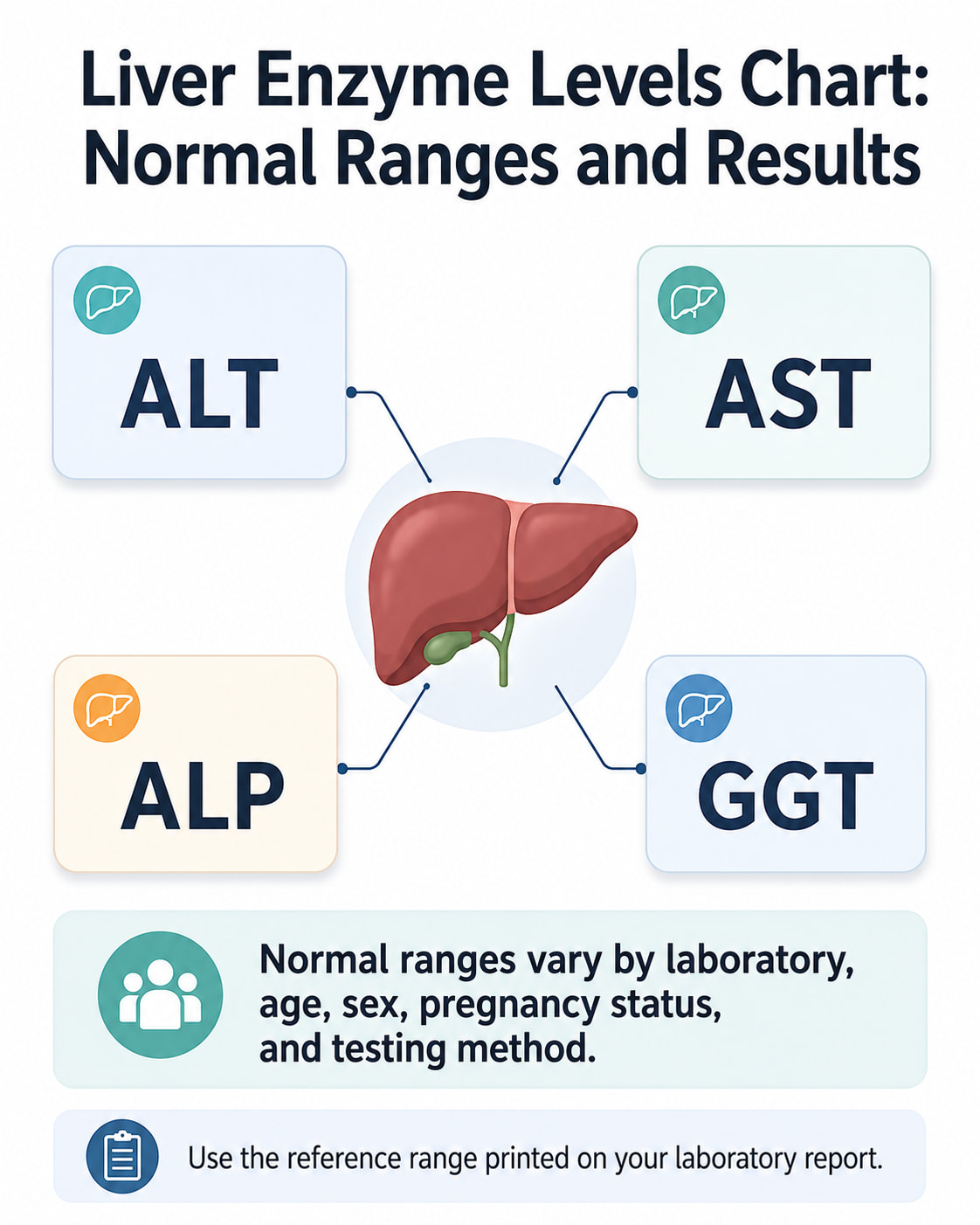
Typical adult liver enzyme ranges are approximately 7–55 U/L for ALT, 8–48 U/L for AST, 40–129 U/L for ALP, and 8–61 U/L for GGT, but normal values vary by sex, age, pregnancy status, testing method, and laboratory. Always use the reference interval printed beside your result as the primary standard.
A liver enzyme result that is slightly outside the normal range does not automatically mean you have liver disease. Healthcare professionals interpret ALT, AST, ALP, and GGT together with bilirubin, albumin, symptoms, medicines, medical history, and changes over time. The Mayo Clinic liver function test guide also emphasizes that ranges differ among laboratories.
Liver Enzyme Levels Chart: Normal Adult Ranges
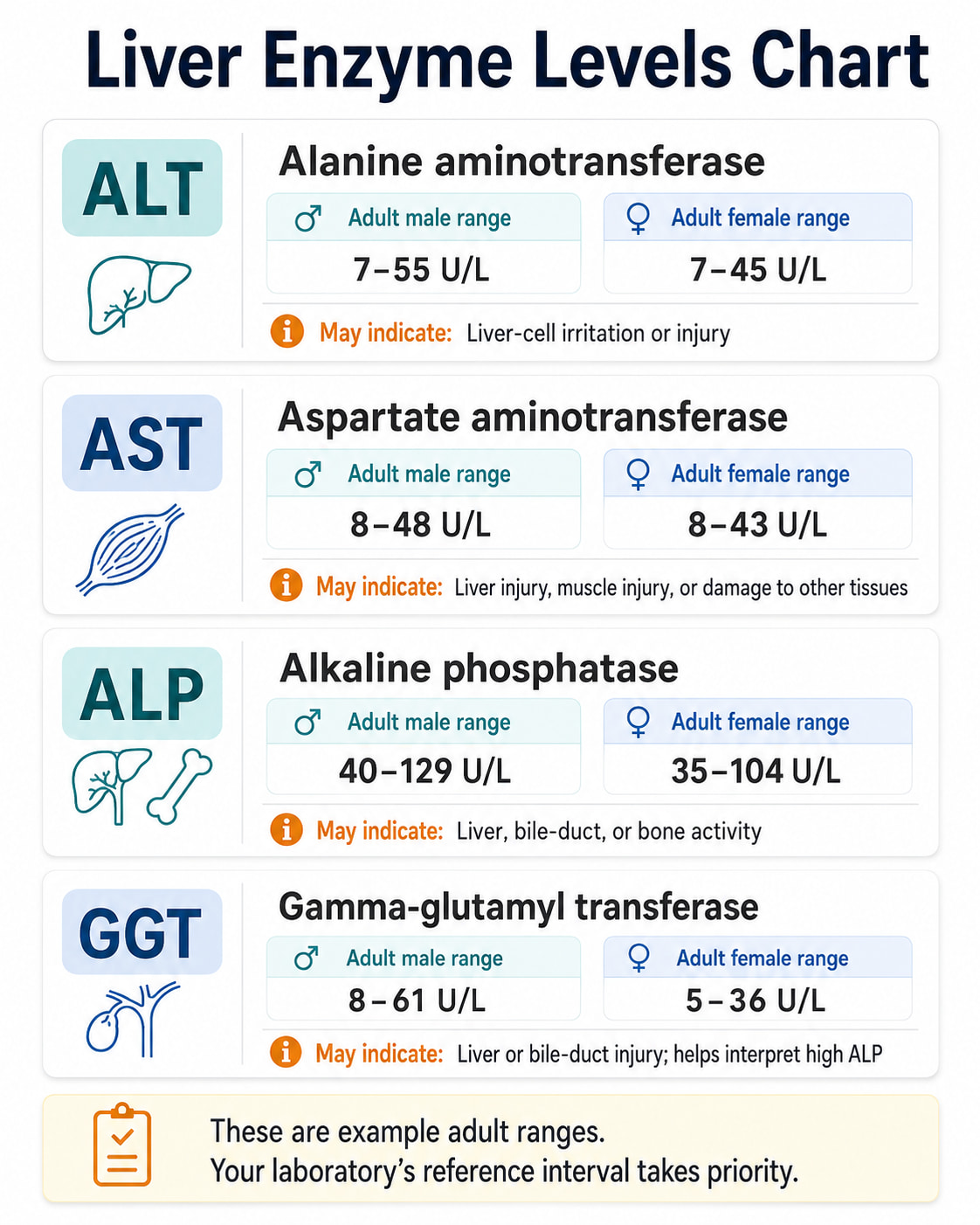
The following chart shows example adult reference intervals published by Mayo Clinic. These numbers are educational guidelines, not universal diagnostic cutoffs.
| Liver enzyme | Adult male range | Adult female range | What the test may reflect |
|---|---|---|---|
| ALT — Alanine aminotransferase | 7–55 U/L | 7–45 U/L | Liver-cell irritation or injury |
| AST — Aspartate aminotransferase | 8–48 U/L | 8–43 U/L | Liver injury or injury involving muscle and other tissues |
| ALP — Alkaline phosphatase | 40–129 U/L | 35–104 U/L | Liver, bile-duct, or bone activity |
| GGT — Gamma-glutamyl transferase | 8–61 U/L | 5–36 U/L | Liver or bile-duct injury; helps interpret elevated ALP |
These intervals apply to specific age groups. Mayo Clinic lists adult GGT ranges for people 18 and older, male ALP ranges for people 19 and older, and female ALP ranges for people 17 and older. Children and adolescents may have higher ALP because their bones are growing. ALP can also rise during pregnancy.
Important Notes About the Chart
- U/L means units per liter.
- A number marked “high” by one laboratory may be within range at another laboratory.
- Results for children should be compared with age-specific pediatric ranges.
- Pregnancy, bone growth, exercise, medicines, and other factors can affect certain results.
- A normal result does not guarantee that the liver is free of disease.
- An abnormal result cannot identify the exact cause by itself.
What Do Liver Enzyme Tests Measure?
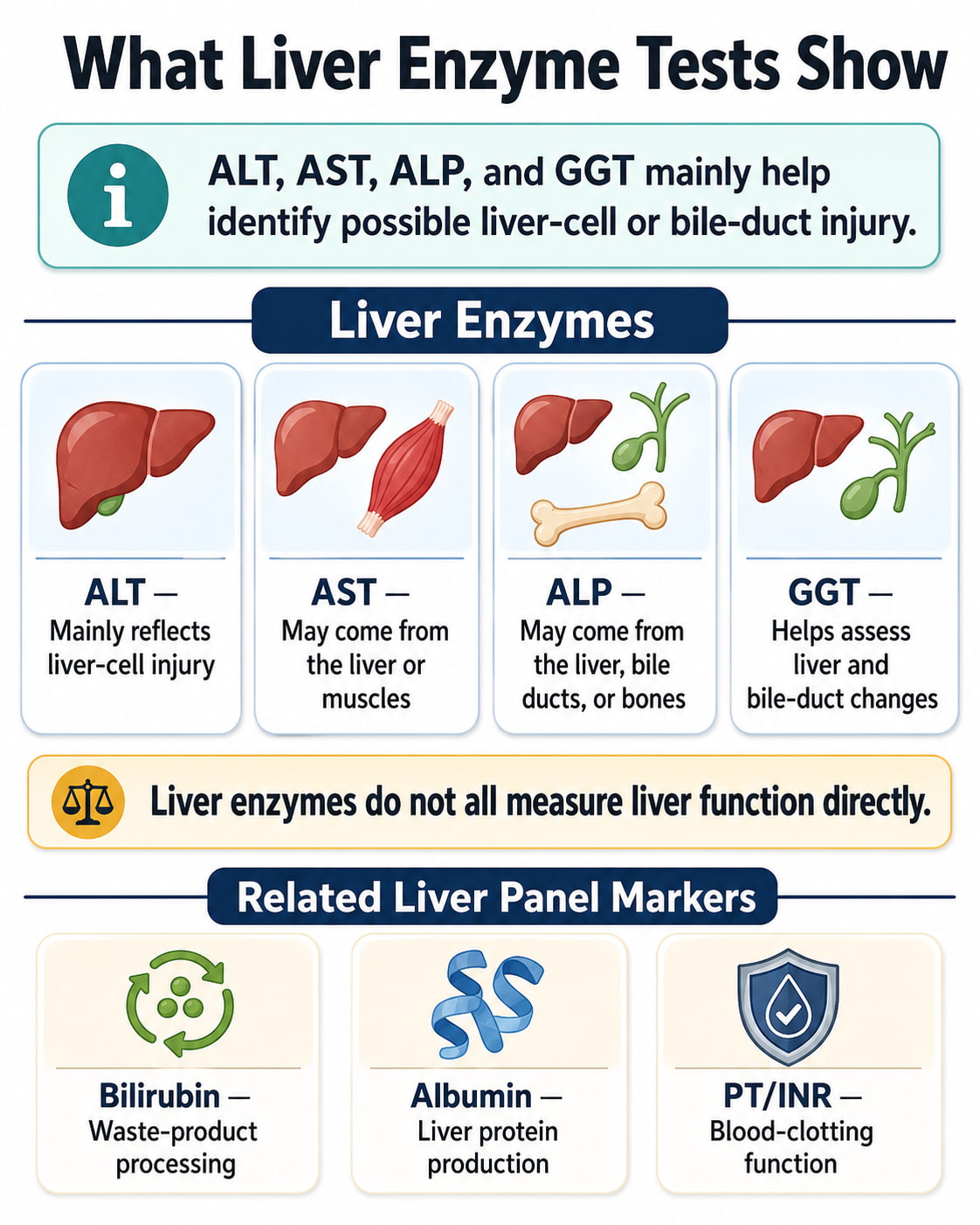
Liver enzymes are proteins that support chemical reactions in the body. When liver or bile-duct cells become irritated or damaged, some enzymes may leak into the bloodstream.
ALT, AST, ALP, and GGT are often grouped under the term “liver function tests,” but they do not all measure liver function directly. ALT and AST mainly help identify possible cell injury, while ALP and GGT may suggest a problem involving bile flow.
According to MedlinePlus liver function test guidance, a liver panel may also include proteins, waste products, and clotting measurements. These results provide different information and usually must be interpreted together.
Related Liver Panel Markers That Are Not Enzymes
| Test | Example adult range | What it helps assess |
|---|---|---|
| Albumin | 3.5–5.0 g/dL | The liver’s ability to produce an important blood protein |
| Total bilirubin | 0.1–1.2 mg/dL | How the liver processes and clears bilirubin |
| Total protein | 6.3–7.9 g/dL | The total amount of albumin and globulins in the blood |
| Prothrombin time or INR | Laboratory-specific | How quickly blood clots and whether the liver is producing enough clotting proteins |
Albumin is a protein, bilirubin is a waste product, and prothrombin time is a clotting measurement. They should not be labeled as liver enzymes.
ALT Normal Range and Results
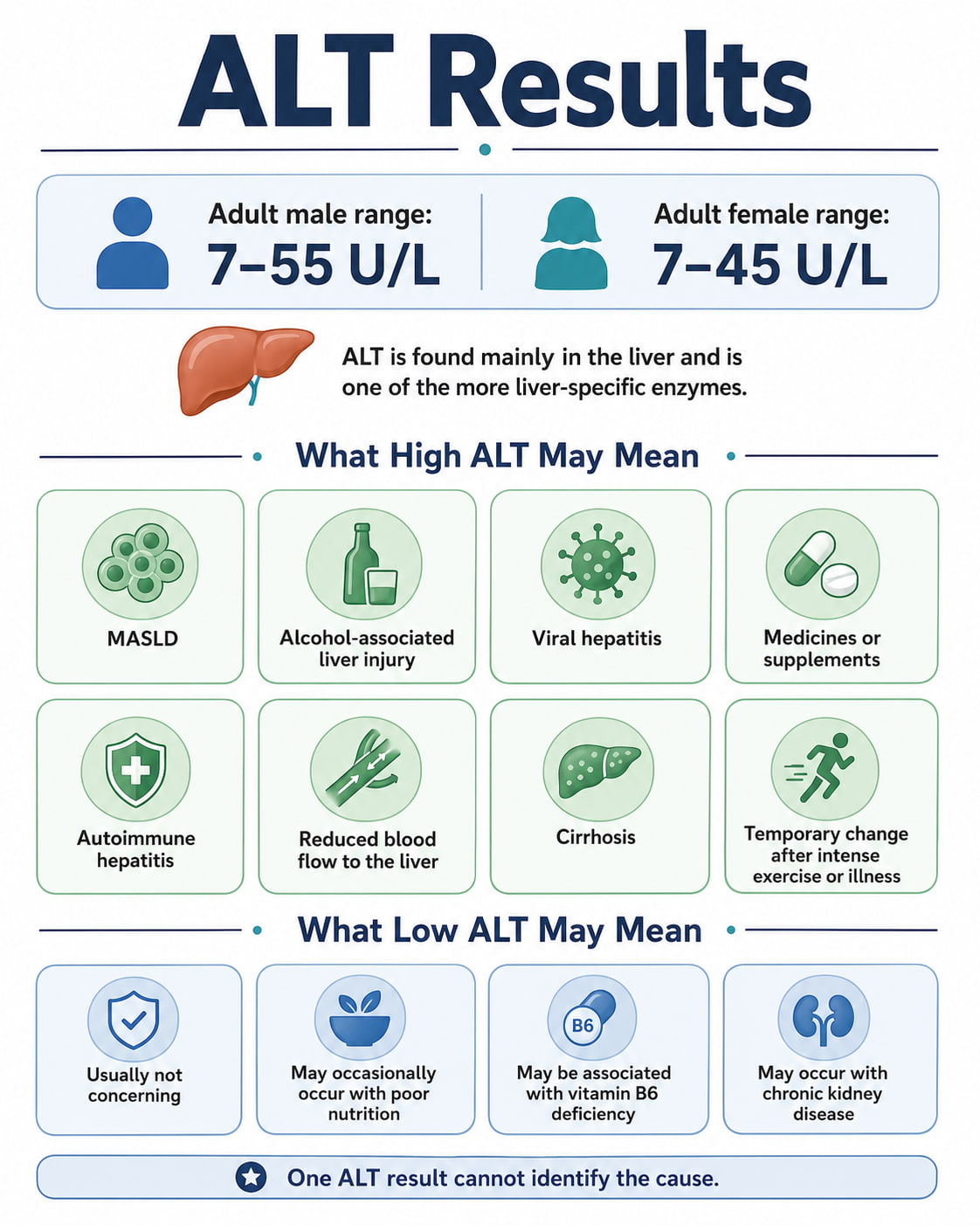
Alanine aminotransferase, or ALT, is found mainly in the liver. It is often considered the most liver-specific enzyme in a routine liver panel.
Normal ALT Range
- Males: 7–55 U/L
- Females: 7–45 U/L
What Does High ALT Mean?
A high ALT result may indicate that liver cells are irritated or injured. Possible causes include:
- Metabolic dysfunction-associated steatotic liver disease, or MASLD
- Alcohol-associated liver disease
- Viral hepatitis
- Medication- or supplement-related liver injury
- Autoimmune hepatitis
- Reduced blood flow to the liver
- Cirrhosis
- Less commonly, injury involving heart or muscle tissue
MASLD is the current term for what was previously called nonalcoholic fatty liver disease, or NAFLD.
A mildly elevated ALT may also occur temporarily after vigorous exercise, a fatty meal, alcohol intake, an illness, or the use of certain medicines. ALT levels may fluctuate, so a trend across several tests is often more informative than one result.
What Does Low ALT Mean?
A low ALT level is usually not a concern. Less commonly, a very low result may be associated with vitamin B6 deficiency, poor nutrition, or chronic kidney disease. A low value alone cannot diagnose any of these conditions.
AST Normal Range and Results
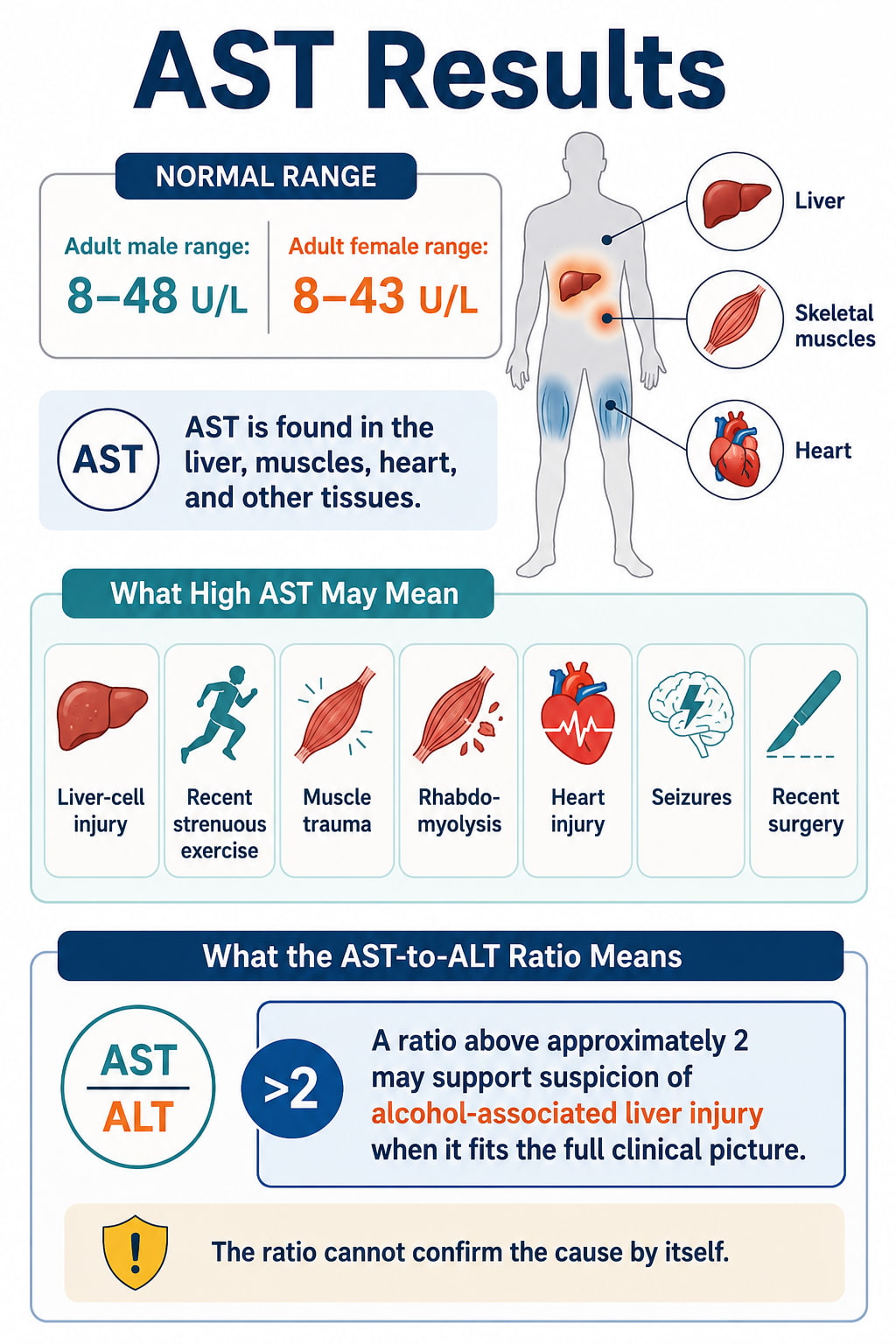
Aspartate aminotransferase, or AST, is found in the liver, skeletal muscles, heart, and several other tissues.
Normal AST Range
- Males age 14 and older: 8–48 U/L
- Females age 14 and older: 8–43 U/L
What Does High AST Mean?
High AST may occur with liver injury, but it is less liver-specific than ALT. Other possible reasons include:
- Recent strenuous exercise
- Muscle trauma
- Rhabdomyolysis
- Heart injury
- Surgery
- Seizures
- Hemolysis during blood collection
When both AST and ALT are elevated, their relationship may help guide further investigation. However, the numbers cannot confirm a diagnosis without other information.
Does a High AST-to-ALT Ratio Mean Alcohol-Related Liver Disease?
An AST level that is substantially higher than ALT—especially an AST-to-ALT ratio above approximately 2—may support suspicion of alcohol-associated liver injury in the appropriate clinical setting. It does not prove that alcohol is the cause.
AST may also exceed ALT in advanced cirrhosis from other causes. Healthcare professionals consider alcohol history, symptoms, bilirubin, blood counts, imaging, and other findings before reaching a conclusion.
What Does Low AST Mean?
Low AST levels are usually considered normal and generally do not require evaluation by themselves.
ALP Normal Range and Results
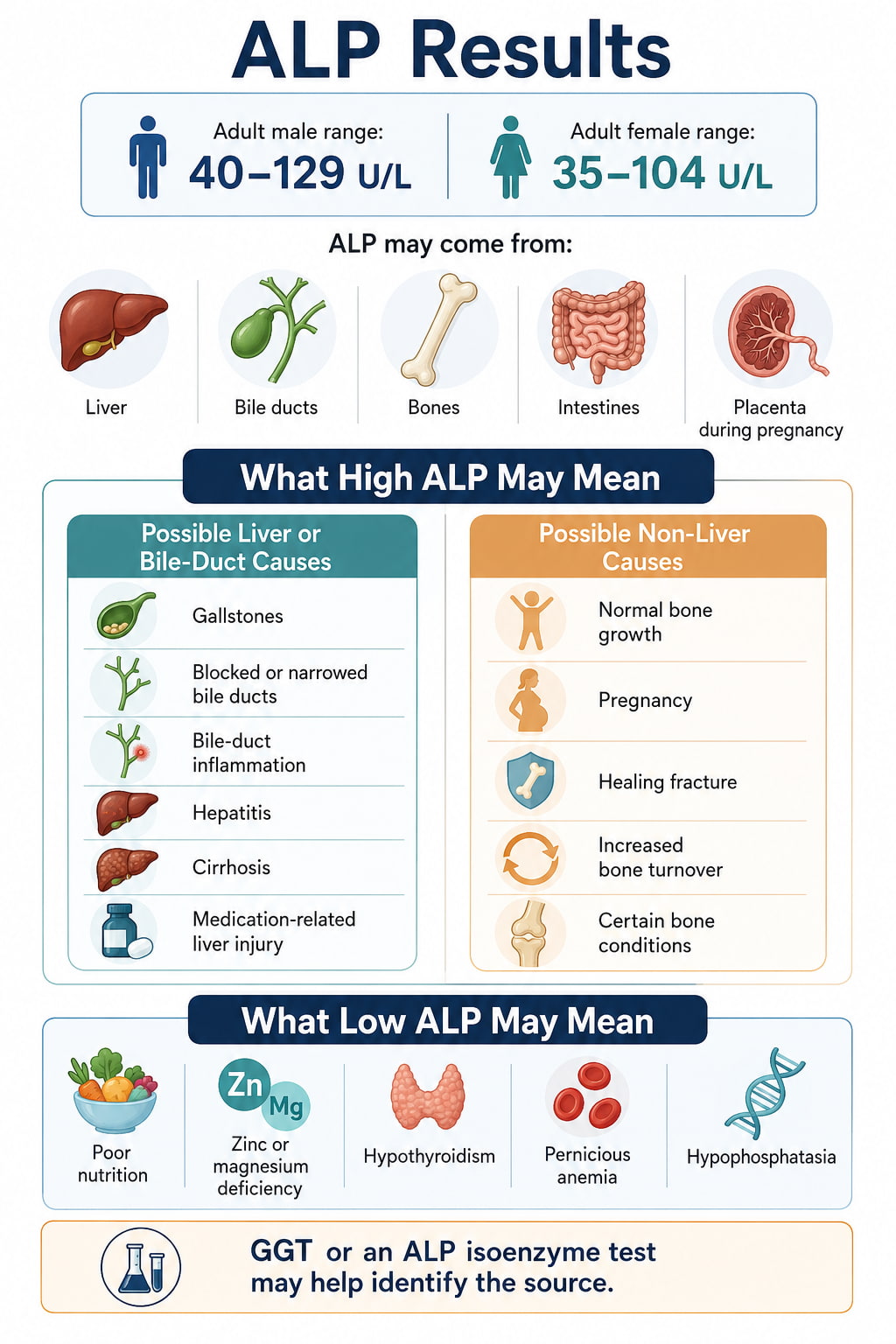
Alkaline phosphatase, or ALP, is found in the liver, bile ducts, bones, intestines, and placenta.
Normal ALP Range
- Males age 19 and older: 40–129 U/L
- Females age 17 and older: 35–104 U/L
What Does High ALP Mean?
A high ALP level may come from the liver or bones. Liver-related causes may include:
- A blocked or narrowed bile duct
- Gallstones
- Bile-duct inflammation
- Medication- or supplement-related liver injury
- MASLD
- Hepatitis
- Cirrhosis
- Certain liver or bile-duct tumors
Non-liver causes may include:
- Normal bone growth in children and teenagers
- Pregnancy
- A healing fracture
- Increased bone turnover
- Certain bone disorders
- Some thyroid or parathyroid conditions
Because a standard ALP test cannot show where the enzyme came from, healthcare professionals may compare it with GGT or order an ALP isoenzyme test.
What Does Low ALP Mean?
Low ALP is less common than high ALP. Possible associations include:
- Zinc deficiency
- Protein deficiency or malnutrition
- Hypothyroidism
- Pernicious anemia
- Wilson disease
- Hypophosphatasia, a rare genetic disorder
A repeat result and other tests are usually needed before a cause can be identified.
GGT Normal Range and Results
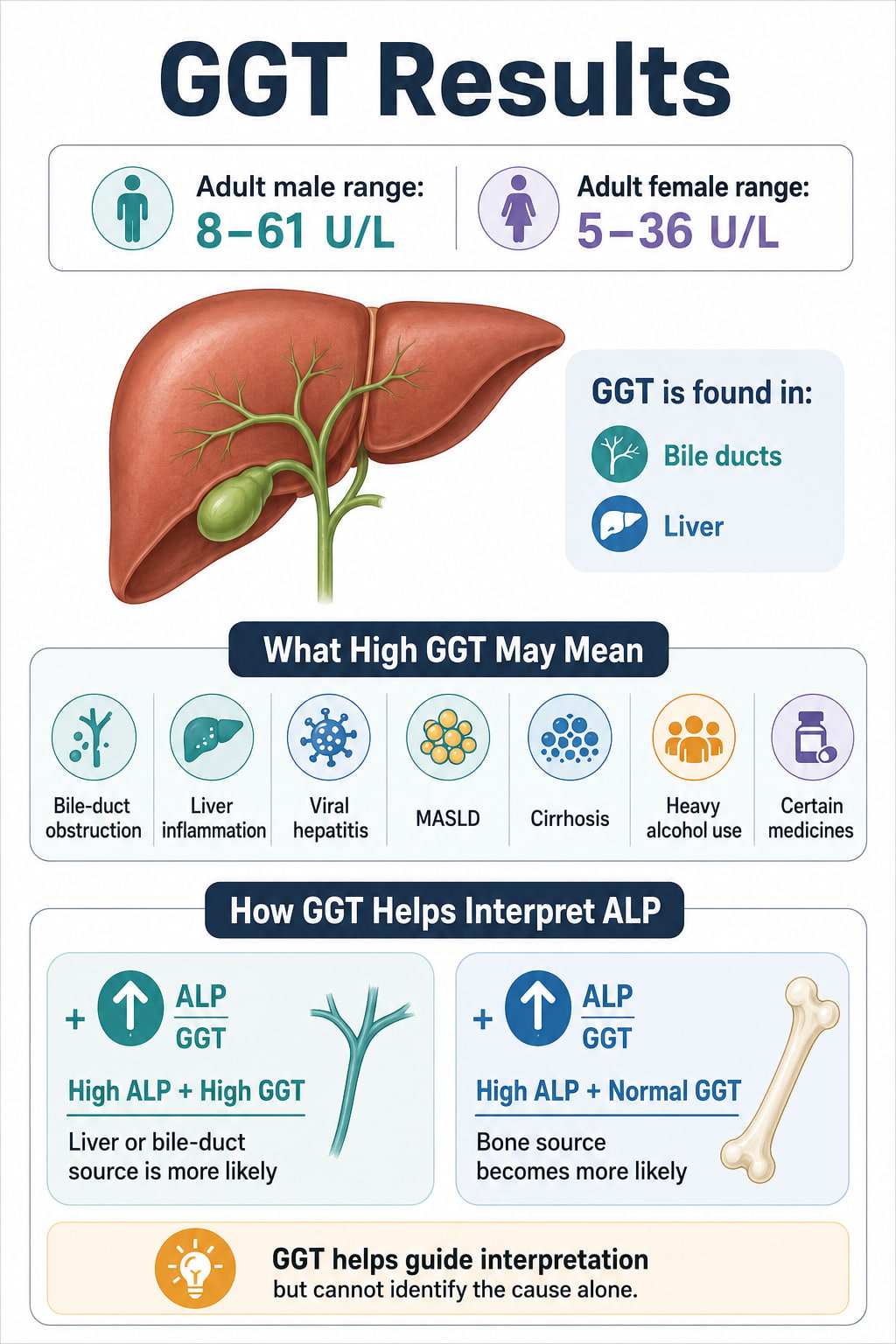
Gamma-glutamyl transferase, or GGT, is found mainly in the liver and bile ducts.
Normal GGT Range
- Males age 18 and older: approximately 8–61 U/L
- Females age 18 and older: approximately 5–36 U/L
What Does High GGT Mean?
High GGT may occur with:
- Bile-duct obstruction
- Liver inflammation
- Viral hepatitis
- MASLD
- Cirrhosis
- Long-term heavy alcohol use
- Certain medicines, including some antiseizure drugs
GGT is sensitive to liver and bile-duct changes, but it is not specific enough to identify the cause by itself. Alcohol, medicines, supplements, meals, and other health conditions may affect the result.
How GGT Helps Explain High ALP
GGT is often most useful when ALP is elevated.
- High ALP and high GGT: The ALP elevation is more likely to come from the liver or bile ducts.
- High ALP and normal GGT: A bone source becomes more likely.
This comparison is not definitive, but it helps guide the next stage of testing. The American College of Gastroenterology recommends using GGT to help confirm whether elevated ALP is liver-related rather than using GGT alone as a general screening test.
What Does Low GGT Mean?
A low GGT level is usually not a reason for concern.
What Do High Liver Enzyme Levels Mean?
High liver enzymes mean that one or more results are above the laboratory’s upper reference limit. They do not automatically mean that the liver is failing or permanently damaged.
Common possibilities include:
- MASLD: Fat accumulation associated with metabolic risk factors such as type 2 diabetes, elevated cholesterol, obesity, or high blood pressure
- Alcohol-related injury: The pattern may include AST that is higher than ALT
- Viral hepatitis: Including hepatitis A, B, or C
- Medicines and supplements: Prescription drugs, over-the-counter products, herbs, and bodybuilding supplements can affect liver tests
- Bile-duct obstruction: Gallstones or other blockages may raise ALP, GGT, and bilirubin
- Autoimmune liver disease: The immune system may mistakenly attack liver or bile-duct tissue
- Inherited conditions: Such as hemochromatosis, Wilson disease, or alpha-1 antitrypsin deficiency
- Non-liver conditions: Muscle injury may increase AST, while bone activity may increase ALP
The amount of ALT or AST in the blood does not reliably show how much lasting liver damage is present. A high number may reflect a sudden, reversible injury, while advanced chronic disease can sometimes be present with only modest or normal enzyme levels.
How High Is Too High?
The safest way to describe an abnormal result is by comparing it with the laboratory’s upper limit of normal, or ULN.
For example, if the laboratory’s ALT upper limit is 55 U/L:
- An ALT of 66 U/L is about 1.2 times the ULN
- An ALT of 110 U/L is 2 times the ULN
- An ALT of 550 U/L is 10 times the ULN
The American College of Gastroenterology groups ALT and AST elevations into categories below five times the ULN, five to 15 times the ULN, and above 15 times the ULN because different degrees of elevation may require different investigations. These categories help guide evaluation; they do not provide a direct measurement of permanent liver damage.
Very high ALT or AST values require prompt medical assessment. The American Association for the Study of Liver Diseases notes that transaminase levels of approximately 3,000 U/L or higher may occur with acute viral hepatitis, acetaminophen overdose, or severely reduced blood flow to the liver.
Liver Enzyme Patterns Matter More Than One Number
Healthcare professionals look at which tests are elevated most prominently.
| Pattern | Typical result pattern | What it may suggest |
|---|---|---|
| Hepatocellular | ALT and AST rise more than ALP | Liver-cell injury |
| Cholestatic | ALP and sometimes bilirubin rise more than ALT and AST | Reduced bile flow or bile-duct injury |
| Mixed | ALT, AST, and ALP are all meaningfully elevated | Features of both patterns |
The AASLD guide to elevated liver enzymes explains that these patterns help organize further testing. A clinician may also calculate an R-value using ALT, ALP, and each laboratory’s upper normal limits, particularly when evaluating possible medication-related liver injury.
Hepatocellular Pattern
In a hepatocellular pattern, ALT and AST are the most prominent abnormalities. Possible causes include viral hepatitis, MASLD, alcohol-associated injury, autoimmune hepatitis, medication-related injury, or reduced blood supply to the liver.
Cholestatic Pattern
In a cholestatic pattern, ALP is elevated more prominently. GGT and bilirubin may also rise. Possible causes include gallstones, bile-duct narrowing, inflammation of the bile ducts, or medication-related injury.
Mixed Pattern
A mixed pattern includes meaningful increases in both ALT or AST and ALP. Medicines and supplements can produce hepatocellular, cholestatic, or mixed patterns.
Can You Have Liver Disease With Normal Liver Enzymes?
Yes. Normal ALT, AST, ALP, and GGT results reduce the likelihood of some active problems, but they do not rule out every liver condition.
Some people with MASLD have normal ALT levels. Liver enzyme levels can also decrease in advanced cirrhosis because fewer functioning liver cells remain available to release enzymes. Risk factors, symptoms, imaging, platelet count, fibrosis assessments, and medical history may still justify evaluation even when enzymes are within range.
Factors That Can Affect Liver Enzyme Results
Several temporary or non-liver factors may influence a liver enzyme levels chart:
- Recent strenuous exercise
- Muscle injury
- Alcohol intake
- A fatty meal
- Fasting status
- Prescription medicines
- Over-the-counter pain relievers
- Herbal or dietary supplements
- Recent infection or illness
- Pregnancy
- Age and bone growth
- Body weight and metabolic health
- Differences in testing equipment and laboratory methods
Tell your healthcare professional about everything you take, including herbal products, workout supplements, and nonprescription medicines. Do not stop a prescribed medicine simply because a result is abnormal unless the prescriber advises you to do so.
What to Do After an Abnormal Liver Enzyme Result
An abnormal result should be interpreted calmly and systematically.
1. Check the Laboratory’s Reference Range
Confirm the units and the normal interval shown on your report. Do not compare results from two laboratories without checking whether their ranges and methods are the same.
2. Review Previous Results
A stable, mildly abnormal result may have a different meaning from a sudden large increase. Bring previous blood-test reports to your appointment when possible.
3. Consider Recent Influences
Tell your healthcare professional about:
- Alcohol consumed before the test
- Recent vigorous exercise
- Illness or infection
- New medicines
- Dose changes
- Acetaminophen use
- Herbal remedies
- Weight-loss or bodybuilding products
4. Do Not Start a “Liver Detox”
Detox teas, cleanses, and unregulated supplements have not been shown to correct an unexplained liver enzyme elevation. Some herbal and dietary products can themselves contribute to liver injury.
5. Complete Recommended Follow-Up Testing
Depending on the pattern and degree of elevation, further evaluation may include:
- A repeat liver panel
- Bilirubin, albumin, and PT/INR
- Complete blood count
- Hepatitis testing
- Iron and ferritin studies
- Autoimmune blood tests
- Creatine kinase when muscle injury is possible
- Abdominal ultrasound
- Fibrosis assessment or elastography
- Additional imaging
- Referral to a gastroenterologist or hepatologist
The American College of Gastroenterology guideline on abnormal liver chemistries recommends confirming abnormalities and tailoring the investigation to the enzyme pattern, medical history, medicines, risk factors, and persistence of the results.
When to Seek Prompt Medical Care
Contact a healthcare professional promptly if abnormal liver enzymes occur with:
- Yellow skin or eyes
- Dark urine
- Pale, gray, or clay-colored stool
- Persistent nausea or vomiting
- Significant upper-right abdominal pain
- Abdominal swelling
- Severe itching
- Unexplained weight loss
- Loss of appetite
- Swelling in the legs or ankles
- Increasing weakness or fatigue
Seek emergency care for confusion, extreme sleepiness, fainting, vomiting blood, black tarry stool, heavy bleeding, severe abdominal pain, or a suspected acetaminophen overdose. These symptoms may indicate a serious liver or gastrointestinal problem that requires immediate evaluation.
Frequently Asked Questions
What is the most important liver enzyme?
No single liver enzyme is always the most important. ALT is relatively liver-specific, AST can also come from muscles, ALP may come from liver or bone, and GGT helps interpret possible bile-duct or liver-related ALP elevations. The complete pattern is more useful than one number.
Is an ALT of 60 high?
It depends on your laboratory’s reference interval and your sex, age, symptoms, and previous results. If the laboratory’s upper limit is 55 U/L, an ALT of 60 U/L is only slightly elevated. A healthcare professional may review recent exercise, alcohol, medicines, metabolic risk factors, and other liver-panel results before deciding whether to repeat the test.
Can exercise raise liver enzymes?
Yes. Vigorous exercise and muscle injury can temporarily raise AST and sometimes ALT. Creatine kinase testing may help when muscle injury is suspected. Tell your healthcare professional about recent intense workouts before your results are interpreted.
Can fatty liver cause high liver enzymes?
Yes. MASLD may cause mild or moderate ALT and AST elevations. However, some people with MASLD have normal liver enzymes, so blood tests alone cannot confirm or exclude it. Imaging and assessment of metabolic risk factors may be needed.
Does high GGT always mean alcohol use?
No. Alcohol can raise GGT, but so can bile-duct obstruction, viral hepatitis, MASLD, cirrhosis, heart failure, diabetes, pancreatitis, and certain medicines. GGT cannot determine the cause by itself.
How long does it take liver enzymes to return to normal?
The timing depends on the cause. A temporary elevation from exercise or a short illness may improve relatively quickly, while elevations related to chronic liver disease may persist. Repeat testing should follow the schedule recommended by your healthcare professional.
Should I stop my medicine if liver enzymes are high?
Do not stop a prescription medicine without speaking with the prescriber, unless emergency medical instructions tell you otherwise. Abruptly stopping some medicines can be harmful. Your healthcare professional may repeat the test, adjust the dose, change the medicine, or investigate another cause.
Conclusion
A liver enzyme levels chart can help you understand where ALT, AST, ALP, and GGT generally fall, but it cannot diagnose the reason for an abnormal result. Start with the range printed on your laboratory report, review the complete liver panel, and compare the result with previous tests.
A slight isolated elevation is often manageable, but persistent, rising, or markedly abnormal results deserve medical follow-up. Bring a complete list of medicines, supplements, alcohol use, recent illnesses, and exercise habits to your appointment so your healthcare professional can interpret the pattern accurately.
This content is for informational purposes only and not medical advice.
References
- Mayo Clinic — Liver Function Tests
- Mayo Clinic — ALT Blood Test
- Mayo Clinic — ALP Blood Test
- Mayo Clinic — GGT Blood Test
- American Association for the Study of Liver Diseases — How to Approach Elevated Liver Enzymes
- MedlinePlus — Liver Function Tests
- American College of Gastroenterology — Evaluation of Abnormal Liver Chemistries