
An electrolyte imbalance can cause muscle weakness, cramps, fatigue, tingling, nausea, confusion, thirst, palpitations, or changes in breathing, depending on which electrolyte is too low or too high. Severe imbalances can lead to seizures, dangerous heart-rhythm changes, loss of consciousness, or cardiac arrest.
This electrolyte imbalance symptoms chart compares the common signs associated with sodium, potassium, calcium, magnesium, chloride, and phosphate. However, symptoms alone cannot identify the affected mineral. Many electrolyte problems cause similar symptoms, and mild abnormalities may cause no symptoms at all.
A blood test provides the only reliable way to confirm an imbalance. Seek urgent medical care for seizures, fainting, severe confusion, breathing difficulty, sudden profound weakness, or a very slow, fast, or irregular heartbeat.
Electrolyte Imbalance Symptoms Chart at a Glance
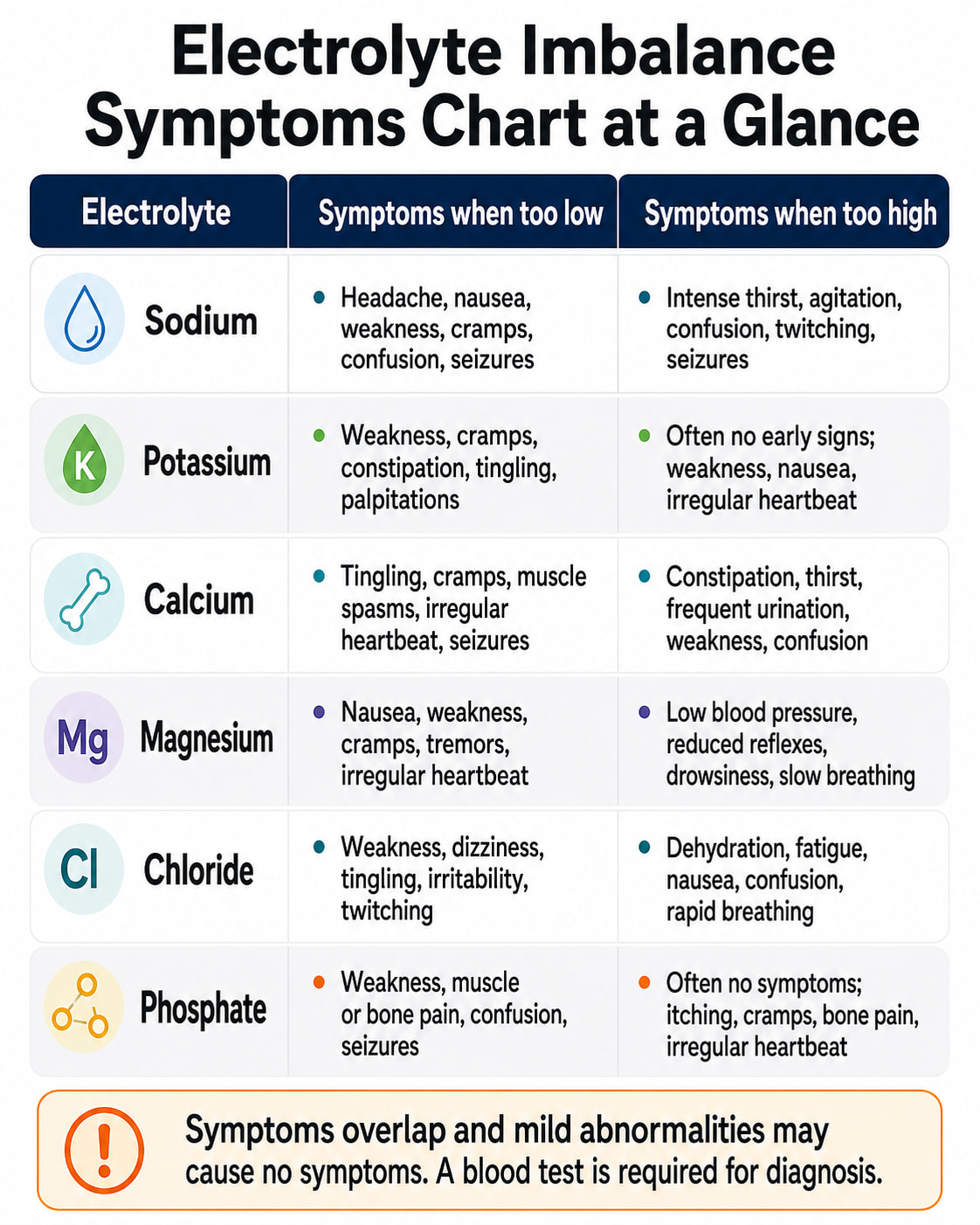
| Electrolyte | Symptoms when too low | Symptoms when too high |
|---|---|---|
| Sodium | Weakness, fatigue, nausea, headache, muscle cramps or twitching, irritability, confusion, seizures, or coma | Intense thirst, very little urination, confusion, agitation, muscle twitching, seizures, or coma |
| Potassium | Constipation, fatigue, muscle weakness or spasms, numbness, tingling, palpitations, lightheadedness, or fainting | Often no early symptoms; possible nausea, vomiting, chest discomfort, breathing difficulty, palpitations, slow or irregular pulse, or sudden collapse |
| Calcium | Tingling around the lips or in the fingers and feet, muscle cramps, spasms, stiffness, irregular heartbeat, or seizures | Constipation, nausea, abdominal pain, thirst, frequent urination, kidney stones, weakness, fatigue, bone pain, depression, or confusion |
| Magnesium | Loss of appetite, nausea, fatigue, weakness, cramps, tingling, tremors, irregular heartbeat, or seizures | Diarrhea or abdominal cramps; severe excess may cause reduced reflexes, low blood pressure, extreme drowsiness, slowed breathing, or cardiac arrest |
| Chloride | Symptoms usually reflect an associated fluid or acid-base problem, such as weakness, dizziness, tingling, irritability, or muscle twitching | Dehydration, fatigue, nausea, vomiting, weakness, confusion, or rapid or difficult breathing |
| Phosphate | Mildly low levels may cause no symptoms; severe deficiency can cause muscle weakness or pain, bone pain, irritability, confusion, seizures, or coma | Often causes no direct symptoms; associated low calcium may cause itching, cramps, bone pain, irregular heartbeat, or seizures |
This chart shows common patterns, not diagnostic rules. The speed of the change can matter as much as the actual laboratory value. For example, a rapid sodium decline can cause serious neurologic symptoms even when a slowly developing abnormality at a similar level causes fewer symptoms.
What Is an Electrolyte Imbalance?
Electrolytes are electrically charged substances in blood, urine, tissues, and other body fluids. They help regulate:
- Fluid balance
- Nerve signaling
- Muscle contraction
- Heart rhythm
- Blood pressure
- Blood acidity, or pH
- Movement of nutrients and waste into and out of cells
An electrolyte imbalance occurs when the concentration of one or more electrolytes becomes too low or too high. The National Library of Medicine’s MedlinePlus guidance explains that changes in body water—either dehydration or excess water—commonly disrupt these levels.
The primary electrolytes measured in medical care include:
- Sodium
- Potassium
- Chloride
- Bicarbonate
- Calcium
- Magnesium
- Phosphate
Electrolytes work together. An abnormality in one can contribute to changes in others. Low magnesium, for example, can occur alongside low potassium or low calcium.
Low and High Sodium Symptoms
Sodium controls fluid distribution and supports normal muscle and nerve activity. Sodium abnormalities often affect the brain because changes in sodium cause water to move into or out of brain cells.
Low Sodium Symptoms
A low blood sodium level is called hyponatremia. Possible symptoms include:
- Nausea or vomiting
- Headache
- Weakness
- Fatigue
- Loss of appetite
- Muscle cramps, spasms, or twitching
- Irritability or restlessness
- Confusion
- Reduced alertness
- Seizures
- Coma
Acute hyponatremia can become dangerous quickly because brain cells swell as water moves into them. A slowly developing imbalance may produce fewer symptoms because the brain has more time to adjust.
Common causes include prolonged vomiting or diarrhea, heavy sweating, diuretics, kidney disease, heart failure, liver disease, certain medications, and drinking excessive amounts of water.
High Sodium Symptoms
A high blood sodium level is called hypernatremia. It usually develops when the body loses more water than sodium.
Possible symptoms include:
- Strong thirst
- Very little urination
- Dry mouth or other signs of dehydration
- Irritability or agitation
- Confusion
- Muscle twitching
- Overactive reflexes
- Seizures
- Coma
Thirst is often the main early sign. Older adults, infants, people with impaired thirst, and people who cannot independently obtain water face a higher risk of severe hypernatremia.
Low and High Potassium Symptoms
Potassium helps muscles, nerves, and heart cells function properly. Both low and high potassium can interfere with the heart’s electrical activity, sometimes before obvious symptoms appear.
Low Potassium Symptoms
Low potassium is called hypokalemia. A small decrease may cause no symptoms. When symptoms occur, they may include:
- Fatigue
- Constipation
- Muscle weakness
- Muscle cramps or spasms
- Tingling or numbness
- Palpitations
- Lightheadedness
- Fainting
A major decline can cause severe muscle weakness, paralysis, breathing-muscle weakness, or a life-threatening abnormal heart rhythm.
Vomiting, diarrhea, excessive laxative use, heavy sweating, diuretics, certain antibiotics, low magnesium, and some hormonal conditions can lower potassium.
High Potassium Symptoms
High potassium is called hyperkalemia. It often causes no noticeable symptoms, which makes laboratory monitoring especially important for people with kidney disease or those taking medicines that raise potassium.
Possible signs include:
- Nausea or vomiting
- Chest discomfort
- Difficulty breathing
- Palpitations
- A slow, weak, or irregular pulse
- Sudden weakness
- Collapse
Very high potassium can cause the heart to stop. Anyone with kidney disease, abnormal heart symptoms, or possible potassium excess should not wait for symptoms before seeking medical advice.
Do not take potassium supplements or potassium-based salt substitutes for cramps or fatigue unless a healthcare professional has confirmed that you need them. Damaged kidneys may struggle to remove excess potassium.
Low and High Calcium Symptoms
Calcium supports bones, muscle contraction, nerve communication, blood clotting, and heart function. A standard blood test usually measures total calcium, although clinicians sometimes measure ionized calcium when they need a more direct assessment of biologically active calcium.
Low Calcium Symptoms
Low blood calcium is called hypocalcemia. Signs may include:
- Tingling around the lips
- Tingling in the tongue, fingers, or feet
- Muscle cramps
- Muscle stiffness
- Painful spasms
- Irregular heartbeat
- Seizures in severe cases
Long-standing low calcium may also contribute to dry skin, coarse hair, and brittle nails. However, many people with a mild abnormality have no symptoms.
Possible causes include vitamin D deficiency, parathyroid disorders, kidney disease, low magnesium, malabsorption, and certain medicines.
High Calcium Symptoms
High blood calcium is called hypercalcemia. Possible symptoms include:
- Constipation
- Nausea or vomiting
- Abdominal discomfort
- Loss of appetite
- Increased thirst
- Frequent urination
- Kidney stones
- Muscle weakness
- Bone or joint pain
- Fatigue
- Depression
- Confusion
Severe hypercalcemia can progress to profound confusion or coma. Common causes include overactive parathyroid glands, certain cancers, and excessive vitamin D activity.
Low and High Magnesium Symptoms
Magnesium supports hundreds of enzyme reactions and helps regulate nerves, muscles, blood sugar, blood pressure, and heart rhythm. The NIH Office of Dietary Supplements updated its professional magnesium fact sheet in January 2026.
Low Magnesium Symptoms
Low magnesium is called hypomagnesemia. Early or moderate symptoms can include:
- Reduced appetite
- Nausea or vomiting
- Fatigue
- Weakness
- Muscle cramps
- Numbness or tingling
More serious deficiency can cause:
- Tremors
- Muscle spasms
- Seizures
- Personality or behavior changes
- Abnormal heart rhythms
- Low potassium
- Low calcium
Blood magnesium can sometimes appear normal even when body stores are low, so clinicians interpret the result alongside symptoms and other test results.
High Magnesium Symptoms
High magnesium is called hypermagnesemia. It remains uncommon in people with normal kidney function. It most often occurs when impaired kidneys cannot remove magnesium from supplements, laxatives, antacids, or medical infusions.
Possible symptoms include:
- Nausea
- Diarrhea
- Abdominal cramping
- Reduced reflexes
- Muscle weakness
- Low blood pressure
- Extreme sleepiness
- Slow or difficult breathing
- Cardiac arrest in severe cases
People with kidney disease should ask a healthcare professional before using magnesium supplements, antacids, or laxatives that contain magnesium.
Low and High Chloride Symptoms
Chloride works closely with sodium and bicarbonate to regulate fluid balance, blood volume, and blood pH.
Chloride abnormalities rarely produce a unique symptom pattern. Symptoms usually come from the underlying fluid loss, kidney problem, or acid-base disorder rather than from chloride alone.
Low Chloride Symptoms
Low chloride is called hypochloremia. It may occur with prolonged vomiting, diuretic use, heart failure, lung disease, adrenal problems, or metabolic alkalosis.
Possible associated symptoms include:
- Weakness
- Dizziness
- Dehydration
- Irritability
- Muscle twitching
- Tingling in the fingers or toes
- Slow or shallow breathing in some acid-base disorders
High Chloride Symptoms
High chloride is called hyperchloremia. It may occur with dehydration, kidney disease, excessive saline exposure, or metabolic acidosis.
Possible associated signs include:
- Thirst or dehydration
- Fatigue
- Weakness
- Nausea
- Vomiting
- Confusion
- Rapid or deep breathing
- Trouble breathing
A chloride result should always be interpreted with sodium, bicarbonate, kidney function, and the clinical situation.
Low and High Phosphate Symptoms
Laboratory reports may use the terms phosphate and phosphorus for the same blood measurement. Phosphate supports bone structure, energy production, cell membranes, muscle function, and acid-base balance.
Low Phosphate Symptoms
Low phosphate is called hypophosphatemia. Mildly low levels often cause no symptoms. Severe deficiency can produce:
- Muscle weakness
- Muscle pain
- Bone pain
- Irritability
- Confusion
- Breathing-muscle weakness
- Heart dysfunction
- Seizures
- Coma
Severe hypophosphatemia requires immediate medical evaluation.
High Phosphate Symptoms
High phosphate is called hyperphosphatemia. It commonly causes no symptoms on its own. However, excess phosphate can lower blood calcium and contribute to:
- Itchy skin
- Rash
- Muscle cramps
- Bone pain
- Irregular heartbeat
- Seizures
Kidney disease is a common cause because damaged kidneys may not remove phosphate effectively. The MedlinePlus phosphate blood test guide emphasizes that clinicians interpret phosphate with calcium, kidney function, parathyroid hormones, symptoms, and medical history.
What About Bicarbonate?
Bicarbonate is an electrolyte, although people do not usually think of it as a dietary mineral. A blood chemistry panel may list it as:
- Bicarbonate
- HCO3
- Total CO2
- Carbon dioxide
Low bicarbonate may point toward metabolic acidosis. Possible symptoms include:
- Rapid or deep breathing
- Fatigue
- Nausea or vomiting
- Confusion
- Reduced alertness
- A fast or irregular heartbeat
High bicarbonate may occur with metabolic alkalosis. Possible symptoms include:
- Headache
- Lightheadedness
- Confusion
- Lethargy
- Muscle twitching or cramps
- Tingling
- Tremors
A bicarbonate result cannot identify the cause by itself. Clinicians may order an anion gap, blood gas, kidney tests, glucose testing, or other studies to evaluate an acid-base problem.
What Causes Electrolyte Imbalances?
An electrolyte imbalance often develops because the body gains or loses water, loses electrolytes, cannot remove excess minerals, or shifts electrolytes between the blood and cells.
Common causes include:
- Prolonged vomiting
- Severe or persistent diarrhea
- Heavy sweating
- Fever or major burns
- Not drinking enough fluid
- Drinking excessive amounts of water
- Kidney disease
- Heart failure
- Liver disease
- Poorly controlled diabetes
- Malnutrition or malabsorption
- Alcohol use disorder
- Diuretics
- Laxative overuse
- Certain blood pressure medicines
- Antacids or supplements containing minerals
- Adrenal, thyroid, or parathyroid disorders
- Major surgery, infection, trauma, or extensive muscle injury
Risk depends on more than diet. For example, a person may have high potassium despite eating a normal amount if the kidneys cannot remove it. Another person may develop low sodium from retaining too much water rather than from consuming too little salt.
How Are Electrolyte Imbalances Diagnosed?
Healthcare professionals diagnose an electrolyte imbalance with blood testing, not with symptoms alone.
Electrolyte Panel
An electrolyte panel commonly measures:
- Sodium
- Potassium
- Chloride
- Bicarbonate or total CO2
The MedlinePlus electrolyte panel resource notes that the test may form part of a basic metabolic panel or comprehensive metabolic panel.
Additional Tests
Depending on the suspected problem, a healthcare professional may also order:
- Calcium
- Magnesium
- Phosphate
- Blood glucose
- Kidney-function tests
- Urine sodium or potassium
- Blood and urine osmolality
- Anion gap
- Arterial or venous blood gas
- Thyroid, adrenal, or parathyroid testing
- An electrocardiogram
An electrocardiogram can help identify heart-rhythm effects from potassium, calcium, or magnesium abnormalities.
Why Reference Ranges Differ
Laboratories use different equipment, testing methods, and reference populations. Always compare your number with the range printed on your own report.
A result slightly outside the laboratory range does not automatically mean that you have a dangerous condition. Your clinician considers:
- How far the result is from the reference range
- Whether it changed quickly
- Your symptoms
- Your kidney function
- Your medications and supplements
- Your hydration status
- Other laboratory results
When Are Electrolyte Imbalance Symptoms an Emergency?
Call emergency services or seek immediate medical care for:
- A seizure
- Loss of consciousness
- Sudden collapse
- Severe or rapidly worsening confusion
- Inability to stay awake
- Severe breathing difficulty
- New chest pain
- Fainting with palpitations
- A very slow, fast, or irregular pulse
- Sudden profound muscle weakness
- Paralysis
- Symptoms after prolonged vomiting or severe diarrhea
- Neurologic symptoms after drinking excessive amounts of water
- Severe symptoms after heat exposure or intense exercise
Do not drive yourself if you feel faint, severely confused, or unable to breathe normally.
Severe electrolyte disturbances can disrupt brain function, breathing muscles, and the heart’s electrical system. Potassium and magnesium abnormalities can become especially dangerous even before a person feels seriously ill.
Can You Correct an Electrolyte Imbalance at Home?
Do not assume that fatigue, cramps, or tingling means you need an electrolyte supplement. Low and high levels can produce similar symptoms.
Taking the wrong product could make the imbalance worse. For example:
- Potassium supplements can be dangerous when potassium is already high.
- Magnesium products can accumulate when kidney function is reduced.
- Excess water can further lower sodium.
- Large amounts of salt may be unsafe for people with heart, kidney, or blood-pressure problems.
- Sports drinks may contain sugar, sodium, and potassium that you do not need.
Minor fluid losses after sweating may improve with water, food, and an appropriate electrolyte beverage. However, prolonged vomiting, persistent diarrhea, significant weakness, confusion, or abnormal heart symptoms require medical advice.
Do not stop prescribed medicines or change supplement doses without speaking with the healthcare professional who manages them.
How to Reduce the Risk of Electrolyte Imbalances
You cannot prevent every electrolyte problem, but these measures may reduce avoidable risk:
- Drink according to thirst during normal daily activities.
- Increase fluid intake appropriately during heat exposure, fever, or prolonged exercise.
- Avoid forcing excessive amounts of plain water in a short period.
- Replace fluids after vomiting or diarrhea according to medical guidance.
- Eat a varied diet unless your clinician has prescribed restrictions.
- Use diuretics, laxatives, antacids, and supplements only as directed.
- Tell your clinician about every prescription, over-the-counter product, and supplement you use.
- Complete recommended blood tests if you have kidney, heart, liver, adrenal, or parathyroid disease.
- Seek medical advice when vomiting or diarrhea continues or prevents you from keeping fluids down.
People with kidney disease or heart failure often need individualized fluid and electrolyte instructions. General hydration advice may not be appropriate for them.
Frequently Asked Questions
What are the first signs of an electrolyte imbalance?
Early signs may include fatigue, weakness, headache, nausea, muscle cramps, twitching, tingling, thirst, constipation, or palpitations. These symptoms are nonspecific, and a mild imbalance may cause no symptoms.
Which electrolyte imbalance causes muscle cramps?
Low sodium, potassium, calcium, or magnesium can all contribute to muscle cramps. High phosphate may also cause cramps indirectly by lowering calcium. Cramps alone cannot show which electrolyte is abnormal.
Can an electrolyte imbalance cause heart palpitations?
Yes. Abnormal potassium, calcium, or magnesium can alter the heart’s electrical activity and cause palpitations or an irregular heartbeat. Seek urgent care for palpitations accompanied by chest pain, fainting, severe weakness, or breathing difficulty.
How can you tell which electrolyte is low?
You cannot reliably identify a low electrolyte from symptoms alone. A blood test can measure sodium, potassium, chloride, bicarbonate, calcium, magnesium, and phosphate as needed.
Can drinking too much water cause an electrolyte imbalance?
Yes. Drinking excessive water can dilute blood sodium and lead to hyponatremia. Severe cases may cause headache, nausea, confusion, seizures, or coma.
Does an electrolyte drink fix every imbalance?
No. Electrolyte drinks mainly replace fluid and selected minerals. They cannot correct every cause of abnormal sodium, potassium, calcium, magnesium, chloride, or phosphate. Some products may worsen an existing high level or conflict with kidney, heart, or blood-pressure restrictions.
When should I ask for an electrolyte blood test?
Contact a healthcare professional if you have persistent vomiting or diarrhea, unexplained weakness, repeated cramps, confusion, palpitations, significant dehydration, kidney disease, or medicines that can alter electrolyte levels. Severe symptoms require immediate care rather than routine testing.
Conclusion
An electrolyte imbalance symptoms chart can help you recognize patterns, but it cannot diagnose the affected mineral or show whether the level is low or high. Pay particular attention to confusion, seizures, breathing problems, fainting, and abnormal heartbeats.
For mild, unexplained symptoms, arrange a medical assessment rather than starting supplements at random. For severe or rapidly worsening symptoms, seek urgent medical care.
This content is for informational purposes only and not medical advice.
References
- National Library of Medicine MedlinePlus — Fluid and Electrolyte Balance
- National Library of Medicine MedlinePlus — Electrolyte Panel
- National Library of Medicine MedlinePlus — Sodium Blood Test
- National Library of Medicine MedlinePlus — Potassium Blood Test
- National Library of Medicine MedlinePlus — Calcium Blood Test
- National Library of Medicine MedlinePlus — Magnesium Blood Test
- National Library of Medicine MedlinePlus — Chloride Blood Test
- National Library of Medicine MedlinePlus — Phosphate in Blood
- NIH Office of Dietary Supplements — Magnesium Fact Sheet for Health Professionals
- Merck Manual Professional Edition — Hyponatremia
- Merck Manual Professional Edition — Hypermagnesemia