
A dowager’s hump is excessive rounding of the upper back that may involve postural habits, spinal degeneration, or osteoporosis-related fractures. Appropriate exercise and posture changes may help some people, while structural causes require an individualized care plan.
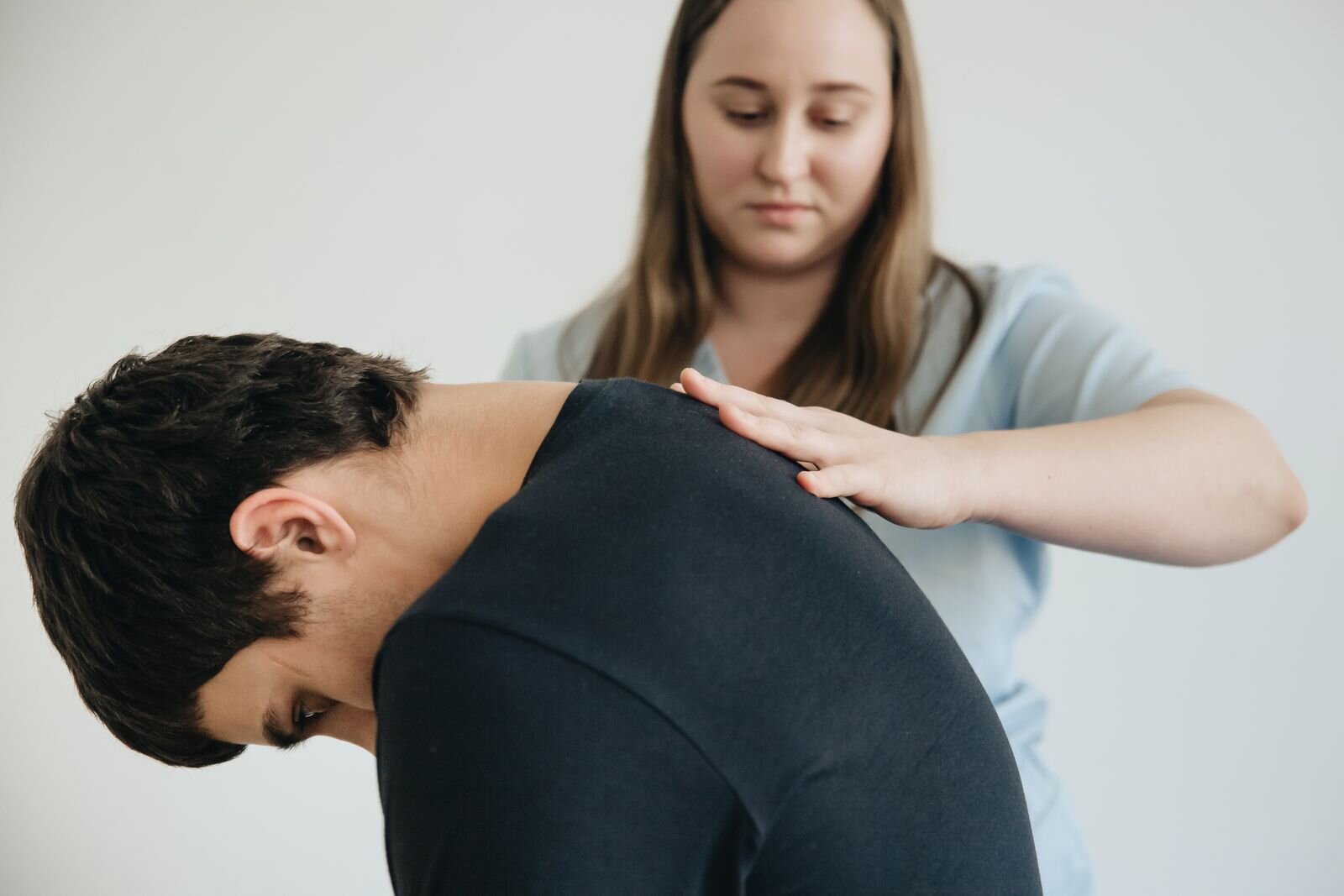
Understanding the cause matters because similar-looking changes can need different approaches. A new curve, unexplained height loss, or persistent back pain deserves attention. An assessment can help you choose suitable movements and understand whether bone health or another condition needs further investigation.
What Is a Dowager’s Hump?
“Dowager’s hump” is a common term for a noticeably rounded upper back. It can affect people of different ages and genders.
Your upper spine naturally curves outward. When that curve becomes excessive, the more precise term is hyperkyphosis, although healthcare professionals often use kyphosis when discussing the condition.
Some curves remain flexible and become less noticeable when a person changes position. Others involve structural changes that do not straighten simply by adjusting posture. A clinician can assess this distinction; a mirror or photograph cannot reliably identify the cause.
What Causes a Dowager’s Hump?
Several factors can contribute, and more than one may be present.
| Possible cause | How it can affect the upper back |
|---|---|
| Postural habits and muscle support | Sustained forward-leaning positions, muscle weakness, and tightness can contribute to flexible rounding. |
| Osteoporosis and compression fractures | Weakened vertebrae can compress into wedge shapes, increasing the curve. Some fractures cause little noticeable pain. |
| Age-related disc degeneration | Spinal discs may flatten and lose height, changing alignment. |
| Scheuermann’s kyphosis | Vertebral wedging develops during growth, usually becoming apparent in adolescence. |
| Congenital differences or spinal injury | Developmental differences or damage to the spine can produce structural curvature. |
In its September 2024 guidance, Mayo Clinic identifies compression fractures, osteoporosis, disc degeneration, and developmental conditions among the causes of kyphosis.
Osteoporosis deserves particular attention in older adults, especially after menopause or with prolonged corticosteroid use. However, a rounded upper back does not automatically mean you have osteoporosis, and screen habits alone do not explain every case.
Dowager’s Hump vs. Buffalo Hump: What’s the Difference?
A bump near the base of the neck may involve spinal curvature, fat accumulation, or both.
| Feature | Dowager’s hump | Dorsocervical fat pad, sometimes called a buffalo hump |
|---|---|---|
| Main change | Excessive upper-back spinal curvature | Localized fat accumulation behind the neck |
| Possible contributors | Postural or structural spinal changes | Obesity, certain medicines, excess cortisol, or other conditions |
| Main focus of assessment | Spinal alignment, flexibility, symptoms, and bone health | Fat distribution, medication history, and associated symptoms |
MedlinePlus explains, in guidance reviewed April 2025, that a hump behind the shoulders alone does not establish a specific diagnosis. It should not automatically be attributed to Cushing syndrome.
Have an unexplained bump checked. If medication might be involved, discuss it with the prescriber rather than stopping it yourself.
Symptoms That May Accompany a Dowager’s Hump
The visible curve may be the only noticeable change. Other possible findings include:
- Rounded shoulders or a forward head position.
- Upper-back discomfort or stiffness.
- Muscle fatigue during prolonged sitting or standing.
- Difficulty getting into a comfortable upright position.
Height loss can accompany vertebral compression fractures. Severe spinal curvature can sometimes affect breathing, but this is not typical of mild postural rounding.
Symptoms and appearance do not always match. A pronounced curve may cause limited discomfort, while a recent spinal change may need attention even before the rounding becomes obvious.
How Is a Dowager’s Hump Diagnosed?
A healthcare professional may ask when the change began, whether it is progressing, and whether you have pain, injuries, fractures, or relevant medication use. The examination can assess flexibility, tenderness, muscle strength, and nerve function.
Depending on the findings, tests may include:
- Spinal X-rays: To measure curvature and look for vertebral changes.
- A bone density scan: To assess low bone density when appropriate.
- MRI or other testing: When a recent fracture or another spinal problem needs investigation.
Mayo Clinic describes these diagnostic options. Not everyone needs every test.
Posture Changes That May Help a Dowager’s Hump
Adjust Your Screen and Reading Position
Position frequently used screens and reading material so you do not have to keep looking down. Bring your phone higher when practical. Small changes to the height and placement of your work can reduce time spent leaning forward.
Take Breaks From Prolonged Positions
Break up long periods of sitting or device use with comfortable movement. Change position, stand, or walk when you can. Avoid forcing your shoulders backward or holding a rigid posture throughout the day.
Learn Suitable Strengthening and Mobility Exercises
Cleveland Clinic discusses these examples for people whose condition allows them:
| Exercise example | Basic movement |
|---|---|
| Chin tuck | Gently draw the chin backward without tipping the head up. |
| Shoulder-blade squeeze | Bring the shoulder blades toward each other without shrugging. |
| Chest stretch | Use a comfortable position to gently stretch the front of the chest. |
These are examples to discuss with a physical therapist, not a complete exercise prescription. Exercise selection and progression should match your symptoms and spinal flexibility.
Modify Exercise if You Have Osteoporosis
Mayo Clinic’s osteoporosis exercise guidance cautions that forward spinal bending and forceful twisting can increase fracture risk in vulnerable bones. Sit-ups and toe touches are examples that may be unsuitable.
If you have osteoporosis, a previous spinal fracture, significant pain, or a new posture change, get guidance before starting a corrective routine. Appropriate activity remains valuable, but exercises may need modification. Stop a movement that causes new or worsening pain.
Dowager’s Hump Treatment Options
The aim of care may be better comfort, movement, alignment, or prevention of further problems. Complete removal of the visible curve is not always realistic. Mild, stable kyphosis may require monitoring rather than an intensive intervention.
Physical Therapy and Targeted Exercise
A physical therapist can assess how much of the curve is flexible and develop a program involving spinal muscle strength, mobility, and posture practice.
A 2017 randomized controlled trial found that six months of supervised spine strengthening and posture training produced a 3-degree greater reduction in X-ray-measured curvature than an education control group. The study included 99 adults aged 60–88.
However, measured physical function and most other quality-of-life outcomes did not differ significantly between groups. The findings support possible modest improvement over months; they do not establish that a brief home routine will remove every hump.
Bone Health and Symptom Management
If osteoporosis or vertebral fractures contribute to the curve, the care plan may include osteoporosis medication and measures to reduce future fracture risk. Pain-management options depend on your medical history and other medicines.
Nutrition, suitable weight-bearing and strengthening activities, and fall prevention also support bone health. A clinician can help determine whether calcium or vitamin D intake needs attention. Supplements alone should not be presented as a way to straighten an established spinal curve.
Braces for Selected Cases
Specialist-prescribed braces can help selected growing children with Scheuermann’s kyphosis. Adult bracing has different goals and requires individual assessment.
A 2022 randomized trial involving 80 older women with previous osteoporotic vertebral fractures found improvements with a professionally fitted orthosis over 16 weeks. Participants had chronic back pain and hyperkyphosis; structurally fixed curves without the ability to extend were excluded.
Those results cannot be assumed to apply to ordinary retail posture straps. Ask what a recommended brace is intended to achieve, how it should fit, and when its effects will be reassessed.
Surgery for Severe Cases
Surgery may be considered when curvature is severe, progressing, causing substantial symptoms, or affecting nerves. It requires specialist assessment of the likely benefits and risks. Most people with mild postural rounding do not need surgery.
When to Seek Medical Help
Arrange an appointment if you notice a new or increasing upper-back curve, unexplained height loss, persistent pain, or a bump whose cause is unclear. Mention any history of osteoporosis, fractures, or prolonged corticosteroid use.
Seek urgent assessment for sudden severe back pain, pain that worsens quickly, or back pain with fever or feeling unwell.
Seek emergency care if back pain occurs with:
- New bladder or bowel control problems, or difficulty urinating.
- Loss of sensation around the genitals or anus.
- Weakness or numbness in both legs.
- A serious accident or chest pain.
These warning signs appear in NHS back-pain guidance, reviewed March 2026. New severe breathing difficulty also requires emergency assessment; do not assume posture is the explanation.
Frequently Asked Questions
Can a Dowager’s Hump Go Away Completely?
Some flexible postural curves may improve substantially. Structural changes can limit correction, although comfort and movement may still improve. The likely outcome depends on the cause, flexibility, and severity of the curve.
How Long Does It Take to Improve a Dowager’s Hump?
There is no reliable timeline for everyone. Research programs generally assess changes over weeks or months. The six-month exercise trial found a modest average improvement, so a promise of complete correction within days is unrealistic.
Does a Dowager’s Hump Always Mean Osteoporosis?
No. Postural factors, disc degeneration, and developmental conditions can also contribute. A new curve with height loss or back pain is a reason to discuss whether spinal imaging or bone density testing is appropriate.
Can a Posture Brace Help a Dowager’s Hump?
Some prescribed orthoses may help selected people. Suitability depends on the diagnosis and intended purpose. Research on professionally fitted devices does not establish that a general posture strap will permanently correct an adult spinal curve.
Will Losing Weight Remove a Neck Hump?
Weight loss may reduce some fat accumulation when obesity contributes to a dorsocervical fat pad. It does not correct vertebral wedging. Identifying whether the visible change involves fat, spinal curvature, or both is the first step.
Can You Exercise With Osteoporosis and a Dowager’s Hump?
Often, yes, with an appropriate plan. Strength, balance, and posture exercises may need modification, particularly after a spinal fracture. A physical therapist experienced in osteoporosis can help you choose suitable movements and progress safely.
Conclusion
A dowager’s hump can have several causes, and useful care starts with understanding yours. Posture adjustments and targeted exercise may improve flexible rounding, while bone or other structural changes need additional attention. If the curve is new, worsening, or painful, schedule an assessment and ask which activities and care options fit your situation.
This content is for informational purposes only and not medical advice.
References
- American Academy of Orthopaedic Surgeons. Kyphosis (Roundback) of the Spine.
- Mayo Clinic. Kyphosis: Symptoms and Causes.
- MedlinePlus. Hump on Upper Back: Dorsocervical Fat Pad.
- Cleveland Clinic. Dowager’s Hump: Causes and Posture Recommendations.
- Mayo Clinic. Kyphosis: Diagnosis and Treatment.
- Mayo Clinic. Exercising With Osteoporosis: Stay Active the Safe Way.
- Katzman WB, et al. Spine Strengthening and Posture Training: The SHEAF Randomized Trial. Osteoporosis International. 2017.
- Hettchen M, et al. Effects of a Spinal Orthosis in Older Women With Vertebral Fractures. Frontiers in Pain Research. 2022.
- National Institute of Arthritis and Musculoskeletal and Skin Diseases. Osteoporosis.