
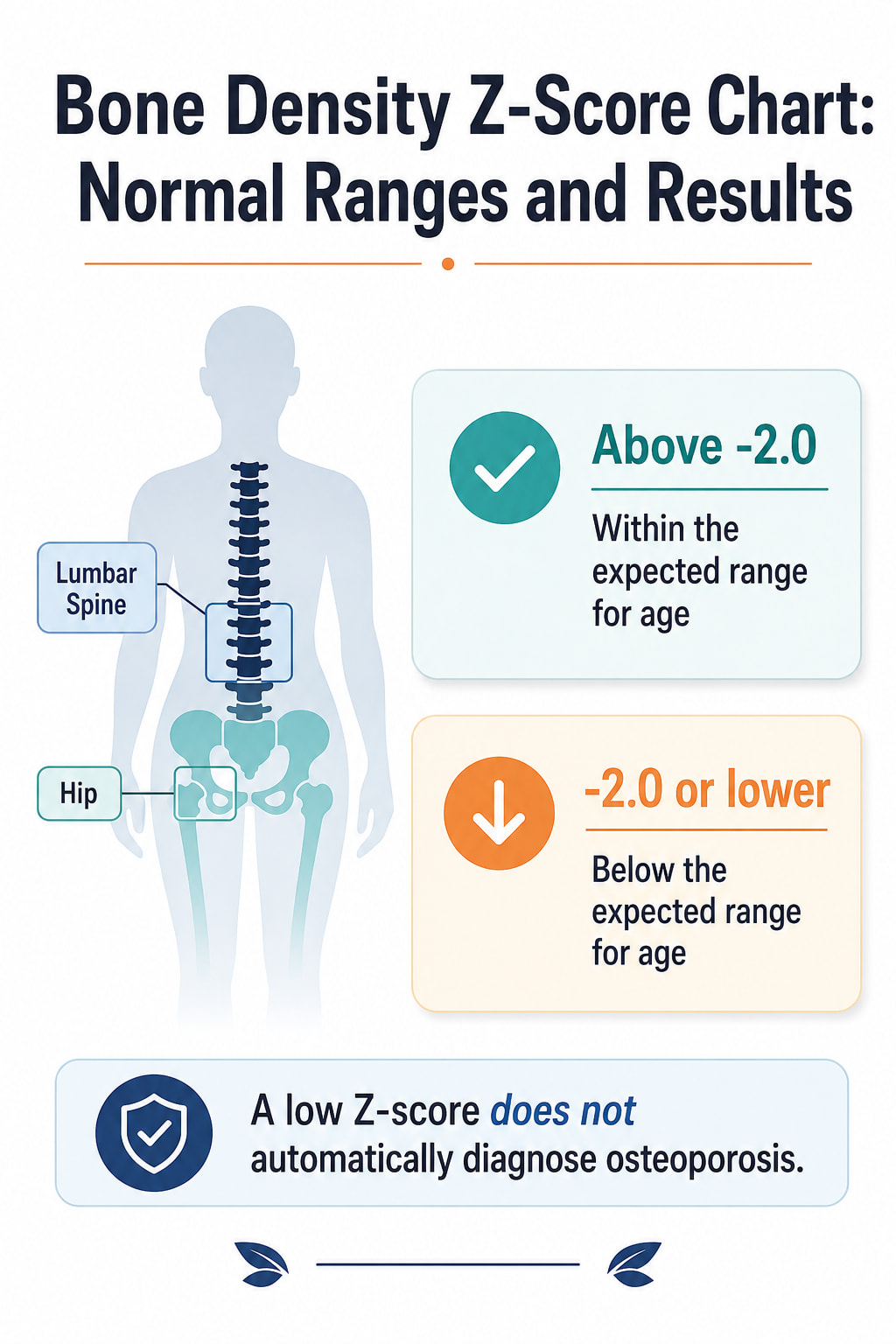
A bone density Z-score above -2.0 is considered within the expected range for age, while a Z-score of -2.0 or lower is considered below the expected range for age. A low Z-score does not automatically mean you have osteoporosis, but it may indicate that a medical condition, medication, nutritional problem, or another factor is affecting your bones.
Z-scores are mainly used for premenopausal women, men younger than 50, and children. Understanding your result can help you discuss whether additional evaluation, lifestyle changes, or follow-up testing may be appropriate.
Bone Density Z-Score Chart
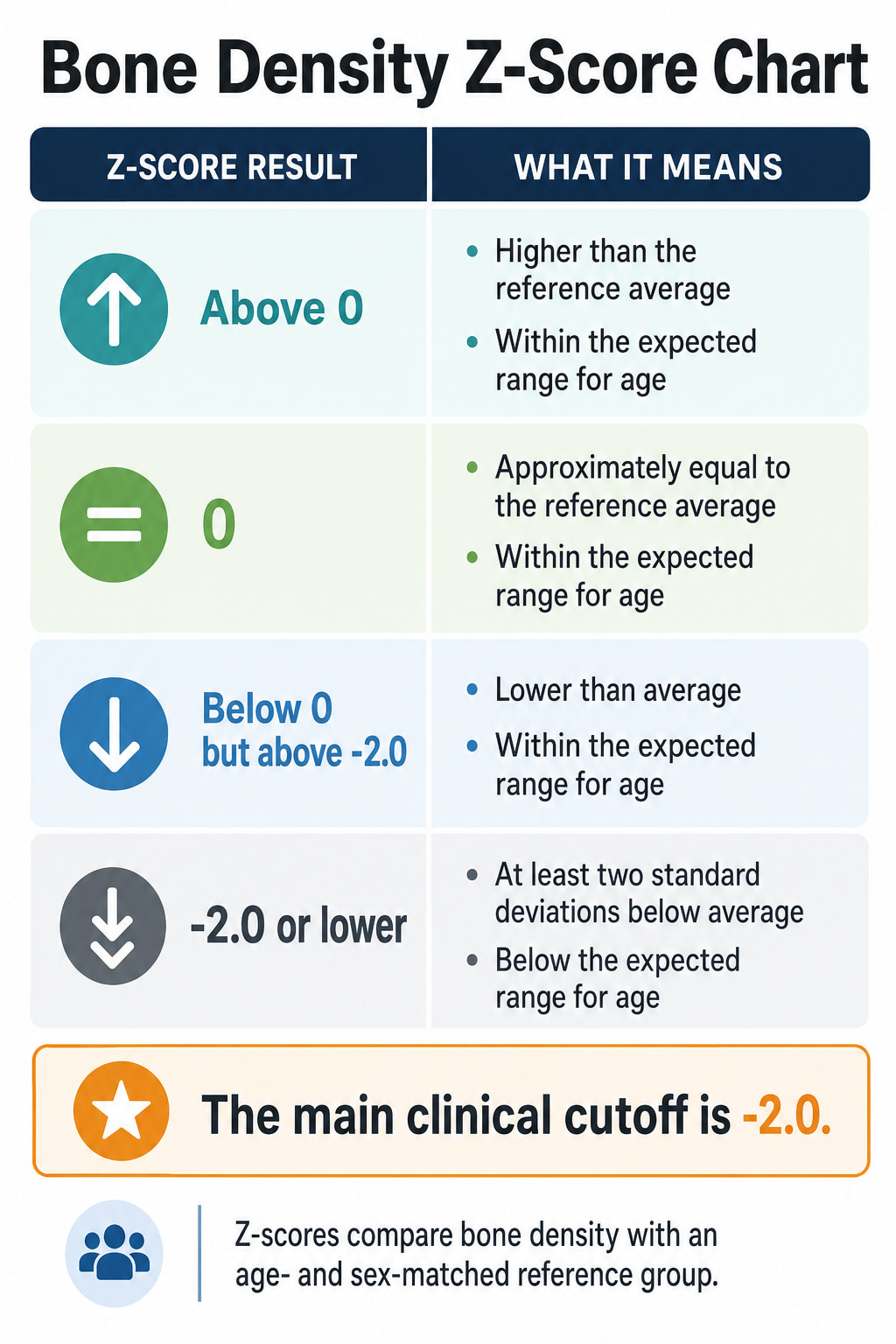
The following bone density Z-score chart uses the terminology recommended by the International Society for Clinical Densitometry.
| Bone Density Z-Score | Comparison With Age-Matched Average | Interpretation |
|---|---|---|
| Above 0 | Higher than the reference average | Within the expected range for age |
| 0 | Approximately equal to the reference average | Within the expected range for age |
| Below 0 but above -2.0 | Lower than average | Within the expected range for age |
| -2.0 or lower | At least two standard deviations below average | Below the expected range for age |
The important cutoff is -2.0. A score does not need to be positive or exactly zero to be considered within the expected range.
According to the International Society for Clinical Densitometry, the preferred descriptions are “within the expected range for age” and “below the expected range for age.” T-score categories such as osteopenia and osteoporosis should not be directly applied to Z-scores.
What Is a Bone Density Z-Score?
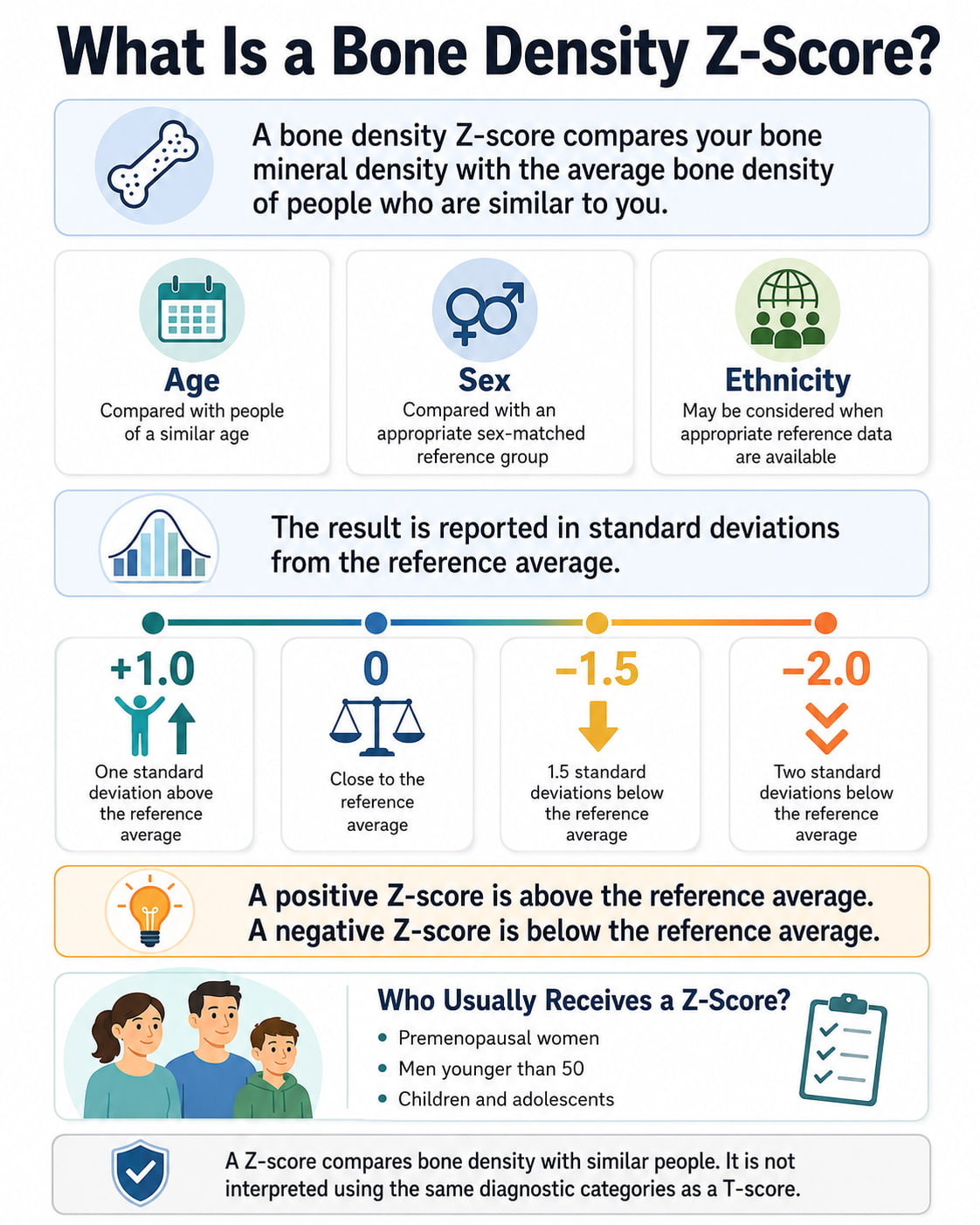
A bone density Z-score compares your bone mineral density with the average bone density of people who are similar to you in:
- Age
- Sex
- Ethnicity, when appropriate reference data are available
The result is reported in standard deviations from the reference average.
For example:
- A Z-score of 0 means your bone density is close to the reference average.
- A Z-score of +1.0 means it is one standard deviation above average.
- A Z-score of -1.5 means it is 1.5 standard deviations below average.
- A Z-score of -2.0 means it is two standard deviations below average.
The National Institute of Arthritis and Musculoskeletal and Skin Diseases explains that Z-scores are generally reported for premenopausal women, men younger than 50, and children. Its patient guidance was last reviewed in February 2025.
What Is a Normal Bone Density Z-Score?
A bone density Z-score above -2.0 is considered within the expected range for age.
This includes results such as:
- +1.2
- +0.5
- 0
- -0.7
- -1.5
- -1.9
A result below zero simply means your bone density is below the average of the comparison group. It does not necessarily mean that your bones are dangerously weak.
Is a Z-Score of -1.5 Normal?
A Z-score of -1.5 is below the age-matched average but remains within the expected range for age under current ISCD criteria.
The result still needs to be interpreted alongside your:
- Previous fractures
- Family history
- Medical conditions
- Medication use
- Menstrual or hormonal history
- Nutrition
- Physical activity
- Other bone-density measurements
Is a Z-Score of -2.0 Normal?
No. A Z-score of exactly -2.0 is classified as below the expected range for age.
However, the result alone usually cannot establish why bone density is low or confirm osteoporosis in a younger adult.
Who Should Use a Z-Score?
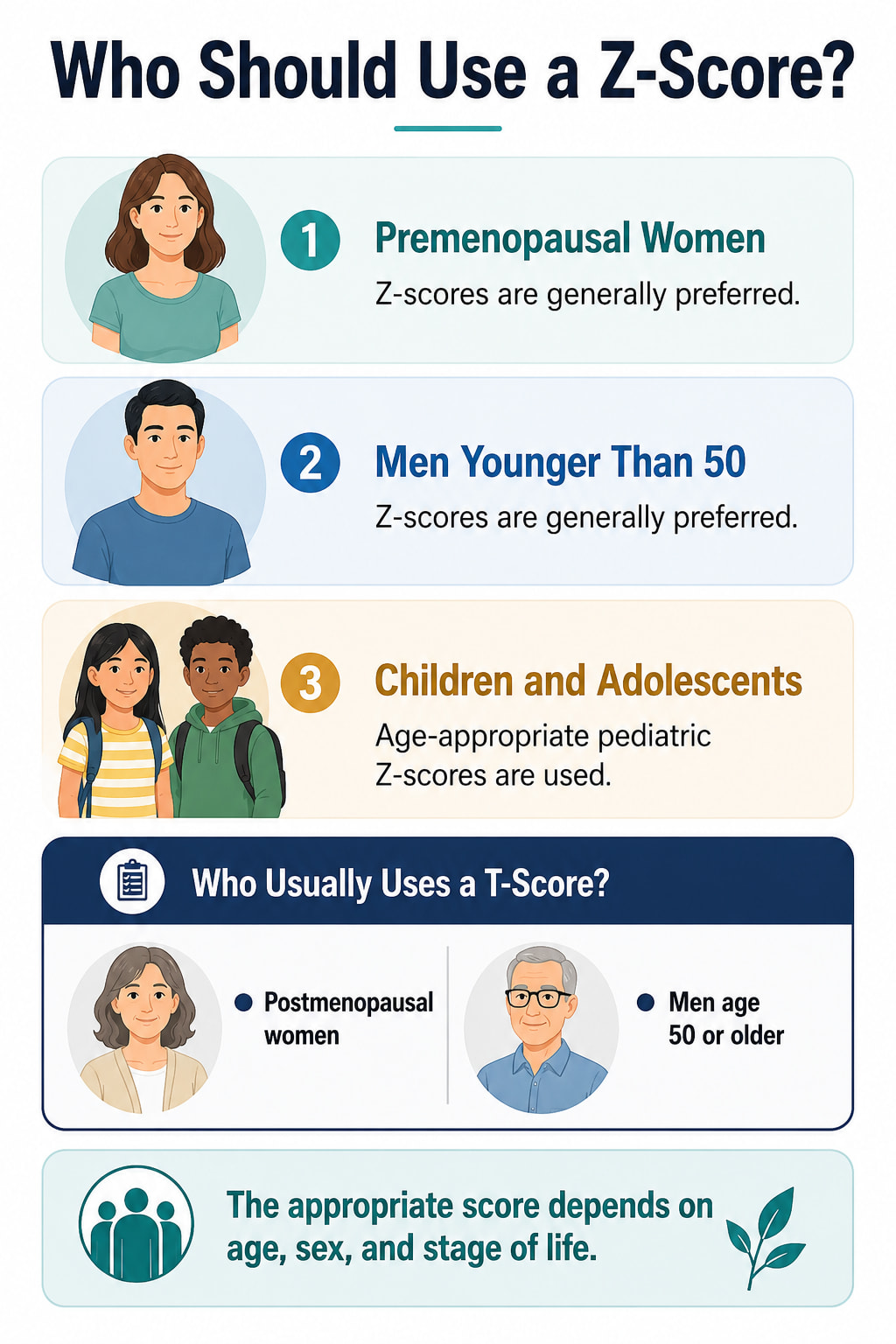
Z-scores are preferred for:
Premenopausal Women
Premenopausal women are generally evaluated using Z-scores because comparisons with people of a similar age are more clinically appropriate than comparisons with healthy young adults.
Women in the menopausal transition may be evaluated differently depending on their circumstances and the clinical guidelines being used.
Men Younger Than 50
Men under age 50 are generally assessed with Z-scores. The ISCD states that osteoporosis cannot be diagnosed in men younger than 50 based on bone mineral density alone.
Children and Adolescents
Children’s bones are still growing, so pediatric DXA results require age-appropriate reference data. Height, development, puberty, growth delay, and fracture history may also affect interpretation.
Who Usually Uses a T-Score?
T-scores are generally preferred for:
- Postmenopausal women
- Men age 50 or older
A T-score compares bone density with the average peak bone density of a healthy young adult. This is the score commonly used to classify normal bone density, low bone mass, and osteoporosis in older adults.
Bone Density Z-Score vs. T-Score
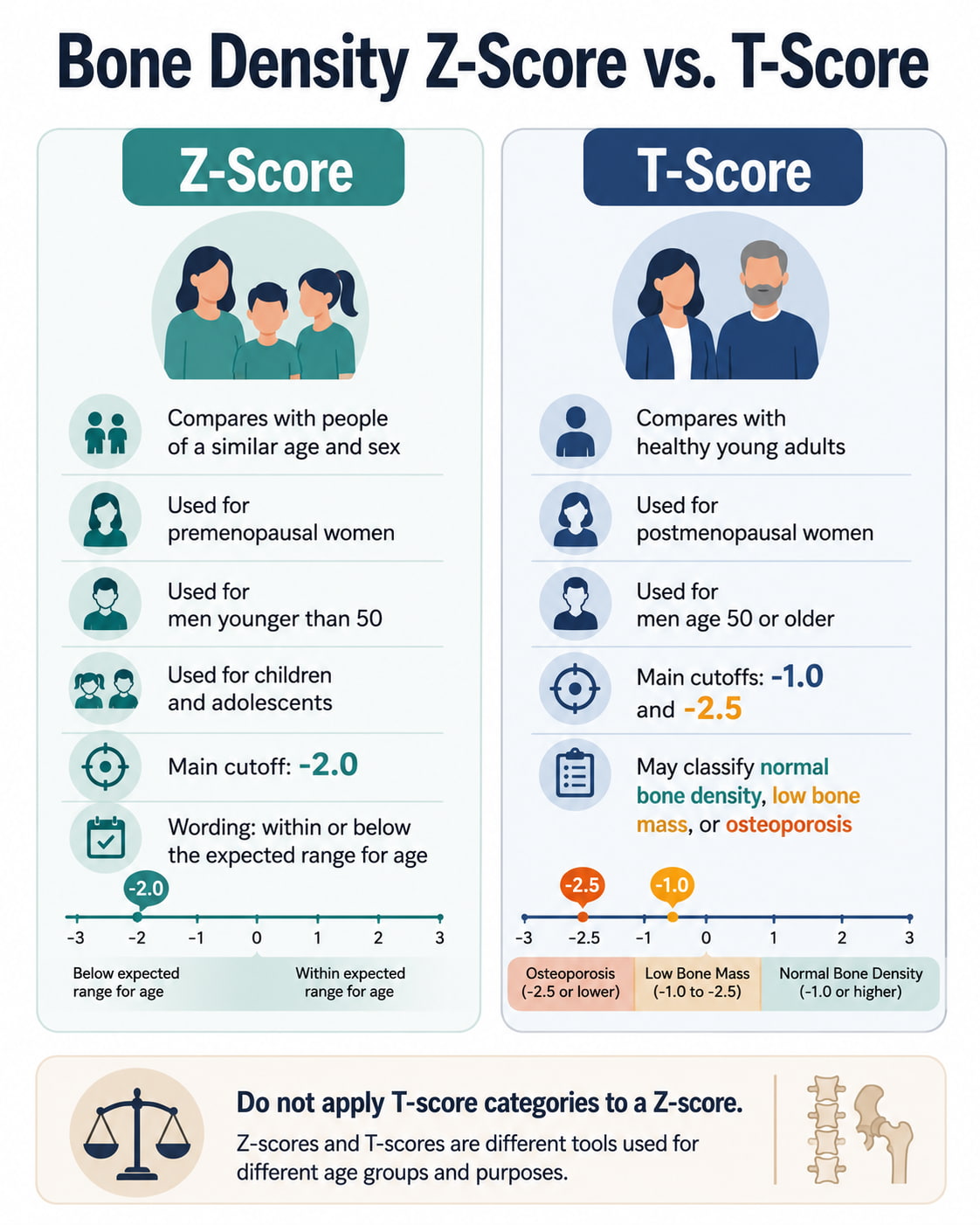
Although both measurements may appear on a DXA report, they have different purposes.
| Feature | Z-Score | T-Score |
|---|---|---|
| Comparison group | People of a similar age and sex | Healthy young-adult reference population |
| Commonly used for | Premenopausal women, men under 50, and children | Postmenopausal women and men 50 or older |
| Main cutoff | -2.0 | -1.0 and -2.5 |
| Preferred wording | Within or below the expected range for age | Normal, low bone mass, or osteoporosis |
| Diagnoses osteoporosis alone? | Usually no | May support diagnosis in the appropriate population |
Do not interpret a Z-score of -2.5 in the same way as a T-score of -2.5. Although the numbers look identical, they use different reference groups and diagnostic rules.
What Does a Low Bone Density Z-Score Mean?
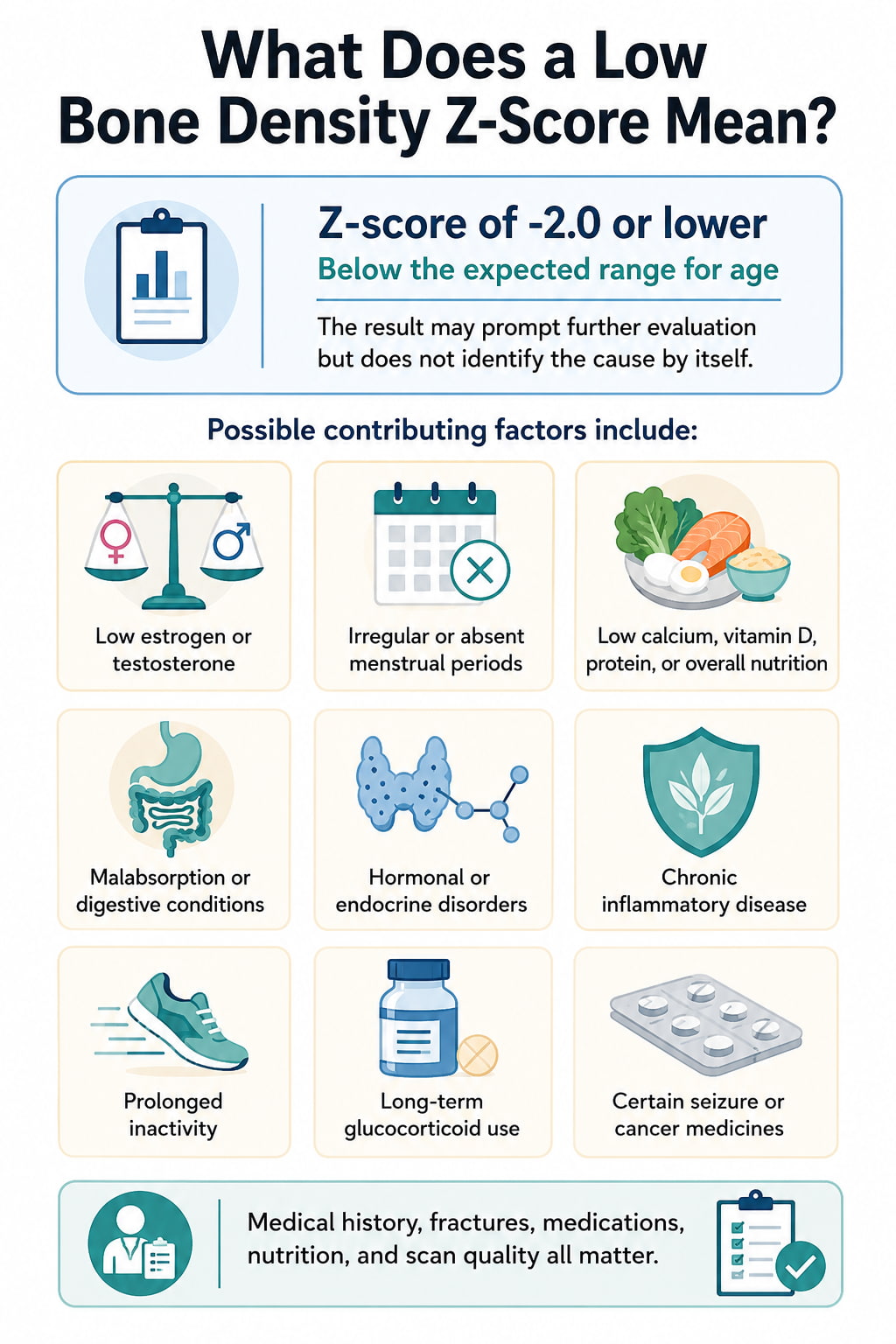
A Z-score of -2.0 or lower means your measured bone mineral density is substantially below the average for your reference group.
This finding may prompt a healthcare professional to look for factors that could interfere with bone formation or increase bone loss.
Possible Reasons for a Low Z-Score
Potential contributors include:
- Low estrogen or testosterone levels
- Absent or irregular menstrual periods
- Low calcium, vitamin D, protein, or overall calorie intake
- Malabsorption or digestive conditions
- Endocrine and hormonal disorders
- Rheumatoid arthritis or chronic inflammatory disease
- Anorexia nervosa or significant undernutrition
- Prolonged bed rest or limited weight-bearing activity
- Long-term glucocorticoid use
- Certain seizure medications
- Some breast or prostate cancer therapies
- Other medications associated with bone loss
The NIAMS osteoporosis overview lists hormonal changes, poor nutrition, gastrointestinal disease, inflammatory conditions, inactivity, and several medication categories among factors that may contribute to reduced bone density.
These possibilities are not diagnoses. Your clinician must consider your complete medical history before deciding whether further testing is needed.
Does a Low Z-Score Mean Osteoporosis?
Not necessarily.
In younger adults, a low Z-score may raise concern about bone health, but bone density is only one part of the evaluation. A clinician may also consider:
- Whether you have had a low-trauma fracture
- The number and location of previous fractures
- Whether you are losing bone rapidly
- Your hormone levels
- Conditions that affect nutrient absorption
- Medication exposure
- Your risk of falling
- The quality and accuracy of the DXA scan
A low Z-score is better viewed as a signal to investigate further rather than a complete diagnosis by itself.
What Does a Positive or High Z-Score Mean?
A positive Z-score means your bone density is above the average for the reference group.
For example, a Z-score of +1.0 indicates that the measured bone density is approximately one standard deviation above the average. In many cases, this is not concerning.
However, a very high reading does not always mean the bone is exceptionally strong. Degenerative changes in the spine, old fractures, calcification, positioning issues, or other scan artifacts can artificially increase a DXA measurement.
The scan should therefore be interpreted by a qualified professional, especially when the result is unexpectedly high or differs substantially between skeletal sites.
Bone Density Z-Scores in Children
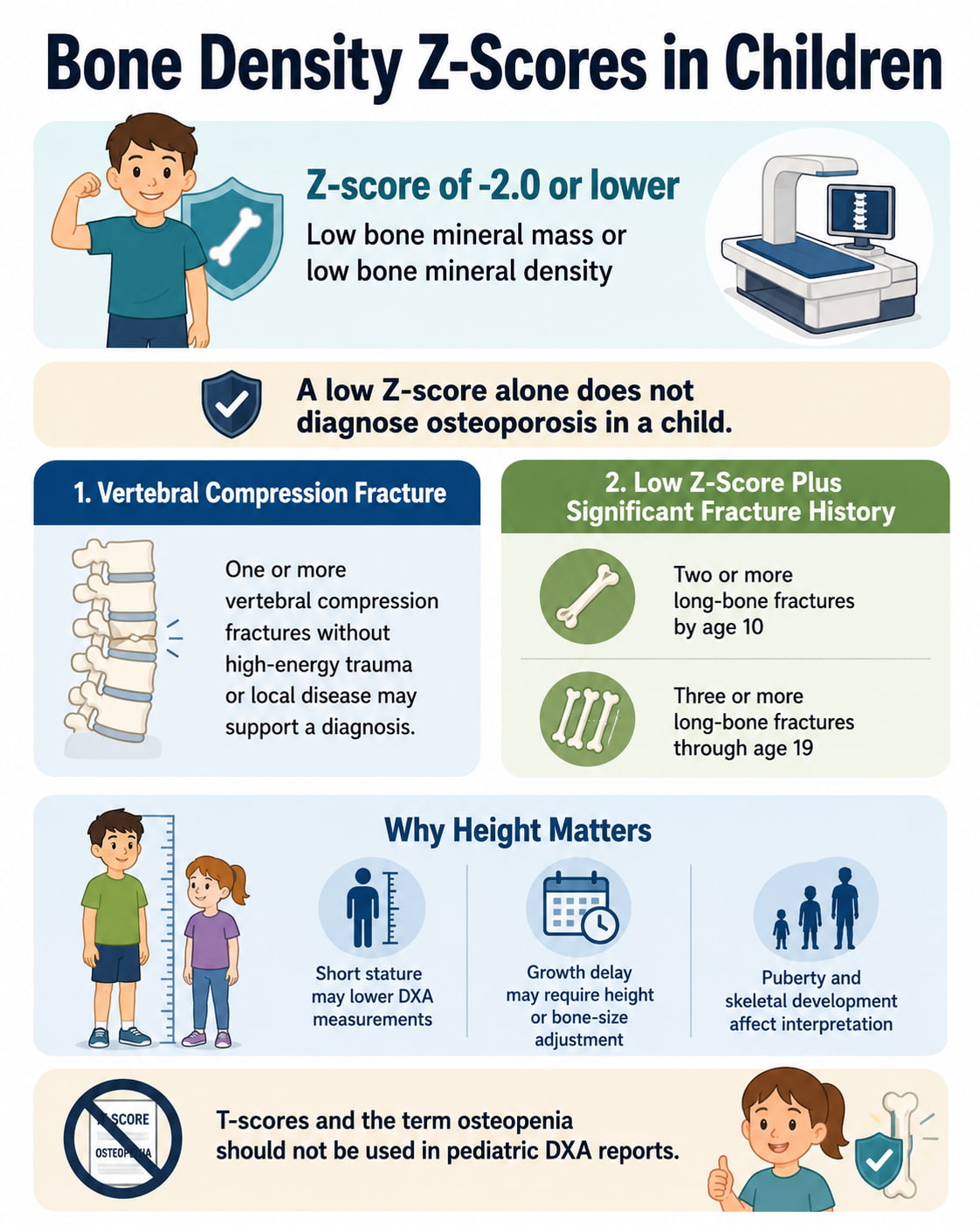
Pediatric Z-scores require more careful interpretation because children differ in height, body size, skeletal maturity, and stage of puberty.
What Is a Low Z-Score in a Child?
A pediatric bone mineral density Z-score of -2.0 or lower should generally be described as:
Low bone mineral mass or low bone mineral density
The terms “osteopenia” and “osteoporosis” should not be used based only on a child’s Z-score.
How Is Osteoporosis Diagnosed in Children?
Under current ISCD Pediatric Positions, osteoporosis may be identified when a child has one or more vertebral compression fractures without high-energy trauma or local disease.
Without a vertebral compression fracture, diagnosis generally requires both:
- A BMD Z-score of -2.0 or lower; and
- A clinically significant fracture history.
A clinically significant pediatric fracture history means:
- Two or more long-bone fractures by age 10; or
- Three or more long-bone fractures at any age through age 19
A Z-score above -2.0 does not completely rule out fragile bones or increased fracture risk.
Why Height Matters in Children
DXA measures areal bone density. Smaller bones may appear less dense even when their true strength is appropriate for the child’s size.
For children with short stature or growth delay, the ISCD recommends adjusting spine and total-body results for height or bone size. Pediatric reports should also document the reference data and any growth adjustments used.
How a DXA Scan Measures Bone Density
Dual-energy X-ray absorptiometry, abbreviated DXA, is the most common test used to measure bone mineral density. It is also commonly called a DEXA scan.
The test:
- Is noninvasive
- Is usually painless
- Uses low levels of X-ray radiation
- Commonly measures the hip and lumbar spine
- May measure the forearm in certain situations
Central DXA measurements of the hip and spine are generally the most reliable measurements for evaluating osteoporosis and predicting fracture risk.
Factors That Can Affect a Z-Score
Your Z-score can be influenced by more than your actual bone strength.
Reference Database
The score depends on the reference population used by the DXA software. Appropriate age-, sex-, and population-specific data are important for a meaningful comparison.
Skeletal Site
The lumbar spine, total hip, femoral neck, forearm, and total body can produce different results. Bone loss does not always occur equally at every site.
Body Size and Growth
Small body size may lower areal BMD measurements. This is particularly important in children and adults with significant short stature.
Arthritis and Spinal Changes
Osteoarthritis, bone spurs, old compression fractures, and calcification may make lumbar spine density appear higher than it really is.
Positioning and Scan Quality
Incorrect positioning, movement during the scan, implants, surgical hardware, and technical errors can affect the measurement.
Different Machines
Results from different DXA machines or facilities may not be directly comparable unless the equipment has been properly cross-calibrated.
For follow-up testing, using the same facility and properly calibrated equipment can make changes easier to interpret.
What Happens After a Low Z-Score?
A healthcare professional may take several steps before recommending treatment.
1. Review the DXA Report
The clinician may check:
- Which bones were measured
- Whether the images were technically adequate
- Whether any vertebrae were excluded
- Whether the correct reference database was used
- Whether the result matches previous scans
2. Review Fractures and Risk Factors
Your fracture history can be as important as the score itself. A fracture caused by a minor fall or normal daily activity may be more concerning than a fracture caused by a major accident.
3. Review Health Conditions and Medications
Your clinician may ask about digestive problems, hormone changes, inflammatory disease, menstrual history, weight loss, eating patterns, and medications that can affect bone.
4. Consider Laboratory Testing
Depending on your history, blood or urine tests may be used to look for nutritional, hormonal, kidney, liver, or metabolic factors. The exact tests vary by person.
5. Create an Individual Bone-Health Plan
The plan may address:
- Adequate calcium and vitamin D
- Sufficient protein and overall nutrition
- Safe weight-bearing and resistance exercise
- Smoking cessation
- Alcohol intake
- Fall prevention
- An underlying health condition
- A medicine contributing to bone loss
Do not stop prescription medication or begin high-dose supplements based only on a Z-score. Discuss changes with the clinician who knows your medical history.
How Often Should a DXA Scan Be Repeated?
There is no single repeat-testing schedule for everyone.
Follow-up timing depends on:
- Age
- Initial bone density
- Fracture history
- Medical conditions
- Medication exposure
- Whether treatment has started
- How quickly bone density is expected to change
- Whether another scan would affect management
The ISCD recommends individualizing adult follow-up intervals. Shorter intervals may be considered when rapid bone loss is possible, such as during glucocorticoid treatment, prolonged immobilization, malabsorption, surgical menopause, or some cancer therapies.
For children who need follow-up DXA testing, the ISCD states that the minimum interval is generally six to 12 months.
Who Should Get a Bone Density Test?
Routine screening recommendations primarily concern older adults, who are usually evaluated with T-scores rather than Z-scores.
The U.S. Preventive Services Task Force recommendation issued January, 2025, advises osteoporosis screening for:
- Women age 65 or older
- Postmenopausal women younger than 65 who have one or more risk factors and are found to have increased fracture risk
The USPSTF concluded that evidence remains insufficient to determine the balance of benefits and harms of routine screening in men.
Younger adults and children are generally tested when they have fractures, medical conditions, or medication exposure that raises concern about bone health and when the result is expected to influence care.
When to Discuss Your Result With a Healthcare Professional
Arrange a medical review when:
- Your Z-score is -2.0 or lower
- You have had a fracture after a minor fall or everyday movement
- You have repeated or unexplained fractures
- You have lost height or developed persistent back pain
- You take long-term glucocorticoids or another medicine associated with bone loss
- You have a condition that affects hormones or nutrient absorption
- Your menstrual periods have stopped unexpectedly
- Your results changed substantially between scans
- Your child has a low Z-score or repeated fractures
Seek prompt medical attention for sudden severe back pain, a suspected fracture, or loss of movement after an injury.
Frequently Asked Questions
Is a Bone Density Z-Score of -1.5 Bad?
A Z-score of -1.5 is lower than the age-matched average but remains within the expected range for age. Your fracture history and other risk factors may still affect how the result is interpreted.
Does a Z-Score of -2.0 Mean Osteoporosis?
No. A score of -2.0 means the bone density is below the expected range for age. In younger adults and children, osteoporosis generally cannot be diagnosed from the Z-score alone.
Is a Positive Bone Density Z-Score Good?
A positive result means your bone density is above the reference average. It is often reassuring, although unusually high measurements may need review for arthritis, calcification, old fractures, or scan artifacts.
Why Are My Z-Score and T-Score Different?
They use different comparison groups. A Z-score compares you with people of a similar age, while a T-score compares you with healthy young adults.
Can a Bone Density Z-Score Improve?
Bone density may increase, decrease, or remain stable over time. Changes can be influenced by age, nutrition, physical activity, medical conditions, medications, and treatment. Small differences between scans may also reflect normal measurement variation.
Why Do My Hip and Spine Z-Scores Differ?
Bone density can vary by skeletal site. Arthritis, previous fractures, body positioning, or structural changes may also affect one site more than another.
Can a Child Have Weak Bones With a Z-Score Above -2.0?
Yes. A result above -2.0 does not completely exclude bone fragility. Fracture history, growth, height, medical conditions, nutrition, and skeletal development must also be considered.
Conclusion
A bone density Z-score chart has one main clinical cutoff: above -2.0 is within the expected range for age, while -2.0 or lower is below the expected range for age.
The score is most useful for premenopausal women, men younger than 50, and children. Because it cannot diagnose osteoporosis or identify the cause of low bone density by itself, review the result with a qualified healthcare professional who can consider your scan quality, fracture history, health conditions, medications, and other risk factors.
This content is for informational purposes only and not medical advice.
References
- International Society for Clinical Densitometry — 2023 Adult Official Positions
- International Society for Clinical Densitometry — Pediatric Positions
- National Institute of Arthritis and Musculoskeletal and Skin Diseases — Bone Mineral Density Tests: What the Numbers Mean
- National Institute of Arthritis and Musculoskeletal and Skin Diseases — Osteoporosis Causes and Risk Factors
- U.S. Preventive Services Task Force — Osteoporosis Screening Recommendation