
Itchy skin with no rash that gets worse at night may be caused by dry skin, irritation, medications, or nerve problems. Sometimes, an underlying health condition is responsible. The timing alone cannot identify the cause, and skin can itch intensely without obvious surface changes.
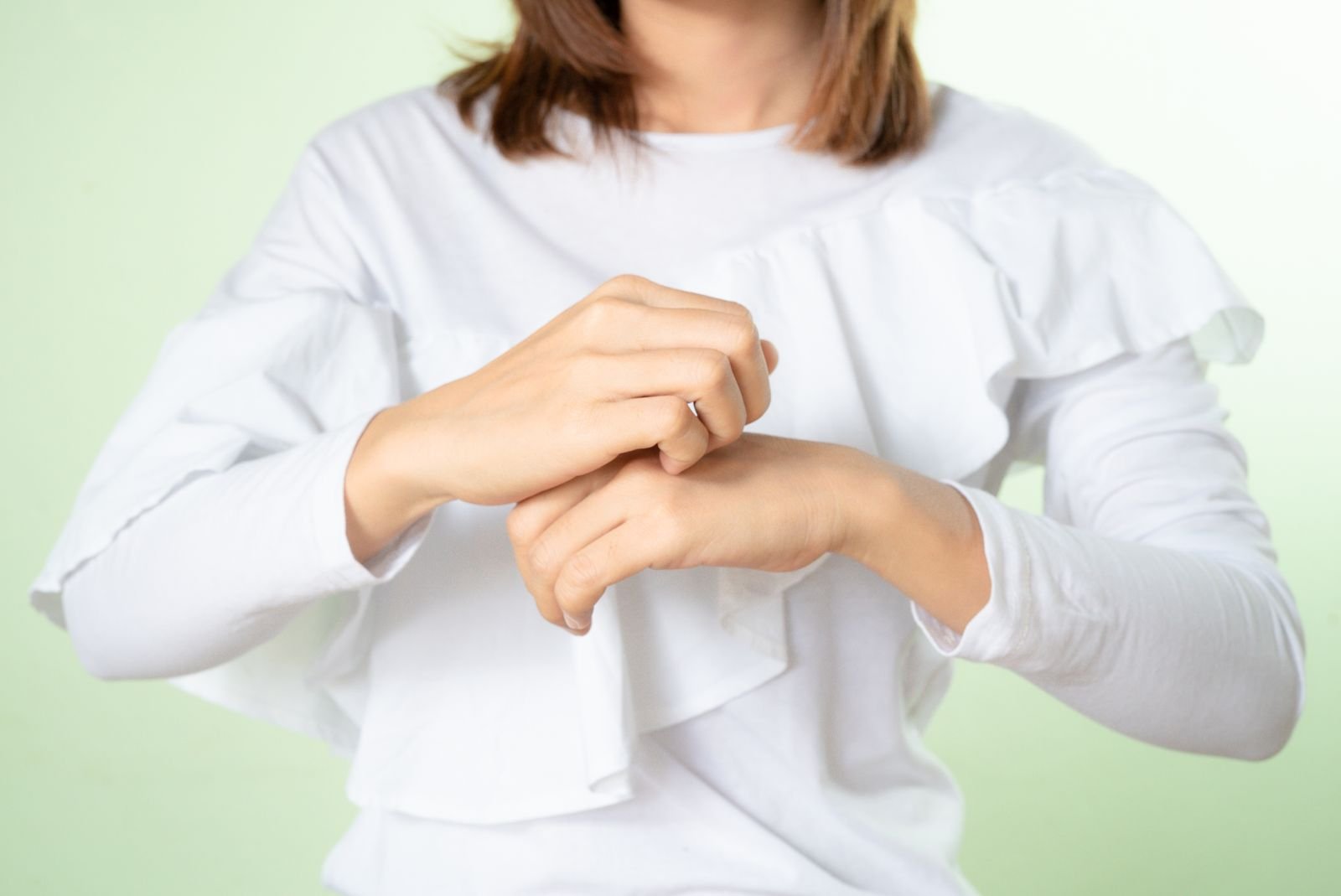
Understanding the cause matters because the same anti-itch product will not help every problem. Gentle skin care may help dryness, while persistent or unexplained itching may need a medical assessment.
Pregnancy safety note: NHS pregnancy guidance recommends urgent medical help if you are pregnant and itching is worse at night, keeps you awake, or affects your palms or soles. Contact your obstetrician or maternity care team rather than waiting for a rash to appear.
Why Does Itchy Skin Get Worse at Night?
Nighttime itching is called nocturnal pruritus. A review of nocturnal itching describes how daily changes in skin temperature, the skin’s protective barrier, and itch-related signaling may contribute. These are possible mechanisms, not a proven explanation for every person’s symptoms.
Your bedtime environment can also aggravate an existing itch. Overheating, heavy bedding, and hot showers may increase discomfort. Stress can contribute as well. These factors can make several different conditions feel worse at night rather than pointing to one specific diagnosis.
Also, “no rash” usually means your skin looked normal before scratching. Scratch marks, irritation, or thickened areas can develop afterward. A clinician may also notice subtle skin changes that are difficult to see yourself.
9 Possible Causes of Itchy Skin With No Rash at Night
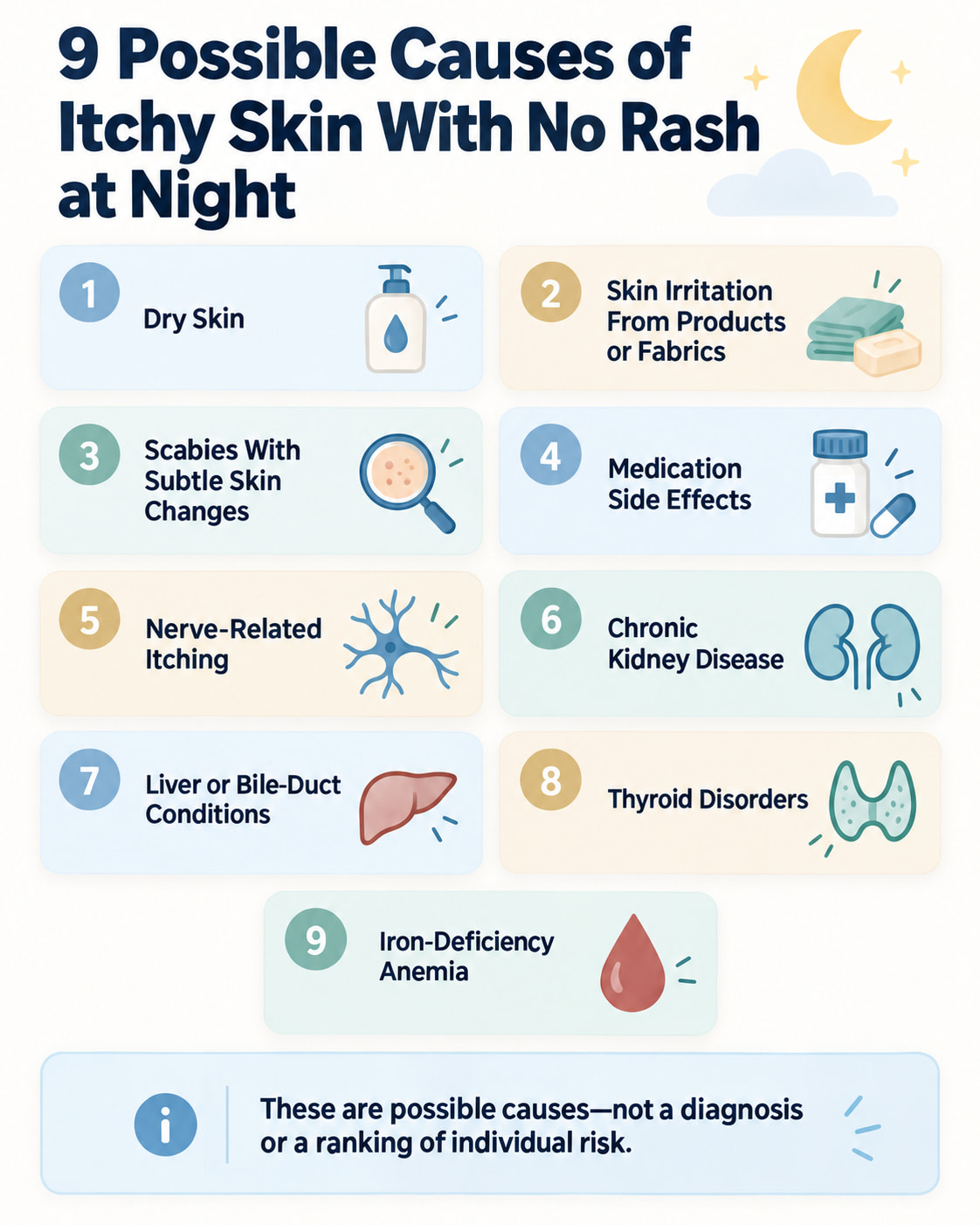
These possibilities are not a diagnosis or a ranking of your individual risk.
1. Dry Skin
Dry skin is a common explanation for widespread itching without an obvious rash, particularly in older adults.
Low humidity, indoor heating, frequent washing, and long, hot showers can reduce moisture in the skin. Aging also makes it harder for skin to retain moisture. You may notice tightness or roughness rather than a distinct rash.
Pay attention to whether symptoms worsen after bathing or during dry weather. Regular moisturizing and gentler washing habits may help when dryness is contributing.
2. Skin Irritation From Products or Fabrics
Harsh cleansers, laundry products, and rough fabrics such as wool can irritate your skin. Fragrances in body products may also trigger reactions.
For example, itching that begins after switching body wash or washing your bedding with a new detergent is worth noting. Set aside a suspected new product and choose gentler, fragrance-free alternatives while you assess the pattern.
However, contact dermatitis usually causes visible skin changes. Do not automatically assume that persistent itching without a rash is an allergy, especially when avoiding the suspected product makes no difference.
3. Scabies With Subtle Skin Changes
Scabies is a skin infestation caused by microscopic mites. According to CDC guidance on scabies symptoms, intense nighttime itching and a pimple-like rash are typical. Tiny burrows can be difficult to spot.
Common locations include the spaces between fingers, wrists, armpits, waist, and buttocks. Itching in a partner or another household member is another reason to seek an examination.
Scabies should not be described as a condition that normally causes no rash. Rather, the changes may be subtle. Suspected scabies needs medical attention; confirmed cases generally require coordinated care for household members and close contacts.
4. Medication Side Effects
Some medicines can cause itching without a primary rash. Examples include certain opioid pain medicines, antibiotics, blood pressure medicines, and cancer therapies. Symptoms may begin within hours or several weeks after starting a medicine.
Review whether the itching followed a new prescription or another medication change. Bring a list of your prescriptions, over-the-counter products, and supplements to your appointment.
Do not stop a prescribed medicine on your own. Contact the prescriber to discuss whether it could be contributing and what changes, if any, are appropriate.
5. Nerve-Related Itching
An irritated or damaged nerve can produce an itch signal even when the skin looks normal. This type of itching often stays in a particular area, such as part of the upper back or an arm.
Some people also notice tingling, numbness, burning, or pain. For example, itching and altered sensation can continue after a shingles rash has disappeared.
Tell your clinician whether the itch repeatedly affects the same spot and whether unusual sensations accompany it. That pattern may help distinguish nerve-related itching from a more widespread skin problem.
6. Chronic Kidney Disease
Chronic kidney disease–associated itching is more common in advanced kidney disease and among people receiving dialysis, although it can occur earlier. It may affect one area or much of the body and can occur without visible skin changes.
The itch can happen during the day or at night. Its causes are complex and are not explained solely by a buildup of waste products.
Nighttime itching alone does not establish a kidney diagnosis. However, if you already have kidney disease, tell your care team about itching and its effect on sleep rather than assuming it is something you must tolerate.
7. Liver or Bile-Duct Conditions
Certain liver conditions and problems affecting bile flow can cause itching without an initial rash. The itch may involve the palms or soles before becoming more widespread, although its location cannot confirm the cause.
During pregnancy, an important possibility is intrahepatic cholestasis of pregnancy, or ICP. This liver condition typically causes itching without a rash and often feels worse at night. It usually develops later in pregnancy but can start earlier.
Pregnancy-related nighttime itching needs prompt assessment. Outside pregnancy, yellowing of the eyes or skin—particularly with itching, dark urine, or unusually pale stools—also warrants urgent medical attention.
8. Thyroid Disorders
An overactive thyroid can be associated with generalized itching. An underactive thyroid can cause dry skin, which may itch, although itching is not a specific or reliable sign of thyroid disease.
Whether symptoms occur at night does not tell you how your thyroid is functioning. A clinician may consider thyroid testing alongside your medical history, examination, and other symptoms.
9. Iron-Deficiency Anemia
Iron deficiency, including iron-deficiency anemia, is another possible cause considered when itching is widespread and unexplained. A complete blood count and tests of iron stores, such as ferritin, may help with the assessment.
Do not start iron supplements solely because your skin itches. Testing can establish whether iron deficiency is present, and a confirmed deficiency may require further evaluation to understand why it developed.
These nine possibilities are not exhaustive. Sometimes an appropriate evaluation does not identify a cause; clinicians may call this idiopathic pruritus. That label comes after assessment, not simply because there is no visible rash.
How to Relieve Itchy Skin at Night
For mild symptoms without warning signs, gentle skin care and a cooler bedtime environment may reduce discomfort. These measures support comfort but do not replace assessment of persistent or unexplained itching.
Mayo Clinic’s dry-skin guidance, updated July, 2026, recommends regular moisturizing, short warm showers, and avoiding products that aggravate dryness.
| Step | How to put it into practice |
|---|---|
| Moisturize regularly | Apply a fragrance-free moisturizer after bathing while your skin is still damp. A thicker cream or ointment may suit very dry skin. |
| Keep showers short and lukewarm | Aim for about 5–10 minutes. Avoid hot water, vigorous scrubbing, and harsh cleansers. |
| Avoid overheating in bed | Keep the bedroom comfortably cool and choose breathable sleepwear and lighter bedding. |
| Use a cool, damp cloth | Hold a clean, cool cloth against an itchy area for temporary comfort. |
| Reduce skin damage | Keep nails short and smooth. Pat or tap the skin instead of scratching. |
Do Antihistamines or Hydrocortisone Help?
Not for every cause. Antihistamines are most useful for histamine-related problems such as hives. They are not a universal answer for unexplained, nerve-related, or other forms of itching.
Hydrocortisone is a steroid cream used for certain inflammatory skin problems. It is not a general-purpose solution when the skin is not inflamed. Ask a pharmacist or clinician before repeatedly applying it to normal-looking itchy skin.
Sedating antihistamines can also cause next-day drowsiness and affect driving. Do not turn them into a routine long-term sleep aid without discussing the risks and alternatives with a clinician.
When to Seek Medical Care
Get Emergency Help for Breathing Problems or Swelling
Sudden throat or tongue swelling, difficulty breathing, or collapse may indicate a severe allergic reaction. Call emergency services immediately rather than waiting to see whether a rash develops.
Seek Urgent Assessment for Pregnancy-Related Itching or Jaundice
Contact your maternity care team urgently if you are pregnant and itching is worse at night, severe enough to keep you awake, or affects your palms or soles.
Yellowing of your skin or the whites of your eyes also needs urgent medical assessment, particularly with dark urine or pale stools.
Arrange an Appointment for Persistent or Troublesome Itching
Seek medical evaluation when itching:
- Disrupts sleep or daily activities, is severe, or affects your whole body.
- Lasts more than two weeks without improving despite self-care, or begins suddenly without an explanation.
- Occurs with unexplained weight loss, fever, or night sweats.
You do not need to wait two weeks when symptoms are severe or concerning.
How Doctors Find the Cause of Itching Without a Rash
The assessment usually starts with your history and a skin examination. Your clinician may ask when the itching began, where it occurs, what makes it worse, and which medicines and skin products you use.
Depending on the findings, blood tests may include a complete blood count, ferritin, and kidney, liver, or thyroid tests. The Primary Care Dermatology Society’s guidance, updated June, 2026, includes these investigations when assessing generalized itching without an obvious skin cause. Testing should be tailored to the clinical situation.
For suspected ICP during pregnancy, clinicians check bile acids and liver blood tests. Initial normal results do not always end the assessment: persistent itching may require repeat testing because symptoms can begin before blood results become abnormal.
Frequently Asked Questions
Can Stress Cause Itching Without a Rash?
Yes. Stress can cause or aggravate itching, and ongoing discomfort can make stress harder to manage. However, persistent unexplained itching should not automatically be dismissed as anxiety without considering other causes.
Can Scabies Be Present Without an Obvious Rash?
Scabies usually causes a rash, but tiny bumps or burrows may be difficult to notice. Nighttime itching, typical affected areas, and symptoms in close contacts are reasons to seek an examination—not enough to diagnose it yourself.
Is Itchy Skin at Night a Sign of Cancer?
Some cancers, including lymphoma, can cause itching. However, nighttime itching by itself does not mean you have cancer. Persistent symptoms deserve evaluation, especially when accompanied by unexplained weight loss, fever, or night sweats.
Why Do I Start Itching When I Get Into Bed?
Warm bedding or an overheated room may aggravate an existing itch. Rough fabrics or products used on your skin or laundry may also contribute. The bedtime pattern does not establish the underlying cause.
What Is the Best Cream for Itchy Skin With No Rash?
There is no single best cream for every cause. For dry skin, a simple fragrance-free moisturizer is a reasonable starting point. Persistent itching despite moisturizing needs assessment rather than repeated trials of stronger products.
What Should I Track Before My Appointment?
Record where the itching occurs, when it began, whether it interrupts sleep, and any recent medication or product changes. Note what makes it better or worse, and bring a complete medication list. This information can help guide the assessment.
The Bottom Line
Itchy skin with no rash that is worse at night can have a straightforward explanation, but persistent symptoms should not be ignored. Gentle skin care and avoiding overheating may help you feel more comfortable. Start with those basics, and arrange medical care when itching keeps returning, becomes widespread, or interferes with sleep.
This content is for informational purposes only and not medical advice.
References
- American Academy of Dermatology: Reasons for uncontrollably itchy skin.
- Mayo Clinic: Itchy skin: Symptoms and causes; Itchy skin: Diagnosis and care; Dry skin: Causes; Dry skin: Self-care guidance.
- British Association of Dermatologists: Pruritus: Patient information.
- CDC: Symptoms of scabies; Scabies overview and care.
- DermNet: Drug-induced pruritus; Itch and pruritus.
- National Kidney Foundation: Pruritus and chronic kidney disease.
- NHS: Itchy skin; Itching in pregnancy.
- Royal College of Obstetricians and Gynaecologists: Intrahepatic cholestasis of pregnancy.
- Primary Care Dermatology Society: Clinical guidance on itching without a rash.
- Patel, Ishiuji, and Yosipovitch, 2007: Nocturnal Itch: Why Do We Itch at Night?, Acta Dermato-Venereologica.