
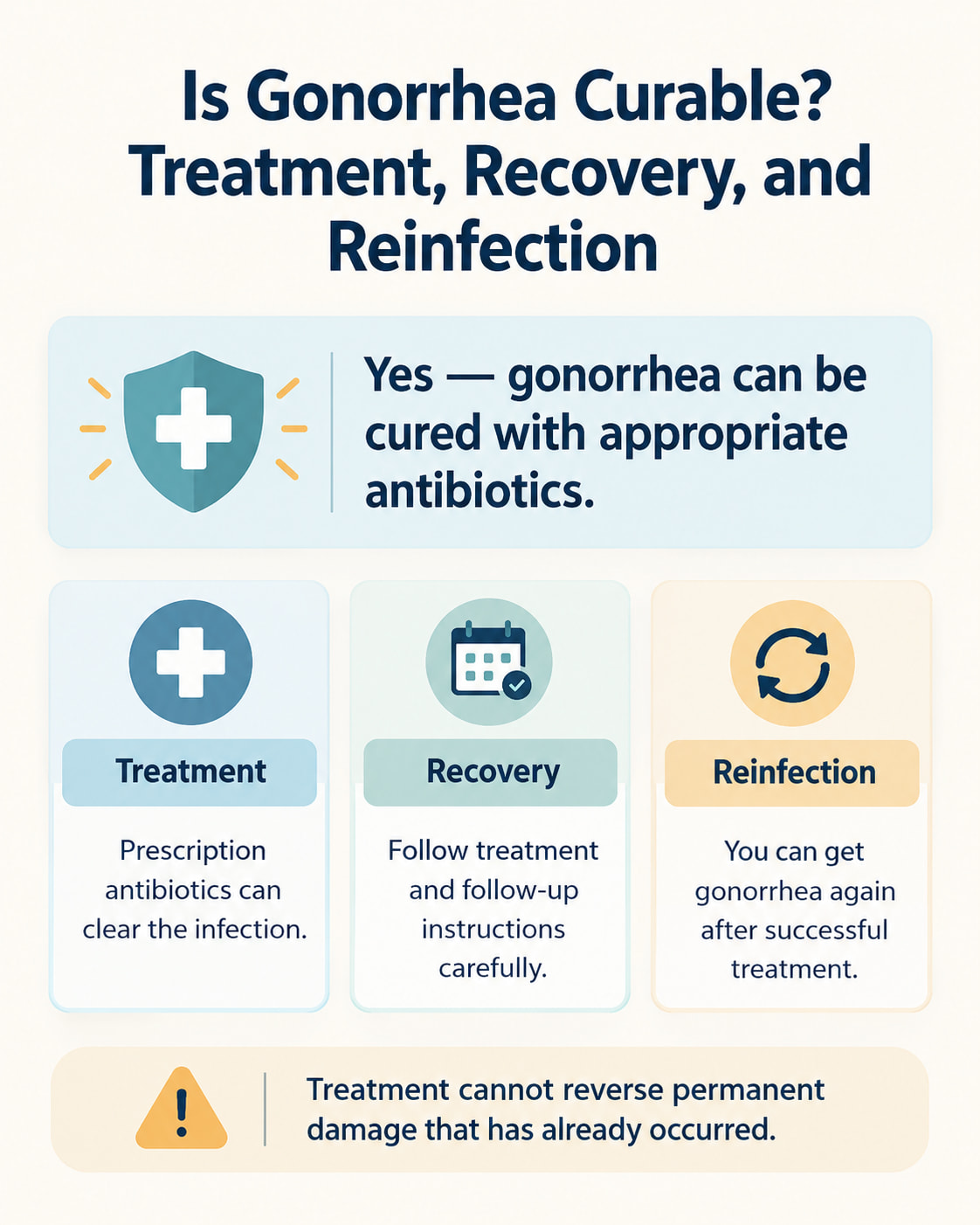
Is gonorrhea curable? Yes—gonorrhea can be cleared with appropriate prescription antibiotics, but successful treatment does not prevent you from getting it again. As the CDC’s patient guidance explains, antibiotics also cannot reverse permanent damage the infection has already caused.
The next steps are straightforward: get appropriate care, follow your prescription, make sure partners receive treatment, and complete any recommended follow-up testing. This guide focuses on U.S. treatment and follow-up recommendations.
Is Gonorrhea Curable Without Lasting Problems?
Gonorrhea is a sexually transmitted infection caused by Neisseria gonorrhoeae bacteria. It can affect the genitals, rectum, and throat, and it may cause no noticeable symptoms. Prompt diagnosis and appropriate antibiotics help reduce the risk of complications.
Without treatment, possible complications include pelvic inflammatory disease, fertility problems, and, rarely, infection that spreads to other parts of the body. These are possible outcomes—not something everyone with gonorrhea will experience.
The important distinction is between clearing the infection and reversing existing damage. Antibiotics can address the active infection, but established scarring or other lasting complications may need separate medical evaluation.
How Is Gonorrhea Treated?
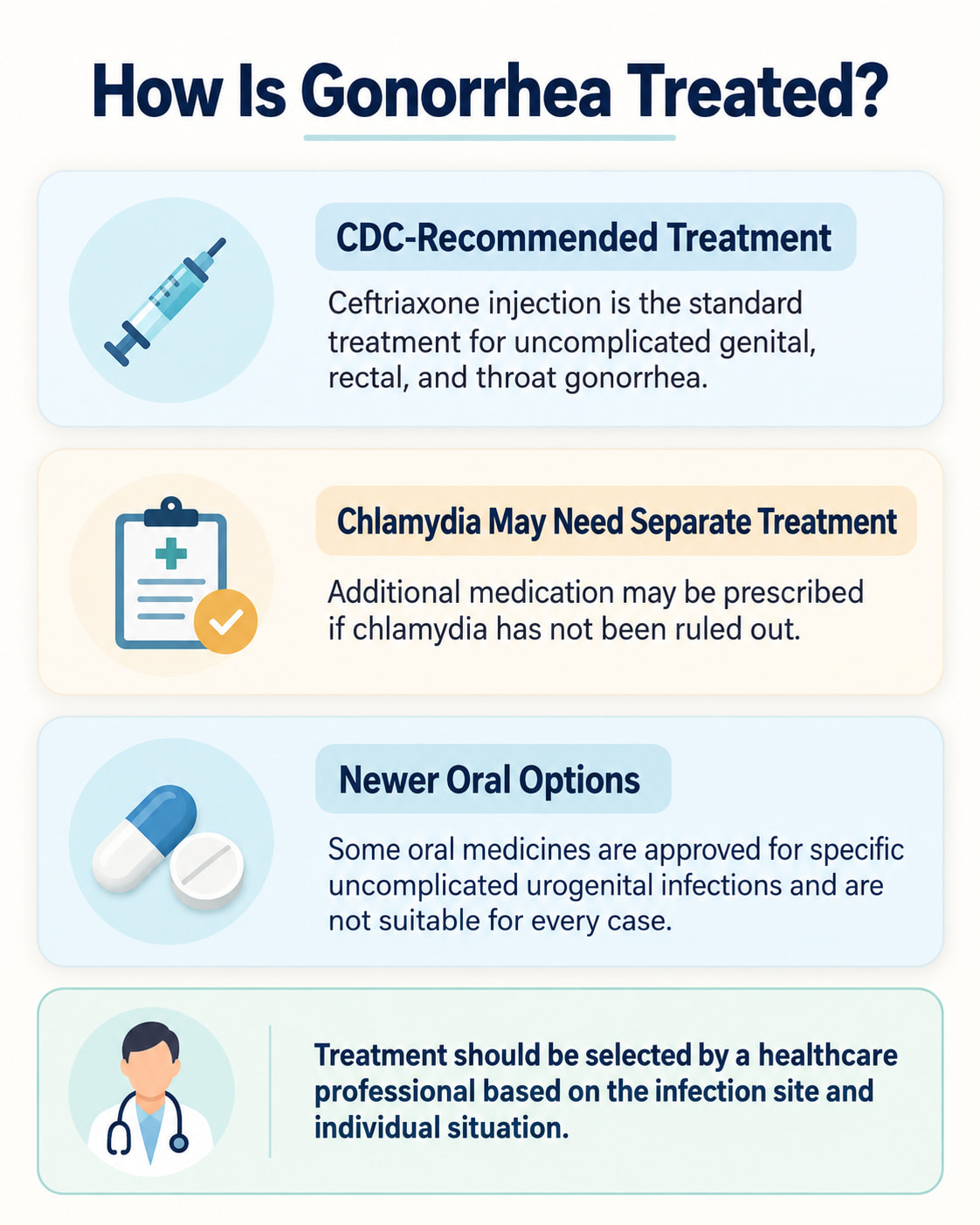
Ceftriaxone Is the Standard CDC-Recommended Option
The CDC’s clinical guidance recommends a single injection of ceftriaxone for uncomplicated genital, rectal, and throat gonorrhea. Your clinician determines the appropriate dose and checks whether this medication is suitable for you.
Additional medication may be needed when chlamydia has not been ruled out. Doxycycline may be prescribed for that separate infection; it should not be mistaken for a stand-alone gonorrhea treatment.
“Uncomplicated” matters here. An infection involving the eyes, reproductive organs, blood, or joints may require a different treatment plan rather than the routine single-dose approach.
Newer Oral Medicines Have Specific Uses
In its December 2025 announcement, the FDA described two newly approved oral options for uncomplicated urogenital gonorrhea, meaning localized infection of the urethra or cervix.
| Medicine | FDA-approved eligibility |
|---|---|
| Nuzolvence (zoliflodacin) | Adults and children age 12 or older weighing at least 77 pounds. |
| Blujepa (gepotidacin) | Adults and children age 12 or older weighing at least 99 pounds who have limited or no alternative treatment options. |
These approvals do not cover every infection site, including throat or rectal gonorrhea. They also do not make oral medication the right choice for everyone. Both medicines have important safety precautions and potential interactions that require clinician review.
Testing Helps Identify the Right Infection Sites
Depending on your exposure, testing may involve urine or swabs from the genital area, throat, or rectum. Tell your clinician about oral and anal sex so relevant sites can be checked; a urine test does not evaluate every possible infection location. Testing for chlamydia, syphilis, and HIV may also be appropriate.
Before receiving medication, mention allergies, pregnancy or possible pregnancy, and any other medicines you take. Follow the prescribed directions rather than using leftover antibiotics or someone else’s prescription.
How Long Does Gonorrhea Take to Clear After Treatment?
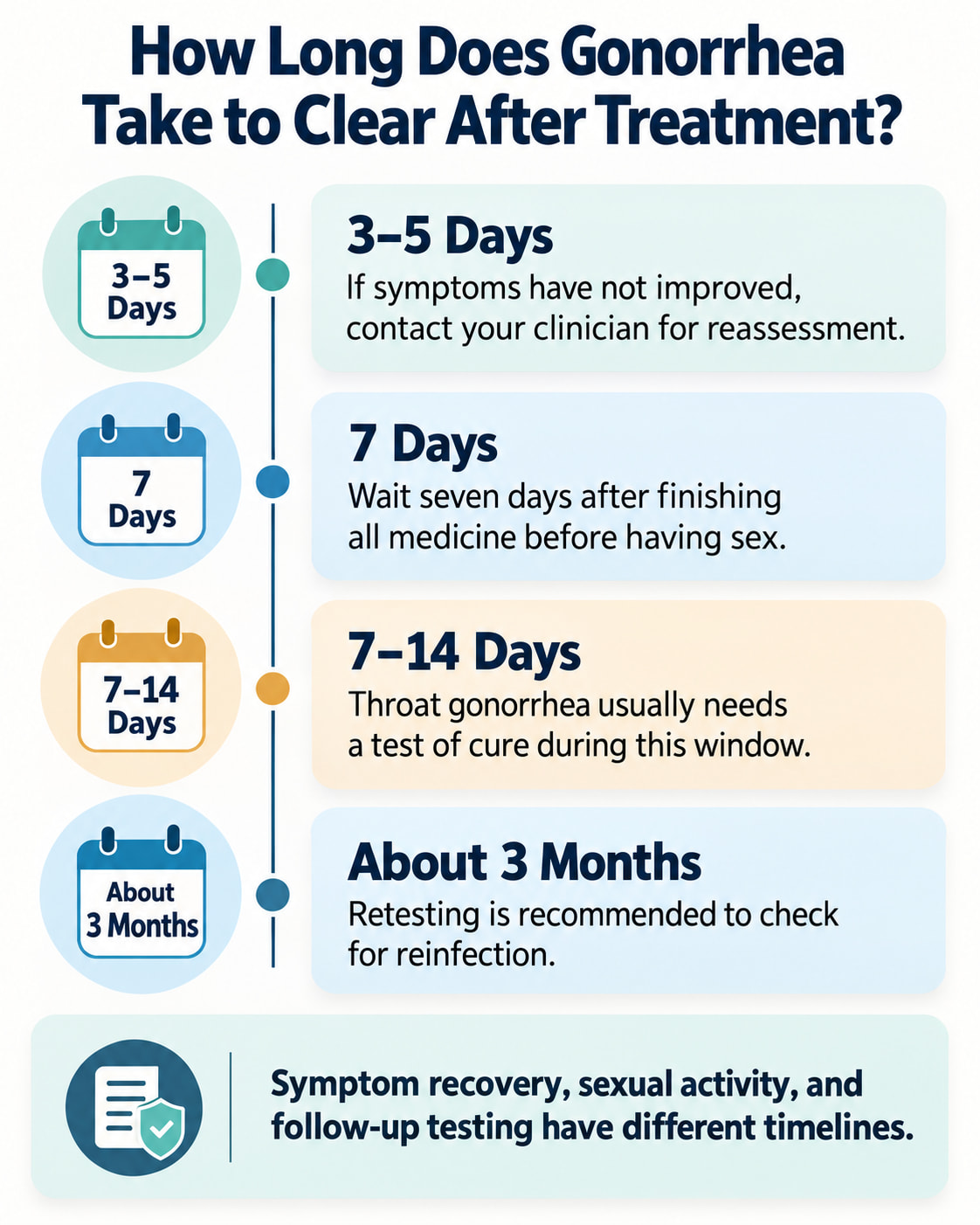
Treatment duration, symptom recovery, and the waiting period before sex are different timelines. Receiving a single-dose treatment does not mean you can safely resume sex that day.
Contact your clinician if symptoms have not resolved within three to five days after recommended treatment, particularly if you have had no sexual contact since treatment. CDC guidance identifies this as a reason to assess possible treatment failure—not proof that the bacteria are resistant.
Do not use the disappearance of burning or discharge as your only sign that everything is resolved. Gonorrhea can be present without symptoms, so medication instructions and follow-up recommendations still matter when you feel well.
When Can You Have Sex After Gonorrhea Treatment?
CDC patient guidance advises waiting seven days after finishing all medicine before having sex. You and your partners should have completed treatment, and any symptoms should be gone. This applies to vaginal, anal, and oral sex.
The waiting period must account for both partners’ treatment dates. For example, when your partner receives single-dose treatment three days after you, reaching seven days after your own treatment is not enough. Your partner’s waiting period still needs to finish.
Ask your clinic to give you a specific date for resuming sex, especially when either person has a multidose prescription, persistent symptoms, or additional follow-up instructions.
Do You Need a Test After Treatment?
There are two different reasons for follow-up testing:
A test of cure checks whether treatment cleared the original infection. Retesting for reinfection looks for a repeat infection later.
The CDC’s follow-up recommendations distinguish between these situations:
| Situation | Usual follow-up |
|---|---|
| Uncomplicated genital or rectal gonorrhea | An early test of cure is usually unnecessary after a CDC-recommended or listed alternative regimen. |
| Throat gonorrhea | A test of cure is recommended 7–14 days after treatment. |
| Anyone who has completed gonorrhea treatment | Retesting is recommended at approximately three months, even when partners received treatment. |
These recommendations separate confirmation of clearance from checking for another infection. Your clinician may arrange additional testing based on your medication, symptoms, or circumstances.
Testing too early can complicate interpretation. For throat gonorrhea, CDC notes that testing at seven days increases the possibility of a false-positive result. Keep the appointment timing your clinic recommends rather than repeatedly testing on your own.
Can You Get Gonorrhea Again?
Yes. Previous infection and successful treatment do not provide reliable protection against another infection. You can get gonorrhea again from a new partner or a partner whose infection has not been cleared.
Recent Partners Need Evaluation
Sex partners from the 60 days before symptoms began or the diagnosis generally need evaluation, testing, and treatment, even without symptoms. When the last exposure was more than 60 days earlier, the most recent partner still needs care.
When a partner cannot access prompt care, ask your clinician about expedited partner therapy. Where legally permitted and clinically appropriate, this allows a clinician to provide medication or a prescription for a partner without first examining them. It is not the same as sharing your own prescription.
Lower Your Risk After Recovery
Condoms and dental dams can reduce exposure during sex, although they do not eliminate every risk. Discuss testing with partners, and ask your clinician how often you should be screened based on your sexual activity and exposure history.
What If Symptoms Continue After Treatment?
Persistent or returning symptoms do not automatically mean antibiotic-resistant gonorrhea. Possible explanations include reinfection, medication not taken as directed, another infection causing similar symptoms, or bacteria that did not respond to the antibiotic.
CDC guidance notes that most suspected treatment failures in the United States are likely reinfections rather than true antibiotic failure.
Your clinician may request additional samples and antibiotic-susceptibility testing to help determine which medication is likely to work. Explain exactly what you took and whether you had sexual contact after treatment. Do not start another antibiotic course on your own.
When to Seek Medical Care
Arrange testing and medical advice when you have a positive result, a partner with gonorrhea, or symptoms such as unusual genital discharge, burning during urination, or rectal discomfort. Do not wait for symptoms after a known exposure.
According to NHS safety guidance, suspected or confirmed gonorrhea needs urgent assessment when accompanied by:
- Red, painful, or pus-producing eyes.
- Fever.
- Joint pain or swelling, or a new bumpy or blotchy rash.
These can indicate a more serious infection.
Sudden, severe testicular pain or severe, worsening pelvic pain requires emergency assessment. Do not assume these symptoms are simply part of an uncomplicated STI.
If you are pregnant or might be pregnant, tell your clinician promptly. Gonorrhea can affect pregnancy and can pass to a baby during delivery, making timely care important.
Frequently Asked Questions
Can Gonorrhea Go Away Without Treatment?
Do not rely on it clearing without medical care. Gonorrhea requires appropriate antibiotics, and a lack of symptoms does not show that the infection is gone. Home care is not a substitute for prescribed medication.
Is Gonorrhea Curable After Months or Years?
An ongoing infection can still be addressed with appropriate antibiotics. However, clearing the bacteria cannot reverse established permanent damage. A delayed diagnosis makes assessment for complications especially important.
Can Doxycycline Alone Clear Gonorrhea?
Doxycycline alone is not a CDC-recommended gonorrhea regimen. It may be prescribed for chlamydia alongside a separate antibiotic for gonorrhea. Follow the treatment plan for each diagnosed or suspected infection.
Is Throat Gonorrhea Curable?
Yes, but throat infections can be harder to eliminate. CDC recommends follow-up testing 7–14 days after treatment, even when the infection caused no noticeable throat symptoms.
Do I Need Treatment If I Have No Symptoms?
Yes. A diagnosed infection still needs appropriate care. Gonorrhea can spread to partners and cause complications without obvious symptoms, so feeling healthy does not replace treatment.
Does a Positive Test After Treatment Always Mean the Antibiotics Failed?
No. The result may reflect reinfection, persistent infection, or testing too early. Your clinician must consider the timing, infection site, treatment received, and any new exposure before deciding what it means.
Conclusion
Gonorrhea is curable, and prompt care gives you a clear path forward. The priorities are appropriate antibiotics, partner treatment, and the right follow-up—not judging recovery by symptoms alone.
Arrange care with your healthcare provider or a sexual health clinic. Before leaving, confirm when you can resume sex and whether you need an early test of cure, a three-month retest, or both.
This content is for informational purposes only and not medical advice.
References
- CDC: About Gonorrhea
- CDC: Clinical Treatment of Gonorrhea
- FDA: Approval of Two Oral Therapies for Gonorrhea
- World Health Organization: Gonorrhea Fact Sheet
- MedlinePlus: Gonorrhea Test
- Cleveland Clinic: Gonorrhea: Diagnosis, Treatment, and Prevention
- NHS: Gonorrhea Symptoms and Safety Guidance