
Yes, coconut oil can help moisturize dry skin, but it may clog pores and is generally a poor choice for acne-prone areas. The answer to “Is coconut oil good for skin?” depends on your skin type and where you apply it.
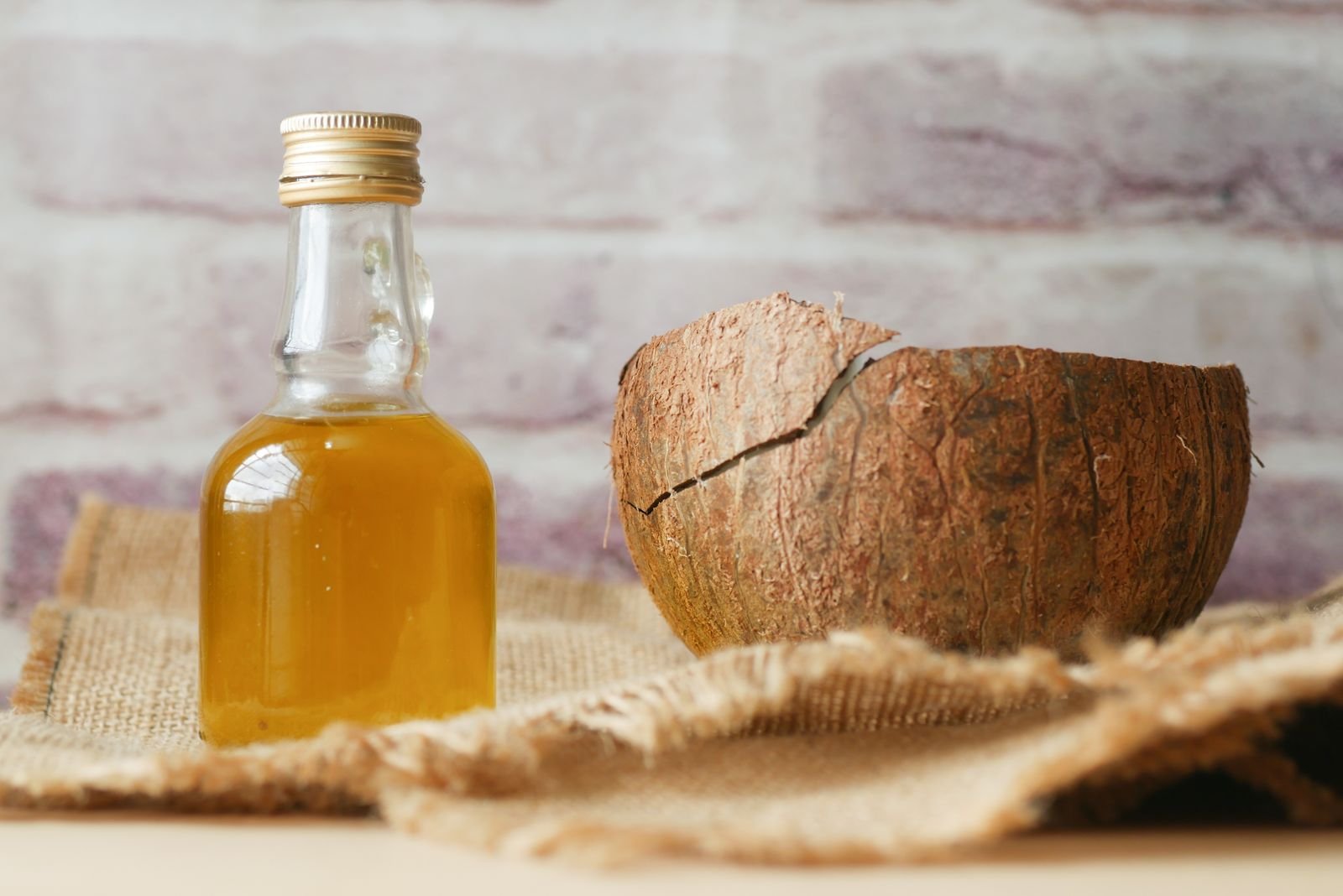
The most useful approach is to think of it as an optional moisturizer—not an all-purpose skin remedy. Before adding it to your routine, test a small area and consider whether an ordinary fragrance-free moisturizer would better meet your needs. The American Academy of Dermatology (AAD) recommends testing new products and choosing skin care appropriate for your skin.
Is Coconut Oil Good for Skin? What the Research Shows
Moisturizes Dry Skin
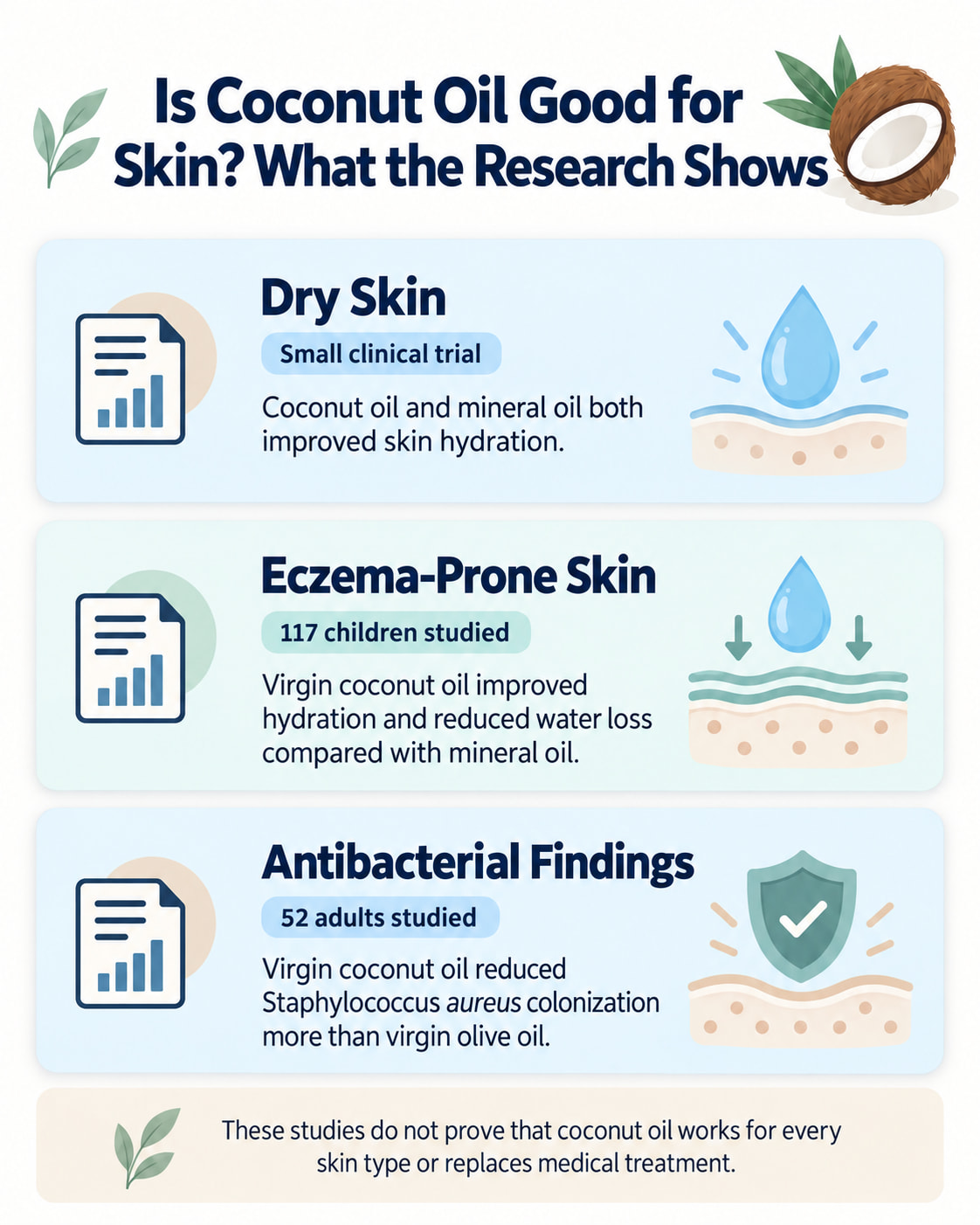
Coconut oil may help soften rough, dry skin. Its moisturizing effects have been studied in people with xerosis, the medical term for unusually dry skin.
In a 2004 randomized trial published in Dermatitis, 34 participants applied coconut oil or mineral oil to their legs twice daily for two weeks. Both groups showed improved skin hydration and increased surface lipid levels. Coconut oil did not demonstrate a statistically significant advantage over mineral oil.
This supports coconut oil as a possible dry-skin moisturizer, but the study was small and short. It did not establish that coconut oil works better than modern moisturizing creams or is suitable for everyone’s face. Participants also had negative product patch tests before starting.
May Help Moisturize Eczema-Prone Skin
Some research suggests virgin coconut oil may support hydration and reduce moisture loss in eczema-prone skin.
For example, a 2014 randomized clinical trial in the International Journal of Dermatology included 117 children with mild-to-moderate atopic dermatitis. After eight weeks, virgin coconut oil produced greater improvements than mineral oil in eczema severity, skin hydration, and the amount of water escaping through the skin.
These findings are encouraging, but they apply to a particular group and comparison. They do not establish coconut oil as a replacement for prescribed eczema care or show that it works for severe or infected eczema.
The AAD describes moisturizing as one part of an individualized eczema plan, alongside trigger management and medication when needed. Discuss a new product with your clinician, especially for a child or during an active flare.
Antibacterial Findings Have Important Limits
A 2008 trial involving 52 adults with atopic dermatitis compared virgin coconut oil with virgin olive oil. Coconut oil reduced Staphylococcus aureus colonization more effectively at the studied skin sites over four weeks.
However, the application sites were not clinically infected. Reducing bacteria living on the skin is different from managing an infection. The study also did not investigate acne, so it cannot justify using coconut oil as an acne product.
Is Coconut Oil Good for Your Face?
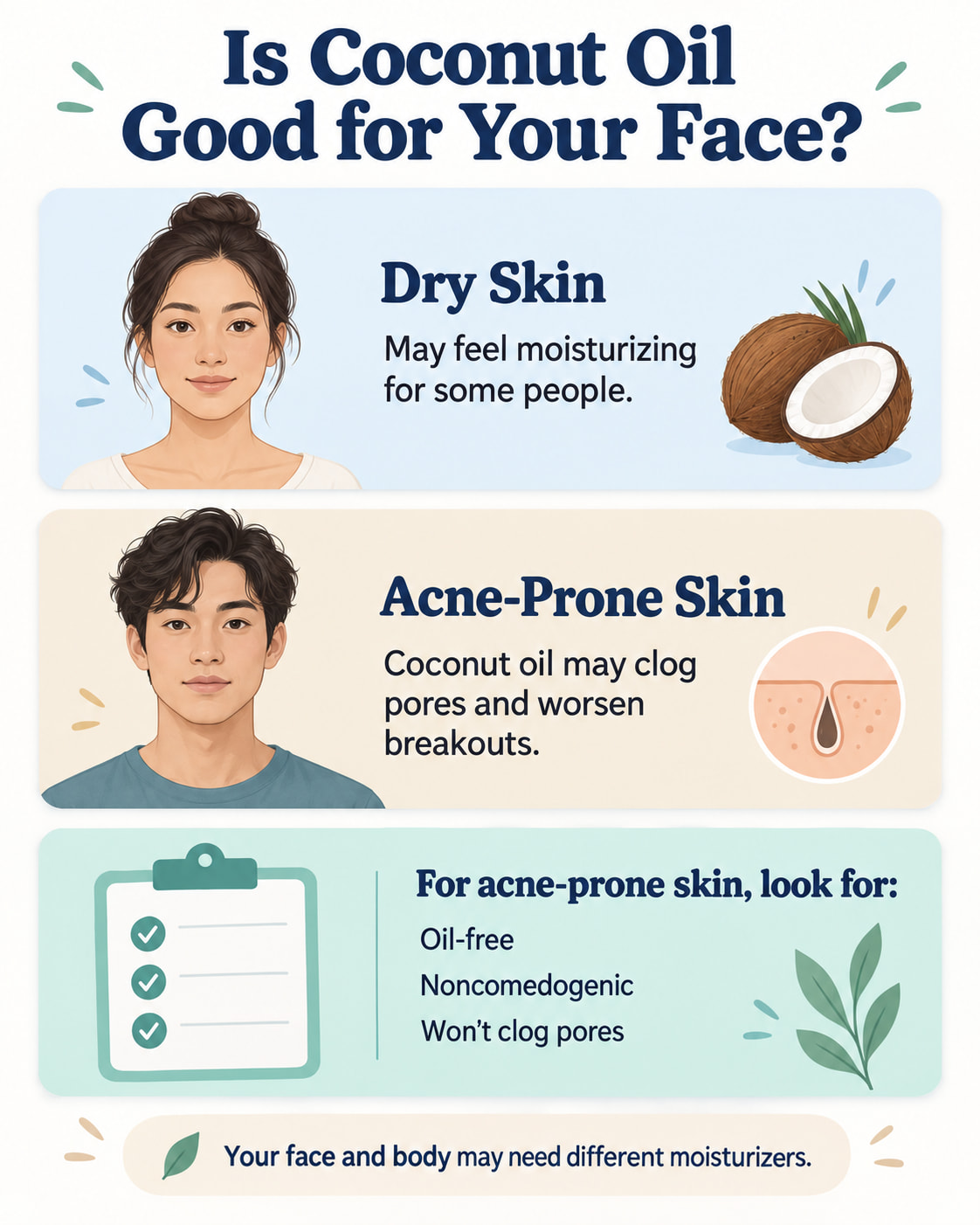
Coconut oil is generally not recommended for acne-prone facial skin. In Cleveland Clinic’s dermatology guidance, dermatologist Jane Wu, MD, cautions that it can clog pores and worsen breakouts. The warning also applies to acne-prone shoulders, chest, and back.
The term comedogenic refers to a tendency to clog pores. It does not mean every person will develop pimples, but it is a reason to be cautious about using pure coconut oil as an all-over facial moisturizer.
Having acne does not mean you should skip moisturizing. Acne-prone skin can also become dry, particularly when using certain acne medications. The AAD recommends looking for moisturizers labeled oil-free, noncomedogenic, or “won’t clog pores.”
For example, someone with dry elbows and facial acne does not need one product for both areas. Choosing a separate acne-friendly facial moisturizer is a reasonable way to address those different needs.
Risks and Side Effects of Coconut Oil on Skin
Irritation and Allergic Reactions
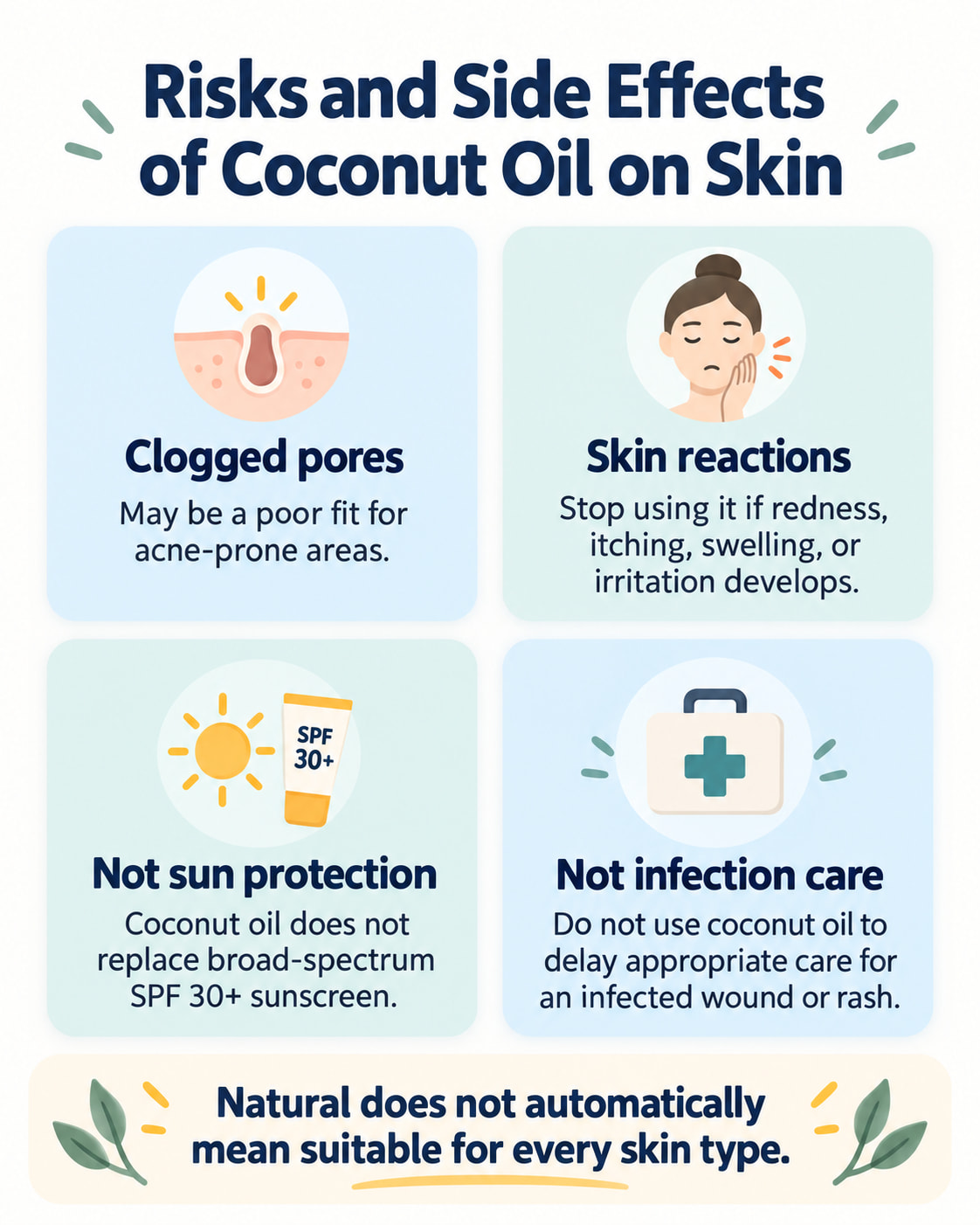
“Natural” does not guarantee that a product will agree with your skin. New skin-care products can cause redness, itching, swelling, or irritation, and added fragrance may create another problem for sensitive skin.
Stop using a product that causes a reaction and gently wash it off. Avoid products containing an ingredient you already know you are allergic to; a home test is not a reason to deliberately re-expose yourself to a known trigger. Persistent or significant reactions need professional assessment.
It Cannot Replace Sunscreen
Do not rely on coconut oil for sun protection. An oil or homemade mixture is not a substitute for a properly tested sunscreen.
In its July 2024 statement, the AAD warned that homemade sunscreens lack dependable protection. It recommends broad-spectrum, water-resistant sunscreen with SPF 30 or higher, along with shade and protective clothing.
It Is Not a Substitute for Wound or Infection Care
Do not use antibacterial claims as a reason to put coconut oil on a suspected skin infection or delay getting care. The adult eczema trial discussed above did not test infected wounds.
For minor cuts and scrapes, AAD guidance instead emphasizes cleaning the area and using petroleum jelly to maintain a moist wound environment. More serious injuries or signs of infection require appropriate medical attention.
How to Use Coconut Oil on Skin
1. Test a Small Area First
The AAD’s product-testing guidance recommends applying a new product to a small spot twice daily for seven to 10 days. A quarter-sized area on the underside of your arm is one option. Use the amount you would normally apply and watch for a reaction.
This is a home tolerance check, not the same as medical patch testing. It also does not establish that a product will be suitable for acne-prone facial skin.
2. Apply a Small Amount to Damp Body Skin
After bathing, gently pat your skin until it is slightly damp. Apply a small amount and spread it into a thin layer rather than leaving a heavy coating. Moisturizers are generally most useful when applied while some water remains on the skin.
There is no need to heat coconut oil before applying it. A small amount can be gently massaged onto the skin; warming weather may naturally change it from solid to liquid.
3. Keep Other Uses Limited
Coconut oil can also moisturize dry lips. For makeup removal, Cleveland Clinic advises following it with a gentle, water-based cleanser to remove residue. Neither use is essential, and an alternative is appropriate when the oil does not suit your skin.
Which Type of Coconut Oil Is Best for Skin?
The clinical studies discussed here used virgin coconut oil. That makes it the relevant form when interpreting those results—but the studies did not establish that every virgin product is superior to every refined oil or formulated moisturizer.
Harvard’s Nutrition Source explains that virgin coconut oil comes from fresh coconut meat, while refined oil typically undergoes additional processing and deodorizing. It also notes that “virgin” and “extra virgin” do not identify different coconut-oil grades in the way those terms do for olive oil.
Focus on a clear ingredient list and avoid added fragrance when you have dry or sensitive skin. An “organic” or premium label is not a substitute for checking how a product affects you.
Alternatives to Coconut Oil for Skin
You do not need coconut oil to maintain a moisturizing routine. The AAD’s dry-skin recommendations favor fragrance-free creams or ointments over lighter lotions for dry skin.
| Your main concern | An alternative to consider |
|---|---|
| Dry, rough body skin | A fragrance-free cream or ointment containing ingredients such as glycerin, dimethicone, mineral oil, or petrolatum. |
| Oily or acne-prone facial skin | An oil-free, noncomedogenic moisturizer. |
| Dry lips | Plain petroleum jelly or a lip balm that does not sting or irritate. |
| Eczema-prone skin | A moisturizer selected as part of your clinician’s skin-care plan. |
A product that already keeps your skin comfortable does not need replacing simply because coconut oil is popular.
When to See a Dermatologist
Arrange an evaluation when dryness persists despite gentle skin care, eczema worsens, or products repeatedly cause burning or irritation. Persistent dryness can sometimes reflect an underlying condition rather than a need for more moisturizer.
Seek prompt medical attention for a painful or rapidly spreading rash, blisters, fever, pus, increasing warmth, or yellow crusting. Trouble breathing or swallowing, or sudden swelling of the lips or eyes, requires immediate medical attention.
Frequently Asked Questions
Can I Use Coconut Oil on My Skin Every Day?
Daily use may be reasonable on dry body skin that tolerates it. Start with a small amount and adjust to your skin’s needs rather than following a fixed schedule. Stop if it causes irritation or bumps.
Can I Leave Coconut Oil on My Face Overnight?
It is not a good overnight choice for acne-prone skin. A noncomedogenic facial moisturizer is a more appropriate option for someone concerned about clogged pores.
Does Coconut Oil Remove Dark Spots?
The moisturizing and eczema trials discussed here did not test dark-spot removal. Their results therefore do not support using coconut oil as a pigment-correcting product. Improved hydration should not be confused with fading pigmentation.
Does Coconut Oil Reduce Wrinkles?
Moisturizing can temporarily make some fine lines look less noticeable, but that is not the same as reversing skin aging. The AAD emphasizes sun protection and moisturizing in its guidance on reducing visible signs of aging; it does not establish coconut oil as a wrinkle-removal product.
Can I Use Cooking Coconut Oil on My Skin?
Plain coconut oil sold for cooking may also be used as a moisturizer, but being edible does not establish that it suits your skin. Check the ingredients, avoid flavored blends, and follow the same small-area testing precautions.
Is Coconut Oil Safe for Babies and Children?
Do not assume results from a childhood eczema trial apply to every baby, child, or rash. Ask your child’s pediatrician or dermatologist before introducing it for a skin condition, especially during a flare. A moisturizer should fit the child’s overall care plan.
The Bottom Line
Coconut oil has evidence supporting some moisturizing benefits, but it is not necessary for healthy skin and does not replace sunscreen or condition-specific care.
Start by identifying what your skin needs. Choose an appropriate moisturizer, test new products carefully, and seek help when dryness or irritation persists. A simple routine that your skin tolerates is a better goal than adding more products.
This content is for informational purposes only and not medical advice.
References
- Agero AL, Verallo-Rowell VM. Dermatitis. 2004. Randomized trial comparing coconut oil and mineral oil for dry skin.
- Evangelista MTP, Abad-Casintahan F, Lopez-Villafuerte L. International Journal of Dermatology. 2014. Virgin coconut oil in children with atopic dermatitis.
- Verallo-Rowell VM, Dillague KM, Syah-Tjundawan BS. Dermatitis. 2008. Coconut and olive oils in adult atopic dermatitis.
- American Academy of Dermatology. Rash 101: When to Seek Medical Attention.
- American Academy of Dermatology. Wrinkle Remedies.