
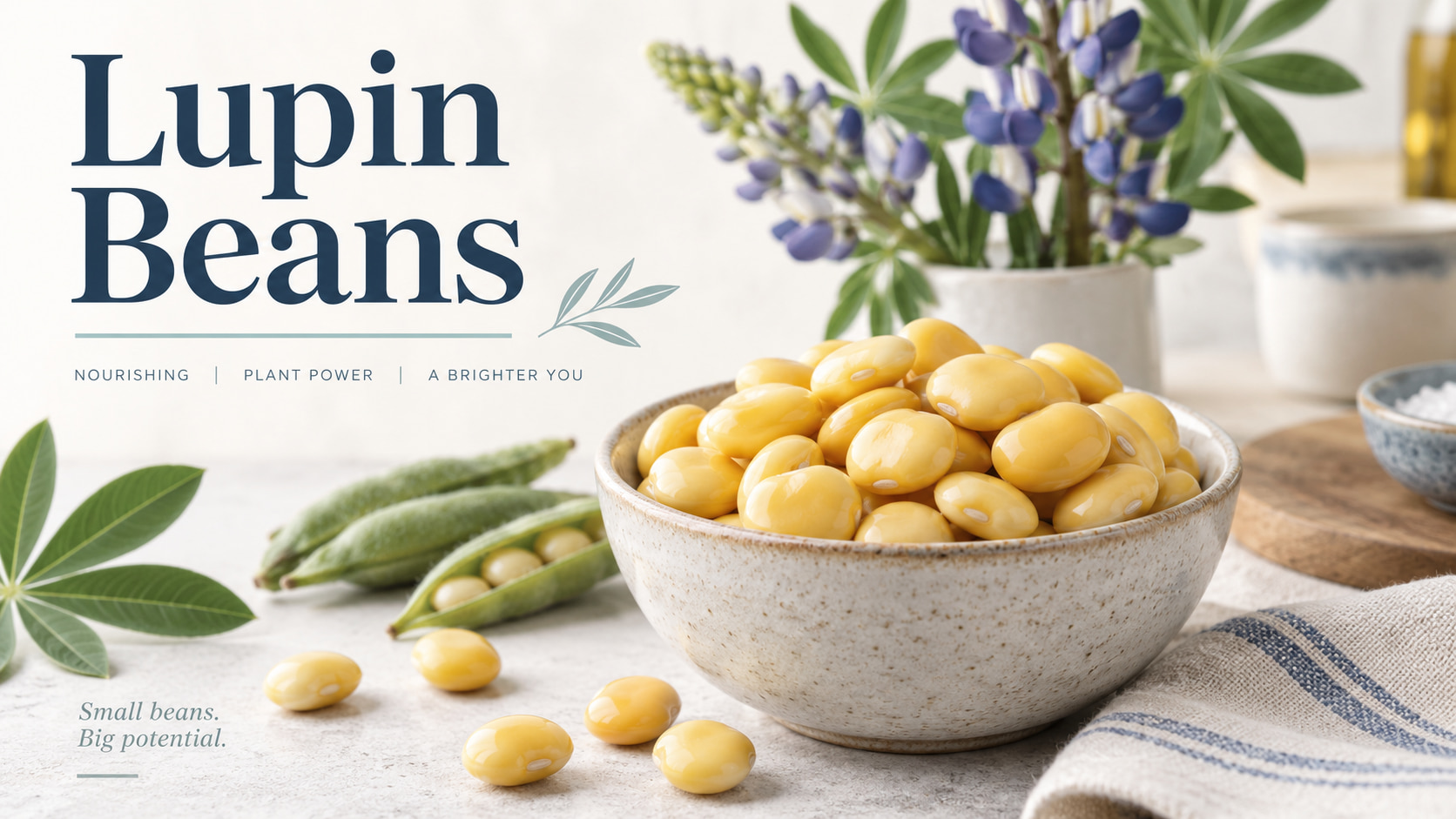
Lupin beans, also called lupini beans, are protein-rich legumes that provide fiber and minerals. Properly prepared beans can be eaten as a snack or added to salads, bowls, and dips. Their main nutritional appeal is their substantial protein content, but preparation and allergy precautions matter.
For a straightforward first try, choose a commercially prepared product labeled ready to eat. Untreated bitter lupin beans can contain toxic alkaloids, and lupin can cause serious allergic reactions. People with peanut allergy should speak with an allergist before trying it.
What Are Lupin Beans?
Lupin beans are seeds from plants in the legume family, which also includes peanuts, peas, and other beans. They are familiar in Mediterranean food traditions, often served as a salty snack or appetizer. Prepared whole beans generally have a firm bite rather than a soft, creamy texture.
You may encounter lupin as whole snack beans, dried seeds, flour, or an ingredient in pasta, baked goods, and plant-based foods. These forms are not interchangeable: their preparation requirements and nutritional profiles can differ considerably.
Lupin Beans Nutrition
The USDA FoodData Central reference entry, as reproduced by NutriDB, lists the following approximate nutrients for 100 grams, or about 3.5 ounces, of cooked, boiled, unsalted lupin beans.
| Nutrient | Amount per 100 grams |
|---|---|
| Calories | 119 |
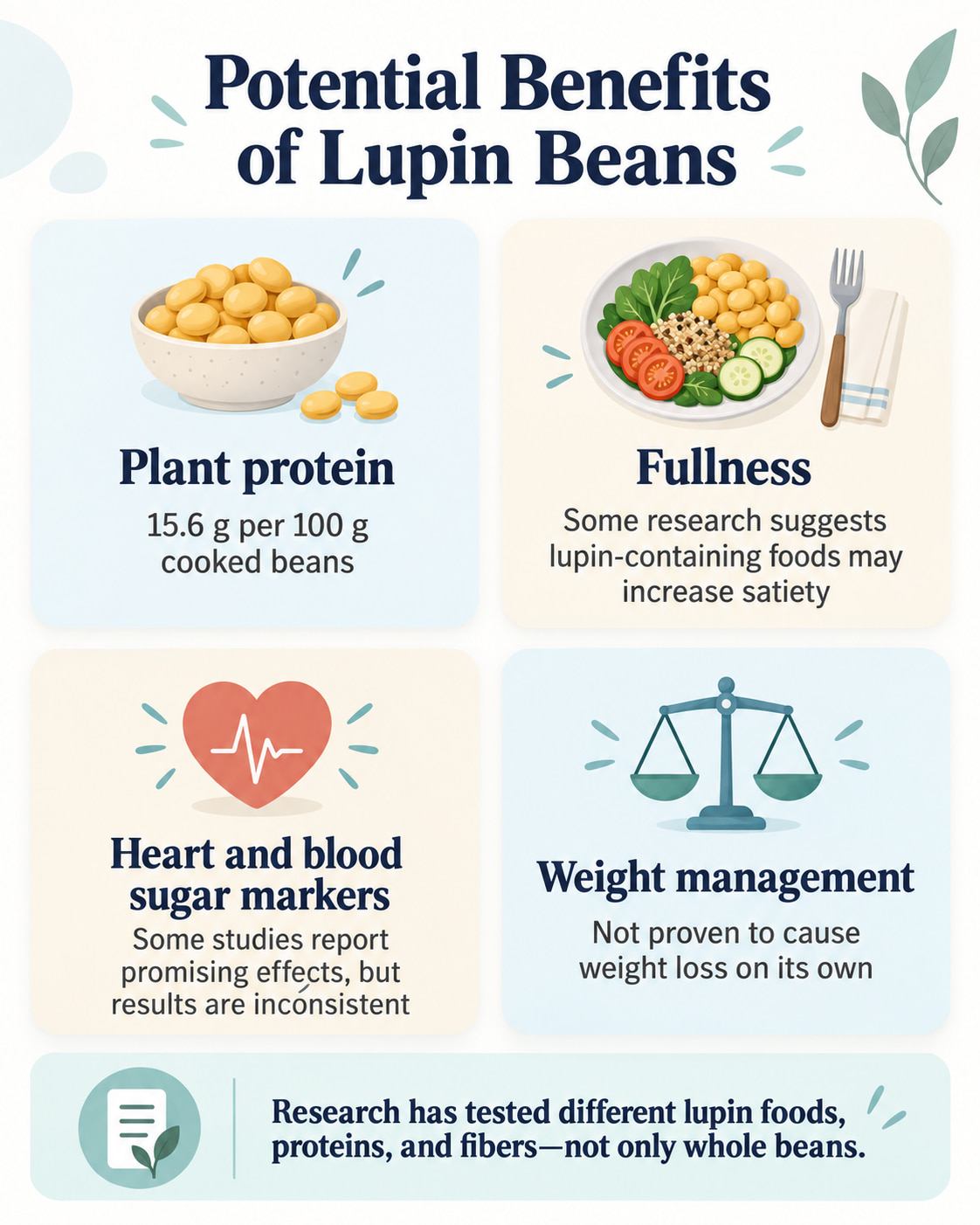
| Protein | 15.6 g |
| Total carbohydrate | 9.9 g |
| Dietary fiber | 2.8 g |
| Total fat | 2.9 g |
| Magnesium | 54 mg |
| Potassium | 245 mg |
| Iron | 1.2 mg |
| Sodium | 4 mg |
These figures describe one cooked-bean reference—not every jar, snack pouch, or lupin flour. Use the package’s own nutrition label, particularly for fiber and sodium. Beans packed in brine should not be assumed to have the same sodium content as unsalted beans.
Potential Benefits of Lupin Beans
A Convenient Source of Plant Protein
Lupin beans can add meaningful protein to a meal without relying on a protein powder. For example, adding prepared beans to a vegetable salad turns it into a more protein-containing dish. They also contribute fiber and minerals, although the amounts depend on the product and portion.
May Help With Fullness
A 2022 systematic review examined 21 controlled studies involving 998 participants. It found promising evidence that some lupin-containing foods increased feelings of fullness.
However, the research included different preparations, such as whole-lupin ingredients, isolated protein, and isolated fiber. Feeling fuller after a particular study food does not guarantee the same response from every lupin snack.
Possible Heart and Blood Sugar Benefits
The same review reported improvements in some measures of blood pressure, cholesterol, and blood sugar regulation. Results were not consistent across all studies, and the researchers highlighted small participant numbers and differences between studies as important limitations.
The practical takeaway is modest: lupin beans may be a useful part of a balanced eating pattern, but the evidence does not establish that an ordinary serving reliably lowers cholesterol or blood sugar. Do not change prescribed medicines based on these findings.
Not a Proven Weight-Loss Aid
In a 12-month randomized controlled trial involving 131 participants, published in the International Journal of Obesity in 2011, lupin-enriched foods did not significantly improve weight loss or weight-loss maintenance compared with the control foods.
Lupin beans can still fit into a weight-management plan. The distinction is that choosing them as a satisfying food is different from expecting them to produce weight loss on their own.
Lupin Beans Risks and Side Effects
Lupin Allergy and Peanut Cross-Reactivity
Lupin can cause an allergic reaction even in someone without peanut allergy. However, some people with peanut allergy also react to lupin because the foods contain proteins that can trigger cross-reactivity. Reactions may include hives, swelling, vomiting, breathing problems, or anaphylaxis.
A peanut allergy is a reason to consult an allergist before trying lupin—not to test a small amount at home. People with a diagnosed lupin allergy should avoid lupin-containing foods.
The FDA’s food-allergen guidance identifies nine major allergens covered by special US labeling requirements; lupin is not among them. Read the complete ingredient list rather than relying only on a “Contains” statement. Look for ingredients such as lupin, lupini, lupin flour, and lupin protein.
Toxic Alkaloids in Untreated Bitter Beans
Some lupin varieties contain substantial amounts of naturally occurring compounds called quinolizidine alkaloids. Inadequately prepared bitter beans can cause poisoning. Removing these compounds is called debittering.
A BfR risk assessment published September, 2025 found insufficient evidence to recommend a general household debittering method. The German Federal Institute for Risk Assessment also noted that poisoning cases have followed inadequate home preparation.
That means a generic instruction to “soak for several days and boil” should not be treated as a safety guarantee. The starting alkaloid level and effectiveness of processing can vary.
A distinctly bitter taste can be a warning sign. Stop eating the product rather than masking bitterness with seasoning. Never drink water used to soak untreated bitter lupin seeds or reuse it in food.
Sodium in Brined and Seasoned Products
Check the sodium amount for the portion you actually eat. A small serving listed on the label can make a salty product look less significant than a larger portion would be.
FDA guidance considers 5% of the Daily Value or less per serving low in sodium, while 20% or more is high. Compare similar serving sizes when choosing between products.
Gas and Bloating
Like other legumes, lupin beans may contribute to gas or bloating in some people. Certain carbohydrates reach the large intestine without being fully digested, where bacteria break them down and produce gas.
Once allergy concerns have been addressed, begin with a smaller portion and notice how you feel. Eat slowly rather than consuming a large amount at once. Persistent or troublesome digestive symptoms deserve a discussion with a healthcare professional.
When to Seek Urgent Help
Breathing difficulty, throat swelling, fainting, or a rapidly worsening reaction after eating requires emergency help. For suspected anaphylaxis, use prescribed epinephrine according to your emergency plan and call 911.
If you suspect poisoning from improperly prepared lupin beans, contact Poison Control at 1-800-222-1222 in the US. Call 911 immediately if someone collapses, has a seizure, has trouble breathing, or cannot be awakened.
How to Eat Lupin Beans
Start With Ready-to-Eat Beans
Choose a product explicitly labeled ready to eat. Commercially debittered beans avoid the need to undertake that processing yourself. Follow the package directions for draining, rinsing, serving, and storage.
For your first meal, try a few tablespoons as an addition rather than making the beans the entire dish. This is a practical portion idea, not a scientifically established dose. Starting small is for digestive comfort—not an allergy test.
Simple Serving Ideas
All of these ideas start with beans already prepared and safe to eat:
- Seasoned snack: Toss with lemon juice, oregano, and a little olive oil.
- Crunchy salad: Combine with cucumber, tomatoes, red onion, and leafy greens.
- Grain bowl: Add to cooked brown rice or quinoa with roasted vegetables.
- Bean dip: Blend with lemon juice, olive oil, garlic, and enough water to reach your preferred texture.
For an easy lunch, combine prepared lupin beans with chopped vegetables and a lemon dressing. Add other foods according to your appetite and nutritional needs.
What About Dried Lupin Beans?
Dried lupin beans require more attention than ready-to-eat products. Clearly identified sweet lupin varieties have lower alkaloid levels than bitter varieties. “Sweet” describes the variety; it does not mean the beans contain added sugar.
Choose food-grade beans that do not require home debittering, and follow their specific cooking instructions. When the variety or preparation requirements are unclear, contact the manufacturer or choose a ready-to-eat alternative. Do not assume an ordinary dried-bean recipe makes untreated bitter lupins safe.
How to Choose and Store Lupin Beans
Choose a package size you can reasonably finish within the manufacturer’s recommended period after opening. Check the preparation instructions, full ingredient list, serving size, and sodium before buying.
Store unopened products as directed. After opening, follow the label’s refrigeration instructions and recommended use period rather than applying one shelf life to every brand. Keep refrigerated beans covered, and maintain your refrigerator at 40°F or below.
Avoid leaking or swollen containers, and discard food with mold or other obvious signs of spoilage. Remember that unsafe food does not always look or smell unusual, so correct storage matters more than a smell test alone.
Frequently Asked Questions
Are Lupin Beans and Lupini Beans the Same?
Yes. “Lupini beans” is another common name for edible lupin beans. However, products sold under either name can differ in variety, preparation, and seasoning.
Can You Eat Lupin Bean Skins?
The skins of properly prepared beans are generally edible, although some people remove them because of their texture. Follow the product’s directions. Peeling is a preference—not a replacement for proper preparation.
Do Lupin Beans Need to Be Cooked?
Products labeled ready to eat do not need additional cooking unless the manufacturer says otherwise. Dried beans require the preparation stated on their package, and untreated bitter varieties must not be handled as ordinary dried beans.
Are Lupin Beans Keto-Friendly?
Some whole-bean products can fit a low-carbohydrate eating plan, depending on your portion and daily carbohydrate target. They are not carbohydrate-free. Lupin pasta may also contain wheat, so do not assume it has the same carbohydrate content as whole beans.
How Many Lupin Beans Should You Eat Per Day?
There is no established daily serving that guarantees health benefits. Use the product’s serving size as a practical starting point, consider the rest of your diet, and choose a smaller portion when legumes cause digestive discomfort.
Are Lupin Beans Gluten-Free?
Plain lupin beans are naturally gluten-free, but lupin-containing foods may also include wheat or other ingredients. Check the finished product’s gluten-free labeling when necessary. Gluten-free does not mean safe for someone with lupin allergy.
The Bottom Line
Lupin beans offer a practical way to add plant protein and variety to meals. Their potential health benefits should be kept in perspective, and preparation and allergy precautions should come first.
Start with a clearly labeled, ready-to-eat product, check its ingredients and sodium, and try a small portion in your next salad or grain bowl once allergy concerns are addressed.
This content is for informational purposes only and not medical advice.
References
- USDA FoodData Central. Lupins, mature seeds, cooked, boiled, without salt—record 172424. Nutrient values checked against the USDA data reproduced by NutriDB.
- Bryant L, Rangan A, Grafenauer S. Lupins and Health Outcomes: A Systematic Literature Review. Nutrients. 2022.
- Belski R, et al. Effects of lupin-enriched foods on body composition and cardiovascular disease risk factors: a 12-month randomized controlled weight loss trial. International Journal of Obesity. 2011.
- American Academy of Allergy, Asthma & Immunology. What Is a Lupin Allergy?
- German Federal Institute for Risk Assessment. Alkaloids and allergies: current data on health risks from lupin seeds in food.
- German Federal Institute for Risk Assessment. Lupin seeds: Health impairments possible with bitter taste.
- US Food and Drug Administration. Food Allergies, Sodium in Your Diet, and Are You Storing Food Safely?
- National Institute of Diabetes and Digestive and Kidney Diseases. Eating, Diet, & Nutrition for Gas in the Digestive Tract. Reviewed June 2021.
- Brami. Lupini Bean FAQs. Manufacturer information on prepared beans, edible skins, and product differences.