
High protein vegetarian meals are meat-free meals that usually provide about 20 grams or more of protein per serving from foods like lentils, beans, tofu, tempeh, edamame, Greek yogurt, cottage cheese, eggs, nuts, seeds, and whole grains. The easiest way to build them is to combine one main protein, one supporting protein, fiber-rich carbohydrates, vegetables, and a flavorful sauce.
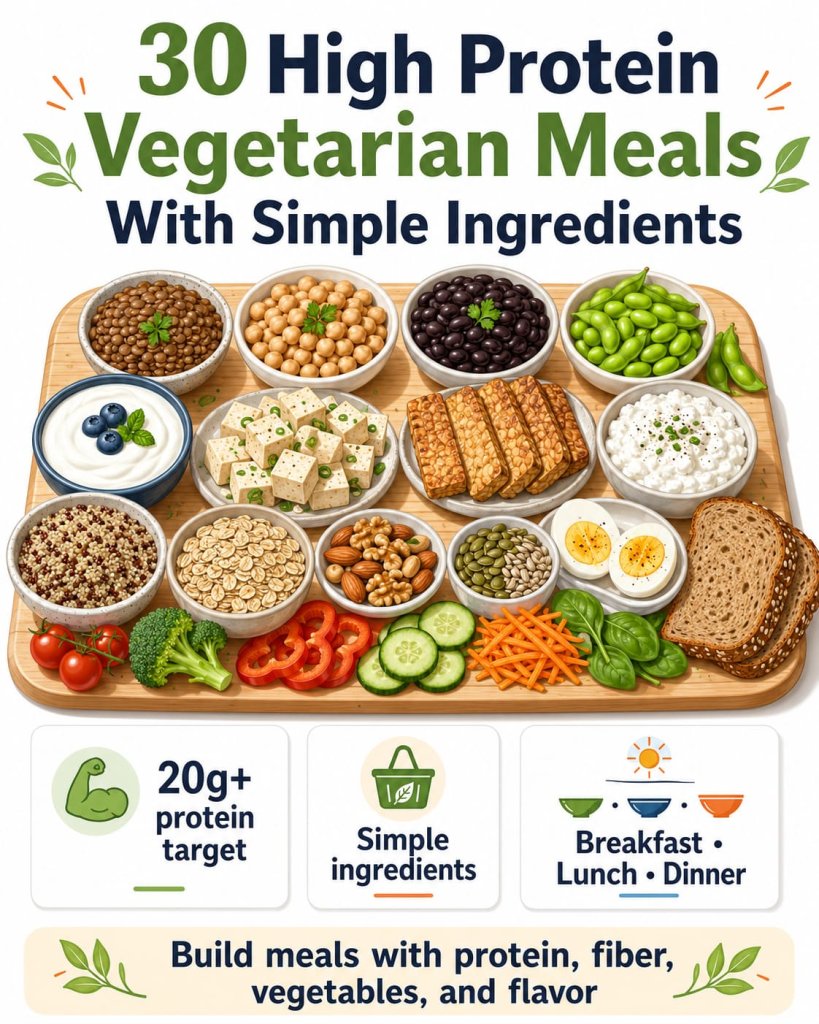
High Protein Vegetarian Meals can be simple, affordable, and filling when you use everyday ingredients. Current U.S. nutrition guidance from the Dietary Guidelines for Americans, 2025–2030 encourages protein foods at every meal and includes plant-based protein sources such as beans, peas, lentils, legumes, nuts, seeds, and soy foods.
In this guide, you’ll find 30 easy vegetarian meal ideas for breakfast, lunch, and dinner, plus protein-building tips, meal prep ideas, vegan swaps, and FAQs.
What Counts as a High Protein Vegetarian Meal?
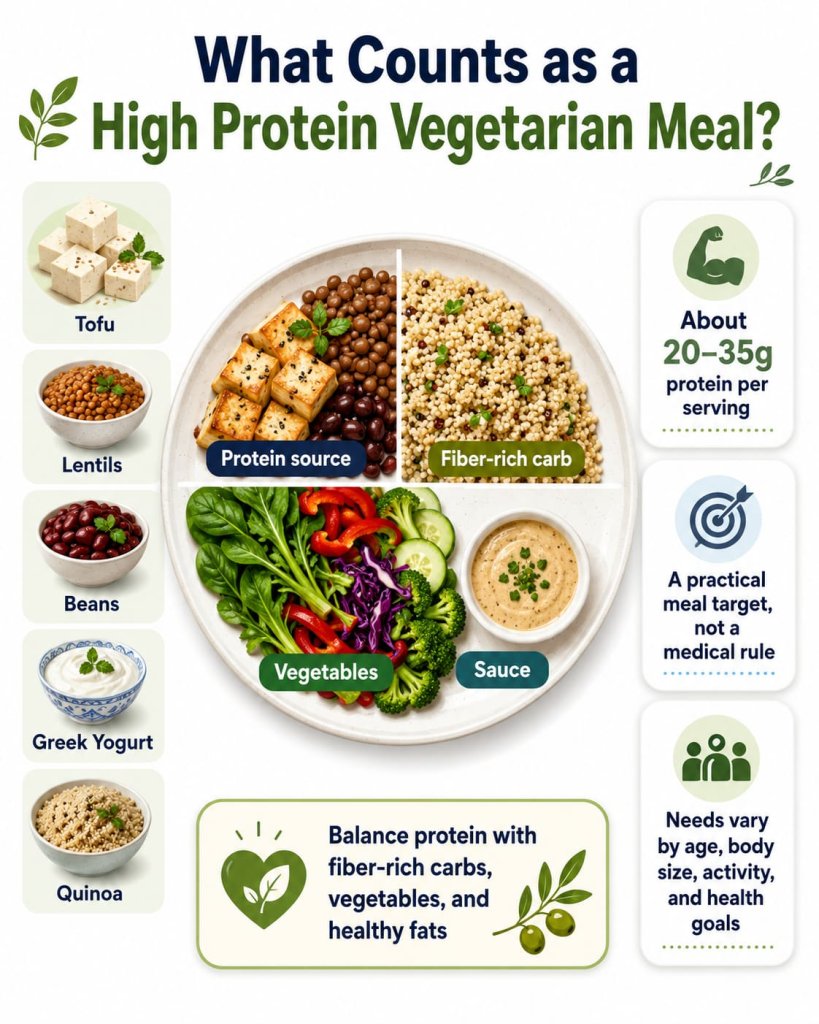
For this article, a high protein vegetarian meal means a meat-free meal with about 20–35 grams of protein per serving.
That is a practical recipe target, not a medical rule. Your personal protein needs depend on body size, age, activity level, pregnancy or breastfeeding status, health conditions, and overall calorie intake.
The Dietary Guidelines for Americans, 2025–2030 lists protein serving goals of 1.2–1.6 grams of protein per kilogram of body weight per day, adjusted for individual calorie needs.
For food labels, the FDA Daily Value guide says 20% Daily Value or more per serving is considered high. The FDA’s Daily Value for protein is 50 grams per day, based on a 2,000-calorie diet.
For homemade meals, the best approach is simple: aim for enough protein to keep the meal satisfying, then balance it with vegetables, fiber-rich carbohydrates, and healthy fats.
Best Simple Ingredients for High Protein Vegetarian Meals
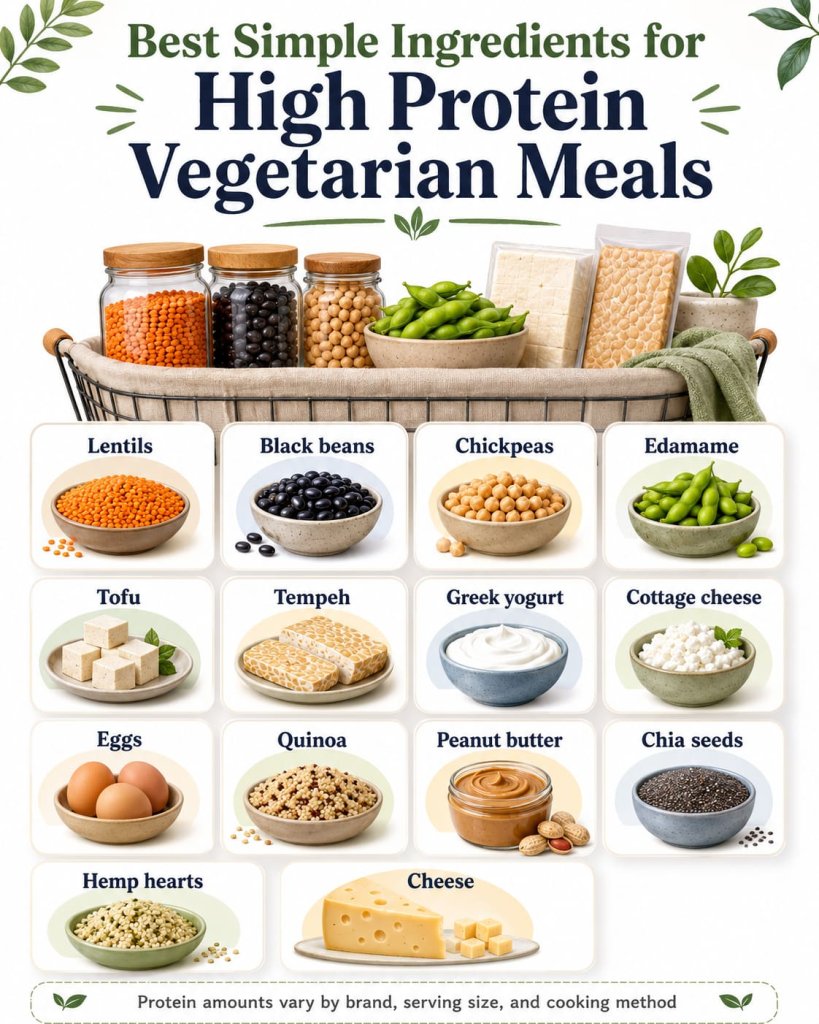
You do not need expensive powders or specialty foods to make high protein vegetarian meals. Most meals can be built with pantry staples and refrigerated basics.
Protein estimates below are approximate because brands, cooking methods, moisture levels, and serving sizes vary. The estimates are based on common nutrition-label values and nutrient data from USDA FoodData Central, the USDA’s comprehensive food composition database.
| Ingredient | Simple Serving Idea | Approx. Protein | |
|---|---|---|---|
| Cooked lentils | 1 cup in soup, dal, pasta sauce, or bowls | 18 g | |
| Cooked black beans | 1 cup in tacos, chili, or burrito bowls | 15 g | |
| Cooked chickpeas | 1 cup in salads, pita, curry, or sandwiches | 14–15 g | |
| Shelled edamame | 1 cup in bowls, noodles, or fried rice | 17–18 g | |
| Firm tofu | 4–6 oz in stir-fries, scrambles, or curries | 15–25 g | |
| Tempeh | 3–4 oz in tacos, bowls, or stir-fries | 16–22 g | |
| Greek yogurt | ¾://wellfitinsider.com/nutrition/benefits-of-cottage-cheese/” title=”10 Proven Health Benefits of Cottage Cheese (Backed by Science)” data-wpil-keyword-link=”linked” data-wpil-monitor-id=”23158″>Cottage cheese | ½–1 cup in toast, pasta, pancakes, or bowls | 12–25 g |
| Eggs | 2 large Eggs in tacos, omelets, or fried rice | 12 g | |
| Quinoa | 1 cup cooked in salads or bowls | 8 g | |
| Peanut butter | 2 tablespoons in noodles, oats, or smoothies | 7–8 g | |
| Chia seeds | 2 tablespoons in oats, yogurt, or pudding | 4–5 g | |
| Hemp hearts | 3 tablespoons on bowls or toast | 9–10 g | |
| Cheese | 1 oz in quesadillas, pasta, or omelets | 6–8 g |
Easy Formula for High Protein Vegetarian Meals
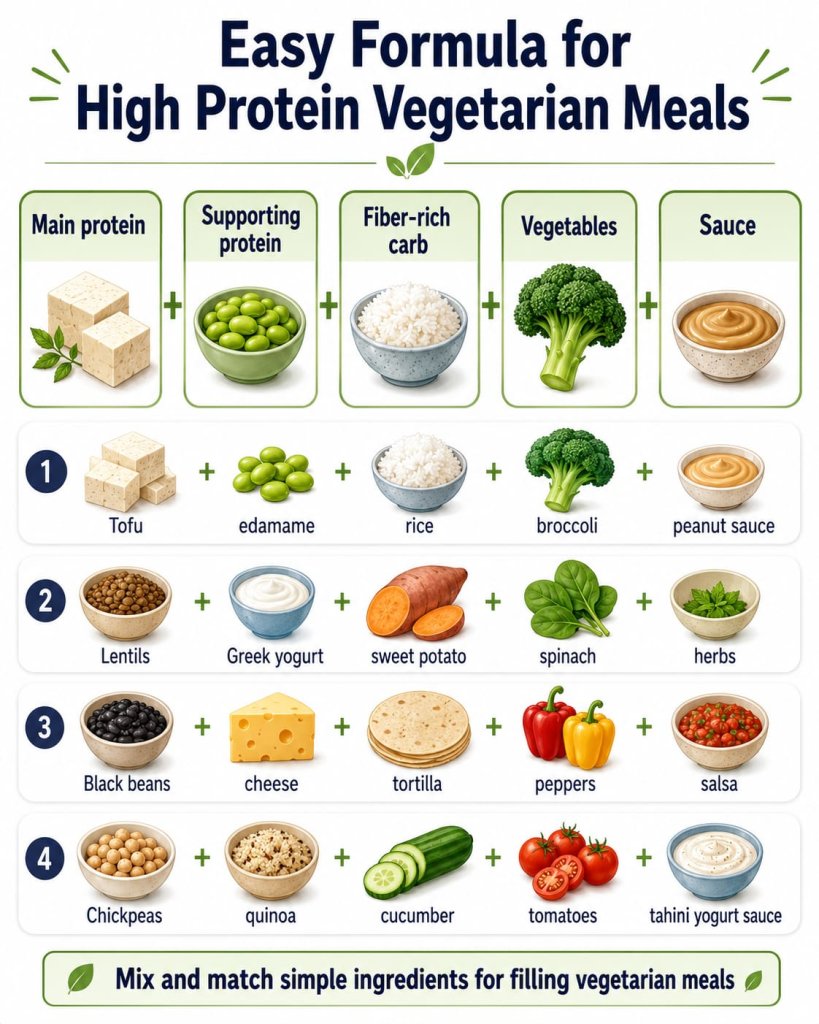
Use this simple formula when you do not want to follow a strict recipe:
Main protein + supporting protein + fiber-rich carb + vegetables + sauce
Examples:
- Tofu + edamame + rice + broccoli + peanut sauce
- Lentils + Greek yogurt + sweet potato + spinach + herbs
- Black beans + cheese + tortilla + peppers + salsa
- Greek yogurt + oats + chia seeds + berries + nut butter
- Chickpeas + quinoa + cucumber + tomatoes + tahini yogurt sauce
Harvard T.H. Chan School of Public Health explains that people who avoid animal foods can meet amino acid needs by eating a variety of protein-containing plant foods throughout the day. Soy foods, quinoa, and chia seeds are examples of plant foods that can contribute a broader amino acid profile.
30 High Protein Vegetarian Meals With Simple Ingredients
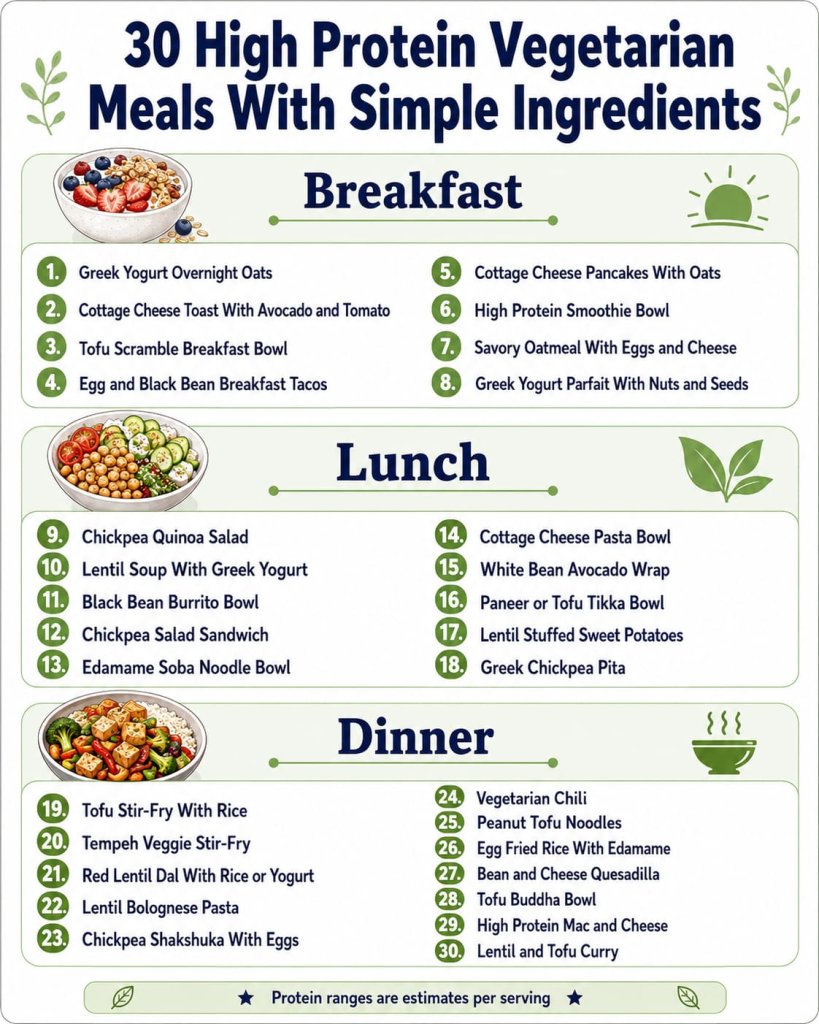
The protein ranges below are estimates per serving. Use them as a planning guide, not exact nutrition labels.
High Protein Vegetarian Breakfast Meals
1. Greek Yogurt Overnight Oats
Approx. protein: 22–30 g per serving
Mix rolled oats, Greek yogurt, milk, chia seeds, berries, and a spoonful of peanut butter. Refrigerate overnight.
This meal works because Greek yogurt provides most of the protein, while oats and chia seeds add fiber and texture.
Simple ingredients: Greek yogurt, oats, chia seeds, milk, berries, peanut butter.
Vegan swap: Use high-protein soy yogurt and soy milk.
2. Cottage Cheese Toast With Avocado and Tomato
Approx. protein: 22–30 g per serving
Spread cottage cheese on two slices of whole-grain toast. Add sliced avocado, tomato, black pepper, and everything bagel seasoning.
Cottage cheese gives this meal a creamy texture and a strong protein base. Whole-grain bread adds extra protein and fiber.
Simple ingredients: Cottage cheese, whole-grain bread, avocado, tomato, seasoning.
Quick tip: Add hemp hearts or pumpkin seeds for more protein.
3. Tofu Scramble Breakfast Bowl
Approx. protein: 25–35 g per serving
Crumble firm tofu in a skillet with olive oil, turmeric, garlic powder, salt, pepper, spinach, peppers, and onions. Serve with black beans or roasted potatoes.
This is one of the best vegan high protein vegetarian meals because tofu is filling, affordable, and easy to season.
Simple ingredients: Firm tofu, spinach, peppers, onions, black beans, spices.
Flavor idea: Add salsa, hot sauce, or avocado.
4. Egg and Black Bean Breakfast Tacos
Approx. protein: 22–30 g per serving
Fill corn or whole-wheat tortillas with scrambled eggs, black beans, salsa, lettuce, and cheese.
This meal combines two easy vegetarian proteins: eggs and beans. It is also fast enough for busy mornings.
Simple ingredients: Eggs, black beans, tortillas, salsa, cheese, lettuce.
Dairy-free swap: Skip the cheese and add avocado or cashew crema.
5. Cottage Cheese Pancakes With Oats
Approx. protein: 25–35 g per serving
Blend cottage cheese, eggs, oats, baking powder, vanilla, and cinnamon. Cook like regular pancakes.
These pancakes feel like comfort food but offer more protein than standard pancakes.
Simple ingredients: Cottage cheese, eggs, oats, cinnamon, baking powder.
Serving idea: Top with berries and a spoonful of Greek yogurt.
6. High Protein Smoothie Bowl
Approx. protein: 22–35 g per serving
Blend Greek yogurt, frozen berries, banana, peanut butter, and milk. Pour into a bowl and top with chia seeds, granola, and sliced fruit.
This is a good option when you want something cool, sweet, and filling without protein powder.
Simple ingredients: Greek yogurt, berries, banana, peanut butter, chia seeds, milk.
Vegan swap: Use soy yogurt, soy milk, and hemp hearts.
7. Savory Oatmeal With Eggs and Cheese
Approx. protein: 20–28 g per serving
Cook oats with water or milk, then top with a fried or poached egg, shredded cheese, spinach, and black pepper.
Savory oats are a simple way to turn breakfast into a balanced meal instead of a sweet snack.
Simple ingredients: Oats, eggs, cheese, spinach, black pepper.
Protein boost: Stir in cottage cheese after cooking.
8. Greek Yogurt Parfait With Nuts and Seeds
Approx. protein: 20–30 g per serving
Layer Greek yogurt with berries, low-sugar granola, chopped nuts, chia seeds, and hemp hearts.
This meal takes five minutes and works well for meal prep.
Simple ingredients: Greek yogurt, berries, granola, nuts, chia seeds, hemp hearts.
Make-ahead tip: Keep granola separate until serving so it stays crisp.
High Protein Vegetarian Lunch Meals
9. Chickpea Quinoa Salad
Approx. protein: 20–28 g per serving
Toss cooked quinoa, chickpeas, cucumber, tomato, red onion, parsley, feta, and lemon dressing.
This meal is easy to pack and holds up well in the fridge.
Simple ingredients: Chickpeas, quinoa, cucumber, tomato, feta, lemon, olive oil.
Vegan swap: Use tahini dressing instead of feta.
10. Lentil Soup With Greek Yogurt
Approx. protein: 22–30 g per serving
Simmer lentils with carrots, celery, onion, garlic, tomatoes, vegetable broth, and spices. Add a spoonful of Greek yogurt before serving.
Lentils provide plant protein and fiber, while Greek yogurt adds creaminess and extra protein.
Simple ingredients: Lentils, carrots, celery, tomatoes, broth, Greek yogurt.
Meal prep tip: Make a large pot and freeze individual portions.
11. Black Bean Burrito Bowl
Approx. protein: 25–35 g per serving
Layer rice, black beans, corn, lettuce, salsa, Greek yogurt, cheese, and avocado.
This is one of the easiest high protein vegetarian meals because it uses canned beans and simple toppings.
Simple ingredients: Black beans, rice, corn, lettuce, salsa, Greek yogurt, cheese.
Protein boost: Add edamame or extra beans.
12. Chickpea Salad Sandwich
Approx. protein: 20–28 g per serving
Mash chickpeas with Greek yogurt, mustard, lemon juice, celery, onion, salt, and pepper. Serve on whole-grain bread with lettuce.
This is a vegetarian version of a classic salad sandwich. It is creamy, crunchy, and easy to meal prep.
Simple ingredients: Chickpeas, Greek yogurt, mustard, celery, onion, whole-grain bread.
Vegan swap: Use mashed avocado or vegan yogurt instead of Greek yogurt.
13. Edamame Soba Noodle Bowl
Approx. protein: 25–35 g per serving
Combine cooked soba noodles with shelled edamame, shredded carrots, cucumber, cabbage, and peanut-lime sauce.
Edamame is a convenient soy protein that works well in cold or warm bowls.
Simple ingredients: Edamame, soba noodles, carrots, cabbage, peanut butter, lime.
Quick tip: Use frozen shelled edamame to save time.
14. Cottage Cheese Pasta Bowl
Approx. protein: 25–35 g per serving
Blend cottage cheese with marinara sauce, garlic, and Italian seasoning. Toss with cooked pasta and spinach.
This makes a creamy high protein pasta sauce without heavy cream.
Simple ingredients: Cottage cheese, pasta, marinara sauce, spinach, garlic.
Protein boost: Use chickpea pasta or lentil pasta.
15. White Bean Avocado Wrap
Approx. protein: 20–30 g per serving
Mash white beans with avocado, lemon juice, garlic, salt, and pepper. Spread into a whole-wheat tortilla with spinach, cucumber, and feta.
White beans make the wrap creamy and filling.
Simple ingredients: White beans, avocado, tortilla, spinach, cucumber, feta.
Vegan swap: Skip feta and add pumpkin seeds.
16. Paneer or Tofu Tikka Bowl
Approx. protein: 25–35 g per serving
Cook paneer or tofu with tikka-style spices, tomato sauce, peppers, and onions. Serve with rice and cucumber yogurt sauce.
This bowl is flavorful but still uses simple ingredients.
Simple ingredients: Paneer or tofu, tomato sauce, rice, peppers, onions, yogurt, spices.
Vegan swap: Choose tofu and use dairy-free yogurt.
17. Lentil Stuffed Sweet Potatoes
Approx. protein: 20–30 g per serving
Bake sweet potatoes and top them with seasoned lentils, Greek yogurt, green onions, and pumpkin seeds.
This meal is filling because it combines protein, fiber, and complex carbohydrates.
Simple ingredients: Sweet potatoes, lentils, Greek yogurt, pumpkin seeds, green onions.
Flavor idea: Add chili powder, cumin, or smoked paprika.
18. Greek Chickpea Pita
Approx. protein: 20–30 g per serving
Fill whole-wheat pita with chickpeas, cucumber, tomato, lettuce, feta, olives, and Greek yogurt tzatziki.
This is a fresh, no-fuss lunch that works well for warm days.
Simple ingredients: Chickpeas, pita, cucumber, tomato, feta, Greek yogurt.
Meal prep tip: Keep the sauce separate until serving.
High Protein Vegetarian Dinner Meals
19. Tofu Stir-Fry With Rice
Approx. protein: 25–35 g per serving
Sauté firm tofu with broccoli, carrots, bell peppers, garlic, ginger, and soy sauce. Serve with rice.
Tofu is one of the most flexible vegetarian proteins because it absorbs flavor from sauces and spices.
Simple ingredients: Tofu, rice, broccoli, carrots, bell peppers, soy sauce.
Protein boost: Add edamame or cashews.
20. Tempeh Veggie Stir-Fry
Approx. protein: 28–38 g per serving
Cook sliced tempeh with vegetables, garlic, ginger, and a simple sauce made from soy sauce, lime juice, and a little maple syrup.
Tempeh has a firm texture and nutty flavor. It is especially useful when you want a vegetarian meal that feels hearty.
Simple ingredients: Tempeh, vegetables, soy sauce, lime, garlic, ginger.
Serving idea: Pair with brown rice or quinoa.
21. Red Lentil Dal With Rice or Yogurt
Approx. protein: 20–30 g per serving
Simmer red lentils with onion, garlic, ginger, turmeric, cumin, tomatoes, and vegetable broth. Serve with rice and plain yogurt.
Red lentils cook quickly and become creamy without blending.
Simple ingredients: Red lentils, onion, garlic, ginger, tomatoes, rice, yogurt.
Vegan swap: Use coconut milk or dairy-free yogurt.
22. Lentil Bolognese Pasta
Approx. protein: 25–35 g per serving
Cook lentils in marinara sauce with onions, garlic, carrots, mushrooms, and Italian seasoning. Serve over pasta.
This is a simple vegetarian dinner that feels familiar and family-friendly.
Simple ingredients: Lentils, pasta, marinara sauce, carrots, mushrooms, garlic.
Protein boost: Use lentil pasta or top with parmesan.
23. Chickpea Shakshuka With Eggs
Approx. protein: 25–35 g per serving
Simmer chickpeas in tomato sauce with peppers, onions, garlic, cumin, and paprika. Crack eggs into the sauce and cook until set.
This meal is rich in flavor and only needs one pan.
Simple ingredients: Chickpeas, eggs, tomatoes, peppers, onions, spices.
Serving idea: Eat with whole-grain toast or pita.
24. Vegetarian Chili
Approx. protein: 25–35 g per serving
Cook black beans, kidney beans, lentils, tomatoes, onions, peppers, chili powder, and cumin. Top with Greek yogurt or cheese.
Beans and lentils make this chili hearty without meat.
Simple ingredients: Beans, lentils, tomatoes, peppers, onions, spices, Greek yogurt.
Meal prep tip: Chili often tastes even better the next day.
25. Peanut Tofu Noodles
Approx. protein: 28–40 g per serving
Toss noodles with crispy tofu, shredded carrots, cabbage, green onions, and peanut sauce.
The tofu and peanut butter work together to create a filling dinner with a creamy sauce.
Simple ingredients: Tofu, noodles, peanut butter, carrots, cabbage, soy sauce, lime.
Protein boost: Add edamame.
26. Egg Fried Rice With Edamame
Approx. protein: 22–32 g per serving
Stir-fry cooked rice with eggs, edamame, carrots, peas, green onions, and soy sauce.
This is a fast way to turn leftover rice into a high protein vegetarian meal.
Simple ingredients: Rice, eggs, edamame, carrots, peas, soy sauce.
Tip: Use day-old rice for the best texture.
27. Bean and Cheese Quesadilla
Approx. protein: 22–32 g per serving
Fill a whole-wheat tortilla with refried beans, shredded cheese, peppers, onions, and salsa. Cook until crisp.
This meal is budget-friendly and ready in minutes.
Simple ingredients: Tortilla, beans, cheese, peppers, onions, salsa.
Protein boost: Serve with Greek yogurt instead of sour cream.
28. Tofu Buddha Bowl
Approx. protein: 25–35 g per serving
Build a bowl with tofu, quinoa, roasted vegetables, leafy greens, avocado, and tahini sauce.
This is a flexible meal that works with almost any vegetables you have.
Simple ingredients: Tofu, quinoa, vegetables, greens, tahini, lemon.
Vegan-friendly: This meal is naturally vegan when made without dairy toppings.
29. High Protein Mac and Cheese
Approx. protein: 25–35 g per serving
Blend cottage cheese with milk, cheddar, garlic powder, and a little mustard. Stir into pasta and add peas or broccoli.
This keeps the creamy comfort-food feeling while adding more protein.
Simple ingredients: Cottage cheese, pasta, cheddar, milk, peas or broccoli.
Protein boost: Use chickpea or lentil pasta.
30. Lentil and Tofu Curry
Approx. protein: 28–40 g per serving
Simmer lentils, tofu, tomatoes, spinach, onion, garlic, curry powder, and coconut milk or yogurt.
This meal combines two strong vegetarian protein sources in one bowl.
Simple ingredients: Lentils, tofu, tomatoes, spinach, onion, curry powder.
Serving idea: Serve with rice, quinoa, or whole-wheat flatbread.
How to Add More Protein to Vegetarian Meals
Small changes can raise the protein in vegetarian meals without making the recipe complicated.
Add a Second Protein Source
Instead of using only one protein, combine two.
Examples:
- Lentils + Greek yogurt
- Tofu + edamame
- Eggs + black beans
- Chickpeas + quinoa
- Cottage cheese + whole-grain toast
- Tempeh + peanut sauce
This strategy is especially helpful for breakfast and lunch, where protein can be lower if the meal is mostly grains or vegetables.
Choose Soy Foods Often
Tofu, tempeh, edamame, and soy milk are simple, protein-rich vegetarian options.
Mayo Clinic lists soy products, legumes, lentils, nuts, seeds, and whole grains as plant-based protein sources that can help vegetarians meet protein needs when eaten in variety.
Use Greek Yogurt or Cottage Cheese in Sauces
Greek yogurt and cottage cheese are easy ways to make creamy sauces with more protein.
Try them in:
- Pasta sauce
- Salad dressing
- Taco topping
- Smoothies
- Pancake batter
- Grain bowls
- Sandwich fillings
Choose plain versions when possible to limit added sugar.
Upgrade the Base
Swap low-protein bases for higher-protein options.
| Instead of | Try |
|---|---|
| White pasta | Chickpea, lentil, or whole-grain pasta |
| Plain white rice only | Rice mixed with lentils, beans, or edamame |
| Regular yogurt | Greek yogurt or high-protein soy yogurt |
| Plain toast | Whole-grain toast with cottage cheese |
| Simple salad | Salad with chickpeas, tofu, eggs, or quinoa |
Do Not Forget Fiber
High protein meals are more satisfying when they also include fiber-rich foods like beans, lentils, vegetables, fruit, oats, quinoa, and whole grains.
MedlinePlus notes that vegetarians should eat a wide variety of foods and pay attention to nutrients such as protein, iron, calcium, zinc, and vitamin B12.
High Protein Vegetarian Meal Prep Tips
Meal prep makes high protein vegetarian eating much easier.
Cook One Bean or Lentil Base
Make a batch of lentils, black beans, chickpeas, or chili at the start of the week.
Use it for:
- Bowls
- Soups
- Wraps
- Tacos
- Pasta sauces
- Stuffed potatoes
Keep Fast Proteins Ready
Stock your fridge and freezer with quick proteins.
Good options include:
- Greek yogurt
- Cottage cheese
- Eggs
- Tofu
- Tempeh
- Frozen edamame
- Canned beans
- Cooked lentils
- Cheese
- Hummus
Prep Sauces Separately
Sauces make vegetarian meals more enjoyable.
Easy high protein or protein-friendly sauces include:
- Greek yogurt ranch
- Peanut-lime sauce
- Cottage cheese marinara
- Tzatziki
- Tahini lemon sauce
- Salsa mixed with Greek yogurt
- Yogurt curry sauce
Build Mix-and-Match Bowls
Prepare a few basics and combine them differently during the week.
Try this setup:
- Protein: tofu, lentils, beans, eggs, tempeh
- Carb: rice, quinoa, pasta, tortillas, sweet potatoes
- Vegetables: spinach, broccoli, peppers, carrots, cabbage
- Sauce: peanut sauce, salsa, yogurt sauce, tahini dressing
This keeps meals simple without eating the same dish every day.
Vegan and Dairy-Free Swaps for High Protein Vegetarian Meals
Many high protein vegetarian meals can be made vegan or dairy-free with simple swaps.
| Ingredient to Replace | High Protein Swap |
|---|---|
| Greek yogurt | High-protein soy yogurt |
| Cottage cheese | Tofu ricotta or blended silken tofu |
| Eggs | Tofu scramble or chickpea flour scramble |
| Cheese | Nutritional yeast plus beans, tofu, or tempeh |
| Paneer | Extra-firm tofu |
| Milk | Soy milk |
| Yogurt sauce | Tahini sauce or soy yogurt sauce |
The Academy of Nutrition and Dietetics released a 2025 position paper stating that appropriately planned vegetarian and vegan dietary patterns can be nutritionally adequate for adults. It also emphasizes the value of individualized guidance from registered dietitian nutritionists when needed.
Who Should Be Careful With High Protein Vegetarian Meals?
High protein vegetarian meals are generally practical for many healthy adults, but not everyone has the same nutrition needs.
Talk with a qualified healthcare professional or registered dietitian before making major protein changes if you:
- Have kidney disease or reduced kidney function
- Have liver disease
- Are pregnant or breastfeeding
- Have a history of eating disorders
- Have diabetes and need help balancing carbohydrates
- Have food allergies or intolerances
- Are feeding a child, teen, or older adult with special nutrition needs
- Follow a vegan diet and may need help with vitamin B12, calcium, iron, zinc, iodine, or omega-3 planning
A well-planned vegetarian diet can meet nutrition needs, but planning matters, especially when you remove more food groups. Mayo Clinic notes that vegan diets cut out natural sources of vitamin B12 and may require extra attention to fortified foods or supplements.
FAQs About High Protein Vegetarian Meals
1. What vegetarian meal has the most protein?
A lentil and tofu curry, peanut tofu noodles, tempeh stir-fry, tofu Buddha bowl, or vegetarian chili with beans and lentils can be among the highest protein vegetarian meals. These meals often reach about 28–40 grams of protein per serving, depending on portions.
2. How can vegetarians get 30 grams of protein per meal?
Use two protein sources in the same meal. For example, combine tofu with edamame, lentils with Greek yogurt, eggs with black beans, or chickpeas with quinoa and feta.
A simple 30-gram protein plate could be tofu, rice, edamame, broccoli, and peanut sauce.
3. Are lentils high in protein?
Yes. Lentils are one of the easiest high protein vegetarian ingredients. One cup of cooked lentils provides roughly 18 grams of protein, plus fiber and minerals.
They work well in soup, dal, chili, pasta sauce, salads, and stuffed sweet potatoes.
4. Is tofu a good protein source for vegetarians?
Yes. Tofu is a useful vegetarian protein because it is versatile, mild in flavor, and easy to cook. Firm tofu works well in stir-fries, scrambles, curries, bowls, and noodles.
To increase protein, choose firm or extra-firm tofu and use a generous serving.
5. Can you get enough protein without meat?
Yes, many people can get enough protein without meat by eating a variety of vegetarian protein foods. Useful options include beans, lentils, chickpeas, tofu, tempeh, edamame, eggs, dairy foods, nuts, seeds, quinoa, and whole grains.
Individual needs vary, so people with medical concerns should ask a healthcare professional or registered dietitian.
6. Are eggs considered vegetarian?
Eggs are included in a lacto-ovo vegetarian diet, which avoids meat, poultry, and seafood but includes eggs and dairy. They are not included in a vegan diet.
For egg-free meals, use tofu scramble, chickpea flour scramble, beans, lentils, tempeh, or edamame.
7. What is the easiest high protein vegetarian dinner?
The easiest high protein vegetarian dinner is usually a bowl or skillet meal.
Try tofu stir-fry with rice, black bean burrito bowls, vegetarian chili, lentil pasta, egg fried rice with edamame, or bean and cheese quesadillas.
Conclusion
High Protein Vegetarian Meals do not have to be complicated. Start with simple ingredients like lentils, beans, chickpeas, tofu, tempeh, edamame, Greek yogurt, cottage cheese, eggs, quinoa, oats, nuts, and seeds.
For the easiest results, build every meal around one strong protein source, add a second protein when needed, include vegetables, and finish with a flavorful sauce.
Choose two or three meals from this list, prep the basics ahead, and rotate sauces and toppings during the week. That simple system can make vegetarian eating easier, more satisfying, and more realistic for everyday life.
This content is for informational purposes only and not medical advice.