
Mouth tape is an adhesive strip or patch placed over the lips during sleep to limit mouth opening and encourage breathing through the nose. However, evidence for its benefits is limited, and it can be risky when nasal breathing is restricted.
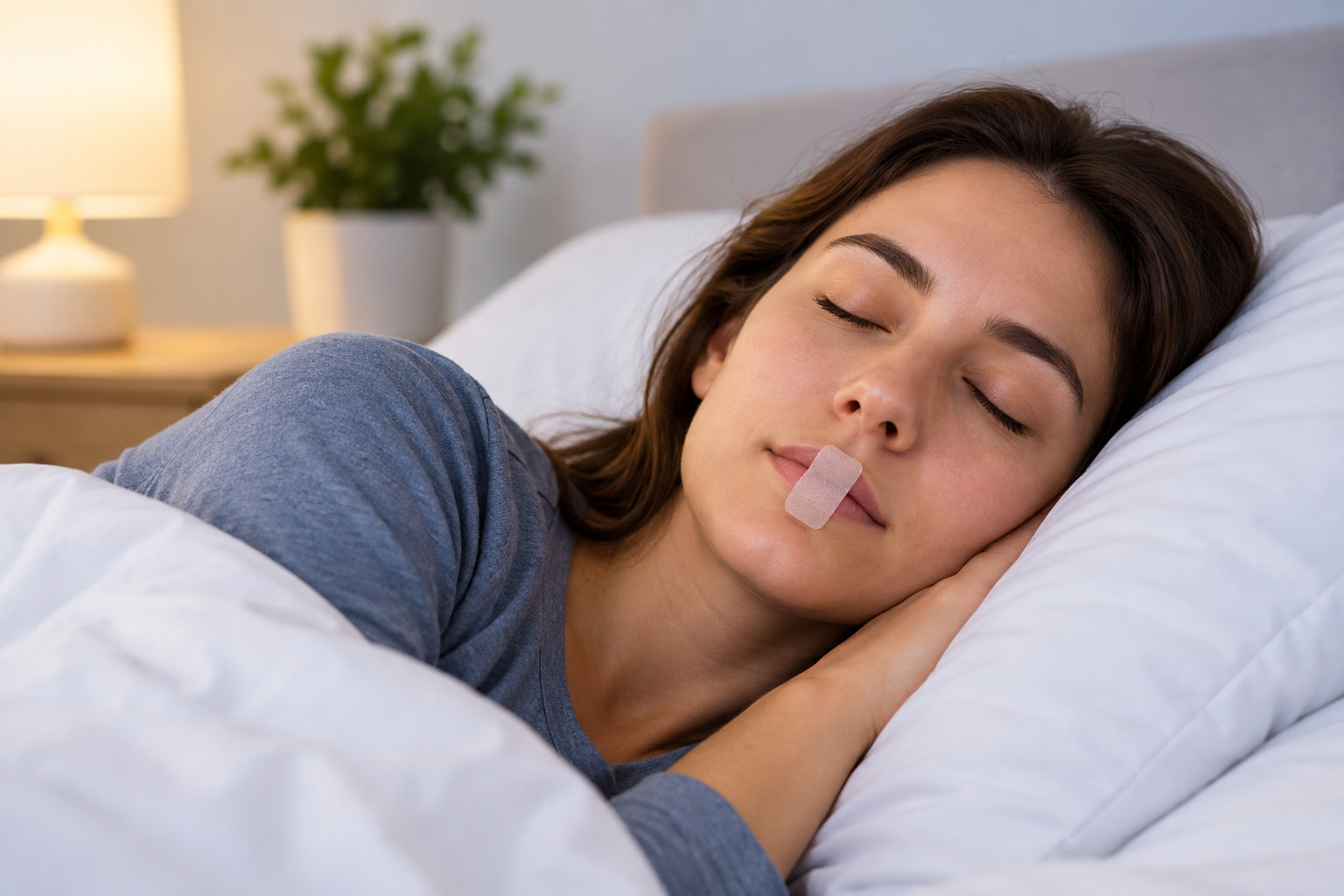
Understanding why you breathe through your mouth matters more than finding a way to keep it closed. According to Cleveland Clinic’s guidance, you should discuss nighttime mouth breathing or snoring with a healthcare professional before trying mouth tape.
What Is Mouth Tape?
Mouth tape refers to the adhesive product, while mouth taping describes wearing it over your lips. Its purpose is mechanical: keeping the lips together to encourage nasal rather than oral breathing. It does not deliver medication or provide pressurized air.
Mouth tape is different from other products used for nighttime breathing:
| Product | What it does |
|---|---|
| Mouth tape | Restricts mouth opening to encourage nasal breathing. |
| Nasal strip | Sits across the nose and may help widen the nasal passages. |
| Prescribed oral appliance | Fits inside the mouth and positions the jaw or tongue to help keep the airway open. |
| CPAP machine | Delivers continuous positive airway pressure through a mask to support breathing during sleep. |
These products are not interchangeable. In particular, a nasal strip or mouth tape should not be assumed to provide the same benefits as prescribed sleep apnea care.
How Does Mouth Tape Work?
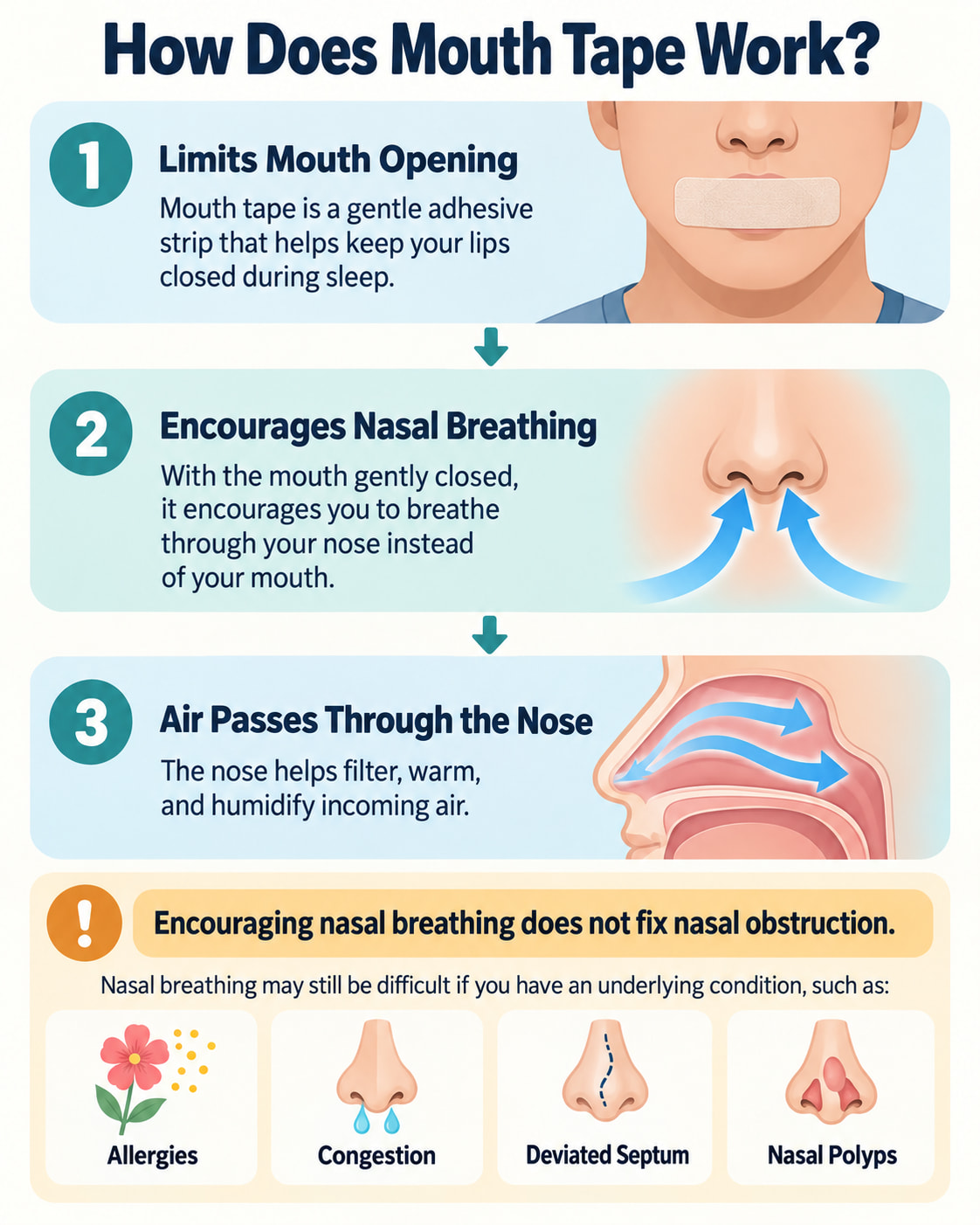
The idea is straightforward: limiting airflow through your mouth encourages air to enter through your nose. Nasal breathing naturally helps filter, warm, and humidify incoming air.
However, the benefits of nasal breathing do not automatically prove the benefits of mouth taping.
Some people breathe through their mouths because nasal airflow is restricted. Allergies, congestion, a deviated septum, or nasal polyps may contribute. Keeping the lips closed does not remove those underlying problems.
For example, someone who starts mouth breathing during allergy season needs to understand the congestion—not simply block the alternative breathing route.
Potential Benefits of Mouth Tape: What Does the Research Say?
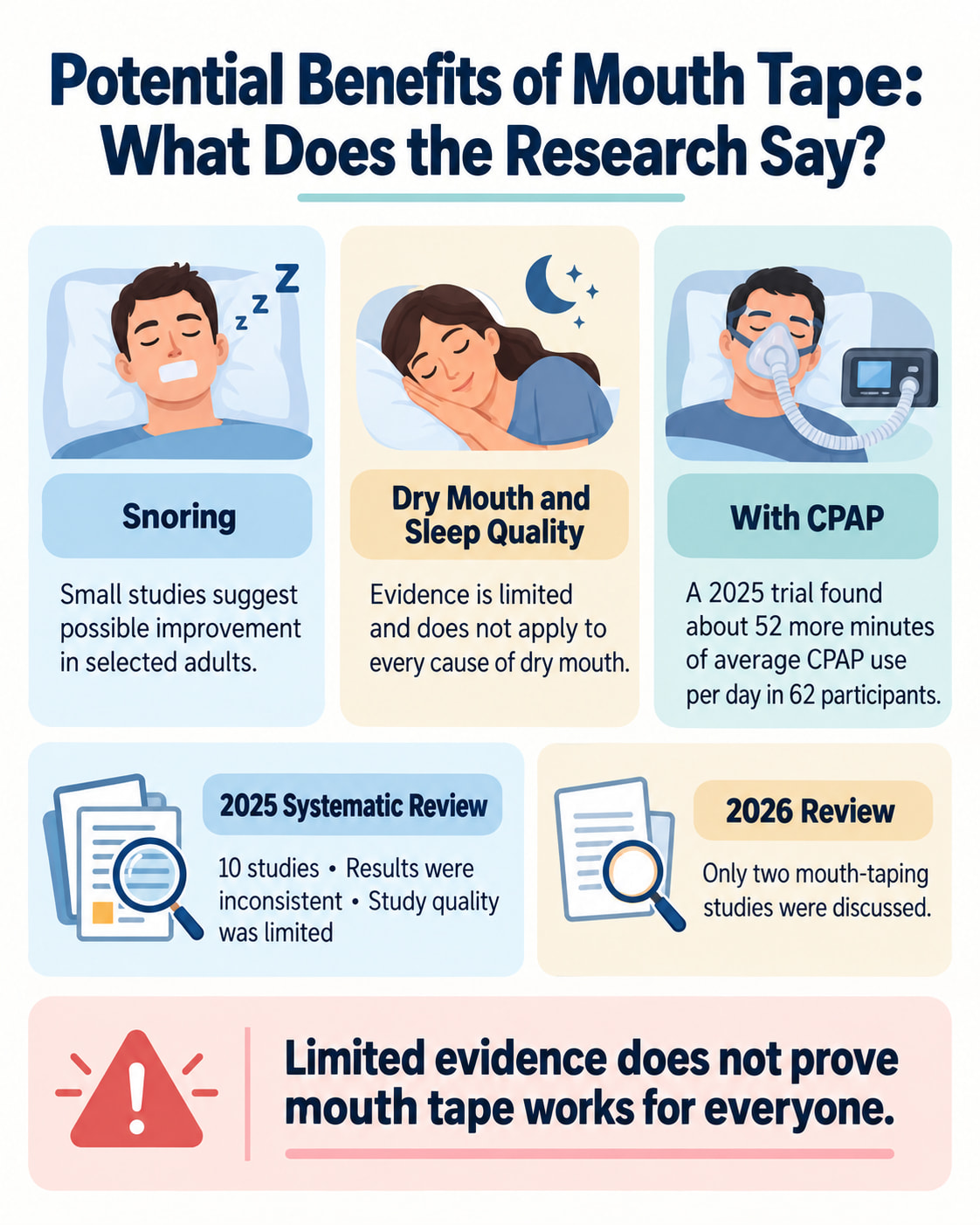
A systematic review published in PLOS One on May, 2025, examined 10 studies involving mouth tape and related mouth-closure methods. Results were inconsistent, study quality was poor, and the authors cautioned against indiscriminate use. These were not 10 large randomized trials of commercial mouth tape.
A review published in OTO Open on August, 2026, discussed only two mouth-taping studies. It did not pool their results in a meta-analysis. Its literature search occurred in October 2024, so it did not capture all subsequently published research.
Mouth Tape for Snoring
Small studies suggest that mouth taping may reduce snoring in selected adults.
For example, a 2022 preliminary study included 20 adults with mild obstructive sleep apnea who tolerated mouth closure. Researchers reported improvements in snoring and breathing-event measurements. However, this was a small, short-term study without a separate control group—not proof that mouth tape works for everyone who snores.
Snoring also deserves attention when it occurs with breathing pauses, gasping, or daytime sleepiness. Quieting the noise should not replace investigating those symptoms.
Mouth Tape for Dry Mouth and Sleep Quality
Mouth breathing can contribute to waking with a dry mouth. However, dryness alone does not establish that mouth breathing is the cause.
The National Institute of Dental and Craniofacial Research explains that medications, certain health conditions, and reduced saliva production can also cause persistent dryness. Taping the lips would not address those causes.
Claims that mouth tape reliably improves sleep quality for otherwise healthy adults remain unestablished. Encouraging results from people using prescribed breathing equipment should not be generalized to everyone.
Mouth Tape With CPAP
Research involving CPAP is a separate question from whether mouth tape works on its own.
A randomized crossover trial published in the Journal of Clinical Sleep Medicine in December 2025 studied 62 people with obstructive sleep apnea who breathed through their mouths while using CPAP. Participants used CPAP with and without mouth tape for 30 days each.
During the mouth-tape period, average CPAP use increased by approximately 52 minutes per day. Participants also reported improvements in some symptoms, including mouth or throat dryness and nighttime awakenings. Adverse effects were reported.
The important distinction is that participants continued using CPAP. The study does not show that mouth tape can replace it.
For someone struggling with CPAP, the practical next step is a discussion with the sleep-care team about mask fit, air leaks, and dryness—not independently adding tape or stopping prescribed care.
Risks and Side Effects of Mouth Taping
Cleveland Clinic identifies several potential problems:
| Potential risk | What you may experience |
|---|---|
| Breathing difficulty | Restricted airflow, particularly when nasal breathing is impaired. |
| Skin or lip reactions | Redness, irritation, or an allergic response to adhesive. |
| Anxiety | Distress from having your mouth held closed. |
| Disrupted sleep | Difficulty falling asleep or staying asleep because of discomfort. |
A product labeled “skin-safe” does not establish that restricting mouth opening is safe for your breathing.
The 2025 systematic review also discussed potentially serious breathing risks when nasal obstruction or regurgitation occurs. It did not establish how frequently severe complications happen in the general population.
Who Should Avoid Mouth Taping?
Do not use mouth tape when your nose is blocked or breathing is difficult. Cleveland Clinic specifically warns against it with conditions such as nasal obstruction, congestion, chronic allergies, sinus infections, enlarged tonsils, a deviated septum, or heart problems.
People with possible or untreated sleep apnea should seek assessment rather than use mouth tape as a self-directed solution. The limited findings in carefully selected study participants cannot establish safety for people with unassessed breathing problems.
What to Try Instead of Mouth Tape
The most useful alternative depends on what is causing the problem.
For Nasal Congestion or Persistent Mouth Breathing
Ask a healthcare professional about the reason nasal breathing is difficult. An examination may identify allergy-related swelling or a structural obstruction, and the appropriate approach depends on that finding.
Nasal strips may help some people breathe more comfortably through the nose. However, Mayo Clinic notes that they are not effective for obstructive sleep apnea. They should not become another reason to postpone an assessment.
For Snoring
Sleeping on your side rather than your back and avoiding alcohol close to bedtime may help some people with snoring. These measures do not replace evaluation when there are signs of sleep apnea.
For diagnosed sleep apnea, options may include positive airway pressure or an appropriately fitted oral appliance. A healthcare professional can help determine which approach fits your diagnosis and needs.
For Dry Mouth
Persistent dryness deserves a dental or medical review, especially when it affects eating, swallowing, or oral comfort.
Depending on the cause, useful measures may include sipping water, using a humidifier at night, or discussing saliva substitutes with a clinician. A medication review may also help, but do not stop or change prescribed medication on your own.
For CPAP-Related Dryness or Air Leaks
Tell your sleep-care team what you notice: air escaping from your mouth, a shifting mask, congestion, or morning dryness.
NHLBI explains that clinicians may recommend a different mask, humidification, nasal care, or adjustments to the device. These options address specific comfort or equipment problems while preserving your prescribed breathing support.
When to Seek Medical Advice
According to NHLBI guidance, important sleep apnea symptoms include frequent loud snoring, breathing that repeatedly stops and starts, gasping for air, and daytime sleepiness.
Arrange an appointment when these symptoms occur, especially if a partner notices breathing pauses or you remain unusually sleepy despite allowing enough time for sleep. A clinician may recommend a sleep study.
Before the appointment, write down when symptoms occur, what a partner has observed, and which medications or supplements you take. This can make the discussion more useful.
Do not drive when you feel sleepy. Untreated sleep apnea can affect alertness and increase the risk of road accidents.
Frequently Asked Questions
Is Mouth Taping Safe Every Night?
Routine nightly use has not been shown to be safe and beneficial for everyone. Existing studies are limited, and some excluded people with important breathing problems. A short study in selected patients does not establish long-term safety for general use.
Can Mouth Tape Replace CPAP?
No. CPAP supplies air pressure to help keep the airway open; mouth tape does not. The 2025 trial showing better CPAP adherence evaluated tape alongside CPAP, not instead of it. Do not change prescribed sleep apnea care without your clinician’s guidance.
Does Mouth Taping Change Your Jawline?
The sleep studies discussed here do not establish that mouth tape reshapes an adult jawline. Research on breathing measurements or CPAP use is not evidence of cosmetic facial changes.
Can You Use Mouth Tape With a Stuffy Nose?
No. A blocked nose is a reason to avoid mouth taping, because restricting mouth breathing can make airflow more difficult. Address the congestion and its cause instead.
Is Mouth Taping Safe for Children?
Do not use mouth tape as a do-it-yourself sleep fix for a child. Regular mouth breathing, snoring, or breathing pauses warrant pediatric assessment. NHLBI notes that enlarged tonsils or adenoids commonly contribute to obstructive sleep apnea in children.
Can You Use Ordinary Household Tape?
Do not improvise with household tape. Changing the adhesive does not resolve the main concern: whether restricting mouth opening is safe for your breathing. Even adhesives intended for skin can cause irritation or allergic reactions.
Bottom Line
Mouth tape is intended to encourage nasal breathing, but limited research does not make it a reliable general sleep solution. Start by identifying why you mouth-breathe, snore, or wake with dryness.
Bring those symptoms to your healthcare professional or sleep-care team before buying a product intended to keep your mouth closed.
This content is for informational purposes only and not medical advice.
References
- Cleveland Clinic. Mouth Breathing: Symptoms, Complications, and Treatment
- Cleveland Clinic. Mouth: Anatomy, Function, and Care
- Rhee J, et al. Breaking Social Media Fads and Uncovering the Safety and Efficacy of Mouth Taping: A Systematic Review.
- Alshehri NA, et al. Impact of Nasal Obstruction and Mouth Taping on Sleep Apnea Indicators: Systematic Review and Meta-Analysis.
- Lee YC, et al. The Impact of Mouth-Taping in Mouth-Breathers With Mild Obstructive Sleep Apnea: A Preliminary Study. Healthcare.
- Meksukree A, et al. The Role of Mouth Tape for CPAP Use in Patients With Mouth Breathing and OSA. Journal of Clinical Sleep Medicine.
- Mayo Clinic. Snoring: Diagnosis and Treatment
- National Institute of Dental and Craniofacial Research. Dry Mouth
- National Heart, Lung, and Blood Institute. Sleep Apnea in Children