
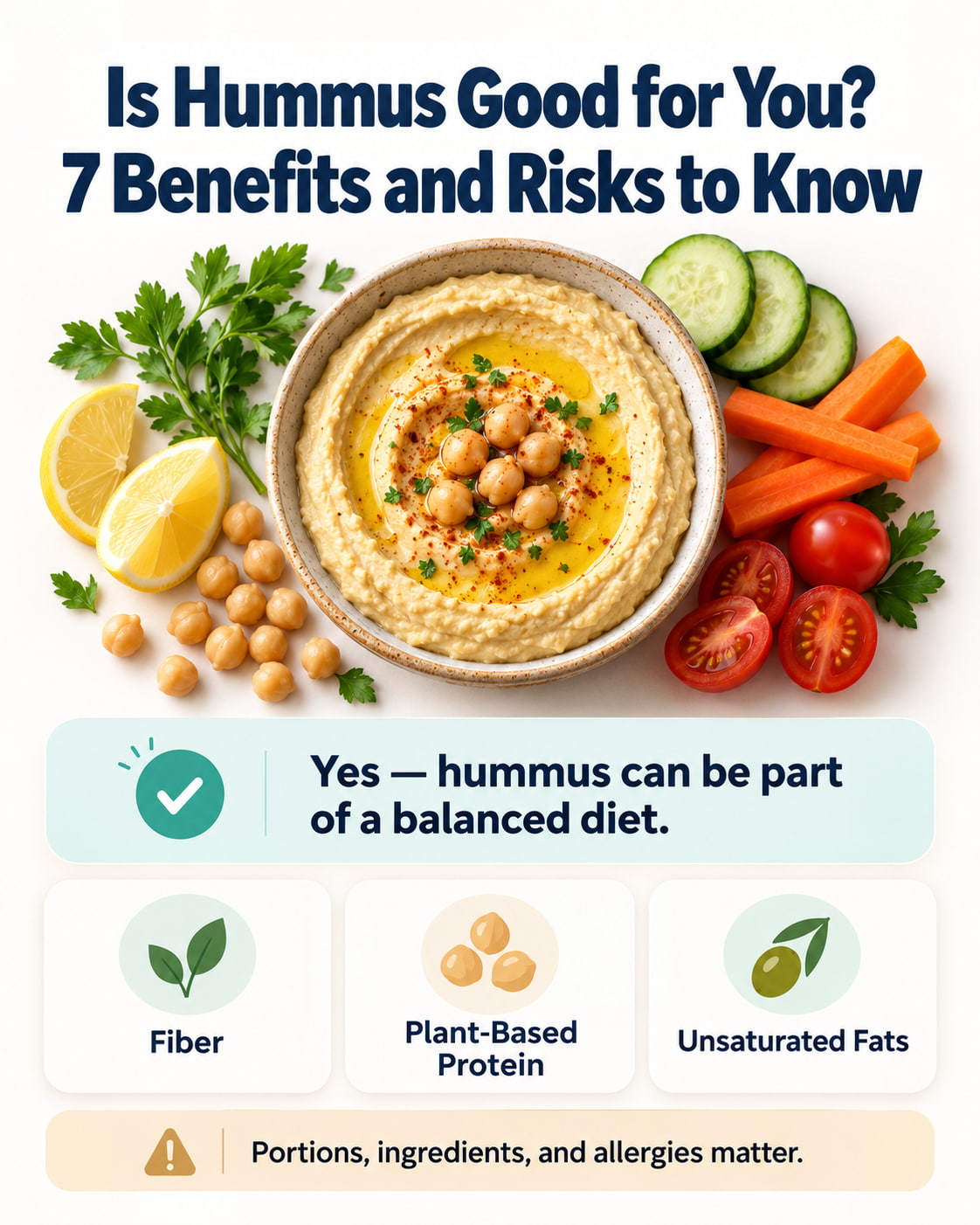
The answer to “Is hummus good for you?” is generally yes. Hummus contributes fiber, some plant protein, and unsaturated fats, making it a useful addition to a balanced diet.
Its nutritional value depends on the recipe, portion size, and foods you eat with it. A small serving adds nutrients, but it usually provides only a modest amount of protein.
You can make hummus work for you by checking the label, choosing satisfying pairings, and paying attention to allergies or digestive symptoms.
What Is Hummus?
Hummus is a creamy dip or spread commonly made from cooked chickpeas, tahini, lemon juice, garlic, and oil. Chickpeas are also called garbanzo beans, and tahini is a paste made from sesame seeds.
Recipes differ. Some contain more chickpeas, while others use more tahini or oil. Flavored versions may include roasted peppers, herbs, or other ingredients.
Those differences affect nutrition. Homemade hummus gives you control over the ingredients, while packaged hummus offers convenience. Either can fit into a balanced eating pattern.
Hummus Nutrition Facts
There is no single nutrition profile for all hummus. To give you a specific example, the MedlinePlus hummus with tahini recipe provides the following amounts.
| Nutrient | 2 tablespoons, 27 g | ¼ cup, 54 g |
|---|---|---|
| Calories | 50 | Approximately 100 |
| Protein | 2 g | Approximately 4 g |
| Total carbohydrate | 5 g | Approximately 10 g |
| Dietary fiber | 1 g | Approximately 2 g |
| Total fat | 3 g | Approximately 6 g |
| Sodium | 40 mg | Approximately 80 mg |
| Added sugars | 0 g | 0 g |
The ¼-cup values are calculated by doubling the recipe’s published, rounded values. These figures describe this particular homemade recipe, not every hummus product.
For packaged hummus, use the Nutrition Facts label on your container. Check the serving size before comparing products or estimating the nutrients in your portion.
Is Hummus Good for You? 7 Potential Benefits
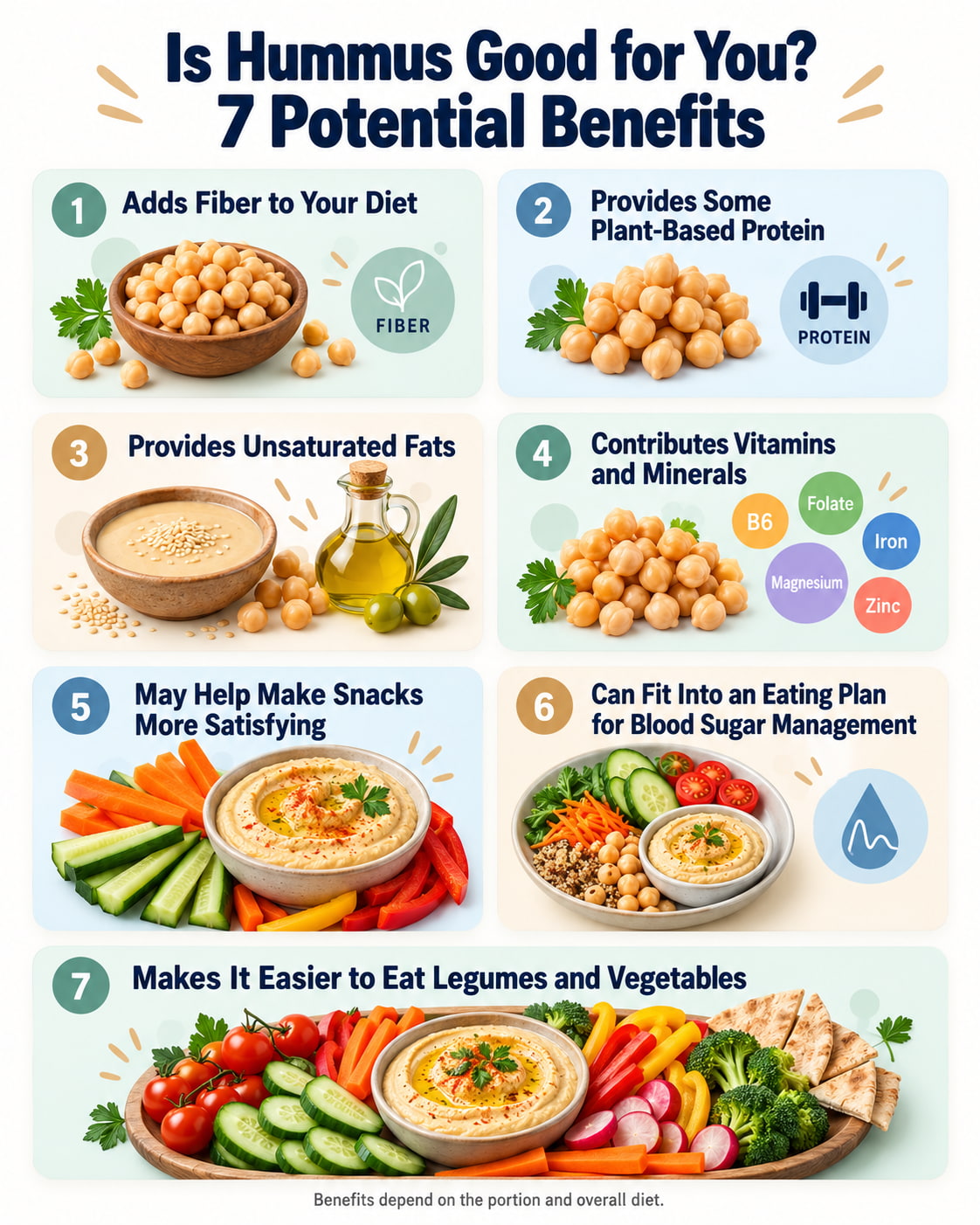
1. Adds Fiber to Your Diet
Chickpeas contain soluble and insoluble fiber. Fiber supports bowel regularity, and some of it is fermented by bacteria in the digestive tract.
Hummus can contribute to your fiber intake, especially when you pair it with vegetables or whole-grain foods. A few spoonfuls make a modest contribution, so include other fiber-containing foods throughout the day.
2. Provides Some Plant-Based Protein
Hummus adds plant protein to snacks and meals. That can be useful whether you eat a vegetarian diet or simply want more variety.
However, a small serving is usually a supporting ingredient rather than the main protein food in a meal. If you are building lunch around hummus, consider adding another protein food, such as beans, tofu, eggs, fish, or chicken.
This lets you enjoy hummus without expecting a thin sandwich spread to supply an entire meal’s protein.
3. Provides Unsaturated Fats
Tahini and oils such as olive, canola, and soybean oil contain unsaturated fats.
The American Heart Association’s 2026 dietary guidance recommends choosing sources of unsaturated fat in place of sources of saturated fat. Hummus can fit that approach when it replaces some of a higher-saturated-fat spread or dip.
The benefit depends on the substitution and your overall eating pattern. There is no need to choose a product made exclusively with olive oil for it to be a reasonable option.
4. Contributes Vitamins and Minerals
Chickpeas contain nutrients such as folate, iron, and phosphorus. These ingredients contribute to the nutritional value of hummus.
The amount you get depends on the recipe and portion size. Think of hummus as one contribution to a varied diet; a small serving is not a reliable way to meet all your needs for any particular vitamin or mineral.
5. May Help Make Snacks More Satisfying
A snack that includes hummus may help you feel satisfied between meals.
In a small 2020 study of 39 adults, an afternoon snack of hummus and pretzels improved some measures of appetite compared with skipping the snack.
The study was short and funded by a hummus manufacturer. It tested hummus together with pretzels, so the findings do not show that hummus alone causes weight loss.
For everyday use, choose a portion and pairing that leave you comfortably satisfied.
6. Can Fit Into an Eating Plan for Blood Sugar Management
Chickpea-based foods may produce a smaller overall blood glucose response than some refined carbohydrate foods.
A 2025 review of short-term chickpea studies identified 28 studies. Its main analysis of 15 studies found a lower overall post-meal glucose response compared with foods containing similar amounts of available carbohydrate.
However, the certainty of the evidence was limited, only one pooled study tested hummus, and the review was industry-funded.
Hummus still contains carbohydrates. If you track carbohydrate intake, include both the hummus and accompanying foods, such as pita or crackers. Adding hummus does not cancel the carbohydrates in the rest of the meal.
7. Makes It Easier to Eat Legumes and Vegetables
Hummus offers a convenient way to include chickpeas in meals without cooking a separate bean dish.
It also pairs well with vegetables and whole-grain foods. You can use it as a dip, spread it inside a sandwich, or add it to a grain bowl. Finding enjoyable ways to eat these foods can make a varied eating pattern easier to maintain.
Hummus Risks and Who Should Be Careful
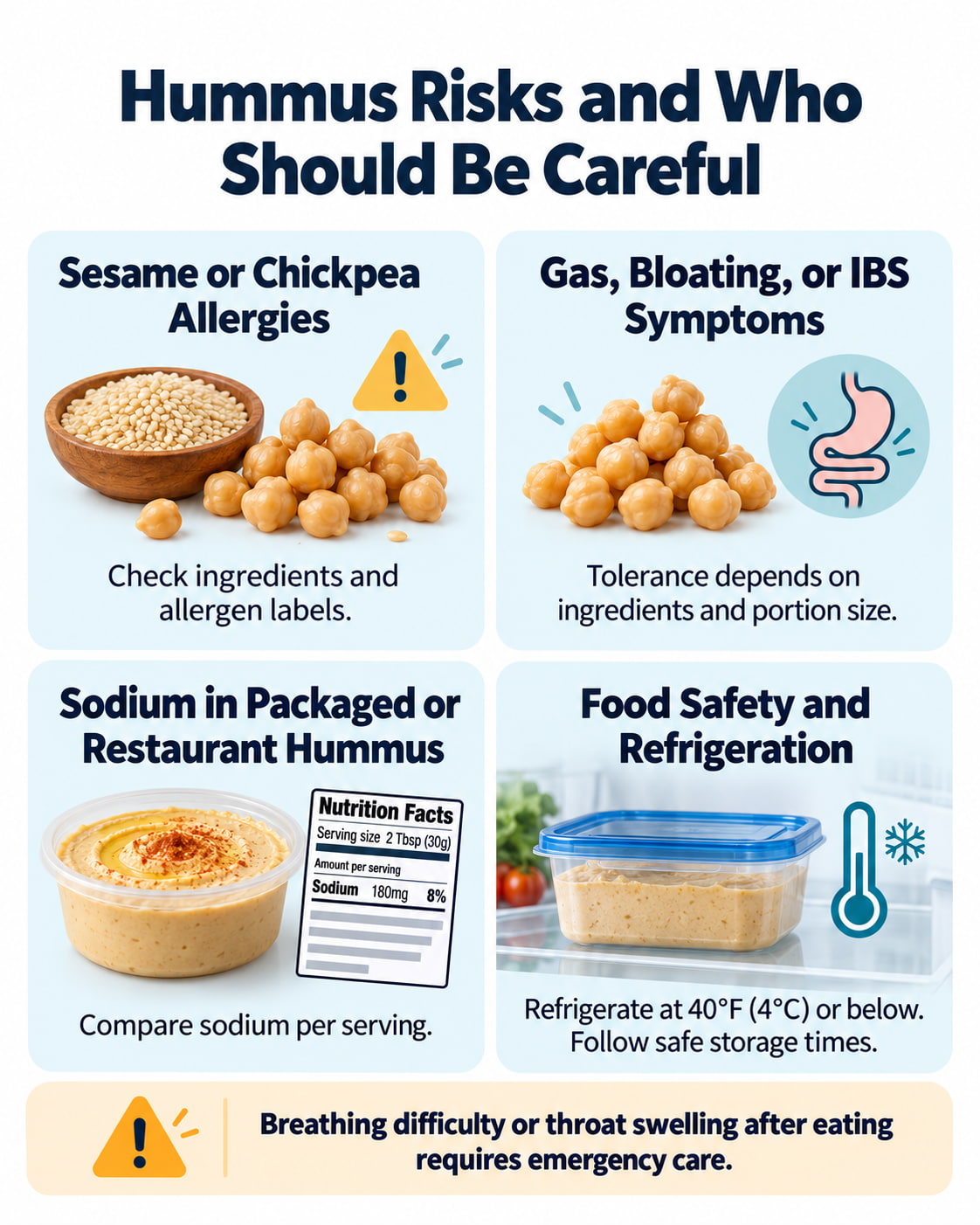
Sesame or Chickpea Allergies
Traditional hummus usually contains tahini, so it is unsuitable for someone with a sesame allergy unless the recipe or product is specifically sesame-free and cross-contact has been addressed.
Under FDA sesame-labeling requirements, sesame must be declared as a major allergen on FDA-regulated packaged foods. Check labels each time you buy a product because ingredients can change.
Chickpea allergy is also possible. A peanut allergy does not automatically mean you are allergic to chickpeas, but an allergist can help assess your individual situation.
Seek emergency medical help if eating hummus is followed by breathing difficulty, throat swelling, or feeling faint. For less severe but repeated symptoms suggesting an allergy, avoid the suspected food and contact a healthcare professional.
Gas, Bloating, or IBS Symptoms
Some carbohydrates in legumes are fermented by intestinal bacteria, which can produce gas. Larger portions or a sudden increase in fiber may cause discomfort for some people.
Garlic and other ingredients can also matter for people with IBS. Low-FODMAP suitability depends on the recipe and portion; not every hummus product has the same effect.
Monash University’s low-FODMAP hummus recipe uses drained and rinsed canned chickpeas and garlic-infused oil. If hummus repeatedly causes symptoms, note the ingredients and amount you ate. A registered dietitian can help you identify suitable options without unnecessarily restricting your diet.
Sodium in Packaged or Restaurant Hummus
Salt content varies between products and recipes. Hummus is not automatically high in sodium, but several servings can contribute more than the label’s single-serving amount suggests.
The FDA’s sodium guidance advises staying below 2,300 milligrams of sodium per day. Its general label-reading guide considers 5% Daily Value or less per serving low and 20% or more high.
Compare products using the same serving size. If you have an individualized sodium target, use that target when planning your meals.
Food Safety and Refrigeration
Homemade hummus and products sold refrigerated need proper cold storage.
Follow FDA food-storage guidance:
- Keep the refrigerator at 40°F, or 4°C, or below.
- Refrigerate perishable hummus within two hours.
- Use a one-hour limit when temperatures exceed 90°F, or about 32°C.
- Follow the package’s storage and after-opening instructions.
- Discard perishable hummus that has exceeded safe time limits outside refrigeration.
Food can contain harmful bacteria even when it looks and smells normal. Unopened shelf-stable hummus should follow its own package directions.
How Much Hummus Should You Eat?
There is no single portion that suits everyone. The amount depends on your appetite, dietary needs, and whether hummus is a small spread or a larger part of a meal.
Two to four tablespoons can be a practical portion to plan around, but this is an example rather than a required daily amount or maximum.
Use the label to understand a larger portion. If it lists two tablespoons per serving, ¼ cup counts as two servings and ½ cup counts as four. Multiply the listed calories and nutrients accordingly.
Include the rest of your snack or meal when making your choice. Bread, crackers, chips, and added oil contribute their own calories and nutrients.
How to Choose and Eat Hummus
Compare the Labels
When choosing packaged hummus:
- Match serving sizes. Comparing two tablespoons of one product with four tablespoons of another can be misleading.
- Check sodium. Choose an amount that fits your overall diet and any individual guidance.
- Look at protein and fiber. Use the actual numbers rather than assuming every chickpea-based product provides large amounts.
- Read the ingredients and allergen information. This is particularly important for sesame or chickpea allergies.
- Check added sugars in sweet varieties. Dessert-style hummus can have a different nutritional profile from savory versions.
Homemade hummus lets you adjust ingredients, but it is not automatically lower in calories, fat, or sodium. The recipe determines those amounts.
Try Simple Meal and Snack Pairings
| How to use hummus | Practical example |
|---|---|
| As a vegetable dip | Serve with cucumber, bell pepper, and carrot sticks |
| As a sandwich spread | Add to whole-grain bread with vegetables and your preferred protein |
| In a grain bowl | Combine with cooked grains, vegetables, and beans, tofu, fish, or chicken |
| As a dressing | Thin a small amount with water and lemon juice, then spoon over a salad |
Choose combinations you enjoy. You do not need to avoid pita or crackers; simply account for them as part of the meal or snack.
Frequently Asked Questions
Is Hummus Good for You Every Day?
Hummus can fit into an everyday eating pattern if you tolerate its ingredients and the portion suits your needs. Keep variety in your diet by including other legumes, vegetables, whole grains, and protein foods too.
Is Hummus Good for Weight Loss?
Hummus can fit into a weight-management eating plan, but it does not cause weight loss on its own. Consider your portion, accompanying foods, and overall intake. A satisfying hummus snack may be useful, but adding it without other changes does not guarantee weight loss.
Is Hummus High in Protein?
A small serving generally contributes a modest amount of protein. Check the label rather than relying on a “plant-based” description. When hummus is part of a main meal, include other protein foods as needed.
Can People With Diabetes Eat Hummus?
Hummus can fit into many eating plans for diabetes. Check the total carbohydrate amount in your portion and include any bread, crackers, or other carbohydrate foods eaten alongside it. Individual responses vary, so follow your usual meal-planning guidance.
Can Hummus Cause Gas or Bloating?
Yes. Chickpeas contain fermentable carbohydrates, and ingredients such as garlic may cause symptoms in some people. Portion size also matters. If symptoms happen repeatedly, tracking the ingredients and amount can help you discuss the pattern with a healthcare professional or dietitian.
Is Store-Bought Hummus Healthy?
It can be. Compare the serving size, sodium, saturated fat, protein, and fiber, and check allergens. A convenient packaged product can fit into a balanced diet; homemade hummus is not automatically the better nutritional choice.
Is Hummus Gluten-Free and Dairy-Free?
Traditional hummus ingredients do not include wheat or dairy. However, flavored versions, toppings, and manufacturing practices vary. Check the product label and relevant allergen or gluten-free information, particularly if you need strict avoidance. Bread or crackers served with hummus may contain gluten.
Conclusion
Hummus can be a useful addition to meals and snacks, offering fiber, some plant protein, and unsaturated fats. Its benefits are best understood as part of a varied eating pattern, with attention to serving size, ingredients, and food safety.
Start by checking the label on the hummus you already buy. Then try a portion with vegetables or as part of a balanced meal, adjusting the amount to your appetite and needs.
This content is for informational purposes only and not medical advice.
References
- MedlinePlus — Hummus With Tahini
- USDA Nutrition.gov — Homemade Hummus
- Harvard Nutrition Source — Chickpeas
- American Heart Association — Dietary Guidance for Heart Health
- The Journal of Nutrition — Hummus Snacking, Appetite, and Glycemic Control
- Nutrition Journal — Chickpeas and Post-Meal Blood Glucose
- FDA — Sesame Allergen Labeling