
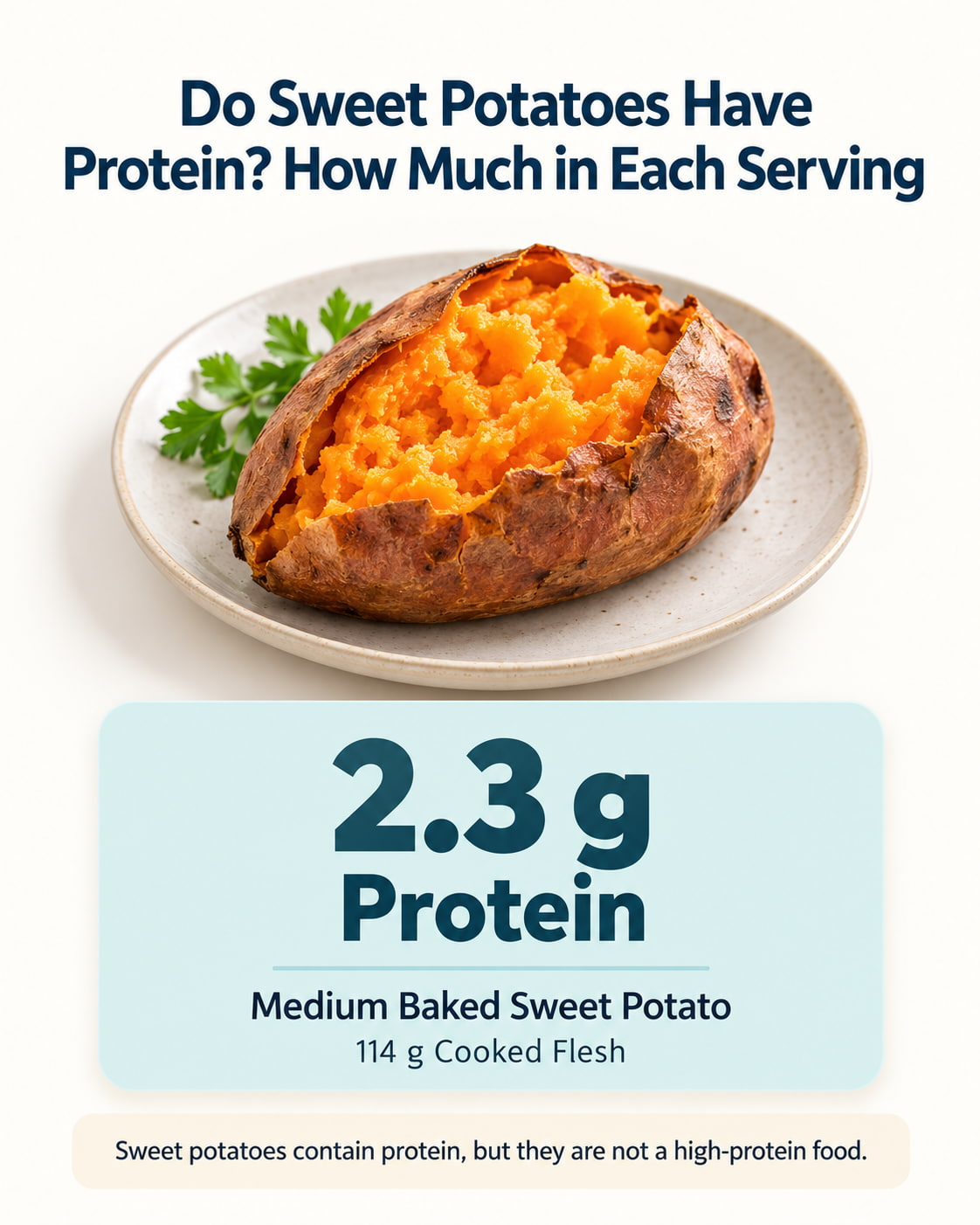
Yes, sweet potatoes have protein. A medium baked sweet potato provides about 2.3 grams in a 114-gram serving of cooked flesh. That makes it a modest contributor to your protein intake.
The amount in your meal depends on the portion and preparation. Understanding those differences makes it easier to compare nutrition figures and choose foods that add more protein to your plate.
Do Sweet Potatoes Have Protein?
Sweet potatoes naturally contain protein. The following servings show how much you can expect from plain baked or boiled sweet potatoes.
According to USDA’s baked sweet potato nutrition data, a larger serving provides more protein, but even a whole potato contributes a relatively small amount.
| Preparation and serving | Edible weight | Approximate protein |
|---|---|---|
| Small baked sweet potato, flesh only | 60 g | 1.2 g |
| Medium baked sweet potato, flesh only | 114 g | 2.3 g |
| Large baked sweet potato, flesh only | 180 g | 3.6 g |
| One cup baked sweet potato flesh | 200 g | 4.0 g |
| Medium boiled sweet potato, without skin | 151 g | 2.1 g |
| One cup boiled, mashed sweet potato, without skin | 328 g | 4.5 g |
Values are rounded to one decimal place. Weights refer to the edible portion.
The baked figures measure flesh from a potato cooked in its skin. They do not measure the flesh and skin eaten together.
Also, “medium” is not a fixed weight across the records. Use the listed grams when comparing portions or logging your food.
Raw vs. Baked vs. Boiled Sweet Potato Protein
Comparing equal weights gives you a clearer view of the different preparation entries.
Alongside the baked figures, USDA reports values for raw sweet potato and boiled sweet potato without skin.
| Preparation | Protein per 100 g |
|---|---|
| Raw, unprepared | 1.57 g |
| Baked flesh, without added salt | 2.01 g |
| Boiled, without skin | 1.37 g |
These are separate food records, so the differences do not show exactly what happens to the same potato during cooking.
The boiled entry contains more water per 100 grams than the baked entry. That is consistent with a lower concentration of protein by weight. It does not mean baking creates protein.
Cup measurements also need care. A cup of boiled, mashed sweet potato is more densely packed and weighs more than the cup of baked flesh listed in the table. Comparing those cups without checking their weights can be misleading.
Are Sweet Potatoes a Good Source of Protein?
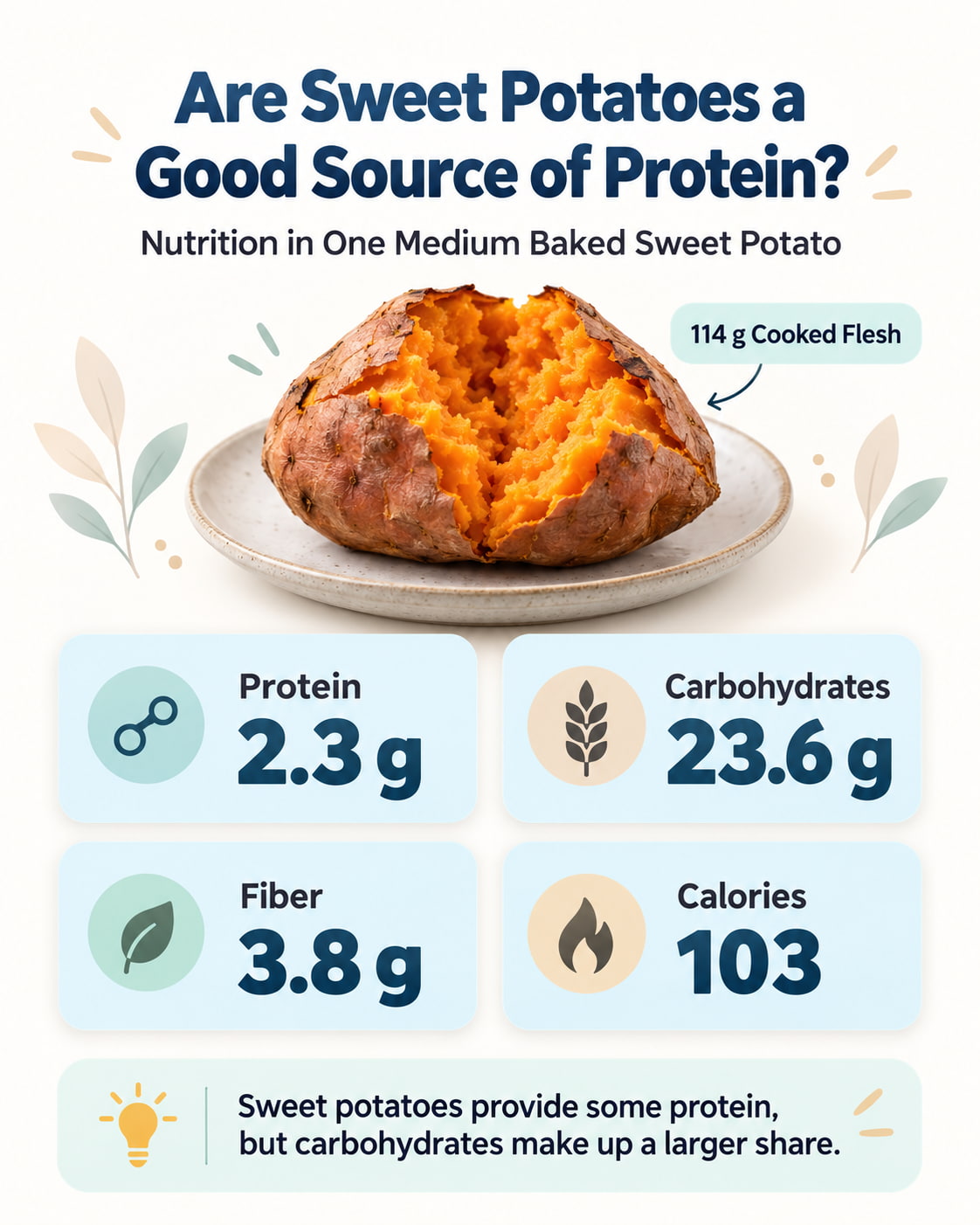
Sweet potatoes contain some protein, but they are not a high-protein food. A medium baked serving contains about 23.6 grams of carbohydrate and 3.8 grams of fiber, alongside its small protein contribution.
For perspective, the FDA’s protein Daily Value is 50 grams. This is a reference used for nutrition labeling; your personal protein needs may differ.
A useful way to plan a meal is to treat the sweet potato as a carbohydrate-containing vegetable and include a protein food alongside it. Its protein still contributes to the meal’s total.
You do not need to choose every ingredient for its protein content. The more useful question is whether the meal as a whole includes enough of the foods you need.
How to Add More Protein to a Sweet Potato Meal
The FDA’s guide to protein identifies beans, lentils, dairy products, eggs, meat, seafood, and soy products as protein sources.
Here are practical ways to combine those foods with sweet potatoes:
| Meal | Protein addition | Simple serving idea |
|---|---|---|
| Stuffed baked sweet potato | Black beans and plain Greek yogurt | Add beans, salsa, and a spoonful of yogurt |
| Roasted sweet potato bowl | Tofu or lentils | Combine with vegetables and your preferred dressing |
| Sweet potato breakfast hash | Eggs | Serve the hash with scrambled or cooked eggs |
| Sweet potato dinner side | Chicken or fish | Serve alongside your main protein food and vegetables |
| Sweet potato skillet | Tempeh | Toss cooked sweet potato pieces with tempeh and vegetables |
These are meal ideas, not fixed nutrition totals. The protein amount will depend on the portions and products you use.
For packaged additions, check the protein grams on the label and the number of servings you actually eat. This is especially useful when comparing different yogurts, tofu products, or ready-to-eat toppings.
How to Estimate Protein in Your Serving
If your potato does not match a standard size, use its edible weight:
- Choose the preparation. Select a raw, baked, or boiled nutrition entry.
- Weigh the portion you will eat. Match the weighed portion to what the entry measures.
- Adjust the per-100-gram value to your portion.
For example, 150 grams of plain boiled sweet potato without skin provides approximately 2.1 grams of protein:
150 ÷ 100 × 1.37 = 2.055 grams, rounded to 2.1 grams.
Weighing food before cooking and using a raw entry is another consistent approach. Avoid applying a cooked-food value to a raw weight.
For a homemade mash or casserole, calculate the ingredients together and divide by the portions served. Added milk, yogurt, or other ingredients change the dish’s nutrition, so a plain sweet potato entry will not represent the complete recipe.
Frequently Asked Questions
How much protein is in one cup of sweet potato?
USDA lists about 4 grams in one cup of baked flesh weighing 200 grams. One cup of boiled, mashed sweet potato without skin weighs 328 grams and provides about 4.5 grams.
Do raw sweet potatoes have protein?
Yes. The USDA raw sweet potato entry contains approximately 1.6 grams per 100 grams, rounded from 1.57 grams. Use that entry when measuring the food raw.
Are sweet potatoes a carbohydrate or a protein food?
They contain both nutrients, but carbohydrate makes up a much larger share. For meal planning, include a separate protein food when you want more protein in the meal.
Does sweet potato protein count toward my daily intake?
Yes. Protein from vegetables contributes to your total intake. The amount from a typical sweet potato serving is simply smaller than what many dedicated protein foods provide.
Does the 2.3-gram figure include the sweet potato skin?
No. It refers to 114 grams of cooked flesh from a potato baked in its skin. It should not be used as an exact measurement for the combined flesh and skin.
What can I add to sweet potatoes for more protein?
Try beans, lentils, tofu, tempeh, eggs, chicken, fish, or plain Greek yogurt. Choose an option that suits your meal, and use its portion size or label to calculate the added protein.
Conclusion
Sweet potatoes contribute a small amount of protein, and their serving weight and preparation affect the amount you get. Use the tables to estimate your portion, then add a protein food you enjoy to make the meal more substantial.
For your next sweet potato meal, try a simple combination such as a baked potato with beans or roasted sweet potatoes with tofu, eggs, chicken, or fish.
This content is for informational purposes only and not medical advice.