
The question “is popcorn bad for you” usually comes down to preparation and portion size. For most adults, plain or lightly seasoned popcorn can be a nutritious whole-grain snack. Generous amounts of salt, butter, sugary coatings, and other toppings can substantially change its nutritional profile.
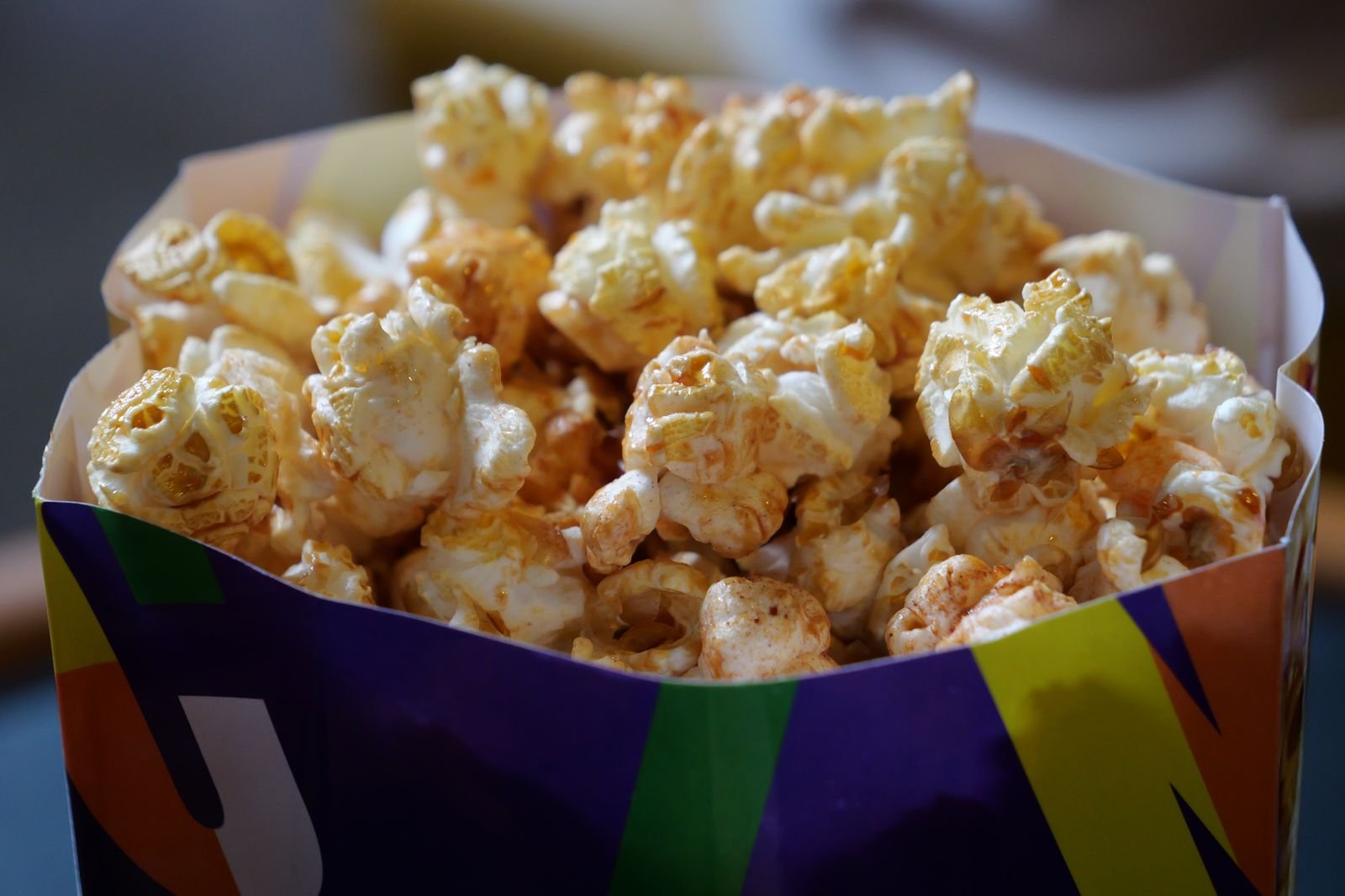
You can make a useful comparison by checking how your popcorn is prepared, what is added, and how much you actually eat. Personal needs matter, too, particularly for young children and people following a prescribed diet.
Popcorn Nutrition Facts
Plain popcorn provides fiber and some protein without much fat or sodium. USDA’s standard reference entry gives the following approximate amounts for 3 cups of air-popped popcorn, weighing about 24 grams.
| Nutrient | Amount per 3 cups |
|---|---|
| Calories | 93 |
| Total carbohydrate | 18.7 g |
| Dietary fiber | 3.5 g |
| Protein | 3.1 g |
| Total fat | 1.1 g |
| Total sugars | 0.2 g |
| Sodium | About 2 mg |
These rounded figures are calculated from USDA’s reference data for plain, air-popped popcorn. They exclude added oil, butter, salt, and coatings. Popcorn’s weight per cup varies, so use the package label for a specific product.
A practical way to remember the baseline is about 100 calories for 3 cups before toppings. The same volume of a coated or oil-rich product can contain considerably more.
When Popcorn Can Be a Healthy Snack
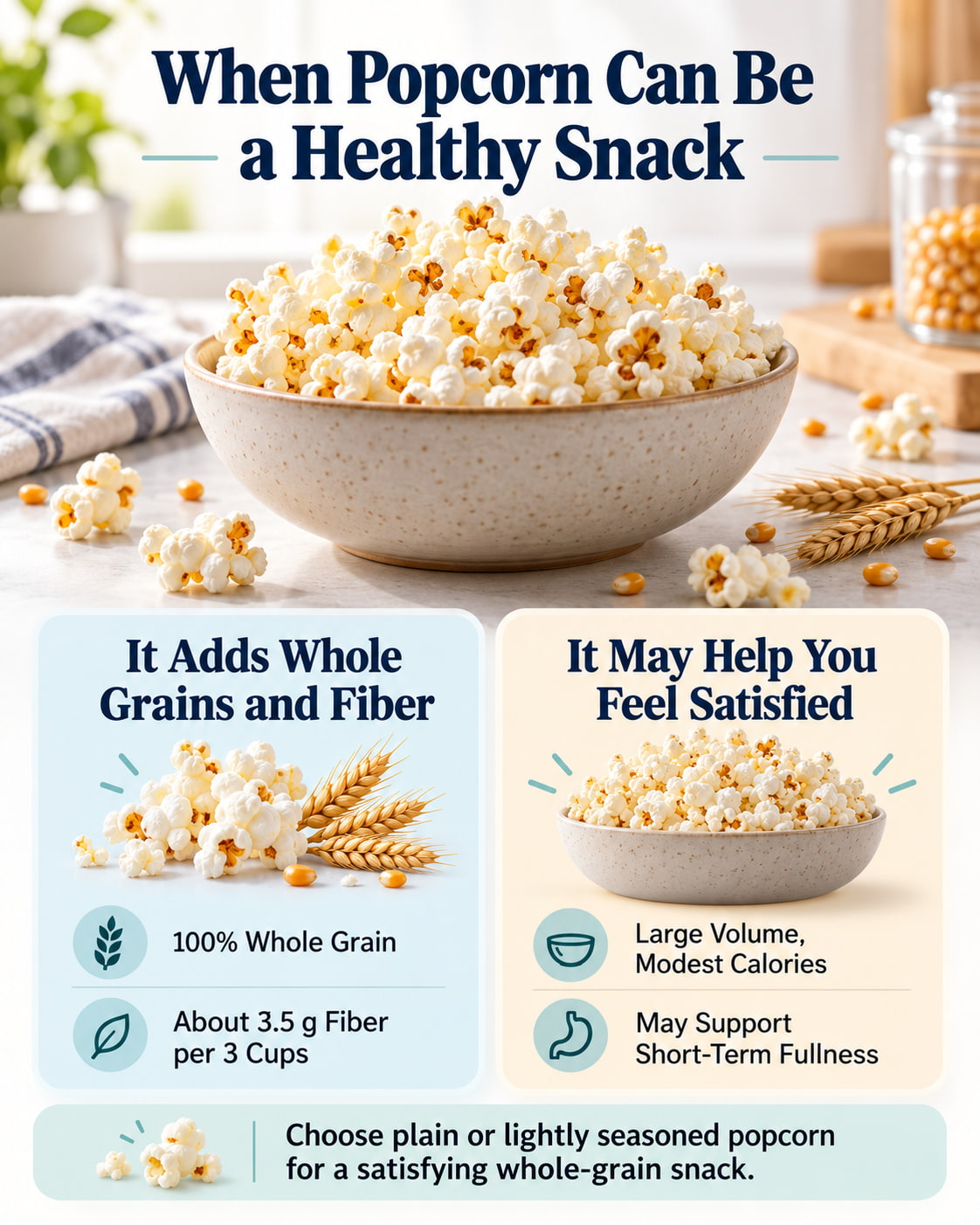
It Adds Whole Grains and Fiber
USDA identifies popcorn as a 100% whole-grain food. A plain portion can help you add whole grains and fiber to your day.
Its approximately 3.5 grams of fiber per 3 cups make a useful contribution, especially when your other snacks provide little fiber. Continue eating a variety of foods, including fruits, vegetables, beans, and other whole grains.
It May Help You Feel Satisfied
Popcorn expands into a large volume, giving you several cups to eat for a relatively modest amount of energy.
In a small study published in Nutrition Journal, 35 adults reported greater short-term fullness after a 100-calorie portion of low-fat popcorn than after a 150-calorie portion of potato chips.
The study was published in 2012 and funded by ConAgra Foods, a popcorn manufacturer. It supports a possible fullness benefit, but it did not demonstrate long-term weight loss. Your overall eating pattern and portions still matter.
Is Popcorn Bad for You? Comparing the Main Types
Preparation makes a substantial difference. Use this comparison as a starting point, then check the actual recipe or label.
| Type of popcorn | What to consider |
|---|---|
| Air-popped | Starts with little fat or sodium; toppings determine what is added. |
| Stovetop | The amount and type of oil affect calories and saturated fat. |
| Microwave | Nutrition and bag sizes vary. Some bags contain multiple servings. |
| Movie-theater | Large containers, salted seasoning, popping oil, and extra toppings can add up. |
| Caramel or kettle corn | Sweet coatings add sugar; the amount varies by recipe. |
| Cheese-flavored | Check sodium, saturated fat, and ingredients, including milk if relevant to an allergy. |
A small amount of butter or oil can fit into your eating pattern. The more useful question is how much it contributes to the portion you eat. The FDA identifies sodium, saturated fat, and added sugars as nutrients to limit.
Why Movie-Theater Popcorn Can Be Less Healthy
Theater popcorn may contain substantial salt and cooking oil before any extra butter topping is added. Container size also makes a difference.
For example, AMC’s posted DINE-IN nutrition information lists these amounts for entire large, 150-fluid-ounce containers without added butter:
| Preparation | Calories | Saturated fat | Sodium |
|---|---|---|---|
| Plain popcorn, no added butter | 870 | 3 g | 1,450 mg |
| Coconut-oil popcorn, no added butter | 860 | 28 g | 1,450 mg |
Fluid ounces describe container volume here, not the popcorn’s weight. These are specific AMC menu examples; recipes, portions, and availability can differ.
The comparison shows why “no butter” does not necessarily mean low in saturated fat. The two preparations have similar calories but very different saturated-fat amounts. Check the popping oil as well as any extra topping.
If you enjoy theater popcorn, choosing a smaller container or sharing a portion can help you manage how much you eat. Check the theater’s nutrition information when available, and account for any extra topping.
Is Microwave Popcorn Bad for You?
Microwave popcorn can fit into a balanced diet. Its nutritional value depends on the product and portion.
For example, JOLLY TIME lists its Healthy Pop Butter Minis as 100-calorie singles with one serving per bag. Its Blast O Butter product lists about three servings per bag. A bag is therefore not a consistent serving size across products.
Check whether the nutrition information refers to unpopped kernels, popped cups, or the full bag. Follow the package’s preparation instructions.
What Has Changed With Microwave-Popcorn Packaging?
Older warnings about microwave-popcorn bags need current context.
In February 2024, the FDA announced that manufacturers were no longer selling PFAS-containing grease-proofing substances for paper and paperboard food packaging into the U.S. market. In January 2025, 35 related food-contact authorizations became ineffective after manufacturers abandoned those uses.
The FDA’s explanation of these packaging changes includes microwave-popcorn bags. This applies to specific U.S. packaging uses and does not establish that every package worldwide contains zero PFAS; contamination or impurities can still occur.
For everyday shopping, the product’s nutrition label and the amount you eat remain useful considerations.
Who Should Be Careful With Popcorn?
Young Children
Popcorn is a choking hazard for young children. The American Academy of Pediatrics recommends keeping high-risk foods, including popcorn, away from children until age 4 or older, depending on their development and maturity.
A fourth birthday does not automatically mean a child is ready. Ask their pediatrician if you are unsure.
People Who Develop Gas, Bloating, or IBS Symptoms
NIDDK explains that adding a large amount of fiber at once can cause gas and trigger IBS symptoms.
If you notice discomfort after popcorn, a practical first step is to try a smaller portion and increase high-fiber foods gradually. Pay attention to whether particular toppings or seasonings bother you as well. Individual tolerance varies, so there is no need to assume everyone with IBS must avoid popcorn.
People With Diverticulosis or Active Diverticulitis
Having diverticulosis does not automatically mean you need to avoid popcorn.
According to NIDDK’s dietary guidance, most people with diverticulosis or diverticular disease do not need to avoid nuts, seeds, or popcorn. The older blanket restriction is not supported by more recent research.
An active episode of diverticulitis is a different situation. Your clinician may recommend temporary dietary changes. Follow those instructions rather than relying on general snack advice.
When to Seek Help
Talk with a healthcare professional if gas or bloating regularly bothers you, changes suddenly, or occurs with abdominal pain, constipation, diarrhea, or unexplained weight loss.
Choking that prevents breathing, speaking, or effective coughing requires immediate emergency help.
How to Make and Choose Healthier Popcorn
1. Start With a Preparation You Can Control
Air-popping gives you a plain base. Stovetop popcorn made with a measured amount of olive or canola oil can also be a reasonable option.
Measure cooking oil rather than pouring freely, and consider how many portions the batch makes.
2. Add Flavor in Small Amounts
Try herbs, smoked paprika, cinnamon, or a seasoning blend without added salt. A small amount of oil or butter can help seasonings stick.
Taste before adding more salt or topping. You may find that a smaller amount gives you enough flavor.
3. Put Your Portion in a Bowl
A bowl makes the amount easier to judge than eating directly from a large package.
Three cups of plain, air-popped popcorn is a useful reference portion, but it is not a universal target or maximum. Adjust the amount to your appetite, other foods, and any dietary guidance you follow.
4. Compare the Nutrition Labels
The FDA’s label-reading guide offers a straightforward way to compare products:
- Check serving size and servings per package.
- Compare equivalent portions. A one-cup label and a three-cup label are not directly interchangeable.
- Review sodium, saturated fat, and added sugars. As a general guide, 5% Daily Value or less per serving is low; 20% or more is high.
- Account for the amount you eat. For example, three servings labeled at 150 calories each would provide about 450 calories.
A labeled serving size reflects an amount people typically consume. It is not a personalized recommendation.
5. Leave Hard Kernels Behind
Discard unpopped kernels instead of biting them. The American Dental Association warns that popcorn kernels can crack teeth.
Frequently Asked Questions
Is It Okay to Eat Popcorn Every Day?
Popcorn can fit into an everyday eating pattern if you tolerate it well and the preparation and portion suit your needs. Favor lightly seasoned options and keep variety in your snacks and meals. Eating popcorn daily is not necessary to get enough whole grains or fiber.
Is Popcorn Good for Weight Loss?
Plain popcorn may be a useful snack when you want a relatively large portion for a modest calorie amount. It does not cause weight loss on its own. Consider how it fits into your overall food intake, including cooking oil, toppings, and other snacks.
How Much Popcorn Should You Eat?
There is no single right amount for everyone. About 3 cups of plain, air-popped popcorn provides a useful reference of roughly 100 calories. A smaller portion may suit you if you are having it alongside other food or if a larger bowl causes discomfort.
Can People With Diabetes Eat Popcorn?
Popcorn can fit into an individualized diabetes eating plan, but its carbohydrate content matters. Three cups of plain, air-popped popcorn contains about 18.7 grams of total carbohydrate.
NIDDK recommends choosing portions and meal-planning methods that fit your needs. Account for popcorn within the approach you use with your healthcare team, and check sweetened varieties carefully.
Does Eating Popcorn Cause “Popcorn Lung”?
The condition nicknamed “popcorn lung” has been associated with breathing certain flavoring chemicals, particularly through workplace exposure.
CDC/NIOSH describes these inhalation exposures. Occupational findings should not be interpreted as evidence that eating popcorn causes this lung condition.
Conclusion
Popcorn can be a convenient whole-grain snack when its preparation and portion fit your needs. Plain or lightly seasoned versions make it easier to keep added salt, saturated fat, and sugar modest.
The next time you buy or prepare popcorn, check the serving information, measure toppings, and put the amount you want into a bowl. Those simple steps help you enjoy it while understanding what you are eating.
This content is for informational purposes only and not medical advice.
References
- USDA Agricultural Research Service — Popcorn: A Healthy, Whole Grain Snack
- USDA — Standard Reference Nutrient Data for Snacks
- American Heart Association — Popcorn as a Snack
- Nutrition Journal — Popcorn and Short-Term Satiety
- AMC — DINE-IN Nutritional Information
- JOLLY TIME — Healthy Pop Butter Minis and Blast O Butter
- FDA — Understanding the Nutrition Facts Label
- American Academy of Pediatrics — Choking Prevention
- NIDDK — Diet and Nutrition for IBS