
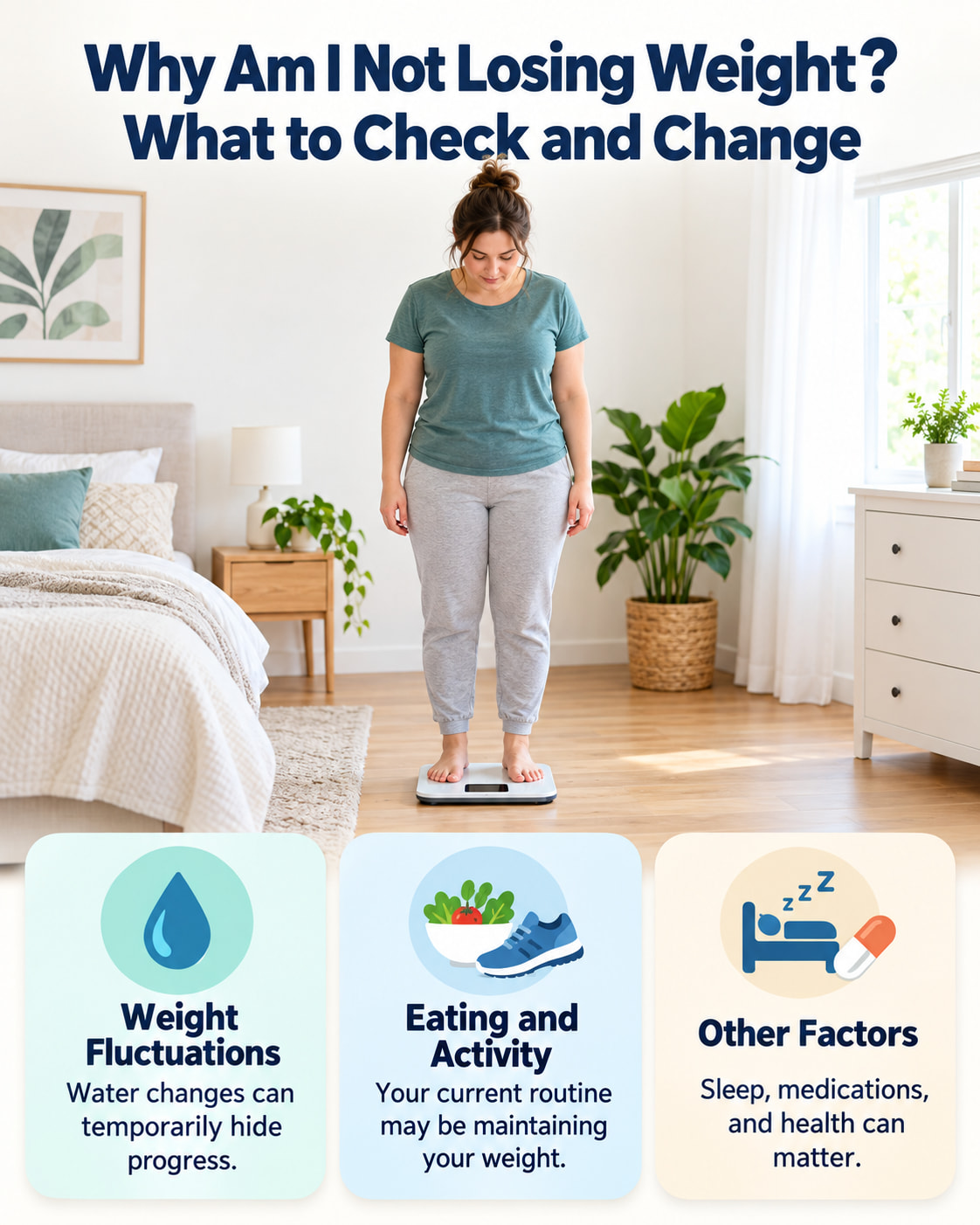
If you are asking, “Why am I not losing weight?” start by looking at the pattern over time. Normal water fluctuations may be hiding progress, your current eating and activity pattern may be maintaining your weight, or factors such as sleep, medications, and health conditions may be affecting your results.
Understanding the reason helps you choose a useful next step. You may need more consistent measurements, a manageable change to your routine, or professional guidance.
Before cutting more food or adding harder workouts, review what has changed and how you are measuring progress.
Why Am I Not Losing Weight? Check Your Weight Trend First
Your scale measures total body weight, including water and digestive contents. It does not directly measure body fat.
A saltier meal, changes in carbohydrate intake, constipation, or menstrual fluid changes can temporarily affect the number. Early weight loss may also include water associated with stored glycogen, so the pace can slow after the first few weeks.
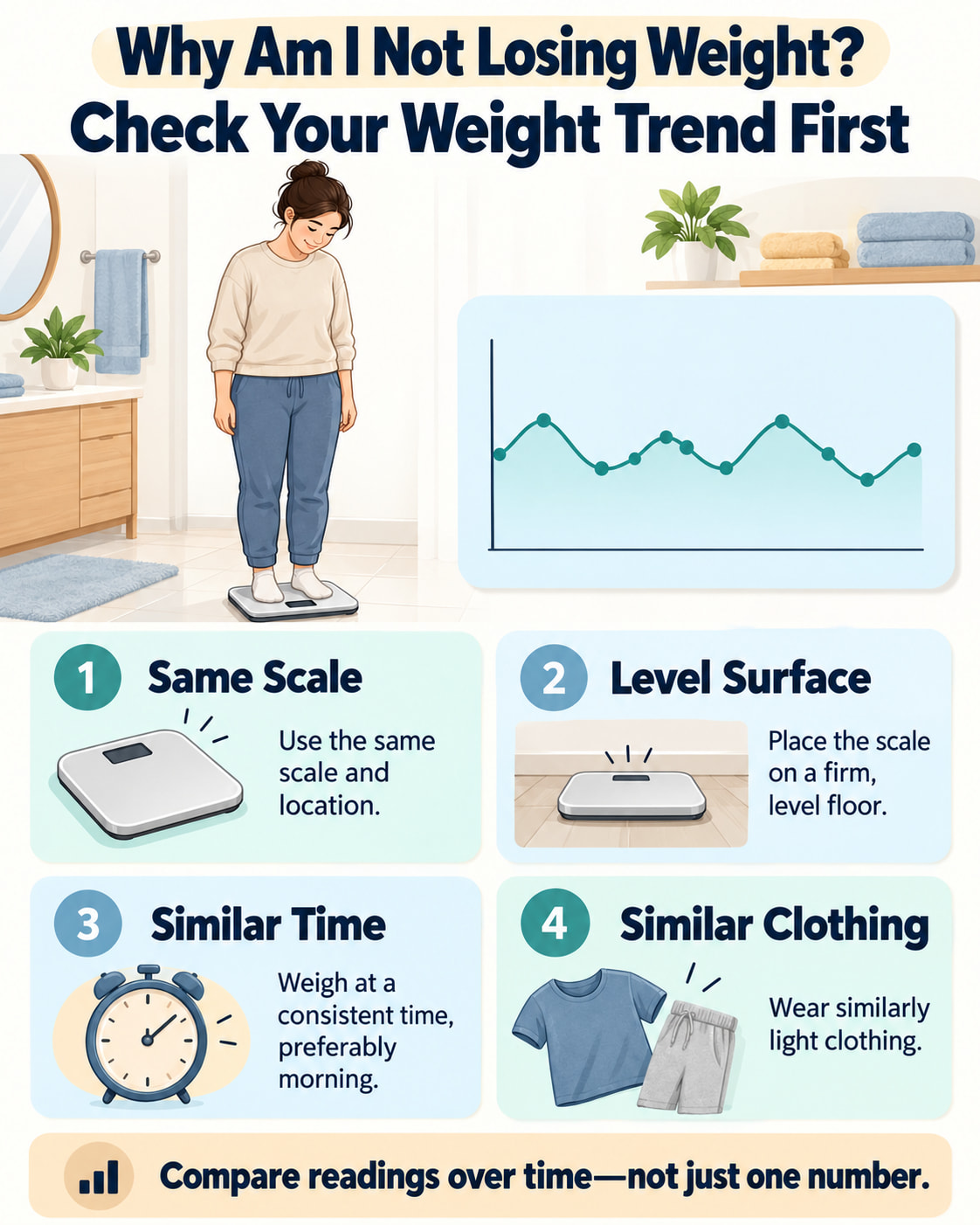
Make your measurements comparable. The NHS recommends consistent weighing conditions:
- Use the same scale in the same location.
- Place it on a firm, level surface.
- Weigh at a similar time, preferably in the morning.
- Wear similarly light clothing each time.
Compare a series of readings over time. Daily weighing is optional; a consistent weekly routine may be more comfortable for you.
A weight-loss plateau describes a period when the weight trend stops declining. A few unchanged readings do not explain why this is happening. Note temporary influences before deciding that your eating or exercise plan needs to change.
If weighing causes distress, discuss another way to monitor progress with a healthcare professional.
Common Reasons You Are Not Losing Weight
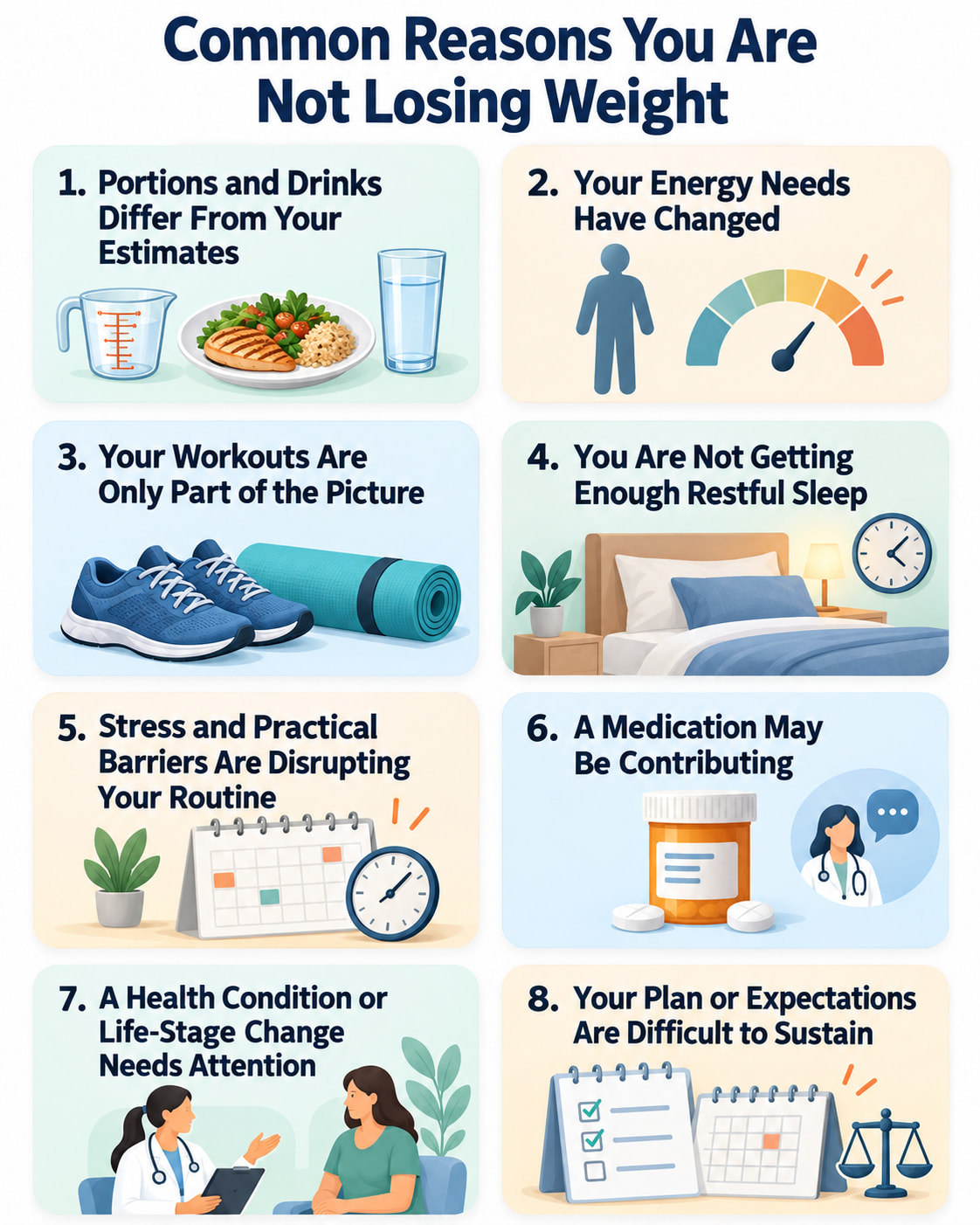
1. Portions and Drinks Differ From Your Estimates
You can improve the quality of your diet without creating the calorie deficit you expected. A calorie deficit means taking in less energy than your body uses over time.
Portions are one useful place to check. The FDA explains that nutrition information usually refers to one labeled serving. If you eat two servings, you generally consume twice the listed calories and nutrients.
For example, a food labeled as 180 calories per serving provides 360 calories when you eat two servings. The serving size itself is not a recommendation for how much you should eat.
Other details worth reviewing include:
- Cooking oils, dressings, sauces, and spreads.
- Milk, cream, sugar, or syrups added to drinks.
- Alcohol and other calorie-containing beverages.
- Restaurant portions and shared dishes.
- Differences between your usual weekday and weekend routine.
What to change: Try a brief food-and-drink record, if that feels useful. Include ordinary days and social meals. You can also measure a few commonly eaten portions to check your estimates without making permanent tracking a requirement.
2. Your Energy Needs Have Changed
Your calorie needs can change as your weight changes. NIDDK explains that a smaller body generally needs fewer calories, and metabolism slows during weight loss.
This helps explain why the same routine may produce weight loss initially and later maintain your weight.
Appetite can also become harder to manage. A 2024 mathematical modeling study published in Obesity examined how feedback between weight loss and increased appetite contributes to plateaus. It helps explain the biology, but it cannot predict your individual timeline.
What to change: Review whether your current estimate reflects your present weight and usual activity. If you use an app, check whether exercise is already included before adding exercise calories again.
Treat a calculator result as a starting estimate. Your longer-term trend, nutritional needs, hunger, and health context help determine whether the plan fits.
3. Your Workouts Are Only Part of the Picture
Regular exercise supports health even when the scale changes less than you hoped. However, a workout does not reveal your total daily energy use or how your eating has changed.
Check whether you spend most of the remaining day sitting, whether everyday walking has decreased, or whether additional hunger has changed your meals and snacks.
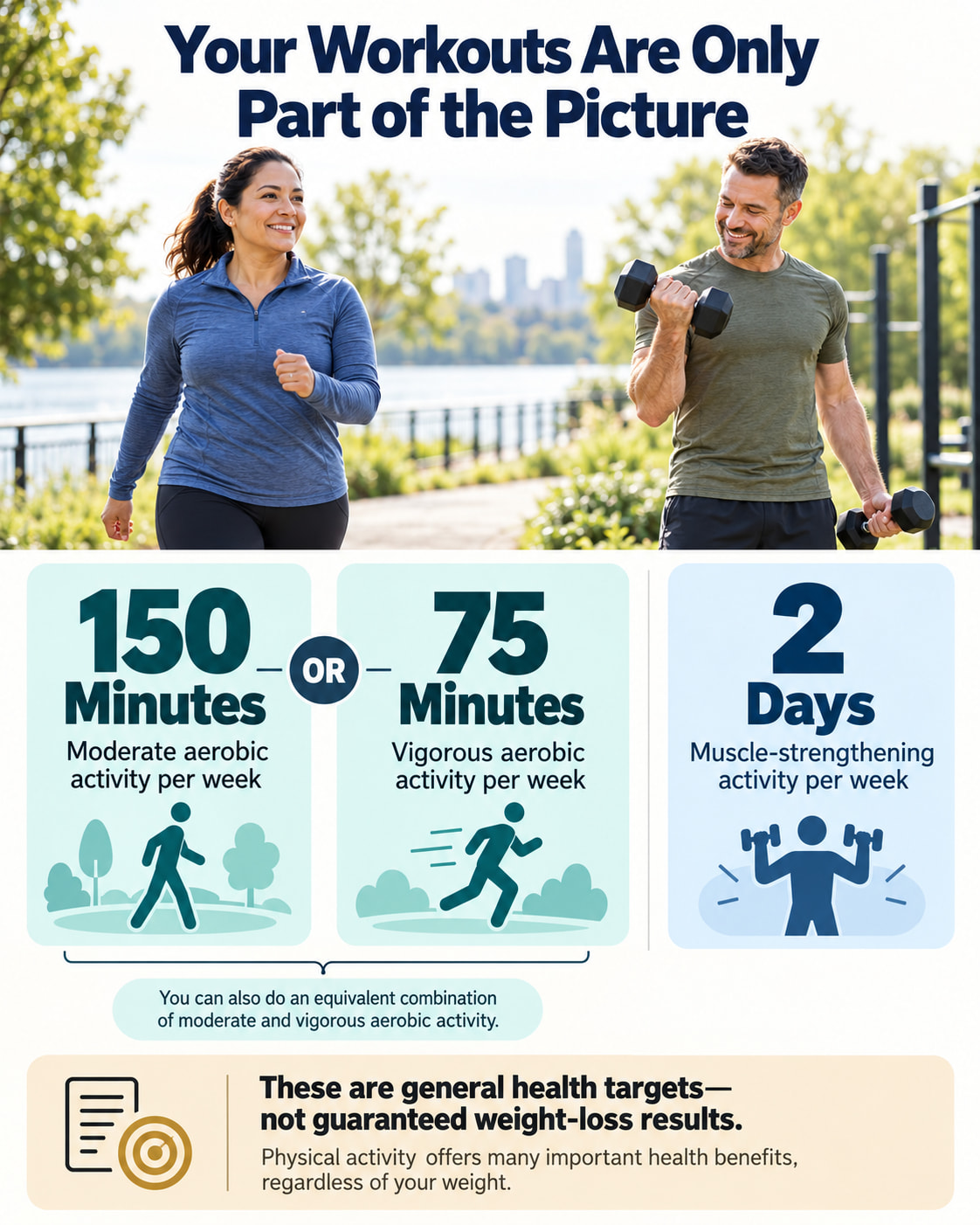
The CDC’s adult activity recommendations include:
- At least 150 minutes of moderate aerobic activity weekly, or 75 minutes of vigorous activity, or an equivalent combination.
- Muscle-strengthening activity on at least two days weekly.
These are general health targets. The activity needed for weight management varies, and these amounts do not guarantee a particular weight change. Exercise calorie estimates are also approximate.
What to change: Choose activities you can repeat comfortably and build up gradually. A short walk or movement break can be a practical addition to a sedentary day. Consider strength, stamina, and everyday function alongside the scale when reviewing progress.
4. You Are Not Getting Enough Restful Sleep
Sleep deserves a place in your review. NIDDK recommends 7–9 hours nightly for adults ages 18–64 and 7–8 hours for adults 65 and older.
In a 2022 randomized trial, a sleep-extension intervention reduced energy intake among 80 adults with overweight who usually slept less than 6.5 hours. Over two weeks, intake fell by approximately 270 calories per day relative to the control group.
The study was short. It does not mean everyone will eat 270 fewer calories or achieve lasting weight loss by sleeping longer.
What to change: Review your sleep schedule, bedtime habits, and daytime tiredness. Make room for enough sleep for your age and needs. If you regularly struggle to sleep or remain tired despite adequate time in bed, discuss it with a healthcare professional.
5. Stress and Practical Barriers Are Disrupting Your Routine
Work schedules, caregiving, food access, and stress can make a reasonable plan difficult to follow.
Ask practical questions:
- Are busy days leaving you without time to prepare or eat regular meals?
- Does stress change how or when you eat?
- Has your schedule reduced opportunities for movement?
- Are you expecting a routine that does not fit your current circumstances?
What to change: Address one barrier. Keep an easy meal available, plan a shorter activity session, or ask for help with a recurring scheduling problem.
Weight alone cannot tell you that cortisol is the cause. Focus on the changes you can observe in your routine.
6. A Medication May Be Contributing
Some medicines can affect appetite, energy use, or weight. NIDDK lists certain antidepressants, antipsychotic medicines, corticosteroids, insulin, and some other diabetes medicines among possible contributors.
This does not mean every medicine in these categories has the same effect.
What to check: Did changes in weight or appetite begin after starting a medicine or changing a dose?
What to change: Bring that timeline to your prescriber. They can review the medicine’s benefits, possible weight effects, and suitable options. Do not stop or reduce a prescribed medication on your own.
7. A Health Condition or Life-Stage Change Needs Attention
A plateau alone does not diagnose a medical condition. Other symptoms and your medical history matter.
Examples worth discussing with a clinician include:
- Hypothyroidism: Weight gain can occur with fatigue, cold sensitivity, dry skin, or hair changes. These symptoms have several possible causes, so appropriate assessment is needed.
- Polycystic ovary syndrome (PCOS): Now also called polyendocrine metabolic ovarian syndrome, or PMOS, this condition can involve difficulty managing weight, irregular periods, acne, or excess hair growth.
- Midlife changes: Aging, muscle changes, sleep, and activity can affect weight management. Menopause also influences where fat is stored, often shifting it toward the abdomen.
What to change: Mention new or persistent symptoms when discussing your weight. A clinician can decide whether an examination or testing is appropriate. There is no need to assume that every plateau requires a broad hormone panel.
8. Your Plan or Expectations Are Difficult to Sustain
A plan that leaves you persistently hungry, exhausted, or struggling to eat adequately deserves review. Making it more restrictive may make it harder to sustain.
The CDC describes approximately 1–2 pounds per week as a gradual pace associated with better maintenance than faster loss. Your progress may be slower, and that range is not a required weekly result.
There is also no single calorie target that suits everyone. Numbers such as 1,200 or 1,500 calories should not be treated as universal instructions.
What to change: Consider whether your goal and timeline fit your health and circumstances. A registered dietitian can help you build an eating pattern that provides adequate nutrition and is realistic to maintain.
NICE guidance places low-energy and very-low-energy diets within structured care with clinical support. They are not a routine solution to try independently whenever progress slows.
What to Check and Change When Weight Loss Stalls
Use the situation that best matches what you are noticing. You do not need to change everything at once.
| What you notice | What to check | A useful next step |
|---|---|---|
| Readings vary or come from different conditions | Scale, timing, clothing, and temporary fluid changes | Standardize measurements and compare the trend |
| You are unsure about usual intake | Portions, drinks, meal additions, and the overall weekly pattern | Try a brief record or check a few commonly eaten portions |
| Your calorie target is confusing | Calculator assumptions and whether activity is counted more than once | Review the settings and assess the estimate against your trend |
| Hunger, fatigue, or your schedule makes the plan difficult | Nutritional adequacy, sleep, and practical barriers | Make the routine more manageable and consider dietitian support |
| Medication changes or other symptoms coincide with weight changes | When the changes began and what else you have noticed | Arrange a clinician review |
Choose one specific adjustment you can repeat. For example, you might check the serving size of a daily snack, prepare an easy lunch, or add a short walk during a work break.
Keep a note of the change and review it alongside your weight trend, hunger, energy, and ability to maintain the routine. A short record can reveal patterns; it does not guarantee that a plateau will resolve within a set number of days.
When to Talk With a Healthcare Professional
You can ask for support whenever the situation is unclear. You do not need to exhaust increasingly restrictive diets first.
A clinician or registered dietitian can help when:
- Your weight trend remains unclear despite a consistent, manageable routine.
- You have persistent hunger, fatigue, or difficulty meeting your nutritional needs.
- A medication may be affecting your appetite or weight.
- You develop symptoms such as unusual cold sensitivity, hair changes, or irregular periods.
- You are unsure whether further weight loss would benefit your health.
- Weighing or food tracking is causing significant distress.
Bring a brief summary of your weight pattern, eating and activity routine, sleep, symptoms, and medication changes. This information can help guide an individualized review.
Seek prompt medical assessment for rapid, unexplained weight gain, particularly with swelling or shortness of breath. These changes can reflect fluid retention and should not be treated as an ordinary weight-loss plateau.
Frequently Asked Questions
Why Am I Not Losing Weight Even Though I Am Eating Less?
Eating less than before does not establish the size of your current calorie deficit. Your energy needs may have changed, or portions and drinks may differ from your estimates. Water fluctuations can also obscure short-term changes. Review comparable measurements and your usual eating pattern before assuming you need a larger restriction.
Can I Be in a Calorie Deficit Without Seeing the Scale Drop?
Yes, temporary changes in water and digestive contents can obscure changes in body tissues. However, an app’s calculated deficit is an estimate rather than a direct measurement of energy balance. A persistent, unclear trend is a reason to reassess the estimate and seek guidance when needed.
Does an Unchanged Scale Mean I Am Gaining Muscle?
Not necessarily. Body fat, muscle, water, and digestive contents can all influence weight. Strength training may change body composition over time, but the scale alone cannot establish that you gained muscle. Changes in strength, waist measurements, and how clothing fits can provide additional context.
Can Eating Too Little Stop Weight Loss?
Very restrictive intake can affect energy expenditure, increase hunger, and make adequate nutrition and consistency harder. That does not mean fat loss becomes impossible or that eating more automatically restarts it. If your intake is already restrictive, seek individualized guidance before cutting further.
How Long Does a Weight-Loss Plateau Last?
There is no single duration that applies to everyone. The apparent stall may reflect temporary fluctuations, a routine that now maintains your weight, or other factors. Review the pattern and relevant changes. You can seek help at any point, especially if symptoms or medication changes are involved.
Should I Weigh Myself Every Day?
Daily weighing is optional. Consistent conditions and a useful view of the trend matter more than reacting to individual readings. A weekly routine may suit you better. If weighing becomes distressing or compulsive, discuss a different approach with a healthcare professional.
Do I Need Thyroid or Hormone Tests If I Cannot Lose Weight?
Not automatically. A clinician should consider your symptoms, medical history, medicines, and examination before deciding which tests are appropriate. Weight gain and fatigue have many possible causes. A plateau alone does not establish thyroid disease or another hormonal condition.
Conclusion
If you are not losing weight, begin with a careful look at your measurements and routine. Temporary fluctuations, changing energy needs, sleep, medications, and health factors can all influence what you see.
Choose one useful check today and make a manageable adjustment where appropriate. If the picture remains unclear, a clinician or registered dietitian can help you decide what to change while protecting your health and nutritional needs.
This content is for informational purposes only and not medical advice.
References
- CDC — Steps for Losing Weight
- NIDDK — Factors Affecting Weight and Health
- NIDDK — Eating and Physical Activity to Lose or Maintain Weight
- NIDDK — Choosing a Safe and Successful Weight-Loss Program
- FDA — Serving Size on the Nutrition Facts Label
- NHS England — How to Record Your Weight
- Cleveland Clinic — Why Weight Fluctuates
- Mayo Clinic — Getting Past a Weight-Loss Plateau
- CDC — Physical Activity and Your Weight and Health