
A calorie deficit for weight loss means consistently consuming fewer calories than your body uses, and you can estimate your starting daily target by subtracting a manageable deficit from your maintenance calories. For example, if you maintain your current weight at about 2,300 calories per day, subtracting 500 calories would give you a starting target of 1,800 calories per day.

That calculation is only a starting estimate. Your actual calorie needs depend on your age, body size, activity level, health, medications, and how your body responds over time. The goal is not to eat as little as possible. It is to find a calorie target that supports gradual weight loss while still providing enough food and nutrients.
According to the CDC’s guidance on gradual weight loss, people who lose weight at a steady rate of approximately 1–2 pounds per week are more likely to maintain their results than those who lose weight faster. However, you do not have to lose within that range every week for your plan to be effective.
Daily calorie target = Estimated maintenance calories − Chosen calorie deficit
What Is a Calorie Deficit for Weight Loss?
A calorie deficit occurs when your body uses more energy than you consume through food and beverages.
Your body uses calories for:
- Breathing, circulation, and other basic functions
- Digesting food
- Walking, household tasks, and daily movement
- Structured exercise
- Maintaining body temperature and repairing tissues
When you consistently consume fewer calories than you use, your body must draw on stored energy. Over time, this can lead to weight loss.
You can create a deficit by eating fewer calories, becoming more physically active, or combining both approaches. The CDC notes that reducing calorie intake accounts for much of weight loss, while regular physical activity is especially valuable for overall health and long-term weight management.
A calorie deficit does not require skipping meals, eliminating entire food groups, or following a highly restrictive diet. Different eating patterns can work when they help you maintain an appropriate deficit and meet your nutritional needs.
How to Calculate Your Daily Calorie Target
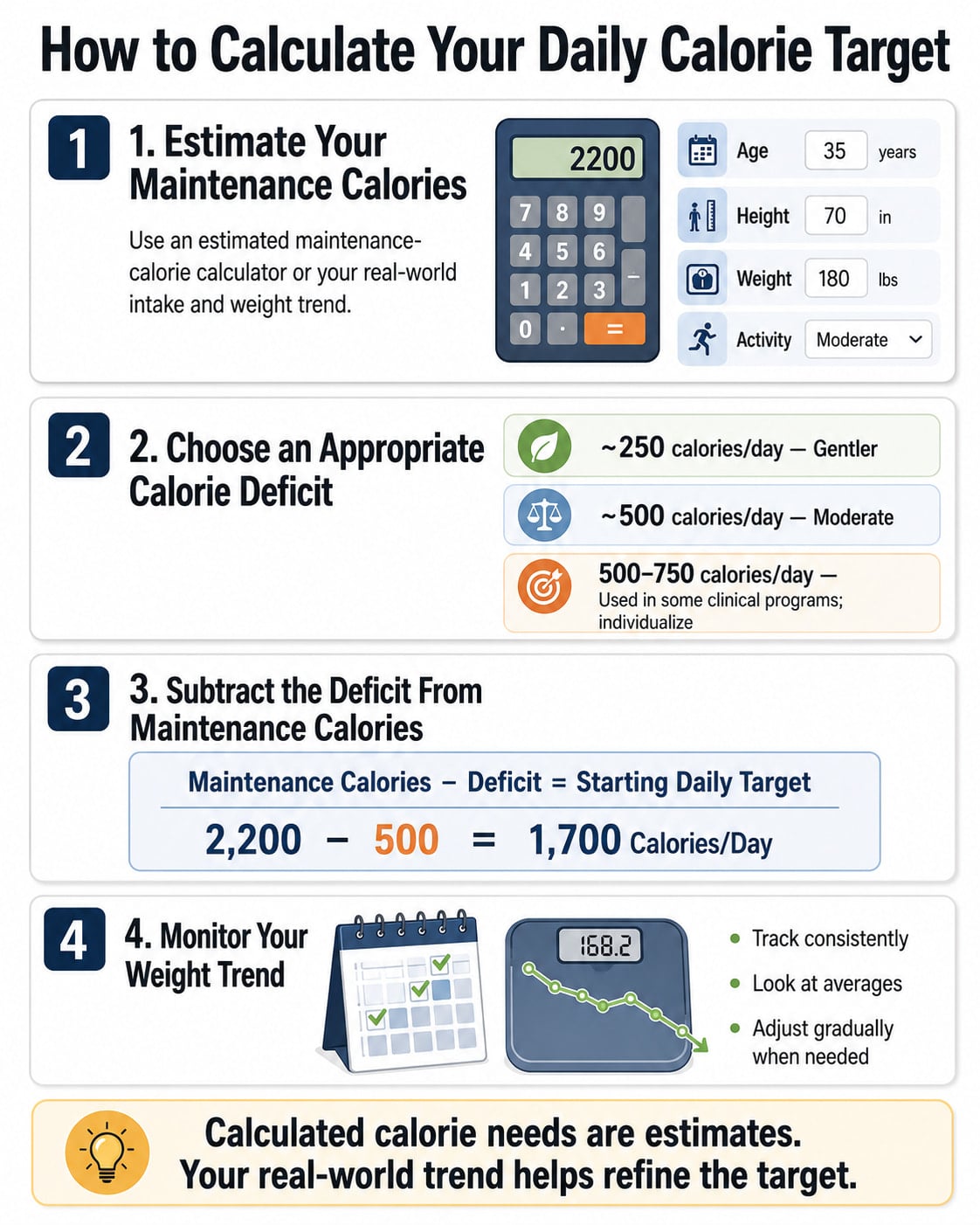
Finding your target involves four basic steps:
- Estimate your maintenance calories.
- Choose a reasonable starting deficit.
- Subtract the deficit from maintenance.
- Monitor your results and adjust when necessary.
Step 1: Estimate Your Maintenance Calories
Maintenance calories are the approximate number of calories you need each day to maintain your current body weight.
One of the most useful official tools is the NIH Body Weight Planner. It estimates the calorie and activity changes needed to reach a particular weight within a selected period. It also estimates the calories needed to maintain that weight afterward.
The planner considers information such as:
- Age
- Sex
- Height
- Current weight
- Goal weight
- Physical activity
- Time allowed to reach the goal
Unlike a basic calculator, the NIH tool attempts to account for changes in energy needs as body weight decreases.
The tool is designed for adults ages 18 and older. It should not be used to set calorie targets for children, teenagers, or people who are pregnant or breastfeeding.
Another Way to Estimate Maintenance
You can also compare your average calorie intake with your weight trend.
For example, if your weight remains relatively stable over several weeks while you average about 2,200 calories per day, 2,200 may be close to your current maintenance intake.
This method is not exact. Food-tracking errors, water-weight changes, irregular activity, and unrecorded meals can affect the result. However, it can provide a useful real-world comparison with an online calculator.
Step 2: Choose an Appropriate Calorie Deficit
There is no single calorie deficit that is right for everyone.
Your deficit should be large enough to produce a downward weight trend but small enough that you can continue eating nutritious meals, functioning normally, and following the plan consistently.
| Starting deficit | When it may be considered |
|---|---|
| About 250 calories per day | A gentler option for people with lower calorie needs, those close to their goal, or anyone who finds a larger reduction difficult |
| About 500 calories per day | A commonly used moderate starting point for adults whose maintenance needs can support it |
| 500–750 calories per day | Used in some structured clinical weight-management programs, but should be individualized |
The 2026 ADA Standards of Care recommends an individualized deficit of approximately 500–750 calories per day in intensive lifestyle programs for adults with diabetes and overweight or obesity. This is guidance for a specific clinical population—not a universal recommendation for every person trying to lose weight.
A larger deficit is not automatically better. It may increase hunger, fatigue, nutrient inadequacy, and the chance that you will abandon the plan.
People with lower maintenance needs may require a smaller deficit. For example, subtracting 750 calories from a maintenance estimate of 1,700 would leave only 950 calories, which is unlikely to provide adequate nutrition without medical supervision.
Step 3: Subtract the Deficit From Maintenance Calories
Once you have estimated maintenance and chosen an appropriate deficit, use this formula:
Maintenance calories − Calorie deficit = Starting daily calorie target
Here are three examples:
| Estimated maintenance | Selected deficit | Starting target |
|---|---|---|
| 1,800 calories | 250 calories | 1,550 calories |
| 2,200 calories | 500 calories | 1,700 calories |
| 2,800 calories | 600 calories | 2,200 calories |
These examples are for illustration only. They are not recommended calorie prescriptions.
Step 4: Monitor Your Weight Trend
Your calculated target may not match your actual energy needs perfectly. Treat it as a starting point and monitor what happens.
A practical tracking process includes:
- Recording meals, snacks, beverages, and cooking ingredients
- Weighing yourself under similar conditions
- Looking at an average or general trend rather than one measurement
- Monitoring hunger, energy, mood, sleep, and workout performance
- Following the plan consistently for several weeks before making a major change
Body weight can fluctuate from day to day because of hydration, sodium intake, carbohydrate intake, digestion, exercise, and hormonal changes. A temporary increase does not necessarily mean you have gained body fat.
If your average weight is gradually decreasing and you feel well, your current target may be appropriate. If your trend remains unchanged, first check tracking accuracy and consistency. Then make a modest adjustment rather than suddenly cutting hundreds of additional calories.
How Fast Can You Lose Weight in a Calorie Deficit?
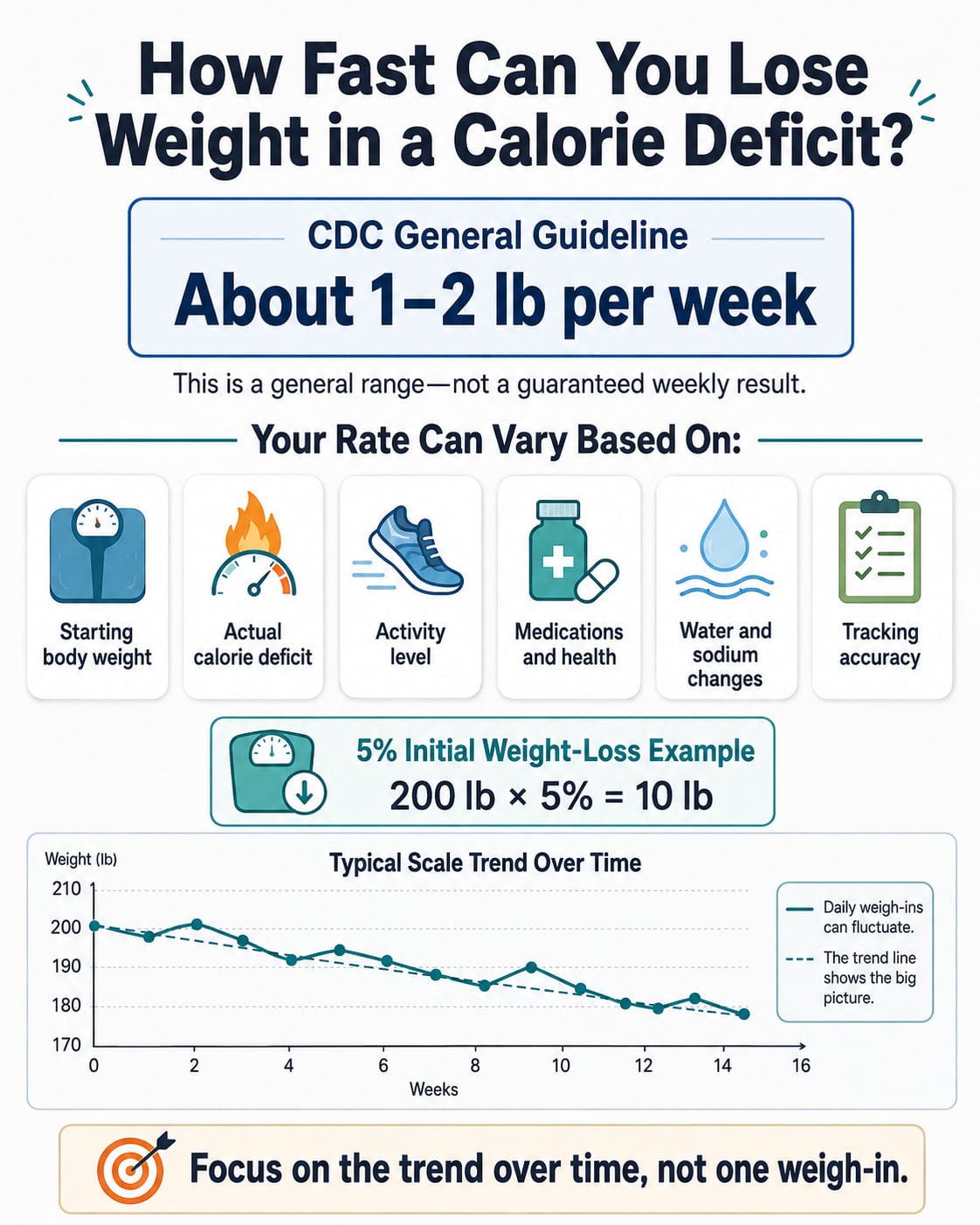
The CDC’s commonly cited range of about 1–2 pounds per week is a general guideline, not a required result or guarantee.
Your rate may be slower or faster depending on:
- Starting body weight
- Size of the actual calorie deficit
- Activity level
- Medication use
- Medical conditions
- Menstrual-cycle-related fluid changes
- Sodium and carbohydrate intake
- Previous dieting history
- Tracking accuracy
People with a higher starting weight may experience a larger initial change. Smaller individuals and people closer to their goal may lose weight more slowly because they generally have lower energy needs.
NIDDK provides an example of losing approximately 5% of starting body weight over six months as a possible initial goal for some adults who need to lose weight. For a person weighing 200 pounds, 5% equals 10 pounds. Goals should still be individualized with a healthcare professional when appropriate.
Why the 3,500-Calorie Rule Is Not Exact
The traditional 3,500-calorie rule suggests that accumulating a 3,500-calorie deficit should produce one pound of weight loss.
Using that rule:
- A 500-calorie daily deficit equals 3,500 calories per week.
- That would theoretically equal one pound of weekly weight loss.
This can be useful for rough, short-term arithmetic, but it should not be treated as a guarantee.
NIH researchers explain that the body responds to calorie and weight changes over time. As body weight decreases, total energy expenditure generally changes, and weight loss often slows. As a result, the simple 3,500-calorie rule may substantially overestimate long-term results.
This is one reason the NIH Body Weight Planner is more useful than multiplying a daily deficit by the number of weeks in your plan.
How to Eat in a Calorie Deficit Without Constant Hunger
A sustainable calorie deficit should still include satisfying meals. Food selection can make a major difference in how filling your calorie target feels.
Include a Protein Food at Each Meal
Protein can make meals more satisfying and helps you meet nutritional needs while losing weight.
Depending on your preferences, protein choices may include:
- Eggs
- Fish and seafood
- Chicken or turkey
- Lean meat
- Greek yogurt or cottage cheese
- Milk or fortified soy milk
- Beans and lentils
- Tofu or tempeh
You do not have to eat an extremely high-protein diet. Focus on including a practical source at meals instead of allowing most calories to come from foods that provide little protein or fiber.
Increase Meal Volume With Vegetables and Fruit
Vegetables and whole fruits provide water, fiber, vitamins, and minerals. They can increase the amount of food on your plate without adding as many calories as many energy-dense alternatives.
CDC guidance notes that substituting vegetables and fruits for more calorie-dense ingredients can lower a meal’s total calories without necessarily reducing its volume. Simply adding produce on top of your usual intake may not create the same effect; substitution matters.
Practical substitutions include:
- Replace part of the rice or pasta with nonstarchy vegetables.
- Add mushrooms, peppers, or spinach to eggs.
- Choose whole fruit instead of fruit juice.
- Replace some sandwich fillings with lettuce, tomatoes, or cucumbers.
- Choose a broth-based vegetable soup instead of a cream-based option.
Prioritize Nutrient-Dense Foods
The current Dietary Guidelines for Americans, 2025–2030, released in January 2026, emphasizes whole, nutrient-dense foods such as protein foods, vegetables, fruits, whole grains, healthy fats, and dairy or appropriate alternatives. It also recommends reducing highly processed foods with refined carbohydrates, added sugars, excess sodium, and less healthful fats.
You do not need to ban processed foods or favorite treats. A flexible plan can include them in appropriate portions. However, building most meals around nutrient-dense foods usually makes it easier to meet nutritional needs within a reduced calorie target.
Watch Calorie-Dense Extras
Some foods provide valuable nutrients but contain many calories in small portions. Examples include:
- Cooking oils
- Butter
- Salad dressings
- Nut butters
- Nuts and seeds
- Cheese
- Creamers
- Sauces and spreads
These foods do not need to be eliminated. Measure or portion them consistently so they do not unintentionally erase your planned deficit.
Count Beverages
Calories from beverages can be easy to overlook. Check portions of:
- Sweetened coffee
- Soda
- Juice
- Energy drinks
- Sweet tea
- Smoothies
- Alcohol
Water, sparkling water, unsweetened tea, and other low-calorie beverages may make it easier to stay near your target. NIH also notes that people commonly overlook beverage calories and underestimate portion sizes.
Plan for Higher-Calorie Meals
One restaurant meal or celebration does not ruin your progress. Avoid trying to compensate with extreme restriction the following day.
Instead:
- Return to your normal plan at the next meal.
- Consider portions before the meal.
- Include vegetables and protein.
- Eat slowly enough to notice fullness.
- Review your weekly pattern instead of judging one meal in isolation.
Consistency over time matters more than perfect adherence every day.
Can Exercise Create a Calorie Deficit?
Yes. Exercise increases energy expenditure and can contribute to a calorie deficit. It also supports fitness, strength, mobility, sleep, and overall health.
Current Physical Activity Guidelines for Americans recommend that adults work toward:
- 150–300 minutes of moderate-intensity aerobic activity each week
- Muscle-strengthening activities on at least two days each week
People who are currently inactive can begin with smaller amounts. Any amount of physical activity can provide benefits, and activity does not have to occur in 10-minute blocks to count.
Useful activities include:
- Brisk walking
- Cycling
- Swimming
- Dancing
- Jogging
- Resistance training
- Recreational sports
- Active household or yard work
Do not assume that every calorie displayed by a treadmill, smartwatch, or exercise app is exact. Calories burned vary with body weight, intensity, duration, fitness, and the device’s calculation method. Automatically eating back every displayed exercise calorie may reduce or eliminate your deficit.
A practical approach is to use exercise primarily to improve health and support your overall plan. Then evaluate your actual weight trend before increasing food intake based on device estimates.
Why Am I Not Losing Weight in a Calorie Deficit?
If your weight is not decreasing, it does not necessarily mean weight loss is impossible. More often, the calculated deficit and the actual deficit are different.
Your Maintenance Estimate May Be Too High
Online calculators cannot directly measure your daily energy expenditure. If a calculator estimates maintenance at 2,400 calories but your actual maintenance is closer to 2,100, eating 1,900 calories creates a much smaller deficit than expected.
Portions May Be Larger Than Recorded
Common tracking gaps include:
- Unmeasured oil
- Large restaurant portions
- Bites and tastes while cooking
- Coffee additions
- Weekend meals
- Condiments and sauces
- Alcohol
- Incorrect food-database entries
You do not necessarily have to weigh every ingredient permanently. A brief period of more careful measurement can help identify where estimates are inaccurate.
Your Activity May Have Changed
Starting a diet or intense exercise program can leave some people tired. Without noticing, they may sit more, take fewer steps, or reduce other daily movement. This can partly offset the calories used during planned exercise.
Water Changes May Be Hiding Fat Loss
A new workout, a high-sodium meal, constipation, travel, or hormonal changes can temporarily increase scale weight. Look for a trend over several weeks rather than assuming a short plateau means the plan has failed.
A Medication or Health Condition May Be Affecting Your Weight
Some medications and health conditions can influence appetite, fluid retention, energy expenditure, or activity. The CDC identifies medicines, medical conditions, hormones, stress, age, genetics, and environmental factors as possible influences on weight management.
Speak with a healthcare professional if your weight changes unexpectedly or your results remain very different from reasonable estimates despite consistent tracking. Do not stop a prescribed medication without medical guidance.
Signs Your Calorie Deficit May Be Too Large
A larger deficit may produce faster early scale changes, but it can also make a plan harder to maintain.
Possible warning signs include:
- Persistent dizziness or lightheadedness
- Fainting
- Extreme fatigue
- Constant, intense hunger
- Difficulty concentrating
- Irritability
- Declining exercise performance
- Repeated binge-restrict cycles
- Menstrual-cycle changes
- Feeling unusually cold
- Difficulty completing normal daily activities
These symptoms can have many causes and do not prove that calorie restriction is responsible. However, they are reasons to pause, reassess the plan, and seek professional advice—especially if symptoms are severe or persistent.
The NIH Body Weight Planner will not generate a target below 1,000 calories per day because its food-group and nutrient recommendations cannot be met below that level. This is a calculator limitation, not a statement that 1,000 calories is safe or adequate for every adult. Many people need substantially more.
Very-low-calorie diets should not be attempted without appropriate medical supervision.
Who Should Get Professional Guidance Before Creating a Calorie Deficit?
Consult a doctor or registered dietitian before intentionally restricting calories if you:
- Are younger than 18
- Are pregnant, trying to become pregnant, or breastfeeding
- Are underweight
- Have a current or previous eating disorder
- Take insulin or medication that can cause low blood sugar
- Have kidney, liver, digestive, or other chronic health conditions
- Are an older adult experiencing frailty or muscle loss
- Have recently experienced unintentional weight loss
- Are recovering from surgery or a serious illness
- Have persistent dizziness, fainting, weakness, or extreme fatigue
Professional guidance is also valuable when you have a large amount of weight to lose, use prescription weight-management medication, or repeatedly lose and regain weight.
Frequently Asked Questions
How do I calculate my calorie deficit?
First, estimate the calories needed to maintain your current weight. Then subtract a manageable deficit.
For example:
2,200 maintenance calories − 500-calorie deficit = 1,700-calorie daily target
Follow the target consistently, monitor your average weight trend, and adjust it when necessary.
Is a 500-calorie deficit safe?
A 500-calorie deficit is a commonly used starting point, but it is not appropriate for everyone. Its suitability depends on your maintenance calories, body size, health, and nutritional needs.
Someone maintaining at 3,000 calories may tolerate a 500-calorie reduction differently from someone maintaining at 1,600. Choose a smaller deficit or seek professional guidance when a 500-calorie reduction would leave an unusually low intake.
Can a 300-calorie deficit help me lose weight?
Yes. A consistent 300-calorie deficit may support gradual weight loss. Progress may be slower than with a larger deficit, but a smaller reduction may be easier to maintain.
Your actual results will depend on whether the estimated deficit matches your real energy intake and expenditure.
Is 1,200 calories enough for weight loss?
There is no universal answer. A 1,200-calorie diet may be too low for many adults, particularly larger or highly active people. It may also make it difficult to meet nutritional needs without careful planning.
Do not choose 1,200 calories simply because it is a common number online. Calculate your needs and discuss a low target with a healthcare professional or registered dietitian.
Should I eat back the calories I burn during exercise?
Not automatically. Exercise machines and wearable devices provide estimates rather than precise measurements.
If you eat back every displayed calorie, you may unintentionally reduce your deficit. Base adjustments on your hunger, training demands, recovery, and actual weight trend rather than one device reading.
How often should I recalculate my calorie deficit?
Recalculate when your body weight changes meaningfully, your activity level changes, or your progress remains different from the estimate. As you lose weight, your maintenance needs may decrease, so the same intake may eventually create a smaller deficit.
Avoid recalculating after every small weight fluctuation.
Why am I gaining weight while eating fewer calories?
A short-term gain may reflect fluid retention, digestion, sodium intake, hormonal changes, or a new exercise routine. It does not necessarily indicate body-fat gain.
If your average weight continues increasing over several weeks, review portion sizes, beverages, weekend intake, tracking accuracy, and your maintenance estimate. Speak with a healthcare professional if the change is unexplained or accompanied by symptoms.
Conclusion
A calorie deficit for weight loss begins with a simple formula, but finding the right daily target requires more than subtracting an arbitrary number.
Estimate your maintenance calories, select a manageable deficit, and treat the result as a starting point. Build meals around nutrient-dense foods, stay active, monitor your average weight trend, and make small adjustments based on real results.
The best calorie target is not the lowest number you can tolerate. It is one that supports gradual progress, adequate nutrition, normal daily function, and habits you can realistically maintain.
This content is for informational purposes only and not medical advice.
References
- CDC: Steps for Losing Weight
- CDC: Physical Activity and Your Weight and Health
- National Institute of Diabetes and Digestive and Kidney Diseases: Body Weight Planner
- NIDDK: Research and Explanation Behind the NIH Body Weight Planner
- NIDDK: Treatment for Overweight and Obesity
- American Diabetes Association: Standards of Care in Diabetes—2026
- Office of Disease Prevention and Health Promotion: Dietary Guidelines for Americans, 2025–2030
- Office of Disease Prevention and Health Promotion: Physical Activity Guidelines for Americans