
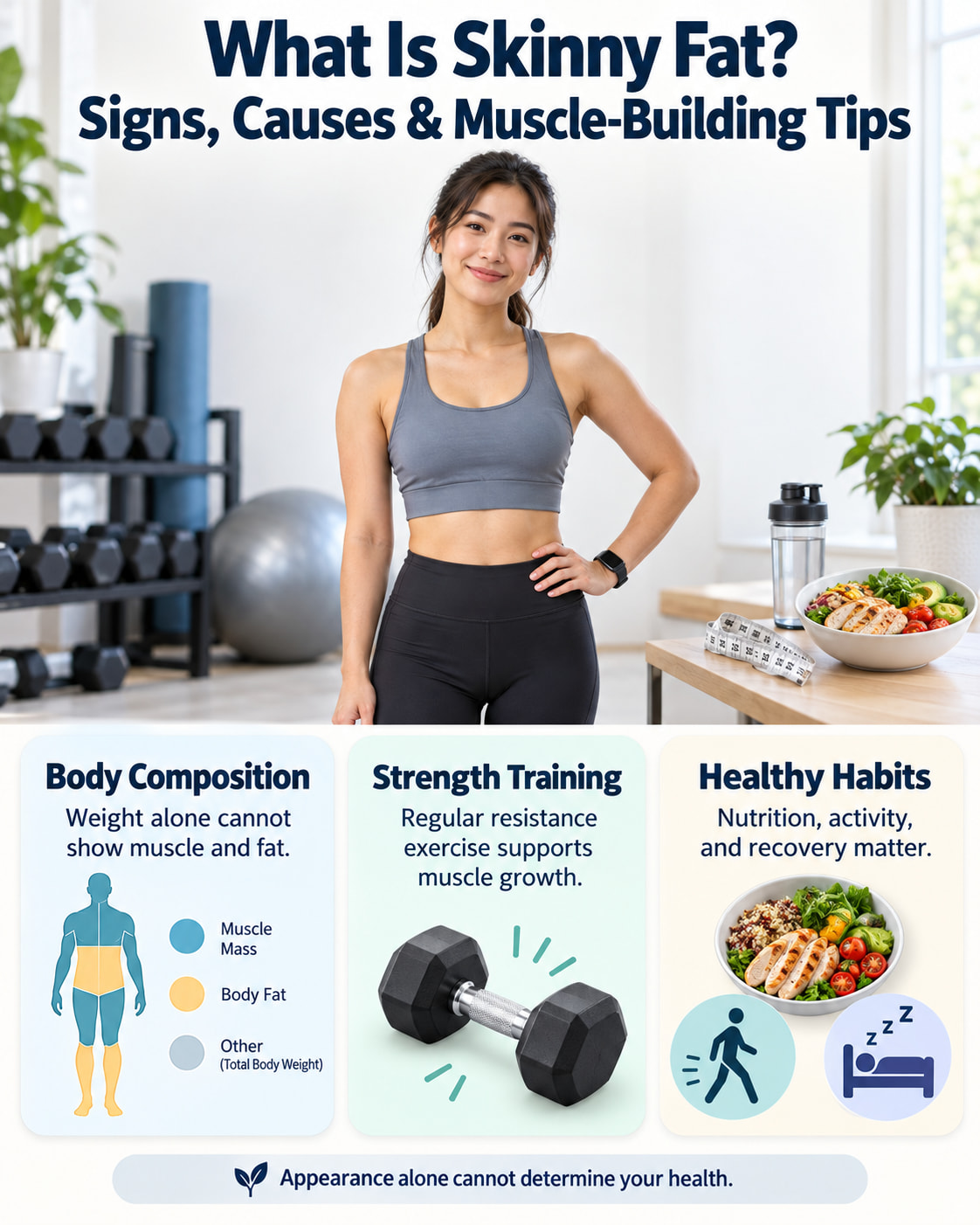
“Skinny fat” is an informal term for having relatively little muscle and a higher proportion of body fat, often at a normal-range body weight. It is not a medical diagnosis, and appearance alone cannot reveal your health.
Understanding the difference between weight and body composition can help you choose more useful fitness goals. If you want to build muscle, start with consistent strength training, adequate nutrition, and recovery. Trying to make the number on the scale smaller is not automatically the right approach.
What Is Skinny Fat?
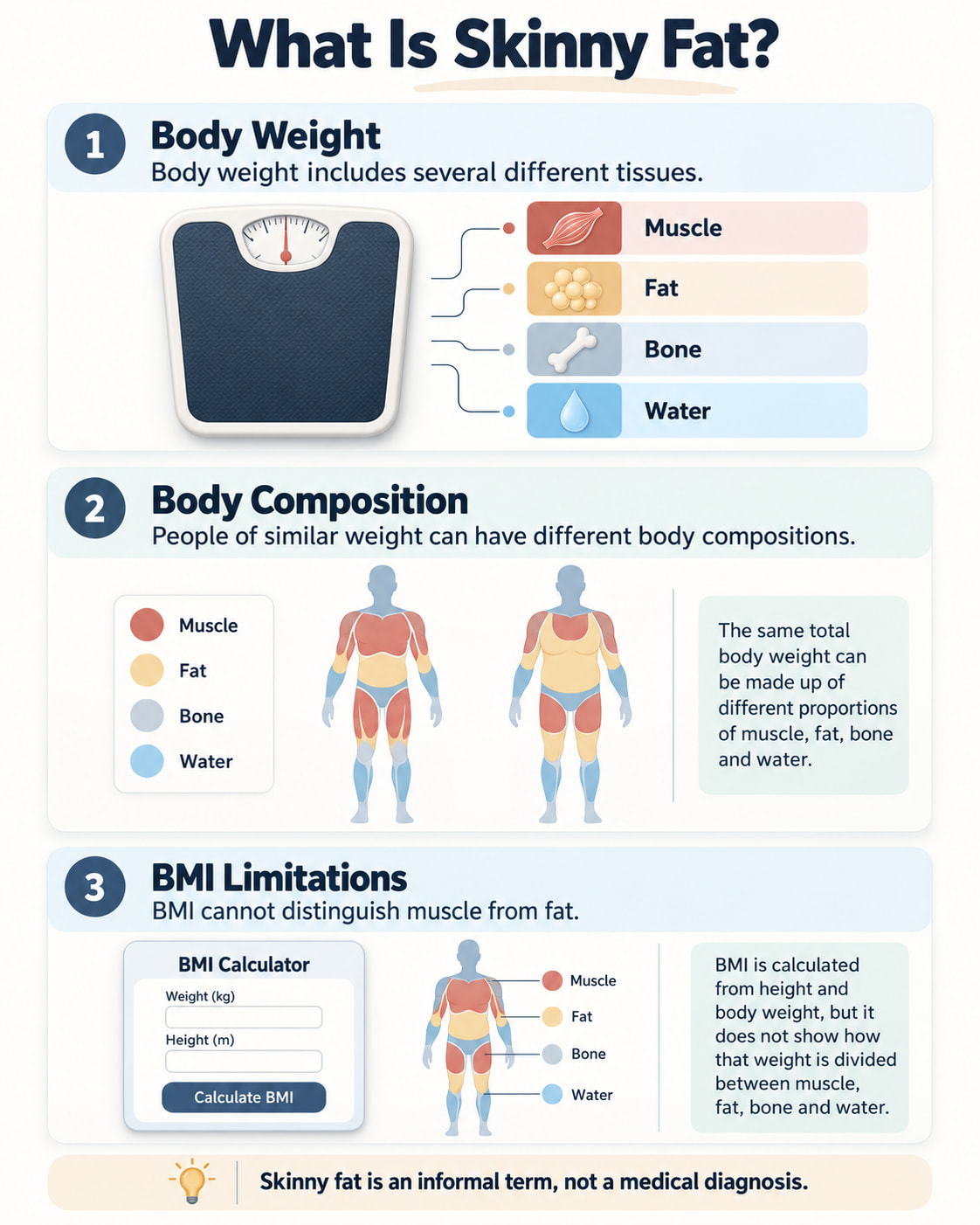
People use “skinny fat” to describe different things, including limited muscle definition, a smaller frame with abdominal fat, or concerns about body composition. Cleveland Clinic explains that the phrase has no clear medical definition.
Your body weight includes muscle, fat, bone, water, and other tissues. Two people of similar height and weight can have different amounts of muscle and fat.
According to the CDC’s explanation of BMI, BMI cannot distinguish fat from muscle or show where fat is stored. It is a screening tool that needs context from your health history, physical examination, and other relevant findings.
Researchers sometimes use normal-weight obesity to describe a normal-range BMI combined with elevated body fat. That research term is more specific than an appearance-based label, and its definitions vary. There is no universal body-fat percentage that diagnoses “skinny fat.”
You also do not need visible abs or sharply defined muscles to be healthy.
Possible Signs of Skinny Fat—and What They Cannot Tell You
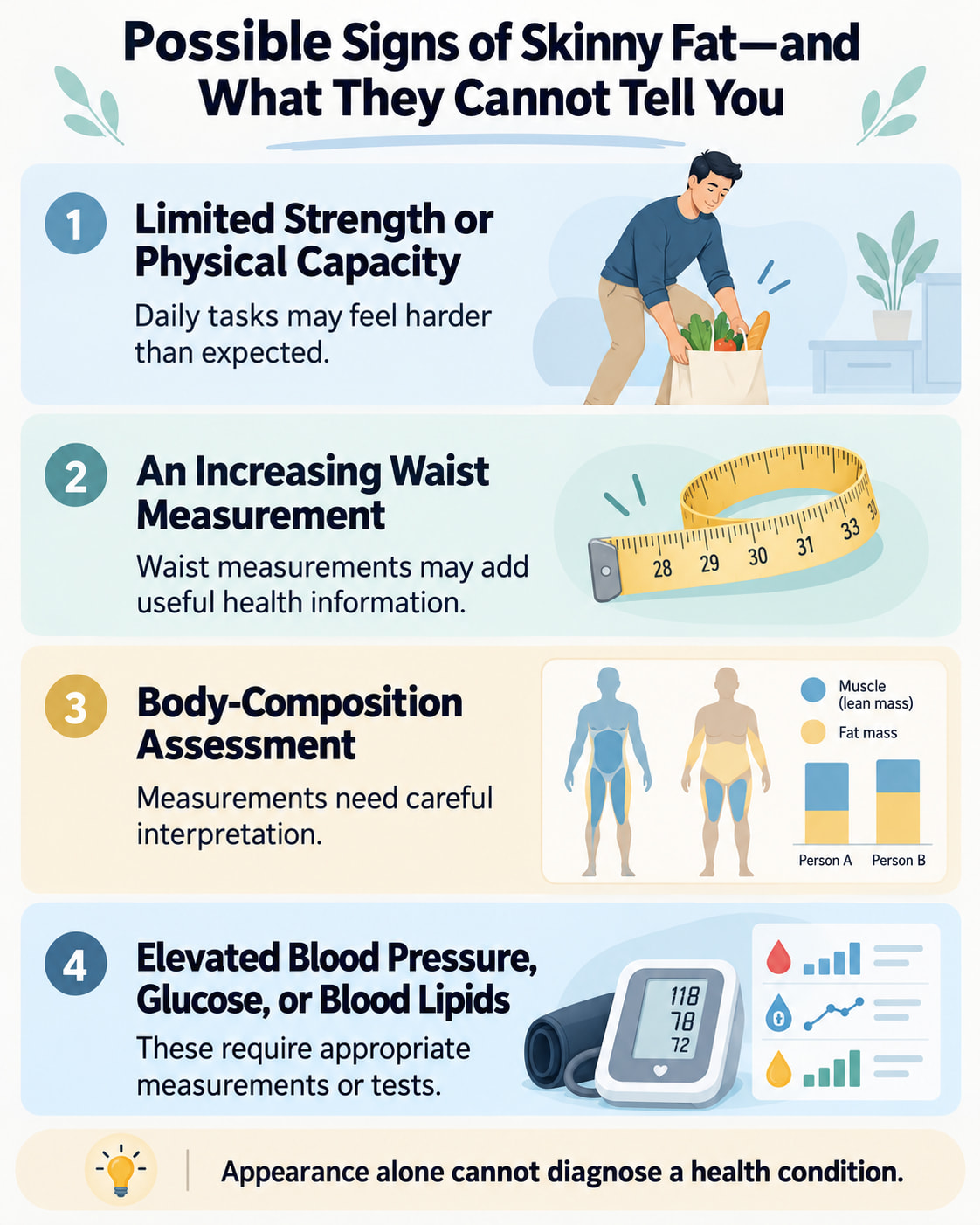
There is no reliable “skinny fat” symptom checklist. However, the following can be reasons to look more closely at strength, body composition, or health:
- Limited strength or physical capacity: Everyday tasks feel harder than expected. This can reflect limited training experience or other factors; it does not prove low muscle mass.
- An increasing waist measurement: This may add useful information beyond changes in weight.
- A body-composition assessment showing relatively low muscle or higher body fat: The result needs interpretation because methods and reference ranges differ.
- Elevated blood pressure, glucose, or blood lipids: These are clinical findings, not something you can reliably identify from your appearance.
Many metabolic risk factors have no obvious symptoms. NHLBI notes that high blood pressure, high triglycerides, and low HDL cholesterol usually do not cause symptoms.
A soft stomach, thin arms, or lack of visible muscle should therefore not be treated as proof of insulin resistance or another health condition. A clinician can decide whether measurements or tests are appropriate for your individual risk.
What Causes Low Muscle Mass and Higher Body Fat?
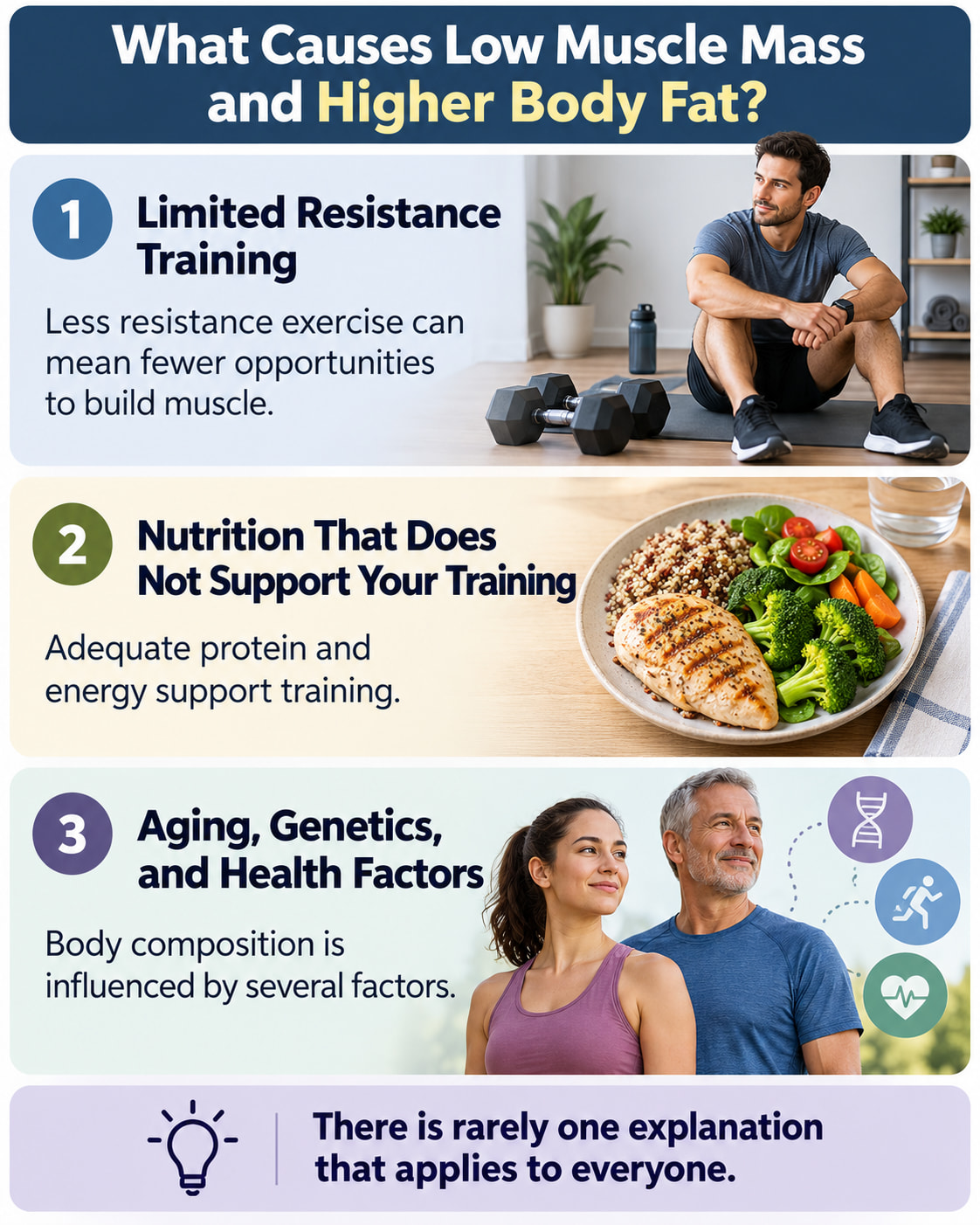
Body composition reflects several influences. There is rarely one explanation that applies to everyone.
Limited Resistance Training
Muscles respond to being challenged. If your routine provides little resistance exercise, you may have less opportunity to build strength and muscle, even if your weight stays stable.
Walking and other aerobic activities still have value. Adding resistance training provides a more direct way to work on muscle strength and size.
Nutrition That Does Not Support Your Training
Muscle building requires adequate nutrition. Consistently eating too little protein can make it harder to meet the needs of an active routine. Substantial calorie restriction can also work against the goal of gaining muscle.
At the same time, regularly consuming more energy than you use can contribute to fat gain. The practical goal is to match your eating pattern to your needs rather than assume that eating much less or much more will help.
Aging, Genetics, and Health Factors
Genetics influences how much fat your body stores and where it is distributed. Aging can also change body composition: NIDDK notes that older adults may lose muscle and bone while gaining fat, even without a change in BMI.
Sleep, daily activity, some medications, and certain health conditions can influence weight and health. A noticeable or unexplained change deserves individualized attention rather than a body-type label.
How to Build Muscle and Improve Body Composition
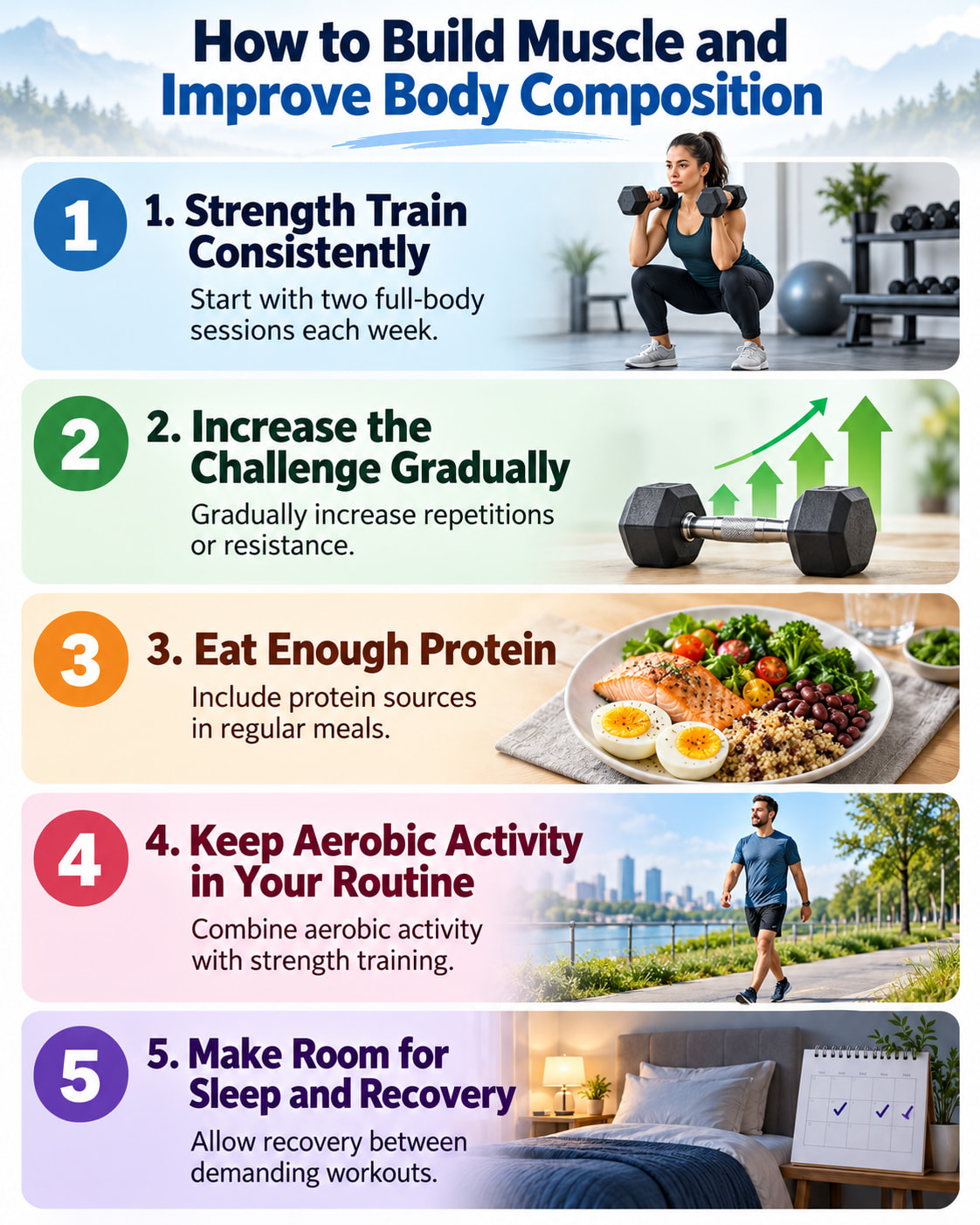
1. Strength Train Consistently
Start with a schedule you can maintain, such as two full-body sessions each week.
The ACSM’s 2026 resistance-training update reviewed 137 systematic reviews involving more than 30,000 participants. It emphasizes regular training of all major muscle groups and shows that many approaches can work.
You can use dumbbells, machines, resistance bands, or appropriately challenging body-weight exercises. Choose movements that fit your experience, available equipment, and comfortable range of motion.
Training every set to complete failure is not necessary. Begin with manageable sessions that you can repeat consistently.
2. Increase the Challenge Gradually
As you become more capable, make small adjustments. You might add a repetition, use slightly more resistance, or move to a harder variation.
For example, start an exercise with a weight you can lift for eight controlled repetitions. Over subsequent sessions, work toward 12. When 12 feels manageable with good form, increase the resistance slightly and build up again.
Keep a short training log. Recording the exercise, resistance, and repetitions makes progress easier to notice without relying on changes in appearance.
3. Eat Enough Protein
Protein supports muscle repair and adaptation to training. Include a protein source in your regular meals, such as eggs, yogurt, fish, poultry, tofu, beans, or lentils.
The NIH’s exercise nutrition guidance describes a protein intake of 1.2–2.0 grams per kilogram of body weight per day for athletes. This provides useful context for people who train regularly, but it is not a requirement for every adult.
For illustration, that range equals approximately 82–136 grams daily for someone weighing 150 pounds, or about 68 kilograms. Starting a beginner routine does not mean you need to aim for the top of the range.
Your needs depend on your training, age, eating pattern, and health. Follow any existing medical advice about protein intake.
Protein powder is optional. It can be convenient when food alone does not meet your needs, but it does not replace training or a balanced diet.
4. Keep Aerobic Activity in Your Routine
Strength training and aerobic exercise serve complementary purposes.
CDC activity guidance recommends at least 150 minutes of moderate-intensity aerobic activity or 75 minutes of vigorous activity weekly, or an equivalent combination, alongside muscle-strengthening activity on at least two days.
Brisk walking, cycling, swimming, or another activity you enjoy can fit around strength sessions. If you are currently inactive, begin with manageable amounts and build gradually.
5. Make Room for Sleep and Recovery
Schedule recovery between demanding sessions for the same muscles. Two full-body workouts on nonconsecutive days are a practical starting option.
NHLBI recommends 7–9 hours of sleep per night for adults. Work toward a regular sleep schedule and adjust training if fatigue is repeatedly affecting your technique or ability to complete sessions.
A Simple Beginner Strength-Training Routine
This sample routine is a general starting point for healthy adults. Use light dumbbells, a sturdy chair, and stable support surfaces.
Try it on two nonconsecutive days, such as Monday and Thursday. Warm up with a few minutes of easy movement and rehearse unfamiliar exercises with little or no resistance.
Begin with one set of each exercise. Add a second set when you feel comfortable with the movements and recover well between sessions.
| Exercise | Repetitions per set | How to perform it |
|---|---|---|
| Chair squat | 8–12 | Use a nonrolling chair secured against a wall. Sit back under control, lightly touch or sit on the seat, then press through your feet to stand. |
| Dumbbell Romanian deadlift | 8–12 | Hold weights near your thighs. With slightly bent knees, move your hips backward and lower the weights close to your legs. Stop before your back rounds, then stand tall. |
| Incline push-up | 8–12 | Place your hands on a stable counter or secured surface. Keep your body aligned as you bend your elbows and bring your chest toward the surface, then press away. |
| Supported one-arm dumbbell row | 8–12 per side | Support your free hand on a stable surface and hinge forward. Pull the weight toward your hip without twisting your torso, then lower it under control. |
| Seated dumbbell shoulder press | 8–12 | Sit upright with feet supported and weights near shoulder height. Press overhead through a comfortable range, then lower. Avoid leaning backward to finish the repetition. |
| Dead bug | 5–8 per side | Lie on your back with arms raised, feet off the floor, and hips and knees bent to about 90 degrees. Slowly reach one arm and the opposite leg away, then return. Shorten the reach if your lower back starts arching. |
Rest about 1–2 minutes between sets, or longer if you need it to regain comfortable breathing and controlled technique.
For the lifting exercises, finish while you could still complete approximately two or three good repetitions. If that is hard to judge, stop before your form begins to break down. Keep dead bugs slow and controlled.
The 8–12 repetition range is a convenient starting framework, not the only effective range for building muscle. Adjust resistance or exercise difficulty to your ability, and stop movements that cause sharp or increasing pain.
Should You Lose Weight or Focus on Building Muscle?
Do not assume that identifying with “skinny fat” means you need a calorie deficit. Your starting point matters.
If your weight is appropriate for you and your main concern is limited strength, begin by improving training consistency and nutrition. Maintaining weight while you establish these habits can be a reasonable starting option.
If reducing excess body fat is an appropriate goal, nutrition changes should still support strength training and adequate protein. Aggressive restriction can make muscle building harder.
A 2022 meta-analysis found that energy deficits reduced gains in lean mass during resistance training, although strength gains could still occur. This does not establish one calorie target for everyone.
If you are underweight or losing weight unintentionally, seek individualized guidance before trying to reduce your intake.
How to Track Your Progress
Use a few practical measures that match your goals:
- Training consistency: Are you completing your planned sessions?
- Strength: Can you perform more controlled repetitions or use slightly more resistance?
- Daily function: Are stairs, carrying groceries, or getting up from a chair becoming easier?
- Relevant health measures: Follow up on blood pressure or laboratory results if your clinician recommends it.
Treat consumer body-fat readings as estimates. A 2021 study of three smart scales found that weight measurements were reasonably accurate, while body-composition estimates were less reliable. That does not mean every device performs identically, but one reading should not become a diagnosis.
You can also keep brief notes about energy and recovery. If repeated weighing or measuring makes you anxious, focus on habits and physical function instead.
When to Talk With a Healthcare Professional
Ask for individualized guidance if you notice unexplained weakness, unintended weight loss, or increasing difficulty with everyday activities.
A clinician can consider your history and decide whether an examination, blood pressure measurement, or appropriate blood tests would help. Not everyone needs a body-composition scan or an extensive testing panel.
If you have a chronic health condition, discuss suitable exercise types and amounts with your healthcare professional. A qualified fitness professional can help you learn unfamiliar movements, while a registered dietitian can help match your eating pattern to your goals.
Frequently Asked Questions
Can You Have a Normal BMI and High Body Fat?
Yes. BMI uses height and weight and cannot separate muscle from fat. It is possible to have a normal-range BMI with relatively high body fat or low muscle mass. Health assessment still requires more than that measurement alone.
Can You Tell Whether Someone Is Skinny Fat From a Photo?
No. The term has no standardized diagnostic criteria, and a photo cannot establish body composition or metabolic health. Lighting, posture, clothing, and natural differences in shape also influence appearance.
Can You Build Muscle and Lose Fat at the Same Time?
It is possible, but it is not guaranteed. Resistance training can support muscle growth and may also reduce body fat. Your starting point, nutrition, training consistency, and recovery influence the outcome. Avoid judging progress only by scale weight.
Is Walking Enough to Improve Body Composition?
Walking can contribute to aerobic activity and general health. If your main goal is building muscle, include resistance exercise as well. The two can work together in the same weekly routine.
Do You Need Protein Powder to Build Muscle?
No. You can meet protein needs through food. A supplement is an optional convenience when it helps fill a gap. More protein does not compensate for inconsistent training or inadequate overall nutrition.
Can Ab Workouts Get Rid of Belly Fat?
Ab exercises can strengthen the muscles involved, but you should not expect them to selectively remove belly fat. A small randomized study found that six weeks of abdominal exercise improved muscular endurance without significantly reducing abdominal fat.
How Long Does It Take to Change Body Composition?
There is no reliable deadline that applies to everyone. Training studies typically measure changes over weeks or months, and strength and visible changes may progress at different rates. Focus on consistent habits and gradual improvements rather than a promised transformation date.
Conclusion
“Skinny fat” is an imprecise label. A more useful approach is to understand your body composition, build strength, and pay attention to relevant health markers.
Start by scheduling two manageable strength sessions this week, including protein in your meals, and allowing time for recovery. Track what you can do, and seek personalized guidance when health concerns or unexplained changes arise.
This content is for informational purposes only and not medical advice.