
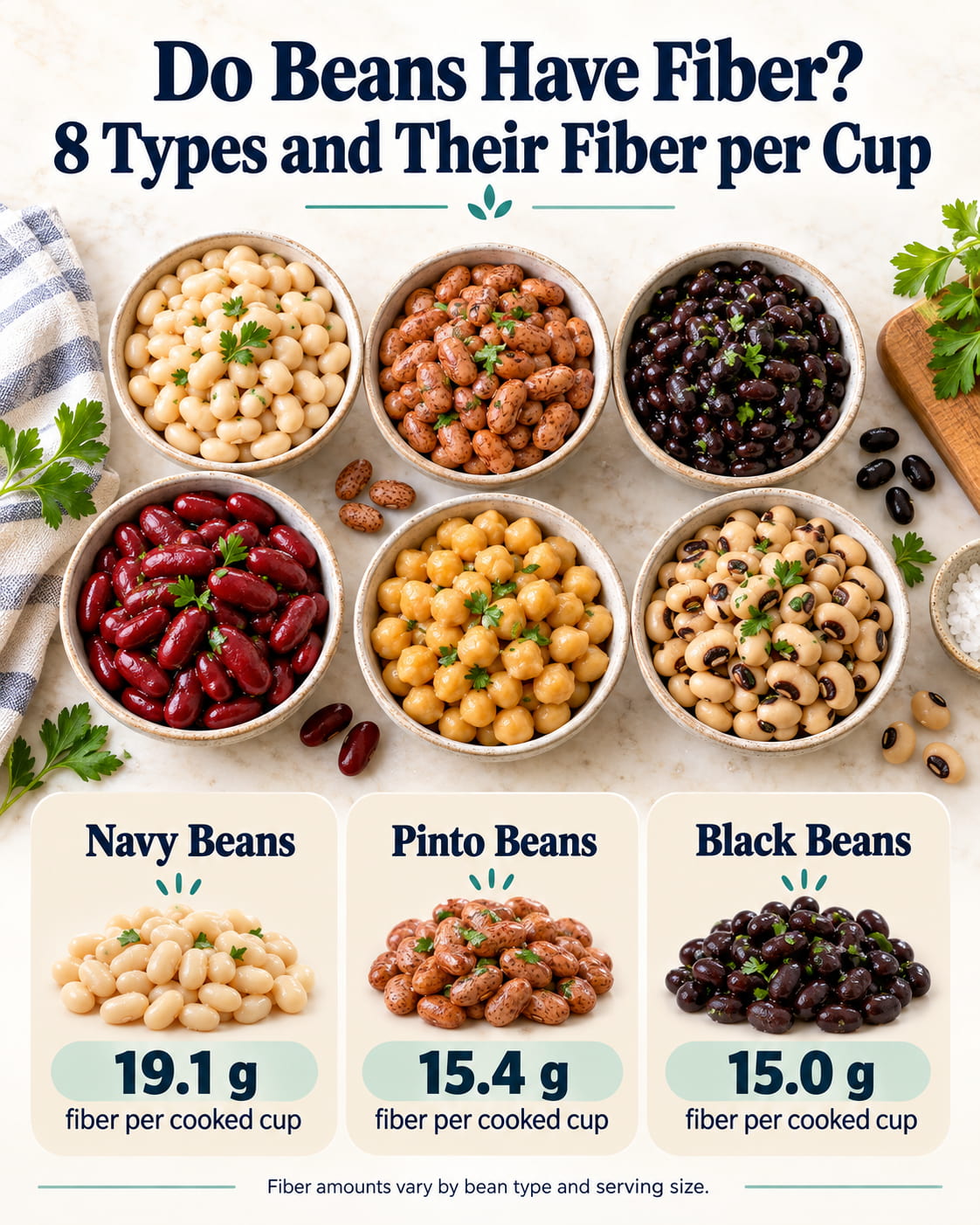
Yes, beans have fiber—about 11–19 grams per cooked cup across the eight types below. Navy beans lead this comparison, while pinto beans, black beans, chickpeas, and other varieties also provide substantial amounts.
The amount you get depends on the bean, its preparation, and your portion size. A half-cup serving can make a useful contribution, and canned beans offer a convenient option when you want to skip cooking from dried.
Here’s how eight common types compare, along with practical ways to use them.
How Much Fiber Do Beans Have?
The following amounts use USDA food-composition data for mature beans cooked and boiled without salt. The weight column shows how much one cooked cup weighs in each USDA entry.
| Bean type | Weight per cooked cup (g) | Fiber per cup (g) | Fiber per ½ cup (g) |
|---|---|---|---|
| Navy beans | 182 | 19.1 | 9.6 |
| Pinto beans | 171 | 15.4 | 7.7 |
| Black beans | 172 | 15.0 | 7.5 |
| Lima beans, large and mature | 188 | 13.2 | 6.6 |
| Red kidney beans | 177 | 13.1 | 6.5 |
| Chickpeas, or garbanzo beans | 164 | 12.5 | 6.2 |
| Great Northern beans | 177 | 12.4 | 6.2 |
| Black-eyed peas, or cowpeas | 171 | 11.1 | 5.6 |
Amounts are approximate, calculated from USDA serving weights and rounded to one decimal place. Portions are calculated before rounding, so doubling a displayed half-cup value may give a slightly different result.
Use these numbers as a comparison guide. For a specific packaged product, check its Nutrition Facts label and serving size.
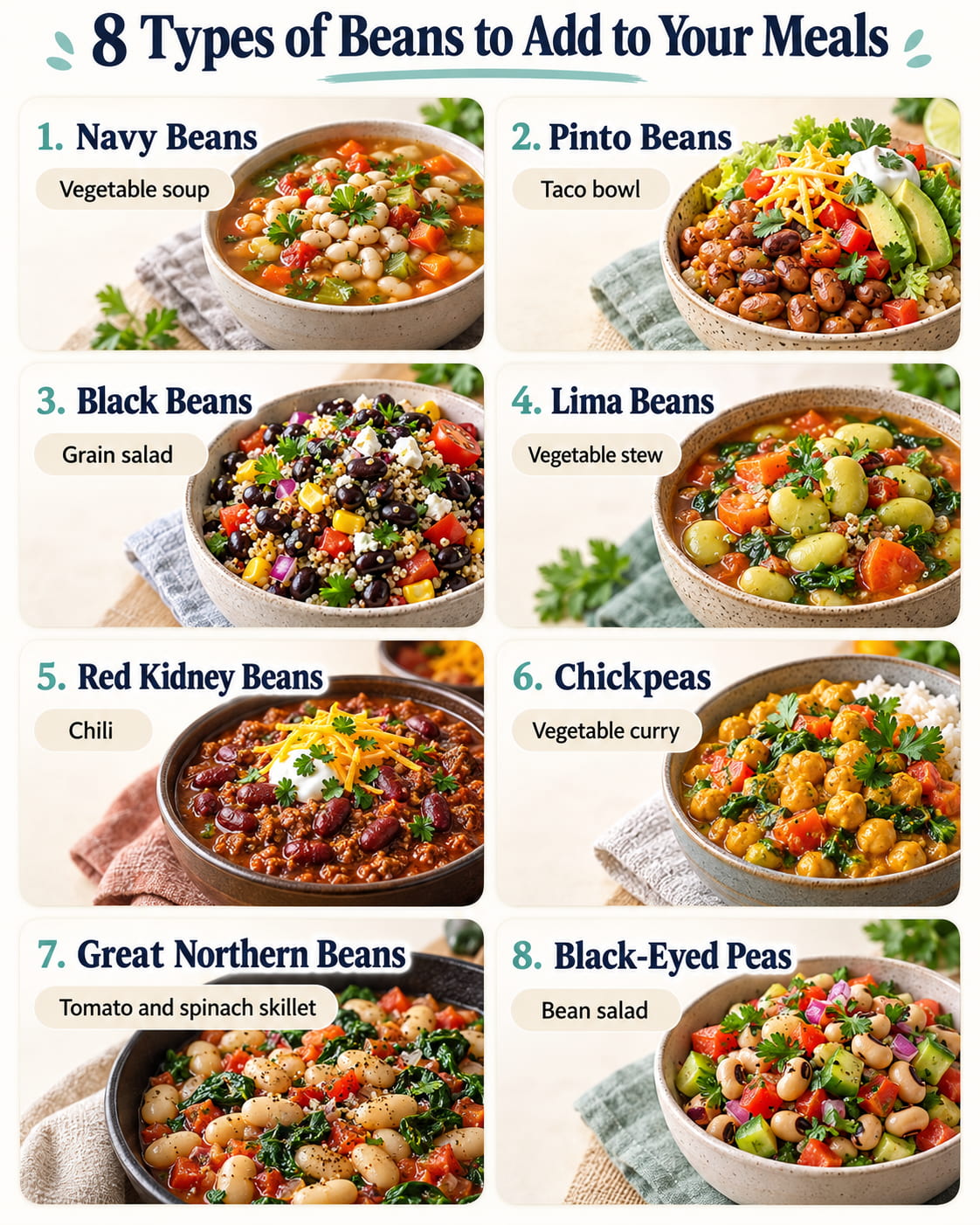
8 Types of Beans to Add to Your Meals
1. Navy Beans
Navy beans are small white beans with a mild flavor and a creamy texture when cooked. They work particularly well in soups and stews.
Try adding them to a vegetable soup, then mashing a few against the side of the pot to thicken the broth. Their mild flavor makes them easy to pair with herbs, tomatoes, or leafy greens.
2. Pinto Beans
Pinto beans have an earthy flavor and become creamy when cooked. They are useful for tacos, burrito bowls, soups, and mashed bean dishes.
For a simple meal, warm cooked pinto beans with cumin and garlic, then serve them with rice and vegetables. You can also mash them into a spread for a tortilla or sandwich.
3. Black Beans
Black beans fit easily into grain bowls, salads, tacos, and soups. Their flavor pairs well with lime, tomatoes, corn, and warm spices.
For a quick lunch, combine cooked black beans with chopped vegetables and a squeeze of lime. Add them to a familiar meal in a portion that suits your appetite and digestive comfort.
4. Lima Beans
Large, mature lima beans have a substantial, creamy texture. They work well in stews or as a side dish with herbs and vegetables.
The table uses mature lima beans cooked from dried. Frozen green lima beans have a different food-composition entry, so check their package for the most relevant nutrition information.
5. Red Kidney Beans
Red kidney beans are useful in chili, bean salads, and hearty soups. Their firm texture helps them remain distinct in dishes with several ingredients.
Canned kidney beans make a convenient addition to a quick chili. If you cook dried kidney beans, follow the preparation guidance below before adding them to your recipe.
6. Chickpeas
Chickpeas, also called garbanzo beans, have a nutty flavor and a firmer texture than many other cooked beans.
Toss them into a salad, stir them into a curry, or mash them with lemon juice and seasonings for a sandwich filling. Prepared foods such as hummus have their own serving sizes and ingredients, so use their labels when comparing fiber.
7. Great Northern Beans
Great Northern beans are mild white beans that work well in soups, pasta dishes, and vegetable skillets.
Try combining them with cooked tomatoes, spinach, and herbs for a simple meal. You can also stir them into a soup near the end of cooking when you want the beans to remain mostly whole.
8. Black-Eyed Peas
Black-eyed peas are a type of cowpea. They work well in warm dishes and chilled bean salads.
For an easy side, combine cooked black-eyed peas with chopped bell pepper, tomatoes, herbs, and a light dressing. They also pair well with rice or other cooked grains.
What Kind of Fiber Is in Beans?
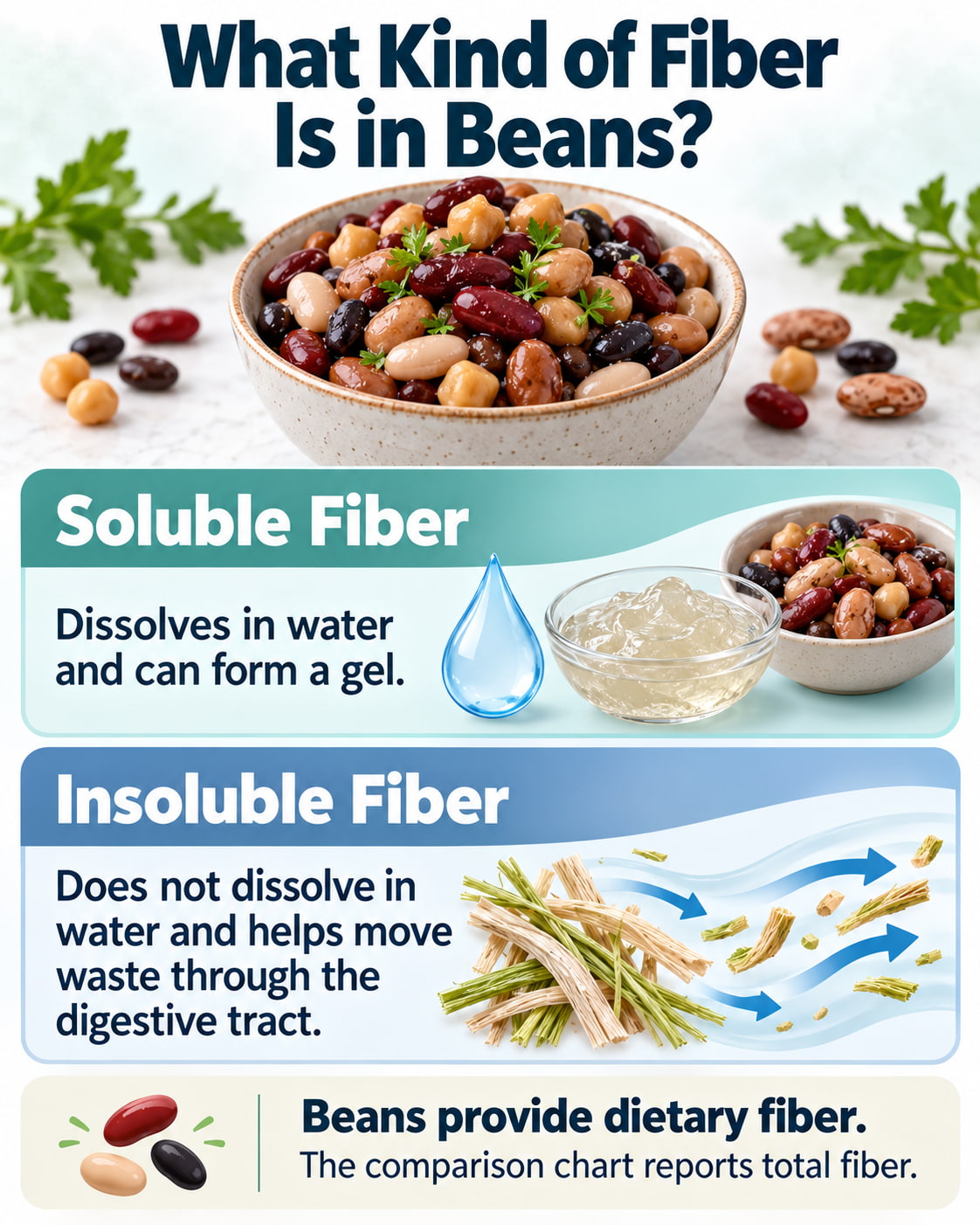
Dietary fiber is a type of carbohydrate that is not fully digested in the small intestine. The FDA’s dietary fiber guide describes two main categories:
- Soluble fiber dissolves in water and can form a gel.
- Insoluble fiber does not dissolve in water and helps move food and waste through the digestive tract.
Fiber can support bowel regularity and contribute to fullness. Beans also provide plant protein, making them useful in meals built around vegetables, grains, and other plant foods.
The comparison table lists total dietary fiber. Its figures should not be interpreted as the amount of soluble fiber alone.
How Do Beans Fit Into Daily Fiber Needs?
The FDA Daily Value for fiber is 28 grams. Using that reference, a full cup of the beans in this comparison supplies approximately 40–68% of the Daily Value. Individual needs vary, so this is a useful label-comparison reference rather than a personalized target.
A varied eating pattern can spread fiber across beans, whole grains, vegetables, fruit, nuts, and seeds.
Do Canned Beans Have Fiber?
Yes, canned beans provide fiber. The National Cancer Institute’s high-fiber food list includes both cooked dried beans and canned beans.
To compare canned products accurately:
- Check the serving size. A label may give nutrition information for half a cup.
- Compare equal portions. Match serving sizes before deciding which product provides more fiber.
- Read the preparation description. Plain beans, beans in sauce, and refried beans are different products.
- Use the product’s own numbers. The cooked-bean table is a reference, while the label describes the product you are buying.
If you want to reduce sodium, HHS shopping guidance recommends choosing beans labeled “no salt added” or “low sodium.” Rinsing canned beans can also remove some sodium.
How to Add More Beans Without Overdoing It
Start With a Comfortable Portion
If beans are new to your routine, begin with a small amount in a familiar meal. For example, add a few spoonfuls to a soup or grain bowl, then increase the amount gradually as comfortable.
NIDDK guidance on fiber recommends adding it a little at a time so your body can adjust. Adequate water and other liquids also help fiber work effectively; fluid needs depend on factors such as health and activity.
The one-cup amounts in the table make comparisons easy. Your meal can contain a smaller portion.
Understand Why Beans May Cause Gas
Some carbohydrates reach the large intestine without being fully digested. Bacteria break them down and produce gas. According to NIDDK’s explanation of food-related gas, beans and other legumes can increase symptoms in some people.
Pay attention to your own tolerance as you increase portions. There is no single serving size or adjustment timetable that works for everyone. If digestive symptoms remain troublesome, a clinician or registered dietitian can help you identify an eating pattern that suits you.
Prepare Dried Kidney Beans Properly
Dried kidney beans require careful preparation because raw or undercooked beans can contain harmful levels of a naturally occurring lectin.
FDA preparation guidance recommends soaking them for at least five hours, discarding the soaking water, and boiling them in fresh water for at least 30 minutes. Continue cooking until tender. Canned kidney beans are already cooked.
Frequently Asked Questions
Which Beans Have the Most Fiber?
Navy beans have the most fiber among the eight types compared here. Other bean varieties and preparations may have different values, so this is a ranking of the selected foods.
How Much Fiber Is in Half a Cup of Beans?
The beans in this table provide approximately 5.6–9.6 grams per half cup. Check the package label when using a specific canned or prepared product.
Do Black Beans or Pinto Beans Have More Fiber?
In this comparison, cooked pinto beans provide slightly more: about 15.4 grams per cup, compared with 15.0 grams for black beans. The difference is small, so taste and how you plan to use them are sensible deciding factors.
Do Beans Count as a Source of Protein or Fiber?
They provide both. Protein and fiber are separate nutrients, and a food can contribute meaningful amounts of each. Beans can therefore add more than one nutritional benefit to a meal.
Does a Cup of Bean Soup Provide the Same Fiber as a Cup of Beans?
A cup of soup includes broth and other ingredients, so it usually contains less than a full cup of beans. Use the soup’s nutrition label or calculate the beans and other ingredients in a homemade recipe.
Can Beans Help With Constipation?
Beans can contribute to a fiber-containing eating pattern that supports bowel regularity. Increase fiber gradually and include adequate fluids. Persistent constipation deserves individualized advice, especially if adding more fiber makes you feel worse.
Conclusion
Beans are a practical way to add fiber to everyday meals. Choose varieties you enjoy, compare similar serving sizes, and use the label for canned or prepared products.
Start with a comfortable portion in a familiar dish—such as a soup, salad, or grain bowl—and increase gradually according to your tolerance.
This content is for informational purposes only and not medical advice.
References
- USDA Agricultural Research Service: National Nutrient Database for Standard Reference, Release 27 — Legumes and Legume Products
- US Food and Drug Administration: Daily Value on the Nutrition and Supplement Facts Labels
- US Food and Drug Administration: Interactive Nutrition Facts Label — Dietary Fiber
- National Institute of Diabetes and Digestive and Kidney Diseases: Eating, Diet, & Nutrition for Constipation
- National Institute of Diabetes and Digestive and Kidney Diseases: Eating, Diet, & Nutrition for Gas in the Digestive Tract
- National Cancer Institute: High-Fiber Foods
- US Department of Health and Human Services: Lower-Sodium Foods: Shopping List
- US Food and Drug Administration: Natural Toxins in Food