
Vaginal odor causes range from temporary scent changes to bacterial vaginosis, trichomoniasis, or a forgotten tampon. Sweat, menstrual blood, sex, urine residue, and irritating products can also affect how the genital area smells.
A mild natural scent is normal. A new, strong, persistent odor deserves attention, especially when it comes with unusual discharge, itching, burning, or pain. Understanding the possible source can help you decide whether everyday care is enough or a medical appointment is needed.
What Vaginal Odor Is Normal?
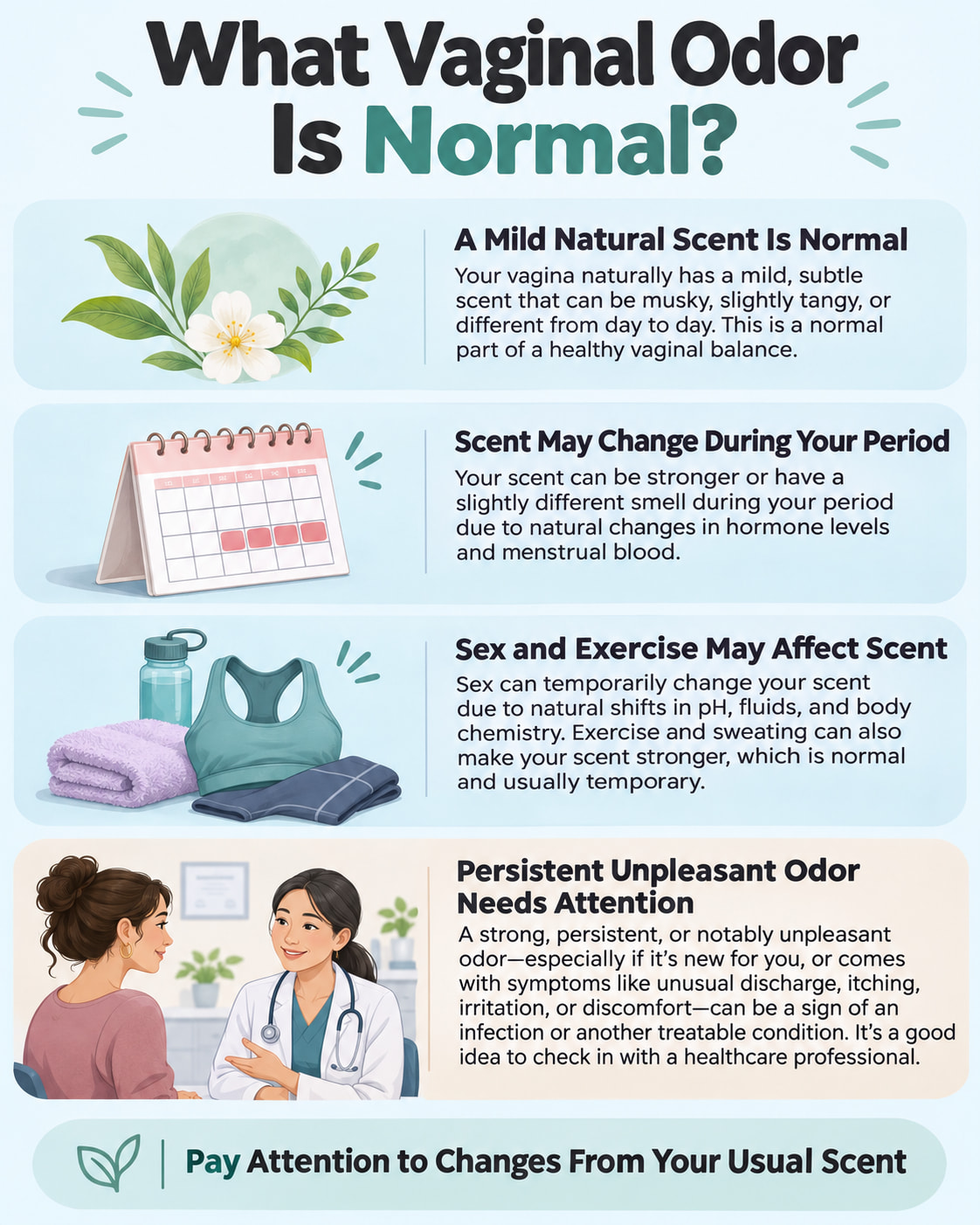
Your vagina does not need to be odorless. A mild, slightly tangy scent can be normal, and it may change during your menstrual cycle or after sex and exercise. These temporary changes are often harmless.
It also helps to distinguish the vagina from the vulva:
- Vagina: The internal canal where vaginal discharge originates.
- Vulva: The external genital area, where sweat or urine residue may contribute to odor.
Pay attention to what is usual for you. A distinctly unpleasant smell that persists, or a change accompanied by other symptoms, should be checked.
When to Get Help for Vaginal Odor
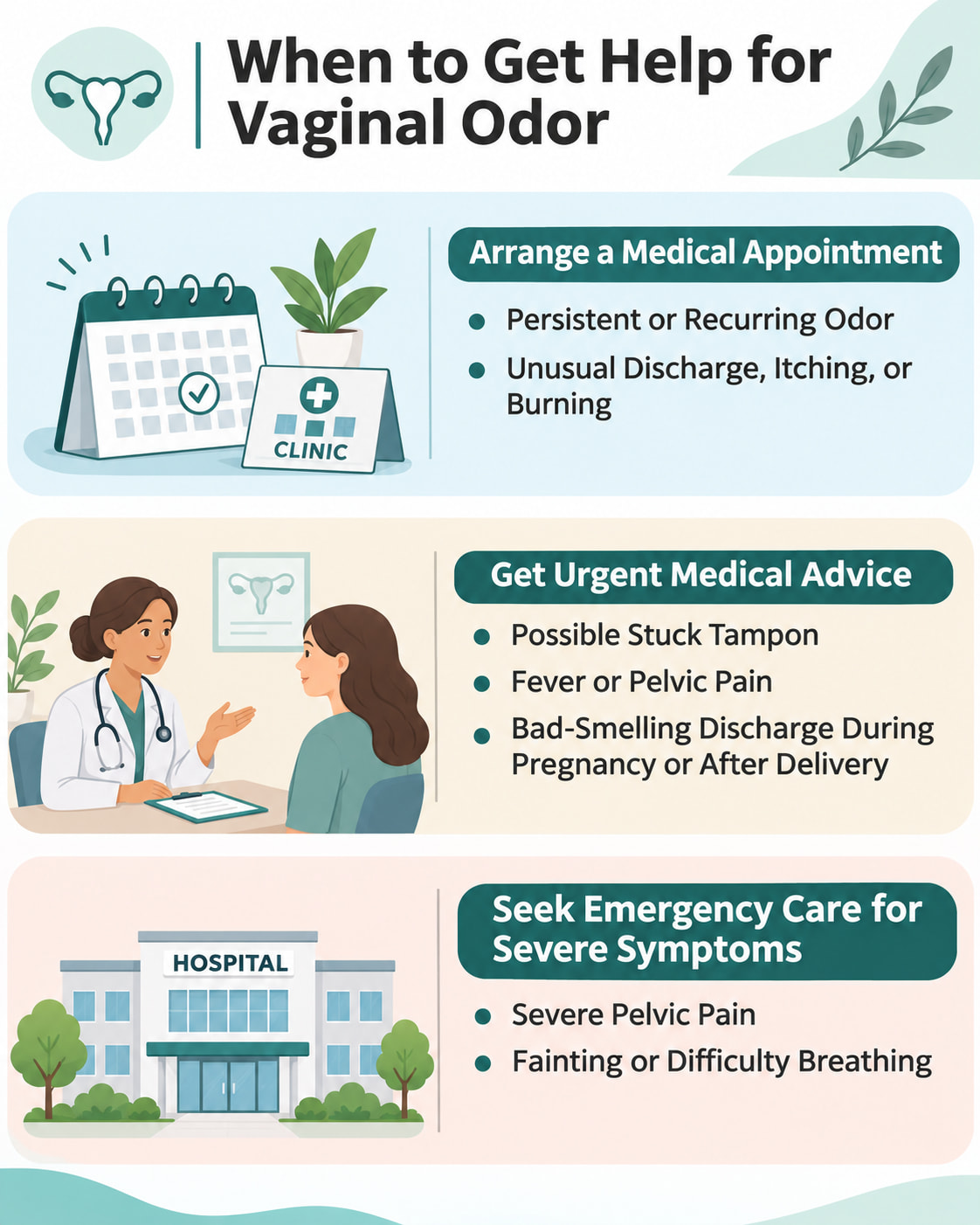
Arrange a Medical Appointment
Contact a healthcare professional if the odor is new, strong, persistent, or keeps returning. Also arrange an assessment if you notice:
- Discharge that changes in color, amount, or texture.
- Itching, burning, redness, or soreness.
- Pain when urinating or having sex.
- Bleeding between periods or after sex.
- Symptoms after sex with a new partner or possible STI exposure.
You can seek care for an unexplained odor even if you do not have itching.
Get Urgent Medical Advice
Get prompt medical help if you may have a tampon stuck inside and cannot remove it, or you are unsure whether one remains.
Unusual odor or discharge with pelvic pain or fever also needs prompt assessment.
Contact your obstetric care team immediately for bad-smelling vaginal discharge during pregnancy or after giving birth. The CDC lists this among its urgent maternal warning signs. Do not wait for fever to develop.
Seek Emergency Care for Severe Symptoms
Seek emergency care for severe or worsening pelvic pain, fainting, confusion, difficulty breathing, or heavy bleeding with pelvic pain.
Sudden illness with fever, vomiting or diarrhea, a rash, or dizziness during or soon after tampon use also requires immediate medical attention. These can be signs of toxic shock syndrome, a rare but serious condition. Remove the tampon if you can, but do not delay getting help.
8 Vaginal Odor Causes
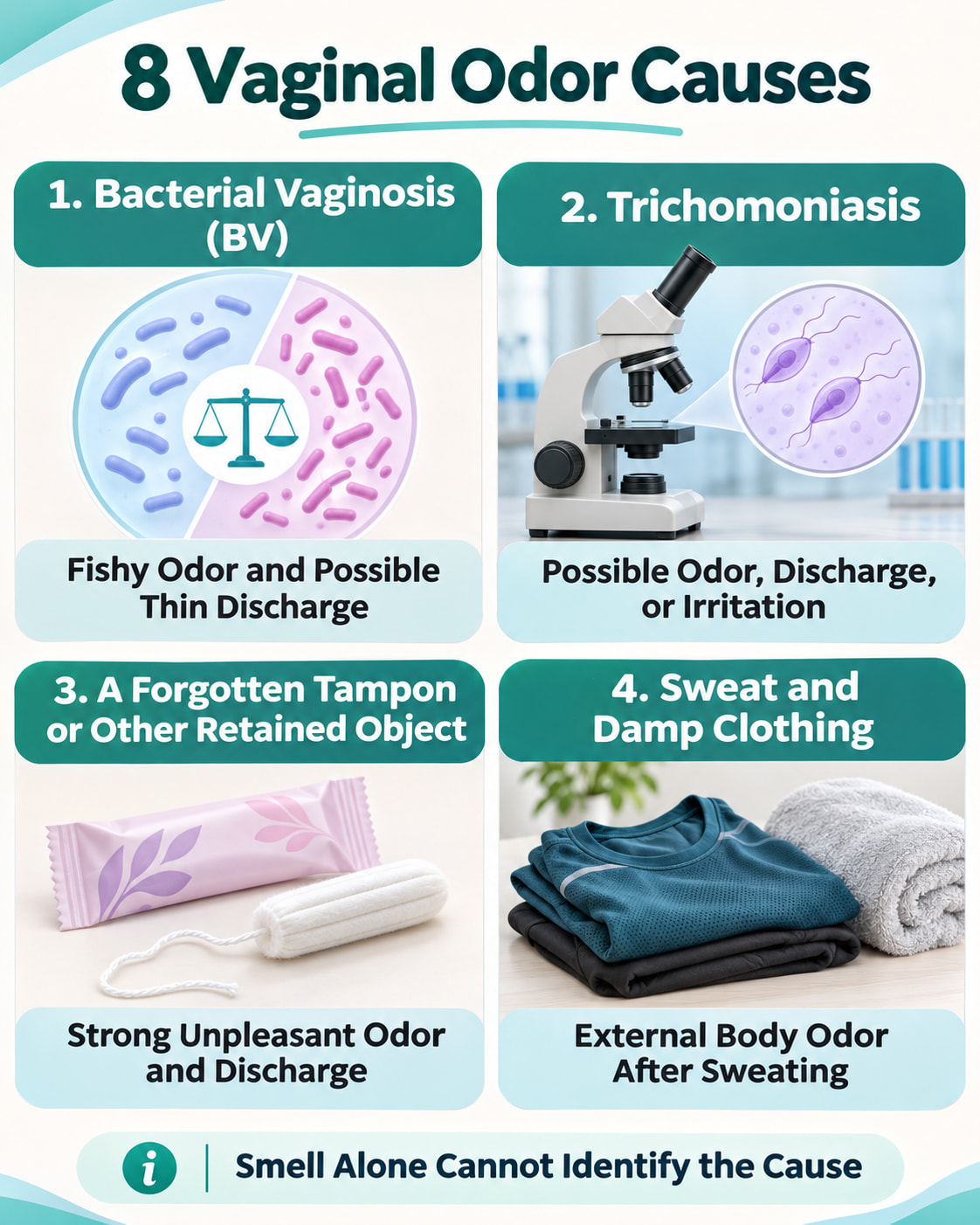
Some causes involve vaginal discharge. Others come from external skin or clothing. The following reasons can overlap, and smell alone cannot identify the cause.
1. Bacterial Vaginosis (BV)
Bacterial vaginosis develops when the balance of bacteria in the vagina changes. It can cause a strong fishy smell, sometimes more noticeable after sex, and thin white or gray discharge.
You may have BV without itching or other obvious irritation. A clinician can assess your symptoms and test vaginal fluid.
If BV keeps returning, ask about options for recurrent symptoms. ACOG guidance issued in October 2025 supports considering partner care for selected adults with recurrent, symptomatic BV. Whether that is appropriate depends on your situation.
2. Trichomoniasis
Trichomoniasis, often called “trich,” is a sexually transmitted infection caused by a parasite.
Possible symptoms include an unpleasant or fishy odor, increased discharge, genital irritation, and discomfort when urinating. Discharge may be clear, white, yellowish, or greenish.
The CDC reports that about 70% of people with trichomoniasis have no signs or symptoms. Having no itching or noticeable discharge does not rule it out.
Testing is needed to confirm trichomoniasis. If it is diagnosed, your clinician can explain care for you and your sexual partner or partners.
3. A Forgotten Tampon or Other Retained Object
A tampon left inside the vagina can cause a strong, unpleasant smell and unusual discharge. Other objects left inside can also contribute to odor.
If you cannot remove a tampon easily, or you are unsure whether one remains, get medical help promptly. A tampon cannot travel past the cervix into the rest of your body.
For routine use, FDA tampon guidance recommends changing tampons every 4–8 hours and never leaving one in longer than 8 hours. Use the lowest absorbency needed for your flow.
4. Sweat and Damp Clothing
Sweat around the vulva and groin can produce a body-odor smell. It may become more noticeable after a workout or while wearing damp underwear or tight clothing that holds moisture against the skin.
For example, a stronger external smell after exercise may lessen after gentle washing and changing into dry clothes.
Sweating does not by itself establish a vaginal infection. If the odor persists or comes with unusual discharge or irritation, arrange an assessment.
5. Menstrual Blood
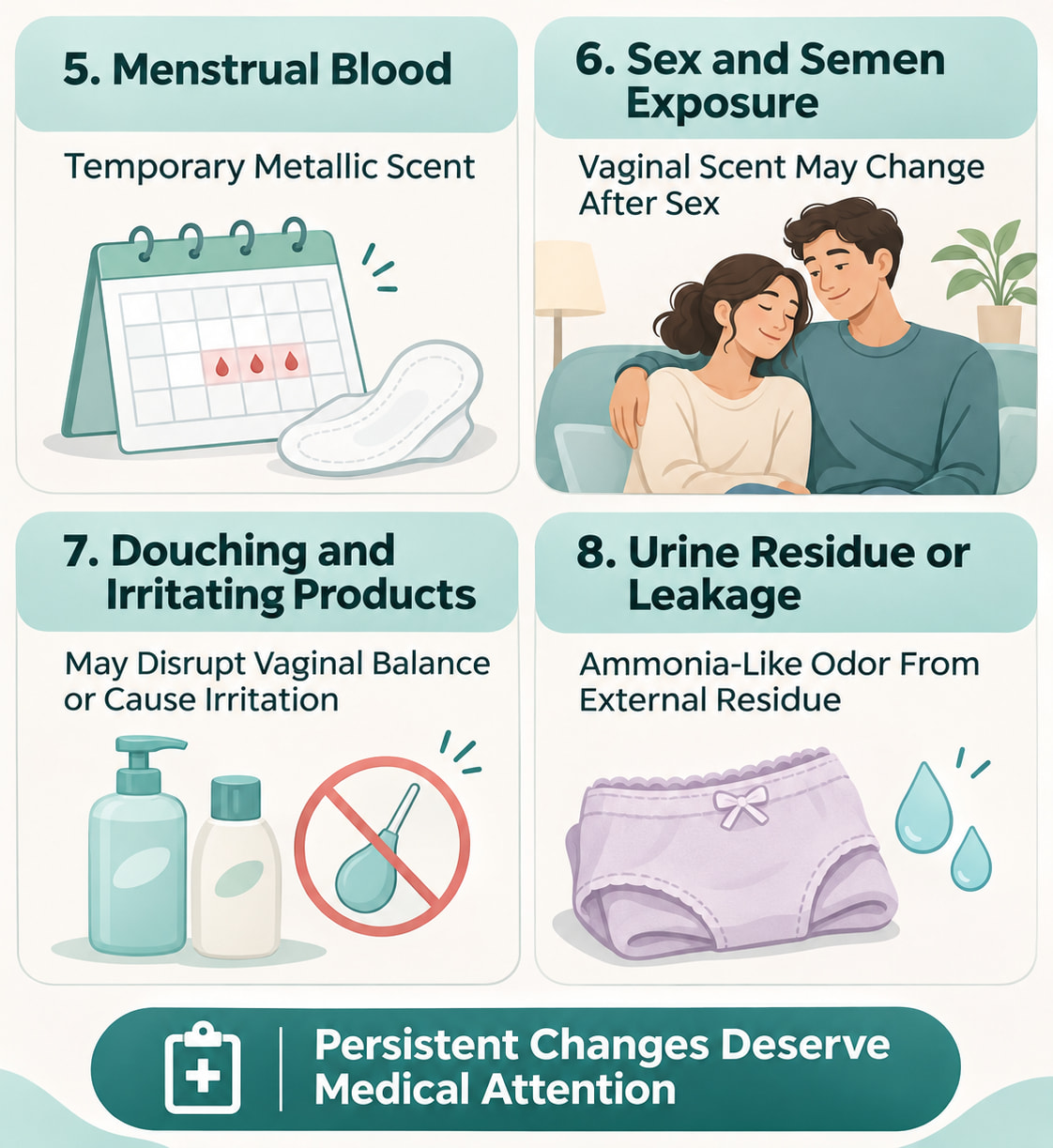
During your period, menstrual blood may give discharge a metallic scent. A temporary change around menstruation can be normal.
Change menstrual products according to their instructions and your flow. Remember to remove the final tampon when your period ends.
A distinctly foul smell, unusual pain, or odor that continues after your period should not automatically be attributed to menstrual blood. Consider whether a tampon may have been forgotten and seek care when needed.
6. Sex and Semen Exposure
Sex can temporarily change vaginal scent. Semen can affect vaginal acidity, and sexual activity may make an existing odor more noticeable.
However, a recurring fishy smell after sex can accompany BV. It should not automatically be dismissed as a normal response to semen.
If the change persists, repeatedly returns, or occurs with discomfort or unusual discharge, get checked. Douching after sex can disrupt the vaginal environment and does not prevent an STI.
7. Douching and Irritating Products
Douching means washing inside the vagina with water or another liquid. It can disturb the normal balance of bacteria and acidity.
The Office on Women’s Health advises against douching, including using it to remove vaginal odor.
Scented sprays, wipes, soaps, and menstrual products can also irritate sensitive genital tissues. Irritation does not always cause odor, but these products may contribute to symptoms or make an existing problem harder to assess.
If a product causes burning or irritation, stop using it and seek advice if symptoms continue.
8. Urine Residue or Leakage
Urine left on external skin or underwear can create an ammonia-like smell. This may be perceived as vaginal odor even though the source is outside the vagina.
Gentle external washing and changing damp underwear or pads may help with residue-related odor.
If leakage keeps happening, or you also have discomfort when urinating, discuss it with a healthcare professional. The smell alone cannot tell you what is causing the problem.
How Clinicians Identify Vaginal Odor Causes
A clinician may ask when the change started and whether it relates to your period, sex, new products, or tampon use. They may also ask about pain, itching, bleeding, pregnancy, and possible STI exposure.
Depending on your symptoms, evaluation may include:
- An examination of the vulva and vagina.
- A sample of vaginal discharge.
- Tests for BV, trichomoniasis, yeast, or other infections.
- Vaginal pH testing alongside other findings.
A home pH test cannot identify the exact cause. Several conditions can produce similar symptoms, and more than one problem can occur at the same time.
Care depends on the findings. Avoid choosing an over-the-counter yeast product based on odor alone; it may not address the actual cause.
How to Care for the Vaginal Area Safely
Keep everyday care gentle:
- Wash externally. Use warm water on the vulva. If you use soap, choose a small amount of mild, unscented soap and avoid products that irritate your skin.
- Leave the inside alone. Do not douche or put cleansing products inside the vagina.
- Change damp clothing. Put on dry underwear and clothing after sweating or swimming.
- Follow menstrual-product instructions. Change products regularly and keep track of tampon removal.
- Avoid masking the odor. Scented sprays and deodorizing products can cause irritation.
- Get persistent changes assessed. Repeated washing is not a substitute for finding the cause.
These habits can help with external sweat or urine residue. An ongoing vaginal condition may need care directed by a clinician.
Frequently Asked Questions
Why Do I Have Vaginal Odor Without Itching?
Some conditions, including BV, can cause odor without obvious itching. External sweat, menstrual blood, or urine residue may also contribute. A new or persistent unpleasant smell is a reason to seek assessment even without irritation.
Does a Fishy Vaginal Smell Always Mean BV?
No. BV is one possible explanation, but trichomoniasis can also cause a fishy smell. Symptoms overlap, so an examination and testing may be needed.
Can a Yeast Infection Cause Vaginal Odor?
A strong odor is not typical of a yeast infection. Yeast more often causes itching, irritation, and thick white discharge, although symptoms vary. Avoid assuming that odor means yeast or choosing medication on that basis.
Why Does Vaginal Odor Change After Sex?
Sex and semen can temporarily affect vaginal scent and acidity. A persistent or recurring fishy smell may be associated with BV and deserves assessment, particularly if there are other symptoms.
Is Vaginal Odor During My Period Normal?
A mild metallic scent can occur because of menstrual blood. A distinctly foul odor, unusual pain, or a possible forgotten tampon needs attention rather than being assumed to be a normal period change.
Can Menopause Change Vaginal Odor?
Hormonal changes around menopause can affect vaginal acidity and discharge. Lower estrogen can also contribute to dryness, burning, and discomfort. A new or persistent unpleasant odor should be checked instead of automatically attributed to menopause.
When Should Vaginal Odor Be Checked Urgently?
Get urgent advice for a possible retained tampon, odor with pelvic pain or fever, or bad-smelling discharge during pregnancy or after delivery. Severe pain, fainting, confusion, or breathing difficulty requires immediate care. So does sudden illness with fever, rash, vomiting, or dizziness during or soon after tampon use.
Conclusion
A mild vaginal scent is part of normal body function. Changes can come from everyday factors or conditions that need assessment.
Keep external care gentle, avoid douching, and pay attention to changes from your usual scent. If an odor is strong, persistent, or accompanied by other symptoms, contact a healthcare professional to identify the cause.
This content is for informational purposes only and not medical advice.
References
- Cleveland Clinic: Vaginal Odor.
- Cleveland Clinic: Home Remedies for Vaginal Odor.
- Cleveland Clinic: Vaginal pH.
- Mayo Clinic: Vaginal Odor.
- CDC: About Bacterial Vaginosis.
- CDC: About Trichomoniasis.
- CDC: Evaluation of Vaginal Symptoms.
- ACOG: Vaginitis.
- ACOG: Updated Guidance on Partner Care for Recurrent BV.
- NHS: Vaginal Discharge.
- NHS: Vaginitis.
- NHS inform: Stuck or Lost Tampon.