
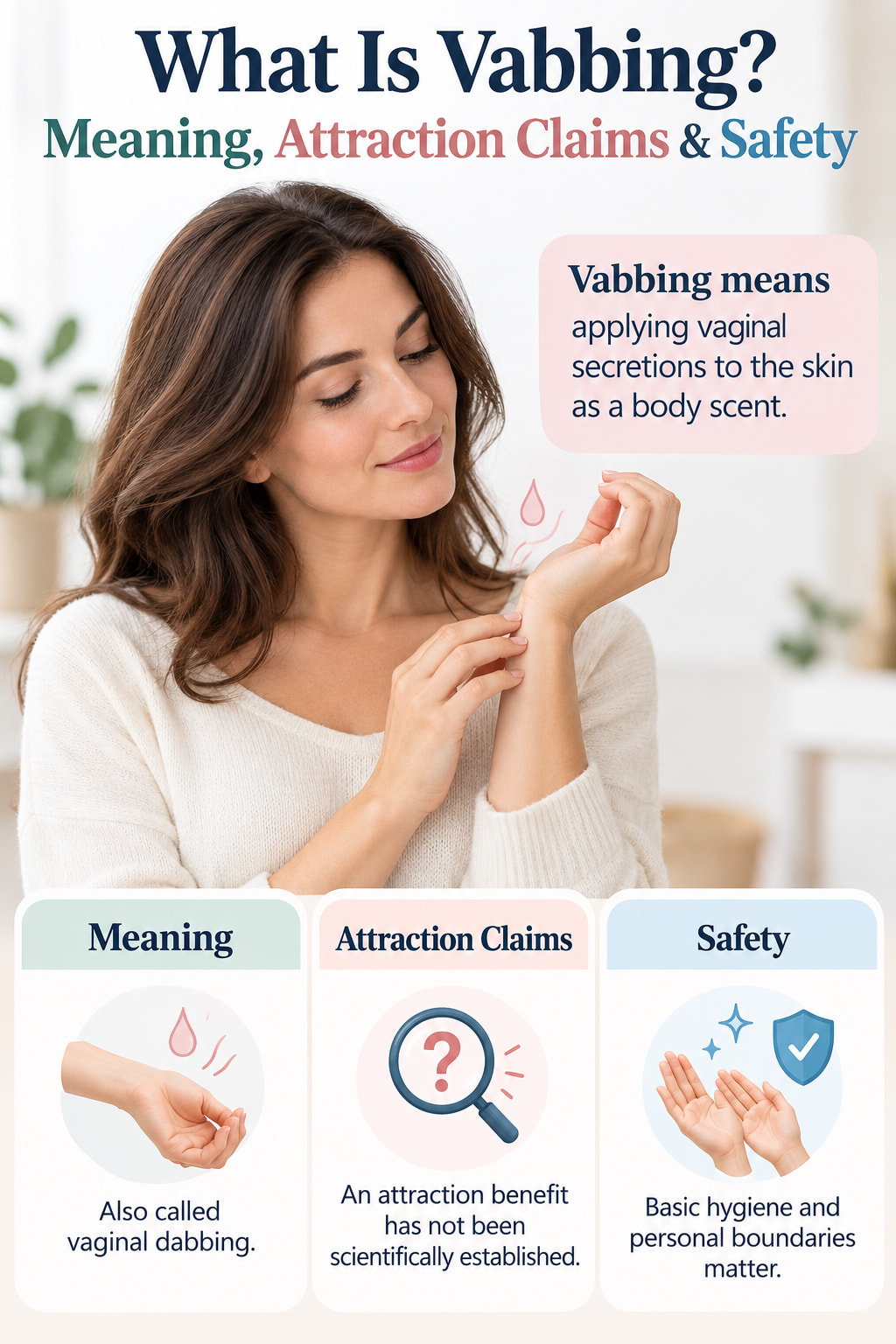
Vabbing means dabbing vaginal secretions on the skin as a body scent, usually to attract a partner. Reliable research has not established that wearing these secretions as perfume increases attraction.
The idea has attracted attention online, but personal success stories cannot prove that it works. Before following the trend, it helps to understand the evidence, basic genital hygiene, and changes in vaginal discharge that deserve medical advice.
What Is Vabbing?
Vabbing, also called vaginal dabbing, involves putting a small amount of your own vaginal fluid on places where you might wear fragrance, such as your wrists or neck.
Supporters suggest that chemicals in the fluid act as pheromones and influence another person’s attraction. That explanation remains unproven.
Does Vabbing Work? What the Research Shows
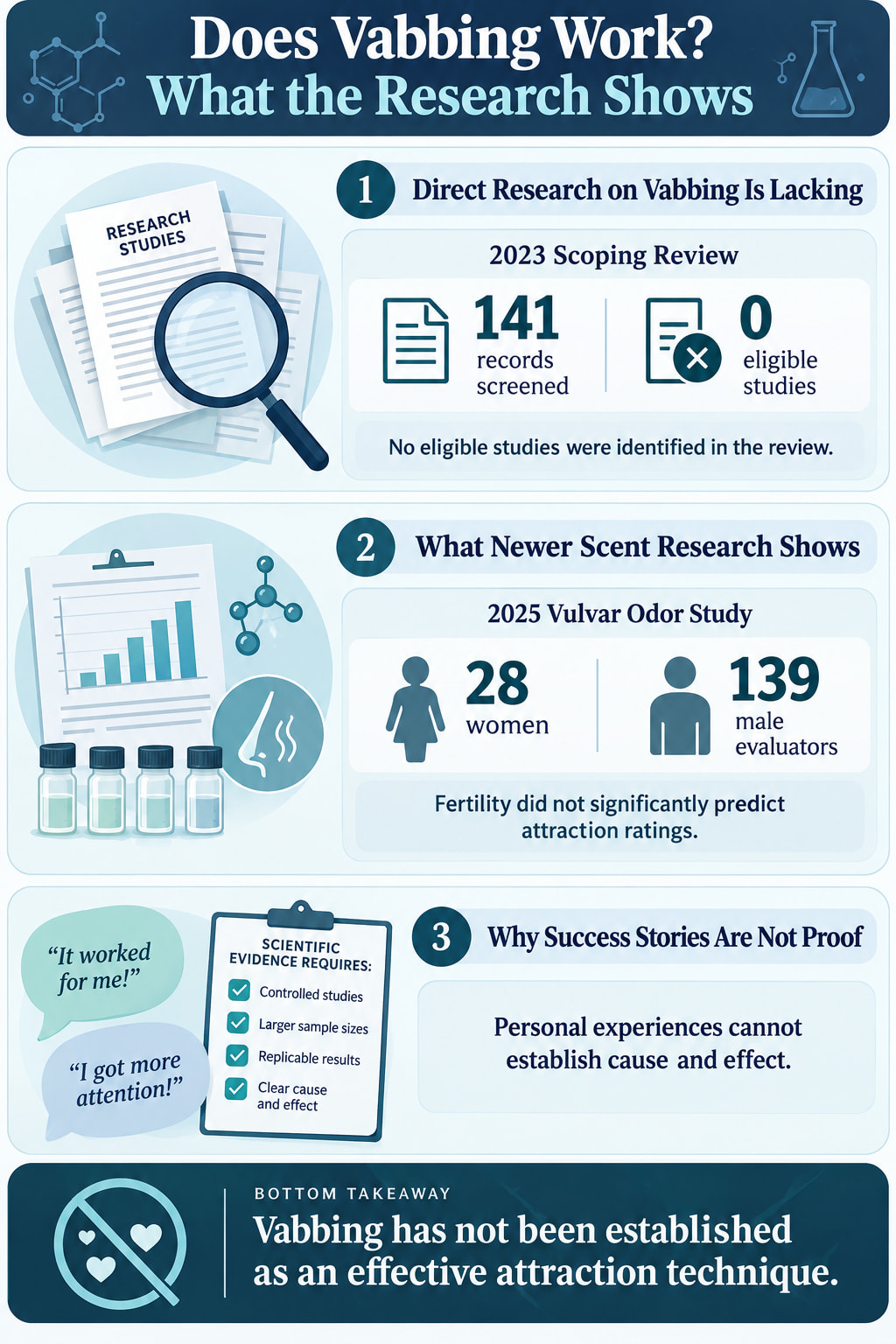
Vabbing has not been established as an effective attraction technique. Research on body odor provides useful context, but it does not directly answer whether wearing vaginal fluid as perfume attracts partners.
Direct Research on Vabbing Is Lacking
A 2023 scoping review searched eight databases for research on vaginal dabbing. After removing duplicates, researchers screened 141 records and found no eligible studies.
The search took place on December, 2022. Its result identifies a research gap at that time; it does not prove that vabbing works or that an effect is impossible.
What Newer Scent Research Shows
A 2025 study of vulvar odor, published in Evolution and Human Behavior, collected samples from 28 women. A total of 139 men evaluated the samples.
Men’s attraction to the odors was not significantly predicted by the women’s fertility. However, the study examined collected odor samples across the menstrual cycle. It did not test whether applying vaginal fluid to the wrists or neck changes dating outcomes.
Other findings also need context. A 2025 iScience study reported positive responses to some compounds associated with women’s underarm odor. A separate placebo-controlled study of synthetic copulin, published online in 2017, found no increase in measured sexual motivation.
These studies used different substances and methods. None demonstrates that vabbing makes the person wearing the fluid more attractive.
Why Success Stories Are Not Proof
Imagine someone tries vabbing before a date and receives more attention than expected. That experience cannot show which factor made the difference.
Confidence, expectations, changes in conversation or body language, and coincidence are possible explanations. They have not been proven to explain vabbing experiences, either.
A useful question is: Was the practice tested against a comparison condition while other factors were kept similar? Personal testimonials generally cannot provide that answer.
Do Pheromones Explain the Attraction Claims?
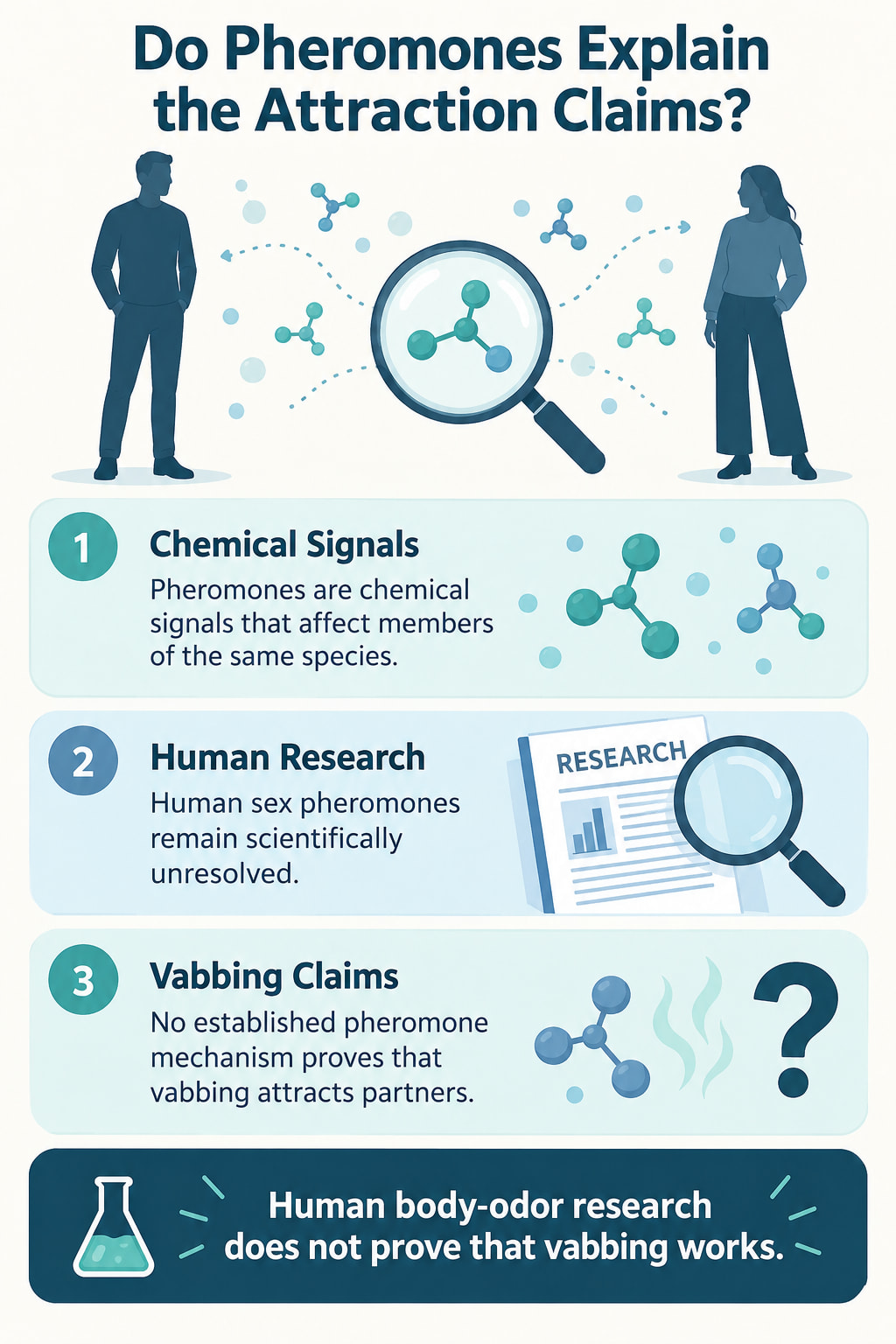
Pheromones are chemical signals that affect other members of the same species. However, noticing or enjoying someone’s scent does not automatically demonstrate a pheromone effect.
A 2025 review in Perspectives on Psychological Science describes the search for human pheromones as unresolved. Researchers have not established a human sex pheromone that validates vabbing’s attraction claims.
This leaves room for continued research on how body odors influence perception. It does not justify promises that vaginal secretions can reliably trigger attraction.
Claims such as “it releases irresistible pheromones” go beyond the available evidence.
Is Vabbing Safe?
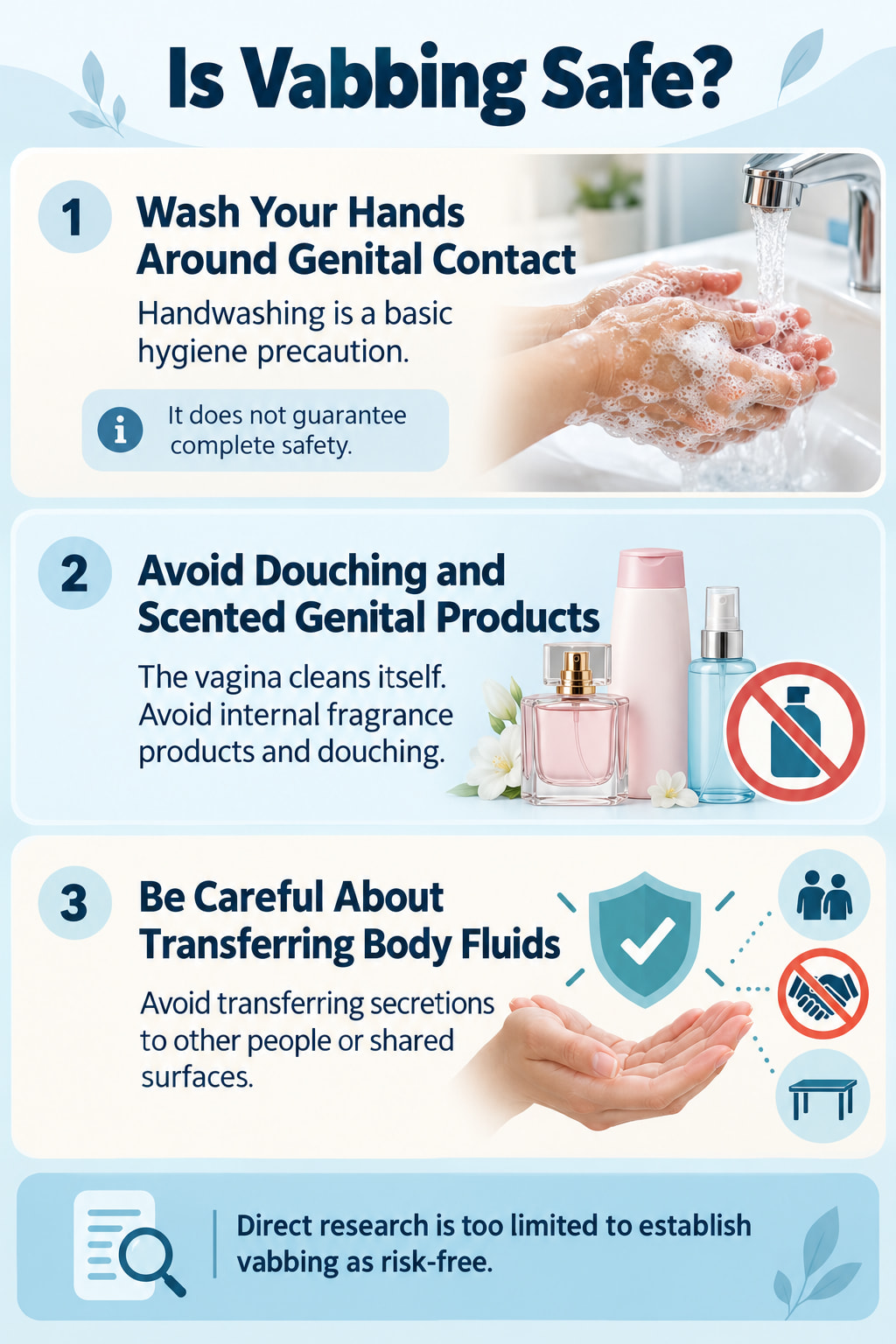
Direct research is too limited to establish a reliable risk estimate for vabbing or describe it as risk-free. Practical precautions come mainly from general genital hygiene and infection guidance.
Wash Your Hands Around Genital Contact
General NHS sexual health guidance recommends washing your hands before and after touching your genitals during masturbation.
The same basic precaution is relevant when handling vaginal secretions. If you have a diagnosed sexually transmitted infection, the guidance emphasizes washing your hands before touching another body part or another person.
Handwashing is a sensible hygiene measure. It is not a guarantee that a particular practice is safe.
Avoid Douching and Scented Genital Products
Do not douche or put perfume, deodorant, or scented cleansing products inside the vagina.
The Office on Women’s Health, in guidance updated in February 2025, explains that douching can disturb vaginal bacteria and acidity. The vagina cleans itself; gentle external washing with warm water is generally sufficient.
There is no need to “prepare” the vagina for the trend with special cleansing. The documented risks of douching should also not be mistaken for evidence that dabbing fluid onto a wrist causes the same problems.
Be Careful About Transferring Body Fluids
As a practical hygiene precaution, avoid transferring vaginal secretions to another person or shared surfaces. Avoid contact with eyes, the mouth, and broken or irritated skin.
Infection risks depend on the organism and the route of exposure. For example, CDC guidance explains that HIV cannot pass through unbroken skin; relevant fluids must reach a mucous membrane, damaged tissue, or the bloodstream.
That specific information should not be generalized to every STI. It also does not establish that vabbing has been proven safe.
What Is Normal Vaginal Discharge?
Vaginal discharge is a normal body function. It helps keep the vagina clean and moist.
Normal discharge can be:
- Clear or white.
- Thick and sticky.
- Slippery and wet.
Its amount and consistency can change during the menstrual cycle. A change associated with your usual cycle is different from a new symptom that is unusual for you.
A mild natural odor can also be normal. The Office on Women’s Health notes that healthy vaginas can have an odor that changes throughout the day.
Normal discharge does not mean you are unclean, and a healthy vagina does not need to be completely odorless.
When to Seek Medical Advice
Arrange an appointment with a healthcare professional if you notice discharge that is unusual for you, especially with:
- A new strong or unpleasant odor.
- An unusual change in color, texture, or amount.
- Itching, burning, or soreness.
- Pain when urinating or during sex.
- Pelvic pain.
- Bleeding between periods or after sex.
These concerns are covered in NHS guidance on vaginal discharge and Office on Women’s Health guidance.
Avoid trying to identify an infection from smell or appearance alone. An OB-GYN, primary care professional, or sexual health clinic can assess the symptoms. Do not use fragrance or douching to cover them up.
Frequently Asked Questions About Vabbing
What Does Vabbing Mean at the Gym?
It refers to the same practice: wearing vaginal secretions as a body scent, in this case while at the gym. The setting does not provide evidence that it increases attraction.
Does Vabbing Work Better During Ovulation?
There is no established evidence that timing vabbing around ovulation makes it effective. Studies of menstrual-cycle changes in body odor do not demonstrate that wearing vaginal fluid attracts a partner.
Are Vaginal Pheromones Proven to Attract People?
No human sex pheromone has been established that supports this claim. Research on body odors and individual chemicals continues, but it does not validate vabbing as an attraction method.
Can Vabbing Cause an Infection?
There is not enough direct research to say how often infections might occur from this practice. General hygiene precautions are sensible, but they do not establish complete safety. Seek medical advice if you develop unusual discharge, irritation, or pain.
Is a Mild Vaginal Odor Unhealthy?
Not necessarily. A mild natural odor can be normal. A new strong or unpleasant smell, particularly with irritation or unusual discharge, deserves medical attention.
Is Vabbing the Same as Douching?
No. Vabbing means using vaginal secretions as a body scent. Douching means rinsing inside the vagina with water or another solution. Health authorities advise against douching because it can disturb the vaginal environment.
Conclusion
Vabbing is a social-media attraction practice with unproven benefits. Related scent research does not establish that wearing vaginal secretions as perfume improves attraction, and direct safety evidence is limited.
Use reliable health information when evaluating intimate-health trends. Maintain gentle hygiene, respect other people’s boundaries, and contact a healthcare professional if you notice unusual discharge, odor, irritation, or pain.
This content is for informational purposes only and not medical advice.
References
- Amzat and colleagues. Research on vaginal dabbing: A systematic scoping review. Reproductive, Female and Child Health, 2023.
- Zetzsche and colleagues. Understanding olfactory fertility cues in humans. Evolution and Human Behavior, 2025.
- Ohgi and colleagues. Human ovulatory phase-increasing odors cause positive emotions and stress-suppressive effects in males. iScience, 2025.
- Williams and Apicella. Synthetic Copulin Does Not Affect Men’s Sexual Behavior. Published online in 2017; journal issue 2018.
- Loos and colleagues. Past, Present, and Future of Human Chemical Communication Research. Perspectives on Psychological Science, 2025.
- Devon Sexual Health. Relationships and intimacy.